

Best EMS Machine for Muscle Growth: Evidence-Based Buying Guide
Choosing the best EMS machine for muscle growth requires more than looking for the highest power rating or the largest number of programs. Electrical stimulation devices vary substantially in their intended purpose, stimulation method, controls, electrode configuration, and evidence base. A device designed primarily for pain modulation is not the same as a neuromuscular electrical stimulation system designed to create meaningful muscle contractions, and an aesthetic body-contouring system should not automatically be treated as equivalent to a muscle-strengthening device.
For muscle strengthening, the most useful buying criteria include stimulation intensity, frequency and pulse controls, contraction capability, electrode or applicator configuration, target-muscle coverage, usability, safety documentation, and how easily the device can complement conventional resistance training. Research supports neuromuscular electrical stimulation (NMES) as a potential tool for improving muscle strength and preserving or increasing muscle size in certain populations, but outcomes depend heavily on the protocol, population, stimulation parameters, and training context.
Best EMS Machines for Muscle Growth: Quick Comparison
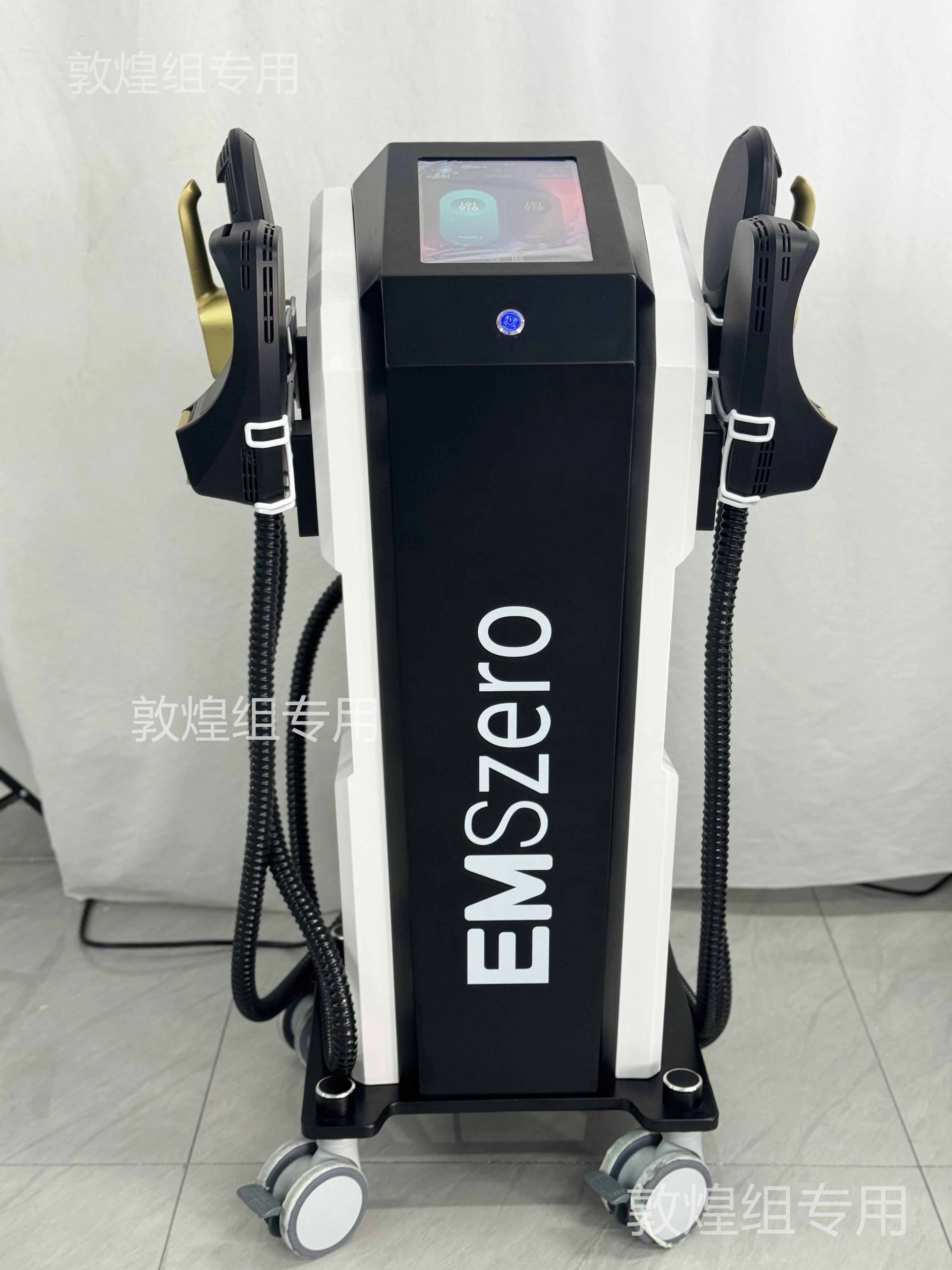
The supplied product information for this guide supports evaluation of one specific machine: the EMS Body Slimming Machine for Muscle Toning & Body Sculpting. Rather than inventing competing products or unsupported specifications, this guide evaluates that machine against the technical criteria that matter when shopping for an EMS system.
- Stimulation technology: Electromagnetic muscle stimulation
- Intended use: Muscle toning, strengthening support, body sculpting, and body contouring
- Frequency range: 5–100 Hz
- Maximum output: 6500W manufacturer specification
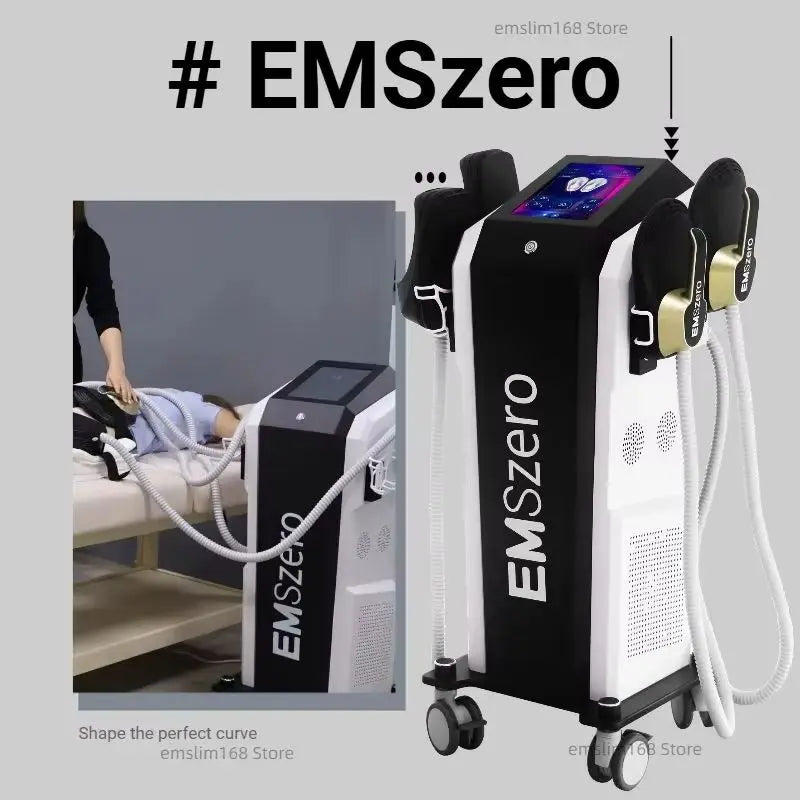
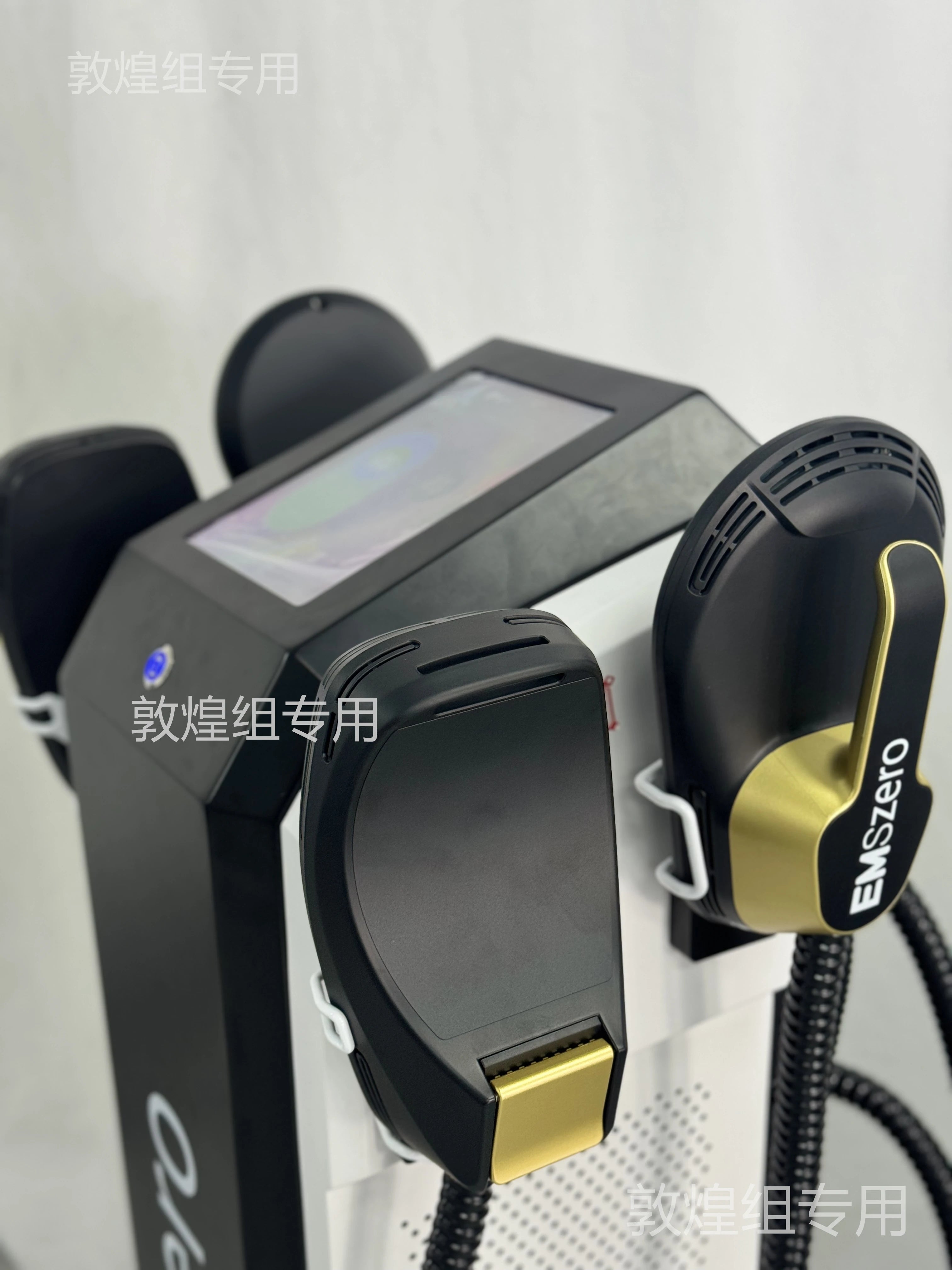
- Applicator configuration: Four handles
- Target areas: Abdomen, arms, legs, and glutes
- Display: 15.6-inch screen
- Cooling: Intelligent air cooling
- Power: AC 110–220V, 50/60Hz
- Best fit: Users seeking multi-area electromagnetic muscle stimulation in a professional or home-use environment
Our Top Pick by Training Goal
For readers specifically looking for a larger-format system that can address multiple body areas, the EMS Body Slimming Machine for muscle toning and body sculpting is the supplied product that most directly matches that use case. Its four-handle configuration is particularly relevant for users who want flexible positioning across the abdomen, arms, legs, and glutes.
How We Evaluated the Machine
The evaluation framework focuses on stimulation capability, adjustable operating characteristics, target-area coverage, applicator configuration, controls, practicality, cooling, safety considerations, and the distinction between manufacturer specifications and evidence-supported outcomes. Product specifications in this article come from the supplied product information. They should not be interpreted as independent clinical proof that the device will produce a particular amount of muscle growth.
If you are comparing body-focused devices more broadly, the Body Care and Health Devices collection provides a useful category-level starting point.
Can an EMS Machine Help Build Muscle?
Yes, electrical muscle stimulation can contribute to muscle activation and strength-related adaptations, but it is important to define what that means. NMES works by delivering electrical impulses that activate peripheral nerves and produce involuntary muscle contractions. Repeated contractions can create a training stimulus, particularly when stimulation is sufficiently strong and consistently applied.
However, “can help build muscle” does not mean that every device marketed as EMS will produce the same result. Evidence varies by device type, stimulation protocol, population, muscle group, and study design. A systematic review and meta-analysis of NMES in hospitalized adults found a small benefit for muscle strength and a moderate benefit for muscle size compared with control interventions, although the research population was not the same as healthy people purchasing an at-home body-sculpting system.
A separate systematic review of whole-body electromyostimulation found positive effects on muscle mass, strength, and power in adults, but the included protocols also varied substantially. This supports a cautious conclusion: electrical stimulation can be useful for muscle-related outcomes, but the results should not be generalized to every commercial EMS machine or treated as a substitute for progressive resistance training.
How Electrical Muscle Stimulation Produces Muscle Contraction
During voluntary exercise, your nervous system recruits motor units to produce muscular force. With electrical stimulation, an external electrical signal activates motor nerves and creates an involuntary contraction. The resulting contraction can impose mechanical and metabolic demands on the stimulated muscle.
This distinction matters when evaluating an EMS machine. The goal is not simply to feel a tingling sensation. For muscle-strengthening applications, the system needs to be capable of producing an appropriate, tolerable muscle contraction under a suitable protocol.
EMS for Strength vs. Muscle Hypertrophy
Strength and hypertrophy are related but different outcomes. Strength improvements can result from changes in neuromuscular function as well as increases in muscle size. Hypertrophy refers more specifically to increases in muscle tissue size.
Research indicates that NMES can influence both strength and muscle-size outcomes in certain settings, but there is no single EMS protocol that guarantees hypertrophy. The most realistic approach is to treat stimulation as an adjunct to an overall training strategy that includes appropriate resistance exercise, recovery, nutrition, and progressive overload.
What the Evidence Actually Supports
Current research supports NMES as a legitimate method of inducing muscle contractions and as a potentially useful intervention for strength and muscle preservation. Evidence is particularly established in rehabilitation and populations where conventional exercise may be difficult. Evidence for healthy consumers seeking large-scale hypertrophy from commercial body-sculpting systems is less straightforward.
That distinction is important for responsible buying decisions. A research finding about NMES should not automatically be presented as proof that a particular commercial electromagnetic device will deliver the same result. The supplied EMS Body Slimming Machine specifications describe electromagnetic muscle stimulation, four handles, a 5–100 Hz frequency range, and a 6500W maximum output, but those specifications alone do not establish a specific clinical muscle-growth outcome.
Why EMS Should Complement Resistance Training
Progressive resistance training remains a central method for developing muscle because it allows systematic increases in training load, volume, exercise difficulty, and mechanical tension. EMS can potentially add another stimulus or help target muscles in situations where conventional training is inconvenient or insufficient.
The strongest buying decision is therefore not “Which machine can replace the gym?” but “Which stimulation system can realistically complement my training goal?” That framing also prevents exaggerated expectations around rapid muscle growth.
EMS vs. NMES vs. TENS: Which Technology Is Relevant to Muscle Growth?
One of the biggest mistakes when shopping for an electrical stimulation device is assuming that EMS, NMES, TENS, and aesthetic body-contouring systems are interchangeable. They overlap in the broad concept of electrical stimulation, but their intended applications and mechanisms can differ.
EMS and NMES
EMS is a broad commercial term for electrical muscle stimulation. NMES, or neuromuscular electrical stimulation, more specifically describes stimulation intended to activate nerves and produce muscle contractions. For buyers focused on muscle strengthening, NMES terminology is particularly useful because it points toward an actual muscle-contraction objective rather than simply electrical sensation.
TENS
TENS stands for transcutaneous electrical nerve stimulation. It is primarily associated with pain-modulation applications rather than muscle-growth training. A TENS device may use electrical stimulation, but that does not make it a muscle-building machine.
EMS vs. Aesthetic Body-Contouring Devices
Aesthetic devices may emphasize slimming, contouring, appearance, or cosmetic body shaping. Some may also produce muscle stimulation, but cosmetic positioning should not automatically be interpreted as evidence of hypertrophy or strength improvement.
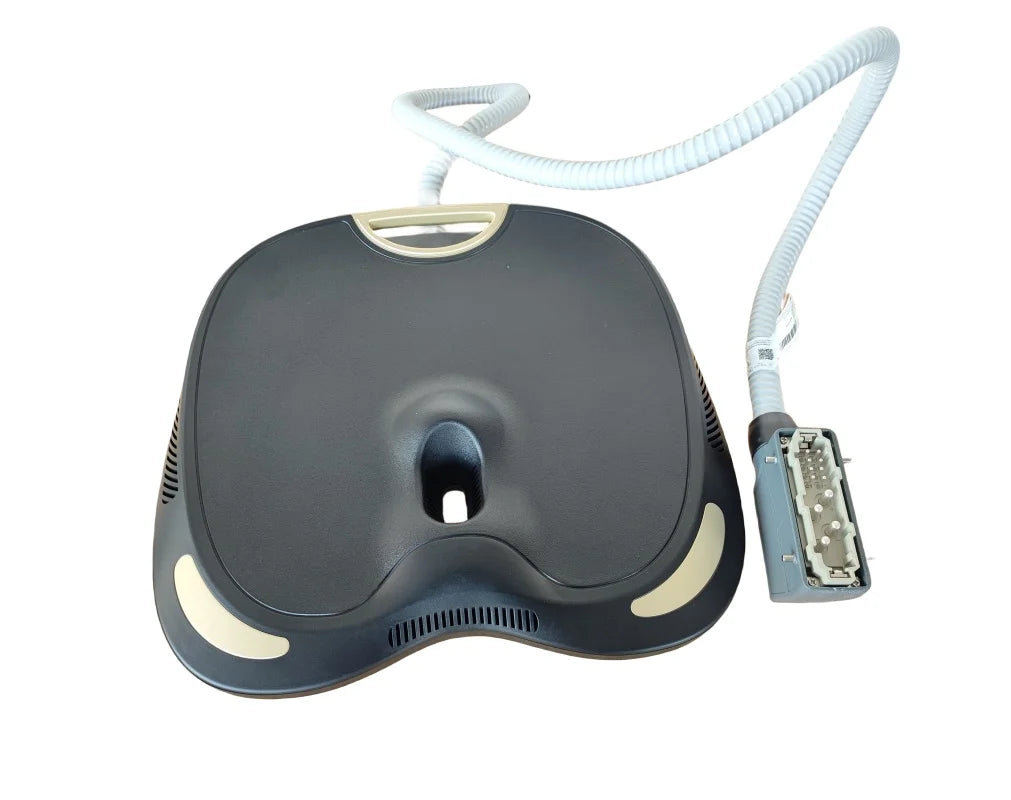
The supplied EMS Body Slimming Machine occupies an interesting overlap because its product positioning combines electromagnetic muscle stimulation with muscle toning and body sculpting. Buyers should therefore separate the device's stated aesthetic benefits from claims about measurable muscle growth.
What to Look for on the Product Label
- Look for explicit muscle-stimulation or neuromuscular-stimulation terminology.
- Check whether the system is designed to create visible or measurable muscle contractions.
- Review the available frequency, intensity, and program controls.
- Check how the device targets individual muscle groups.
- Review safety instructions, contraindications, and intended-use documentation.
- Do not assume that a device marketed for slimming is automatically equivalent to an NMES training system.
EMS Settings That Matter for Muscle Strengthening
Stimulation settings are more meaningful than a headline power number. A good EMS buying decision considers how the system actually controls stimulation and whether those controls allow a useful and tolerable contraction.
Pulse Frequency
Frequency describes how frequently electrical pulses are delivered. Different frequencies can produce different contraction characteristics, fatigue profiles, and levels of comfort. Research protocols use a range of frequencies, so there is no universal number that should be treated as “best” for every person or muscle.
The supplied machine lists a frequency range of 5–100 Hz. That range provides broad operating coverage, but the specification itself does not establish which setting is optimal for a particular muscle, user, or training objective.
Pulse Duration
Pulse duration describes how long each electrical pulse lasts. Together with frequency and intensity, it influences the stimulation delivered to the target tissue. Buyers should determine whether the machine provides meaningful control of this parameter or instead relies primarily on preset programs.
Intensity and Tolerable Muscle Contraction
Intensity is one of the most important practical considerations. For muscle-strengthening applications, simply feeling stimulation is not the same as producing a useful contraction. At the same time, increasing intensity indefinitely is not a sensible strategy because discomfort, fatigue, and irritation can increase.
A useful system should allow gradual adjustment so users can work within a tolerable range appropriate to the device's instructions and their experience level.
Duty Cycle, Rest Periods, and Session Structure
Repeated contractions create fatigue. Duty cycle and rest periods therefore matter because a muscle needs recovery between stimulation bouts. More stimulation is not automatically better, and a protocol should account for the user's overall training load.
Waveform and Program Controls
Program flexibility can be useful, but buyers should avoid choosing a machine simply because it advertises a large number of modes. A smaller number of meaningful programs with clear controls may be more useful than dozens of cosmetic presets.
How to Choose an EMS Machine for Your Training Goal
For Muscle Strengthening
Prioritize a device that can produce meaningful contractions, provides adjustable stimulation, and offers practical control over the treatment. Electrode or applicator positioning should also make it possible to consistently target the intended muscle.
For Muscle Hypertrophy Support
Look for repeatable stimulation and appropriate intensity control, but keep expectations realistic. EMS should support an overall muscle-development strategy rather than replace resistance training and progressive overload.
For Targeted Muscle Activation
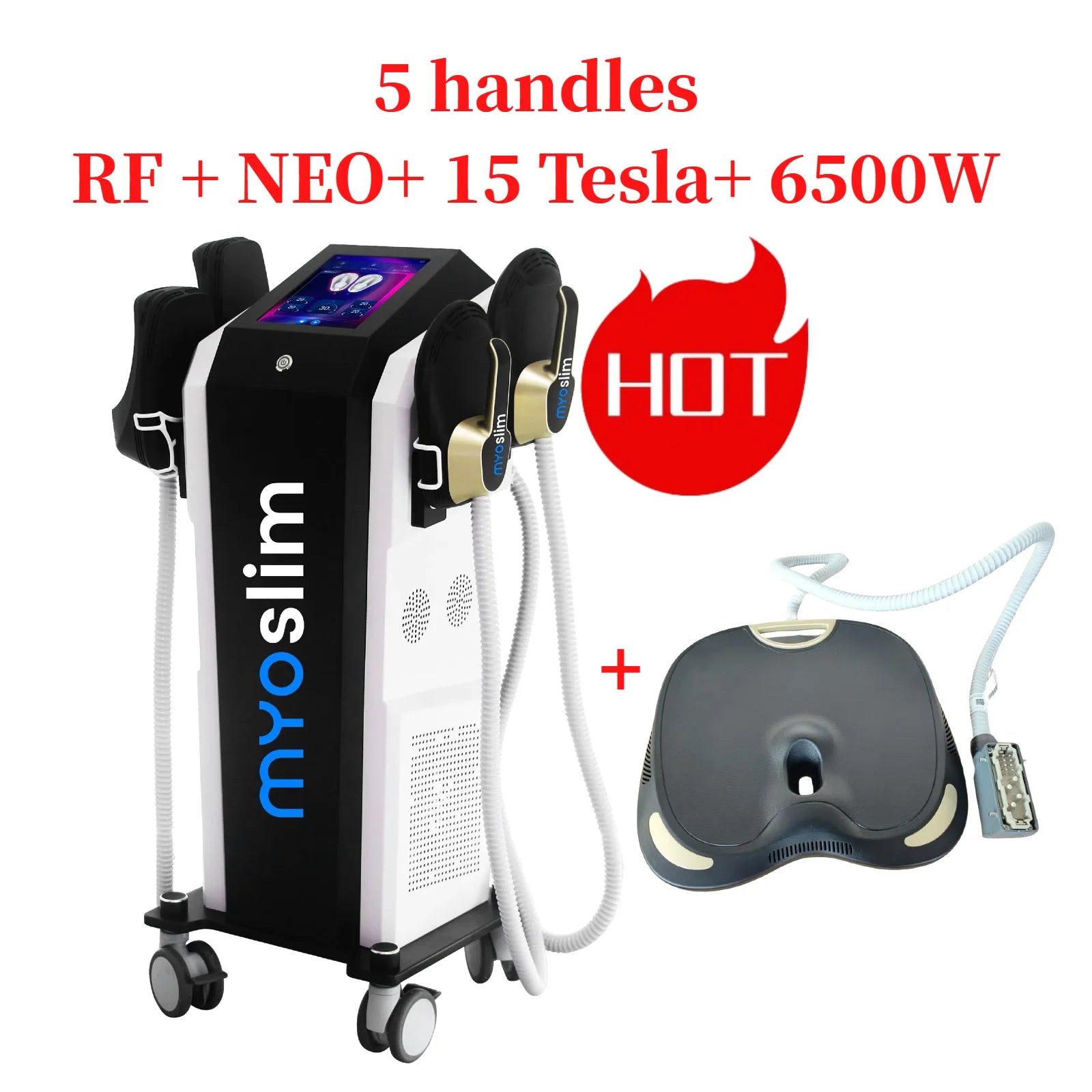
Targeting becomes more important when your goal is a particular muscle group. The machine's applicator configuration, positioning flexibility, and independent controls can influence how easily you can work on specific areas.
For Full-Body or Multiple-Muscle Training
Multiple applicators can simplify treatment across several areas. The supplied EMS Body Slimming Machine has four handles and is specified for use on the abdomen, arms, legs, and glutes, making multi-area positioning one of its clearest practical advantages.
For Home and Professional Use
Large-format systems require more space and setup than small portable stimulators. In return, they may offer larger displays, multiple applicators, and broader body-area coverage. The supplied machine is described as suitable for both professional and home-use environments and includes a 15.6-inch display and intelligent air cooling.
For users primarily interested in other home body-care technologies, the Body & Face Blog can provide additional category-level educational content.
EMS Electrode Placement: Getting Muscle Recruitment Right
The machine itself does not determine the quality of stimulation. Placement and anatomical targeting matter. An incorrectly positioned electrode or applicator can reduce the ability to stimulate the intended muscle and may create unnecessary discomfort.
Why Electrode Placement Matters
Electrical stimulation needs to reach the relevant neural and muscular structures effectively. Positioning should therefore follow the manufacturer's instructions rather than relying on generic diagrams from another EMS device.
Common Target Areas
Common training targets include the quadriceps, hamstrings, glutes, calves, abdominals, arms, and other major muscle groups. Placement requirements can vary by device, applicator design, muscle anatomy, and stimulation method.
The four-handle configuration of the supplied machine provides flexibility for multiple body areas, but users should still follow the device-specific positioning instructions rather than assuming that one placement method works for every muscle.
Single-Channel vs. Multi-Channel Systems
Channel configuration affects how many areas can be stimulated and whether different areas can receive independent control. Multi-applicator systems can be advantageous for users who want broader coverage, while simpler devices may be easier to transport and operate.
Key EMS Machine Buying Criteria
Stimulation Intensity and Adjustment Range
Look for gradual intensity adjustment and controls that allow the stimulation level to be adapted to the user's tolerance. A headline output figure should not be used as the sole indicator of effectiveness.
Channels and Applicator Configuration
Consider how many muscle areas can be addressed during one session and whether the applicators can be positioned comfortably. Four handles make the supplied machine particularly relevant for multi-area body stimulation.
Programs and Customization
Preset programs can simplify operation, while adjustable parameters provide more flexibility. The best choice depends on whether you prefer guided sessions or greater control over the stimulation experience.
Power, Portability, and Controls
Consider the physical size of the system, power requirements, display, control interface, and storage needs. The supplied model uses AC 110–220V at 50/60Hz and has a 15.6-inch display, suggesting a larger fixed setup rather than a pocket-sized portable stimulator.
Cooling and Operating Comfort
Longer or repeated operation makes thermal management relevant to practical usability. The supplied machine includes intelligent air cooling, which the manufacturer positions as a feature supporting comfortable, consistent operation.
Safety Features and Documentation
Safety documentation should explain intended use, prohibited treatment areas, contraindications, intensity progression, and electrode or applicator placement. Buyers should treat clear instructions as a core purchasing criterion rather than an afterthought.
EMS Body Slimming Machine: Product Review
Best for Multi-Area Muscle Stimulation and Body Sculpting
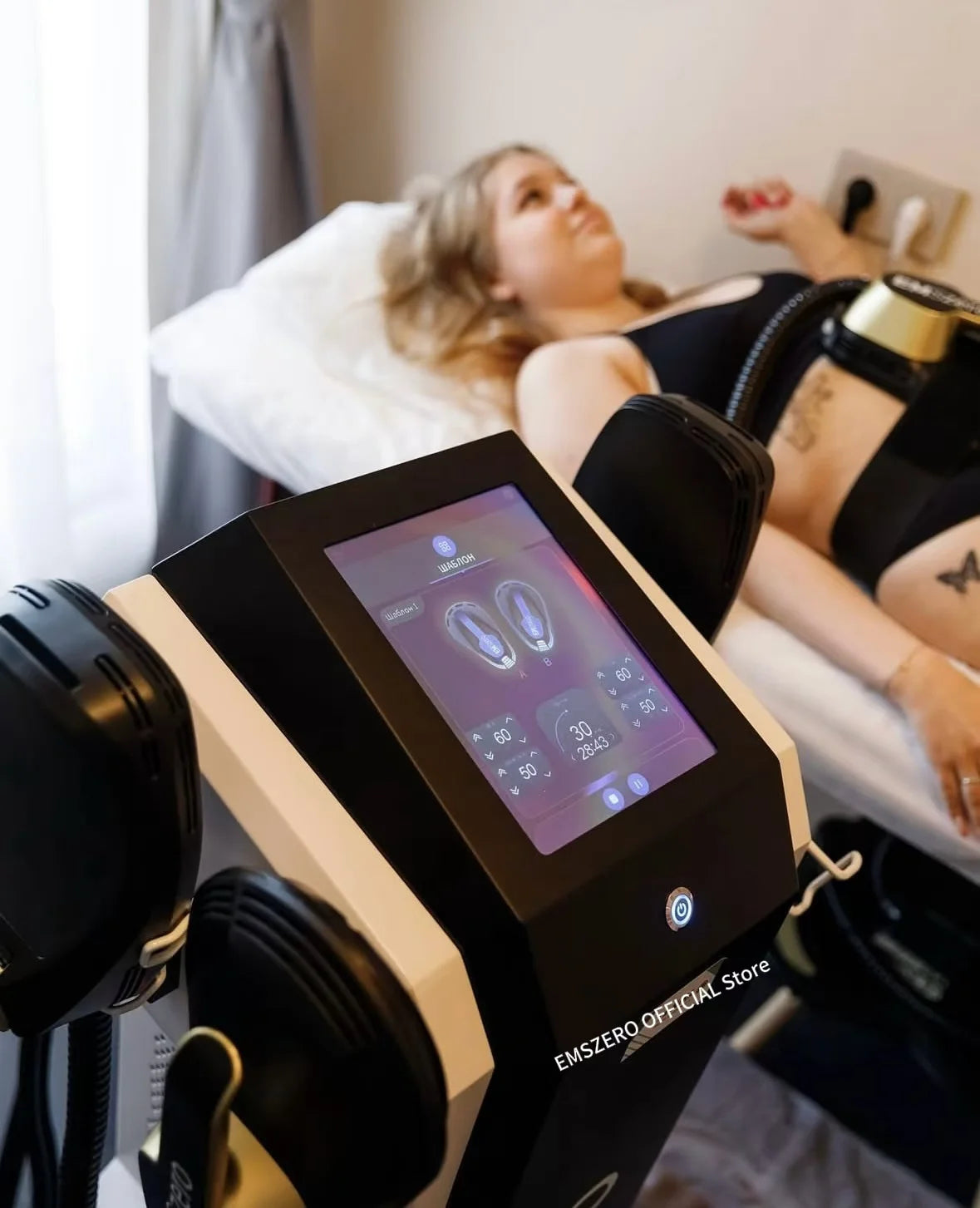
The EMS Body Slimming Machine is designed around electromagnetic muscle stimulation and is positioned for muscle toning, strengthening support, and body contouring. Its most distinctive practical feature is the four-handle configuration, which allows flexible positioning across multiple areas.
According to the supplied specifications, the machine operates across a 5–100 Hz frequency range, uses a 15.6-inch display, provides intelligent air cooling, and supports AC 110–220V, 50/60Hz power. The manufacturer also lists ABS + TPR construction and a one-year warranty.
- Pros: Four-handle configuration supports multi-area positioning.
- Pros: Broad 5–100 Hz frequency specification.
- Pros: Large 15.6-inch display for operation and control.
- Pros: Designed for abdomen, arms, legs, and glutes.
- Pros: Intelligent air cooling is included.
- Pros: Suitable for professional and home-use environments according to the supplied product description.
- Cons: It is a larger system and is less portable than compact electrode-based stimulators.
- Cons: The supplied product information does not provide independent clinical evidence establishing a specific muscle-growth result for this model.
- Cons: Its body-sculpting positioning means buyers should distinguish appearance-related claims from evidence for measurable hypertrophy.
Manufacturer Specifications vs. Evidence-Supported Claims
The machine's frequency range, display size, four-handle configuration, power requirements, cooling system, construction materials, and warranty are manufacturer-provided specifications. These can be evaluated directly as product characteristics.
Claims about increased muscle size, strength gains, or long-term body-composition changes require a separate evidence standard. Research on NMES and electromyostimulation provides support for the broader modality in certain circumstances, but that evidence should not be presented as proof of a specific outcome from this exact commercial product.
How Often Should You Use EMS for Muscle Growth?
There is no single weekly schedule that can be applied safely or effectively to every EMS user, muscle group, and machine. Stimulation frequency should be based on the device's instructions, the intensity used, the user's tolerance, and the rest of the overall training program.
EMS Training Frequency
A higher number of sessions is not automatically better. Electrical stimulation can create muscular fatigue, particularly when contractions are strong. Users should begin conservatively, follow the manufacturer's recommended session structure, and allow adequate recovery.
EMS and Recovery
Muscle soreness or fatigue can occur after demanding stimulation. If a muscle has not recovered from a previous workout, adding another intense stimulus may reduce rather than improve training quality. EMS should therefore be considered alongside resistance-training volume, exercise intensity, sleep, and recovery.
Combining EMS With Resistance Training
For users pursuing muscle growth, the most sensible framework is usually to combine stimulation with an established resistance-training routine rather than attempting to replace it. EMS can be used as an adjunct, while conventional training provides progressive mechanical loading and broader movement practice.
EMS Safety, Contraindications, and Who Should Avoid It
Electrical stimulation is not appropriate for everyone. Safety requirements vary by device, so the manufacturer's instructions should always take priority. FDA guidance for powered muscle stimulators warns against applications such as stimulation over the neck or mouth, across the chest in a way that introduces current through the heart, over infected or inflamed areas, and over certain cancerous lesions. The FDA also notes important precautions involving pregnancy, heart conditions, impaired sensation, recent surgery, and other circumstances.
Common Safety Precautions
- Read the device instructions before the first session.
- Use the recommended applicators, leads, and accessories.
- Do not place stimulation over prohibited anatomical areas.
- Do not use stimulation over irritated, infected, or damaged skin.
- Increase intensity gradually rather than starting at an unnecessarily high level.
- Stop if the stimulation causes unusual or excessive discomfort.
- Keep electrical stimulation equipment away from children.
Common Contraindications and Warnings
Powered muscle-stimulator guidance identifies cardiac pacemakers and certain other implanted electronic devices as important contraindications or concerns. Safety during pregnancy has not been established for powered muscle stimulation, and additional caution may be required for people with heart conditions, epilepsy, recent surgery, impaired sensation, or other medical circumstances.
Because contraindications vary by device and individual circumstances, this article should not be used to determine personal medical eligibility. Anyone with an implanted electronic device, significant medical condition, recent surgery, pregnancy, or uncertainty about safe use should obtain appropriate professional guidance before using electrical stimulation.
When to Stop Using an EMS Machine
Stop a session if you experience unusual pain, significant skin irritation, unexpected symptoms, or a response that differs from the device's normal stimulation sensation. Do not attempt to push through severe discomfort simply to increase intensity.
Which EMS Machine Is Right for You?
Choose Based on Your Primary Goal
- Muscle strengthening: Prioritize meaningful contraction capability, adjustable intensity, useful stimulation programs, and reliable positioning.
- Hypertrophy support: Look for repeatable stimulation while maintaining a conventional progressive resistance-training program.
- Targeted activation: Prioritize applicator positioning and the ability to focus stimulation on specific muscle groups.
- Multi-area training: Consider multi-handle or multi-channel systems that simplify treatment across several body areas.
- Home use: Evaluate setup requirements, available space, controls, operating instructions, and ongoing maintenance.
Five Questions to Ask Before Buying
- Is the device actually designed to create muscle contractions rather than primarily provide pain modulation?
- Can the stimulation intensity be adjusted gradually and comfortably?
- Does the applicator or electrode configuration match the muscles I want to target?
- Are the device specifications clearly separated from unsupported muscle-growth claims?
- Does the manufacturer provide adequate safety instructions, warnings, and documentation?
Comparison Matrix: What Matters Most
- Technology: Prefer clearly defined muscle-stimulation technology when muscle strengthening is the goal.
- Intensity: Adjustable intensity is more useful than a large headline power number alone.
- Frequency: A useful operating range provides flexibility, but frequency alone does not determine effectiveness.
- Applicators: Multiple handles can improve multi-area coverage and positioning flexibility.
- Target areas: The device should match the muscle groups you actually intend to train.
- Controls: Clear programs and practical adjustment options improve usability.
- Safety: Instructions, contraindications, and prohibited treatment areas are essential.
- Evidence: Research supporting the general stimulation modality should not be confused with clinical evidence for a particular commercial product.
For the supplied EMS Body Slimming Machine, the strongest fit is multi-area electromagnetic muscle stimulation combined with body-sculpting use. Its four handles, 5–100 Hz frequency specification, large display, cooling system, and coverage of the abdomen, arms, legs, and glutes make it a practical option for users who want a larger-format system rather than a compact portable stimulator.
If that configuration matches your goal, you can review the EMS Body Slimming Machine specifications before deciding whether its format and capabilities fit your training setup.
When an EMS Machine Is Not the Right Purchase
An EMS machine may not be the best purchase if your primary objective can already be met more effectively with conventional resistance training, if you need a highly portable device, or if you are looking for a medical treatment that requires professional assessment. EMS is also not a shortcut around progressive overload, recovery, and consistent training.
Frequently Asked Questions
Can an EMS machine help build muscle?
EMS and NMES can create muscle contractions and have been associated with improvements in strength and muscle-related outcomes in research. However, results vary by protocol and population, and a commercial EMS device should generally be viewed as an adjunct to resistance training rather than a replacement for it.
What is the difference between EMS, NMES, and TENS?
EMS is a broad term for electrical muscle stimulation, while NMES specifically refers to neuromuscular electrical stimulation intended to activate nerves and produce muscle contractions. TENS primarily refers to transcutaneous electrical nerve stimulation used for pain-modulation applications. These categories should not be treated as interchangeable when shopping for a muscle-growth device.
How often should you use an EMS machine for muscle growth?
There is no universal schedule. Follow the specific machine's instructions and account for stimulation intensity, muscle fatigue, conventional training load, and recovery. More frequent or stronger stimulation is not automatically more effective.
What EMS settings are best for muscle strengthening?
There is no single universally optimal setting. Frequency, pulse duration, intensity, duty cycle, muscle position, and electrode or applicator placement can all affect the stimulation response. The correct settings depend on the device, target muscle, user, and intended training protocol.
Is an EMS machine a replacement for resistance training?
No. EMS can complement resistance training by producing additional muscle contractions, but progressive resistance exercise remains an important foundation for long-term strength and muscle development. A good EMS strategy should fit around, rather than eliminate, an appropriate training program.
Final Verdict: What Makes the Best EMS Machine for Muscle Growth?
The best EMS machine for muscle growth is not necessarily the one with the biggest marketing claims, the highest advertised output, or the greatest number of programs. A better choice is a system that is genuinely designed for meaningful muscle stimulation, provides useful intensity and operating controls, offers practical target-muscle coverage, and includes clear safety documentation.
Research supports the broader role of neuromuscular electrical stimulation in producing muscle contractions and improving strength or muscle-related outcomes in selected populations, but evidence should be interpreted conservatively. The strongest long-term strategy remains a combination of appropriate resistance training, progressive overload, recovery, and consistent nutrition, with EMS serving as a complementary tool when it fits the user's goals.
For buyers who specifically want a larger electromagnetic muscle-stimulation system with four handles and multi-area coverage, the EMS Body Slimming Machine for muscle toning and body sculpting is the supplied option that most directly fits that use case. Review its specifications, safety documentation, and intended application carefully before incorporating it into your training routine.
Other body-focused device categories can be explored through the Beauty & Self-Care Blog for additional education on home and professional care technologies.
Pillar Article: Abdominal Muscle Stimulation: How Devices Work and What to Know













