

Abdominal Muscle Stimulation: How It Works, Benefits & Devices
Abdominal muscle stimulation uses externally generated electrical or electromagnetic energy to produce repeated muscle contractions. Depending on the device, stimulation may be delivered through surface electrodes or through electromagnetic energy that induces contractions without conventional electrodes. The technology can support muscle activation and conditioning, but it is not a universal replacement for active exercise, nutrition, or other healthy habits. Understanding the differences between EMS, NMES, and electromagnetic stimulation is essential before choosing an abdominal muscle stimulation device.
For shoppers, the most important questions are practical: How does abdominal stimulation work? Can it actually strengthen the core? Does it reduce belly fat? How does EMS differ from HIFEM? And what specifications matter when comparing devices? This guide covers the underlying technologies, realistic benefits and limitations, safety considerations, home-use principles, comparison criteria, and the features worth evaluating before purchase.
What Is Abdominal Muscle Stimulation?
Abdominal muscle stimulation is the use of an external device to trigger contractions in abdominal or core muscles. Instead of relying entirely on voluntary movement, the device delivers a controlled stimulus that causes the targeted muscles to contract. The goal may be muscle activation, strengthening, conditioning, or body-contouring support, depending on the technology and treatment protocol.
The key distinction is that externally induced contraction is not the same physiological experience as intentionally performing a plank, crunch, sit-up, or other active exercise. Stimulation can create muscle contractions, but active exercise also trains movement coordination, balance, endurance, and functional control.
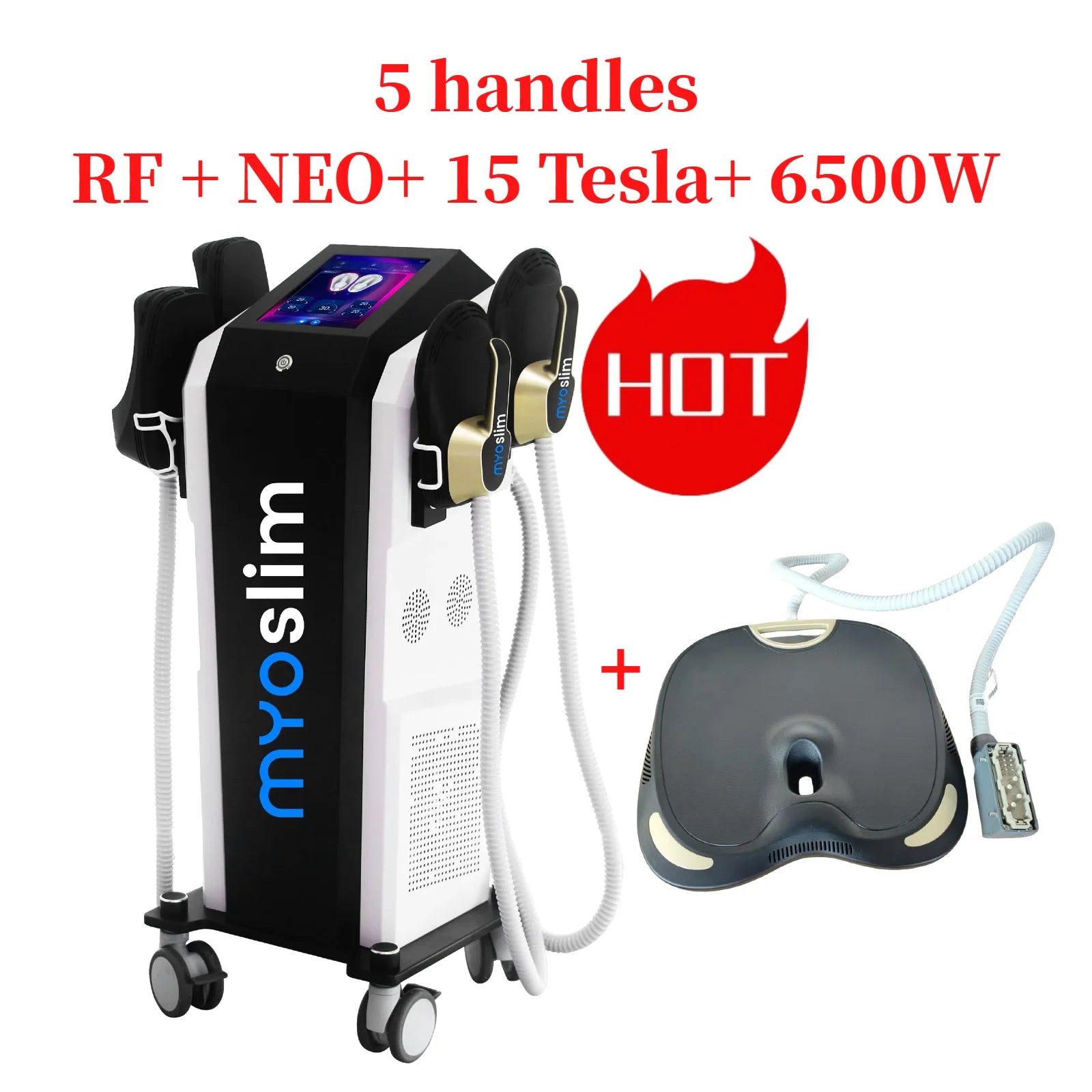
How abdominal stimulation creates muscle contractions
Muscles contract when motor nerves activate muscle fibers. Stimulation technologies take advantage of this basic mechanism by delivering an external stimulus designed to produce repeated contractions in a targeted area. With electrode-based systems, the stimulus is delivered through conductive contact points on or near the skin. Electromagnetic systems use electromagnetic energy to induce muscle contractions without relying on conventional surface electrodes.
The intensity and pattern of contraction depend on the technology, device settings, treatment area, and individual response. A properly selected protocol should prioritize controlled, tolerable contractions rather than simply maximizing intensity.
EMS vs. NMES vs. electromagnetic stimulation
EMS is a broad term commonly used for electrical muscle stimulation. NMES, or neuromuscular electrical stimulation, is more specifically associated with electrical stimulation intended to activate nerves and produce muscle contractions. Both typically involve electrodes.
Electromagnetic muscle stimulation uses a different energy-delivery method. Instead of passing electrical stimulation through surface electrodes, electromagnetic energy is used to induce contractions in targeted muscles. HIFEM, or high-intensity focused electromagnetic stimulation, is one terminology used for high-intensity electromagnetic approaches. These technologies should not automatically be treated as interchangeable simply because they all produce muscle contractions.
Which abdominal muscles can be targeted?
Depending on device design and placement, abdominal stimulation may target muscles including the rectus abdominis and external obliques, along with broader abdominal and core musculature. Actual targeting depends on the device, applicator or handle design, positioning, stimulation pattern, and treatment instructions.
Because abdominal anatomy and body shape vary, correct placement matters. A device designed for multiple body areas may also support abdominal, arm, leg, and glute stimulation, but its specifications and instructions should determine how each treatment area is approached.
How Does an Abdominal Muscle Stimulation Device Work?
An abdominal stimulation device creates controlled muscle contractions by delivering an external form of stimulation. Electrical systems use electrodes to transmit electrical impulses, while electromagnetic systems use electromagnetic energy to induce contractions. During a typical session, the user follows the device's placement instructions, starts at an appropriate intensity, allows the contraction cycle to operate, and gradually progresses according to the manufacturer's recommendations.
Electrical muscle stimulation (EMS/NMES)
EMS and NMES devices generally use electrodes positioned on the body. Electrical impulses stimulate nerves associated with the targeted muscles, producing involuntary contractions. The user can usually adjust the intensity or choose from different operating programs depending on the device.
Electrode-based systems can be relatively compact and may be designed for specific muscle groups. Their effectiveness and comfort depend heavily on electrode placement, skin contact, stimulation settings, and consistent use.
High-intensity focused electromagnetic stimulation (HIFEM)
HIFEM refers to a high-intensity electromagnetic approach designed to produce powerful muscle contractions. Rather than placing conventional electrical electrodes on the skin, electromagnetic energy is delivered through an applicator positioned over the target area.
Electromagnetic stimulation is therefore distinct from traditional electrode-based EMS. When comparing devices, shoppers should look at the actual technology description instead of assuming that every product labeled “EMS” uses the same mechanism.
What happens during a typical session?
A typical session begins with positioning the applicator or electrodes over the intended treatment area. The device is then activated at a suitable starting intensity. As the session progresses, the machine may produce repeated contraction cycles that can become more noticeable as intensity increases.
The expected sensation varies by technology. Electrode-based systems may produce tingling followed by involuntary contractions, while electromagnetic systems may create strong muscle contractions or pulsing sensations. Significant pain should not be treated as a normal indicator of effectiveness.
Abdominal Muscle Stimulation Benefits: What Can It Actually Do?
Abdominal stimulation can have legitimate muscle-related applications, but the benefits should be described precisely. The strongest practical distinction is between muscle activation or conditioning and fat reduction. A device can stimulate muscle contractions without automatically eliminating the body fat covering those muscles.
May support muscle strengthening
Repeated muscle contractions provide a form of muscular loading. Depending on the stimulation technology, intensity, frequency, treatment schedule, and individual response, repeated stimulation may support muscle strengthening or conditioning.
However, the outcome should not be assumed to be identical to a structured resistance-training program. Active exercise allows the person to control movement and progressively load muscles through functional patterns, whereas stimulation primarily creates externally induced contractions.
May complement core training
For users interested in abdominal muscle conditioning, stimulation may be considered an adjunct to active training rather than a replacement. This distinction is especially important for people whose goals include functional core strength, movement quality, athletic performance, or general fitness.
A balanced approach can combine active core exercises with appropriate stimulation when the device's instructions and the user's circumstances support that approach.
Potential effects on abdominal muscle definition
Muscle definition depends on more than muscle activation. The visible appearance of the abdomen is influenced by muscle development, body-fat levels, genetics, hydration, posture, and overall body composition. Increasing muscle conditioning alone does not guarantee a visibly defined abdomen.
This is why claims about abdominal stimulation should distinguish between improving muscle tone or conditioning and producing a leaner-looking waistline through fat loss.
What abdominal stimulation does not do
Abdominal stimulation should not be presented as a shortcut for spot fat reduction. Stimulating the abdominal muscles does not mean that energy is selectively removed from abdominal fat simply because the muscles underneath are contracting.
Likewise, stimulation should not be marketed as effortless weight loss or as a complete substitute for exercise and healthy lifestyle habits. Realistic expectations make it easier to evaluate whether a device fits a particular goal.
For readers exploring related body-focused technology, Body Care and Health Devices provides a broader category context.
Does Abdominal Muscle Stimulation Really Work?
Abdominal muscle stimulation can produce real muscle contractions, so the central mechanism is not simply hypothetical. The more important question is what those contractions can accomplish over time. Evidence and practical outcomes need to be interpreted according to the specific technology, protocol, intensity, consistency, and goal rather than treating every stimulation device as equivalent.
What the evidence suggests about muscle activation
Externally induced stimulation can activate muscles and create involuntary contractions. This establishes a reasonable physiological basis for using stimulation as a muscle-conditioning tool. The magnitude of any longer-term benefit depends on how the stimulation is delivered and how consistently it is used.
For a consumer evaluating a device, specifications alone cannot guarantee a particular outcome. Frequency range, output, applicator design, stimulation pattern, treatment duration, and user adherence all influence the practical experience.
Muscle strengthening vs. fat reduction
These outcomes should be evaluated separately. Muscle stimulation primarily addresses muscle contraction and conditioning. Body-fat reduction is a different physiological goal influenced by overall energy balance, diet, physical activity, genetics, and other factors.
A person may experience improved muscle conditioning without seeing dramatic changes in abdominal circumference. Conversely, changes in body composition can alter abdominal appearance even without a dedicated stimulation device.
Why results vary between users
Results can vary because devices differ in technology, intensity, treatment area, operating modes, and stimulation patterns. User-related factors also matter, including baseline fitness, body composition, treatment consistency, nutrition, exercise habits, and individual response.
For that reason, product comparisons should focus on measurable device characteristics and intended use rather than promising identical results for every user.
Expert perspective: A useful way to evaluate abdominal stimulation is to separate three questions—does the device create muscle contractions, does the protocol support a meaningful training stimulus, and does that stimulus match the user's actual goal?
Can Abdominal Muscle Stimulation Replace Exercise?
Abdominal muscle stimulation should generally be viewed as complementary rather than automatically equivalent to active exercise. A stimulation device can induce contractions without voluntary movement, while conventional core training involves coordinated movement and voluntary muscle control.
Stimulation vs. active core training
| Factor | Abdominal stimulation | Active core training |
| Muscle contraction | Externally induced | Voluntarily controlled |
| Movement practice | Limited or absent | Central to the exercise |
| Core coordination | Depends on device and protocol | Directly trained through movement |
| Convenience | Can be performed with minimal active movement | Requires active participation |
| Primary consideration | Muscle stimulation and conditioning | Strength, movement, stability, and fitness |
How to use stimulation alongside exercise
A complementary approach can involve maintaining a normal exercise routine while using stimulation according to the device's instructions. The objective is not to replace every core exercise, but to determine whether stimulation provides useful additional muscle-conditioning support.
Users should avoid assuming that higher intensity or more frequent sessions automatically produce better outcomes. Manufacturer instructions should guide duration, intensity, treatment frequency, and recovery.
Who may benefit most from an adjunct approach?
An adjunct approach may be most relevant to users who already value exercise but want an additional muscle-stimulation modality. It may also interest people comparing professional body-contouring systems with more conventional exercise-based approaches.
The appropriate choice depends on the person's objective. Someone seeking functional fitness may prioritize active training, while someone evaluating a body-contouring system may place greater emphasis on stimulation technology, treatment convenience, multi-area coverage, and operating controls.
EMS vs. HIFEM: Which Abdominal Stimulation Technology Is Different?
EMS and HIFEM should be distinguished by how they deliver stimulation. EMS/NMES generally relies on electrodes and electrical impulses, whereas HIFEM uses electromagnetic energy to induce muscle contractions. The technologies can overlap in their broad purpose—stimulating muscles—but their device architecture and treatment experience are different.
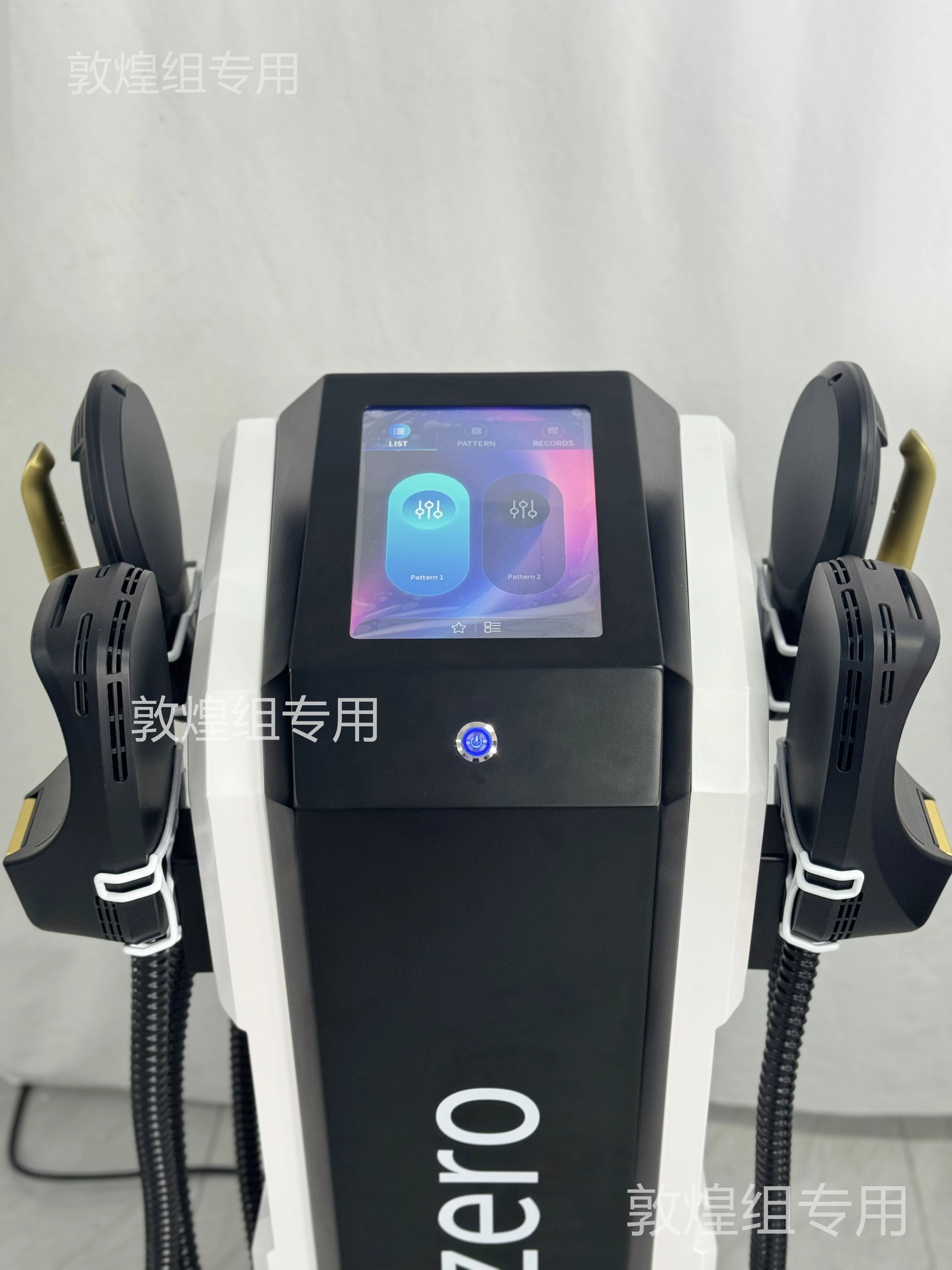
EMS and NMES
EMS and NMES systems typically use electrodes. The electrical stimulus is delivered through the contact points and can trigger contractions in the targeted muscles. These devices may be compact, portable, or designed for specific applications.
When evaluating an EMS or NMES device, look at electrode placement requirements, available intensity controls, program settings, treatment duration, skin-contact requirements, and the manufacturer's safety instructions.
HIFEM and electromagnetic muscle stimulation
HIFEM and other electromagnetic muscle stimulation systems use electromagnetic energy rather than conventional surface electrodes. This creates a different device format and treatment mechanism.
The phrase “electromagnetic muscle stimulation” is therefore more precise than using EMS as a universal label for every muscle-stimulation technology. Shoppers should read the technology description carefully before comparing specifications between products.
Key differences in application, intensity, and device format
| Criterion | EMS/NMES | Electromagnetic stimulation |
| Energy delivery | Electrical impulses | Electromagnetic energy |
| Typical contact method | Surface electrodes | Applicator positioned over target area |
| Muscle contraction | Externally induced | Externally induced |
| Device format | Often electrode-based | Often uses dedicated electromagnetic applicators |
| Key buying consideration | Electrode placement and stimulation controls | Applicator design, operating modes, intensity, and treatment coverage |
How to Choose an Abdominal Stimulation Device
Choosing an abdominal stimulation device is easier when the decision is based on technology, controls, coverage, safety information, comfort, and intended use rather than headline power numbers alone. A professional system may also need to accommodate multiple body areas and repeated treatment sessions.
Choose the stimulation technology
First determine whether the device uses EMS/NMES, electromagnetic stimulation, or another mechanism. If your primary interest is electrode-based stimulation, an EMS or NMES system may fit the intended application. If you are evaluating a professional-style electromagnetic body-contouring system, examine its applicators, energy-delivery technology, operating modes, and treatment coverage.
Check intensity and stimulation controls
Adjustability matters because users have different tolerance levels and treatment goals. A useful system should provide appropriate control over stimulation rather than forcing every user into a single intensity.
For example, the EMS Body Slimming Machine described in the product specifications uses a 5–100 Hz frequency range and adjustable operating modes. Its listed maximum output is 6500W. These are product specifications, not guarantees of a particular clinical or cosmetic result.
Consider electrode placement and treatment area
For electrode-based devices, placement is central to both targeting and comfort. For electromagnetic systems, applicator positioning serves a similar purpose. A system designed for multiple areas may be more versatile than an abdominal-only device if the user's goals extend to the arms, legs, or glutes.
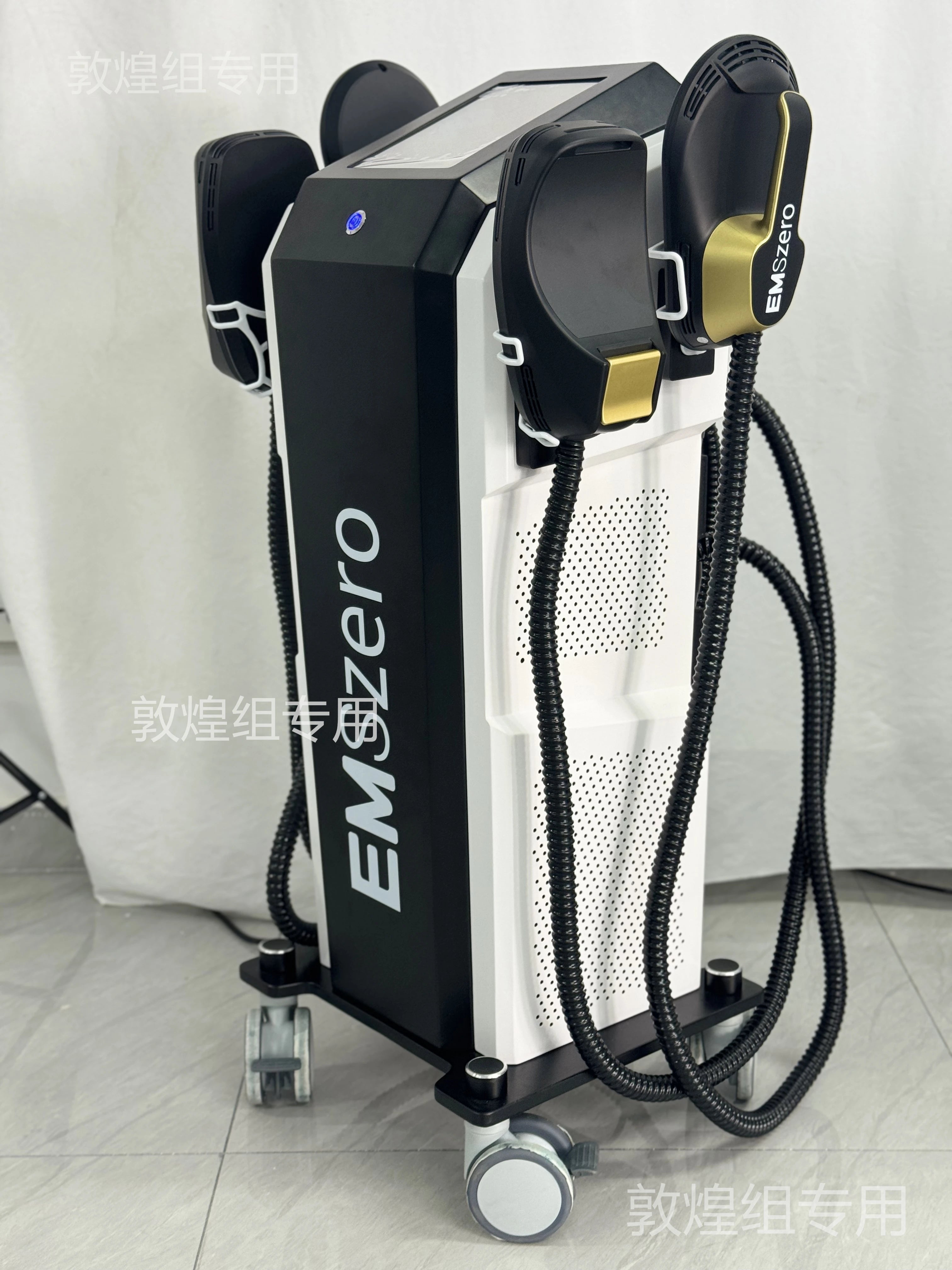
The EMS Body Slimming Machine is described as using four handles for flexible positioning and focused electromagnetic stimulation across the abdomen, arms, legs, and glutes. This makes multi-area coverage one of its distinguishing product characteristics.
Look for clear safety instructions and realistic claims
Responsible product documentation should explain how the device is intended to be used, where it should be positioned, how intensity should be adjusted, and when use should be avoided. Be cautious of claims that imply stimulation alone guarantees weight loss, spot fat removal, or dramatic results regardless of the user's starting point.
Evaluate comfort, usability, and consistency
A device that is difficult to operate or uncomfortable to use may be harder to incorporate consistently. Display design, control layout, cooling, treatment coverage, and maintenance can therefore matter as much as headline specifications.
The EMS Body Slimming Machine includes a 15.6-inch display, intelligent air cooling, ABS + TPR construction, AC 110–220V, 50/60Hz power compatibility, and a listed one-year warranty. The manufacturer description identifies it as suitable for professional and home-use environments.
After considering these criteria, readers who want to examine the specific system can review the EMS Body Slimming Machine for muscle toning and body sculpting and compare its specifications with their intended use.
| Buying criterion | What to check | Why it matters |
| Technology | EMS, NMES, or electromagnetic stimulation | Determines how contractions are generated |
| Intensity control | Adjustable settings and operating modes | Supports individualized use |
| Treatment coverage | Abdomen-only or multi-area design | Determines versatility |
| Applicators or electrodes | Number, positioning, and fit | Influences targeting and convenience |
| Cooling | Active cooling where applicable | May support comfort during operation |
| Documentation | Instructions and safety guidance | Supports responsible use |
| Warranty | Coverage period and terms | Provides post-purchase support information |
Pros and cons of an electromagnetic body-stimulation system
| Pros | Cons |
| Produces externally induced muscle contractions | Does not automatically replace active exercise |
| Can target multiple body areas | Results vary between users |
| Adjustable operating modes can support different users | Higher output does not guarantee better results |
| Four-handle design can provide flexible positioning | Professional-style systems may require more space and setup |
| Air cooling can support consistent operation | Users must follow device-specific safety instructions |
How to Use an Abdominal Muscle Stimulation Device at Home
Home use should always begin with the manufacturer's instructions. Device architecture varies considerably, so there is no single universal placement, intensity, duration, or weekly schedule that applies to every stimulation machine.
Step 1: Read the device instructions
Before the first session, review the device manual, treatment-area instructions, contraindications, intensity controls, and recommended session schedule. The manufacturer's instructions should take priority over generic online advice.
Step 2: Prepare the abdominal area
Prepare the treatment area according to the device's instructions. For electrode-based systems, correct skin contact and electrode positioning are important. For electromagnetic systems, position the applicator or handles as directed.
Step 3: Start at a comfortable intensity
Begin at an appropriate intensity rather than immediately selecting the maximum available setting. The objective is controlled muscle contraction that remains within the device's intended operating parameters. Gradual progression is generally more sensible than treating maximum output as the default.
Step 4: Follow the recommended session schedule
Consistency matters more than randomly increasing session duration or intensity. Follow the manufacturer's recommended treatment duration and frequency, and allow recovery when instructed.
Step 5: Clean, inspect, and store the device
After use, follow the cleaning and storage instructions. Inspect electrodes, applicators, cables, handles, and other components for visible wear or damage. Proper maintenance helps preserve reliable operation and hygiene.
Is Abdominal Muscle Stimulation Safe to Use at Home?
Safety depends on the specific technology, device, user, and circumstances. Home users should follow the manufacturer's safety labeling and avoid treating generic guidance as a substitute for device-specific instructions. Stimulation should feel controlled; significant pain or unusual symptoms should not be ignored.
Common sensations and expected effects
Depending on the technology, users may notice tingling, pulsing, pressure, or involuntary muscle contractions. Electrode-based stimulation can produce noticeable surface sensations, while electromagnetic stimulation may feel like strong muscle contractions.
Sensation alone is not a reliable measure of effectiveness. A stronger sensation does not necessarily mean a better outcome.
When to stop using a stimulation device
Stop the session if you experience significant pain, substantial skin irritation, unusual symptoms, or any response that concerns you. Do not attempt to push through a reaction simply to complete a scheduled session.
Who should seek medical advice before use?
People with implanted or electronic medical devices, certain medical conditions, pregnancy, or other circumstances identified in the device's safety labeling should consult an appropriate healthcare professional before using stimulation technology. The exact contraindications depend on the device and its intended use.
Why following manufacturer instructions matters
Stimulation devices differ in energy delivery, applicator design, treatment area, intensity, and operating schedules. Manufacturer instructions therefore determine the appropriate placement, settings, session duration, and safety precautions for that particular machine.
When evaluating devices for home use, clear safety documentation should be treated as a buying criterion, not an optional extra.
Abdominal Muscle Stimulation Results: What to Expect
Results should be evaluated over time rather than judged solely by how intense a single session feels. Immediate muscle contractions demonstrate that the device is producing stimulation, but that sensation is different from measurable long-term changes in strength, conditioning, or appearance.
Short-term sensations vs. measurable changes
A user may immediately feel involuntary abdominal contractions during a session. That is a short-term response to stimulation. Longer-term outcomes require repeated sessions and should be evaluated separately through appropriate measures such as training consistency, strength, function, or appearance.
Why consistency matters
Muscle conditioning is not generally determined by a single session. A consistent approach, appropriate intensity, adequate recovery, and adherence to the manufacturer's recommended schedule are more meaningful than occasional high-intensity use.
How to evaluate progress realistically
Consider tracking several categories independently: how consistently sessions are completed, changes in perceived muscle control, exercise performance, strength-related measures, and changes in appearance. Separating these outcomes reduces the risk of interpreting one short-term sensation as proof of a major body-composition change.
Abdominal Muscle Stimulation vs. Traditional Core Training
Stimulation and active core training solve different parts of the muscle-conditioning equation. Stimulation can induce contractions without voluntary movement, while traditional core training develops strength through controlled movement and requires the nervous system to coordinate muscles during a task.
Muscle contraction
Both approaches can produce muscle contraction, but the source differs. Stimulation provides an external trigger, while exercise requires the individual to intentionally contract the muscles.
Functional movement and core control
Exercises such as planks, carries, controlled rotational movements, and other core exercises can train the body to stabilize and move under real-world conditions. This functional component cannot be assumed to come from isolated external muscle stimulation alone.
When combining both approaches may make sense
For some users, the most practical strategy is not to choose one modality exclusively. Active training can remain the foundation for functional strength and fitness, while stimulation may serve as an additional muscle-conditioning modality when appropriate.
The right combination depends on the user's goals, experience, schedule, device instructions, and individual circumstances.
Abdominal Muscle Stimulation Device Comparison Matrix
Before purchasing, use the following matrix to identify which characteristics deserve the most attention. It is more useful to compare technology and intended application than to treat every device with the same “EMS” label as equivalent.
| Decision factor | EMS/NMES device | Electromagnetic system | Traditional exercise |
| External muscle contraction | Yes | Yes | No; contraction is voluntary |
| Surface electrodes | Typically | Not conventional electrodes | No |
| Active movement required | Low during stimulation | Low during stimulation | Yes |
| Core movement training | Limited | Limited | High |
| Multi-area potential | Depends on device | Depends on applicator design | High |
| Main evaluation criteria | Electrodes, programs, intensity | Applicators, intensity, coverage, cooling | Exercise selection, load, technique |
For readers researching other device categories, KentDo's Body & Face Blog provides additional educational content around body and facial care devices.
How the EMS Body Slimming Machine Fits the Buying Criteria
The EMS Body Slimming Machine described in this guide is positioned as a professional-style electromagnetic muscle stimulation system for muscle toning and body sculpting. According to the supplied product specifications, it uses electromagnetic muscle stimulation, supports adjustable operating modes, and is designed for both professional and home-use environments.
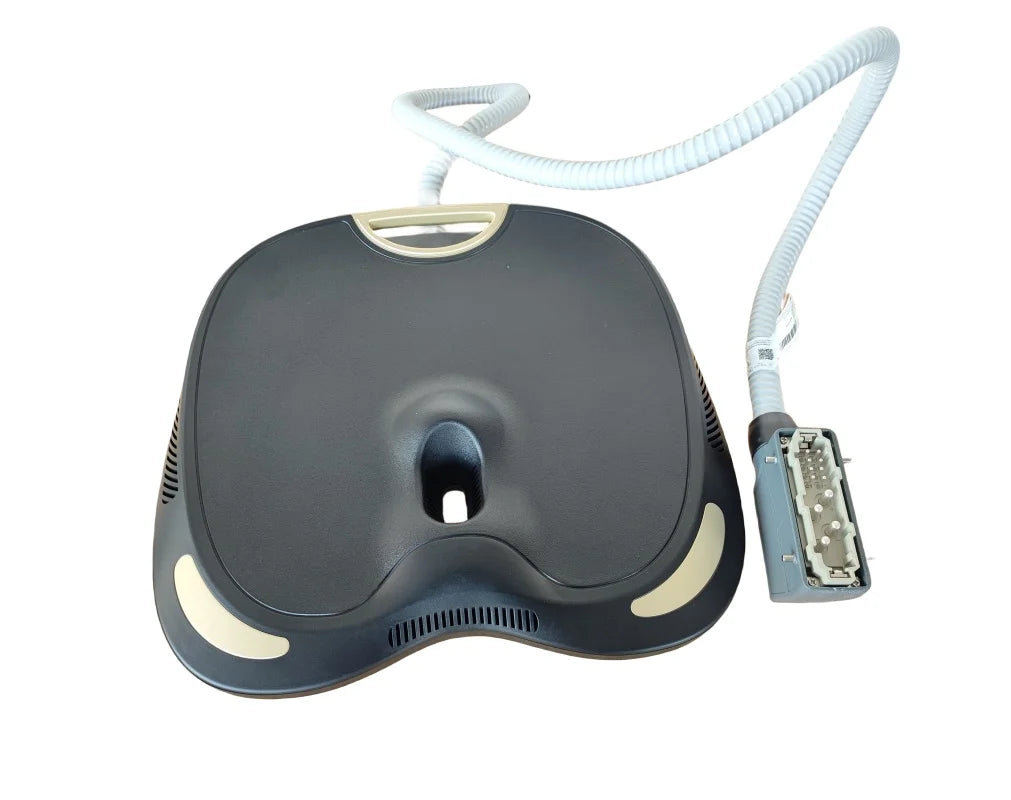
| Specification | Listed product detail |
| Technology | Electromagnetic muscle stimulation |
| Frequency | 5–100 Hz |
| Maximum output | 6500W |
| Display | 15.6-inch display |
| Handles | Four handles |
| Cooling | Intelligent air cooling |
| Material | ABS + TPR |
| Power | AC 110–220V, 50/60Hz |
| Warranty | 1 year |
These specifications can make the system relevant for buyers looking for a multi-area electromagnetic body-sculpting machine rather than a small electrode-based abdominal stimulator. The four-handle configuration is particularly relevant when the intended use extends beyond the abdomen to areas such as the arms, legs, and glutes.
At the same time, specifications should not be interpreted as clinical outcome guarantees. Frequency and maximum output describe the machine's listed operating characteristics; they do not independently establish how much muscle strengthening, fat reduction, or visual contour change a particular user will experience.
Frequently Asked Questions About Abdominal Muscle Stimulation
What is abdominal muscle stimulation?
Abdominal muscle stimulation uses external electrical or electromagnetic energy to induce contractions in targeted abdominal muscles. EMS and NMES generally use electrodes, while electromagnetic systems use electromagnetic energy to create muscle contractions without conventional surface electrodes.
Does abdominal muscle stimulation really work?
Stimulation can produce real muscle contractions and may support muscle conditioning or strengthening depending on the technology and protocol. Results vary, and stimulation should not automatically be equated with fat loss or a replacement for active exercise.
How does an abdominal muscle stimulation device work?
EMS/NMES devices generally deliver electrical impulses through electrodes to trigger muscle contractions. Electromagnetic systems use electromagnetic energy to induce contractions in targeted muscles. The exact mechanism and treatment protocol depend on the device.
Can abdominal muscle stimulation replace exercise?
It should generally be considered a complement rather than an automatic replacement. Active exercise provides voluntary movement, coordination, functional core control, and broader physical-training benefits that isolated stimulation does not necessarily reproduce.
Is abdominal muscle stimulation safe to use at home?
Home use depends on the specific device and the user's circumstances. Follow the manufacturer's safety instructions, placement guidance, intensity limits, and contraindications. Stop if significant pain, substantial irritation, or unusual symptoms occur.
How often should you use an abdominal muscle stimulation device?
There is no universal schedule for every device. Follow the manufacturer's recommended duration, frequency, intensity, and recovery guidance. More frequent or more intense sessions are not automatically better.
Does abdominal muscle stimulation burn belly fat?
Muscle stimulation and fat reduction are different outcomes. Stimulating the abdominal muscles does not mean that fat is selectively removed from the abdomen. Visible body-composition changes depend on broader factors including nutrition, physical activity, and overall energy balance.
What is the difference between EMS and HIFEM for abdominal muscles?
EMS generally refers to electrical stimulation delivered through electrodes, while HIFEM refers to high-intensity focused electromagnetic stimulation. Both can produce muscle contractions, but they use different energy-delivery methods and device formats.
Can abdominal muscle stimulation help strengthen the core?
It may support muscle conditioning or strengthening by producing repeated contractions. However, core strength also involves functional movement and voluntary control, so stimulation should not automatically replace active core training.
How long does it take to see results from abdominal muscle stimulation?
There is no single timeline that applies to every user or device. Immediate contractions can be felt during a session, while longer-term conditioning or appearance changes depend on the technology, protocol, consistency, baseline condition, exercise habits, and individual response.
Final Takeaway: Choosing Abdominal Muscle Stimulation Based on Your Goal
Abdominal muscle stimulation can create genuine externally induced muscle contractions, making it a potentially useful tool for muscle activation, conditioning, and body-sculpting applications. The key is to understand what the technology can and cannot do. EMS and NMES use electrical stimulation, while electromagnetic systems such as HIFEM use a different method to induce contractions.
For buyers, the best decision starts with the intended goal. If the priority is functional strength and overall fitness, active exercise remains important. If the goal is adding an externally induced muscle-stimulation modality, compare technology, intensity controls, treatment coverage, applicator design, comfort, safety documentation, usability, and warranty rather than relying on marketing claims alone.
A multi-area electromagnetic system such as the EMS Body Slimming Machine for muscle toning and body sculpting may be worth evaluating when abdominal stimulation is part of a broader body-contouring setup. Its listed four-handle design, 5–100 Hz frequency range, adjustable operation, air cooling, and multi-area positioning provide concrete specifications to compare against your requirements.
For additional device-focused options and education, explore the Skin and Beauty Care Devices collection alongside the body-care category. The most important takeaway is simple: choose the stimulation technology that matches your goal, follow the device-specific protocol, maintain realistic expectations, and treat abdominal stimulation as one component of a broader approach to muscle conditioning and body composition.
Related Articles:
- Professional Muscle Stimulator Machine: Buyer's Guide
- Noninvasive Body Contouring: Technologies Compared
- Best EMS Machine for Muscle Growth: Evidence-Based Buying Guide
- EMS Machine for Home Use: Best Picks by Goal in 2026
- EMS Body Sculpting: Machine Guide, Specs & Buying Tips
- Electromagnetic Muscle Stimulation: How It Works, Evidence & Safety
- Best Electric Muscle Stimulation Machine: Buying Guide
- Do Body Sculpting Machines Work? What Results to Expect in 2026
- Body Muscle Toning: How to Build Muscle and Lose Fat
- Best Muscle Stimulation Machines of 2026: Tested & Compared













