

Best Facial Analysis Software in 2026: Compared by Accuracy, APIs & Features
Choosing the best facial analysis software is less about finding the longest feature list and more about matching the technology to the job you need it to perform. A platform built for facial landmarks and virtual try-on may not be the right choice for skin analysis, while a professional skin analysis machine may provide a richer consultation workflow than a general-purpose facial imaging API.
This guide takes a buyer-focused approach to facial analysis software and related facial analysis technology. It compares the capabilities that matter in real deployments, including facial attribute analysis, skin analysis, computer vision performance, APIs and SDKs, deployment flexibility, privacy, scalability, reporting, and business fit. It also separates general-purpose facial analysis software from specialized professional skin-analysis equipment so buyers can avoid comparing fundamentally different technologies as though they were interchangeable.
Facial Analysis Software at a Glance
Quick Comparison of the Best Facial Analysis Software Options
There is no universal winner because facial analysis platforms solve different problems. Use the following matrix as a first-pass shortlist rather than treating every capability as equivalent.
| Technology category | Primary strength | Skin analysis | Facial landmarks | API/SDK potential | Best fit |
| General-purpose facial analysis API | Face detection and computer vision attributes | Usually limited or specialized | Often supported | Strong | Apps, software products, automation |
| Facial analysis SDK | Real-time application experiences | Depends on provider | Strong | Strong | Mobile and web applications |
| Virtual try-on technology | Face geometry and positioning | Usually limited | Strong | Strong | Beauty and ecommerce experiences |
| Research-oriented computer vision system | Model experimentation and customization | Variable | Variable | Variable | Research and computer vision projects |
| Professional AI skin analyzer | Detailed facial skin assessment and reporting | Core capability | Facial imaging focused | Device-dependent | Salons, skincare clinics, skin management centers |
Which Facial Analysis Platform Is Best for Your Use Case?
- For skincare: prioritize dedicated skin-analysis capabilities, consistent facial imaging, multiple skin indicators, reporting, and longitudinal image tracking.
- For ecommerce personalization: prioritize APIs, integrations, scalability, response time, and customer-facing workflows.
- For virtual try-on: prioritize facial landmarks, geometry, pose handling, real-time performance, and mobile or web SDK support.
- For mobile applications: evaluate SDK maturity, supported devices, latency, edge processing options, and implementation effort.
- For research: prioritize documentation, model transparency, customization, reproducibility, and data access.
- For enterprise deployment: examine security, governance, scalability, deployment architecture, support, and contractual requirements.
How We Evaluated Facial Analysis Software
A meaningful comparison should evaluate the complete workflow rather than one headline feature. A facial analysis system can identify a face successfully while still being unsuitable for professional skin analysis, real-time applications, or enterprise deployment.
Evaluation Criteria and Scoring Weights
For a commercial evaluation, the most useful framework considers ten areas: facial detection, landmark detection, attribute analysis, skin analysis, computer vision performance, API and SDK quality, integration flexibility, deployment options, privacy and security, and operational scalability.
- Facial analysis capability: What characteristics can the system actually analyze?
- Skin analysis depth: Does it evaluate concerns such as pigmentation, pores, wrinkles, moisture, sebum, tone, acne, or elasticity?
- Image quality: How consistently can useful information be extracted from captured images?
- API and SDK experience: Are APIs, SDKs, authentication, response formats, examples, and documentation suitable for the intended development team?
- Deployment: Does the architecture support cloud, local, edge, or device-based processing where required?
- Privacy: Can the buyer control collection, retention, access, deletion, and processing workflows?
- Scalability: Can the system support the expected number of users, images, concurrent requests, and locations?
- Reporting: Does the output translate into useful information for employees, customers, or applications?
- Workflow fit: Does the technology solve the actual business problem?
- Total cost: Consider software usage, hardware, integration, infrastructure, support, maintenance, and staff training.
How to Interpret Accuracy Claims
Accuracy is not a single universal number. Performance depends on what is being measured, the dataset used for validation, image quality, lighting, camera characteristics, facial pose, occlusion, preprocessing, demographic diversity, and the threshold or methodology used by the model.
For skin analysis in particular, buyers should distinguish between identifying visible characteristics in an image and making a clinical diagnosis. A digital skin analysis report can help organize observations and support a skincare consultation, but it should not automatically be interpreted as medical diagnosis.
Vendor Claims vs. Editorial Assessment
Vendor specifications are useful for establishing documented features, but they should not be treated as independent validation. A stronger procurement process separates three questions: What does the provider say the system does? What evidence demonstrates that capability? And does it perform adequately on your own representative images?
This distinction is especially important when comparing terms such as “AI-powered,” “high accuracy,” “professional,” or “advanced imaging.” These descriptions do not have identical technical meaning across vendors.
What Is Facial Analysis Software?
Facial analysis software uses computer vision and machine learning techniques to extract information from images or video of a face. Depending on the system, outputs can include face detection, facial landmarks, geometry, expressions, estimated attributes, skin characteristics, or other image-based measurements.
What Facial Analysis Software Can Detect
General facial analysis systems commonly begin with face detection, which locates a face in an image. Facial landmark detection identifies important points or regions such as the eyes, nose, mouth, and facial contours. Additional models can then analyze selected attributes or characteristics.
Specialized skin analysis technology goes further by focusing the imaging and analysis workflow on skin-related characteristics. Depending on the system, this can include acne, pigmentation, pores, wrinkles, moisture, sebum, skin tone, texture, and elasticity.
How Facial Analysis Works
- Image capture: A camera or imaging system captures a facial image or video frame.
- Face detection: Computer vision identifies the relevant facial region.
- Image processing: The system can normalize or preprocess the image for analysis.
- Feature extraction: Facial landmarks, regions, textures, or other characteristics are identified.
- Machine learning inference: Trained models generate the relevant analysis outputs.
- Reporting or API output: Results are presented through software, a report, dashboard, application, or structured API response.
Facial Analysis vs. Facial Recognition
Facial analysis and facial recognition are related but different. Facial analysis generally evaluates characteristics of a face, while facial recognition is concerned with identifying or verifying an individual. A skincare consultation, for example, may require detailed analysis of pigmentation or wrinkles without needing to identify the person.
Key Features to Compare Before You Buy
Face Detection and Facial Landmark Detection
For general facial analysis software, reliable face detection is foundational. Buyers should examine performance across different poses, distances, image resolutions, lighting conditions, and partial occlusion. Landmark quality becomes especially important for virtual try-on, facial measurement, geometry analysis, and applications that must align digital content with facial regions.
Facial Attribute Analysis
Attribute analysis can cover a wide range of outputs. However, buyers should confirm exactly which attributes are supported instead of assuming that every facial analysis platform provides the same measurements.
Ask whether attributes are directly measured, estimated by a model, classified into categories, or derived from other image features. This distinction affects how results should be interpreted in customer-facing or professional workflows.
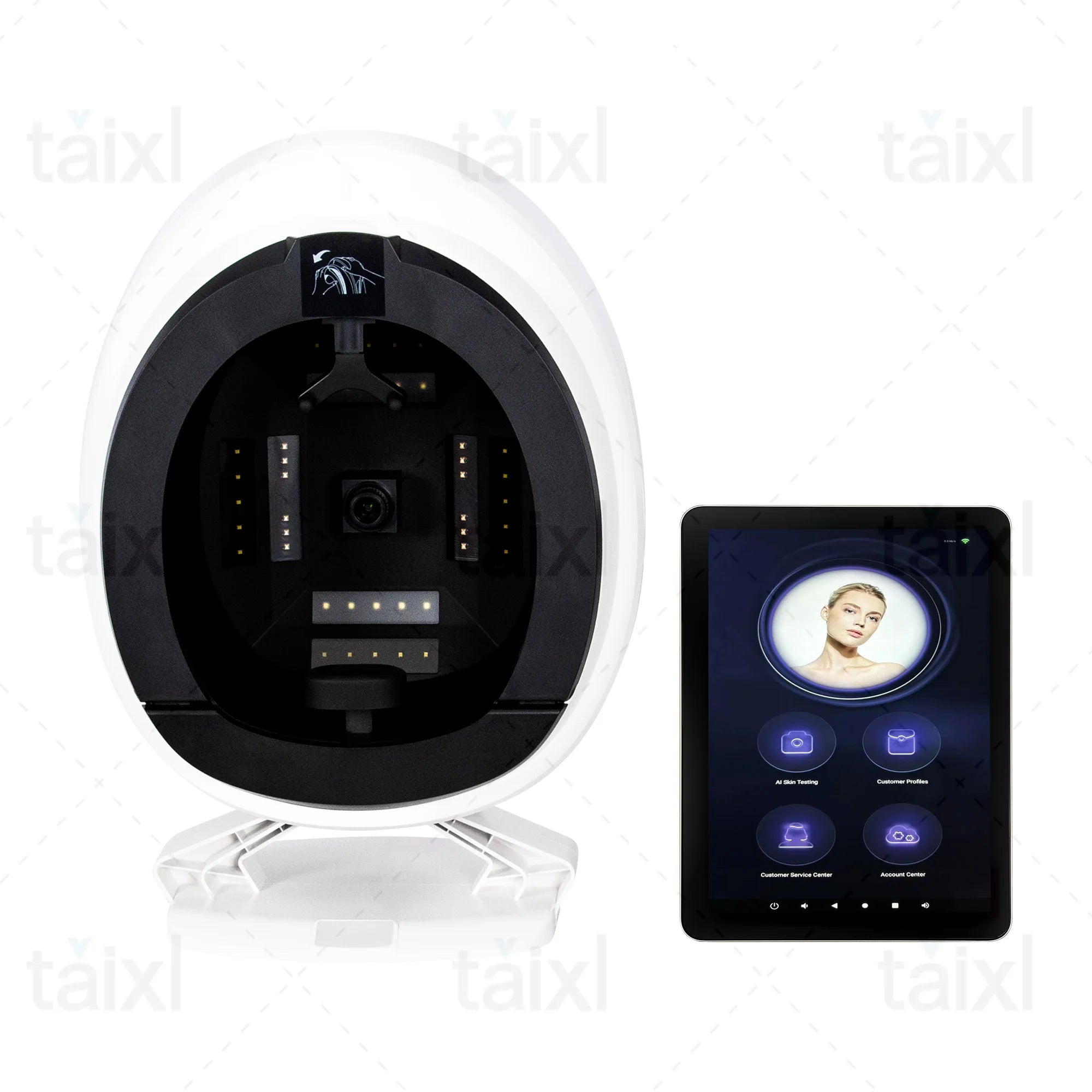
Skin Analysis Capabilities
Skin analysis requires a more specialized evaluation framework than ordinary face detection. If your objective is professional skin condition assessment, examine whether the system can analyze multiple indicators together and produce results that are useful during consultations.
For example, a professional system designed around facial skin imaging may evaluate acne, pigmentation, pores, wrinkles, moisture, sebum, tone, and elasticity. That is materially different from a basic camera application that simply photographs a face.
Computer Vision Accuracy and Model Performance
Do not evaluate accuracy only through a vendor's headline percentage. Ask what dataset produced the result, what metric was used, what population was tested, and whether the conditions resemble your actual environment.
A useful proof of concept should include representative camera hardware, lighting, image distances, poses, skin tones, age groups, and expected use cases. Production performance can differ substantially from laboratory performance.
REST APIs, SDKs, and Developer Experience
Software buyers should inspect the developer experience before signing a contract. Useful questions include:
- Is there a documented REST API?
- Are mobile or web SDKs available?
- How are API credentials authenticated?
- What image formats and resolutions are supported?
- How are errors returned?
- Are response schemas documented?
- Are rate limits clearly defined?
- How are versions managed?
- Are sample integrations available?
- How responsive is technical support?
Cloud, On-Premise, and Edge Deployment
Cloud processing can simplify infrastructure and scaling, while local or edge processing can provide greater control over where images are processed. The right architecture depends on application requirements, connectivity, latency, data governance, and operating environment.
Privacy, Security, and Data Governance
Facial images can be sensitive personal information, and some facial-analysis applications may create outputs that have additional privacy implications. Before deployment, determine what data is collected, where it is processed, how long it is retained, who can access it, and how deletion is handled.
For consumer-facing applications, consent and clear communication are particularly important. Enterprise buyers should also review encryption, access controls, audit capabilities, processing locations, contractual data terms, and applicable privacy requirements.
Scalability, Latency, and Reliability
A platform that works well for a demonstration may not automatically work for thousands or millions of requests. Evaluate expected throughput, concurrency, response times, service availability, regional infrastructure, monitoring, rate limits, and scaling costs.
Best Facial Analysis Software by Buyer Type
Best for Skincare and Skin Analysis
For skincare professionals, the strongest solution is usually not the most general facial analysis API. The priority should be meaningful skin indicators, consistent imaging, structured reports, image tracking, and a workflow that helps professionals explain findings to clients.
A dedicated professional facial analysis device can be particularly useful when the objective is to assess visible and less obvious skin characteristics during an in-person consultation. For example, the AI Skin Analyzer for Professional 3D Facial Skin Analysis combines a 36MP industrial HD camera, 8-spectrum imaging, and AI-powered analysis. Its stated analysis categories include acne, pigmentation, pores, wrinkles, moisture, sebum, skin tone, and elasticity.
That makes it a different category from a general-purpose facial analysis API: the emphasis is on professional skin assessment, structured reporting, and ongoing skin-analysis workflows rather than general facial computer vision.
Best for Ecommerce Personalization
Ecommerce businesses typically need software that can integrate into websites, mobile applications, product recommendation systems, and customer journeys. API accessibility, scalability, latency, consent management, and integration effort can matter more than the number of facial attributes a platform advertises.
Before selecting a system, map the complete workflow from image capture through analysis to recommendation. If the facial analysis output cannot be reliably connected to the recommendation engine or customer experience, additional features may have little practical value.
Best for Virtual Try-On
Virtual try-on places greater emphasis on facial landmarks, geometry, pose handling, real-time performance, and SDK compatibility. A platform optimized for detailed skin reporting is not automatically the best choice for overlaying glasses, cosmetics, accessories, or other digital assets.
Best for Mobile Applications
Mobile developers should evaluate SDK maturity, supported operating systems, device compatibility, inference latency, battery consumption, offline capabilities, and image-processing requirements. Edge processing can be valuable when low latency or reduced image transmission is a priority.
Best for Research and Computer Vision Projects
Research teams may prioritize model transparency, documentation, customization, reproducibility, dataset considerations, and access to lower-level outputs. A turnkey commercial workflow can be preferable for business operations but less useful when researchers need to experiment with models or processing pipelines.
Best for Enterprise Deployment
Enterprise buyers should evaluate governance as carefully as computer vision performance. Security architecture, deployment options, service-level commitments, support, scalability, documentation, data retention, and integration with existing systems should all be part of the evaluation.
For businesses primarily evaluating professional skincare workflows rather than developer APIs, it can also be useful to review the broader skin and beauty care device collection alongside software-based options.
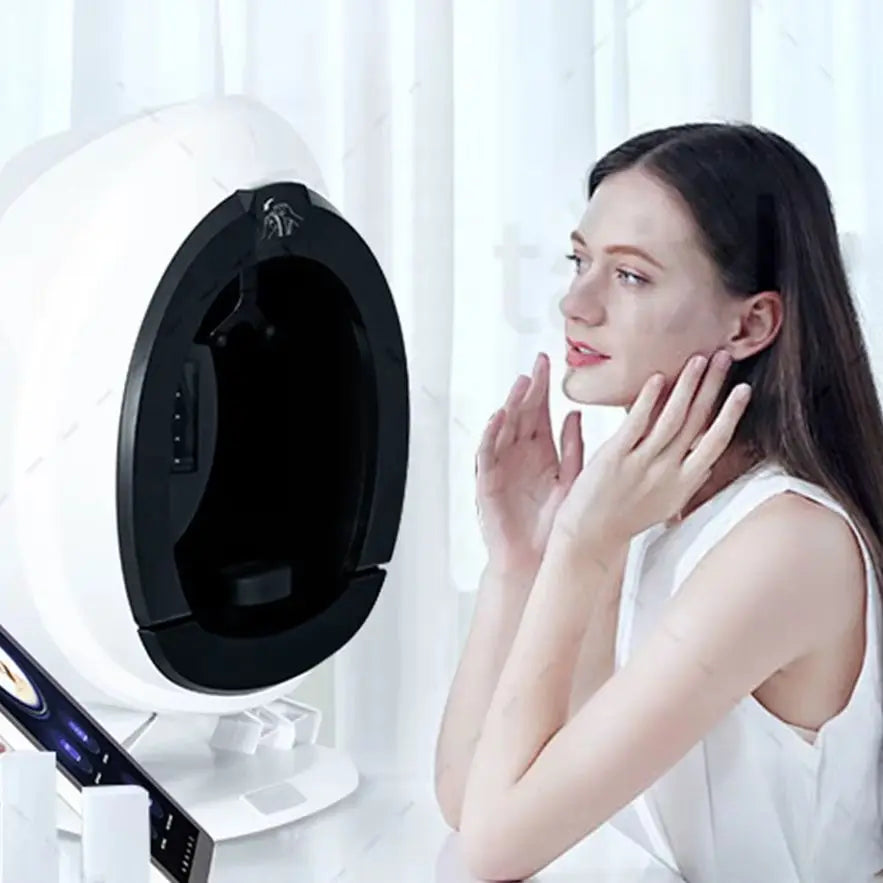
If your requirement is specifically in-person skin assessment rather than a general facial-analysis API, the professional AI skin analyzer is worth evaluating as a device-based alternative. The important comparison is not simply software versus hardware, but whether the system produces the information and workflow your practitioners actually need.
Facial Analysis Software Limitations and Risks
Accuracy Can Vary by Image and Use Case
Lighting, camera quality, pose, occlusion, makeup, image preprocessing, and other capture conditions can affect image-based analysis. A result should therefore be interpreted in the context of the system's intended operating conditions.
For professional skincare, standardized image capture is especially valuable. Consistent positioning, lighting, distance, and camera conditions make comparisons over time more meaningful.
Bias and Model Validation
Machine learning systems can perform differently across populations and real-world conditions. Buyers should ask vendors for validation information relevant to their intended users rather than relying solely on aggregate performance claims.
For important applications, conduct your own evaluation using representative images and establish measurable acceptance criteria before deployment.
Privacy and Consent Considerations
Facial analysis should not be implemented as though facial images were ordinary anonymous photographs. Establish appropriate consent, retention, deletion, access, security, and governance procedures before collecting customer images.
When Facial Analysis Is the Wrong Tool
Facial analysis is not a substitute for every form of assessment. If the business question requires clinical diagnosis, laboratory testing, specialist examination, or another form of measurement, a facial imaging system alone may be inappropriate.
The best systems support a professional workflow rather than encouraging users to treat an automated image analysis as an infallible diagnosis.
How to Choose Facial Analysis Software
Step 1: Define the Primary Use Case
Start with the desired output. “We need facial analysis” is too broad. Define whether you need skin condition assessment, facial landmarks, virtual try-on, personalization, research outputs, identity-related functionality, or another specific capability.
Step 2: Identify Required APIs and SDKs
List every integration point before comparing vendors. Determine whether your project requires a REST API, mobile SDK, browser integration, local processing, structured JSON responses, webhooks, or other developer functionality.
Step 3: Test Accuracy on Your Own Data
Request a proof of concept using representative images. Include the cameras, lighting, environments, demographic characteristics, and workload that will exist in production. Compare outputs against an agreed ground truth or professional assessment method where appropriate.
Step 4: Review Privacy and Deployment Requirements
Determine whether images can be processed in the cloud, on a local computer, or at the edge. Then review retention, encryption, consent, deletion, access controls, and processing locations against your organization's requirements.
Step 5: Calculate Total Cost and Scalability
Do not compare subscription or API prices in isolation. Include implementation, hardware, infrastructure, usage charges, support, maintenance, staff training, image storage, and expected volume.
Step 6: Validate Documentation and Support
Strong documentation can materially reduce implementation time. Review API references, SDK examples, error handling, versioning policies, changelogs, support channels, and migration procedures before committing.
Facial Analysis Software Implementation Checklist
Technical Checklist
- Confirm supported image formats and resolutions.
- Define acceptable latency and throughput.
- Test API authentication and access controls.
- Validate SDK compatibility with your platforms.
- Document rate limits and error handling.
- Test image capture under production lighting conditions.
- Establish monitoring and failure-recovery procedures.
- Validate integration with the existing customer or clinical workflow.
Privacy and Compliance Checklist
- Define how consent is obtained.
- Document what facial data is collected.
- Establish retention and deletion rules.
- Review encryption in transit and at rest.
- Limit access to authorized personnel.
- Identify processing locations.
- Review applicable privacy and biometric-data requirements with qualified counsel where necessary.
Accuracy Validation Checklist
- Use a representative evaluation dataset.
- Define the expected ground truth.
- Measure false positives and false negatives where applicable.
- Test different lighting and camera conditions.
- Evaluate relevant demographic groups.
- Compare results against the intended professional workflow.
- Monitor performance after launch rather than treating pre-launch testing as permanent proof of accuracy.
Our Final Decision Framework
Choose Based on Accuracy, Integration, or Deployment First
The best facial analysis software is the platform that solves the highest-priority requirement with acceptable trade-offs. If integration is the primary concern, start with API and SDK quality. If accuracy is critical, start with representative validation. If privacy is the constraint, start with deployment and data governance. If professional skincare is the goal, start with the depth and usefulness of the skin-analysis workflow.
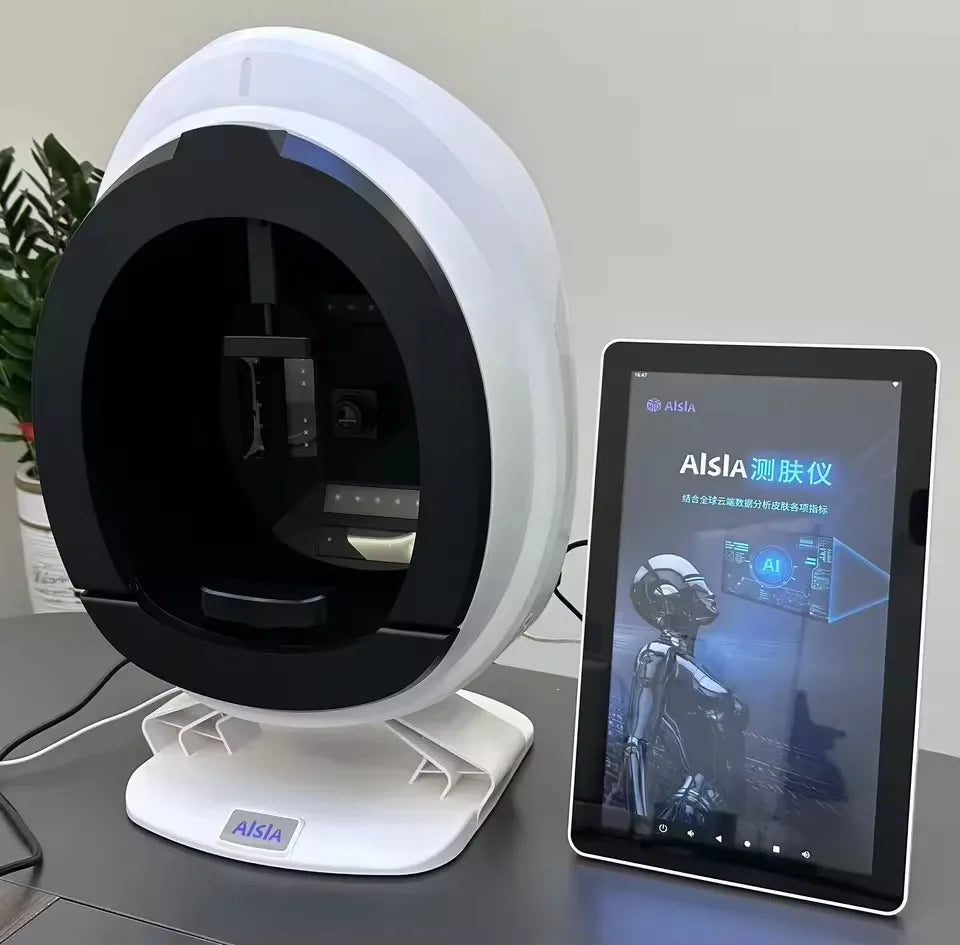
For professional skincare businesses, a dedicated device can make more sense than adapting a general-purpose facial analysis API. A system such as the AI Skin Analyzer is designed around facial skin imaging, multiple skin indicators, digital reporting, and image tracking for professional consultations.
What to Test Before Signing a Contract
- Ask the vendor to demonstrate the exact features you will use.
- Request documentation supporting important technical claims.
- Test representative images rather than vendor-selected examples only.
- Measure real-world latency and reliability.
- Review privacy, retention, and deployment terms.
- Calculate the complete implementation cost.
- Confirm support and software-update policies.
- Define success criteria before beginning the production rollout.
Businesses building a broader professional wellness or device-based workflow can also explore body care and health devices when evaluating complementary technology.

Frequently Asked Questions About Facial Analysis Software
What is facial analysis software?
Facial analysis software uses computer vision and machine learning to analyze characteristics within facial images or video. Depending on the platform, it may detect faces, facial landmarks, geometry, attributes, expressions, or specialized skin characteristics.
How accurate is facial analysis software?
Accuracy varies by provider, model, attribute, dataset, camera, lighting, pose, preprocessing, and population. Buyers should test shortlisted systems with representative real-world data instead of relying exclusively on a vendor's headline accuracy claim.
What features should you compare in facial analysis software?
Compare the actual capabilities required for your use case, including face detection, facial landmarks, attribute analysis, skin analysis, image quality, computer vision performance, APIs, SDKs, deployment, privacy, scalability, reporting, documentation, support, and total cost.
What is the difference between facial analysis software and facial recognition software?
Facial analysis evaluates characteristics of a face, while facial recognition generally involves identifying or verifying an individual. They can use related computer vision techniques but serve different purposes and should not be treated as the same technology.
How do you choose facial analysis software for skincare, ecommerce, or virtual try-on?
Start with the desired business output. Skincare buyers should prioritize skin indicators, consistent imaging, reporting, and consultation workflows. Ecommerce buyers should emphasize APIs, scalability, personalization, and integration. Virtual try-on buyers should focus on facial landmarks, geometry, real-time performance, and SDK support.
Conclusion: Choose the Facial Analysis Workflow, Not Just the Feature List
The best facial analysis software in 2026 is not necessarily the platform with the most advertised features. The right choice depends on the specific characteristics you need to analyze, the evidence supporting model performance, API and SDK requirements, deployment architecture, privacy controls, scalability, and the workflow in which the results will actually be used.
For software developers, that may mean prioritizing APIs, SDKs, latency, scalability, and integration. For ecommerce teams, personalization and customer experience may come first. For virtual try-on, facial landmarks and geometry can dominate the decision. For professional skincare, however, specialized facial imaging and skin-analysis capabilities may be more valuable than a general-purpose facial analysis API.
If your goal is to improve professional skin consultations with structured facial imaging and multiple skin indicators, consider evaluating the AI Skin Analyzer for Professional 3D Facial Skin Analysis alongside other professional skin-analysis solutions. The most reliable purchasing decision is the one validated against your own workflow, images, users, privacy requirements, and measurable business objectives.
Pillar Article: AI Facial Analyzer for Estheticians: Best Options Compared













