

Best Personal Air Cooler Fans of 2026: Compared & Tested
Choosing the best personal air cooler fan is not simply about finding the strongest breeze. A regular fan moves air across your skin, while a water-based personal air cooler can use evaporation to create a cooler-feeling airflow when conditions are suitable. That distinction matters if your desk gets too hot, your bedroom feels uncomfortable at night, or a small office becomes stuffy during summer.
For this 2026 comparison, the focus is practical performance: cooling method, airflow, noise, portability, runtime, water capacity, power options, coverage, maintenance, and use-case fit. One important limitation comes first: a compact personal air cooler is designed for targeted personal comfort, not whole-room air conditioning. Evaporative cooling is also more useful in dry air than in already-humid conditions.
Best Personal Air Cooler Fans at a Glance
Quick Comparison Matrix
| Cooling option | Cooling method | Airflow | Power | Water | Best use |
| Portable Air Cooler Fan | Water-assisted personal cooling | 9-blade airflow | Rechargeable + USB | 500ml | Desk, bedroom, office, small spaces |
| Rechargeable Fan | Fan-only airflow | Air movement | Rechargeable battery | None | Simple personal airflow |
| USB Desktop Fan | Fan-only airflow | Focused airflow | USB | None | Desk and workspace |
| Portable Air Conditioner | Refrigeration | Room or zone cooling | AC power | Varies | Substantial temperature reduction |
Our Top Picks by Use Case
- Best overall for personal cooling: A compact water-based air cooler when you want airflow plus evaporative cooling close to where you sit.
- Best for desks and workspaces: A rechargeable mini air cooler with a small footprint, quiet operation, and USB charging.
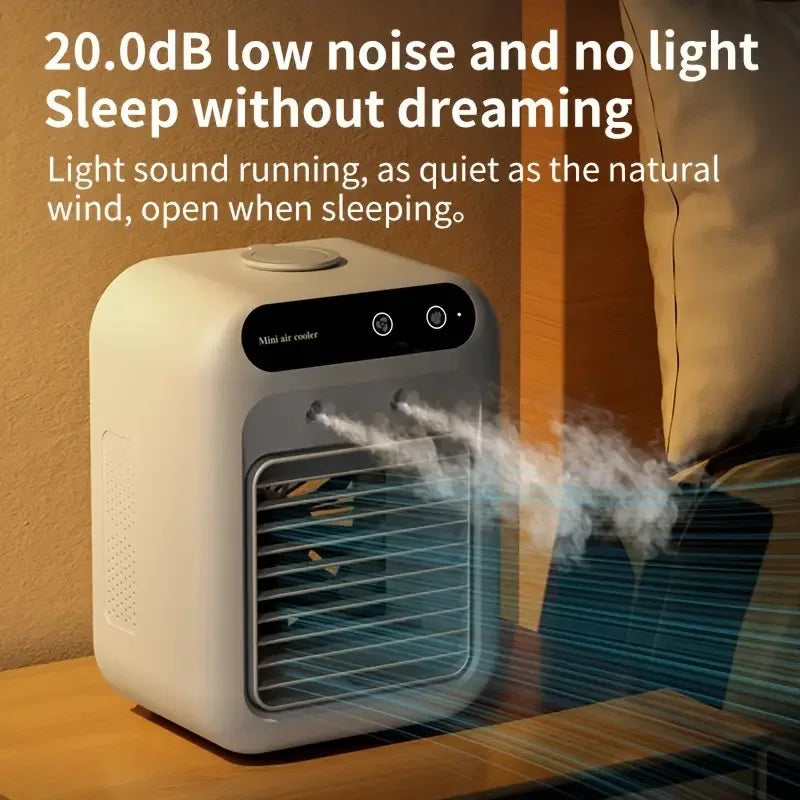
- Best for bedrooms: A quiet personal cooler positioned close enough to provide focused airflow without requiring a large appliance.
- Best for simple portability: A rechargeable fan if you do not need water-assisted cooling.
- Best for whole-room cooling: A properly sized portable air conditioner rather than a mini personal cooler.
- Best for humid conditions: A conventional fan may be the more predictable choice because it does not depend on evaporation.
If your priority is compact, water-assisted cooling for a desk, bedroom, or office, the Portable Air Cooler Fan is a particularly practical configuration. It combines a 500ml reservoir, rechargeable operation, USB charging, quiet operation, and a nine-blade airflow system in a compact personal cooling format.
Explore the Portable Air Cooler Fan if you want to compare its specifications with your own cooling needs.
How We Compared Personal Air Cooler Fans
A meaningful personal air cooler comparison should look beyond marketing language. The same device can feel excellent at a desk in dry conditions and considerably less impressive in a hot, humid room. We therefore evaluate each cooling category against the factors that actually influence day-to-day comfort.
Cooling Effectiveness
The first question is whether the device does more than simply move air. Water-based evaporative cooling can make outgoing airflow feel cooler when water evaporation is effective. A fan-only device does not actively cool the air; its benefit comes primarily from moving air across your skin.
For personal cooling, perceived comfort is often more important than trying to lower the temperature of an entire room. Position, distance, humidity, and airflow direction can make a substantial difference.
Airflow and Coverage
Airflow determines how effectively a device delivers its cooling effect to the person using it. A compact personal cooler is generally intended for close-range use rather than broad room circulation.
A nine-blade system, such as the one used in the Portable Air Cooler Fan, is designed to provide consistent personal airflow. That makes the format better suited to a desk, bedside table, work surface, or other location where the device can remain relatively close to you.
Noise
Noise becomes especially important in bedrooms, home offices, study spaces, and video calls. A cooling device that creates an uncomfortable amount of mechanical noise can undermine the benefit of having it nearby.
For quiet environments, look for a product that emphasizes quiet operation rather than judging cooling performance by airflow alone. The goal is a balance between useful airflow and minimal disruption.
Runtime, Tank Capacity, and Power
Water capacity affects how frequently you need to refill a water-based cooler. A 500ml reservoir offers a useful middle ground for a compact personal appliance: enough water for convenient personal use while avoiding the footprint of a much larger cooling unit.
Rechargeable operation adds another advantage. Instead of being permanently tied to a wall outlet, a rechargeable mini air cooler can be positioned where airflow is most useful and recharged through USB when needed.
Portability and Build
Small-space cooling is partly a placement problem. A device can have excellent airflow but still be inconvenient if it consumes too much desk or bedside space.
A compact personal cooling device should be easy to position, move, refill, and store. This is particularly valuable when you alternate between a home office, bedroom, dorm-style room, or another small personal space.
Value and Use-Case Fit
The best device is not necessarily the one with the most features. It is the one whose cooling method matches your environment. Paying more for refrigeration-style cooling makes sense when you need significant room-temperature reduction. Choosing a small evaporative cooler makes more sense when you primarily want focused comfort without a bulky appliance.
What Is a Personal Air Cooler Fan?
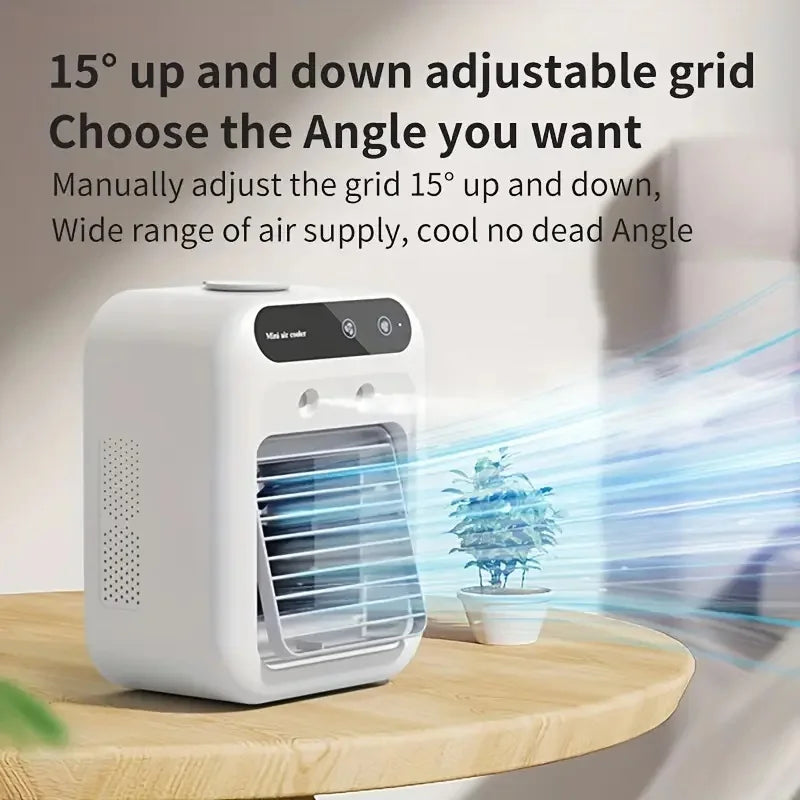
A personal air cooler fan is a compact cooling device designed to deliver localized airflow, often with water-assisted evaporative cooling. Unlike an air conditioner, it is generally intended to make the immediate area around the user feel more comfortable rather than provide substantial whole-room temperature control.
Personal Air Cooler vs. Regular Fan
A regular fan moves existing air. When that moving air reaches your skin, it can increase evaporation from the skin and make you feel cooler even though the fan itself has not lowered the air temperature.
A personal air cooler can combine airflow with water evaporation. Under appropriate conditions, evaporation can remove heat from the air passing through the cooling system, producing a cooler-feeling stream of air.
Personal Air Cooler vs. Portable Air Conditioner
The difference is substantial. A portable air conditioner uses refrigeration to extract heat and typically requires significantly more electrical power and an appropriate exhaust arrangement. A personal air cooler uses a much simpler water-and-air approach.
If your goal is to cool a whole bedroom or reduce room temperature substantially, a portable air conditioner is generally the more appropriate category. If you want focused cooling while working at a desk, reading, or resting nearby, a compact personal air cooler can be considerably easier to place and operate.
Personal Air Cooler vs. Air Circulator or Desktop Fan
A desktop fan is often the simplest option when all you need is moving air. It also has no water tank to refill and no reservoir to clean. A water-based personal cooler adds another maintenance step but may provide a cooler-feeling airflow under favorable conditions.
How Evaporative Cooling Works
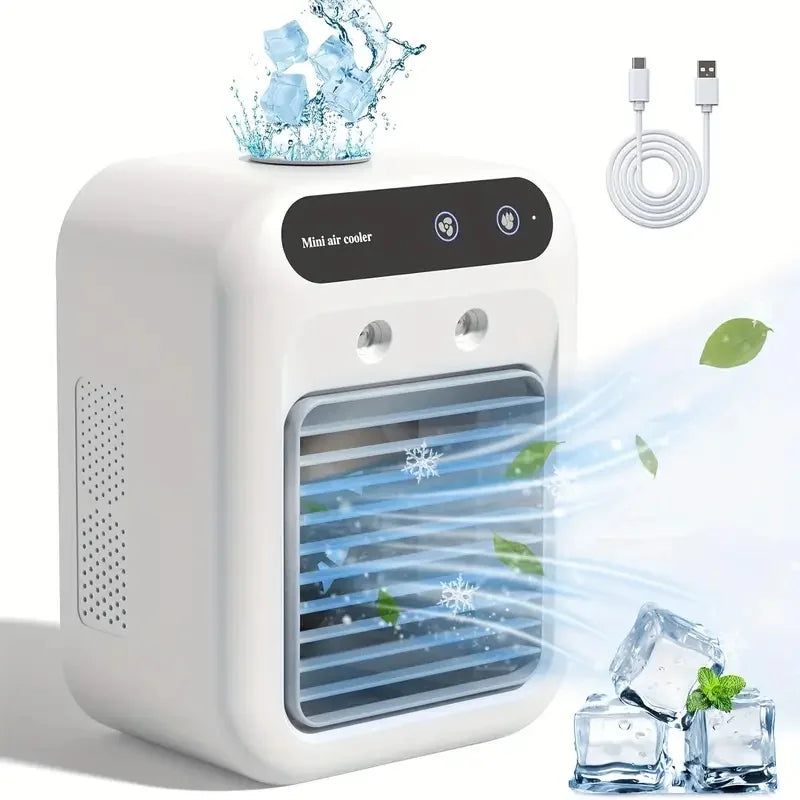
Airflow + Water Evaporation
Evaporative cooling relies on a basic physical process: when water changes from liquid to vapor, it absorbs heat. A personal evaporative cooler uses airflow to help move air through or across a wetted cooling medium, allowing evaporation to contribute to the cooling effect.
This is why adding water to a compatible personal air cooler can create a different experience from using the fan alone. The result depends on how readily water can evaporate under the surrounding conditions.
Why Humidity Matters
Humidity is one of the most important variables. Dry air has greater capacity to accept additional water vapor, so evaporation can occur more readily. When relative humidity is already high, evaporation becomes less effective.
This means a mini evaporative air cooler should not be judged by the same expectations you would apply to a compressor-based air conditioner. Climate is part of the performance equation.
When a Personal Air Cooler Works Poorly
A personal air cooler may be a poor match when the air is extremely humid, when you expect it to cool a large enclosed room, or when you need air-conditioning-level temperature reduction.
- Very humid conditions: evaporation becomes less effective.
- Large rooms: a compact device cannot provide the same coverage as a full-size cooling appliance.
- Whole-room cooling: a personal cooler is designed around localized comfort.
- No desire for maintenance: water-based devices require reservoir management and cleaning.
The Best Personal Air Cooler Fans of 2026, Compared
Best Overall Personal Air Cooler: Portable Air Cooler Fan
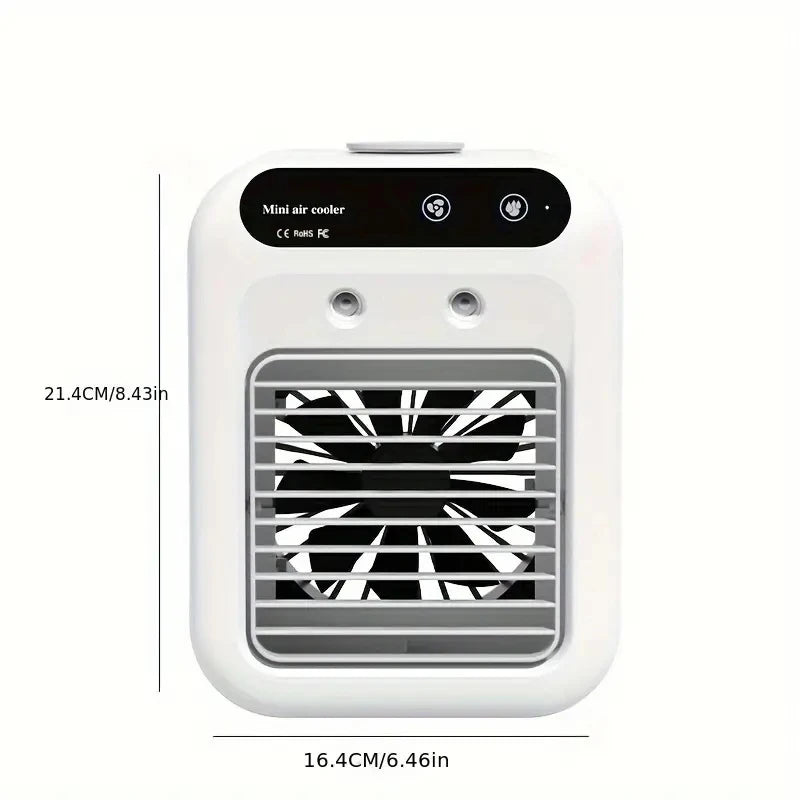
For users who want a compact combination of airflow and water-assisted cooling, the Portable Air Cooler Fan offers a straightforward specification set: a 500ml water capacity, nine-blade airflow design, rechargeable battery, USB charging, quiet operation, and compact construction.
- Primary advantage: combines focused airflow with a 500ml water reservoir.
- Best for: desks, bedrooms, offices, and other small personal spaces.
- Trade-off: performance remains dependent on humidity and close-range use.
Who should buy it? Choose this type of personal air cooler if you want more than basic fan airflow but do not need a full-size air conditioner.
Best Personal Air Cooler for Desks and Workspaces
A desk-focused cooling device should prioritize footprint, noise, airflow direction, and convenient power. The Portable Air Cooler Fan fits this use case particularly well because its compact design is intended for personal spaces, while rechargeable USB operation reduces dependence on a fixed outlet.
For a desk that gets too hot during afternoon work, place the device close enough for its airflow to reach your upper body without blocking your monitor, keyboard, or workspace.
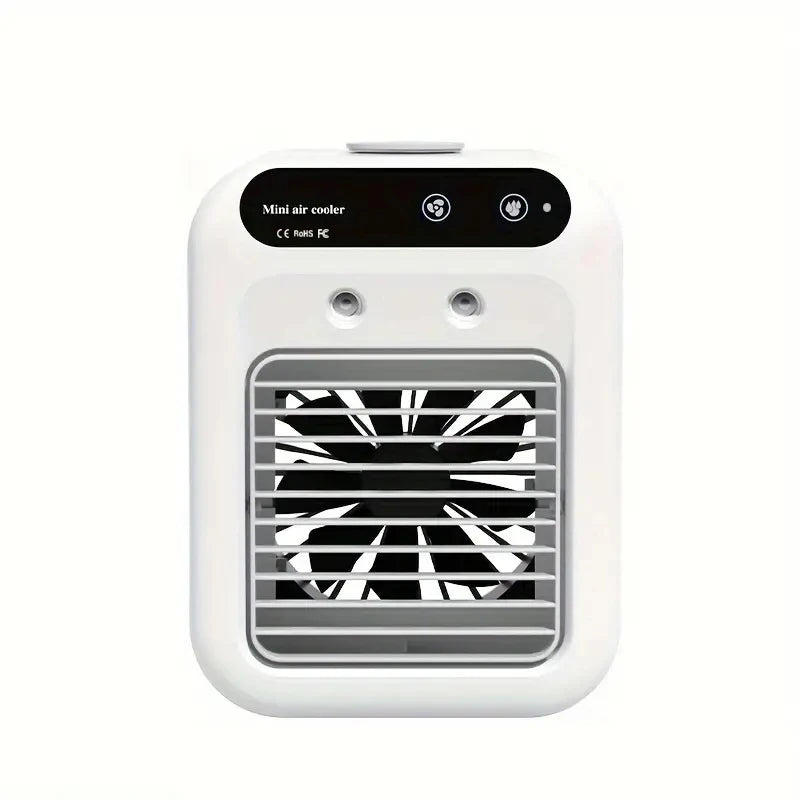
Who should buy it? Office workers, students, and home-office users who want focused cooling without adding a bulky appliance to the desk.
Best Personal Air Cooler for Bedrooms
Bedroom cooling requires a different priority set. Noise, airflow intensity, placement, and water capacity matter more than maximum airflow. A quiet mini air cooler can be useful when you want localized airflow near the bed rather than attempting to cool the entire room.
The 500ml reservoir of the Portable Air Cooler Fan is suited to the compact format, while rechargeable operation gives you flexibility when placing the device near a bedside table.
Who should buy it? Choose a compact personal cooler if your bedroom is uncomfortable primarily around your sleeping position and you do not need whole-room air conditioning.
Best Portable Personal Air Cooler for Travel
Travel cooling is where compact dimensions become especially valuable. A personal air cooler can make sense for temporary workspaces, hotel rooms, dorm-style accommodation, or other situations where carrying a large appliance is impractical.
However, travelers should consider water access, battery restrictions, charging requirements, and cleaning before choosing a water-based device. A simple rechargeable fan may be more convenient if you frequently move between locations.
Who should buy it? Travelers who have access to water and want localized cooling without carrying a conventional cooling appliance.
Best Personal Air Cooler for Hot Outdoor Use
Outdoor conditions require realistic expectations. A compact personal cooler is not designed to cool an outdoor area. Its value comes from bringing airflow close to the user.
In hot, dry conditions, evaporative cooling can be more useful because the surrounding air can support faster evaporation. In humid outdoor weather, a conventional rechargeable fan may provide more predictable personal airflow.
Who should buy it? Users spending time in hot, relatively dry conditions who want close-range cooling and have convenient access to water.
Best Budget Personal Air Cooler
For budget shoppers, avoid paying for features that do not solve the actual problem. If your desk is uncomfortable but you have no need to lower the temperature of the whole room, a compact personal cooler can be more practical than moving toward a large air-conditioning solution.
The strongest budget choice is the device that provides usable airflow, convenient power, reasonable water capacity, and a footprint that fits your space.
Who should buy it? Buyers who need focused cooling for one person rather than an expensive solution for an entire room.
Personal Air Cooler Buying Guide: What Matters Most
Cooling Method
First decide whether you want ordinary airflow or water-assisted cooling. A rechargeable fan is simpler. An evaporative cooler can provide a cooler-feeling airflow when evaporation works effectively.
Airflow Strength and Direction
Strong airflow is useful only if it reaches you. For desk and bedroom applications, directional airflow can matter more than attempting maximum room coverage.
Noise Level
For sleeping and working, quiet operation should be treated as a core buying criterion. Consider where the device will sit and whether its sound could interfere with calls, concentration, or sleep.
Water Tank Capacity
A larger reservoir generally means fewer refills, but it can also increase the device's footprint. A 500ml capacity is a useful example of how a compact personal air cooler can balance water capacity with portability.
Battery and Charging Options
Rechargeable operation is particularly useful when you want to reposition the device away from a wall outlet. USB charging also makes it easier to integrate the cooler into a desk or portable setup.
Size, Portability, and Coverage
Do not confuse a small personal air cooler with a miniature air conditioner. Its compact size is an advantage for targeted comfort, but it also defines its realistic coverage. The closer the device is to you, the more directly you can benefit from its airflow.
Cleaning and Maintenance
Any water-based cooling device requires more attention than a fan-only design. Empty and refresh the reservoir as appropriate, keep water-contact surfaces clean, and follow the manufacturer's maintenance instructions. Regular cleaning helps reduce buildup and unwanted odors.
Which Personal Air Cooler Is Right for Your Situation?
For a Desk or Home Office
Choose a compact, quiet device with focused airflow and flexible power. A rechargeable mini air cooler is especially useful when desk heat makes concentration uncomfortable but a full-size air conditioner is unnecessary.
For a Bedroom
Prioritize quiet operation, manageable water capacity, and close-range airflow. Position the cooler so it provides personal comfort without expecting it to replace whole-room air conditioning.
For Travel
Look for compact construction, rechargeable operation, and easy refilling. A water-based device makes the most sense when you can reliably access clean water and have a suitable place to operate it.
For Hot, Dry Outdoor Conditions
Evaporative cooling has a stronger case in dry environments. Use a personal cooler close to your body and treat it as a personal comfort device rather than an outdoor room-cooling appliance.
For Humid Climates
If your environment is consistently humid, compare an evaporative cooler against a conventional fan before buying. A fan may be the better choice when you mainly need reliable airflow without depending on evaporation.
For broader personal-care and lifestyle devices, you can also browse the Lifestyle collection for other compact everyday-use products.
Personal Air Cooler Fan vs. Other Cooling Options
Personal Air Cooler vs. USB Fan
A USB fan is simpler and requires no water. It can be a good choice when you need straightforward airflow at a desk. A water-based personal air cooler adds evaporative cooling but introduces reservoir maintenance and humidity dependence.
Personal Air Cooler vs. Rechargeable Fan
Both can operate away from a fixed outlet. The rechargeable fan wins on simplicity, while the personal air cooler can provide an additional evaporative cooling effect in suitable conditions.
Personal Air Cooler vs. Desktop Fan
A desktop fan is usually easier to maintain because there is no water tank. A personal air cooler may be preferable when you want to combine compact airflow with water-assisted cooling.
Personal Air Cooler vs. Portable Air Conditioner
A portable air conditioner is the stronger choice for substantial temperature reduction and larger areas, but it requires substantially more power and has greater setup demands. A personal air cooler is better suited to localized comfort, portability, and low-disruption use.
For more compact devices and everyday lifestyle solutions, the Body Care and Health Devices collection provides another place to explore portable personal-use products.
Pros and Cons of Personal Air Cooler Fans
Key Advantages
- Compact alternative to bulky cooling appliances.
- Focused personal airflow for desks, bedrooms, and offices.
- Water-assisted cooling can feel more refreshing than fan-only airflow in suitable conditions.
- Rechargeable models can be used away from a fixed outlet.
- USB charging supports convenient everyday use.
- Lower-power personal cooling can be more practical than cooling an entire room when only one person needs relief.
Important Limitations
- Evaporative performance decreases as humidity rises.
- Compact units are not substitutes for air conditioners when whole-room cooling is required.
- Water reservoirs require regular attention and cleaning.
- Coverage is primarily personal and close-range.
- Cooling effectiveness depends on placement, airflow, humidity, and surrounding conditions.
Final Verdict: Which Personal Air Cooler Fan Should You Buy?
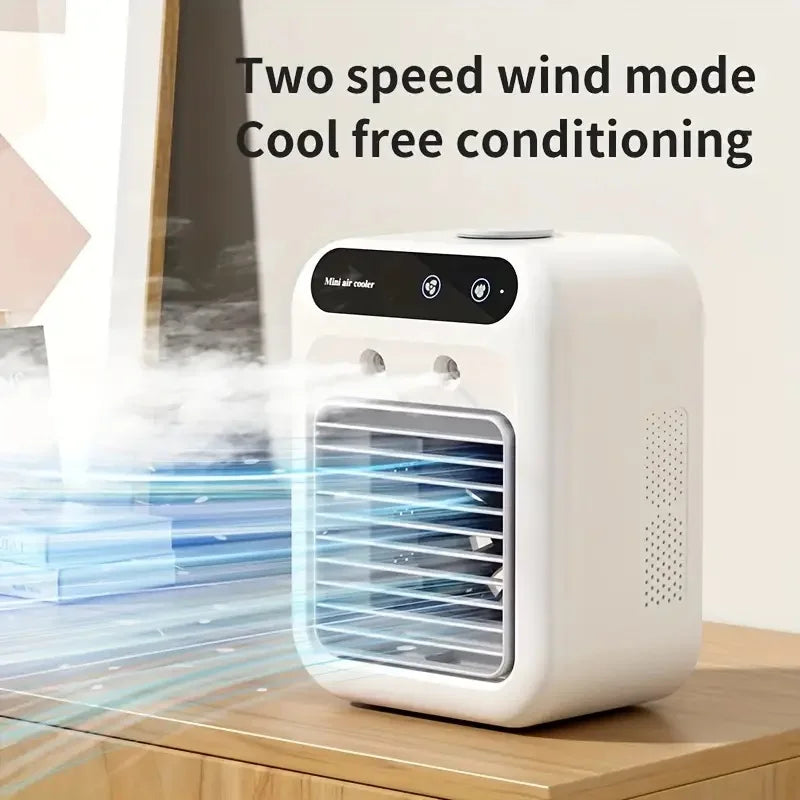
The best personal air cooler fan depends on what you are trying to cool. If your problem is a hot desk, uncomfortable bedside area, or stuffy personal workspace, a compact water-based cooler can offer a useful combination of airflow, portability, and refreshing evaporative cooling.
Best Overall Choice
The Portable Air Cooler Fan is a strong fit for users who want a compact personal cooling device with a 500ml water reservoir, nine-blade airflow, rechargeable battery, USB charging, quiet operation, and small-space versatility. Its biggest advantage is the combination of focused airflow and water-assisted cooling in a portable format.
View the Portable Air Cooler Fan to see whether its specifications match your desk, bedroom, or office setup.
Best Choice by Use Case
- Desk: Choose a compact, quiet rechargeable personal air cooler for focused airflow.
- Bedroom: Prioritize quiet operation, convenient placement, and manageable water capacity.
- Travel: Choose portability and rechargeable operation, provided water access is convenient.
- Hot and dry conditions: Evaporative cooling can be particularly useful when positioned close to the user.
- Humid conditions: Consider a conventional fan if evaporation is unlikely to provide much additional benefit.
- Whole-room cooling: Move up to a properly sized portable air conditioner rather than expecting a mini cooler to perform the same job.
Who Should Skip a Personal Air Cooler?
Skip the category if you need to cool a large room, require substantial room-temperature reduction, or live in conditions where high humidity makes evaporative cooling less effective. In those situations, a conventional fan or portable air conditioner may better match your needs.
For everyone else, the decision is straightforward: choose a personal air cooler when you want targeted cooling without a bulky appliance, choose a regular fan when simple airflow is enough, and choose an air conditioner when whole-room temperature control is the priority.
If you are building a broader summer comfort setup, the Lifestyle collection can also help you explore compact products designed for everyday use.
Pillar Article: Best Bedroom Cooling Devices for 2026: Compare Your Options













