

Best Professional AI Skin Analyzers for 2026: Compare Top Machines
Choosing a professional AI skin analyzer is more complicated than comparing camera megapixels or counting the number of skin indicators a machine claims to measure. Two systems may both promise AI facial analysis while differing substantially in imaging technology, spectrum coverage, reporting, client data management, repeatability, workflow integration, and evidence supporting their results.
For aesthetic clinics, dermatology practices, med spas, salons, and beauty retailers, the better buying question is not simply “Which machine has the most features?” It is “Which system produces useful, repeatable information that fits the way my business evaluates clients and tracks skin over time?”
This guide compares professional AI skin analyzers using that decision framework. It separates documented specifications from claims that should be independently verified and explains what to look for in imaging, AI assessment, reporting, workflow, support, and total ownership cost.
What Is a Professional AI Skin Analyzer?
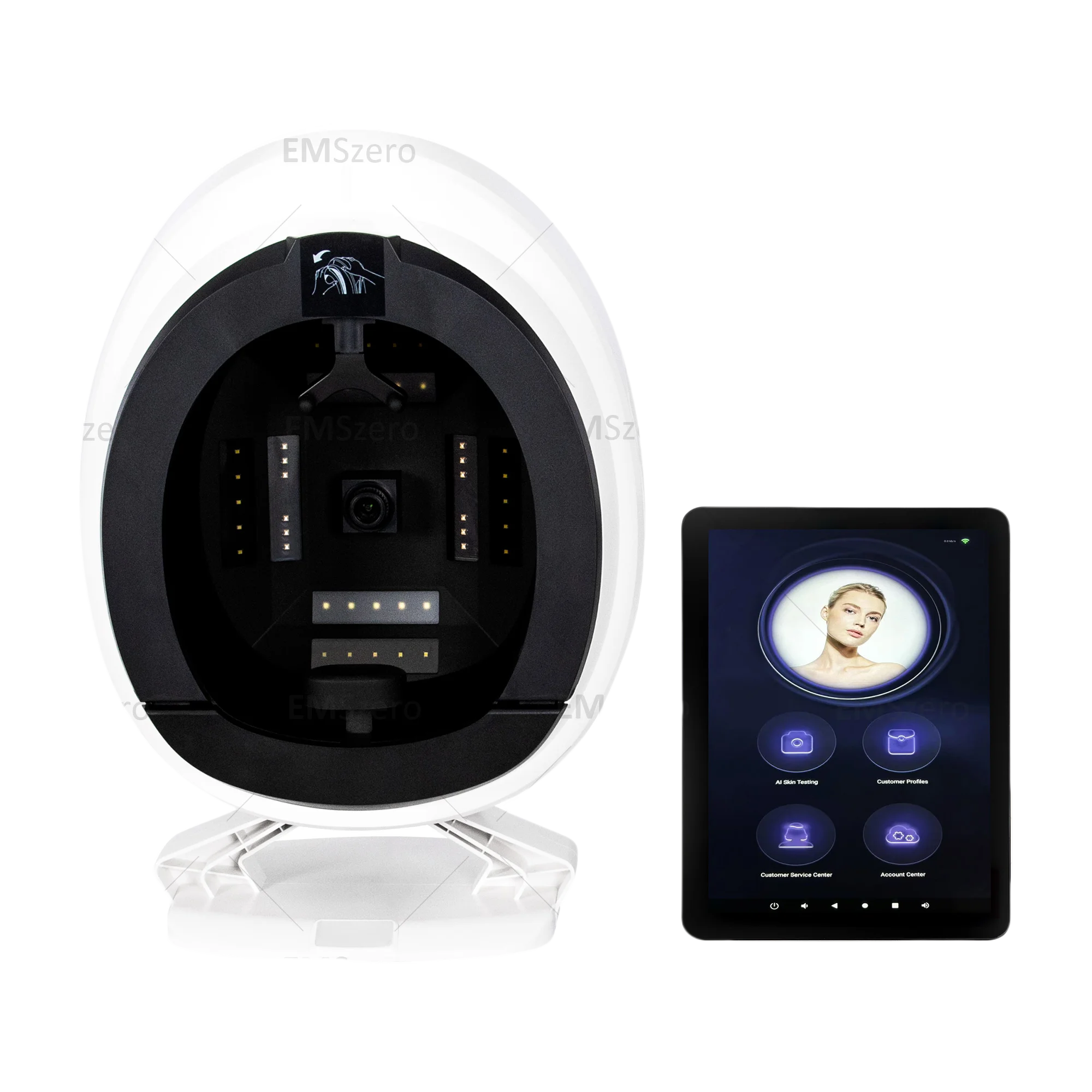
A professional AI skin analyzer is a facial imaging and analysis system designed to capture standardized images of the skin and use software or artificial intelligence to organize and interpret characteristics such as pigmentation, pores, wrinkles, acne, sebum, moisture, tone, and elasticity.
The important distinction is that a true analysis platform does more than take a photograph. A conventional camera records an image. A professional skin analysis system can combine controlled imaging with specialized illumination, image processing, computer vision, measurements, reports, and historical records to support a structured consultation.
AI Skin Analysis vs. Facial Imaging
Facial imaging is the capture stage. AI skin analysis adds an interpretation layer that can identify or score patterns within captured images. That distinction matters when comparing a digital skin analyzer with a high-resolution camera or basic skin scanner.
A professional system should ideally make it easier to compare standardized images, identify areas that deserve attention, communicate findings to clients, and monitor changes during follow-up visits.
How Computer Vision Supports Skin Assessment
Computer vision can process facial images to detect visual patterns that may be difficult to evaluate consistently with the naked eye. Depending on the system, algorithms may segment facial regions, identify color differences, estimate wrinkle or pore characteristics, and organize multiple indicators into a report.
AI should therefore be viewed as an assessment aid rather than a substitute for professional observation or medical examination.
What Professional Systems Can and Cannot Diagnose
Professional skin analyzers can help visualize and organize skin characteristics, but analysis results should not automatically be interpreted as a medical diagnosis. A machine can identify patterns associated with pigmentation, acne, pores, wrinkles, moisture, or other characteristics without establishing the clinical cause of a condition.
For higher-risk findings or suspected medical conditions, professional clinical evaluation remains appropriate.
Best Professional AI Skin Analyzers for 2026: Comparison Matrix
The market includes everything from simple facial imaging cameras to sophisticated multispectral systems. Because specifications, software, validation, and pricing can change between vendors, use the following matrix as a buying framework rather than assuming that every manufacturer claim is independently validated.
- Imaging technology: Determine whether the system uses standard, polarized, UV, multispectral, or other specialized imaging.
- Image resolution: Higher resolution can improve image detail, but resolution alone does not establish analysis accuracy.
- AI metrics: Check exactly which characteristics the software evaluates and whether results are measurements, scores, classifications, or visual overlays.
- Skin concerns: Look for relevant coverage of pigmentation, acne, pores, wrinkles, moisture, sebum, tone, and elasticity.
- Reporting: Determine whether the system generates structured reports suitable for consultation and follow-up.
- Data management: Check whether client images and historical results can be stored and compared.
- Connectivity: Verify how the analyzer communicates with its software or workstation and whether it fits the existing workflow.
- Portability: Consider machine footprint, installation requirements, power requirements, and whether it needs a dedicated consultation area.
- Certifications: Confirm applicable certifications for the market where the equipment will be operated.
- Warranty and support: Compare warranty duration, training, troubleshooting, replacement parts, software support, and vendor responsiveness.
- Pricing: Compare the complete ownership cost rather than only the advertised equipment price.
- Ideal business: Match the system to client volume, consultation style, available space, and the sophistication of your reporting workflow.
How to Read the Comparison: Verified Specs vs. Manufacturer Claims
A useful professional comparison should distinguish between a published hardware specification and a performance claim. For example, a camera resolution such as 36MP is a specification. A statement that an analyzer provides highly accurate skin diagnosis is a performance claim that requires stronger evidence.
For buyers evaluating the AI Skin Analyzer for Professional 3D Facial Skin Analysis, the documented configuration includes a 36MP industrial HD camera, AI and 8-spectrum imaging technology, analysis of multiple skin indicators, digital reporting, image tracking, CE and RoHS certification, and a one-year warranty. These are useful comparison points, while independent validation of analytical accuracy should still be requested from the supplier when accuracy is a purchasing requirement.
For other professional beauty technology, the skin and beauty care devices collection can also help businesses evaluate complementary equipment for a broader consultation workflow.
How Professional AI Skin Analyzers Work
Different imaging technologies reveal different types of information. Buyers should understand this before treating every “AI analyzer” as equivalent.
Standard Facial Imaging
Standard visible-light imaging captures the appearance of the face under controlled or relatively conventional lighting. It is useful for evaluating visible characteristics such as tone, redness, pigmentation appearance, pores, texture, and wrinkles.
Polarized Imaging
Polarized imaging can reduce certain surface reflections and emphasize specific visual characteristics of the skin. This can make some differences easier to observe than under ordinary illumination.
UV Imaging
UV imaging uses ultraviolet illumination to reveal patterns that are not as apparent under normal visible light. Depending on the system and its software, these images may support assessment of pigmentation-related patterns or other surface characteristics. UV imagery should not be interpreted as a medical diagnostic test by itself.
Multispectral Imaging
Multispectral or spectrum-based imaging captures information using multiple wavelength bands rather than relying on a single visible-light image. The purpose is to create additional contrast between different optical characteristics of facial skin.
An 8-spectrum system, for example, can provide multiple imaging conditions that software can process into a more detailed assessment than a conventional single-image workflow. The exact meaning of each spectrum and the resulting measurements should be confirmed with the manufacturer.
AI-Assisted Computer Vision
AI or computer vision software analyzes captured images and converts visual information into structured indicators. Depending on the platform, this can include automated detection, scoring, comparison, visualization, or reporting.
The strongest professional workflow combines consistent image capture with software interpretation and human review rather than treating the algorithm as an autonomous diagnostic authority.
Key Features to Compare Before Buying
Imaging Modalities and Image Quality
Start with the imaging system rather than the marketing label. Ask how many imaging modes are available, how facial positioning is standardized, what lighting conditions are controlled, and whether images can be reproduced consistently during follow-up appointments.
For businesses that prioritize detailed facial imaging, a high-resolution camera combined with multiple spectrum modes may provide more useful information than a basic camera-based scanner. However, image resolution should always be evaluated alongside illumination, optics, software, and repeatability.
AI Metrics and Skin Concerns Detected
Review the actual indicators rather than accepting broad language such as “full skin analysis.” A useful system should clearly explain which characteristics it evaluates and how results are presented.
The MYOSLIM system described for this comparison evaluates acne, pigmentation, pores, wrinkles, moisture, sebum, skin tone, and elasticity. That range can support a consultation that looks beyond a single concern and creates a more complete facial skin profile.
Analysis Reports and Client-Facing Results
Reports matter because the value of an analyzer is not limited to what the machine detects. Professionals need to turn information into understandable consultation conversations.
Look for clear visualizations, organized metrics, image comparisons, export or presentation options where applicable, and reports that can be explained without overwhelming the client.
Skin Analysis Software and Data Management
Software can become more important than hardware once a business begins analyzing many clients. Ask whether the system can maintain client records, associate images with visits, compare historical results, and preserve a consistent analysis workflow.
Data privacy and retention practices should also be reviewed before deployment, particularly when facial images are stored as part of customer records.
Connectivity, Integrations, and Workflow
Consider where analysis occurs and how staff move from imaging to consultation. A system that produces excellent images but creates unnecessary manual steps may be less useful in a high-volume clinic than a slightly less sophisticated system with a smoother workflow.
Portability, Footprint, and Ease of Operation
Large fixed analyzers may suit dedicated clinics with consultation rooms, while compact systems can make more sense for salons or retail environments with limited space. Also verify power requirements before purchase. The MYOSLIM configuration described here specifies 220V operation.
Certifications, Warranty, and Manufacturer Support
Certification is an important procurement checkpoint, but it does not by itself prove analytical accuracy. Confirm which certifications apply to the exact model and destination market.
The product evaluated in this guide lists CE and RoHS certification and a one-year warranty. Buyers should also ask what technical support, training, software assistance, and replacement-part services are included.
How Accurate Are Professional AI Skin Analyzers?
Accuracy is one of the most important questions when evaluating an AI skin analyzer, but it is also one of the easiest areas to oversimplify.
Accuracy vs. Repeatability: What Is the Difference?
Accuracy asks how closely an output corresponds to an appropriate reference or ground truth. Repeatability asks whether the same person produces comparable results when the measurement is repeated under equivalent conditions.
For many skincare consultations, repeatability is especially valuable. If lighting, facial position, camera distance, and expression change substantially between appointments, an apparent improvement or deterioration may reflect image conditions rather than a genuine change in skin characteristics.
What Can Affect AI Skin Analysis Results?
- Lighting intensity and color temperature
- Facial position and camera distance
- Facial expression and movement
- Makeup, sunscreen, or skincare products on the skin
- Recent cleansing or treatment
- Camera focus and image quality
- Differences in software versions or analysis settings
- Changes in the way staff position clients
Standardizing the capture process is therefore essential when the goal is to track changing skin condition over time.
How to Evaluate Validation and Evidence
Before making a significant equipment investment, ask the vendor what evidence supports its algorithms. Useful questions include whether the system has been tested against a recognized reference method, how its measurements were validated, what population was included, and whether published performance data are available.
Be cautious when a vendor provides impressive accuracy percentages without explaining the dataset, testing conditions, metric definition, or validation method.
Why AI Results Should Not Be Treated as a Medical Diagnosis
A skin analyzer can help professionals visualize and organize facial characteristics, but its output should not automatically be treated as a diagnosis of a medical condition. The appropriate interpretation depends on the device's intended use, software claims, professional qualifications, and applicable regulations.
Professional Workflow: How to Use an AI Skin Analyzer in Practice
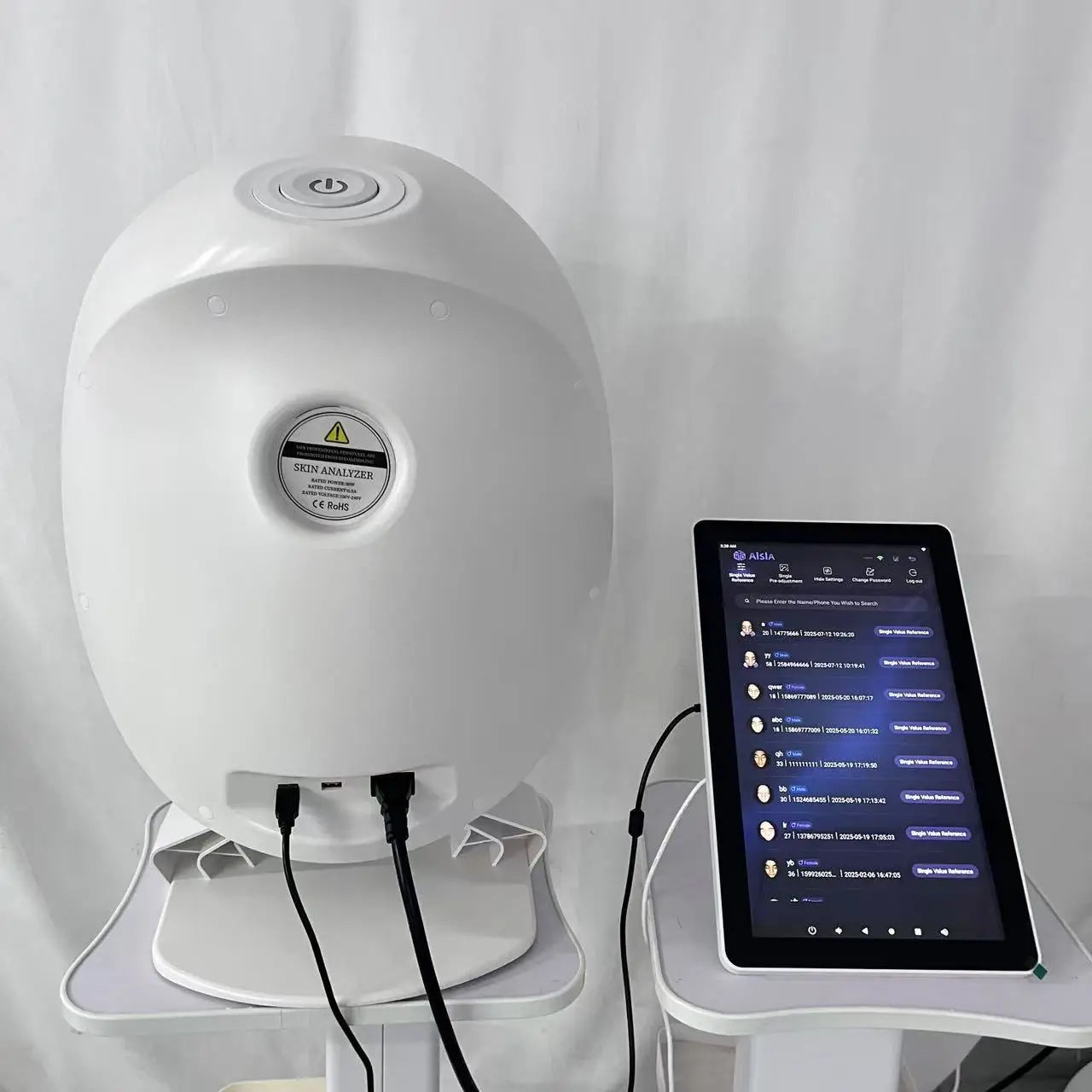
Step 1: Capture Consistent Facial Images
Begin with a standardized setup. Keep facial positioning, camera distance, lighting, and preparation instructions as consistent as possible. Consistency becomes especially important when the objective is to compare results over several visits.
Step 2: Run AI Skin Analysis
Capture the required images and allow the software to process the relevant imaging modes. The system can then organize the available information into skin indicators and visual results.
Step 3: Review and Explain the Results
Professionals should interpret the results in context rather than simply reading scores aloud. A client may care more about what a pigmentation pattern means for their routine than about a technical image classification.
Step 4: Build a Treatment or Skincare Plan
Use the analysis as one input when developing a personalized skincare or treatment strategy. The objective is to connect observable skin characteristics with practical recommendations rather than allowing the technology to dictate treatment automatically.
Step 5: Store Results and Track Progress
Historical images and reports can make future consultations more objective. When the same capture protocol is followed, professionals can compare changes in areas such as visible pigmentation, pores, wrinkles, moisture, or overall tone.
Businesses building a broader device-based consultation workflow can also explore the body care and health devices collection for related professional and personal-care technology.
Which Professional AI Skin Analyzer Is Best for Your Business?
Best for Aesthetic Clinics
Aesthetic clinics generally benefit from strong imaging detail, structured reports, historical comparisons, and a workflow that supports consultations before and after treatments. Prioritize repeatability and reporting rather than selecting a machine solely because it advertises the largest number of AI metrics.
Best for Dermatology Practices
Clinical environments should place particular emphasis on intended use, validation evidence, documentation, data security, workflow integration, and regulatory considerations. An analyzer can complement clinical assessment, but it should not be treated as a replacement for appropriate examination or diagnostic procedures.
Best for Med Spas
Med spas often need a balance between professional presentation and operational efficiency. A system that generates understandable reports and makes progress comparisons easy can provide practical consultation value while supporting a more structured client journey.
Best for Salons and Estheticians
Salons and independent estheticians may prioritize ease of use, footprint, consultation speed, and clear client-facing results. The ideal system should provide enough analytical depth to improve consultations without creating a complicated technical workflow.
The Beauty & Self-Care collection can be useful when evaluating how professional skin-analysis equipment fits into a broader beauty-service offering.
Best for Beauty Retailers and Consultation Counters
Retail environments often need fast imaging and highly understandable outputs. The best system is one that can fit naturally into a product consultation without requiring lengthy setup or specialist technical knowledge for every customer interaction.
For businesses specifically comparing a professional facial imaging solution, the MYOSLIM AI skin analyzer system is worth reviewing against the operational requirements above. Its listed configuration combines 36MP imaging, 8-spectrum technology, AI-powered analysis, multiple skin indicators, digital reporting, and image tracking.
Professional AI Skin Analyzer Cost and Total Cost of Ownership
The purchase price is only one part of the financial calculation. A professional analyzer can also involve software, training, maintenance, accessories, technical support, data storage, upgrades, and replacement costs.
What Determines the Upfront Price?
Price can be influenced by camera resolution, number of imaging modalities, illumination hardware, software sophistication, automation, physical construction, reporting capabilities, and vendor support. More expensive equipment is not automatically better for every business.
Software and Subscription Costs
Ask whether analysis software is included, licensed permanently, or provided through a recurring subscription. Also confirm whether future software updates, additional users, cloud storage, and report functionality carry additional fees.
Training, Maintenance, and Support
Staff need to know how to capture consistent images and interpret results responsibly. Include training and ongoing technical support in the purchasing comparison, especially for businesses that rely heavily on the device for daily consultations.
How to Compare Quote-Based Systems
Request an itemized quote rather than comparing headline prices. The quote should clarify the analyzer, software, installation, training, warranty, accessories, support, recurring fees, and any required workstation or infrastructure.
Professional AI Skin Analyzer Buying Checklist
Technology and Accuracy Checklist
- What imaging modalities does the system use?
- What is the camera resolution?
- Which skin indicators are actually analyzed?
- How are AI results generated and presented?
- What evidence supports analytical accuracy?
- How does the manufacturer address repeatability?
- Can the imaging protocol be standardized between visits?
Software and Workflow Checklist
- Does the system generate structured analysis reports?
- Can images and results be compared over time?
- How are client records stored?
- Does the software require recurring subscriptions?
- Can staff learn the workflow quickly?
- Does the system fit existing consultation processes?
Commercial and Support Checklist
- What is the complete delivered equipment cost?
- Are installation and training included?
- How long is the warranty?
- What technical support is available?
- Are replacement parts readily available?
- What certifications apply to the exact model?
- What are the expected ongoing software and maintenance costs?
Final Verdict: Choosing the Right Professional AI Skin Analyzer
There is no universal best professional AI skin analyzer. The right system depends on the business's highest-priority requirement: imaging depth, AI assessment, repeatability, client reporting, data management, consultation speed, portability, regulatory requirements, or total cost of ownership.
Choose Based on Your Highest-Priority Requirement
For a clinic focused on longitudinal skin tracking, repeatable imaging and historical comparison may matter more than a long list of automated scores. For a retail consultation counter, speed and simplicity may be more important. For a high-end aesthetic practice, detailed imaging and professional reporting may justify a more sophisticated system.
When to Prioritize Advanced Imaging Over More AI Metrics
More AI metrics do not automatically mean better analysis. If the underlying images are inconsistent or the vendor cannot explain how its algorithms were validated, additional scores may add complexity without adding proportional value.
Advanced imaging can be more useful when it provides genuinely different information that supports a defined professional workflow. The MYOSLIM system's combination of a 36MP industrial HD camera and 8-spectrum imaging is therefore best evaluated according to whether those capabilities improve the specific consultations and progress-tracking workflows your business performs.
For a professional setup that needs detailed facial imaging, structured reports, and multiple skin indicators, you can review the professional AI Skin Analyzer configuration and compare its documented specifications with the buying checklist above.
The strongest purchase decision is ultimately evidence-led: verify the imaging capabilities, understand exactly what the AI measures, test repeatability, review reporting and data workflows, confirm certifications and support, and calculate the full ownership cost. That approach is more reliable than choosing an analyzer simply because it has the highest megapixel count or the longest feature list.
Pillar Article: AI Facial Analyzer for Estheticians: Best Options Compared













