

How can you heat small rooms without wasting energy?
Heating a small office desk area efficiently starts with directing warmth exactly where you work—not the entire room. Using the best portable heater for office desk setups, improving airflow, and following safety best practices can reduce energy waste while keeping you consistently warm and focused.
Best Portable Heater for Office Desk (2026) — Stay Warm & Focused
Cold hands, chilly feet, and uneven warmth at your desk can ruin productivity—even when the room heating is on. If your workspace still feels cold, the issue isn’t always temperature—it’s positioning, airflow, and the wrong type of heater. The right desk heater solves this efficiently without increasing your electricity bill.
⏱ 7 min read

Desk heating works best when warmth is directed where you sit—not wasted across the room. See it in action
Why your office desk feels cold even in a heated room
Even with central heating, your desk area may feel cold due to poor airflow, distance from heat sources, or blocked circulation. Warm air rises, leaving your feet and lower body cold—especially when sitting for long hours.
Quick check: Are your hands or feet cold while the room feels warm? That’s a localized heating problem—not a lack of heat.
How to Choose the Best Desk Heater for Office Use
Size & Desk Space Considerations
Choose a compact heater that fits under or beside your desk without cluttering your workspace. A small footprint ensures better placement and airflow without interfering with cables or movement.
Safety Features for Office Use
Look for essential protections like tip-over shutoff, overheat protection, and cool-touch housing. A safe heater for office use is critical in shared or busy environments.
Noise Levels & Quiet Operation
Quiet operation matters in offices. Many quiet portable heaters for office use ceramic or fanless technology to minimize noise, allowing you to work without distractions.
Energy Efficiency & Power Consumption
An energy efficient office heater uses lower wattage (400–800W) while delivering focused warmth. Adjustable settings help reduce electricity use during long work sessions.
Top Portable Heaters for Office Desk in 2026
Best Overall Personal Heater for Office
Balanced performance with fast heating, quiet operation, and safety features. Ideal for daily office use and long sitting hours.
Quiet Portable Heater for Office
Designed for silent performance, perfect for shared or open-plan offices. Maintains steady warmth without distracting noise.
Mini Heater for Small Desk Spaces
Ultra-compact design fits easily under desks or beside monitors. Great for tight workspaces needing targeted heat.
Budget-Friendly Desk Heater
Affordable option with reliable performance. Suitable for occasional use or smaller personal workstations.
Energy Efficient Office Heater
Optimized for long hours with minimal power consumption. Helps reduce electricity bills while maintaining comfort.
| Heater Type | Best Use Case | Noise Level | Power Range |
|---|---|---|---|
| Fan Heater | Fast desk heating | Low–Moderate | 500–1500W |
| Ceramic Heater | Quiet office use | Low | 400–1000W |
| Mini Heater | Small desk spaces | Very low | 300–800W |
For most desk setups, a compact portable electric fan heater offers the best balance between speed, size, and efficiency.
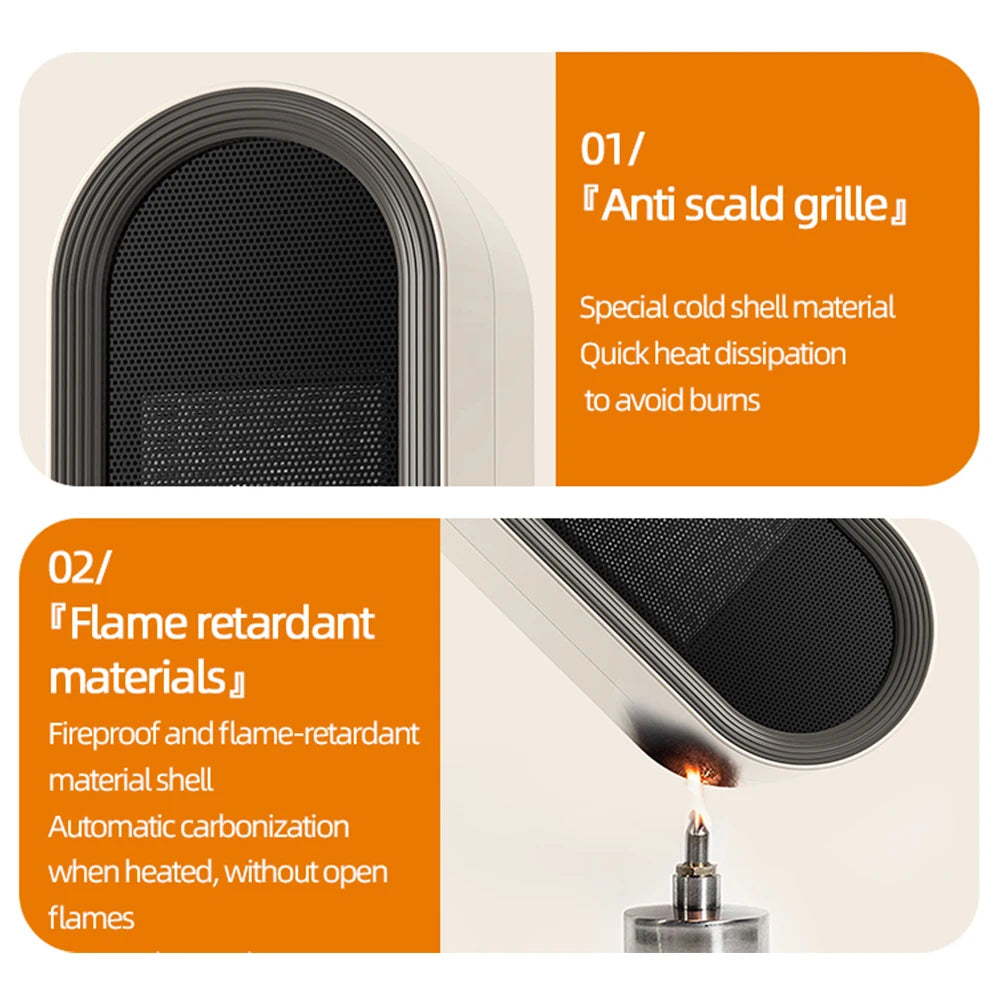
Compact heaters perform best with clear airflow and correct positioning. See it in action
Portable heater pros and cons at a glance
- ✅ Fast, targeted heating for desk areas
- ✅ Energy efficient compared to whole-room heating
- ✅ Compact and portable
- ❌ Limited coverage area
- ❌ Requires careful placement for safety
Step-by-Step Setup for Optimal Desk Heating
- Place your heater under or beside your desk on a flat surface.
- Ensure cables are safely positioned to avoid tripping.
- Set a comfortable temperature or low wattage mode.
- Keep airflow unobstructed for even heat distribution.
- Use short heating intervals to maintain efficiency.
Safety & Maintenance Tips for Office Heaters
- Keep heaters away from paper, fabric, and cables.
- Clean dust buildup regularly to maintain performance.
- Unplug when leaving your desk or office.
- Choose certified models with built-in safety protections.
- Avoid placing heaters on unstable or uneven surfaces.

Efficient desk heating is about precision, safety, and smart placement. See it in action
Supporting winter comfort beyond heating
Staying warm at your desk is only part of the equation. Explore simple upgrades from the Lifestyle collection to improve comfort, focus, and overall well-being during colder months.
FAQs: Personal Heaters for Office Desks
What is the most energy efficient desk heater for office use?
Low-wattage ceramic or mini heaters with adjustable settings provide efficient warmth without excessive energy use.
Are desk heaters safe for long hours at work?
Yes, if they include safety features like tip-over protection and overheat shutoff, and are used according to guidelines.
Can I use a mini heater under my desk without noise distraction?
Yes. Many modern heaters are designed for quiet operation, making them ideal for office environments.
How much wattage is enough for a personal office heater?
Typically, 400–800 watts is sufficient for a desk area. Adjustable settings allow better control of comfort and energy usage.
Related Guide: Personal room heater benefits for work, sleep, and daily comfort
UPGRADE PLAN { "outline": [ { "action": "MODIFY", "h2": "Best Portable Heater for Office Desk: Quick Picks for Every Workspace", "h3": [ "Best Overall", "Best Quiet Office Space Heater", "Best Mini Heater for Desk", "Best Energy Efficient Office Heater", "Best Budget Desk Heater" ], "focus": [ "Highlight top recommendations", "Match products to office scenarios", "Summarize strengths and trade-offs", "Enable quick comparison" ], "keywords": [ "best portable heater for office desk", "top-rated portable heaters for office use", "best personal space heater for office" ] }, { "action": "ADD", "h2": "Comparison Table: Office Desk Heater Features at a Glance", "h3": [], "focus": [ "Heating coverage", "Wattage and energy use", "Noise levels", "Safety features", "Best use case" ], "keywords": [ "desk heater for office", "office space heater quiet", "energy efficient office heater" ] }, { "action": "ADD", "h2": "How We Evaluated the Best Portable Heaters", "h3": [], "focus": [ "Heating performance", "Noise testing", "Safety assessment", "Energy efficiency", "Value for money" ], "keywords": [ "safe heater for office use", "quiet portable heater for office" ] }, { "action": "MODIFY", "h2": "How Do Portable Office Desk Heaters Work?", "h3": [ "Ceramic vs Fan-Forced Heaters", "Radiant vs Convection Heating", "Choosing the Right Heating Style" ], "focus": [ "Heating technology", "Office suitability", "Efficiency differences", "Comfort expectations" ], "keywords": [ "personal heater for office", "small heater for office desk" ] }, { "action": "KEEP", "h2": "Why your office desk feels cold even in a heated room", "h3": [], "focus": [ "Heat distribution", "Drafts", "Poor circulation", "Workspace positioning" ], "keywords": [ "heater for sitting all day", "desk heater for office" ] }, { "action": "MODIFY", "h2": "How to Choose the Best Desk Heater for Office Use", "h3": [ "Size & Desk Space Considerations", "Safety Features for Office Use", "Noise Levels & Quiet Operation", "Energy Efficiency & Power Consumption", "Thermostat & Temperature Controls" ], "focus": [ "Workspace size", "Safety certifications", "Noise tolerance", "Operating cost", "Convenience" ], "keywords": [ "small heater for office desk", "safe heater for office use", "office space heater quiet", "energy efficient office heater" ] }, { "action": "MODIFY", "h2": "Top Portable Heaters for Office Desk in 2026", "h3": [ "Best Overall Personal Heater for Office", "Best Quiet Portable Heater for Office", "Best Mini Heater for Desk", "Best Heater for Shared Offices", "Best Energy Efficient Office Heater", "Best Value Personal Heater" ], "focus": [ "Pros and cons", "Performance summary", "Ideal user", "Key specifications", "Value comparison" ], "keywords": [ "best portable heater for office desk", "quiet portable heater for office", "mini heater for desk", "personal heater for office" ] }, { "action": "MODIFY", "h2": "Portable Heater Pros and Cons", "h3": [], "focus": [ "Advantages", "Limitations", "Best office environments", "Who should avoid" ], "keywords": [ "best personal space heater for office" ] }, { "action": "MODIFY", "h2": "Office Desk Heater Safety Guide", "h3": [ "Proper Placement", "Under-Desk Safety", "Extension Cord Considerations", "Daily Maintenance" ], "focus": [ "Fire prevention", "Tip-over protection", "Safe operation", "Long-term reliability" ], "keywords": [ "safe heater for office use", "desk heater for office" ] }, { "action": "ADD", "h2": "Which Office Heater Is Best for Your Situation?", "h3": [ "Shared Office", "Home Office", "Under-Desk Heating", "All-Day Office Comfort" ], "focus": [ "Scenario recommendations", "Noise priorities", "Energy savings", "Comfort needs" ], "keywords": [ "heater for sitting all day", "office space heater quiet", "personal heater for office" ] }, { "action": "MODIFY", "h2": "Supporting Winter Comfort Beyond Heating", "h3": [], "focus": [ "Layering strategies", "Humidity control", "Workspace insulation", "Complementary accessories" ], "keywords": [ "energy efficient office heater" ] }, { "action": "MODIFY", "h2": "Frequently Asked Questions", "h3": [], "focus": [ "Buying concerns", "Safety", "Energy costs", "Office compatibility" ], "keywords": [ "best portable heater for office desk" ] } ], "internal_links": [ "Portable heated blankets", "USB heated seat cushions", "Workspace comfort accessories", "Energy-saving winter essentials", "Home office comfort guides" ], "faq": [ "What is the best portable heater for an office desk?", "Which office desk heater is the quietest?", "Are portable heaters allowed in office buildings?", "How much electricity does a desk heater use?", "Is a ceramic heater better than a fan heater for an office?", "Can I safely use a heater under my office desk?", "What size heater is best for a personal workspace?", "What safety features should an office heater have?" ], "trim": [ "How can you heat small rooms without wasting energy?", "Step-by-Step Setup for Optimal Desk Heating" ] } Approved linked products: - portable electric fan heater (/products/portable-electric-fan-heater) - portable electric fan heater (/products/portable-electric-fan-heater) - portable heater for indoor use (/products/portable-electric-fan-heater) - get yours now (/products/portable-electric-fan-heater) Product Rules - Keep all approved products. - Only approved products may contain affiliate links. - You may add real competitor products when useful. - Competitor products must not contain links unless already present. - Only create comparison tables when they genuinely improve the article. RULES - Apply every instruction in the Upgrade Plan. - Keep all existing affiliate links unchanged. - Keep all existing internal links unchanged. - Keep all existing image URLs unchanged. - Preserve sections such as Related Articles, Related Posts and Recommended Reading. - Avoid duplicate headings. - Insert new sections only where specified. - Improve clarity, topical coverage, EEAT and readability. - Expand weak sections only when required. - Use natural keyword placement. - Keep semantic HTML clean. YEAR UPDATE If visible article text contains "2005", replace it with "2026". Do not modify years inside: - URLs - href attributes - image filenames OUTPUT REQUIREMENTS Return ONLY the final upgraded HTML article. The output must be valid HTML and ready to publish. Do NOT return: - Markdown - Explanations - Notes - Code fences - JSON - XML Return the HTML beginning with the first HTML element and ending with the last HTML element.Best Portable Heater for Office Desk (2026) — Stay Warm & Focused
Finding the best portable heater for office desk setups can make a noticeable difference in comfort, productivity, and energy use. Instead of heating an entire office, a compact personal heater delivers warmth exactly where you work, helping keep your hands, feet, and legs comfortable while reducing unnecessary energy consumption.
Whether you work from home or in a shared office, the right desk heater combines fast heating, quiet operation, and built-in safety features. Choosing the correct placement and heater type also helps create consistent warmth without increasing your electricity bill.
⏱ 7 min read
Desk heating works best when warmth is directed where you sit—not wasted across the room. See it in action.
Why your office desk feels cold even in a heated room
If you spend hours at your workstation, you've probably noticed that your desk can feel colder than the rest of the room. This is a common issue caused by uneven heat distribution rather than an underpowered heating system. Warm air naturally rises toward the ceiling, while your feet and lower legs remain in the coolest part of the room.
Several factors can make the problem worse, including air conditioning vents, poorly insulated windows, exterior walls, drafts under doors, and workstations positioned far from the main heat source. Sitting still for long periods also reduces circulation, making your hands and feet feel colder even when the room temperature appears comfortable. That's why many people who need a heater for sitting all day benefit more from targeted heating than increasing the thermostat for the entire office.
A compact desk heater for office use provides focused warmth where it's needed most. Instead of wasting energy heating unused areas, it creates a more comfortable personal workspace while helping maintain overall energy efficiency.
Quick check: If the room feels warm but your hands, legs, or feet stay cold, you're likely dealing with localized heat loss caused by airflow, drafts, or poor workstation positioning—not a lack of overall room heating.
Office Desk Heater Safety Guide
Proper Placement
- Place your heater on a stable, level surface under or beside your desk with adequate clearance for airflow.
- Keep at least 3 feet (1 meter) of space between the heater and paper, curtains, bags, clothing, or other flammable materials.
- Position the airflow toward your seating area without blocking the air intake or outlet.
Under-Desk Safety
- Avoid covering the heater with blankets, coats, or footrests while it is operating.
- Ensure there is enough room for air to circulate around the unit.
- Do not place the heater where it can easily be kicked, bumped, or tipped over.
Extension Cord Considerations
- Whenever possible, plug the heater directly into a wall outlet.
- Avoid using extension cords or power strips unless they are specifically rated for the heater's electrical load and permitted by the manufacturer.
- Keep power cords organized to reduce tripping hazards around your workstation.
Daily Maintenance
- Clean dust from air vents regularly to maintain efficient heating performance.
- Inspect the power cord and plug for signs of wear before use.
- Turn the heater off and unplug it whenever you leave your desk for an extended period.
- Choose certified models with tip-over protection and automatic overheat shutoff for added safety.
Efficient desk heating is about precision, safety, and smart placement. See it in action.
Supporting Winter Comfort Beyond Heating
An energy efficient office heater is only one part of creating a comfortable workspace. Small adjustments to your environment can help you stay warm for longer while reducing the amount of heat you need.
- Dress in layers: Lightweight thermal clothing or warm socks help retain body heat throughout the workday.
- Improve humidity: Dry winter air can make rooms feel colder than they are. Maintaining comfortable humidity may improve overall comfort.
- Reduce drafts: Position your desk away from poorly insulated windows or seal gaps that allow cold air inside.
- Use complementary accessories: Footrests, insulated floor mats, and other products from the Lifestyle collection can further enhance workspace comfort during colder months.
Combining targeted personal heating with simple workspace improvements helps create a warmer, more comfortable office while keeping energy use under control.













