

Skin Analysis Systems Compared: Features, Accuracy & Cost
Professional skin analysis systems can look remarkably similar on a specification sheet, yet their practical value can differ substantially. Imaging modalities, measurable skin parameters, AI software, repeatability, reporting, client tracking, integrations, training, and ongoing costs all affect whether a system is actually useful in a clinic. The best choice is therefore not necessarily the device with the highest camera resolution or longest feature list. It is the system whose capabilities match the way your practice evaluates skin, documents treatments, and manages client progress.
This guide compares the most important factors for estheticians, skincare clinics, med spas, dermatology practices, and other professional users. It also distinguishes image-based skin analysis from medical diagnosis, because an automated score or visualization should not automatically be interpreted as a clinical diagnosis.
Professional Skin Analysis Systems: What Buyers Should Compare First
A professional skin analysis system is more than a camera. It combines controlled facial imaging with software designed to organize observations, quantify or score selected characteristics, generate reports, and support repeat assessments. For a professional practice, the value comes from making consultations more consistent and giving practitioners a structured way to document changes.
Who Benefits Most From a Professional Skin Analysis System?
High-volume esthetics practices can benefit when standardized imaging reduces reliance on subjective visual assessment alone. Med spas and treatment clinics may place greater emphasis on before-and-after documentation and longitudinal tracking. Skincare clinics may prioritize detailed reports and personalized consultation workflows, while research-oriented or advanced assessment environments may need more specialized imaging, calibration, and validation information.
A consumer facial scanner may be adequate for basic personal awareness, but professional buyers generally need stronger repeatability, client records, reporting, operator controls, and service support.
The 8 Buying Criteria That Matter Most
- Imaging capability: Determine whether the system uses standard RGB photography, polarized imaging, UV, multispectral, or other specialized imaging.
- Measured parameters: Check exactly which characteristics are measured, estimated, scored, or visualized.
- AI and software: Evaluate automated analysis, segmentation, scoring, reporting, and comparison tools rather than assuming “AI” means greater accuracy.
- Validation: Look for information about calibration, repeatability, reference methods, testing conditions, and independent or peer-reviewed evidence.
- Reporting: Compare report depth, visual overlays, client-facing presentation, and treatment documentation.
- Tracking: Determine whether the platform supports repeat visits, before-and-after comparisons, and longitudinal records.
- Workflow: Review cloud or local software, accounts, data export, integrations, and multi-provider access.
- Total ownership cost: Include hardware, software, subscriptions, training, service, replacement costs, and future upgrades.
Quick Comparison Matrix: Professional Skin Analysis Systems
| Evaluation area | What to compare | Why it matters |
| Imaging | RGB, polarized, UV, multispectral and specialized modes | Determines what visual information can be captured |
| Parameters | Pigmentation, pores, wrinkles, texture, redness, sebum, hydration and other indicators | Connects system capability to consultation needs |
| AI/software | Segmentation, automated scoring, classification and reporting | Can improve consistency and reduce manual work |
| Validation | Calibration, repeatability, reference methods and published evidence | Helps distinguish technical claims from demonstrated performance |
| Tracking | Before-and-after imaging and longitudinal records | Supports treatment documentation and progress reviews |
| Workflow | Cloud/local storage, accounts, exports and integrations | Affects day-to-day operational efficiency |
| Support | Training, warranty, repairs and software assistance | Reduces operational risk after purchase |
| Ownership cost | Hardware plus software, subscriptions, training and service | Shows the real financial commitment |

Skin Imaging Technology: RGB, Polarized, UV, and Multispectral Imaging
Imaging technology is one of the most important differences between professional skin analysis systems. However, more imaging modes do not automatically make one system better. Buyers should ask what each mode contributes to the intended workflow and whether the additional information is reproducible and useful.
RGB Photography for Standardized Surface Imaging
RGB photography captures facial appearance under visible light. It is useful for documenting complexion, visible pigmentation, spots, texture, wrinkles, and other surface characteristics. In a professional environment, standardized lighting, camera position, facial orientation, and capture conditions can be as important as camera resolution.
A high-resolution camera can produce detailed images, but detail alone does not guarantee accurate automated analysis. Consistency between appointments is essential when images are being used for before-and-after comparisons.
Polarized Imaging for Surface and Subsurface Visualization
Polarized illumination can reduce certain surface reflections and provide visual information that may not be as apparent in conventional photography. This can be useful when a practitioner wants additional visualization of complexion characteristics or surface patterns.
When comparing systems, ask whether polarized images are simply displayed for practitioner review or are also incorporated into automated analysis and scoring.
UV Imaging and Pigmentation-Related Visualization
UV-based imaging can reveal visual patterns that are less apparent under ordinary visible light. It may therefore contribute additional information for pigmentation-related visualization. However, UV imaging should not be treated as a standalone method for diagnosing skin disease or lesions.
Buyers should verify the intended use, operating procedure, and software interpretation rather than assuming that a UV image represents a medical finding.
Multispectral Imaging: What It Adds
Multispectral imaging uses multiple spectral bands rather than relying exclusively on conventional RGB photography. The additional spectral information can help a system distinguish visual characteristics that may overlap in ordinary photographs.
The important purchasing question is not simply how many spectra a device uses. Ask which bands are used, what outputs they support, how repeatable the capture is, and whether the manufacturer provides meaningful validation for the resulting measurements or scores.
What Can Professional Skin Analysis Systems Measure?
Professional systems can evaluate a range of visible and algorithmically derived skin characteristics. Buyers should distinguish between a variable that is directly measured by a dedicated sensor and one that is estimated from an image or generated by an algorithmic scoring model.
Pigmentation, Dark Spots, and Uneven Tone
Image-based systems can identify and quantify visible differences in pigmentation and complexion. This can help practitioners document uneven tone and compare changes over time. The usefulness of the result depends on consistent imaging conditions and the algorithm's methodology.
Pores, Wrinkles, and Skin Texture
Pores, wrinkles, and texture are commonly assessed through facial imaging. Software may identify regions of interest, calculate image-derived features, and translate them into scores or visual overlays. These outputs are useful for structured consultation, but the score should be interpreted according to the system's methodology rather than treated as an absolute clinical measurement.
Redness and Sensitivity Indicators
Some systems can visualize or score redness-related characteristics. This may help practitioners identify areas that warrant closer observation or document changes in appearance. A redness score or sensitivity indicator should not automatically be presented as a diagnosis of inflammation, allergy, or another medical condition.
Sebum and Oil-Related Analysis
Sebum analysis varies significantly between systems. Some approaches estimate oil-related characteristics from images, while others may use dedicated measurement techniques. Buyers should determine whether a product provides an actual sensor measurement or an optical or algorithmic estimate before comparing specifications.
Hydration and Moisture Measurement
Hydration is another area where terminology matters. A dedicated sensor can measure a physical property associated with skin moisture, while an imaging system may generate an appearance-based moisture score. These are not necessarily equivalent.
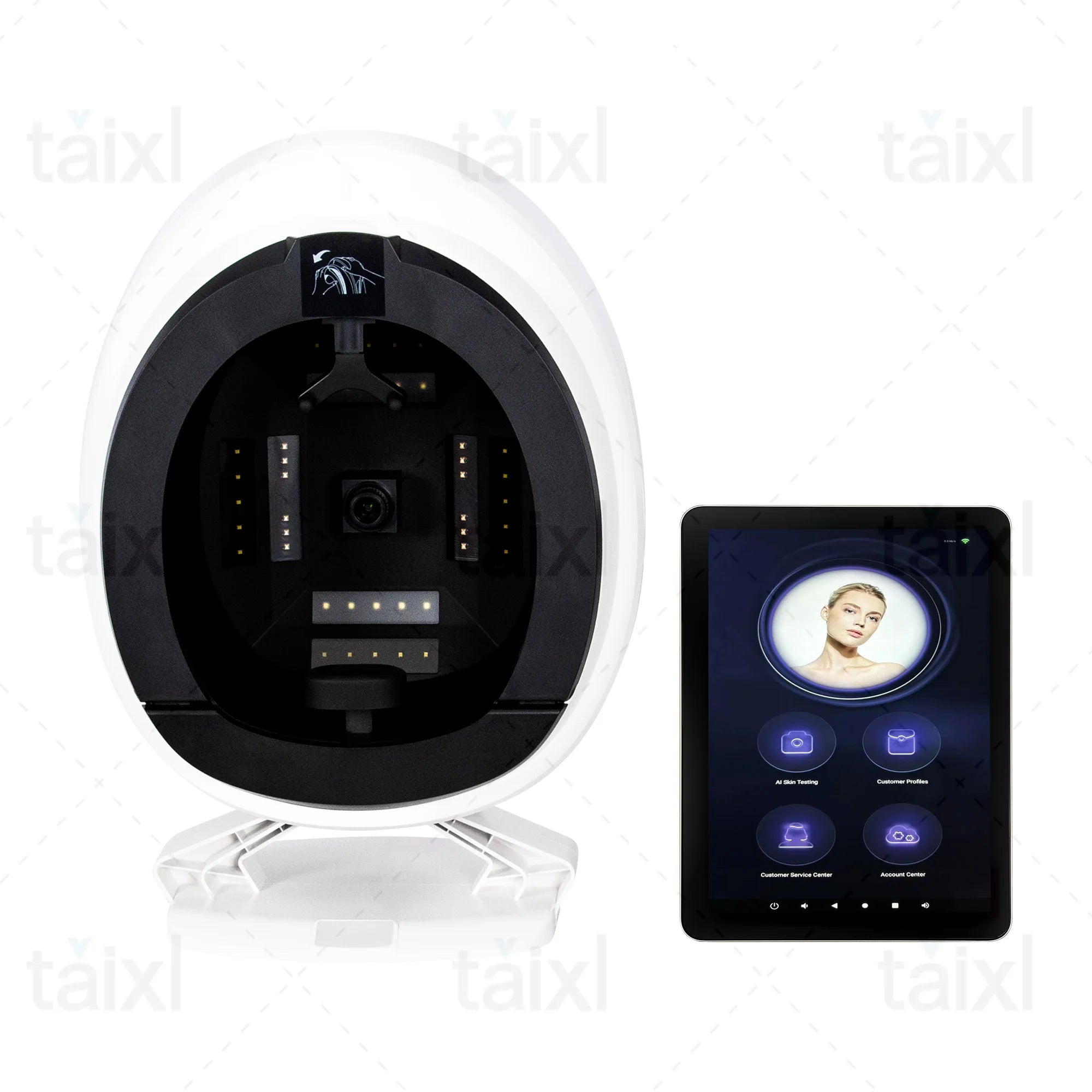
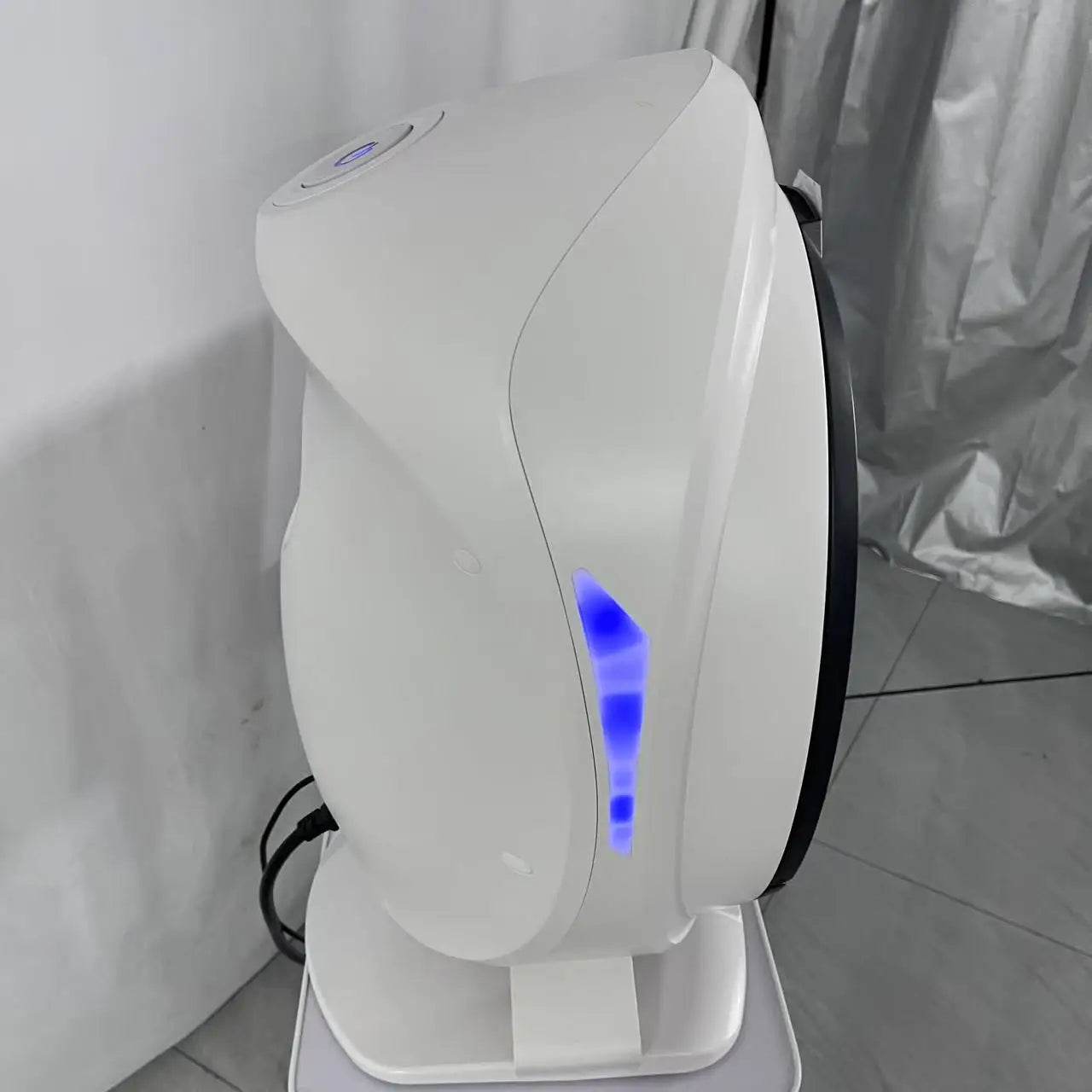
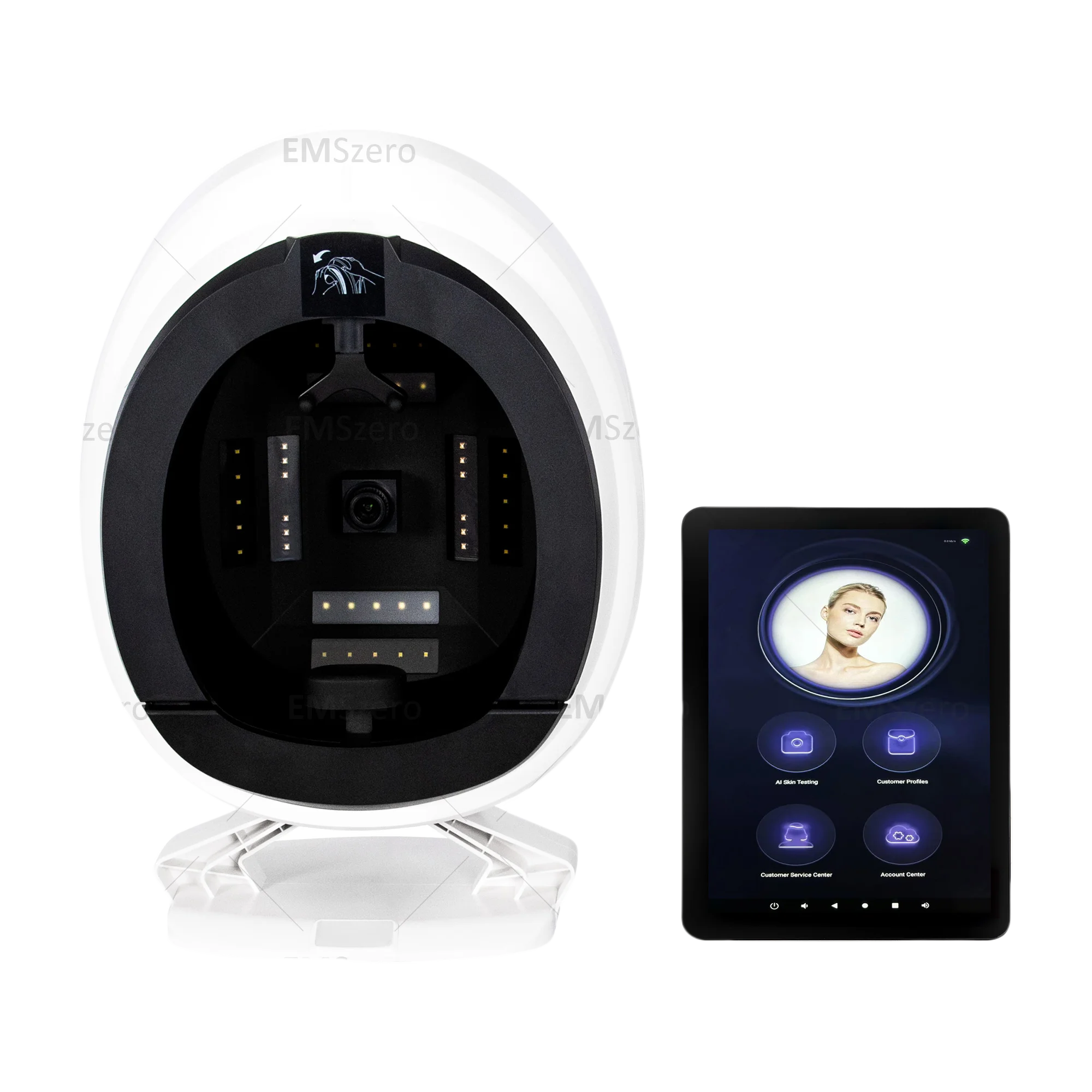
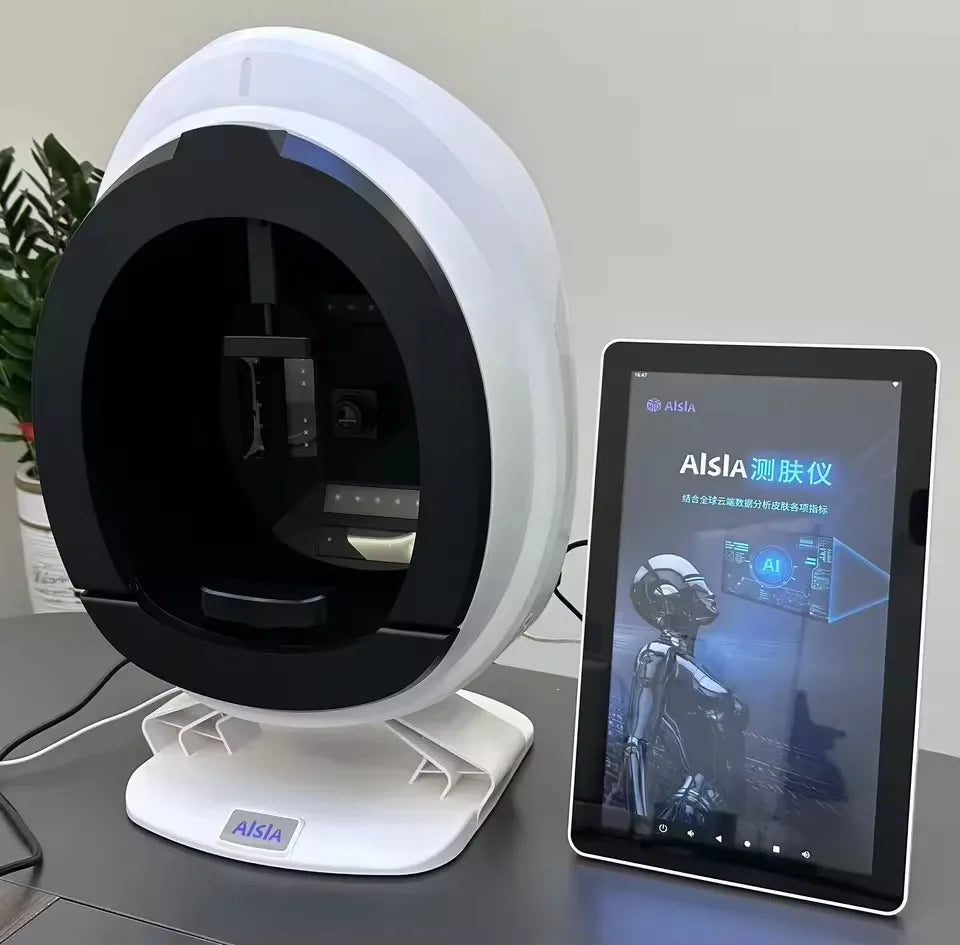
For example, the MYOSLIM AI Skin Analyzer is specified with AI and 8-spectrum imaging and is designed to evaluate indicators including moisture, sebum, pigmentation, pores, wrinkles, tone, and elasticity. Its stated specifications include a 36MP industrial HD camera. These capabilities should be understood as product specifications rather than independent proof of clinical diagnostic accuracy.
Lesion and Spot Visualization: Where Applicable
Some systems can improve visualization or documentation of spots and other facial features. That can be useful for consultation records and progress comparisons. It does not mean that every automated visualization system can diagnose a lesion. If clinical diagnosis is part of the intended workflow, buyers should separately verify the device's intended use, regulatory status, and supporting evidence.
AI, Computer Vision, and Automated Skin Scoring
AI is increasingly used in facial skin analysis, but the term itself is not a validation standard. A useful evaluation focuses on what the software actually does and how its outputs were tested.
How Computer Vision Turns Images Into Skin Scores
At a high level, computer vision software can segment facial regions, detect visual features, classify patterns, and assign scores. The system can then convert image data into structured outputs that are easier to review during a consultation.
This automation can make repeated assessments more consistent, but software results remain dependent on image quality, capture conditions, model design, training data, and the parameter being evaluated.
What AI Can Improve in a Clinic Workflow
AI and computer vision can help automate scoring, organize comparisons, generate reports, and document treatment progress. Instead of relying entirely on a practitioner's memory or subjective visual comparison, staff can use standardized digital records to support consultations.
This is particularly useful when multiple practitioners need to follow the same consultation process or when a clinic wants to compare images from several appointments.
AI Marketing Claims vs. Evidence
Buyers should ask manufacturers how the software was trained and validated. Important questions include whether representative test populations were used, whether results were compared with a reference method, whether testing was independent, and how reproducibility was evaluated.
“AI-powered” should therefore be treated as a software description, not an automatic guarantee of accuracy.
How Accurate Are Professional Skin Analysis Systems?
There is no single accuracy number that meaningfully applies to every professional skin analysis system. Accuracy depends on what is being measured, how the measurement is obtained, how the algorithm is validated, and what the result is intended to represent.
Accuracy Depends on What Is Being Measured
Image reproducibility, parameter measurement accuracy, algorithm classification performance, and clinical usefulness are different concepts. A system may produce highly consistent photographs while still having limitations in an algorithmically estimated skin score.
For purchasing decisions, evaluate each important parameter separately instead of accepting a general statement that the entire system is “highly accurate.”
Validation, Repeatability, and Calibration
Repeatability matters when the same client is assessed over multiple visits. Standardized positioning, lighting, camera distance, and capture protocols can reduce variation that has nothing to do with an actual change in skin condition.
Ask whether the system includes calibration procedures and whether the manufacturer provides documented test conditions. A device intended for longitudinal tracking should make repeatable image capture practical for staff.
How to Evaluate Clinical Validation
When available, look for peer-reviewed research, independent testing, clearly described sample populations, reference measurement methods, sensitivity and specificity data where relevant, and stated limitations. The quality of validation should be assessed in relation to the specific parameter being measured.
Why “Diagnostic Accuracy” Can Be Misleading
A professional skin analysis system can support visualization, measurement, consultation, and documentation without being a medical diagnostic device. Buyers should verify intended use and applicable regulatory information rather than assuming that automated skin scores constitute medical diagnoses.
Reporting, Before-and-After Imaging, and Longitudinal Skin Tracking
The software experience can determine whether a skin analysis system becomes an everyday clinical tool or an expensive camera that staff rarely use. Reporting and longitudinal tracking are especially valuable when consultations involve multiple appointments.
Automated Skin Analysis Reports
Compare reports for depth, visual overlays, scores, parameter breakdowns, and client-facing presentation. A strong report should help a practitioner explain observations without requiring extensive manual interpretation every time.
Before-and-After Imaging
Before-and-after comparisons are only meaningful when capture conditions remain reasonably consistent. Changes in lighting, facial angle, camera distance, or expression can create apparent differences that are unrelated to actual skin changes.
Longitudinal Skin Tracking
Longitudinal tracking allows practitioners to compare assessments across appointments and document treatment progress. This can make consultations more structured and provide a clearer record of how selected indicators change over time.
Client Records and Data Export
Before buying, determine whether records are stored locally or in the cloud, what export formats are available, who can access client information, and how user permissions are managed. Data portability can become important if the practice changes software or expands to multiple locations.
Workflow Integration: Software, Cloud Access, and Clinic Operations
Cloud-Based vs. Local Skin Analysis Software
Cloud software can make information accessible across supported locations and may simplify updates, while local software can provide different data-management and connectivity characteristics. Neither model is universally better. The right choice depends on the clinic's infrastructure, privacy requirements, number of users, and operating model.
EMR, CRM, Booking, and Other Integrations
Integration with existing systems can reduce duplicate data entry and make consultation records easier to manage. If integrations are important, ask which systems are supported, whether an API or export function is available, and whether integration requires additional fees.
User Accounts, Multi-Provider Access, and Data Security
Multi-provider practices should consider individual user accounts, permissions, record ownership, and access controls. A system designed for one operator may not provide the same operational flexibility as a platform built for multiple practitioners or locations.
Software Updates and Feature Lifecycle
Software support should be evaluated alongside hardware specifications. Ask how updates are delivered, whether they are included, how long support is expected to continue, and whether major features require additional licensing.
Training, Support, Warranty, and Service Requirements
Initial Training and Staff Onboarding
Even an advanced imaging system can produce inconsistent results if staff do not follow the same capture procedure. Evaluate installation assistance, operator training, documentation, calibration instructions, and onboarding resources before purchase.
Warranty, Repairs, and Replacement Parts
A warranty can reduce early ownership risk, but buyers should read the actual coverage. Determine what happens if the camera, computer, lighting components, or other hardware fails and whether replacement parts are readily available.
Technical Support and Software Assistance
Support response time can matter when the device is part of a daily consultation workflow. Compare available support channels, remote troubleshooting, software assistance, service availability, and escalation procedures.
Professional Skin Analysis System Cost and Total Cost of Ownership
Professional skin analysis system pricing varies substantially because systems can differ in cameras, imaging modalities, sensors, software, hardware, data management, and intended professional use. Hardware price alone is therefore an incomplete purchasing metric.
What Determines the Upfront Price?
Higher-resolution cameras, specialized imaging, additional sensors, dedicated hardware, advanced software, and professional workflow features can all affect the initial price. Buyers should first identify which capabilities their clinic will actually use.
Software Subscriptions and Recurring Fees
Ask whether the system requires cloud storage, software subscriptions, AI features, per-user licensing, per-location charges, or paid upgrades. A lower initial price can become less attractive if recurring fees are substantial.
Training, Service, and Replacement Costs
Include onboarding, staff training, technical service, replacement components, and future hardware or software upgrades in the budget. These expenses can materially affect the economics of a professional system over several years.
A Simple Total-Cost-of-Ownership Formula
Total cost of ownership = upfront hardware + required software + training + service + recurring subscriptions + expected replacement costs.
Using this formula makes it easier to compare systems with different pricing models on a more consistent basis.
Which Professional Skin Analysis System Is Right for Your Clinic?
Best Fit for High-Volume Esthetics Practices
High-volume practices should prioritize fast, repeatable image capture, straightforward reports, simple operator workflows, and reliable support. A system that produces sophisticated outputs but takes too long to operate may have less practical value than a simpler system that staff can use consistently throughout the day.
Best Fit for Med Spas and Treatment Clinics
Med spas and treatment-focused clinics may benefit most from systems emphasizing before-and-after documentation, longitudinal tracking, reporting, and workflow integration. The ability to compare a client's records over multiple visits can be particularly useful when consultations are part of an ongoing treatment plan.
Best Fit for Advanced Skin Assessment and Research-Oriented Workflows
Advanced workflows should place greater emphasis on specialized imaging, calibration, validation methodology, measurable parameters, repeatability, and data quality. More sophisticated imaging is most valuable when the practice understands how the resulting information will be used.
When a Lower-Cost System May Be Enough
A lower-cost system may make sense when the practice primarily needs standardized facial photography, basic skin visualization, or simple consultation documentation. Paying for specialized imaging or complex software that staff will not use can increase ownership costs without improving workflow.
Professional Skin Analysis Buying Checklist
- Confirm the imaging modalities you actually need.
- List the skin parameters required for your consultations.
- Determine which outputs are directly measured and which are algorithmic estimates.
- Ask for validation and repeatability information for important parameters.
- Review calibration and standardized capture procedures.
- Compare automated reports and client-facing outputs.
- Check before-and-after and longitudinal tracking features.
- Review cloud or local storage options and data export.
- Confirm user accounts and multi-provider access.
- Check integrations with existing clinic software.
- Ask about training, warranty, repairs, and technical support.
- Calculate total cost of ownership rather than comparing hardware prices alone.
For practices evaluating professional skincare equipment more broadly, the Skin and Beauty Care Devices collection can also be reviewed alongside a dedicated facial analysis system.
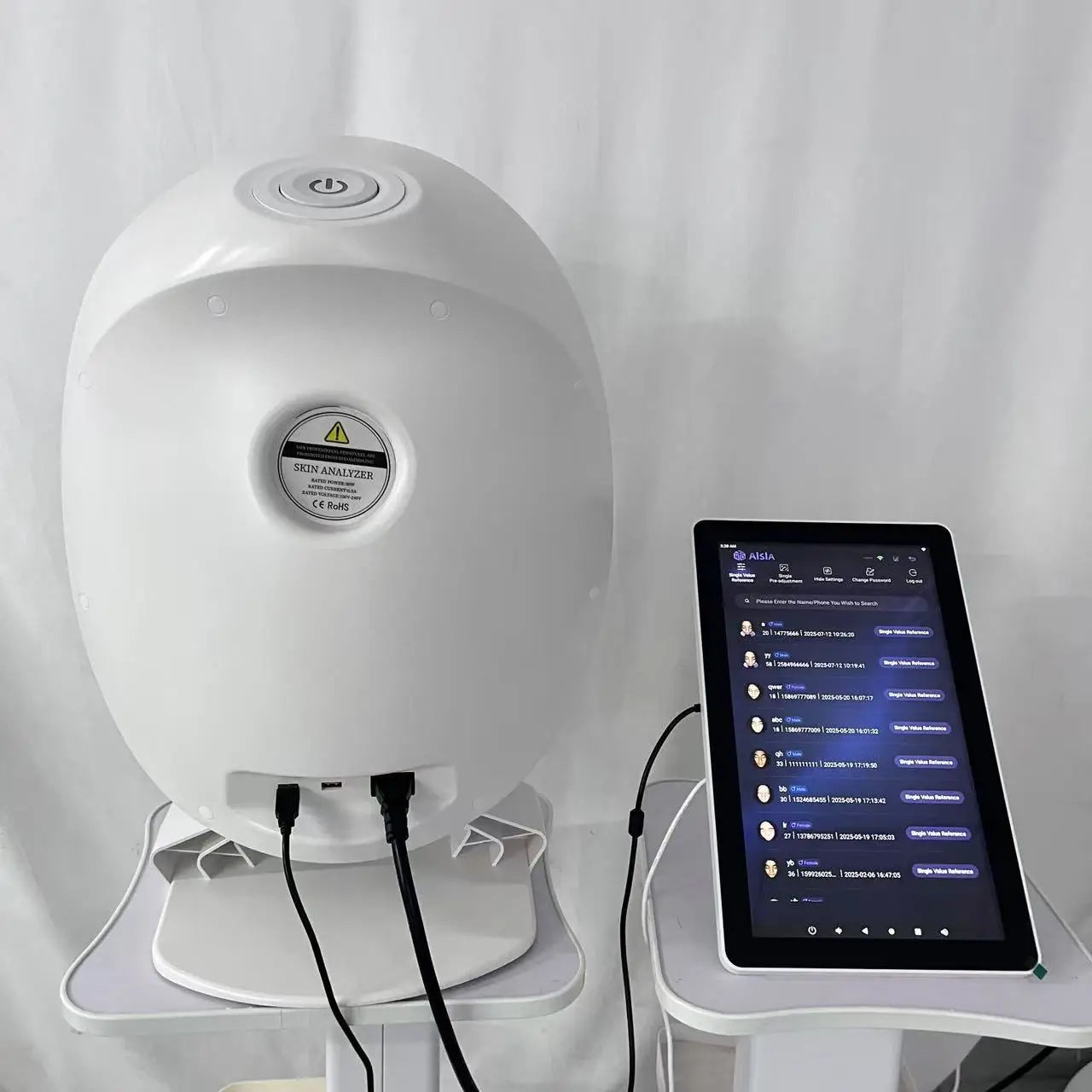
One example of a professional option is the AI Skin Analyzer for Professional 3D Facial Skin Analysis. According to the supplied product specifications, it combines a 36MP industrial HD camera with AI and 8-spectrum imaging and is designed for beauty salons, skincare clinics, and professional skin management businesses. Its listed analysis indicators include acne, pigmentation, pores, wrinkles, moisture, sebum, skin tone, and elasticity. These stated capabilities illustrate how a professional system can combine high-resolution facial imaging with structured analysis and reporting, but they should not be interpreted as independent evidence of diagnostic accuracy.
Professional Skin Analysis Systems: Pros and Cons
Pros
- Creates more standardized facial documentation than relying only on visual assessment.
- Can evaluate multiple visible and algorithmically derived skin characteristics.
- Supports structured consultations and digital reporting.
- Can make before-and-after comparisons easier to organize.
- Longitudinal records can support ongoing client progress tracking.
- AI and computer vision can reduce repetitive manual analysis tasks.
Cons
- System outputs vary by imaging technology, software, calibration, and validation.
- An AI-generated score should not automatically be treated as a clinical diagnosis.
- Specialized imaging can increase upfront and ongoing ownership costs.
- Inconsistent image capture can reduce the usefulness of longitudinal comparisons.
- Cloud software may introduce subscription, connectivity, or data-management considerations.
- Staff training is necessary to achieve consistent operational results.
Professional Skin Analysis Systems: Frequently Asked Questions
What are skin analysis systems used for in professional skincare clinics?
Professional skin analysis systems are used to support consultations through facial imaging, skin-condition visualization, structured assessment, digital reporting, treatment documentation, and progress tracking. Their outputs can complement professional judgment but should not automatically be treated as medical diagnoses.
What should you compare when choosing a digital skin analysis system?
Compare imaging modalities, skin parameters, AI and software capabilities, validation, calibration, reporting, before-and-after functionality, longitudinal tracking, data storage, integrations, training, support, warranty, and total cost of ownership.
How accurate are professional skin analysis systems?
Accuracy varies according to the parameter, measurement method, imaging conditions, calibration, algorithm, validation methodology, and intended use. A meaningful comparison should evaluate evidence for the specific measurement rather than relying on a single overall accuracy claim.
Which skin parameters can professional skin analysis systems measure?
Depending on the system, parameters can include pigmentation, dark spots, pores, wrinkles, texture, redness, sebum, hydration or moisture, skin tone, elasticity, and acne-related indicators. Buyers should verify whether each parameter is directly measured, image-derived, or algorithmically estimated.
How much does a professional skin analysis system cost?
There is no single price that applies to all professional systems. Cost depends on hardware, imaging modalities, software, sensors, subscriptions, training, service, and replacement requirements. The most useful comparison is total cost of ownership rather than hardware price alone.
Conclusion: Choose the System That Fits the Workflow
The best professional skin analysis system is not necessarily the one with the most imaging modes, highest camera resolution, or longest list of AI features. The stronger choice is the system whose imaging capabilities, measurable parameters, validation, software, reporting, tracking, workflow integration, support, and total cost align with the clinic's actual needs.
For a practice considering an AI-based facial analysis solution, the professional AI skin analyzer described in this guide provides a relevant example of a system built around 36MP imaging, 8-spectrum technology, AI analysis, multiple skin indicators, digital reporting, and image tracking. Review those specifications against your own consultation workflow rather than treating any single feature as proof that one system is universally superior.
If you are comparing additional professional skincare equipment, you can also explore the Beauty & Self-Care Blog and the Body & Face Blog for related educational content.
The purchasing goal is simple: choose the system that produces information your practitioners can use consistently, supports the documentation your clients need, and remains practical to operate and maintain over its expected service life.
Pillar Article: AI Facial Analyzer for Estheticians: Best Options Compared













