

Do Carbon Fiber Insoles Really Improve Performance?
Carbon fiber insoles can improve performance by limiting excessive forefoot motion, increasing stability during push-off, and helping some runners transfer force more efficiently. Unlike traditional foam inserts that primarily provide cushioning, lightweight carbon fiber shoe inserts use a rigid plate to reduce energy lost through excessive foot flexion. However, the degree of improvement depends on your footwear, activity, foot mechanics, and individual running style.
Research and real-world experience suggest that the greatest carbon fiber insoles performance benefits are typically seen during repetitive, high-impact activities such as running, sprinting, court sports, and fast-paced walking. While some users notice a quicker toe-off and reduced muscular fatigue, others may experience little change if their shoes already provide sufficient stiffness or if their biomechanics differ.
It's also important to distinguish performance enhancement from pain management. A rigid carbon fiber insert may help reduce motion around painful toe joints or injured forefoot structures, but that benefit is different from improving speed or athletic efficiency.
- Helps stabilize the forefoot during toe-off
- May reduce energy loss caused by excessive foot flexion
- Supports a more consistent stride for some runners
- Can reduce fatigue during repetitive high-impact activities
- Performance gains vary by footwear, activity, and the individual user
Carbon Fiber Insoles Performance Compared for Speed and Support
Carbon fiber insole reviews often focus on more than speed alone. The best models balance stiffness, weight, comfort, durability, fit, and intended use to improve efficiency without making shoes uncomfortable. Whether you're training for faster race times, recovering from a forefoot injury, or looking for better support during long workdays, choosing the right carbon fiber insole matters as much as the material itself.
⏱ 7 min read
Ever feel like your legs are strong, but your shoes are limiting your stride? For many runners and active individuals, the missing piece isn't necessarily more cushioning—it's better control of how the foot moves during each step. Carbon fiber insoles are designed to reduce unnecessary motion while supporting a smoother, more efficient push-off.
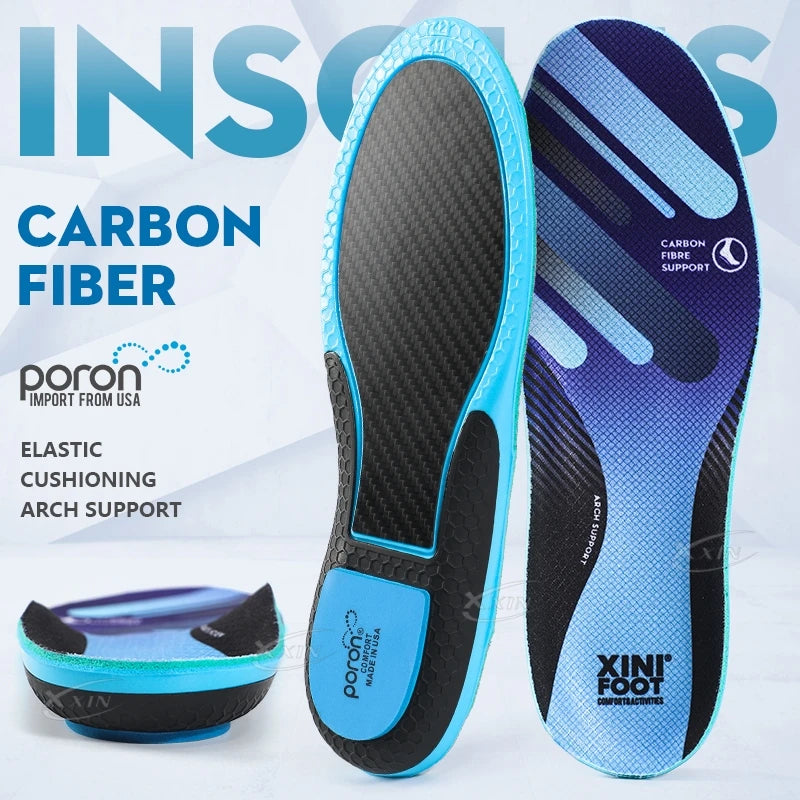
Carbon fiber insoles performance in motion — feel the snap of kinetic energy running. See it in action.
How Do Carbon Fiber Insoles Work? (Energy Return Explained)
Carbon fiber insoles use a rigid plate that limits excessive bending through the forefoot while redistributing pressure across the foot during movement. Rather than acting like a soft cushion, the insert provides structural support that can make push-off feel more stable and efficient.
During kinetic energy running , the shoe, insole, and lower leg work together through the gait cycle. As your foot contacts the ground, the carbon fiber plate resists excessive flexion. During toe-off, that controlled stiffness helps direct force forward instead of allowing energy to dissipate through repeated bending of the forefoot.
- Foot strikes the ground and body weight loads the shoe.
- The rigid plate limits unnecessary forefoot motion while maintaining stability.
- Toe-off occurs with a firmer, more controlled transfer of force.
This mechanism is similar in principle to the stiff plates found in many modern racing shoes, although individual insoles vary considerably in thickness, flexibility, and overall performance. As a result, carbon fiber insoles tend to work best for activities involving repetitive forward motion rather than casual everyday walking alone.
Top Benefits of Carbon Fiber Insoles for Running and Daily Use
- Improved propulsion: A rigid forefoot can help create a more efficient push-off during running and fast walking.
- Better motion control: Reduced forefoot flexion may improve stability for certain users and movement patterns.
- Reduced muscular fatigue: Some athletes report feeling less lower-leg fatigue during repetitive training sessions.
- Support for specific foot conditions: Reduced joint motion may help people managing turf toe, hallux rigidus, or certain forefoot injuries when recommended by a healthcare professional.
- Long-lasting durability: Carbon fiber maintains its structural stiffness significantly longer than most foam or gel inserts.
While these benefits can be meaningful, carbon fiber insoles are not a universal replacement for cushioning or custom orthotics. Their effectiveness depends on proper shoe fit, the intended activity, and whether your goal is improved performance, reduced joint motion, or additional structural support instead of simply adding comfort.
Carbon Fiber Insole Performance: Comparison Table and Evaluation Criteria
When comparing carbon fiber insole reviews, performance is only one factor. The best inserts should also provide an appropriate balance of rigidity, weight, comfort, durability, and compatibility with your footwear. The table below highlights how carbon fiber inserts differ from traditional foam and gel alternatives.
| Evaluation Criteria | Carbon Fiber Insoles | Foam Insoles | Gel Insoles |
|---|---|---|---|
| Motion Control | Excellent (Rigid forefoot support) | Low | Low to Moderate |
| Energy Return | High potential during running | Low | Moderate |
| Weight | Ultra-light | Light | Moderate |
| Thickness | Thin profile | Varies | Usually thicker |
| Durability | Very High | Low | Medium |
| Comfort | Firm after break-in | Soft | Highly cushioned |
| Shoe Compatibility | Running shoes, work boots, supportive everyday shoes | Most footwear | Roomier footwear |
| Best Use | Running, forefoot protection, long hours on feet | General comfort | Shock absorption |
Rather than outperforming every alternative in every situation, carbon fiber insoles excel when limiting excessive forefoot motion is the priority. Users primarily seeking soft cushioning may prefer foam or gel inserts, while runners and people managing specific forefoot conditions often benefit from a rigid design.
Best Carbon Fiber Insoles (Tested & Reviewed)
The following recommendations evaluate carbon fiber insoles using consistent criteria: rigidity, comfort, weight, durability, thickness, fit, and intended use. Choosing the right model depends more on your activity and foot condition than on stiffness alone.
1. Best Overall Carbon Fiber Insoles
A balanced design that combines efficient motion control with everyday comfort. Suitable for runners, walkers, and users seeking long-term durability without excessive stiffness.
Pros
- Excellent balance of rigidity and comfort
- Thin profile fits many athletic shoes
- Highly durable for regular use
Cons
- May require a short adaptation period
Ideal for: Mixed training, walking, and daily wear.
2. Best for Running Performance
Designed for runners looking to maximize propulsion and maintain a consistent toe-off during repetitive training.
Pros
- High forefoot stiffness
- Very lightweight construction
- Supports efficient running mechanics
Cons
- Can feel too firm for casual walking
Ideal for: Road running, speed workouts, and longer-distance training.
3. Best for Arch Support & Orthopedic Needs
Combines a rigid carbon fiber base with structured support to reduce excessive foot motion while improving alignment.
Pros
- Improves overall foot stability
- May complement supportive footwear
- Useful for selected biomechanical needs
Cons
- Not a replacement for custom orthotics when medically prescribed
Ideal for: Users seeking additional structure alongside supportive shoes.
4. Best Budget Option
An affordable introduction to rigid carbon fiber inserts for users who want to evaluate whether this style suits their needs.
Pros
- Lower purchase cost
- Lightweight construction
- Good entry point for first-time users
Cons
- Typically offers fewer fit and sizing options
Ideal for: Beginners and occasional athletic use.
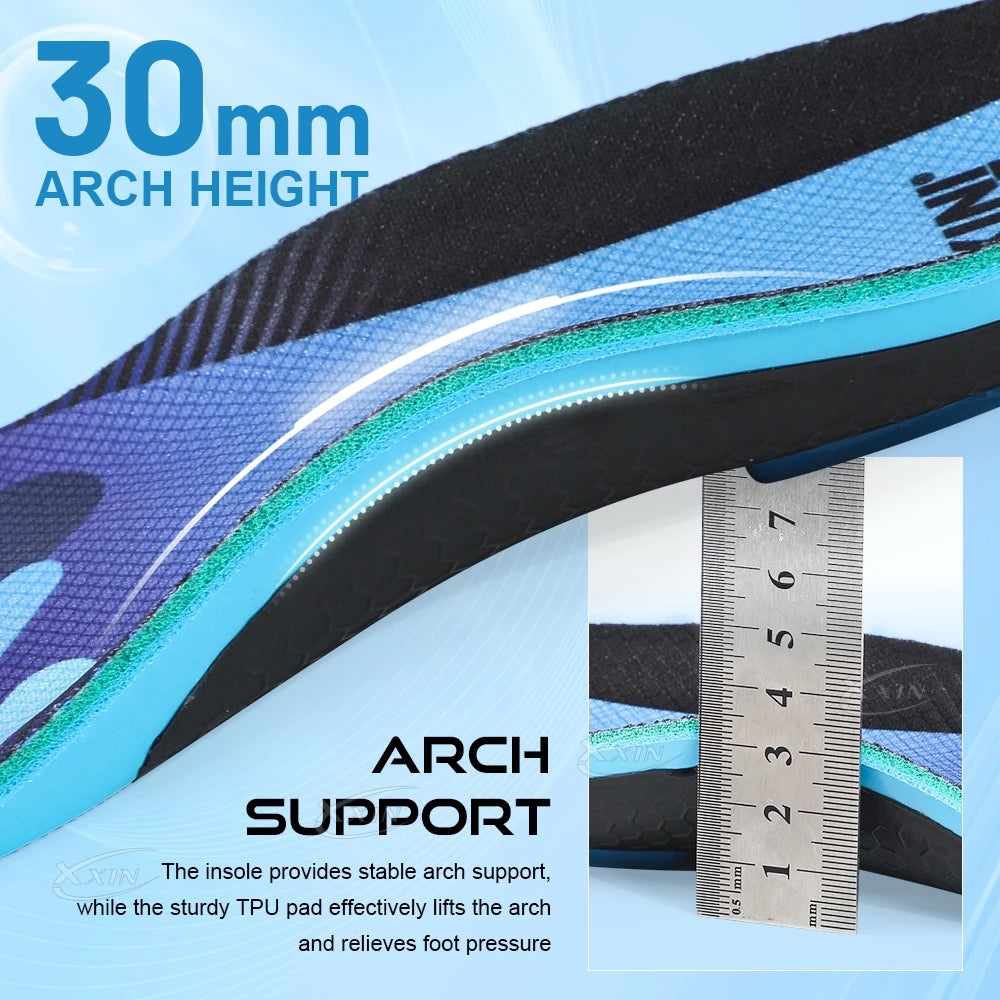
Lightweight carbon fiber shoe inserts evaluated for stability, comfort, and running efficiency. See it in action.
Who Benefits Most from Carbon Fiber Insoles?
Carbon fiber insoles are most effective when the goal is to limit excessive forefoot motion rather than simply increase cushioning. They are commonly chosen for performance, structural support, or to help reduce motion around sensitive joints.
- Runners: Those looking for improved stride efficiency and a firmer toe-off.
- Court and field athletes: Sports involving repeated acceleration and directional changes may benefit from additional forefoot stability.
- Workers on their feet: People who spend long hours standing or walking in supportive footwear may appreciate the added structural support.
- Users transitioning from supportive footwear: Carbon fiber inserts can complement, but do not automatically replace, orthopedic arch support shoes.
- People with certain forefoot conditions: A healthcare professional may recommend rigid inserts to reduce movement associated with turf toe, hallux rigidus, or selected recovery situations.
Carbon fiber insoles are generally less suitable for users who primarily want plush cushioning or who wear shoes with limited interior space. Matching the insert to your footwear and intended activity is often more important than choosing the stiffest model available.
How to Choose the Right Carbon Fiber Insoles
The best carbon fiber insole is the one that matches your footwear, activity level, and foot mechanics. Instead of choosing the stiffest model available, evaluate how the insert will function inside your shoes and whether its design fits your intended use.
- Match rigidity to your activity: Stiffer inserts are generally better for running, forefoot protection, and motion control, while semi-rigid designs may feel more comfortable for everyday use.
- Check shoe compatibility: Verify there is enough interior volume for the insert without making the shoe excessively tight. Running shoes, work boots, and supportive walking shoes often accommodate rigid inserts more easily than minimalist footwear.
- Consider length, width, and forefoot coverage: Full-length carbon fiber insoles provide more consistent support, while partial-length plates may be recommended for specific footwear or medical applications.
- Evaluate your arch shape: Carbon fiber provides rigidity rather than customized arch correction. If you require significant biomechanical correction, discuss whether a custom orthotic may be more appropriate.
- Think about cushioning preferences: Some lightweight carbon fiber shoe inserts include a thin comfort layer, while others prioritize maximum stiffness with minimal padding.
- Follow medical guidance when appropriate: If you're recovering from surgery or managing conditions such as turf toe, hallux rigidus, or other forefoot disorders, consult your healthcare professional before selecting an insert.
Taking these factors into account improves both comfort and long-term performance while reducing the likelihood of sizing or compatibility problems.
How to Use Carbon Fiber Insoles for Best Results
Because carbon fiber inserts are considerably stiffer than traditional foam insoles, most users benefit from a gradual adaptation period. Proper fit and realistic expectations are just as important as the insert itself.
- Wear the insoles for 30 to 60 minutes initially, increasing usage gradually over several days.
- Place the insert securely inside a properly fitted shoe without creating pressure points or heel slippage.
- Use supportive footwear that allows enough room for the rigid plate to sit flat.
- Pay attention to overall comfort, especially around the forefoot and toes during the first week.
- Reduce wear time if discomfort develops, and discontinue use if pain consistently worsens or new symptoms appear.
A short break-in period is common, but persistent discomfort is not. If the insert continues to cause pain after proper adjustment, it may be incompatible with your footwear or foot mechanics.
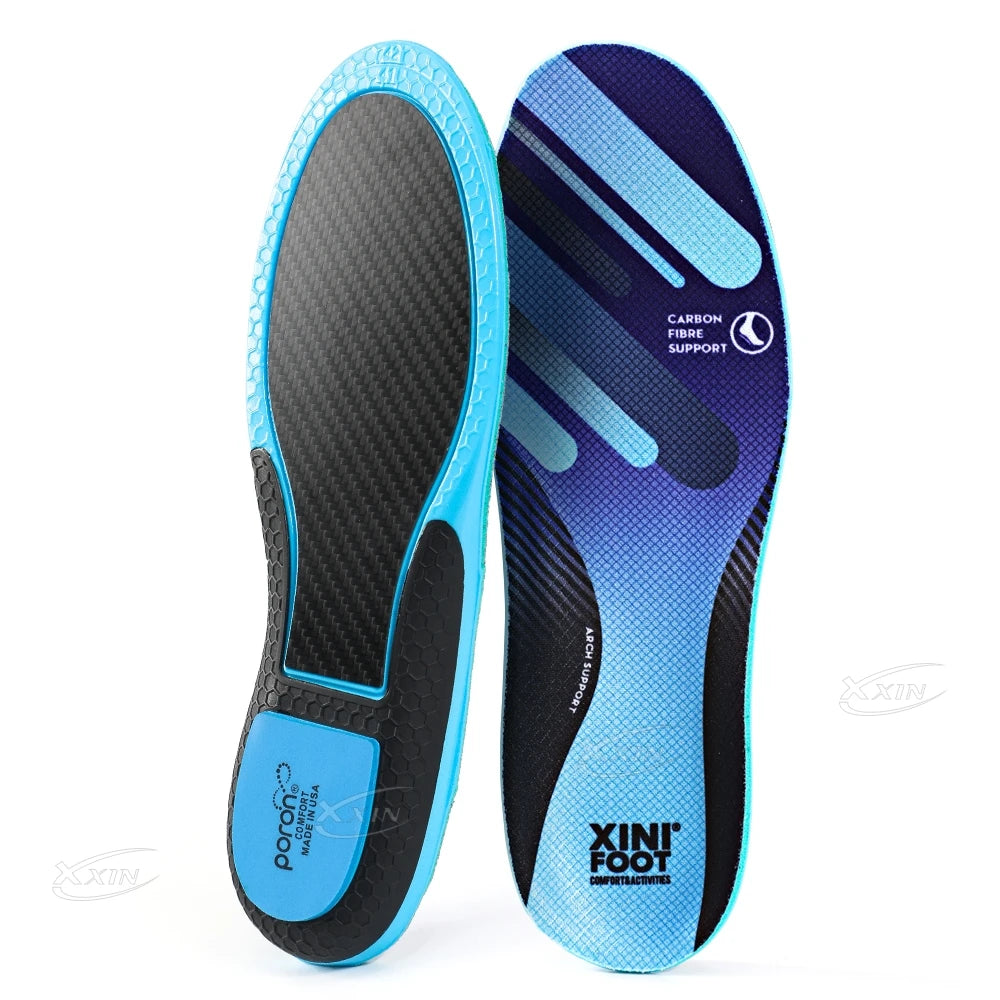
Carbon fiber insoles paired with supportive footwear to improve stability and forefoot motion control. See it in action.
Are Carbon Fiber Insoles Worth It? (Cost vs Performance)
Carbon fiber insoles are often worth the investment for people who specifically need improved motion control, long-term durability, or enhanced running efficiency. Their value comes less from extra cushioning and more from the ability to reduce excessive forefoot flexion while maintaining structural support over thousands of miles or hours of use.
Compared with foam inserts, carbon fiber models generally last much longer and retain their stiffness better over time. Compared with budget rigid inserts, premium carbon fiber options are typically lighter, thinner, and easier to fit into performance footwear.
If your primary goal is soft comfort for occasional walking, a quality foam or gel insole may provide better value. However, runners, active workers, and individuals using rigid inserts under medical guidance often find that the increased durability and specialized support justify the higher initial cost.
If you're looking for a lightweight rigid insert designed to improve forefoot stability and long-term durability, you can explore the featured model here: Carbon Fiber Insoles .
Frequently Asked Questions About Carbon Fiber Insoles
Do carbon fiber insoles really improve performance?
They can improve performance for some users by limiting excessive forefoot motion and creating a more efficient toe-off during running or other repetitive activities. The benefits depend on your footwear, gait mechanics, training style, and whether additional rigidity suits your needs.
Do carbon fiber insoles work for flat feet?
They may help some people with flat feet by providing a more stable platform, but carbon fiber itself does not replace proper arch support. Users who require significant biomechanical correction may benefit more from custom orthotics or a healthcare professional's recommendation.
Do carbon fiber insoles work for walking or standing jobs?
Yes, they can reduce excessive forefoot motion and provide additional structural support during long periods of standing or walking. Comfort depends on having supportive shoes with enough room to accommodate the insert.
Are carbon fiber insoles good for turf toe or hallux rigidus?
Rigid carbon fiber inserts are commonly used to reduce movement through the big toe joint, which may help decrease discomfort associated with turf toe or hallux rigidus. They should be used according to guidance from a qualified healthcare professional, particularly after injury or surgery.
Do carbon fiber insoles work for Morton's neuroma?
Some people with Morton's neuroma may benefit from reduced forefoot motion, but effectiveness varies depending on the cause and severity of symptoms. A podiatrist can recommend whether a rigid insert is appropriate for your condition.
Are carbon fiber insoles better than orthopedic arch support shoes?
Not necessarily. Carbon fiber insoles focus on motion control, while orthopedic arch support shoes are designed to improve overall foot alignment and support. In many cases, the two can be used together rather than replacing one another.
How long do carbon fiber insoles last?
With normal use, carbon fiber insoles generally outlast foam and gel inserts because the material resists compression and maintains its stiffness over time. Actual lifespan depends on usage frequency, activity level, and shoe conditions.
Do carbon fiber insoles feel stiff at first?
Yes. Most users notice a firmer feel during the first several wears. A gradual break-in period usually improves comfort, but persistent pain or worsening symptoms may indicate the insert is not the right fit.
Related Guide: Best Insoles for Shock Absorption Compared for Sports Impact













