

Best Neck Support for Office Chair: Top Picks for Pain Relief & All-Day Comfort
Quick Comparison: Best Neck Support for Office Chair (2026)
Top Picks Side-by-Side
- Best Overall: Ergonomic memory foam neck support for office chair with adjustable dual straps, breathable cover, and balanced firmness for everyday comfort.
- Best for Neck & Shoulder Pain: Contoured cervical support cushion with high-density foam that promotes neutral spinal alignment during long work sessions.
- Best Adjustable: Height-adjustable office chair neck support cushion designed to fit different chair backs and user heights.
- Best Budget: Lightweight foam neck pillow with washable cover for occasional use and entry-level ergonomic support.
- Best for Gaming Chairs: High-back compatible neck pillow that stays securely positioned during extended gaming or streaming.
Best by Use Case
- For 8+ Hour Workdays: Breathable memory foam with an ergonomic contour that minimizes pressure buildup and supports healthy posture.
- For Frequent Neck Pain: Firmer cervical support that helps reduce forward head posture and upper trapezius fatigue.
- For Shared Workspaces: Adjustable neck support cushion that can be repositioned quickly for different users.
- For Remote Workers: Portable office chair neck support cushion that fits most home office chairs.
- For Budget Buyers: Simple foam support that improves comfort without a significant investment.
Compatibility at a Glance
- Executive Chairs: Excellent fit with high-back designs and integrated headrests.
- Mesh Office Chairs: Choose adjustable straps that prevent slipping on flexible chair backs.
- Gaming Chairs: Compatible with most racing-style chairs featuring tall backrests.
- Task Chairs: Best paired with compact, lightweight neck cushions that do not interfere with movement.
10 Best Neck Support Cushions for Office Chairs (Tested & Reviewed)
Best Overall
An ergonomic memory foam neck support for office chair delivers the best balance of comfort, pressure relief, adjustability, and long-term durability. It conforms to the natural curve of the neck while maintaining enough structure to reduce fatigue during full workdays.
Best for Neck & Shoulder Pain
Firm cervical support cushions help maintain proper head alignment, reducing strain on the upper trapezius muscles and minimizing discomfort caused by prolonged sitting and forward head posture.
Best Adjustable Cervical Support
Look for an office chair neck support cushion with adjustable straps and height positioning so it can accommodate different chair back heights, body proportions, and sitting preferences.
Best Memory Foam
High-density memory foam adapts to your cervical curve while resisting compression over time, providing consistent support throughout the workday without feeling overly soft.
Best Budget
Affordable foam cushions offer reliable basic support for occasional desk work, making them suitable for students, hybrid workers, or anyone seeking an economical ergonomic upgrade.
Best for Gaming Chairs
Designed for taller chair backs, gaming chair neck pillows remain securely positioned and provide continuous support during extended gaming, streaming, or creative sessions.
Best for Mesh Chairs
Mesh office chairs benefit from lightweight cushions with non-slip adjustable straps that stay stable without reducing the flexibility or breathability of the chair back.
Best Portable Option
Compact neck support cushions are easy to move between the office, home workstation, coworking space, or travel destination while maintaining ergonomic comfort wherever you work.
How We Tested
Our evaluation focused on ergonomic design, neck alignment, comfort during 8-hour sitting sessions, foam resilience, breathability, adjustability, ease of installation, compatibility with common office chair styles, and overall long-term value.
Pros & Cons Summary
- Pros: Improves neck alignment, reduces muscle fatigue, fits most office chairs, supports healthier sitting posture, and enhances comfort during prolonged computer work.
- Cons: Requires proper positioning for best results, may need occasional adjustment, and cannot compensate for poor workstation ergonomics on its own.
Does Neck Support for Office Chairs Really Work?
What Science Says About Cervical Support
Yes. A properly positioned cervical support for office chair use helps maintain the natural curve of the neck, reducing muscle fatigue caused by prolonged forward head posture. Ergonomic studies consistently show that supporting the cervical spine distributes pressure more evenly across the neck and upper back, improving comfort during extended desk work and reducing the effort required from surrounding muscles.
When It Helps (and When It Doesn’t)
A neck support cushion delivers the greatest benefit when combined with good workstation ergonomics, including correct chair height, monitor placement, keyboard positioning, and regular movement breaks. While it can reduce neck pain from sitting at a desk, it should not be considered a replacement for medical evaluation if pain is persistent, severe, or related to an underlying condition.
⏱ 6 min read
Long hours at your desk shouldn't end with neck stiffness, headaches, or shoulder tension. Whether you work from home, spend full days in the office, or alternate between multiple workspaces, choosing the best neck support for desk chair use can significantly improve posture, reduce muscle strain, and increase comfort throughout the day. This guide compares leading options, explains what features matter most, and helps you choose the right office chair neck support cushion for your workspace.
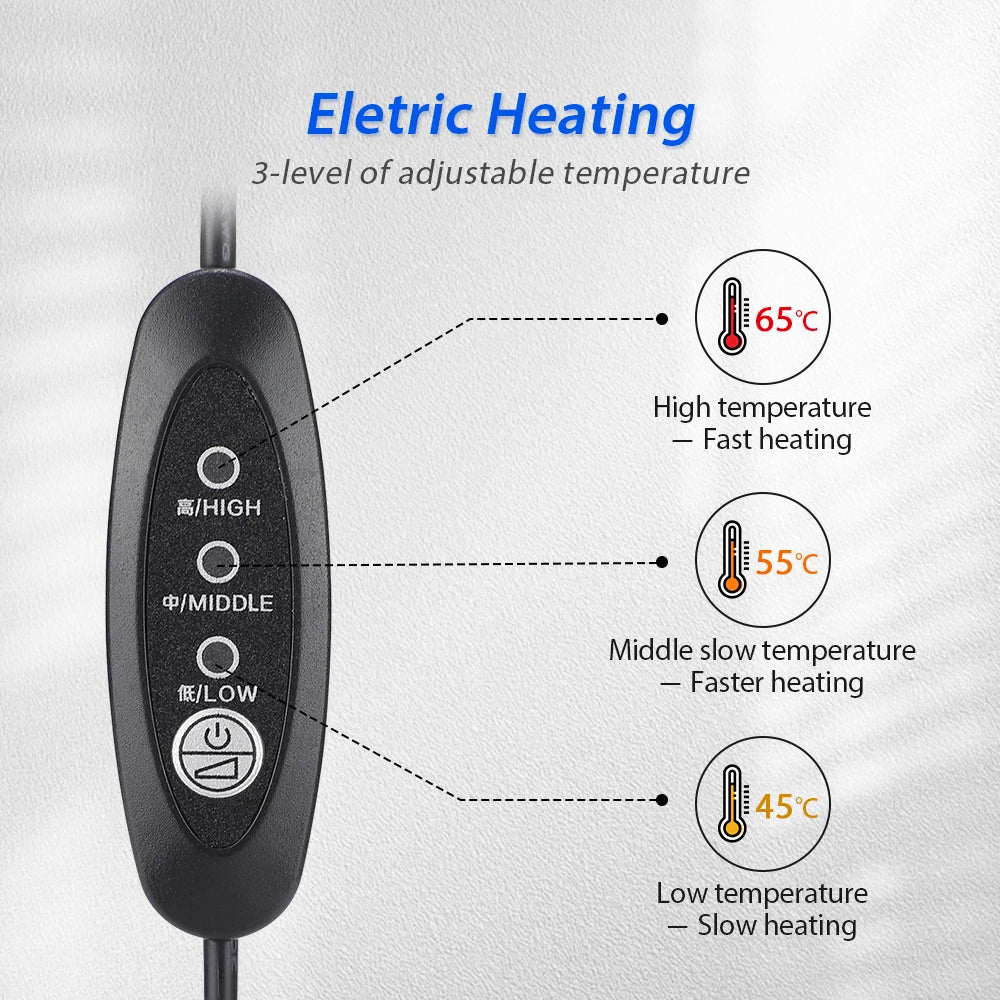
Cervical support for office chair comfort that adapts to your posture. See it in action.
Why Neck Pain Starts at Your Chair Setup
Common Ergonomic Mistakes
Neck pain from sitting at a desk often begins with an office chair that fails to support the natural curve of the cervical spine. Without adequate neck support, the head gradually shifts forward, increasing the workload on the neck, shoulders, and upper back. Even a small forward head position can place significantly more stress on the cervical muscles during prolonged computer use.
Other common ergonomic mistakes include sitting too far from the backrest, using a monitor positioned below eye level, and resting on unsupported armrests. Together, these habits contribute to muscle fatigue, stiffness, and reduced comfort throughout the workday.
Warning Signs of Poor Sitting Posture
- Neck stiffness after one to two hours of desk work
- Frequent shoulder tightness or upper back tension
- Leaning forward toward the monitor without noticing
- Recurring tension headaches after long computer sessions
- Needing to stretch your neck repeatedly throughout the day
Recognizing these early warning signs allows you to adjust your chair setup before temporary discomfort develops into ongoing postural strain.
How Neck Support Improves Posture and Comfort
Neutral Spine Alignment Explained
An ergonomic neck support for chair use helps maintain the natural alignment of the head, neck, and upper spine. Rather than allowing the head to drift forward, a properly positioned cervical cushion supports the cervical curve so the spine remains in a more neutral position. This balanced posture reduces unnecessary stress on joints, discs, and surrounding soft tissues while promoting healthier sitting habits.
Reduced Muscle Strain During Long Sitting
When the neck receives consistent support, surrounding muscles no longer need to work continuously to stabilize the weight of the head. This decreases muscle fatigue, minimizes shoulder tension, and helps maintain comfort during extended desk sessions. Combined with regular movement breaks and proper workstation ergonomics, a quality office chair neck support cushion can make long workdays noticeably more comfortable.
How to Choose the Best Neck Support for Your Chair
Chair Compatibility
Not every cervical support for office chair use fits every chair design. Before purchasing, confirm that the cushion is compatible with your chair's height, headrest shape, and backrest style. Adjustable straps typically provide the best fit for executive chairs, gaming chairs, mesh office chairs, and standard task chairs.
Adjustable neck supports allow you to fine-tune the cushion's height and position for your body size and preferred sitting posture. Fixed cushions are generally easier to install but offer less flexibility, making them better suited to users whose chair dimensions closely match the product.
Materials & Breathability
Material selection affects both comfort and durability. High-density memory foam offers excellent contouring and long-term support, while breathable mesh or moisture-wicking fabric covers improve airflow and reduce heat buildup during extended work sessions. A removable, washable cover also makes routine maintenance easier.
Lumbar vs Cervical Support
When comparing lumbar vs cervical support chair accessories, remember that each serves a different purpose. Lumbar support maintains the natural curve of the lower back, while cervical support helps keep the head aligned over the shoulders. Using both creates a more balanced ergonomic sitting posture, especially for people who spend many hours at a desk. Learn more in our Body & Face Blog .
Who Needs a Headrest Upgrade
A dedicated office chair neck support cushion is particularly beneficial if your current chair has a flat, poorly positioned, or non-adjustable headrest. It can also improve comfort for remote workers, professionals who spend more than six hours sitting daily, gamers, and anyone who regularly experiences neck or shoulder fatigue despite maintaining good workstation ergonomics.
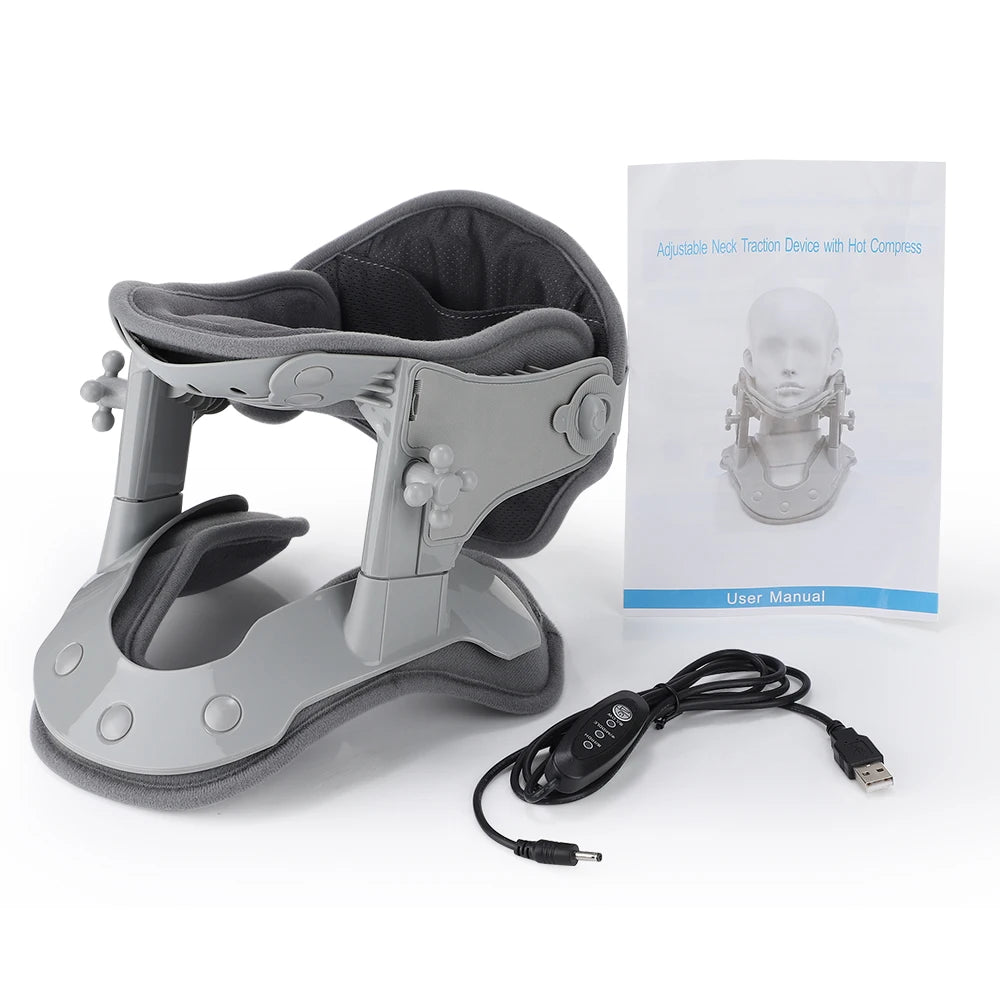
Relief for neck and shoulder tension during extended desk work. See it in action.
How to Support Your Neck While Sitting at a Desk
Monitor Position
One of the most effective ways to support your neck while sitting at a desk is to position your monitor so the top of the screen is at or just below eye level. Keep the display approximately an arm's length away to minimize the tendency to lean forward or tilt your head downward. If you work on a laptop, consider using a laptop stand with an external keyboard and mouse to create a more ergonomic viewing angle.
Chair Adjustment Checklist
A properly adjusted workstation works together with your office chair neck support cushion to reduce neck pain and improve posture throughout the day.
- Keep both feet flat on the floor or on a footrest.
- Maintain knees at approximately a 90-degree angle.
- Sit with your hips fully against the backrest.
- Adjust lumbar support to maintain the natural curve of your lower back.
- Position the neck cushion so it supports the cervical curve rather than pushing the head forward.
- Relax your shoulders instead of shrugging them toward your ears.
Keyboard & Arm Position
Your keyboard and mouse should be close enough that your elbows remain comfortably bent at about 90 degrees. Keep your wrists in a neutral position and allow your forearms to rest lightly on adjustable armrests or the desktop. Proper arm positioning reduces unnecessary tension that can travel into the neck and shoulders.
Healthy Sitting Routine
Even the best neck support for office chair use cannot eliminate the effects of sitting continuously for hours. Stand up, stretch, or walk for one to two minutes every 30 to 60 minutes to improve circulation and reduce muscle stiffness. Alternate between sitting and standing when possible, and perform gentle neck mobility exercises throughout the day to maintain flexibility.
Office Chair Neck Support vs Lumbar Support
Key Differences
| Feature | Neck Support Cushion | Lumbar Support Cushion |
|---|---|---|
| Primary Support Area | Cervical spine and neck | Lower back and lumbar spine |
| Main Purpose | Maintains head and neck alignment | Preserves the natural lower back curve |
| Helps Reduce | Neck stiffness, shoulder tension, forward head posture | Lower back fatigue, slouching, pelvic tilt |
| Best For | Desk work, gaming, prolonged computer use | Long periods of seated work or driving |
When You Need Both
Many office workers benefit from using both lumbar and cervical support together. Lumbar support creates a stable foundation for the spine, while a cervical support for office chair use helps keep the head centered over the shoulders. This combination promotes balanced posture, distributes pressure more evenly, and can significantly reduce neck and shoulder fatigue during long workdays.
How to Install and Maintain a Neck Support Cushion
Proper Placement
Position the office chair neck support cushion so it fills the natural curve of your neck rather than supporting the back of your head. The goal is to keep your ears aligned over your shoulders while maintaining a neutral cervical spine. After fastening the straps, sit back fully in the chair and make small height adjustments until the cushion feels supportive without pushing your head forward.
- Align the cushion with the cervical curve, not the middle of the head.
- Secure the straps firmly to prevent slipping during movement.
- Keep your shoulders relaxed and your chin level.
- Recheck the cushion position after adjusting your chair height or monitor.
Cleaning & Care
Regular maintenance helps preserve both comfort and support. Remove and wash the cover according to the manufacturer's instructions, and allow memory foam inserts to air out periodically. Avoid prolonged exposure to direct sunlight or excessive moisture, which may shorten the lifespan of the foam.
When to Replace
Replace your neck support cushion if the foam no longer returns to its original shape, the straps no longer hold it securely in place, or the cushion has lost the firmness needed to maintain proper cervical alignment. High-quality memory foam models typically last longer than basic foam cushions with regular use.
Best Office Chair Setups for Different Users
Work From Home
Create a dedicated ergonomic workspace by pairing an adjustable office chair with both lumbar and cervical support. Position your monitor at eye level and use a separate keyboard and mouse to reduce neck strain during long remote work sessions.
Corporate Office
For traditional office environments, choose an adjustable office chair neck support cushion that fits your chair without interfering with shared workstations. Fine-tune the chair height, armrests, and monitor placement to maintain consistent posture throughout the day.
Gamers
High-back gaming chairs benefit from supportive neck pillows that remain securely positioned during extended sessions. Combine proper chair adjustments with regular movement breaks to minimize stiffness during long periods of sitting.
Laptop Users
Laptop users often experience forward head posture because screens sit too low. A laptop stand combined with an external keyboard and mouse raises the display to eye level, allowing your cervical support cushion to work more effectively.
Many users enhance ergonomic support by combining a quality neck cushion with tools like the neck cervical traction device for additional neck relaxation after long workdays.
To complement your ergonomic workspace, explore wellness-focused solutions within Body Care and Health Devices or browse everyday comfort products in the Lifestyle collection.
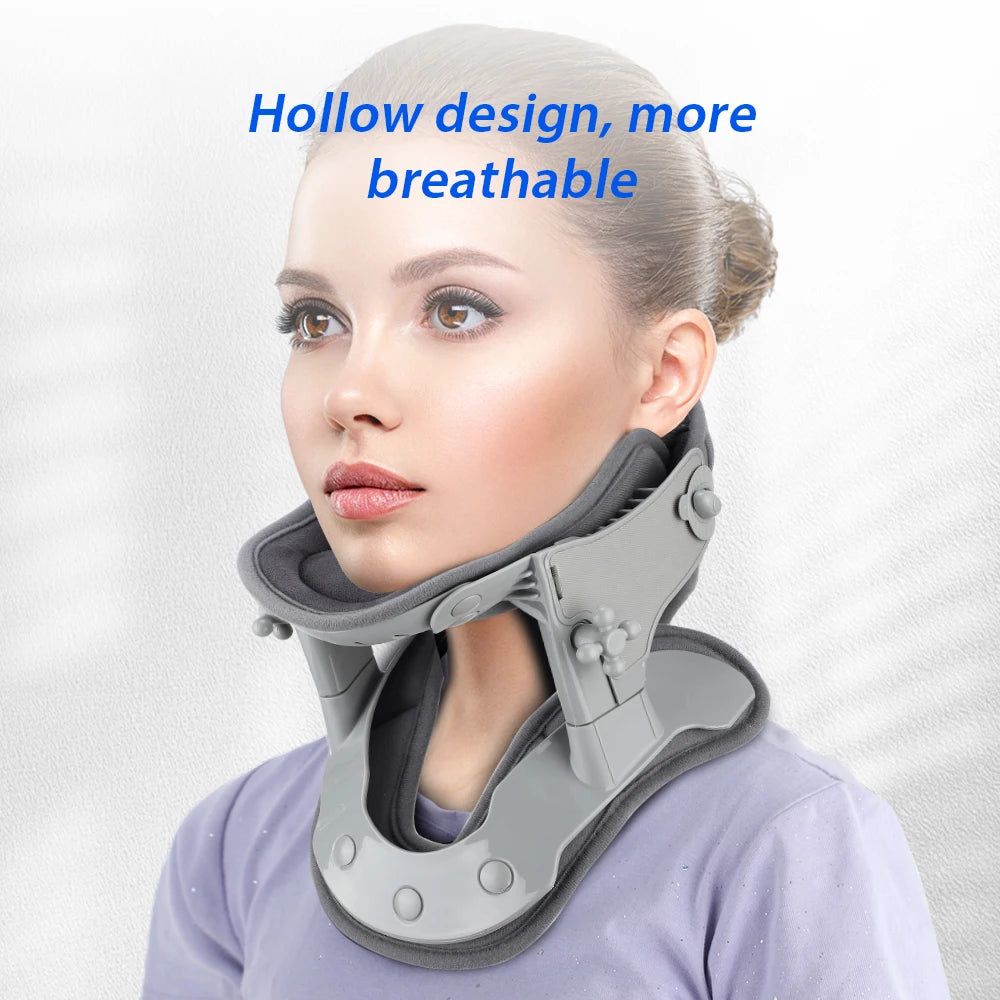
Support that fits your routine and helps reduce neck discomfort during extended screen time. See it in action.
Frequently Asked Questions About Neck Support for Office Chairs
What is the best neck support for an office chair?
The best neck support for an office chair provides adjustable positioning, high-density memory foam, breathable materials, and a shape that supports the natural cervical curve. It should fit your chair securely and keep your head aligned with your spine without pushing it forward.
Can an office chair neck support reduce neck and shoulder pain?
Yes. A properly positioned office chair neck support cushion can reduce muscle fatigue and improve head alignment, helping relieve mild to moderate neck and shoulder discomfort caused by prolonged sitting. The best results come when it is combined with an ergonomic workstation setup and regular movement breaks.
Do all office chairs need cervical support?
Not necessarily. Chairs with well-designed, adjustable headrests may already provide adequate cervical support. However, many office chairs have flat or poorly positioned headrests, making an additional neck cushion beneficial for improved comfort and posture.
How do I choose a neck cushion for my desk chair?
Look for a cushion that matches your chair height and backrest design, uses supportive memory foam, includes adjustable straps, and has a breathable, removable cover. Choosing the correct size and firmness is just as important as selecting the right material.
Can cervical support fix posture long-term?
A cervical support cushion encourages healthier sitting posture by helping maintain proper head and neck alignment. Long-term posture improvement, however, depends on consistent ergonomic habits, regular stretching, strengthening exercises, and a correctly adjusted workstation.
Is it suitable for all office chairs?
Most neck support cushions fit executive, gaming, mesh, and task chairs thanks to adjustable attachment straps. Before purchasing, verify compatibility with your chair's backrest height and headrest design for the most secure fit.
How quickly does it reduce neck pain?
Some users notice improved comfort within the first few days, while others experience gradual relief over several weeks. Consistent use, correct positioning, and good workstation ergonomics all influence how quickly symptoms improve.
Is lumbar support enough without neck support?
Lumbar support stabilizes the lower back, but it does not directly support the cervical spine. If you frequently experience neck stiffness or shoulder tension, combining lumbar and cervical support typically provides more balanced spinal alignment and greater overall comfort.
Can a neck support cushion improve posture?
Yes. By helping maintain a neutral head position, a quality neck support cushion reduces forward head posture and encourages healthier sitting habits. It works best alongside proper monitor height, chair adjustments, and regular posture breaks.
Are neck support cushions compatible with mesh office chairs?
Most modern cushions are compatible with mesh office chairs. Models with adjustable dual straps or anti-slip fastening systems generally provide the most secure fit while preserving the chair's flexibility.
How should a neck support cushion be positioned?
Place the cushion so it fills the natural curve of your neck rather than supporting the back of your head. When positioned correctly, your ears should remain aligned over your shoulders while your head rests comfortably without being pushed forward.
Enhance your daily comfort further by exploring expert insights in the Beauty & Self-Care Blog and posture-friendly resources within the Body & Face Blog .
Related Guide: Benefits of Cervical Traction for Lasting Neck Relief













