

Door Draft Stopper vs Insulated Curtains: Which Actually Works Better?
If cold air is entering through your doorway, choosing the right insulation solution can make your home noticeably warmer while helping reduce heating costs. When comparing a door draft stopper vs insulated curtains, it's important to understand that each addresses a different source of heat loss. Draft stoppers seal air leaks beneath the door, while insulated curtains create a thermal barrier across the entire door surface. This guide explains where each option performs best, when combining both makes sense, and how to choose the right solution for your home.
⏱ 5 min read
Quick Answer: Draft Stopper vs Insulated Curtains
If you're deciding between a door draft stopper vs insulated curtains, the best choice depends on where your home is losing heat. Draft stoppers excel at stopping cold air flowing under doors, while insulated curtains reduce both drafts and heat transfer through the door itself.
Best for quick fixes
- Door draft stoppers seal gaps under doors within seconds.
- Affordable, portable, and simple to install without tools.
- Ideal for stopping noticeable cold air leaks immediately.
- Excellent for renters or temporary winter insulation.
Best for maximum insulation
- Insulated curtains cover the entire door surface.
- Reduce airflow as well as conductive heat loss through the door.
- Help improve energy efficiency during long, cold winters.
- Especially effective on glass, patio, and exterior doors.
Best for renters vs homeowners
- Renters: A door draft stopper is usually the easiest, most affordable solution because it requires little or no permanent installation.
- Homeowners: Insulated curtains offer greater long-term thermal performance, particularly when paired with weatherstripping or a quality draft stopper.
Bottom line: If your main problem is cold air entering beneath the door, a draft stopper is the quickest fix. If the entire door feels cold to the touch, insulated curtains provide better overall insulation. For the highest level of comfort and energy savings, using both together delivers the best results.
How Heat Loss Happens Around Doors (Simple Explanation)
Air gaps vs surface heat loss
Heat escapes around doors in two primary ways: air leakage and heat transfer. Even a small gap beneath or around a door allows warm indoor air to escape while letting cold outdoor air enter. These air leaks are what create uncomfortable drafts that make a room feel colder than the thermostat indicates.
At the same time, heat naturally transfers through the door itself. Thin wood, hollow-core doors, metal doors, and glass panels can all lose warmth, even when there are no noticeable gaps.
Why doors are a major energy leak
Compared with insulated exterior walls, doors are often one of the least insulated parts of a home. Worn weatherstripping, uneven thresholds, seasonal expansion and contraction, and thinner construction all contribute to winter heat loss.
This is why comparing a door cold air stopper vs curtains matters. Draft stoppers are designed to block moving air, while insulated curtains reduce overall heat loss by creating an additional thermal barrier across the entire door.
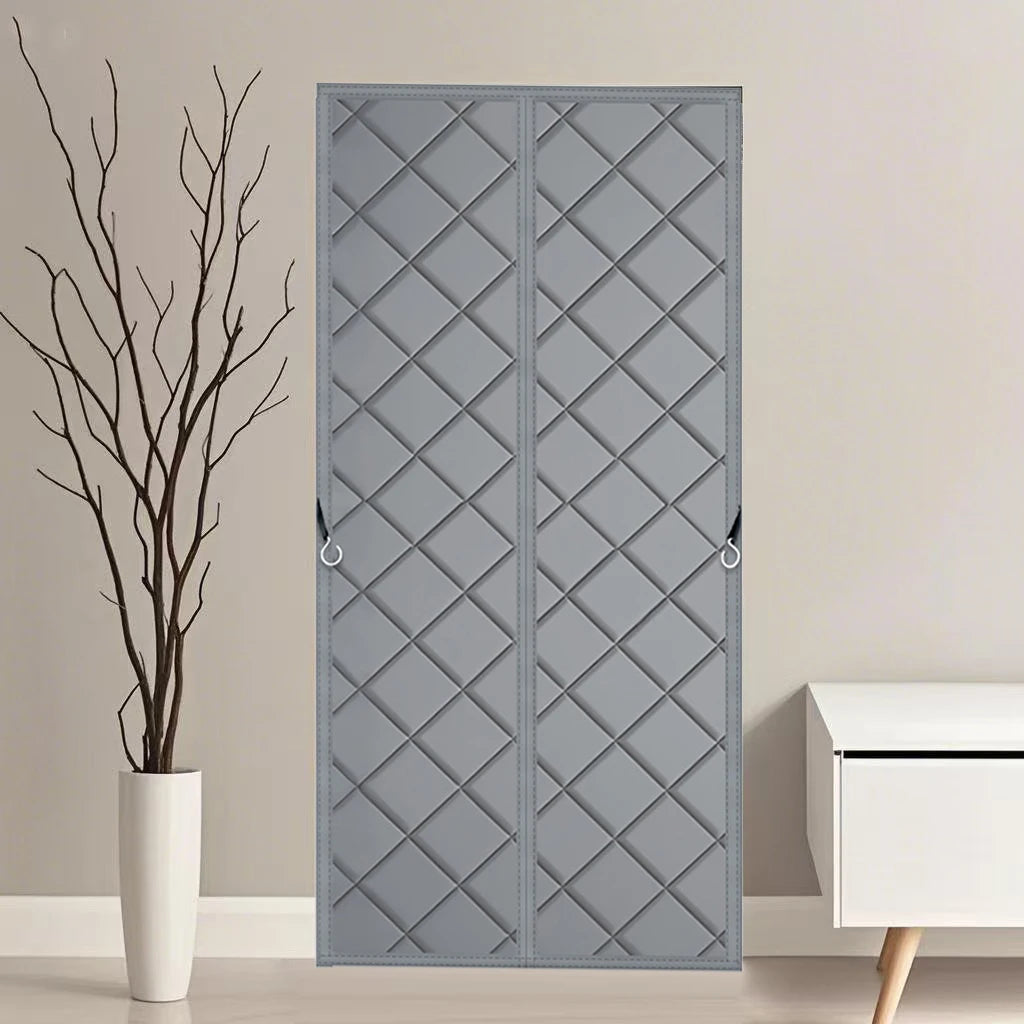
Insulated door draft stopper blocks cold air instantly — See it in action
What Is a Door Draft Stopper and How It Works
Types of draft stoppers
- Fabric draft blockers: Weighted or foam-filled tubes that rest against the bottom of the door and move with or sit in front of it.
- Under-door twin draft guards: Dual foam cylinders that slide onto the bottom edge of the door to seal both sides simultaneously.
- Adhesive door seals and sweeps: Permanent or semi-permanent strips attached to the bottom of the door for continuous draft protection.
Each design works by closing the gap beneath the door where cold air typically enters. By reducing unwanted airflow, a door draft stopper helps maintain indoor temperatures, improves comfort, and reduces the workload on your heating system.
Where they work best
- Interior and exterior doors with visible gaps underneath.
- Rental properties where permanent modifications are limited.
- Bedrooms, basements, garages, and other rooms that develop seasonal drafts.
- Homes needing a fast, budget-friendly solution for cold air leaks.
While a draft stopper is highly effective at blocking airflow, it only seals the bottom edge of the door. It does not significantly reduce heat transfer through the door panel itself, which is where insulated curtains can provide additional benefits.
What Are Insulated Curtains and How They Help
Thermal curtain materials explained
Insulated curtains use multiple layers of fabric to improve thermal performance. Depending on the product, these layers may include tightly woven textiles, foam insulation, cotton batting, or reflective thermal linings that help retain indoor warmth during winter.
By creating an additional barrier between the room and the door, thermal curtains slow heat transfer while also reducing the feeling of cold radiating from glass or thin door panels.
How they block both air and radiant heat
Unlike draft stoppers, insulated curtains extend across the entire doorway, allowing them to reduce several sources of heat loss at once:
- Air leakage around door edges.
- Heat transfer through wood, metal, or glass doors.
- Cold radiation from large glass panels or patio doors.
- Temperature fluctuations caused by exterior weather.
This broader coverage makes insulated curtains for doors in winter an excellent choice for homeowners looking to improve overall energy efficiency rather than simply stopping drafts.
Door Draft Stopper vs Insulated Curtains: Side-by-Side Comparison
Comparison table
| Feature | Door Draft Stopper | Insulated Curtains |
|---|---|---|
| Primary purpose | Blocks cold air under the door | Insulates the entire doorway |
| Insulation effectiveness | Excellent for air leaks | Excellent for heat retention and air control |
| Coverage | Bottom edge only | Entire door surface |
| Installation | Very easy | Moderate; may require mounting hardware |
| Typical cost | Low | Medium |
| Best suited for | Quick draft reduction | Long-term winter insulation |
Performance by scenario
- Cold air drafts: A draft stopper provides the fastest improvement by sealing the gap beneath the door.
- Overall insulation effectiveness: Insulated curtains perform better because they reduce both airflow and heat transfer.
- Cost vs long-term value: Draft stoppers have a lower upfront cost, while insulated curtains may deliver greater energy savings over multiple winters.
- Ease of installation: Draft stoppers require little to no setup, whereas curtains generally need rods, brackets, or mounting hardware.
Draft Stopper vs Thermal Curtains: Real-World Scenarios
Apartments & renters
For renters, a door draft stopper is usually the most practical solution because it requires little or no installation and can be removed without damaging the property. It works well for apartment entry doors, bedrooms, and shared living spaces where permanent upgrades aren't permitted. If mounting hardware is allowed, adding insulated curtains can provide additional warmth during the coldest months.
Old homes with poor insulation
Older homes often have uneven door frames, worn weatherstripping, and larger gaps that allow both drafts and heat loss. In these situations, insulated curtains offer broader thermal protection by covering the entire door, while a draft stopper seals the bottom gap. Together, they create a more effective barrier against winter air.
Extreme winter conditions
In regions with prolonged freezing temperatures or strong winds, relying on only one solution may leave noticeable heat loss. Combining a door draft stopper with insulated curtains helps block moving air beneath the door while reducing heat transfer through the door surface, making it one of the most effective ways to fix drafty doors and improve overall comfort.
Can You Combine Both for Better Results?
Yes. Using both products together creates layered insulation that addresses the two primary causes of heat loss around doors. Instead of choosing between them, many homeowners achieve the best results by combining both solutions.
- A draft stopper seals the gap beneath the door to stop cold air infiltration.
- Insulated curtains create a thermal barrier that reduces heat transfer through the entire door.
- Together, they improve indoor comfort while helping reduce heating costs during winter.
This combination is especially useful for exterior doors, patio doors, and older homes where both air leakage and poor insulation contribute to energy loss.
For an easy way to add full-door insulation, many homeowners pair their draft stopper with the winter magnetic insulated door curtain , which helps create an additional thermal barrier while allowing convenient everyday access.
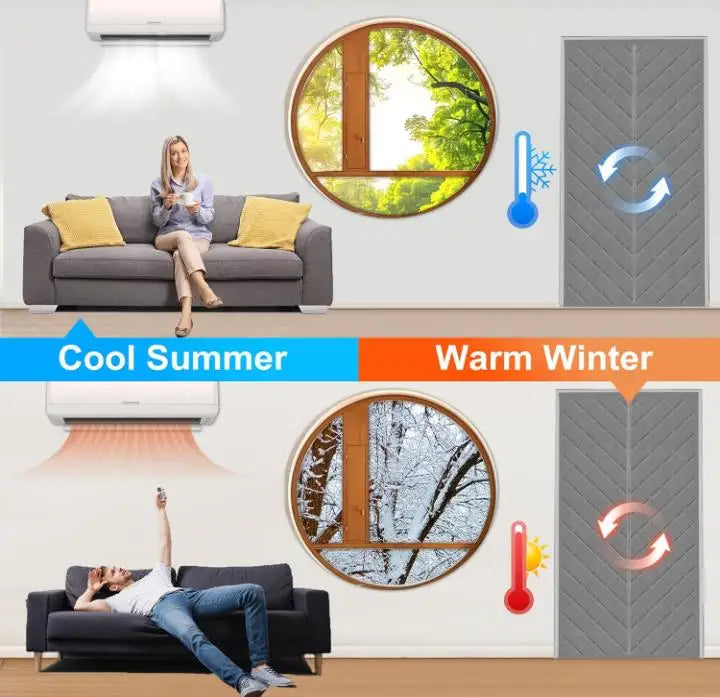
Door cold air stopper seals gaps in seconds — See it in action
How to Choose the Best Solution for Your Home
Decision checklist
- Choose a draft stopper if you can feel cold air entering beneath the door.
- Choose insulated curtains if the entire door surface feels cold or includes large glass panels.
- Use both together for the highest level of insulation and winter comfort.
- If you're renting, start with a portable draft stopper that requires little or no installation.
- If long-term energy efficiency is your priority, insulated curtains offer greater thermal protection across the entire doorway.
Also consider your home's climate, the size and material of the door, and whether you prefer a temporary or permanent solution. Exterior doors exposed to strong winds often benefit from layered insulation, while interior doors usually require only a draft stopper.
For a complete cold-weather setup, pair a door cold air stopper with the winter magnetic insulated door curtain to create an effective barrier against drafts while reducing heat loss through the door.

Fix drafty doors and reduce heat loss today — See it in action
Final Verdict: Curtain vs Draft Blocker Effectiveness
Choosing between door draft curtains and a draft stopper depends on the type of heat loss you're trying to solve.
A draft stopper is the better choice when cold air is entering through the gap beneath the door. It delivers immediate results, is inexpensive, and works well for renters or anyone looking for a quick seasonal upgrade.
Insulated curtains provide broader thermal protection by covering the entire doorway, making them a stronger option for improving energy efficiency and reducing heat transfer through wood, metal, or glass doors.
For most homes, the best approach is to combine both solutions. Sealing air leaks with a draft stopper while adding an insulated curtain creates a layered barrier that maximizes comfort, reduces winter heat loss, and helps lower heating costs.
FAQ
Do draft stoppers really work compared to insulated curtains?
Yes. Door draft stoppers are highly effective at sealing the gap beneath a door, stopping cold air infiltration almost immediately. Insulated curtains, however, provide broader thermal protection by covering the entire door surface. If your primary concern is drafts under the door, a draft stopper is usually the better choice. For maximum winter insulation, using both together delivers the best results.
Which is better for blocking cold air under doors?
A door draft stopper is specifically designed to block airflow beneath the door, making it the most effective solution for eliminating noticeable drafts. Insulated curtains help reduce heat loss but are less effective at sealing the bottom gap unless paired with a draft stopper.
Are insulated curtains worth it for winter doors?
Yes. Insulated curtains are especially worthwhile for exterior doors, patio doors, and glass doors because they reduce heat transfer while adding an extra layer of insulation. They can also improve privacy and help dampen outside noise.
Can insulated curtains replace draft stoppers?
Not completely. While insulated curtains improve overall insulation, they usually cannot seal the gap beneath a door as effectively as a dedicated draft stopper. Combining both products provides the most comprehensive protection against winter heat loss.
Can you use both a draft stopper and insulated curtains together?
Absolutely. This combination addresses both major sources of heat loss around doors. The draft stopper blocks moving air beneath the door, while insulated curtains reduce heat transfer through the door itself, improving comfort and energy efficiency.
Are draft stoppers worth it long term?
For many homes, yes. Draft stoppers are inexpensive, reusable, and can help reduce heating costs by preventing conditioned air from escaping. They offer excellent value, particularly in older homes or rental properties where permanent insulation upgrades may not be practical.
Which solution reduces heat loss the most?
Insulated curtains generally reduce more overall heat loss because they cover the full door surface. However, if cold air is entering through the gap underneath the door, a draft stopper is essential. The greatest reduction in heat loss typically comes from using both solutions together.
What is the cheapest way to fix a drafty door?
A basic door draft stopper is usually the most affordable option and provides immediate improvement for doors with noticeable air gaps. If your budget allows, adding insulated curtains later can further improve comfort and energy efficiency.
Related Guide: Best Insulated Door Curtain Winter Compared for Real Homes













