

Double Wall Insulated Mug: How It Keeps Coffee Hot, What to Look For & Best Uses
A double wall insulated mug uses two layers of material with an insulating space between them to slow heat transfer and keep beverages warmer or colder for longer. Depending on the construction, a vacuum insulated mug can reduce conduction and convection while helping the outside stay more comfortable to hold. This guide explains how does a double wall insulated mug work , how it compares with single-wall and glass designs, what features matter most, and how to choose an insulated mug for commuting, travel, home, or work.
⏱ 9 min read
What Is a Double Wall Insulated Mug?
A double wall insulated mug is a cup or mug built with two separate walls rather than one. The space between the inner and outer walls provides insulation, slowing the movement of heat between the beverage and surrounding air. In vacuum-insulated models, most of the air is removed from this space, creating a stronger thermal barrier than a simple air gap.
Double-wall vs. single-wall construction
A single-wall mug has one primary layer between your drink and the surrounding environment. Heat can therefore move more readily through the material, making hot drinks cool faster and causing the exterior to become hot. A double-wall design adds a second wall and insulating space, reducing that heat transfer.
Double-wall construction can also improve comfort. With hot coffee inside, the outer surface of a well-insulated mug generally feels cooler than the outside of a comparable single-wall metal mug. With cold drinks, the insulating barrier can also reduce condensation on the exterior.
Air-gap vs. vacuum insulation
Not every double wall insulated mug is vacuum insulated. An air-gap mug leaves a layer of air between its walls, while a vacuum insulated mug removes most of the air from that space. Because there is much less material available for conduction and little gas available for convection, vacuum insulation can provide stronger temperature retention.
The exact performance still depends on wall construction, lid design, beverage volume, starting temperature, ambient conditions, and how often the mug is opened. A claim such as “keeps coffee hot for hours” should therefore be treated as a general performance description rather than a guarantee of a specific final temperature.
Ever poured a fresh cup of coffee and found it lukewarm before you finished your commute? The problem is continuous heat loss. A well-designed insulated mug slows that process, giving you a larger window to enjoy your drink at a comfortable temperature.
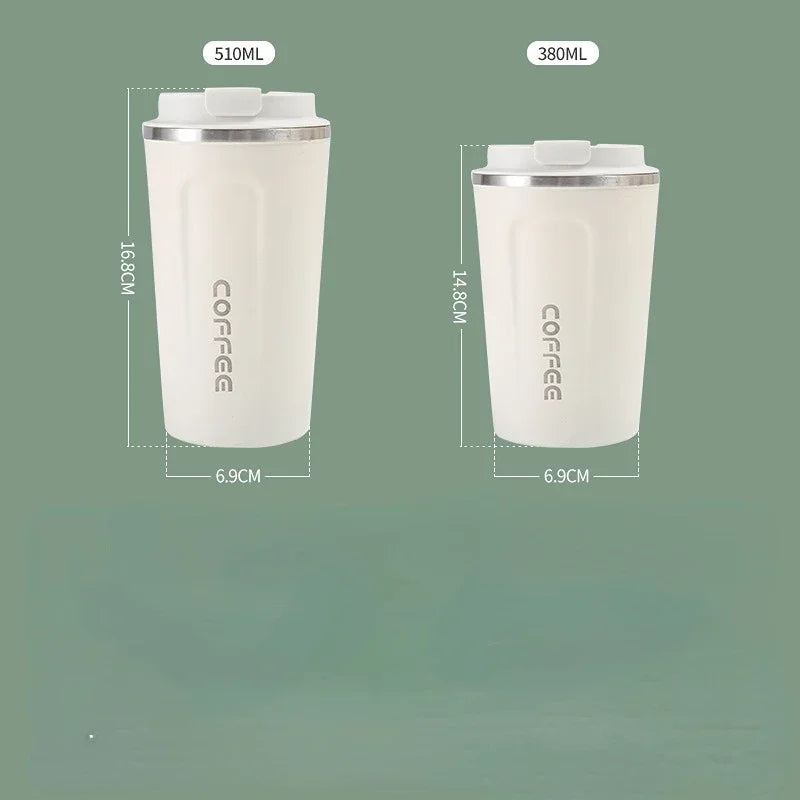
See the double wall insulated mug in action — designed for lasting temperature retention and comfortable handling.
How Double Wall Insulation Keeps Coffee Hot and Drinks Cold
To understand how does a double wall insulated mug work , it helps to look at the three main ways heat moves: conduction, convection, and radiation. Double-wall construction primarily reduces conduction and convection, while the geometry and materials of the mug also influence radiant heat transfer.
Heat retention and cold retention
When hot coffee is poured into a mug, heat naturally moves toward the cooler surroundings. The inner wall contacts the beverage, while the insulating space slows the movement of that heat toward the exterior wall. For cold drinks, the process works in reverse: insulation slows heat from the surrounding environment from reaching the cold beverage.
- Inner wall: Holds the beverage and transfers less heat toward the exterior when insulation is effective.
- Insulating space: Reduces heat movement between the inner and outer walls.
- Outer wall: Helps create a more comfortable surface temperature.
- Lid: Limits heat exchange through the open top and helps reduce spills.
Why the exterior stays cooler
A single-wall stainless steel mug can become noticeably hot because the metal readily conducts heat from the coffee to the outside surface. A double-wall design inserts an insulating barrier between the beverage and your hand. The result is usually a lower exterior temperature, although the mug can still warm over time, particularly around the lid and rim.
How long does an insulated mug keep coffee hot?
There is no universal retention time for every insulated coffee tumbler or mug. Performance varies with insulation type, capacity, lid construction, beverage temperature, ambient temperature, and how frequently the lid is opened.
Vacuum-insulated mugs generally offer stronger retention than basic single-wall designs, but “hot for 6–8 hours” should not be interpreted to mean the coffee remains at its original serving temperature for the entire period. A more useful way to evaluate a mug is to compare its starting and ending temperatures under the same conditions.
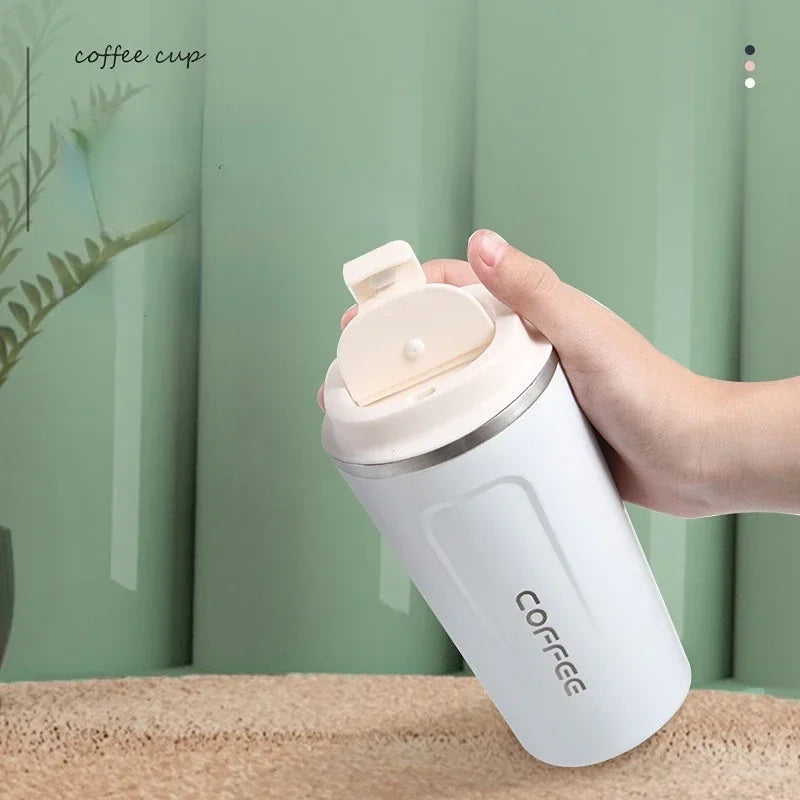
☕ Engineered vacuum insulation — the science behind effective insulated travel mugs .
Double Wall vs. Single Wall Mugs: Which Performs Better?
For temperature retention, a double wall insulated mug generally has an advantage over a single-wall mug because the extra insulating layer slows heat transfer. However, single-wall construction can still be useful when low weight, simplicity, or rapid cooling is more important than long-lasting temperature retention.
Heat retention comparison
Double-wall and especially vacuum-insulated designs are better suited to people who want coffee, tea, or cold beverages to remain closer to their starting temperature for longer. A single-wall mug allows heat to move more directly from the drink to the surrounding environment.
Condensation and exterior temperature
Cold drinks can create condensation when a cold surface meets humid air. Double-wall insulation reduces the transfer of cold to the exterior, so it can significantly reduce exterior condensation compared with many single-wall designs. It does not necessarily eliminate moisture in every environment, particularly around exposed areas such as the lid.
Durability and everyday usability
Stainless steel double-wall mugs are often a practical choice for commuting and travel because they combine insulation with resistance to everyday bumps. The trade-off is that additional material and insulation can increase weight compared with a basic single-wall cup.
| Feature | Double-Wall Mug | Single-Wall Mug |
|---|---|---|
| Heat retention | Generally better | Generally lower |
| Cold retention | Generally better | Generally lower |
| Exterior temperature | Usually more comfortable with hot drinks | Can become hot or cold quickly |
| Condensation | Usually reduced | More likely on cold beverages |
| Weight | Often heavier | Often lighter |
| Best suited to | Travel, commuting, long work sessions | Short-term drinking and simple everyday use |
Glass vs. Stainless Steel Double Wall Insulated Mugs
Double-wall insulation is available in several materials, but stainless steel and glass are two common choices. The better option depends on whether you prioritize durability, visibility, weight, taste neutrality, or ease of everyday handling.
Stainless steel insulation and durability
A stainless steel insulated mug is a strong choice for commuting and travel because stainless steel can withstand routine handling better than glass. Double-wall stainless construction is also commonly paired with vacuum insulation for stronger thermal performance.
High-quality stainless steel is generally resistant to corrosion and is easy to clean when the design has a sufficiently wide opening. Some users also prefer stainless steel because it does not absorb flavors in the same way some porous materials can.
Double-wall glass for visibility and aesthetics
Double-wall glass allows you to see the beverage while creating an insulating layer between the inner and outer surfaces. This can be attractive for coffee, tea, and layered drinks, especially in a home or office setting.
However, glass requires more care when dropped or exposed to sudden temperature changes. Thermal shock can stress glass, so manufacturer instructions should always be followed when moving between very different temperatures.
Which material is best for everyday use?
For frequent commuting, bags, outdoor use, and situations where durability matters, stainless steel is usually the more practical choice. For home or office use where visibility and presentation are priorities, double-wall glass can be appealing.
The benefits of drinking from stainless steel cup also include durability, reusability, and resistance to corrosion. Rather than choosing solely by material, evaluate the entire mug: insulation, lid, capacity, weight, cleaning requirements, and intended use all affect everyday performance.
How to Choose the Best Double Wall Insulated Mug
The best insulated travel mugs are not necessarily the largest or most heavily insulated. The right mug should match your beverage habits, carrying needs, and cleaning routine.
Capacity, dimensions, and weight
Choose capacity based on how much you normally drink. A compact mug can be easier to carry and may fit more cup holders, while a larger mug can reduce the need for refills. Check the actual dimensions rather than relying only on volume, especially if you plan to use the mug in a vehicle or carry it inside a bag.
Lid design and leak resistance
A well-insulated body cannot compensate for a poorly designed lid. Look for a secure closure, quality seals, and a drinking opening that matches your routine. If you plan to carry coffee in a bag, prioritize a lid specifically designed for leak resistance and follow the manufacturer's instructions for locking or sealing it.
“Leak-proof” and “spill-resistant” are not always interchangeable terms. If a manufacturer does not explicitly state that a mug is leak-proof, avoid assuming that it can safely be carried upside down in a bag.
Handle comfort and portability
A handle can improve comfort during extended use, while a handle-free design can be easier to fit into cup holders and small bags. Consider the diameter of the mug, grip shape, total weight, and whether the handle leaves enough room for your fingers.
Cleaning and dishwasher safety
Check the manufacturer's cleaning instructions before putting an insulated mug in the dishwasher. The body may be dishwasher-compatible while a particular lid, gasket, coating, or finish may require hand washing. A wide opening and removable seals can make routine cleaning easier and reduce the chance of coffee residue accumulating around the lid.
Microwave compatibility and material safety
Do not assume a stainless steel or other metal insulated mug is microwave-safe. Metal containers should generally not be placed in a microwave unless the manufacturer explicitly provides appropriate instructions. For everyday safety, follow the product's stated material, temperature, cleaning, and heating specifications rather than relying on generic assumptions.
One option to consider is the KentDO Stainless Steel Thermal Mug , designed for users who want a reusable stainless steel thermal mug for daily drinks and travel.
Best Double Wall Insulated Mugs by Use Case
Instead of choosing a mug solely because it claims the longest heat-retention time, match its construction and features to the way you actually use it. The following categories make it easier to narrow down the right double wall insulated coffee mug .
Best for commuting and travel
Look for: vacuum insulation, a secure lid, a compact footprint, cup-holder compatibility, and a durable stainless steel body.
Why: Commuters benefit from a mug that combines temperature retention with portability. A slightly smaller capacity can be preferable if it fits securely into a vehicle cup holder and is easier to carry.
Pros: Portable, durable, reduced exterior heat, good temperature retention.
Cons: Often heavier than a basic mug and may require more cleaning around the lid and seals.
Best for long-lasting heat retention
Look for: vacuum insulation, a well-sealed lid, sufficient capacity, and documented temperature-retention specifications.
Why: Vacuum construction is generally the better choice when your priority is slowing temperature loss over a long workday, journey, or outdoor activity.
Pros: Strong thermal performance and reduced heat transfer to the exterior.
Cons: Usually costs more than basic single-wall drinkware and may be heavier.
Best stainless steel option
Look for: quality stainless steel construction, double-wall or vacuum insulation, a comfortable grip, and a lid with replaceable or cleanable seals.
Why: Stainless steel is a practical choice when durability and everyday portability matter more than seeing the beverage through the walls.
Pros: Durable, reusable, travel-friendly, and well suited to vacuum insulation.
Cons: You cannot see the beverage level as easily, and some users may notice a metallic character with certain drinks or lower-quality construction.
Best leak-resistant option
Look for: a secure locking mechanism, silicone gasket, covered drinking opening, and manufacturer-confirmed leak or spill resistance.
Why: The lid is the most important component when the mug will be carried in a backpack, laptop bag, or vehicle.
Pros: Lower risk of spills and easier transport.
Cons: More lid components can mean more areas that need regular cleaning.
Best for home and office use
Look for: comfortable capacity, easy cleaning, a stable base, and a lid that is convenient rather than overly complex.
Why: At home or a desk, portability may be less important than comfort and easy access to the beverage.
Pros: Comfortable for extended drinking and everyday routines.
Cons: Travel-oriented features may add unnecessary weight or complexity.
Double Wall Insulated Mug Comparison Table
The table below compares the main mug constructions and helps identify which type is most appropriate for different needs.
| Mug Type | Insulation | Typical Material | Heat/Cold Retention | Lid Options | Portability | Best Use Case |
|---|---|---|---|---|---|---|
| Vacuum double-wall mug | Vacuum gap | Stainless steel | High relative to single-wall designs | Travel, locking, or screw-top options | High | Commuting and long travel |
| Air-gap double-wall mug | Air gap | Stainless steel, glass, or other materials | Moderate to high depending on construction | Varies | Moderate to high | Home, office, and shorter trips |
| Double-wall glass mug | Air gap or insulating cavity | Glass | Moderate to high depending on design | Usually home/office oriented | Moderate | Tea, coffee, and visible beverages |
| Single-wall stainless mug | None | Stainless steel | Lower | Simple or travel lids | High | Short-term drinking and lightweight use |
For most people who want a combination of heat retention, durability, and portability, a vacuum-insulated stainless steel mug is the strongest all-around category. However, the best choice depends on your actual use case rather than insulation alone.
How We Tested Double Wall Insulated Mugs
A meaningful comparison of an insulated travel mug should use consistent conditions rather than relying only on manufacturer claims. The following evaluation framework focuses on repeatable measurements and everyday usability.
Heat retention testing
Start each mug with the same beverage volume and the same starting temperature. Record the initial temperature, then measure the beverage at predetermined intervals, such as 1, 2, 4, and 6 hours, while keeping ambient conditions consistent. The useful result is the temperature change over time, not simply a statement that the drink remains “hot.”
Cold retention and condensation testing
For cold beverages, begin with the same drink temperature and volume and record temperatures at matching intervals. Observe the exterior for condensation at the same room temperature and humidity. This helps distinguish genuine insulation performance from differences caused by environmental conditions.
Leak and spill testing
Fill the mug according to its intended capacity and secure the lid according to the manufacturer's instructions. Check for leakage while the mug is stationary and during controlled movement. If a product is marketed as leak-proof, the test should also examine the seal, drinking opening, gasket, and locking mechanism rather than assuming that a closed lid guarantees leak protection.
Cleaning and durability testing
Evaluate how easily the body, lid, gasket, and drinking opening can be cleaned. Dishwasher use should only be assessed when the manufacturer states that the relevant components are dishwasher-safe. For durability, inspect the mug after repeated normal handling for changes to the finish, lid fit, seals, and overall function.
When comparing mugs, documenting the same variables across every model produces a more useful result than relying on isolated temperature claims or anecdotal reviews.
Pros and Cons of Double Wall Insulated Mugs
A double wall insulated mug offers clear thermal advantages, but the construction also introduces trade-offs that are worth considering before purchase.
- Pro — Better heat retention: Double-wall and vacuum-insulated designs generally slow heat loss more effectively than single-wall mugs.
- Pro — Better cold retention: Insulation also slows heat entering cold beverages.
- Pro — More comfortable exterior: The outer wall is typically less affected by the beverage temperature.
- Pro — Less condensation: Cold drinks are less likely to make the entire exterior wet than in many single-wall designs.
- Pro — Durable options: Stainless steel construction is well suited to regular travel and commuting.
- Con — Higher weight: Additional walls and insulation can make the mug heavier.
- Con — Higher cost: Vacuum insulation and more complex lids can increase the purchase price.
- Con — More cleaning points: Multi-part lids and silicone seals can collect residue if not cleaned regularly.
- Con — Not automatically leak-proof: Insulation performance and leak resistance depend on the lid and seal design.
These trade-offs explain why a double-wall mug is not automatically the right choice for every situation. A simple single-wall cup may be perfectly adequate for someone who drinks coffee immediately and prioritizes low weight and easy cleaning.
Is a Double Wall Insulated Mug Worth It?
Is a double wall insulated mug worth it? For many commuters, travelers, office workers, and people who drink beverages slowly, the answer is yes. The value comes from slowing temperature loss, improving handling comfort, reducing condensation, and replacing disposable cups with a reusable option.
Who should buy one?
- People who regularly take coffee or tea on commutes.
- Travelers who need beverages to stay at a useful temperature for longer.
- Office workers who do not finish a drink immediately.
- Anyone who prefers reusable stainless steel drinkware.
- People who frequently carry cold drinks and want less exterior condensation.
When a regular mug may be better
A conventional single-wall mug can make more sense if you drink coffee quickly, want the beverage to cool faster, prefer the lowest possible weight, or mainly use the mug at home. It can also be easier to clean because it has fewer components.
What features justify a higher price?
Prioritize features that solve an actual problem. Vacuum insulation can justify a higher price when long temperature retention matters. A high-quality lid is valuable for commuting. Durable stainless steel can make sense for frequent travel. Easy-to-clean construction may be more important than maximum insulation for daily office use.
A practical decision framework is simple: choose the insulation level first, then capacity, lid security, portability, cleaning requirements, and material quality. The most expensive mug is not necessarily the best mug for your routine.
How to Clean and Care for a Double Wall Insulated Mug
Proper maintenance helps preserve the lid, seals, finish, and everyday performance of your mug. Always prioritize the manufacturer's care instructions because construction and coatings differ between products.
- Wash the mug and lid regularly with warm water and a suitable dish soap.
- Clean removable silicone seals separately when the design allows it.
- Use a soft brush or sponge rather than harsh abrasives that can scratch the surface.
- Allow the mug and lid to dry completely before long-term storage.
- Store with the lid open or removed when practical to reduce trapped moisture and odors.
- Do not microwave a metal or stainless steel mug unless the manufacturer explicitly states that it is microwave-compatible.
- Use the manufacturer's dishwasher instructions rather than assuming every component is dishwasher-safe.
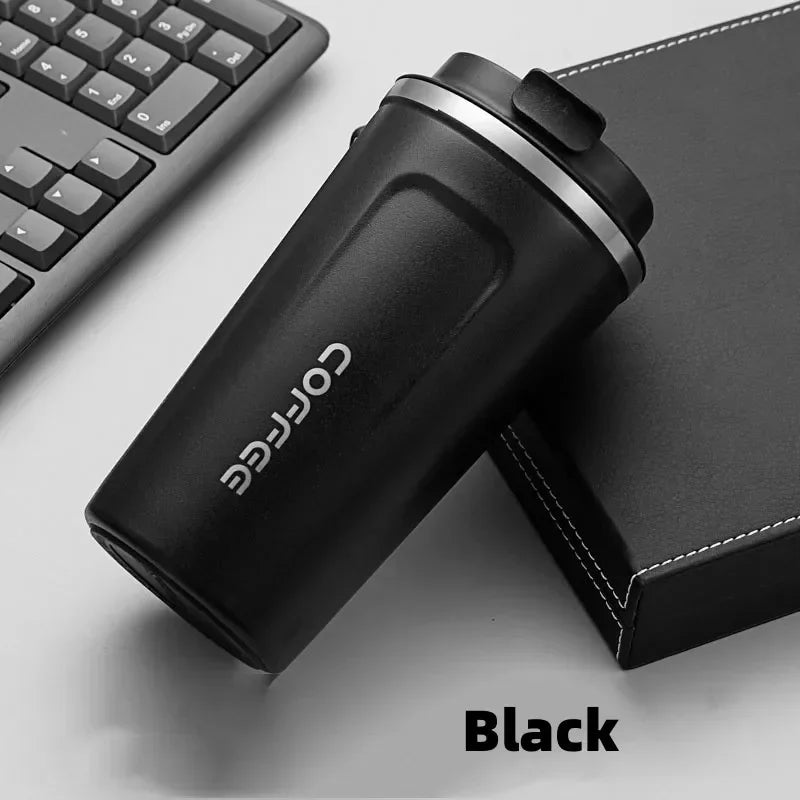
The double wall insulated mug built for reusable, durable, travel-ready beverage routines.
Looking for more smart, travel-friendly wellness gear? Explore our Lifestyle and Body Care and Health Devices collections for tools designed to simplify your day.
Frequently Asked Questions About Double Wall Insulated Mugs
How long does an insulated mug keep coffee hot?
It depends on the insulation, lid, capacity, starting temperature, and ambient conditions. Vacuum-insulated mugs can retain heat for several hours, but the beverage will gradually cool. Compare starting and ending temperatures under consistent conditions instead of relying only on a stated number of hours.
How does a double wall insulated mug work?
A double-wall mug has an inner and outer wall separated by an insulating space. This slows heat transfer between the beverage and the surrounding environment. Vacuum-insulated versions remove most of the air from that space, further reducing conduction and convection.
What is the difference between double-wall and single-wall mugs?
A single-wall mug has one main wall and generally allows heat to move more quickly between the beverage and outside environment. A double-wall mug adds an insulating space between two walls, improving temperature retention and usually making the exterior more comfortable to hold.
What is the difference between air-gap and vacuum insulation?
An air-gap mug has air between its two walls, while a vacuum insulated mug removes most of that air. Because the vacuum provides less opportunity for conduction and convection, vacuum insulation generally provides stronger thermal performance.
Are stainless steel insulated mugs safe for everyday use?
Stainless steel is widely used for reusable beverage containers because it is durable and corrosion-resistant. Choose a product made for food and beverage use and follow its cleaning and temperature instructions. If you are concerned about a particular material or coating, check the manufacturer's specifications.
Are double wall insulated mugs dishwasher safe?
Some are, but dishwasher compatibility varies by product and component. The body may have different care requirements from the lid, gasket, coating, or finish. Always follow the manufacturer's instructions before using a dishwasher.
Can you microwave a double wall insulated mug?
Do not assume that a double-wall mug is microwave-safe. Stainless steel and other metal components should not be microwaved unless the manufacturer specifically confirms compatibility and provides instructions for doing so.
Do double wall insulated mugs prevent condensation?
They can significantly reduce condensation by limiting how cold the exterior becomes. However, condensation may still occur around exposed areas such as the lid or in very humid environments.
What size insulated mug is best for travel?
The best size depends on your beverage routine and carrying method. A compact mug can be easier to fit into vehicle cup holders and bags, while a larger capacity reduces refills. Check the mug's actual height and diameter before buying if cup-holder or bag compatibility is important.
Is a double wall insulated mug worth it?
It can be worth it if you regularly carry drinks, want longer temperature retention, dislike condensation, or prefer durable reusable drinkware. If you drink beverages quickly at home and value simplicity and low weight, a single-wall mug may provide better value.
Pillar Article: 8 oz Coffee Mug Hacks: Perfect Portions for Espresso Lovers and Minimalists
Other Related Articles:
- Reusable Hot Cold Tumbler Guide: How to Master Temperature Retention All Day
- Stainless Steel Coffee Cup Use Guide: How to Brew, Pour, and Maintain Heat Like a Pro
- 8 Ounce Coffee Mugs vs. 12 Ounce—Which Keeps Flavor Better?
Explore More:













