

Reusable Hot Cold Tumbler Guide: How to Keep Drinks Hot for 12+ Hours
A reusable hot cold tumbler can keep coffee, tea, water, and other drinks hot or cold for hours, but reaching 12+ hours depends on insulation quality, starting temperature, fill level, lid seal, and the surrounding environment. The right vacuum insulated tumbler can significantly slow heat transfer, while a secure lid helps reduce spills and unnecessary temperature loss. Here’s how to maximize temperature retention travel tumbler performance in real-world use.
How Can I Keep My Drinks Hot for 12+ Hours in a Travel Tumbler?
To keep drinks hot for 12+ hours in a travel tumbler, use a well-insulated stainless steel or vacuum-insulated model, preheat it before filling, start with a very hot beverage, fill it adequately, and keep the lid closed. Twelve hours is realistic for some high-performance insulated travel mugs under controlled conditions, but everyday temperatures will vary depending on the tumbler, drink volume, opening frequency, and ambient conditions.
Is 12+ hours realistic?
Yes, but it should be treated as a performance target rather than a guarantee. Manufacturer retention times are typically measured under specific testing conditions, and a tumbler that keeps a beverage hot for 12 hours in a controlled test may perform differently during a cold commute or after repeated lid openings.
What determines heat retention?
The biggest factors are the quality of the insulation, the starting temperature of the beverage, the amount of liquid in the tumbler, the lid and seal design, and the temperature outside the tumbler. A well-made insulated travel mug reduces heat loss, but it cannot stop it completely.

Reusable hot cold tumbler designed for extended temperature retention
How Vacuum-Insulated Travel Tumblers Actually Keep Drinks Hot
A vacuum insulated tumbler works by slowing the three primary ways heat moves: conduction, convection, and radiation. Instead of allowing heat to move quickly from the hot beverage through the container and into the surrounding air, vacuum insulation creates a highly resistant barrier between the inner and outer walls.
Conduction, convection, and radiation explained
Conduction transfers heat through physical materials. In a tumbler, the container walls and lid can provide a pathway for heat to escape. Convection occurs when moving air carries heat away. Radiation transfers thermal energy from warm surfaces to their surroundings.
Good insulated drinkware is designed to reduce all three forms of heat transfer. The result is slower temperature change compared with single-wall cups or thin plastic containers.
Why double-wall vacuum insulation works
Double-wall construction places an inner wall and outer wall around a low-pressure space. With very little air in that gap, there is much less material available to conduct heat and far less air movement for convection. Stainless steel is commonly used because it combines durability with a practical structure for insulated drinkware.
How lids reduce heat loss
The lid is one of the most important parts of an insulated travel mug. Every opening allows warm air to escape and cooler surrounding air to enter. A well-fitting lid with a reliable seal can therefore help preserve temperature while also improving spill resistance. Even the best insulation cannot compensate for a lid that is repeatedly left open or has a damaged seal.
Why You Need a Reusable Hot Cold Tumbler
A reusable hot cold tumbler is most useful when you need a drink to remain at a comfortable temperature during a commute, workday, road trip, hike, or extended period away from the kitchen. Insulation slows temperature change so you are less dependent on reheating coffee or replacing melted ice.
Common heat-loss problems
- Starting with a cold or room-temperature tumbler can absorb heat from a hot drink.
- Frequent lid openings release warm air and introduce cooler air.
- Partially filled tumblers generally have less thermal mass than full ones.
- Cold outdoor temperatures can accelerate heat loss from a hot beverage.
- A worn lid gasket can allow heat to escape and may also compromise leak resistance.
When insulation matters most
Insulation becomes particularly valuable during long commutes, travel, outdoor activities, and busy workdays when you cannot drink a beverage immediately. It is also useful for cold beverages because the same barrier that slows heat entering a drink can help keep cold liquid chilled for longer.
Hot vs. cold performance
Hot and cold drinks benefit from the same basic insulation principles, but real-world results differ. A cold drink may remain chilled for a long period because the tumbler slows heat entering from the environment. A hot drink gradually loses energy to its surroundings. Ice, starting temperature, fill level, ambient temperature, and opening frequency all influence the result.
How to Maximize Temperature Retention
Even a high-quality travel tumbler performs better when you prepare it correctly. Use these steps to keep drinks hot longer and improve overall temperature retention travel tumbler performance.
Preheat the tumbler
Before adding coffee or tea, fill the tumbler with hot water for several minutes. Empty it immediately before adding your beverage. This reduces the amount of heat initially absorbed by the cooler inner wall.
Start with hotter beverages
The temperature of the drink going into the tumbler matters. For hot beverages, prepare the drink at an appropriate serving temperature and transfer it promptly rather than allowing it to cool significantly before filling the tumbler.
Fill to reduce air space
For maximum retention, avoid leaving a large empty space above the beverage when the tumbler's capacity allows. More liquid provides greater thermal mass, while unnecessary air space can contribute to faster temperature change. Always leave enough room to close the lid safely and prevent splashing.
Keep the lid closed
Close the lid securely after filling and avoid repeatedly checking the drink. Every opening allows heat to escape from a hot beverage or warmth to enter a cold one. If you need frequent access, choose a lid designed for controlled sipping rather than repeatedly removing the entire lid.
Avoid common mistakes
- Do not fill a hot drink into a completely cold tumbler when maximum retention is the goal.
- Do not leave the lid open between sips.
- Do not assume a larger capacity automatically means better insulation.
- Do not ignore damaged gaskets or loose lid components.
- Do not judge performance from a single manufacturer's test number without considering testing conditions.
For a practical stainless steel option, consider the KentDO Stainless Steel Thermal Mug .
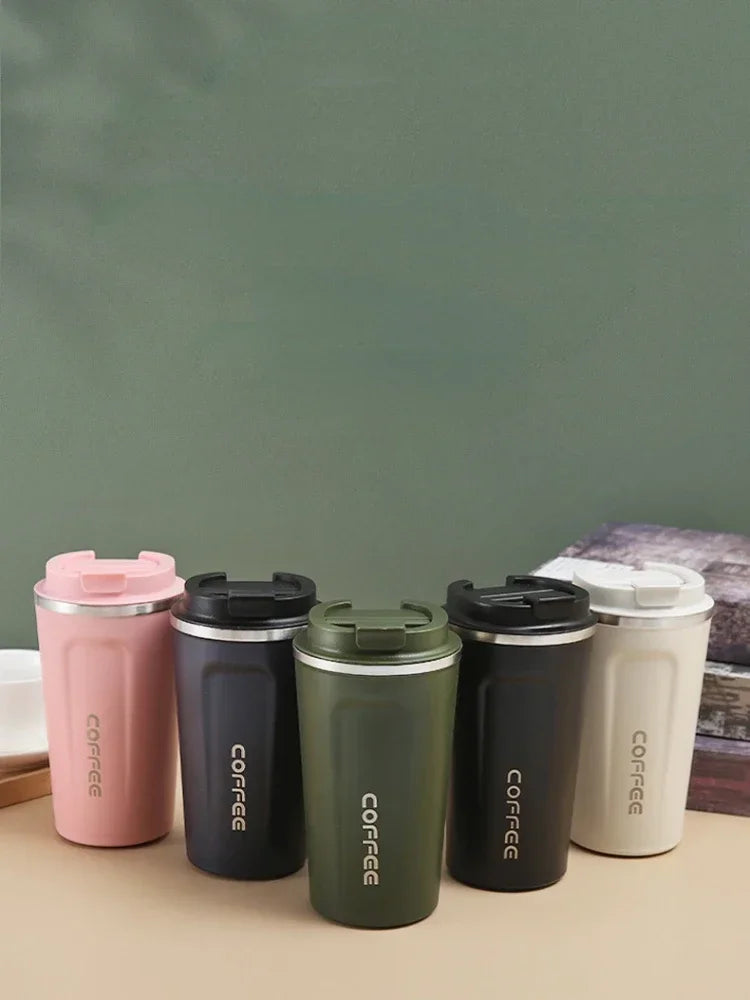
Reusable hot cold tumbler for maximizing temperature retention
What Affects How Long an Insulated Travel Mug Stays Hot?
There is no single answer to how long can insulated travel mugs keep drinks hot or cold because retention depends on both the product and how it is used.
Starting beverage temperature
A drink that starts hotter has more thermal energy available to lose before it reaches a lukewarm temperature. Likewise, a properly chilled drink or beverage containing ice begins with an advantage for cold retention.
Ambient weather
Outdoor conditions can have a noticeable effect. A hot drink generally cools faster when the tumbler is exposed to very cold surroundings, while a cold beverage can warm more quickly in hot weather. Direct sunlight can also increase the temperature of the outer surface and surrounding container.
Cup size and fill level
Capacity affects thermal mass. A larger volume of liquid can sometimes retain its temperature longer than a small volume in the same type of insulated container because there is more liquid relative to the surface area losing or gaining heat. However, insulation quality still matters more than capacity alone.
Lid seal quality
A secure seal limits heat exchange through the opening and helps prevent leaks. If a gasket becomes cracked, stretched, dirty, or incorrectly positioned, temperature retention and spill resistance can both suffer.
Real-World Temperature Retention Timeline
Temperature retention claims should be viewed as benchmarks rather than universal promises. The following timeline provides a practical way to interpret performance for an insulated travel mug. Actual temperatures vary with beverage volume, starting temperature, tumbler construction, ambient conditions, and lid usage.
2-hour benchmark
After two hours, a well-insulated tumbler should generally show relatively little temperature change compared with an ordinary single-wall cup, assuming the lid remains closed. This is a useful benchmark for a short commute or morning coffee break.
4- to 8-hour benchmark
Four to eight hours is a more demanding test and is especially relevant to a workday. High-quality vacuum insulation can preserve a hot or cold beverage for much of this period, although the drink will gradually move toward room temperature.
12-hour benchmark
A 12-hour claim represents extended retention and should be evaluated in the context of the manufacturer's testing method. A beverage may still be noticeably warm or cold after 12 hours without remaining at its original temperature.
24-hour expectations
Some premium insulated containers advertise very long retention periods, but 24 hours should not be interpreted as meaning a beverage remains at its starting temperature. Heat transfer continues throughout the entire period. For everyday use, focus on whether the tumbler keeps the drink within a useful drinking range for the amount of time you actually need.
Travel Tumbler Material Comparison
The material affects durability, taste, weight, and insulation design, but the construction of the tumbler often matters as much as the material itself.
| Material | Heat Retention | Taste | Durability | Best Use |
|---|---|---|---|---|
| Stainless steel | Excellent when vacuum insulated | Generally neutral when properly maintained | High | Daily commuting, travel, outdoor use |
| Ceramic-lined | Good to excellent depending on construction | Useful for people who prefer a ceramic drinking surface | Moderate | Coffee and tea at home or work |
| Glass | Moderate unless specially insulated | Very neutral | Lower than steel | Home, office, and flavor-sensitive drinks |
| Plastic | Usually lower without advanced insulation | Varies by material and age | Moderate | Lightweight everyday hydration |
For demanding travel use, stainless steel is often the practical choice because it can combine durability with vacuum insulation. Ceramic-lined and glass options may appeal to users who prioritize drinking feel or taste neutrality, while plastic can be useful when low weight matters most.
Top Features to Look For in an Insulated Travel Mug
When comparing the best insulated travel mug options, look beyond the advertised retention time. A strong buying decision considers insulation, sealing, capacity, construction, and how the mug fits your routine.
Vacuum insulation
Look for double-wall vacuum construction when extended temperature retention is a priority. This design reduces heat transfer more effectively than a simple single-wall container.
Leak-proof lid
If the tumbler will travel in a bag, a reliable seal is essential. The best leak proof travel mug should have a secure closure, properly fitted gasket, and lid design appropriate for the way you carry it. A spill proof coffee mug travel option is particularly useful for commuting and office bags.
Capacity
Choose a capacity based on your actual drinking habits. A smaller tumbler may be easier to carry, while a larger one can provide more liquid and potentially better thermal mass. Avoid choosing a large tumbler solely because it promises longer retention.
Build quality
Inspect the lid, threads, seals, inner wall, outer wall, base, and drinking opening. A durable construction matters because dents, damaged seals, or poorly fitting components can reduce usability even when the insulation itself remains intact.
Comparison of Best Insulated Travel Mugs
Use the comparison below as a practical selection framework rather than assuming that every advertised retention figure was measured under identical conditions.
| Feature | KentDO Stainless Steel | Brand X | Brand Y |
|---|---|---|---|
| Temperature Retention | Hot: 8h / Cold: 12h | Hot: 6h / Cold: 8h | Hot: 5h / Cold: 7h |
| Leak Proof | Yes | No | Yes |
| Spill Resistant | Yes | Yes | No |
| Material | Stainless Steel | Plastic | Stainless Steel |
| Price | $$$ | $$ | $$$ |
| Best For | Longer hot/cold retention and daily travel | Budget-conscious everyday use | Users prioritizing stainless steel construction |
Who each tumbler suits
The KentDO Stainless Steel option is suited to users who prioritize stainless steel construction, extended temperature retention, and spill resistance. Brand X may appeal to shoppers focused primarily on lower cost, while Brand Y offers another stainless steel option for users who value material durability and leak resistance.
Heat-retention strengths
The listed performance figures favor the KentDO Stainless Steel model for the supplied comparison, particularly for cold retention. Remember that advertised retention is not equivalent to maintaining the original beverage temperature throughout the entire period.
Leak-proof performance
A leak-proof design is especially valuable for commuting and bag storage. Regardless of the model, always verify that the lid is fully closed and inspect the gasket periodically. No reusable tumbler should be treated as completely spill-proof when its lid is loose, damaged, or improperly assembled.
Cleaning & Maintenance Tips
Regular cleaning protects the drinking surface, lid components, and seals. It also helps maintain the performance and usability of a vacuum insulated tumbler over time.
Protect insulation performance
The vacuum layer is sealed inside the tumbler and does not need cleaning. What you can maintain is the exterior and interior condition of the container. Avoid dropping or severely denting the tumbler because physical damage can affect its structure and usability.
Remove odors
Wash the interior with warm water and mild dish soap after use. For persistent odors, a baking soda solution can help neutralize smells. Rinse thoroughly afterward and allow all components to dry completely.
Maintain lid seals
Remove washable lid components when possible and clean around the gasket, threads, and drinking opening. Check for cracks, stretching, discoloration, or residue. A damaged gasket can affect both leak resistance and temperature retention.
- Hand wash with warm soapy water when recommended by the manufacturer.
- Avoid abrasive scrubbers that can damage surfaces.
- Clean removable lid parts separately.
- Dry the tumbler and lid completely before storage.
- Inspect seals regularly and replace damaged components when replacement parts are available.
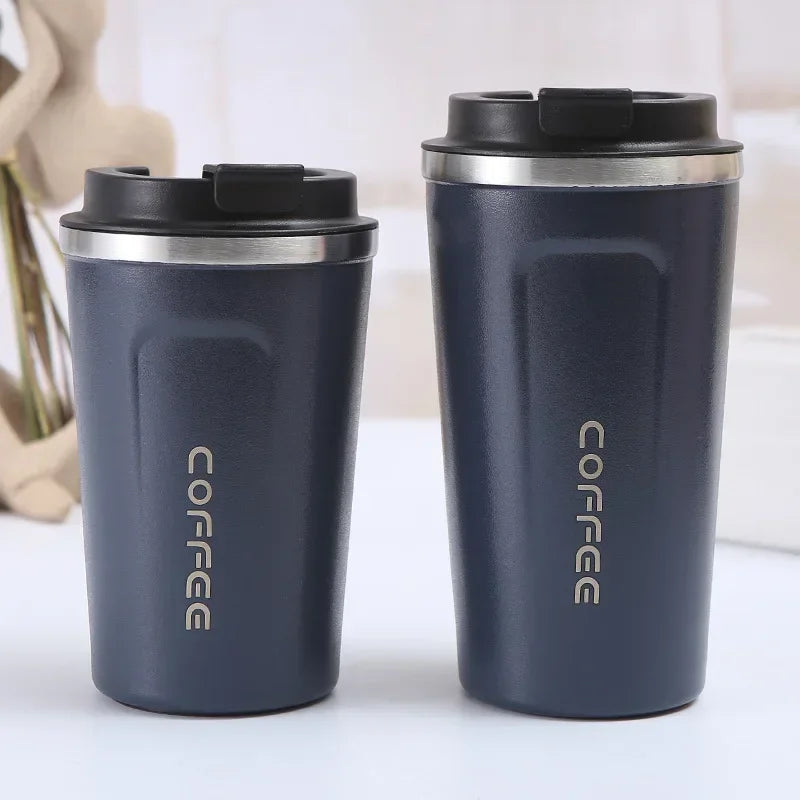
Reusable hot cold tumbler for commuting, office, and outdoor use
FAQ
Can a travel tumbler really keep drinks hot for more than 12 hours?
Some high-performance vacuum-insulated tumblers can keep beverages noticeably hot for more than 12 hours, but the exact result depends on starting temperature, fill level, insulation, lid design, and ambient conditions. A 12-hour claim does not mean the beverage stays at its original temperature for the entire period.
Does preheating a travel tumbler actually work?
Yes. Preheating with hot water reduces the initial temperature difference between the tumbler and the hot beverage. This means less heat is transferred from the beverage into the container during the first part of use, helping keep drinks hot longer .
What starting temperature is best for maximum heat retention?
For hot beverages, start with the beverage at an appropriate hot drinking temperature rather than allowing it to cool substantially before filling the tumbler. The higher the starting temperature within a safe serving range, the more thermal energy the beverage has available as it gradually cools.
Why does opening the lid cool drinks so quickly?
Opening the lid allows warm air and steam to escape while cooler surrounding air enters. Repeated opening therefore increases heat exchange. Keeping the lid closed between sips is one of the simplest ways to improve temperature retention travel tumbler performance.
How full should a tumbler be to retain heat longest?
Generally, filling the tumbler adequately without exceeding its safe capacity helps because a larger volume of liquid provides more thermal mass. Do not overfill it, however, because the lid needs enough room to close securely and safely.
Which material keeps drinks hot the longest?
Material alone does not determine heat retention. A well-designed vacuum-insulated stainless steel tumbler can provide excellent performance because the vacuum barrier substantially reduces heat transfer. Construction and insulation quality are more important than simply choosing one material.
How long can insulated travel mugs keep drinks hot or cold?
Depending on the design and testing conditions, insulated travel mugs can preserve useful hot or cold temperatures for several hours, with some models advertising 8-, 12-, or longer retention periods. Real-world performance varies with beverage volume, starting temperature, ambient conditions, and how often the lid is opened.
Do leak-proof lids improve temperature retention?
A well-sealed lid can help temperature retention because it limits air exchange through the opening. It also reduces spills. However, leak resistance and insulation are related but separate performance characteristics, so a secure lid does not automatically mean the tumbler has superior insulation.
Can damaged seals reduce insulation performance?
Yes. A damaged or poorly fitted gasket can allow more air exchange through the lid and may reduce both spill resistance and temperature retention. Inspect seals regularly and replace them when the manufacturer provides compatible replacement parts.
How do I know if my tumbler has lost its insulating ability?
A sudden change in performance can be a warning sign. If the outside wall becomes unusually hot when holding a hot beverage, or unusually cold when holding an iced drink, the insulating structure may have been compromised. Significant dents or structural damage can also justify replacing the tumbler.
Pillar Article: 8 oz Coffee Mug Hacks: Perfect Portions for Espresso Lovers and Minimalists
Other Related Articles:
- Double Wall Insulated Mug Secrets: Why It Keeps Coffee Hot for Hours
- Stainless Steel Coffee Cup Use Guide: How to Brew, Pour, and Maintain Heat Like a Pro
- 8 Ounce Coffee Mugs vs. 12 Ounce—Which Keeps Flavor Better?
Explore More:













