

EMS Machine for Home Use: Best Picks by Goal in 2026
Finding the right EMS machine for home use is not as simple as choosing the device with the highest advertised power, the most programs, or the largest number of electrodes. Home EMS products can differ substantially in their stimulation technology, electrode configuration, intensity controls, portability, setup requirements, and intended use.
Electrical muscle stimulation (EMS) uses electrical impulses to produce muscle contractions. Depending on the device and its intended use, EMS may be used as part of muscle conditioning or stimulation routines. It is not the same thing as conventional resistance training, and EMS should not automatically be confused with TENS, which is primarily associated with pain-focused electrical nerve stimulation.
This guide takes a decision-first approach. Instead of naming one universal “best” machine, it matches EMS options to practical home-use goals such as muscle conditioning, abdominal stimulation, beginner use, portability, recovery-oriented routines, and multi-area body sculpting.
Best EMS Machines for Home Use at a Glance
Quick Comparison: Best by Home-Use Goal
- Best for multi-area body sculpting: A system with multiple handles or treatment applicators, adjustable stimulation, and flexible positioning is the most practical choice when you want to work across areas such as the abdomen, arms, legs, and glutes.
- Best for targeted muscle conditioning: Prioritize controllable intensity, repeatable programs, appropriate applicator or electrode placement, and a setup that allows consistent stimulation of the intended muscle group.
- Best for abdominal muscle stimulation: Look for a configuration that can be positioned appropriately over the abdominal region and offers adjustable stimulation rather than relying solely on a preset intensity.
- Best for beginners: Choose intuitive controls, clear instructions, gradual intensity adjustment, straightforward setup, and manageable session programming.
- Best for portability: Compact, battery-powered EMS devices generally have an advantage over larger professional-style systems, although they may offer fewer applicators or less flexible multi-area treatment capability.
- Best for professional-style home body sculpting: A larger electromagnetic stimulation system can make more sense when portability is less important and the priority is multi-area operation, display controls, cooling, and broader treatment positioning.
Featured Option for Multi-Area Home Use
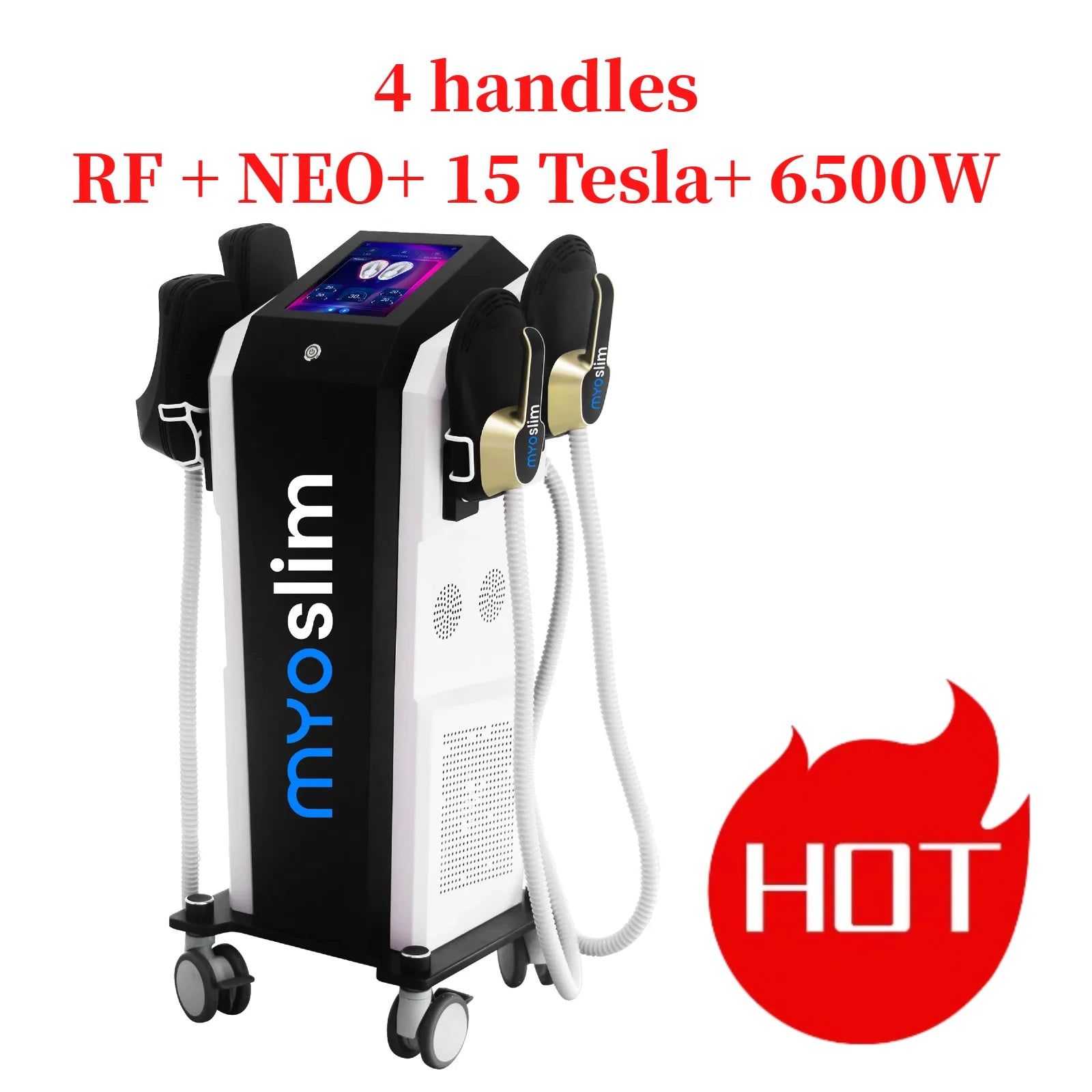
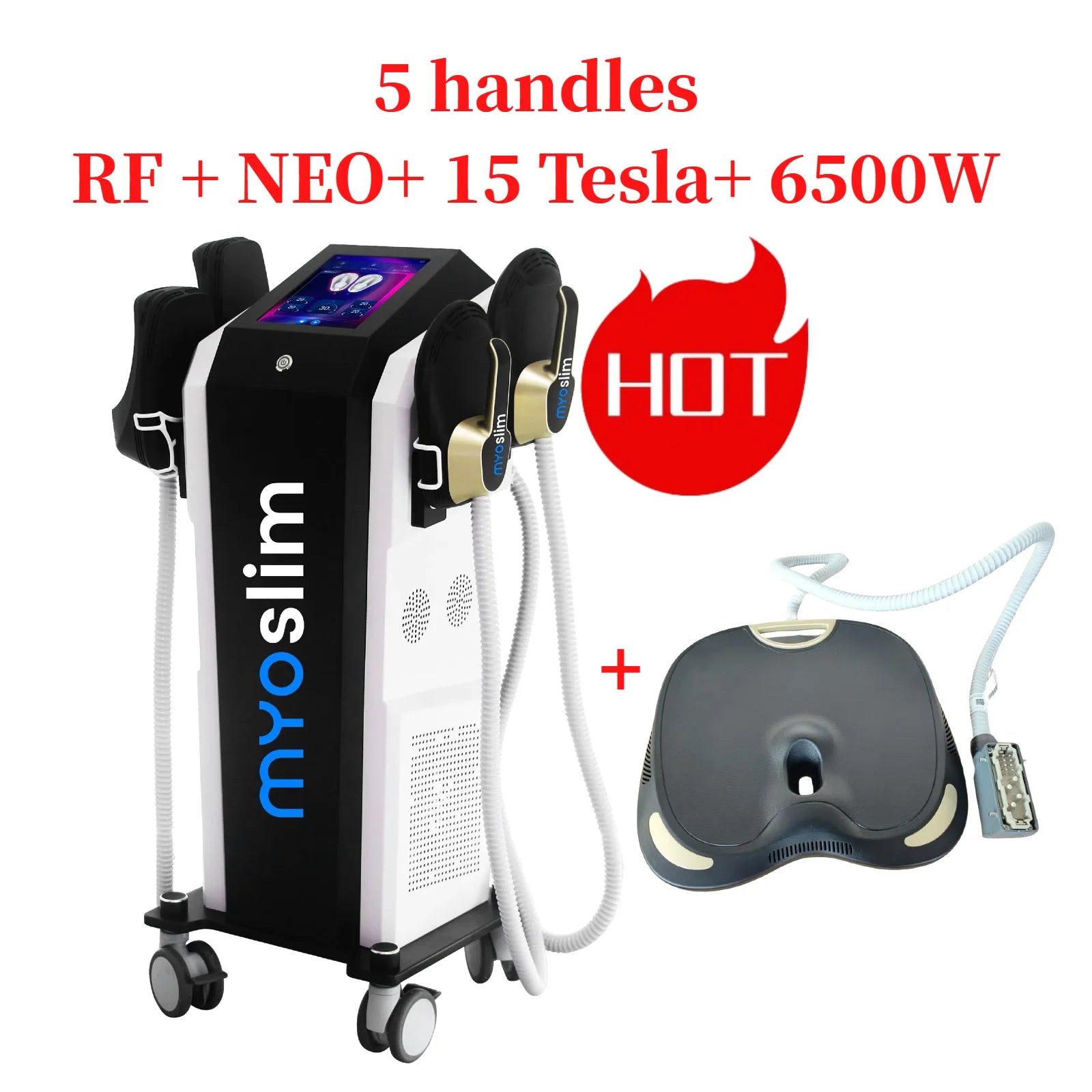
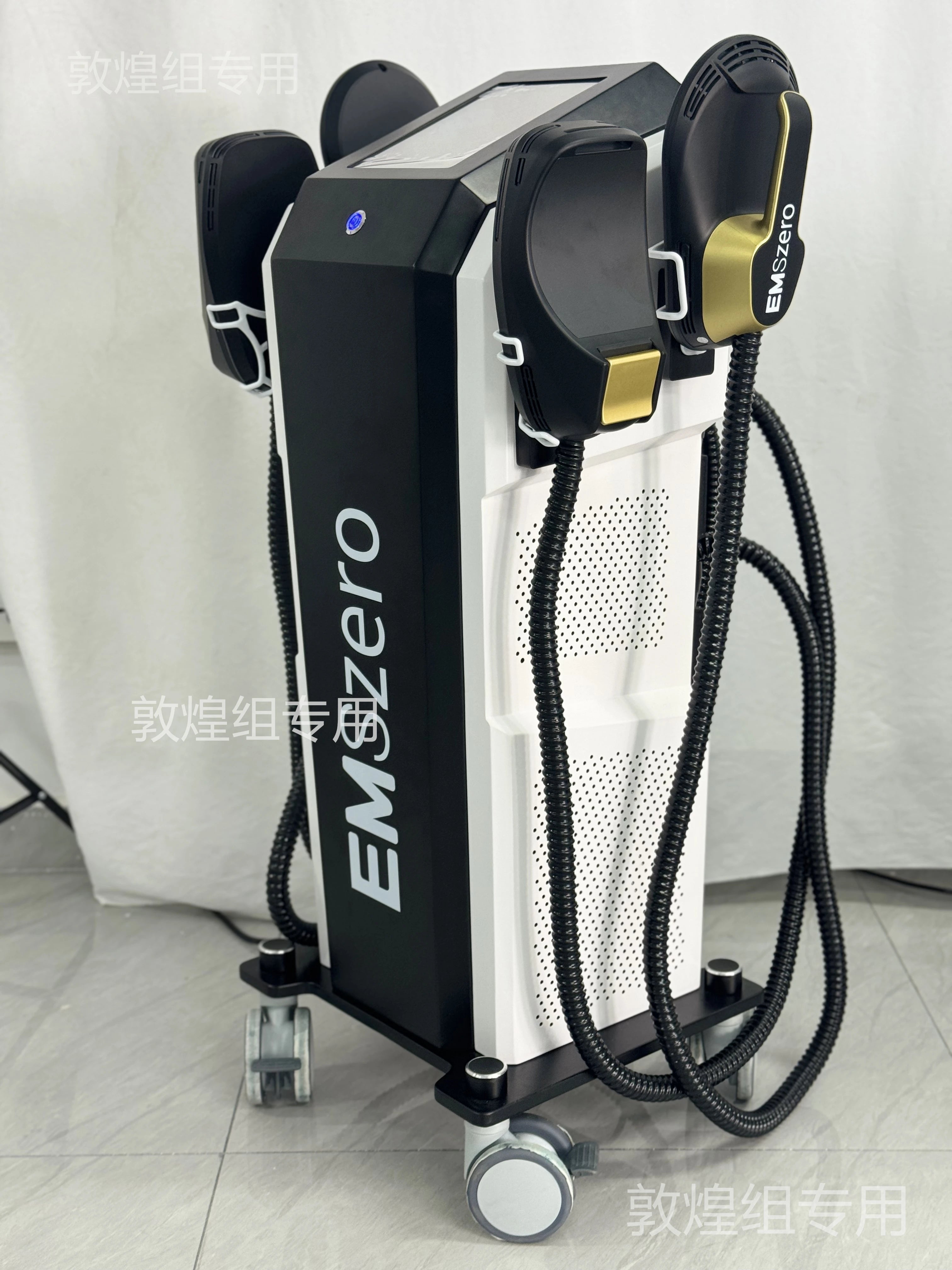
For shoppers specifically interested in a larger electromagnetic body-sculpting system rather than a small adhesive-pad stimulator, the EMS Body Slimming Machine for Muscle Toning & Body Sculpting is designed for both professional and home-use environments. The manufacturer describes it as an electromagnetic muscle stimulation system with adjustable operating modes, four handles, air cooling, and a 15.6-inch display.
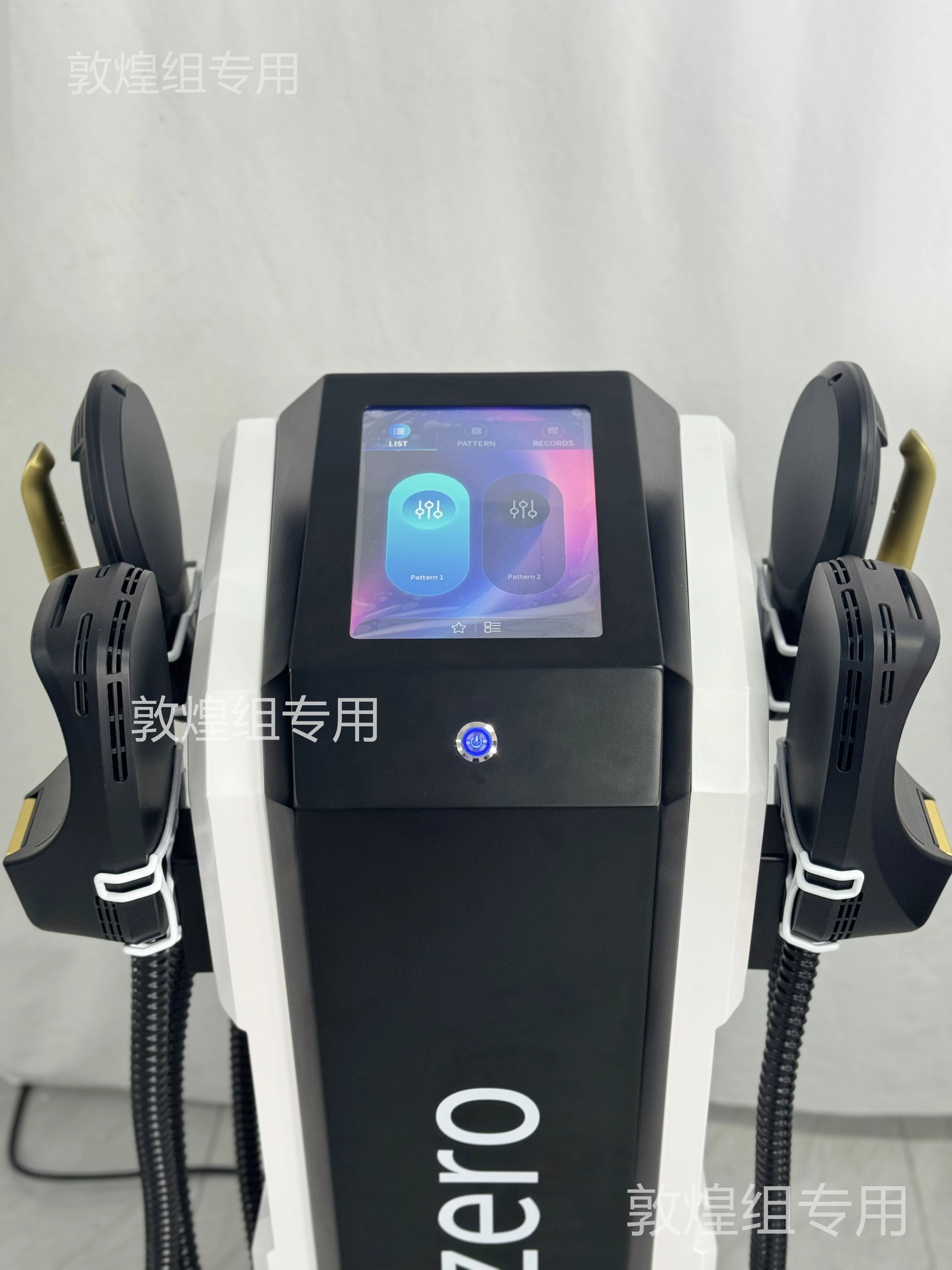
Its listed operating frequency is 5–100 Hz, with AC 110–220V, 50/60Hz power input and a manufacturer-listed maximum output of 6500W. Those numbers should be viewed as product specifications rather than proof that higher output automatically produces better results. For home users, controllability, appropriate positioning, instructions, comfort, and consistency are more useful purchasing criteria than a single headline power figure.
How We Evaluated Home EMS Options
The most useful way to compare an EMS machine for home use is to evaluate the complete system rather than one specification. Important criteria include the intended stimulation technology, target body areas, applicator or electrode configuration, independent channels where applicable, intensity adjustment, program controls, session timing, setup requirements, portability, maintenance, cooling, warranty, and the clarity of safety information.
For larger electromagnetic systems, additional considerations include power requirements, physical footprint, cooling, applicator positioning, display usability, and whether the system is realistically appropriate for the space and experience level of the intended user.
If you are comparing EMS with other body-care equipment, the Body Care and Health Devices collection can also help you distinguish an EMS system from other categories of personal-care technology.
How to Choose an EMS Machine for Home Use
1. Start With Your Main Goal
Begin with the outcome you actually want from stimulation. Someone looking for convenient muscle conditioning may need a different configuration from someone interested in multi-area body sculpting.
Common goals include supporting muscle conditioning, targeting specific muscle groups, incorporating abdominal stimulation into a routine, maintaining stimulation between conventional workouts, or using a larger system for body-contouring routines.
Be especially careful with the phrase “fat burning.” Electrical muscle stimulation can cause muscle contractions, but that does not mean an EMS machine should be treated as a standalone substitute for nutrition, physical activity, or conventional resistance training for overall fat loss.
2. Match the Device to the Body Area
Body area matters because effective stimulation depends on appropriate positioning. A device designed around small adhesive electrodes may provide flexibility for selected muscle groups, while a larger system with dedicated handles can be more convenient when the intended routine involves several larger areas.
For abdominal, arm, leg, or glute stimulation, follow the specific manufacturer's positioning instructions. Avoid assuming that placing an applicator anywhere over a body region will automatically produce the desired muscle contraction.
3. Consider Your Experience Level
Beginners generally benefit from simple controls and gradual intensity progression. A technically sophisticated device can be counterproductive if the user cannot easily understand its settings or position its applicators correctly.
More experienced users may value adjustable stimulation parameters, multiple programs, broader placement options, and the ability to build repeatable routines. However, technical complexity is valuable only when it improves practical control.
4. Check Electrode Configuration and Channel Count
Electrode count and channel count are not necessarily the same thing. An EMS system can have multiple electrodes or applicators while using a smaller number of independently controlled channels.
Channel count describes control architecture. It can influence whether different muscle areas can be stimulated independently or whether they share the same settings. Electrode count describes the physical contact points or stimulation components.
More electrodes therefore do not automatically mean a better EMS machine. The relevant question is whether the configuration matches the number and type of muscle areas you want to stimulate during a session.
5. Evaluate Intensity and Program Controls
Adjustable intensity is one of the most practical features to look for. It allows users to start conservatively and increase stimulation progressively according to the device instructions and their tolerance.
Other controls can include pulse frequency, pulse width, preset programs, timers, ramp-up and ramp-down functions, and separate controls for different channels. These specifications can be useful, but their presence alone does not establish that one machine will be more effective than another.
6. Think About Setup and Maintenance
Small EMS devices may require adhesive electrode pads, cables, skin preparation, charging, and regular pad replacement. Larger electromagnetic systems may reduce dependence on disposable adhesive pads but require more physical space and a more substantial setup.
Before purchasing, consider where the machine will be stored, how quickly it can be prepared for a session, how applicators are maintained, and whether replacement consumables are readily available.
Best EMS Machines by Home-Use Goal
Best for Muscle Conditioning
For muscle conditioning, look for a system that allows controlled stimulation and repeatable sessions. The goal should be a manageable contraction that can be incorporated consistently into an overall training routine.
An EMS machine should complement rather than replace conventional resistance exercise when strength development and overall physical conditioning are the goal. Progressive resistance training provides mechanical loading that electrical stimulation alone does not replicate.
Best for Targeted Abdominal Muscle Stimulation
Abdominal EMS is attractive to users who struggle to feel or consistently train their abdominal muscles. A suitable device should offer a practical way to position the stimulation components over the intended abdominal muscle area and allow intensity to be adjusted.
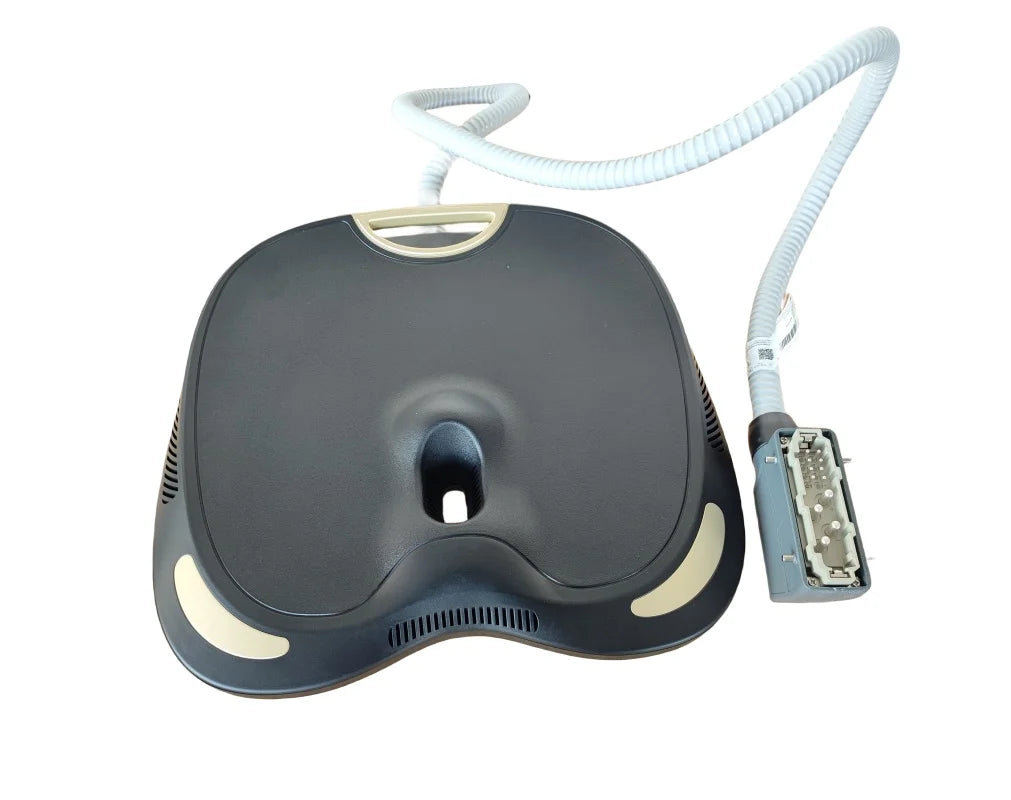
The KentDO EMS Body Slimming Machine is designed around multi-area electromagnetic muscle stimulation, with four handles intended for flexible positioning across areas including the abdomen, arms, legs, and glutes.
However, abdominal stimulation should not be interpreted as a shortcut for reducing abdominal fat. Stimulating abdominal muscles and changing body-fat levels are different objectives.
Best for Recovery-Oriented Routines
Some users look for EMS because they want electrical stimulation to complement their recovery routine. This is where terminology becomes particularly important.
EMS and NMES are commonly associated with electrically induced muscle contractions, while TENS is generally associated with electrical nerve stimulation for pain-focused applications. A product marketed for TENS should not automatically be treated as an EMS muscle-conditioning system.
For recovery, EMS should also be considered one potential component of a broader routine rather than a replacement for sleep, appropriate training volume, hydration, mobility work, or professional care when an injury or medical problem is involved.
Best for Beginners
Beginners should prioritize usability over impressive specifications. Look for clear controls, understandable instructions, gradual intensity adjustment, uncomplicated applicator placement, and a session timer.
A beginner-friendly system should make it obvious how to start, how to increase intensity, how long a session lasts, and how to stop stimulation. If the instructions are unclear, complexity becomes a disadvantage.
Best Portable EMS Option
Portability usually favors compact battery-powered EMS devices. They can be easier to move between rooms or take while traveling, but smaller systems can involve trade-offs in applicator size, simultaneous stimulation capacity, display controls, and overall versatility.
For a home user with limited storage space, compactness may matter more than having a large multi-area body-sculpting system. For a dedicated home treatment area, the reverse may be true.
Best for Multi-Area Home Use
Multi-area users should look for flexibility rather than simply maximum intensity. The ability to position applicators across different muscle groups can make a larger system more practical for structured body-sculpting routines.
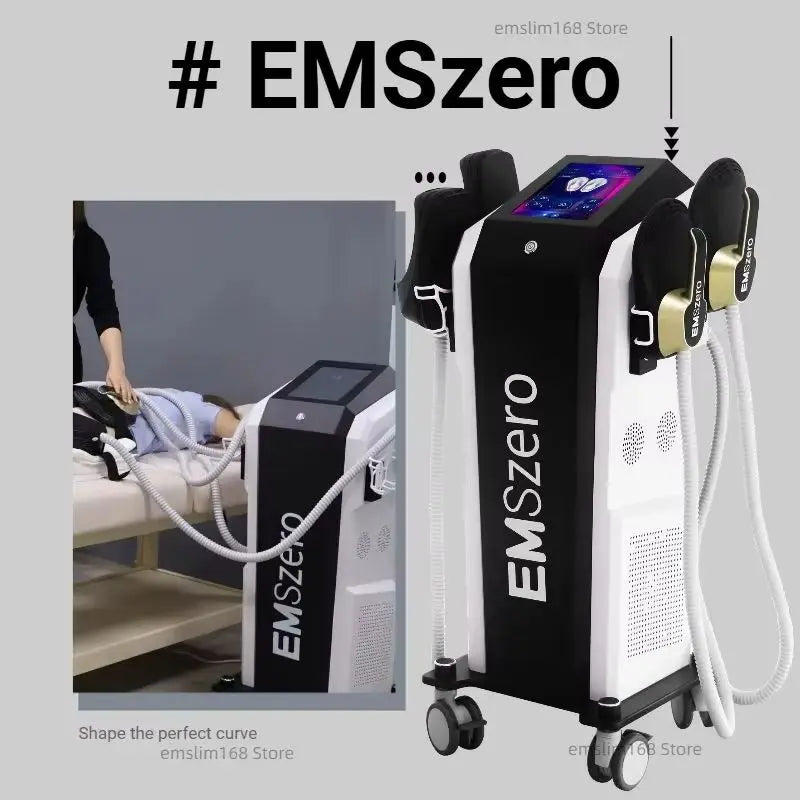
The KentDO system is particularly relevant to this use case because its product specifications identify four handles and targeted areas including the abdomen, arms, legs, and glutes. Its 15.6-inch display and intelligent air-cooling design are also intended for a more substantial operating setup than a small portable pad-based stimulator.
Pros:
- Four handles support flexible multi-area positioning.
- 5–100 Hz listed frequency range provides a defined operating range.
- 15.6-inch display offers a larger control interface.
- Air cooling is designed to support consistent operation.
- Listed for professional and home-use environments.
- 1-year warranty is specified by the product information.
Cons:
- It is less portable than compact battery-powered EMS devices.
- The larger system requires an appropriate space and power connection.
- A high advertised maximum output should not be interpreted as automatically superior performance.
- Users still need to follow the manufacturer's operating and positioning instructions.
For readers specifically evaluating professional-style body contouring equipment, the Body & Face Blog is another relevant area for exploring related body-care topics before making a purchase decision.
EMS vs. NMES vs. TENS: What Is the Difference?
Electrical Muscle Stimulation (EMS)
Electrical muscle stimulation, or EMS, is a broad term for using electrical impulses to stimulate muscles and produce contractions. Consumer products can use the term for a range of configurations and intended uses, so the product's actual instructions and specifications matter.
Neuromuscular Electrical Stimulation (NMES)
NMES refers specifically to electrical stimulation intended to activate nerves supplying muscles and produce muscle contractions. EMS and NMES terminology can overlap in consumer and professional product descriptions, but terminology should not be used as a substitute for checking the device's intended use.
Transcutaneous Electrical Nerve Stimulation (TENS)
TENS is generally associated with transcutaneous electrical stimulation of nerves for pain-focused applications. Although both TENS and EMS involve electrical impulses delivered through the skin, their intended purposes and stimulation targets can differ.
Why the Difference Matters When Buying
If your goal is muscle stimulation or conditioning, investigate whether the device is specifically intended for muscle stimulation rather than assuming that any electrical stimulation device will provide the same function. If your goal involves pain, injury, rehabilitation, or a medical condition, product marketing should not replace professional guidance.
EMS Machine Specifications That Actually Matter
EMS Channels vs. Electrode Count
Independent channels can determine how flexibly different stimulation areas are controlled. Electrode or applicator count tells you more about physical coverage. Evaluate both, but do not confuse the two.
Electrical Waveform
Waveform describes the shape and characteristics of the electrical signal delivered by the device. Different systems may use different waveform terminology, but a waveform name alone cannot tell you whether a machine is the right choice. Intended use, controls, stimulation parameters, and manufacturer instructions provide more useful purchasing context.
Pulse Width and Pulse Frequency
Pulse frequency refers to how frequently stimulation pulses are delivered, while pulse width describes the duration of individual pulses. A wider adjustable range can offer more configuration flexibility, but a larger numerical range is not automatically evidence of better results.
Intensity Range and Progression
For home use, the ability to increase stimulation gradually is generally more useful than simply having an extreme maximum setting. Users should be able to find a controllable level appropriate to the device instructions and their experience.
Session Duration and Program Modes
Preset programs and timers can make an EMS routine easier to repeat. Look for controls that clearly indicate session duration and allow you to understand what the selected program is intended to do.
Electrode Pads and Consumables
Pad-based EMS devices require attention to adhesive quality, skin contact, cleaning, storage, and replacement. Worn or damaged electrodes can make stimulation inconsistent and may increase skin discomfort.
Before buying a compact EMS device, investigate the recurring cost and availability of replacement electrodes. For larger electromagnetic systems, examine how the applicators are maintained and stored.
What Is Mostly Marketing Noise?
Several specifications can sound impressive without providing enough context to determine whether a device is suitable. Maximum wattage, number of programs, number of electrodes, and broad frequency claims should all be evaluated alongside actual control, intended use, placement, safety information, and usability.
For example, the KentDO system lists a maximum output of 6500W. That figure is a manufacturer-listed specification, not a standalone measure of effectiveness. A sensible buyer should ask what the machine is designed to do, how stimulation is controlled, how applicators are positioned, and whether the system fits the intended home environment.
EMS Electrode Placement: What Home Users Should Know
Why Electrode Placement Matters
Electrical stimulation works through the interaction between the stimulation component and the underlying tissue. Positioning therefore matters. Incorrect placement can result in weak, uneven, or uncomfortable stimulation.
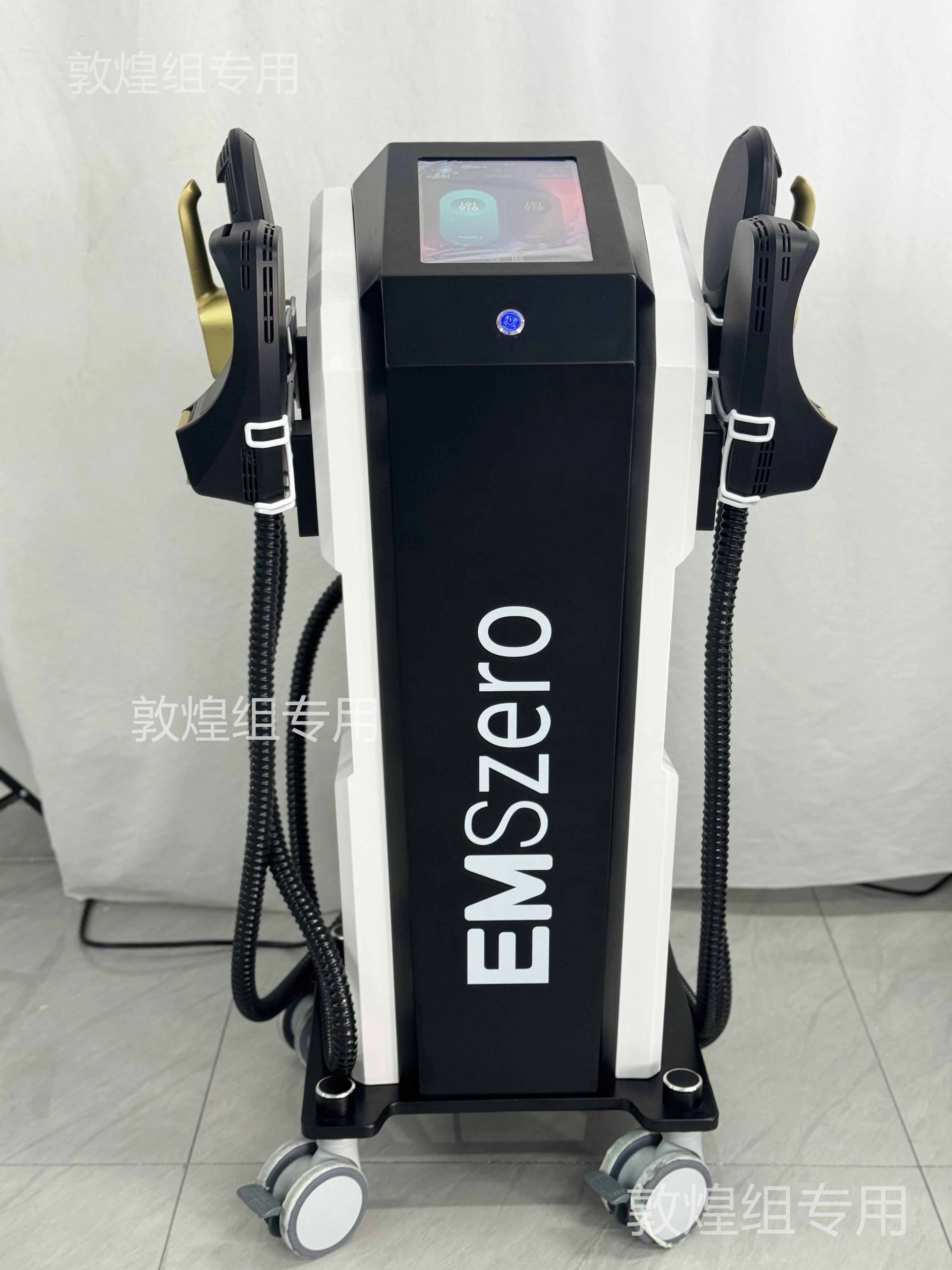
Electrode Placement by Target Area
For the abdomen, arms, legs, and glutes, users should follow the placement diagrams or instructions supplied with the specific device. The correct position depends on the device design and its stimulation components.
Do not copy an electrode placement diagram from a different EMS machine simply because the body area appears similar. Applicator size, stimulation configuration, and intended use can differ between systems.
Common Placement Mistakes
- Placing electrodes or applicators without following the manufacturer's positioning instructions.
- Using damaged, worn, or poorly contacting electrodes.
- Applying stimulation over irritated or compromised skin.
- Assuming stronger stimulation is always better.
- Moving applicators during active stimulation rather than stopping the device first.
- Using a device for an unintended body area or purpose.
How to Use an EMS Machine at Home
Step 1: Prepare the Skin and Electrodes
Start with clean, appropriately prepared skin and inspect the electrodes or applicators. Good contact is important for consistent stimulation. Follow the device-specific preparation instructions rather than applying additional products that could interfere with contact.
Step 2: Position the Electrodes
Position the stimulation components according to the manufacturer's instructions for the selected muscle area. If the system uses dedicated handles rather than adhesive electrodes, use the recommended positioning and contact method.
Step 3: Start at a Comfortable Intensity
Begin at a low or manageable intensity and increase gradually according to the manufacturer's instructions. The objective is controlled stimulation, not an immediate attempt to reach the maximum available setting.
Step 4: Follow the Program and Session Timer
Use the recommended program and session duration. Avoid extending a session simply because the stimulation feels manageable, particularly when you are new to the device.
Step 5: Clean, Store, and Check the Electrodes
After the session, turn the device off before removing stimulation components. Clean and store reusable components as directed, inspect electrodes for wear, and replace consumables when they no longer provide reliable contact.
How Often Can You Use an EMS Machine at Home?
Build Up Gradually
There is no single frequency that is appropriate for every EMS machine or every user. Session frequency depends on the specific device, stimulation intensity, target muscle group, program, intended use, and manufacturer instructions.
New users should prioritize tolerability and controlled progression rather than trying to maximize the number of sessions. Follow the manufacturer's recommended schedule and allow appropriate recovery between demanding muscle-stimulation sessions.
Avoid Treating EMS as a Replacement for Training
EMS can produce muscle contractions, but it does not reproduce every component of conventional exercise. Strength training also involves voluntary movement, progressive external resistance, coordination, technique, and broader physical demands.
If your primary objective is stronger muscles and improved physical performance, EMS is best considered a complementary tool rather than a universal replacement for conventional exercise.
When to Stop a Session
Stop if you experience unexpected pain, significant discomfort, unusual skin irritation, or other concerning symptoms. Also stop if the device appears to malfunction or the stimulation behaves unexpectedly. Follow the manufacturer's safety instructions and seek qualified professional guidance when appropriate.
EMS Home-Use Safety, Contraindications, and Regulatory Terms
Who Should Avoid or Seek Guidance Before Using EMS?
Electrical stimulation is not appropriate for everyone. People with certain implanted electronic devices, particular medical conditions, impaired sensation, pregnancy-related concerns, or other contraindications may need to avoid electrical stimulation or obtain professional guidance before use.
Because contraindications vary by device and individual circumstances, the manufacturer's warnings and intended-use information should be reviewed before operating an EMS machine. When you have a medical condition or uncertainty about whether electrical stimulation is appropriate, consult a qualified healthcare professional rather than relying on general product marketing.
Skin, Sensation, and Electrical Safety
Do not place stimulation components over damaged, irritated, or compromised skin unless the device's instructions specifically indicate otherwise. Users should also be cautious when normal sensation is impaired because discomfort may be harder to detect.
Keep electrical equipment away from unsuitable moisture exposure, inspect cables and applicators before use, and operate the system according to its electrical requirements. A large professional-style system should be installed and operated in an appropriate environment rather than treated like a small portable gadget.
FDA Device Classification: What the Label Does and Does Not Mean
FDA terminology can be confusing because classification, clearance, registration, listing, and authorization are not interchangeable concepts. The presence of a regulatory term does not by itself prove that a product is more effective, safer for every individual, or appropriate for every intended use.
When evaluating an EMS machine, look for clear manufacturer information about intended use, applicable regulatory status, warnings, and operating instructions. Do not interpret a general regulatory statement as a guarantee of a particular body-sculpting result.
Marketing Claims vs. Evidence-Supported Expectations
A responsible EMS buying decision separates muscle stimulation from exaggerated body-sculpting promises. EMS can stimulate muscles, but consumers should be skeptical of claims implying that electrical stimulation alone will replace exercise, produce dramatic fat loss, or permanently reshape the body without broader lifestyle factors.
The same principle applies to terms such as “HI-EMT,” “high intensity,” “fat burning,” and “body slimming.” These terms should be evaluated in the context of the actual technology, intended use, specifications, instructions, and evidence rather than treated as proof of superiority.
EMS Machine Buying Checklist for 2026
Goal and Body Area
- Confirm the device is intended for your primary goal.
- Check whether the intended muscle area is supported.
- Review the manufacturer's placement instructions.
- Decide whether you need one target area or multi-area flexibility.
Channels, Electrodes, and Controls
- Identify the number of independent stimulation channels.
- Determine how many electrodes or applicators are included.
- Check intensity adjustment and progression.
- Review available programs, timers, and stimulation parameters.
- Confirm whether the controls are understandable for your experience level.
Ownership and Maintenance
- Check whether electrodes require replacement.
- Consider recurring consumable costs.
- Review charging or AC power requirements.
- Consider storage space and setup time.
- Check warranty coverage and manufacturer support.
Safety and Regulatory Information
- Read the complete intended-use information.
- Review contraindications and warnings.
- Check the manufacturer's operating instructions.
- Confirm that the electrical requirements are suitable for your environment.
- Do not assume marketing claims equal clinical evidence.
For shoppers considering a larger multi-area system, review the specifications of the EMS Body Slimming Machine for Muscle Toning & Body Sculpting against this checklist before deciding whether its four-handle configuration, 15.6-inch display, 5–100 Hz listed frequency range, air cooling, and AC 110–220V power requirements fit your setup.
Users who are also comparing other personal-care technologies can browse the broader Skin and Beauty Care Devices collection to understand how electrical and technology-assisted devices differ by intended purpose.
Who Should Buy an EMS Machine for Home Use?
Good Fit for Home EMS
An EMS machine may be a reasonable fit if you want a structured way to incorporate muscle stimulation into your routine, have a clear target area, understand how to operate the device, and are comfortable following manufacturer instructions.
A larger electromagnetic system may make particular sense for users who want multi-area body-sculpting functionality and have enough dedicated space for the equipment. The KentDO system is positioned for professional and home-use environments and uses four handles to support flexible positioning.
When Another Approach May Be Better
If your primary objective is building overall strength, conventional resistance training remains important. If your objective is significant fat loss, EMS should not be treated as a standalone substitute for nutrition and physical activity.
If you are dealing with unexplained pain, an injury, substantial weakness, impaired sensation, or a medical concern, an EMS purchase should not substitute for an appropriate professional evaluation.
Simple Decision Tree
- Define the goal: muscle conditioning, abdominal stimulation, recovery-oriented use, or body sculpting.
- Choose the body area: determine whether you need one target area or several.
- Assess experience: beginners should favor simpler controls and gradual progression.
- Determine configuration needs: consider electrodes, applicators, independent channels, and simultaneous stimulation.
- Decide on portability: compact devices favor mobility; larger systems favor multi-area functionality.
- Review controls: check intensity, programs, frequency, timing, and usability.
- Check ownership requirements: consider power, maintenance, consumables, storage, and warranty.
- Verify safety information: review contraindications, intended use, warnings, and regulatory documentation before purchasing.
Frequently Asked Questions
What is an EMS machine for home use?
An EMS machine for home use delivers electrical stimulation intended to activate muscles and produce contractions. Home EMS devices range from compact electrode-based systems to larger electromagnetic muscle-stimulation equipment. The appropriate choice depends on intended use, target area, controls, configuration, and manufacturer instructions.
How do I choose the right EMS machine for home use?
Start with your goal and target body area. Then evaluate electrode or applicator configuration, independent channels, intensity control, programs, session timing, portability, maintenance, power requirements, warranty, and safety information. Do not select a machine solely because it advertises more programs, higher power, or more electrodes.
Are EMS machines good for muscle conditioning and recovery support?
EMS can produce electrically induced muscle contractions and may be incorporated into muscle-conditioning routines. Recovery-oriented electrical stimulation is a separate consideration and should not automatically be equated with TENS or medical treatment. EMS also does not replace conventional exercise, adequate recovery, or professional care when medically appropriate.
How many electrodes and channels should a home EMS machine have?
There is no universal ideal number. Electrode count describes the physical stimulation components, while independent channel count relates to how stimulation can be controlled. Choose the configuration according to the number of body areas you want to address simultaneously and the flexibility you actually need.
How often can you use an EMS machine at home, and what safety precautions should you follow?
Use frequency depends on the specific device, program, intensity, target muscle, intended purpose, and manufacturer instructions. Start gradually, use appropriate electrode placement, avoid damaged or irritated skin, review contraindications, and stop if unexpected pain, significant irritation, or unusual symptoms occur.
Final Verdict: Choosing the Right EMS Machine for Home Use
The best EMS machine for home use is not necessarily the one with the highest advertised output or the longest feature list. The better choice is the system that matches your goal, target muscle area, experience, stimulation configuration, control requirements, available space, and maintenance expectations.
For users who prioritize portability, a compact electrode-based EMS device may be the more practical option. For users who want a professional-style setup with flexible multi-area positioning, a larger electromagnetic system can offer a different type of home-use experience.
The EMS Body Slimming Machine is worth evaluating when your priorities include multi-area electromagnetic muscle stimulation, four-handle positioning, a large display, adjustable operation, and a dedicated body-sculpting setup. Its specifications should still be weighed against your available space, power requirements, experience level, intended body areas, and the manufacturer's safety instructions.
If your goal is firmer-looking contours and more convenient muscle stimulation, use the buying framework above to compare the technology to your actual routine rather than chasing the biggest specification. A well-matched device, used consistently and according to its instructions, is generally a more sensible purchase than a machine selected solely because its marketing numbers look impressive.
Pillar Article: Abdominal Muscle Stimulation: How Devices Work and What to Know













