

AI Facial Analyzer for Estheticians: Features, ROI & Salon Workflow
For estheticians, a strong consultation depends on more than what can be seen in a mirror. Pores, pigmentation, wrinkles, uneven tone, moisture changes, sebum levels, and texture can be difficult to evaluate consistently with the naked eye. An AI facial analyzer for estheticians adds structured facial imaging and computer-assisted analysis to the consultation, giving professionals a repeatable way to document skin characteristics and explain recommendations to clients.
But the best professional skin analyzer is not necessarily the machine with the most impressive specification sheet. Salon owners should evaluate imaging quality, analysis depth, reporting, workflow fit, client tracking, privacy controls, total ownership cost, and potential return on investment.
This guide explains how professional AI facial analysis works, what accuracy really depends on, how to integrate scanning into an esthetician workflow, and how to compare systems before purchasing.
What Is an AI Facial Analyzer for Estheticians?
An AI facial analyzer combines facial imaging hardware with software that identifies and organizes image-derived skin characteristics. Depending on the system, analysis may cover pigmentation, acne-related characteristics, pores, wrinkles, texture, tone, moisture, sebum, redness, and elasticity-related indicators.
For an esthetician, the practical advantage is not simply producing a colorful facial image. The goal is to turn imaging into a structured consultation tool that can support client education, treatment prioritization, skincare recommendations, and progress tracking.
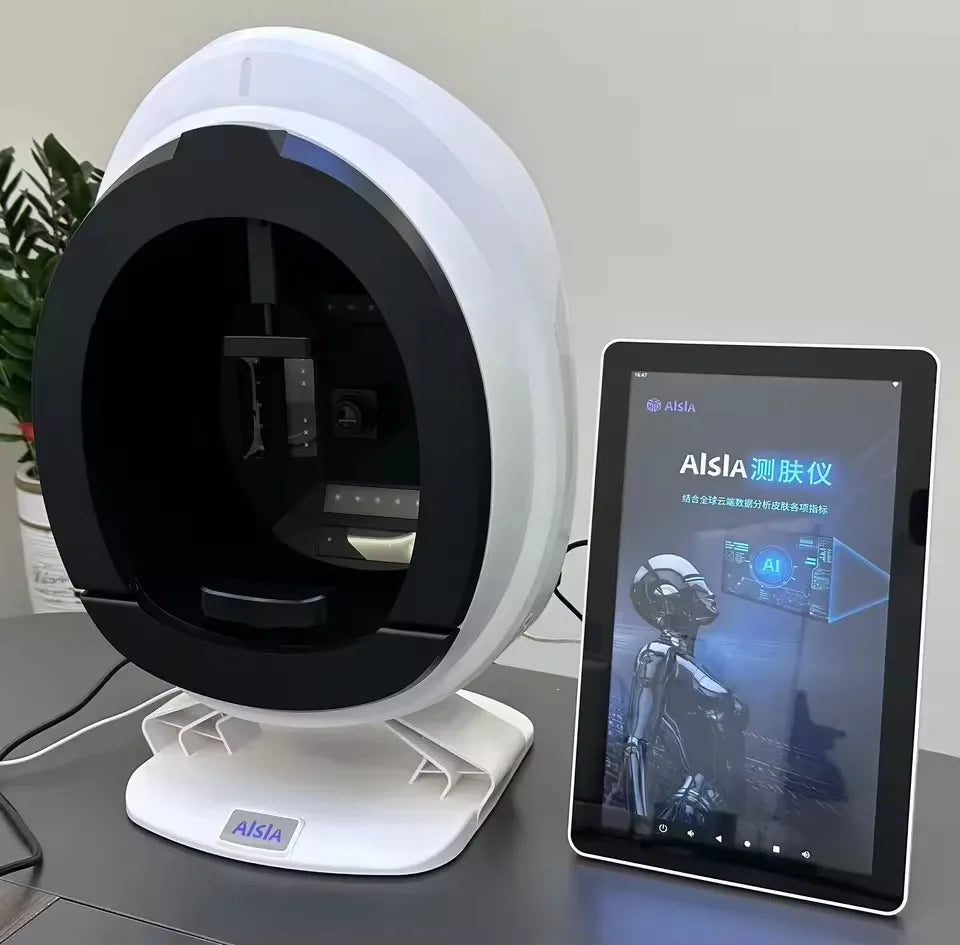
AI Facial Analysis vs. Manual Skin Assessment
Manual assessment remains important because trained estheticians can observe texture, sensitivity, hydration-related signs, visible congestion, and other characteristics in context. AI imaging should therefore be viewed as a decision-support and documentation tool rather than a replacement for professional judgment or medical diagnosis.
Its main advantages are consistency, visual documentation, repeatability, and easier client communication. Instead of relying entirely on subjective descriptions, an esthetician can show a client where particular image-derived indicators appear and compare future scans using a similar process.
What Skin Concerns Can AI Imaging Evaluate?
Professional systems can analyze different combinations of acne, pigmentation, pores, wrinkles, moisture, sebum, tone, elasticity, and texture. The exact parameters depend on the hardware, imaging modes, software, and algorithms used by the manufacturer.
Importantly, image analysis does not automatically equal medical diagnosis. Estheticians should use analyzer outputs to support cosmetic skin assessment and consultation, while suspected medical conditions should be referred to an appropriately qualified healthcare professional.
How Accurate Are AI Facial Skin Analyzers for Professional Salons?
Accuracy is one of the most important purchasing questions, but it should not be reduced to megapixels or the word “AI.” A professional skin analyzer's useful accuracy depends on the entire measurement process: image capture, lighting, camera quality, spectrum selection, software algorithms, image segmentation, training data, repeatability, and validation.

Imaging Types: Standard, Polarized, UV and Multi-Spectral
Different imaging methods reveal different visual characteristics. Standard visible-light photography can document facial appearance and surface characteristics. Polarized imaging can reduce or alter reflected light to make certain pigmentation or vascular-related visual patterns easier to observe. UV-based imaging can highlight characteristics that are not obvious under ordinary illumination. Multi-spectral systems capture information across multiple wavelength bands.
More imaging layers can provide more information, but additional spectra do not automatically prove greater clinical accuracy. Buyers should ask what each imaging mode contributes, how consistently images are captured, and whether the vendor provides meaningful validation evidence.
AI Algorithms and Computer Vision
Computer vision can segment facial regions, detect visual patterns, compare images, classify features, and convert observations into scores or report categories. For an esthetician, the important question is how reliably the software transforms raw images into information that can actually be used during a consultation.
A system that generates understandable reports quickly may be more valuable to a busy salon than one with extensive technical features that require complicated interpretation.
What to Look for in Validation and Accuracy Claims
- Ask whether the manufacturer provides repeatability or validation information.
- Check whether images must be captured under controlled lighting and positioning.
- Determine whether the same client can be measured consistently at follow-up visits.
- Ask how the software handles different skin tones, facial characteristics, and imaging conditions.
- Distinguish image-derived indicators from clinically validated diagnostic measurements.
- Look for transparent explanations of what each score actually represents.
A 36MP camera, for example, can provide highly detailed imagery, but resolution alone does not establish diagnostic accuracy. The quality of the complete imaging-and-analysis workflow matters more than one specification.
AI Skin Analysis Workflow: From Scan to Treatment Plan
The strongest salon implementation treats the analyzer as part of the consultation rather than as a standalone gadget.
Step 1: Capture Consistent Facial Images
Start with standardized preparation. Remove makeup or other factors that could interfere with imaging, position the client consistently, and follow the manufacturer's recommended lighting and capture procedure. Consistency becomes particularly important when comparing results over time.
Step 2: Review the AI Skin Analysis Report
Review the report before discussing recommendations. Look at the image overlays, analyzed areas, scores, and trends together rather than presenting a single number as an absolute measurement.
The best client conversation translates technical output into understandable observations: what is visible, what appears to be changing, what deserves attention, and what should be monitored.
Step 3: Build a Personalized Treatment Plan
Use the analysis to prioritize goals rather than attempting to address every indicator at once. An esthetician might organize a consultation around pigmentation appearance, congestion, hydration-related concerns, texture, or signs of aging, depending on the client's needs.
This approach makes treatment recommendations feel more individualized because the service plan is connected to documented observations instead of a generic menu of treatments.
Step 4: Recommend Skincare Products
Analysis can also support more relevant retail conversations. Instead of recommending products solely because they are popular, an esthetician can connect product categories to the client's documented cosmetic priorities and explain why a particular routine may fit those goals.
For businesses expanding their professional beauty-device offering, the Skin and Beauty Care Devices collection can also serve as a broader reference for complementary skincare technology.
Step 5: Track Results at Follow-Up Visits
Repeat imaging creates a visual record that can support follow-up consultations. When capture conditions are kept consistent, before-and-after images and analysis reports can help professionals discuss changes, reassess priorities, and refine future treatment plans.
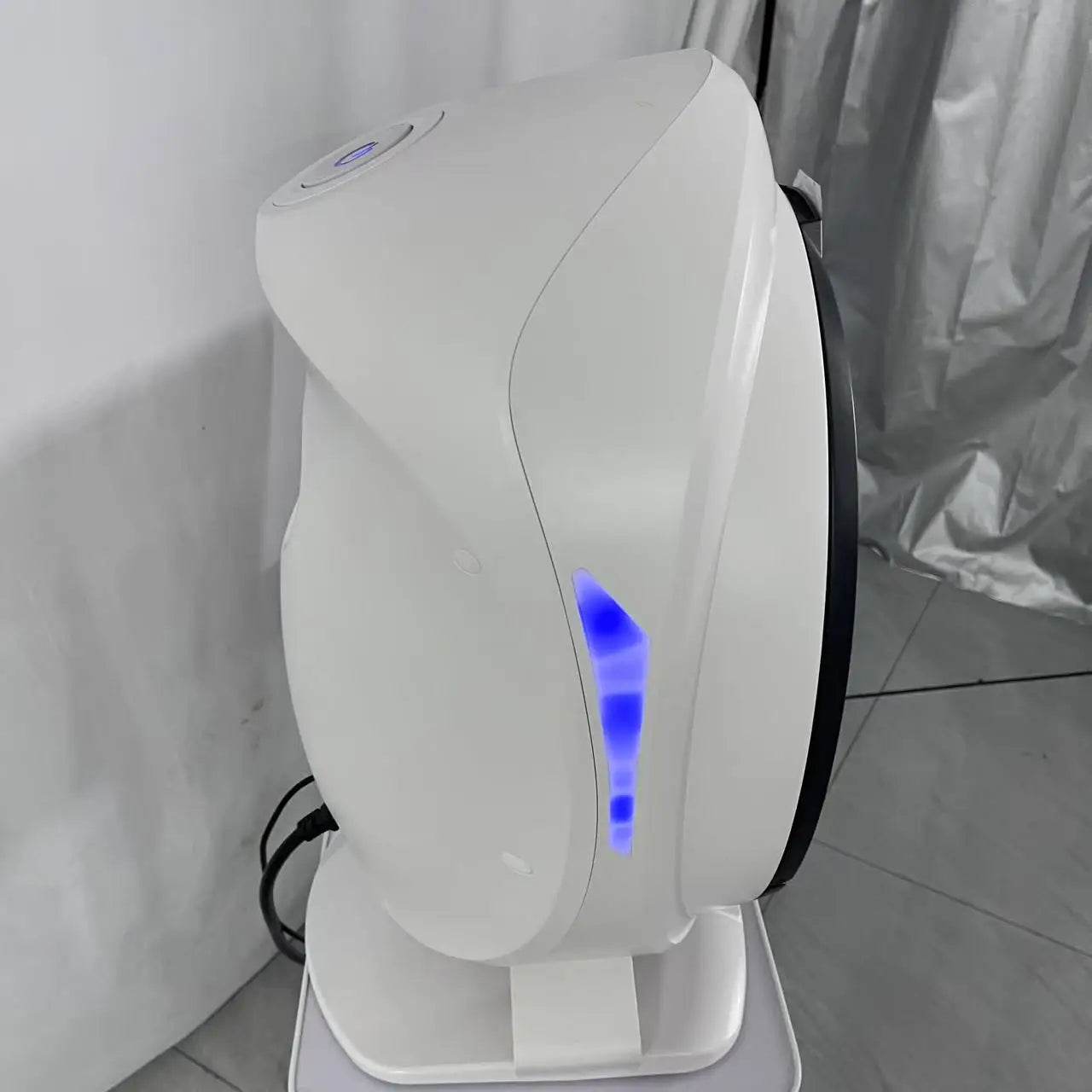
Key Features to Compare in an AI Facial Analyzer for Estheticians
Imaging Depth and Skin Parameters
Start with the information the system can actually capture. Compare camera resolution, imaging modes, spectrum technology, analyzed skin parameters, and report detail. A system designed for professional consultations should provide more useful information than a basic facial photograph.
AI Reporting and Client-Friendly Visuals
Reports should be understandable enough to use during a real consultation. Look for clear visual overlays, organized measurements, comparison capabilities, and presentation features that help clients understand their skin without requiring technical expertise.
Treatment and Product Recommendation Tools
Not every analyzer includes recommendation software, so determine whether the platform simply analyzes skin or also supports treatment planning and product recommendations. If your business relies heavily on retail sales, client education and report clarity may be particularly important.
Client Skin Tracking and Salon Management Integration
For a growing practice, consider the workflow after the initial scan. Ask whether the system supports client records, image history, data management, report storage, exports, or integration with existing salon software. A sophisticated analyzer that creates extra administrative work may deliver less value than a simpler system staff will consistently use.
A useful complementary resource for evaluating other professional device categories is the Body Care and Health Devices collection, particularly when building a broader technology-focused salon service menu.
AI Facial Analyzer Comparison: What Matters Most for a Salon?
Instead of choosing a machine based on feature count alone, use this comparison matrix to match capabilities to your business model.
- High-volume consultations: prioritize fast image capture, simple operation, repeatable workflows, and reports that staff can explain quickly.
- Premium personalized treatments: prioritize deeper imaging, multiple analysis parameters, detailed reporting, client history, and progress comparison.
- Retail-focused salons: prioritize clear visual reports and analysis categories that make personalized skincare recommendations easier to communicate.
- Multi-provider practices: prioritize standardized capture procedures, centralized client records, consistent reporting, and staff-friendly software.
- Long-term skin management: prioritize image tracking, repeat analysis, historical reports, and easy comparison between visits.
Example: MYOSLIM 36MP, 8-Spectrum AI Skin Analyzer
The AI Skin Analyzer for Professional 3D Facial Skin Analysis is an example of a professional-oriented system built around high-resolution facial imaging and AI analysis. It uses a 36MP industrial HD camera and 8-spectrum imaging technology and evaluates indicators including acne, pigmentation, pores, wrinkles, moisture, sebum, skin tone, and elasticity.
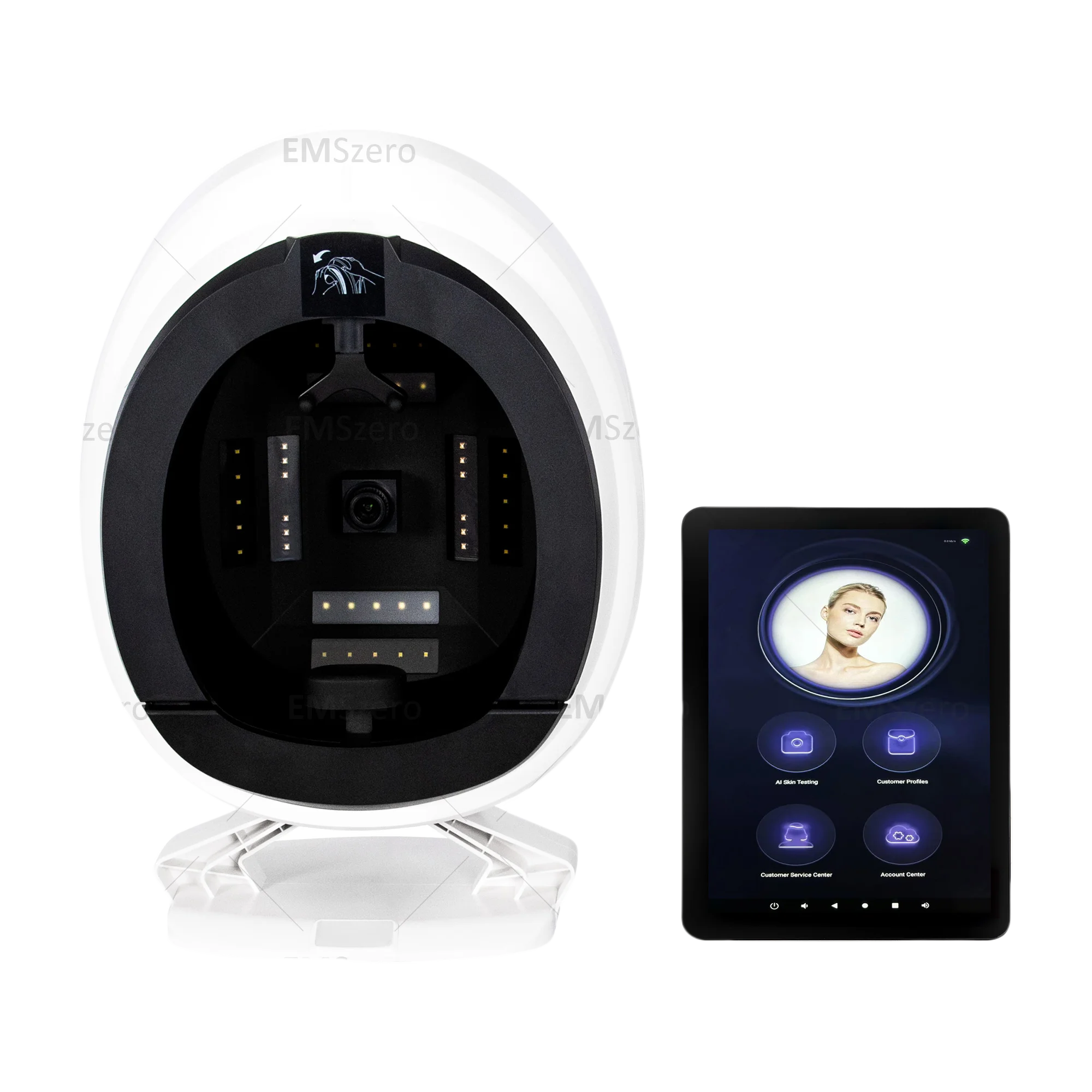
Its intended environment is professional beauty salons, skincare clinics, and skin management businesses. Intelligent digital reporting and image tracking are particularly relevant for consultations where the objective is to compare skin characteristics over time and build more personalized recommendations.
Pros:
- 36MP industrial HD camera for detailed facial imaging.
- 8-spectrum imaging provides multiple imaging layers.
- Analyzes a broad set of cosmetic skin indicators.
- Digital reports can support structured consultations.
- Image tracking supports ongoing skin assessment.
- Designed specifically for professional skincare environments.
Cons:
- Professional hardware requires a dedicated purchasing decision rather than an impulse consumer purchase.
- Results still depend on consistent image capture and correct interpretation.
- AI analysis should support, not replace, trained esthetician judgment.
- Buyers should confirm software, data-storage, integration, and support details before purchase.
For salons considering a professional facial imaging system, this type of configuration is most relevant when detailed documentation and repeat client analysis are central to the consultation model.
If you are ready to evaluate a professional system against your consultation workflow, you can review the professional AI facial skin analyzer and compare its imaging, reporting, and tracking capabilities with your business requirements.
How Much Does a Professional AI Skin Analyzer for Salons Cost?
Professional AI skin analyzers can vary substantially in total cost because buyers may be paying for hardware, imaging technology, software, reporting, cloud storage, support, training, integrations, and future upgrades rather than only the physical machine.
Upfront Hardware vs. Subscription Pricing
Before comparing advertised prices, determine whether the quoted figure includes the software required to operate the analyzer. Some platforms use a hardware-purchase model, while others may add recurring software or service fees. Financing can also change the effective monthly cost.
For an accurate comparison, calculate the first-year total cost rather than looking only at the hardware price.
Hidden Costs to Check Before Buying
- Software subscriptions or recurring platform fees.
- Cloud storage and client-image limits.
- Training and onboarding.
- Technical support and maintenance.
- Report-generation or export restrictions.
- Integration with existing salon software.
- Future software upgrades or hardware replacement.
A Simple Break-Even Calculation
A practical break-even formula is:
Monthly incremental profit ÷ total analyzer investment = estimated monthly return rate.
For a payback estimate, divide the total acquisition and implementation cost by the additional monthly contribution generated through consultation conversions, treatment upgrades, retail sales, and repeat visits.
For example, if an analyzer contributes an illustrative $1,000 in additional monthly gross profit and the total implementation cost is $5,000, the simple payback model would be approximately five months. This is an example for planning, not a performance guarantee. Your actual result depends on consultation volume, pricing, conversion rates, margins, client retention, and how consistently staff use the system.
After calculating your expected break-even point, a professional system such as the MYOSLIM AI Skin Analyzer can be evaluated based on whether its imaging and reporting capabilities support the revenue model you are targeting.
AI Facial Analyzer ROI: Can Skin Analysis Increase Salon Revenue?
The strongest business case for facial analysis is not the scan itself. It is what the scan enables the business to do afterward.
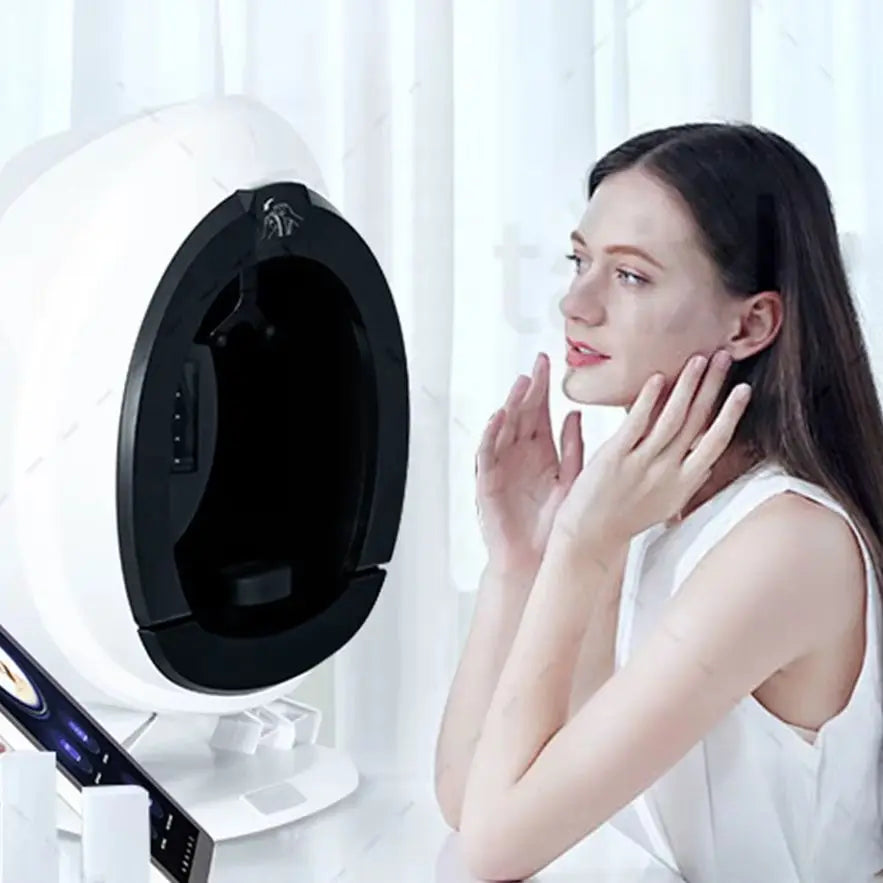
Increase Treatment Conversion
Clients may understand a recommendation more easily when an esthetician can visually demonstrate the cosmetic concern being discussed. A structured report can make the consultation more tangible and may help reduce the gap between “the esthetician recommends this” and “I understand why this treatment fits my goals.”
Increase Revenue per Consultation
Analysis can support treatment upgrades or multi-visit plans when those recommendations genuinely correspond to documented client priorities. The key is relevance: a higher-value treatment should be connected to the client's goals rather than presented simply because the analyzer produced more data.
Increase Skincare Retail Sales
Personalized analysis can create a more credible transition from service to home care. If the report highlights areas that require ongoing attention, the esthetician can explain how a consistent home routine complements professional treatments.
Improve Client Retention Through Progress Tracking
Progress tracking gives clients a reason to return for reassessment. Instead of treating every appointment as an isolated service, the salon can frame the relationship around an ongoing skin-management plan with documented milestones.
These benefits should be measured rather than assumed. Track consultation-to-treatment conversion, average ticket, retail attachment rate, repeat booking rate, and revenue generated per analyzer-assisted consultation before and after implementation.
Privacy, Consent and Data Compliance for Client Facial Imaging
Facial images can constitute sensitive personal data depending on how they are used and the laws that apply to the business. Before deploying an AI skin analyzer, salon owners should understand where client images are stored, who can access them, how long they are retained, and whether the vendor processes them through third-party cloud services.
What to Ask About Facial Image Storage
- Are facial images stored locally, in the cloud, or both?
- Who owns the uploaded images and analysis records?
- Can staff accounts have different permission levels?
- How are stored and transmitted images protected?
- Can client records be deleted when requested?
- How long are backups retained?
- Does the vendor use customer images to train or improve algorithms?
GDPR and Other Privacy Requirements
Privacy obligations vary according to the client's location, the salon's location, the type of information collected, and how the vendor processes that information. Businesses serving clients in jurisdictions with comprehensive privacy laws should obtain appropriate consent and review their vendor's data-processing and privacy documentation.
HIPAA: When Does It Matter?
HIPAA does not automatically apply to every salon simply because the business collects facial images. Applicability depends on the organization's role and whether it qualifies as a covered entity or business associate under HIPAA. Businesses operating in healthcare-related environments should obtain appropriate legal or compliance advice rather than assuming a device is or is not HIPAA compliant.
How to Choose the Best AI Facial Analyzer for Your Esthetician Practice
Match the Analyzer to Your Consultation Volume
A solo esthetician may prioritize simplicity and client education, while a high-volume salon may need faster workflows, standardized procedures, and stronger client-data management. Start with the number of consultations you expect the analyzer to support each week.
Prioritize Workflow Fit Over Feature Count
The right system should fit naturally into your existing consultation. If staff avoid using it because setup is slow or reports are difficult to explain, advanced imaging capabilities may have little business value.
Evaluate the complete process: client preparation, image capture, analysis time, report review, treatment recommendation, retail recommendation, record storage, and follow-up comparison.
Calculate Expected ROI Before Buying
Estimate your baseline numbers before purchase:
- Monthly consultation volume.
- Current consultation-to-treatment conversion rate.
- Average treatment ticket.
- Average retail purchase per client.
- Repeat booking rate.
- Expected incremental conversions attributable to improved consultations.
- Total hardware, software, training, and support costs.
Then model conservative, moderate, and optimistic scenarios. This gives you a more useful purchasing decision than relying on generic claims that an AI analyzer will “increase revenue.”
For businesses already investing in professional beauty technology, the broader Body & Face Blog provides a relevant content hub for exploring facial and body-care technology alongside skin analysis.
When comparing systems, also consider how facial analysis fits into your wider technology stack. A device that provides detailed imaging, structured reports, and client tracking can become more valuable when it is consistently incorporated into consultations instead of being used only occasionally.
Final Verdict: What Makes an AI Facial Analyzer Worth Buying?
The best AI facial analyzer for estheticians is not automatically the device with the highest camera resolution, the largest number of analysis modes, or the longest feature list. The stronger choice is the system that delivers credible imaging, useful analysis, understandable reports, repeatable client tracking, practical workflow fit, appropriate privacy controls, and a measurable business case.
For professional buyers, the AI Skin Analyzer for Professional 3D Facial Skin Analysis offers a combination of 36MP HD facial imaging, 8-spectrum technology, AI-powered analysis, multiple skin indicators, digital reporting, and image tracking designed for salons, skincare clinics, and professional skin-management environments.
The next step is to compare those capabilities against your consultation volume, service model, client-management process, retail strategy, and expected break-even point. If the technology improves how your team explains skin concerns, personalizes treatment plans, documents progress, and manages follow-up consultations, it has a stronger chance of becoming a productive part of the salon workflow rather than simply another piece of equipment.
Pillar Article: AI Facial Analyzer for Estheticians: Best Options Compared













