

Do Hand Rehabilitation Devices Really Work? (Clinical Perspective)
Yes. A hand rehabilitation device can be an effective part of a recovery program when used consistently and paired with appropriate therapeutic exercises. Clinical rehabilitation often incorporates device-assisted training because it enables controlled, repetitive movement that is difficult to achieve with manual exercises alone. This high repetition supports improvements in hand strength, joint mobility, coordination, and functional movement over time.
Evidence from Stroke Recovery Studies
Research in stroke rehabilitation consistently shows that repetitive, task-specific hand movement helps promote motor recovery by encouraging the brain to reorganize damaged neural pathways. A stroke hand exercise device, including robotic therapy gloves and passive motion systems, allows patients to complete more guided repetitions with consistent movement patterns than unaided exercise alone. Early intervention generally produces the greatest improvements, although patients can continue making meaningful progress during later stages of recovery with structured practice.
When Results Are Faster (and When They’re Not)
Recovery speed varies according to the severity of impairment, how soon rehabilitation begins, and how consistently exercises are performed. Individuals who combine a hand rehabilitation device with therapist-guided treatment and daily home practice often experience steadier gains in flexibility, grip strength, and coordination. More severe paralysis, extensive nerve damage, or long delays before starting rehabilitation may require a longer recovery timeline and ongoing professional supervision.
Best Hand Rehabilitation Devices for Faster Recovery (2026 Guide)
Modern hand rehabilitation devices combine assisted movement, repetitive training, and hand muscle activation support to help restore everyday function after stroke, nerve injury, surgery, or other neurological conditions. Whether your goal is improving grip strength, reducing stiffness, or rebuilding fine motor control, choosing the right hand therapy equipment can make home rehabilitation more structured, measurable, and effective.
⏱ 6 min read
If weak grip, stiff fingers, or limited hand movement are making everyday activities more difficult, you're not alone. Recovering hand function takes patience, but using the right rehabilitation tools can help you perform more quality repetitions while maintaining proper movement patterns.
Which approach offers the best chance of restoring strength, dexterity, and independence? This guide explains what current rehabilitation technology can—and cannot—do.
Discover how advanced hand muscle activation support can accelerate your recovery journey.
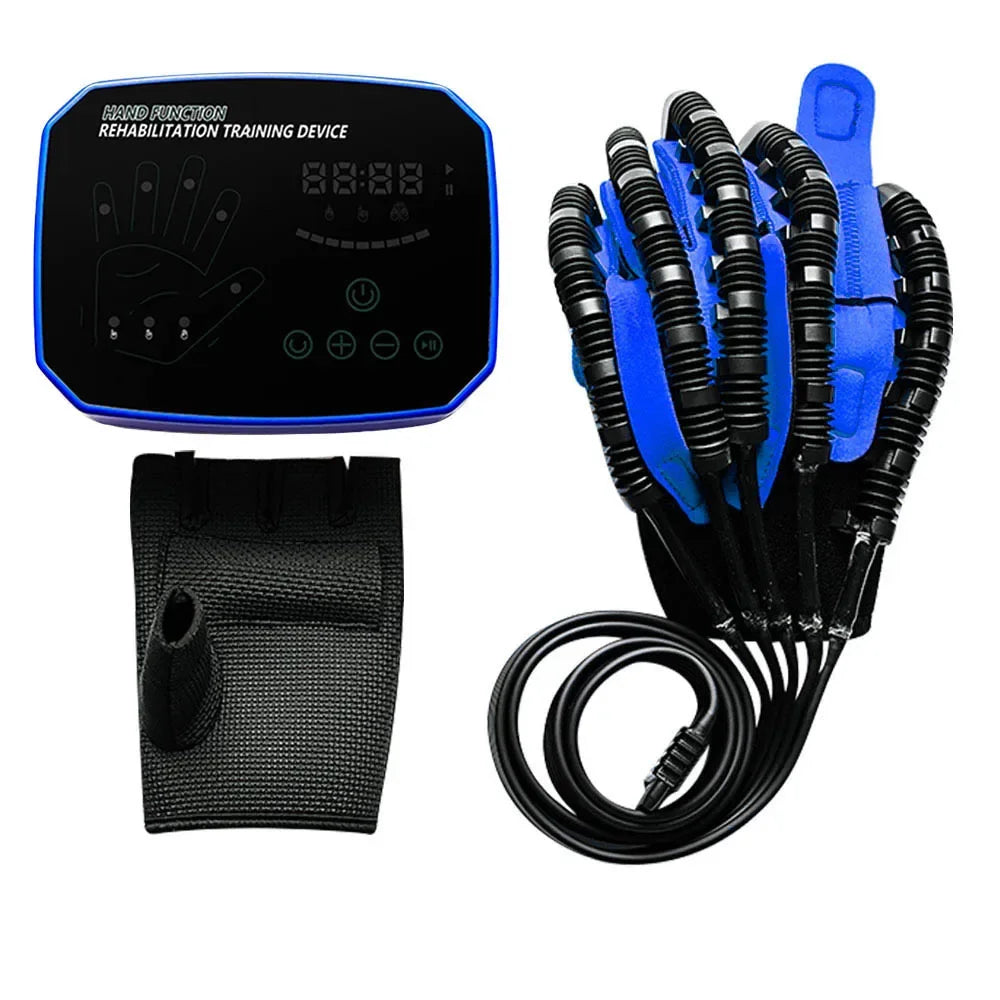
Hand muscle activation support with therapy gloves for stroke hand exercises. See it in action.
What Is a Hand Rehabilitation Device and How Does It Work?
A hand rehabilitation device is designed to improve finger mobility, grip strength, coordination, and functional hand use after stroke, orthopedic injury, nerve damage, or neurological disorders. By delivering guided, repetitive movements, these devices help retrain muscles while reinforcing communication between the brain and the hand. Depending on the model, users may perform passive movement, active resistance training, or a combination of both throughout different stages of recovery.
Passive vs Active Training Explained
Passive hand exercise devices move the fingers and hand without requiring the user to generate force. They are especially valuable during early rehabilitation when voluntary movement is limited, helping maintain joint mobility, reduce stiffness, and prepare the hand for active exercise.
Active training devices require the user to participate by squeezing, extending, or resisting movement. This approach builds muscle strength, improves endurance, and develops fine motor control. Many advanced rehabilitation systems combine passive assistance with active exercise so therapy can progress alongside recovery.
How Devices Stimulate Neuroplasticity
One of the most important principles of rehabilitation is repetition. Performing the same purposeful movement hundreds of times helps reinforce neural pathways responsible for hand function. Consistent practice with hand therapy equipment allows users to complete more accurate repetitions, encouraging neuroplasticity while reducing compensatory movement patterns that may slow recovery.
Robotics, EMS, Resistance and Pneumatic Systems
Hand rehabilitation technology includes several different approaches. Robotic therapy gloves use motors or pneumatic air pressure to guide finger movement through natural motion patterns. Electrical muscle stimulation (EMS) devices activate muscles using controlled electrical impulses and are commonly incorporated into therapist-directed rehabilitation programs. Resistance trainers strengthen grip and finger muscles during later recovery stages, while pneumatic systems provide smooth, adjustable assistance that can be tailored to changing mobility levels.
Why Traditional Exercises Alone Often Fall Short
Manual hand exercises, therapy putty, and stress balls remain valuable rehabilitation tools, but they often depend on the user already having enough voluntary muscle activation to perform the movement correctly. When muscles are extremely weak or coordination is impaired, completing sufficient repetitions becomes challenging.
- ❌ Fingers cannot fully open or extend.
- ❌ Grip strength varies from one repetition to the next.
- ❌ Progress slows because movement quality declines with fatigue.
- ❌ Limited repetitions reduce opportunities for motor relearning.
Without assisted movement, individuals may unintentionally reinforce inefficient movement patterns instead of restoring normal hand function. Device-assisted therapy helps increase repetition, maintain consistent motion, and improve adherence to home rehabilitation programs.
That’s where the rehabilitation robot glove for hand recovery stands apart by providing guided assistance that supports structured hand exercise throughout different stages of recovery.
Types of Hand Rehabilitation Devices (Compared)
Each category of hand rehabilitation device is designed to solve a different recovery challenge. Your ideal choice depends on whether your priority is restoring movement, increasing strength, reducing stiffness, or improving fine motor control. Many rehabilitation specialists recommend combining multiple hand therapy tools for home use as recovery progresses.
Robotic Therapy Gloves
Robotic therapy gloves use pneumatic air pressure or motor-assisted technology to guide finger flexion and extension. They are among the most versatile therapy gloves for hand recovery because they often include both passive and active-assisted training modes.
- Best for: Stroke survivors, neurological conditions, severe hand weakness
- Advantages: High repetition, adjustable assistance, consistent movement patterns
- Limitations: Higher cost than basic rehabilitation tools
Grip & Strength Trainers
Grip exercisers, spring-loaded hand grippers, and resistance tools are effective hand strength recovery devices once basic finger movement has returned. They improve grip endurance, pinch strength, and functional hand use for daily activities.
- Best for: Mid- and late-stage rehabilitation, sports injuries, post-surgical strengthening
- Advantages: Affordable, portable, progressive resistance options
- Limitations: Not suitable for individuals with very limited finger movement
Electrical Stimulation Devices (EMS)
Electrical muscle stimulation (EMS) devices activate muscles using controlled electrical impulses. They are commonly incorporated into supervised rehabilitation programs to encourage muscle contraction when voluntary activation is weak.
- Best for: Muscle re-education and therapist-directed rehabilitation
- Advantages: Helps activate underused muscles and complements exercise programs
- Limitations: Should be used according to medical guidance and is not a substitute for active exercise
Passive Hand Exercise Devices
Passive hand exercise devices move the fingers through controlled ranges of motion without requiring muscular effort from the user. They help maintain flexibility, reduce joint stiffness, and prepare the hand for more active rehabilitation.
- Best for: Early recovery after stroke, surgery, or prolonged immobilization
- Advantages: Gentle movement, reduced stiffness, supports circulation
- Limitations: Limited strength-building benefits on their own
Therapy Balls and Finger Trainers
Therapy putty, silicone balls, finger resistance bands, and dexterity trainers help improve coordination, finger independence, and fine motor skills. These simple tools are excellent additions to structured home rehabilitation programs.
- Best for: Arthritis, tendon recovery, improving dexterity and hand endurance
- Advantages: Low cost, easy to carry, suitable for daily practice
- Limitations: Less effective for individuals who cannot actively move their fingers
Best Hand Rehabilitation Devices for Home Use (Top Picks)
The best hand rehabilitation device depends on your diagnosis, recovery stage, and daily therapy goals. Matching the device to your needs helps maximize progress while avoiding unnecessary expense.
Best for Stroke Recovery
Robotic therapy gloves that combine passive assistance with active training remain the leading option for stroke rehabilitation. Their adjustable assistance supports gradual progression while encouraging repetitive, high-quality movement.
Gentle passive motion devices, therapy balls, and low-resistance finger exercisers help maintain joint mobility while reducing stiffness. They place less stress on painful joints and can be used as part of a daily flexibility routine.
Best for Hand Injury Recovery
Individuals recovering from tendon injuries, fractures, or surgery often benefit from a combination of passive mobility devices during early healing and grip-strengthening equipment once cleared by a healthcare professional.
Best Budget Option
Resistance grippers, therapy putty, finger extension bands, and exercise balls provide excellent value for improving strength and coordination. These tools are inexpensive, durable, and suitable for regular home practice.
Best Smart/Robotic Glove
Smart robotic gloves with programmable training modes, adjustable assistance levels, and ergonomic designs provide the most comprehensive home rehabilitation experience for users who require structured therapy over an extended period.
Key Benefits You’ll Notice Within Weeks
- ✅ Increased grip strength and muscular endurance
- ✅ Smoother finger opening and closing movements
- ✅ Reduced hand stiffness and improved joint flexibility
- ✅ Better finger coordination and fine motor control
- ✅ Greater confidence performing everyday activities independently
While recovery timelines vary, many users notice measurable improvements within 3 to 6 weeks of consistent practice when using a hand rehabilitation device alongside an appropriate exercise program.
By Recovery Stage
- Early stage: Improved joint mobility, reduced stiffness, and easier passive finger movement.
- Middle stage: Better hand muscle activation support, stronger grip, and improved coordination during everyday tasks.
- Later stage: Increased endurance, finer motor control, faster object manipulation, and greater independence during work and self-care activities.
How to Choose the Right Hand Therapy Equipment
Selecting the right hand therapy equipment starts with understanding your diagnosis, current hand function, rehabilitation goals, and daily routine. The best device should match your recovery stage while being comfortable enough for consistent home use.
Based on Condition (Stroke, Injury, Arthritis, Parkinson's)
- Stroke: Hand rehabilitation equipment for stroke patients typically includes robotic gloves or passive-assisted devices that encourage repetitive, guided movement and gradual active participation.
- Hand or nerve injury: Mobility devices are often used during early recovery, followed by grip trainers and resistance tools as strength returns.
- Arthritis: Choose gentle mobility devices and low-resistance exercise tools that improve flexibility without placing excessive stress on painful joints.
- Parkinson's disease: Devices that promote finger mobility, coordination, and repetitive movement may help maintain functional hand use as part of a broader rehabilitation program.
Based on Recovery Stage
- Early stage: Passive movement devices help maintain range of motion and reduce stiffness when voluntary movement is limited.
- Middle stage: Assisted devices that combine passive and active training encourage muscle activation while improving coordination.
- Late stage: Strength trainers, dexterity tools, and resistance exercises help restore endurance, grip strength, and fine motor skills.
Based on Portability and Budget
If you travel frequently or prefer short therapy sessions throughout the day, lightweight hand therapy tools such as grip trainers, therapy putty, or finger exercisers provide convenient options. Larger robotic rehabilitation systems generally offer more advanced features but require a higher investment. Consider your long-term rehabilitation plan when comparing value rather than focusing only on initial purchase price.
Features That Actually Matter
- Adjustable assistance or resistance levels
- Comfortable ergonomic fit for extended sessions
- Passive and active training modes
- Simple controls suitable for independent home use
- Durable construction and easy maintenance
- Sizing options that fit different hand dimensions
- Reliable safety features that prevent excessive movement
Explore more options in Body Care and Health Devices.
How to Use Hand Rehabilitation Devices for Best Results
Consistent practice is more important than occasional long sessions. Following a structured routine helps build strength, improve mobility, and reinforce proper movement patterns while minimizing fatigue.
Daily Routine Example (Home Use)
- Warm up the fingers, wrist, and forearm with gentle stretching for 5 to 10 minutes.
- Complete passive or assisted exercises using your rehabilitation device for 15 to 20 minutes.
- Perform active grip, finger extension, or dexterity exercises for another 10 to 15 minutes.
- Finish with gentle stretching and allow adequate recovery before the next session.
- Repeat the routine consistently according to your therapist's recommendations.
Combining Devices with Occupational Therapy
Home rehabilitation devices work best when combined with occupational or physical therapy. A therapist can monitor movement quality, adjust exercise intensity, and recommend functional tasks that improve real-world activities such as writing, buttoning clothing, cooking, or holding everyday objects. Using hand therapy tools for home use between appointments also helps maintain training frequency without replacing professional care.
Mistakes That Slow Recovery
- Skipping scheduled therapy sessions or practicing inconsistently
- Choosing equipment that does not match your recovery stage
- Ignoring pain, swelling, or unusual discomfort during exercise
- Skipping warm-up and mobility exercises before training
- Progressing resistance too quickly or overtraining without adequate rest
- Focusing only on strength while neglecting flexibility and coordination
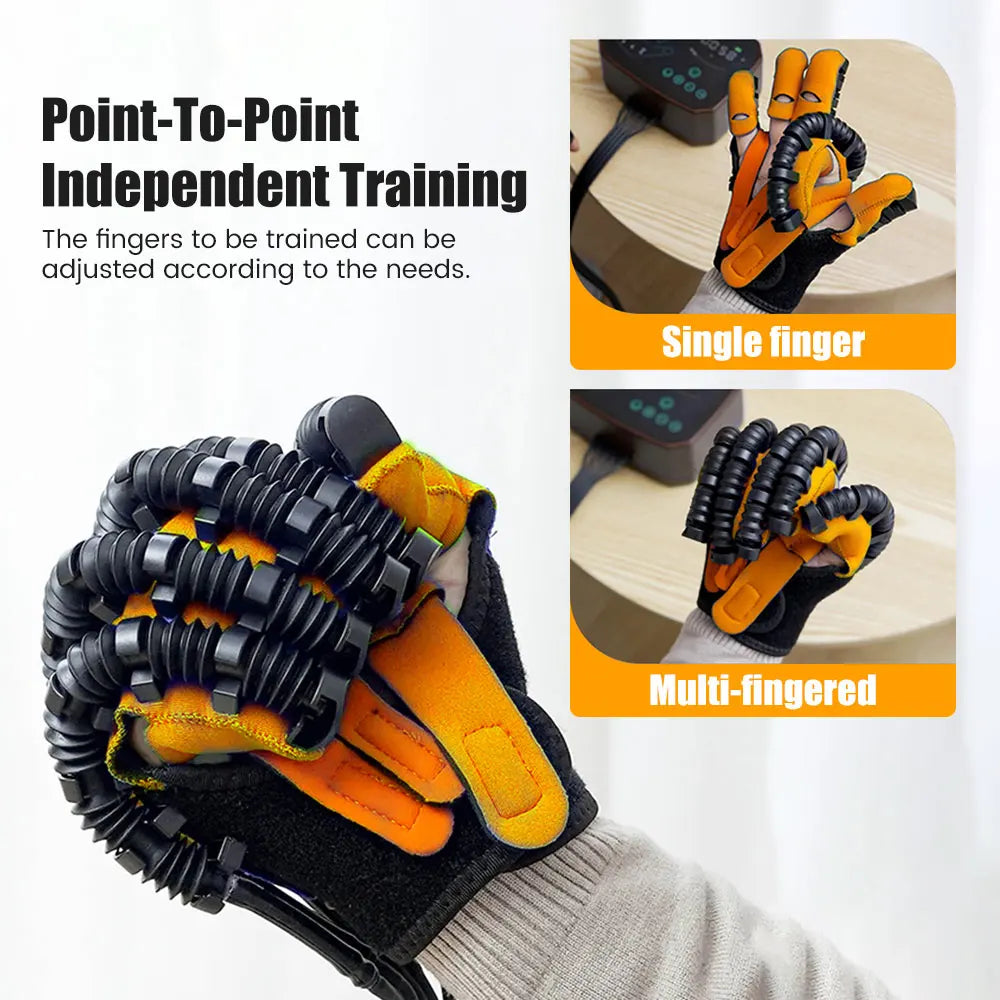
Therapy gloves enhancing hand exercise equipment physical therapy results. See how assisted movement feels.
Comparison: Assisted Devices vs Manual Therapy Alone
Device-assisted rehabilitation and therapist-guided manual therapy each provide unique benefits. Rather than choosing one over the other, many rehabilitation professionals recommend combining both approaches to maximize recovery.
| Feature | Assisted Devices | Manual Therapy |
|---|---|---|
| Training repetitions | High-volume, consistent movement | Limited by appointment duration |
| Personalized correction | Limited | Excellent therapist feedback |
| Home accessibility | Available daily | Requires scheduled visits |
| Progress monitoring | Often includes adjustable settings | Based on clinical assessment |
| Best use | Daily home rehabilitation | Professional evaluation and technique correction |
For most individuals, combining a hand rehabilitation device with supervised therapy provides the best balance of intensive practice, professional guidance, and long-term functional improvement.
Who Benefits Most from This Technology?
Hand rehabilitation devices can benefit a wide range of people recovering from neurological, orthopedic, and age-related conditions. The right device should match the individual's diagnosis, current hand function, and rehabilitation goals, ideally with guidance from a healthcare professional.
Stroke Survivors
Hand rehabilitation equipment for stroke patients is designed to improve finger mobility, grip strength, and coordination through repetitive, guided movement. A stroke hand exercise device may help increase practice volume between therapy sessions while supporting neuroplasticity and functional recovery.
Arthritis and Joint Stiffness
Individuals with arthritis or chronic hand stiffness may benefit from gentle passive movement devices, therapy balls, and low-resistance exercise tools that improve flexibility, reduce joint stiffness, and help maintain hand function for everyday activities.
Nerve and Tendon Injuries
People recovering from peripheral nerve injuries, tendon repairs, or hand trauma often use rehabilitation devices as they progress from protected movement to active strengthening. Following the rehabilitation timeline recommended by a surgeon or therapist is important to avoid overstressing healing tissues.
Post-Surgery Recovery
After hand or wrist surgery, rehabilitation equipment can help restore range of motion, rebuild strength, and improve dexterity once approved by the treating physician. Structured home exercises often complement occupational or physical therapy during recovery.
Seniors experiencing age-related loss of grip strength or reduced dexterity may also benefit from appropriately selected hand therapy equipment with adjustable assistance levels and ergonomic designs.
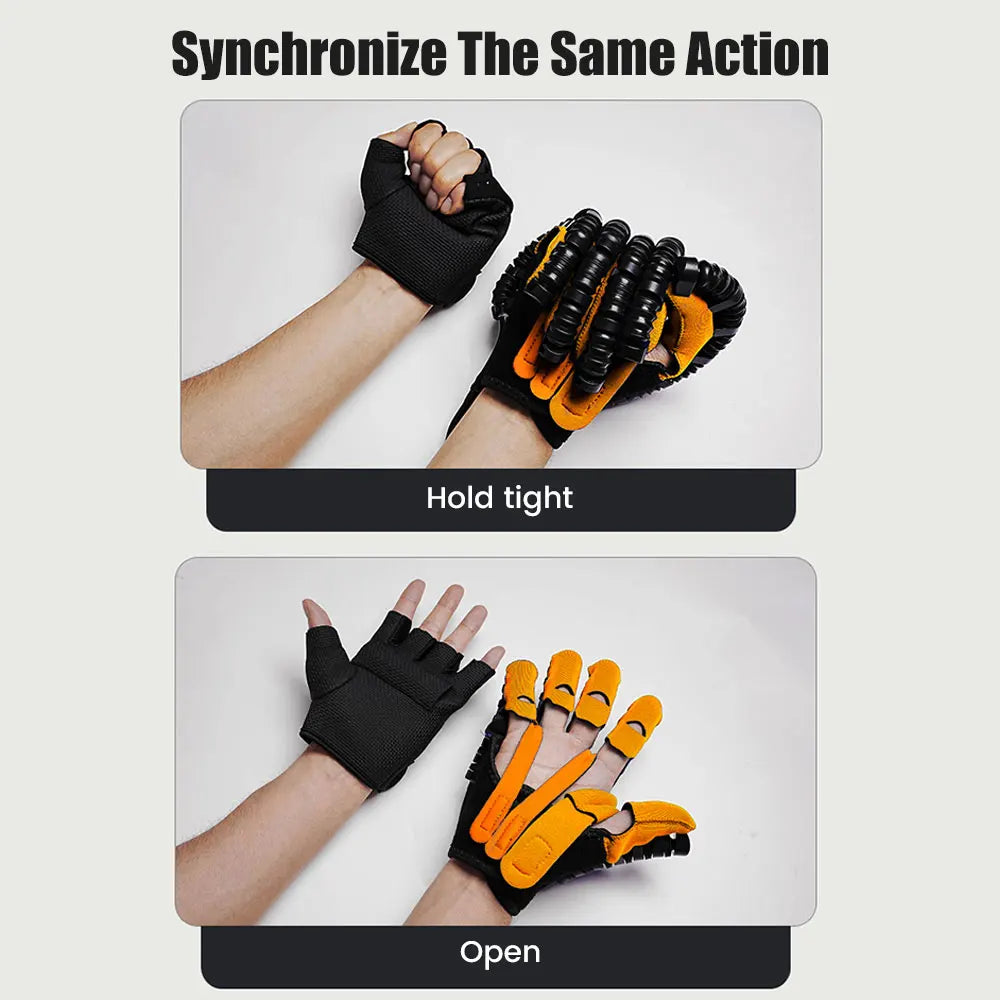
Stroke hand exercises powered by therapy gloves for neuromuscular recovery. Get yours now — limited stock!
Get yours now — limited stock!
FAQs About Hand Rehabilitation Devices
How long does it take to see results?
Many users notice gradual improvements in mobility, flexibility, or grip strength within 3 to 6 weeks of consistent training. More substantial functional recovery may require several months, depending on the underlying condition, severity of impairment, and adherence to the rehabilitation program.
Can therapy gloves replace physical therapy?
No. Therapy gloves are designed to complement—not replace—occupational or physical therapy. They allow users to perform more guided repetitions at home between clinical appointments, helping reinforce exercises prescribed by rehabilitation professionals.
Are these devices safe for seniors?
Yes. Most modern hand rehabilitation devices include adjustable assistance or resistance levels, making them appropriate for many older adults. Seniors with severe arthritis, recent surgery, or complex medical conditions should consult their healthcare provider before beginning a new rehabilitation program.
Do they improve fine motor skills?
Yes. Repetitive finger exercises and coordinated movement training can improve dexterity, object manipulation, and everyday tasks such as buttoning clothing, writing, and holding utensils when practiced consistently.
Which hand rehabilitation device is best after a stroke?
Robotic therapy gloves with passive and active-assisted training modes are often recommended because they support repetitive movement while adapting to changing recovery needs. The best choice depends on your current hand function and your therapist's recommendations.
What is the difference between passive and active hand exercise devices?
Passive devices move your fingers with little or no muscular effort, making them suitable for early rehabilitation. Active devices require you to generate movement or resistance, helping build strength, endurance, and coordination during later recovery stages.
Can I use a hand rehabilitation device every day?
Daily use is common for many rehabilitation programs, provided exercises are performed at the recommended intensity and appropriate rest periods are included. Always follow instructions provided by your healthcare professional or device manufacturer.
Are robotic therapy gloves worth the cost?
For individuals requiring long-term rehabilitation after stroke or neurological injury, robotic gloves can provide consistent, high-repetition training at home. Their value depends on your rehabilitation goals, frequency of use, and whether advanced assistance features are needed.
How do I improve hand mobility after stroke at home?
The most effective approach combines therapist-directed exercises, daily stretching, repetitive task practice, and appropriate hand rehabilitation equipment. Consistency and gradual progression are more important than exercising at high intensity.
What hand therapy equipment is best for arthritis?
Gentle mobility devices, therapy putty, finger exercisers, and soft therapy balls are commonly used to improve flexibility, maintain joint movement, and support hand function while minimizing excessive joint stress.
Can seniors safely use hand rehabilitation devices?
Yes, provided the device is easy to operate, properly fitted, and used according to the recommended settings. Adjustable assistance levels and ergonomic designs help make rehabilitation safer and more comfortable for older adults.
How long does hand recovery usually take?
Recovery varies widely depending on the cause of impairment. Mild injuries may improve within weeks, while recovery following stroke, nerve injury, or major surgery can continue for several months or longer with consistent rehabilitation and professional guidance.
Related Guide: Rehabilitation Robot Glove Device Features Explained













