

Grip Strengthening Gloves vs Hand Therapy Exercises: Which Is More Effective?
Quick Answer: Gloves vs Exercises for Grip Strength
Grip strengthening gloves and hand therapy exercises are designed for different stages of recovery, making them complementary rather than competing solutions. Therapy gloves are most beneficial for assisted movement, improving range of motion, and supporting people with limited hand function. Hand therapy exercises are more effective for developing grip strength, dexterity, coordination, and long-term muscle performance.
For most people recovering from stroke, nerve injuries, arthritis, or hand weakness, the best results come from combining both approaches. Assisted movement helps restore mobility first, while progressive exercises build lasting strength and functional independence.
Best Option by Goal (Rehab vs Strength)
- Restore movement: Grip strengthening gloves provide guided assistance when active movement is difficult.
- Increase grip strength: Hand therapy exercises progressively challenge muscles to improve power and endurance.
- Improve daily function: Combining assisted rehabilitation with active exercise often produces the most consistent improvements.
When to Use Each Method
People in the early stages of rehabilitation often benefit from therapy gloves because they reduce the effort needed to complete repetitive movements. As mobility improves, structured exercises become increasingly important for rebuilding strength, coordination, and fine motor control.
Can You Combine Both?
Yes. Many rehabilitation programs begin with glove-assisted movement to increase joint mobility and reduce stiffness before progressing to active strengthening exercises. This gradual transition helps improve recovery while minimizing unnecessary strain.
Modern rehabilitation technology supports both passive assistance and active training. Whether using a robotic glove, a dedicated hand therapy machine, or a structured exercise routine, choosing the right combination depends on your level of mobility, rehabilitation goals, and overall hand function.
⏱ 7 min read
Having trouble buttoning clothes, holding a mug securely, or writing without discomfort?
Reduced hand strength can affect nearly every daily activity. Whether the cause is stroke recovery, arthritis, nerve damage, injury, or age-related weakness, selecting an appropriate rehabilitation strategy can make recovery more effective.
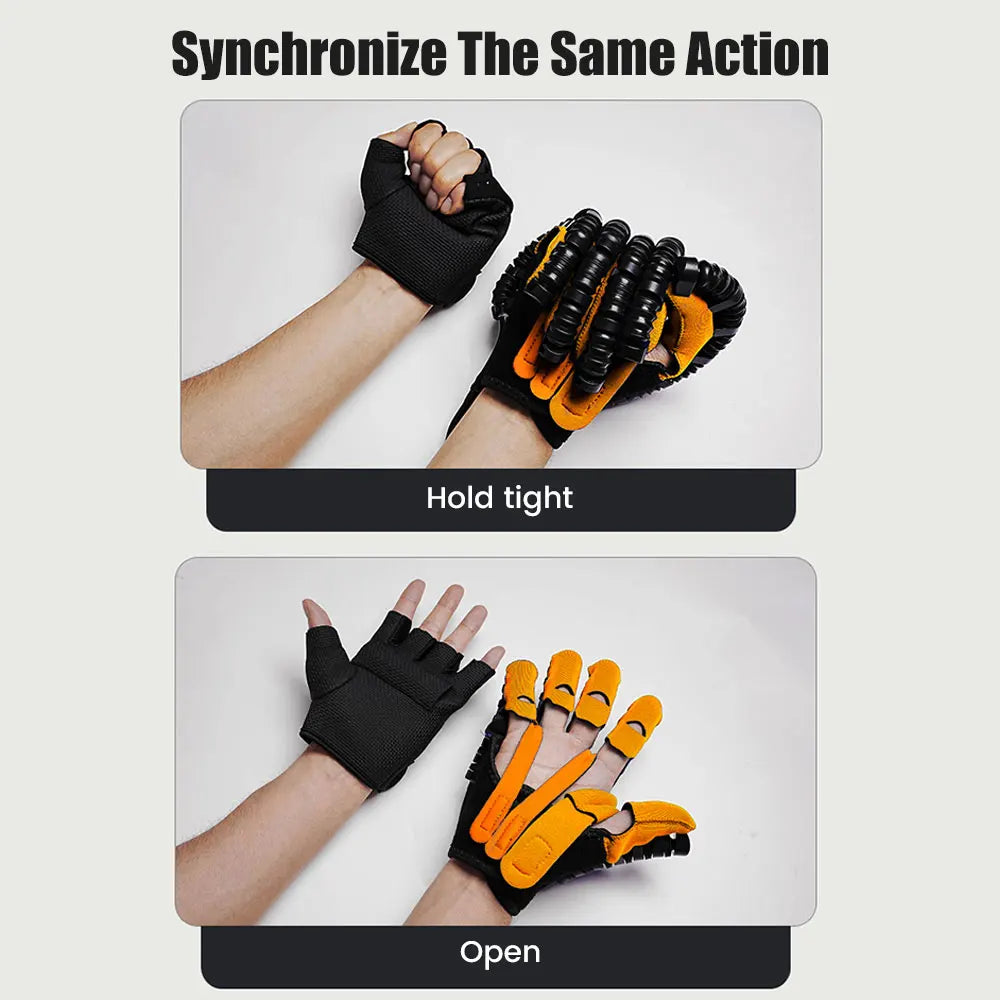
Advanced hand rehab device for stroke hand recovery and grip strength training. See it in action.
Grip Strengthening Gloves vs Hand Therapy Exercises: Side-by-Side Comparison
Key Differences at a Glance
- Primary Function: Therapy gloves assist movement, while exercises develop active grip strength and coordination.
- Best For: Gloves support early rehabilitation and reduced mobility; exercises are ideal for strength gains and long-term maintenance.
- Muscle Engagement: Gloves provide assisted movement, whereas exercises rely on voluntary muscle contraction.
- Ease of Use: Gloves make repetitive training more accessible for people with limited hand function.
- Cost: Exercises require minimal equipment, while robotic or therapy gloves involve a higher upfront investment.
- Long-Term Results: Progressive exercises typically produce greater improvements in strength and endurance over time.
Comparison Table (Effectiveness, Cost, Use Case, Progression)
| Category | Grip Strengthening Gloves | Hand Therapy Exercises |
|---|---|---|
| Primary Goal | Restore movement and improve mobility | Increase strength, dexterity, and endurance |
| Best Recovery Stage | Early rehabilitation | Middle to late rehabilitation and maintenance |
| Muscle Activation | Assisted or supported movement | Active muscle contraction |
| Progression | Depends on device settings | Easily increased with resistance and repetition |
| Investment | Higher initial equipment cost | Low-cost with simple rehabilitation tools |
| Long-Term Benefit | Maintains mobility and encourages movement | Builds lasting grip strength and functional performance |
Pros and Cons Summary
-
Grip Strengthening Gloves
- Provide guided, repetitive movement.
- Help reduce stiffness and support neurological rehabilitation.
- Improve consistency for users with limited mobility.
- May not provide enough resistance to maximize strength gains alone.
-
Hand Therapy Exercises
- Strengthen muscles through active effort.
- Adapt easily as recovery progresses.
- Require little equipment and can be performed almost anywhere.
- May be difficult during the earliest stages of recovery when movement is severely limited.
What Are Grip Strengthening Gloves and How Do They Work?
Grip strengthening gloves are wearable rehabilitation devices that assist finger and hand movement through guided motion. Depending on the design, they may use elastic tension, pneumatic assistance, or robotic motors to help users complete repetitive movements that would otherwise be difficult. They are frequently recommended for stroke rehabilitation, nerve injuries, arthritis, and other conditions that reduce hand mobility.
Types: Passive, Resistance, Robotic Gloves
- Passive therapy gloves: Provide gentle support to improve flexibility and reduce stiffness.
- Resistance gloves: Add controlled resistance during movement to encourage muscle activation.
- Robotic gloves: Use powered assistance to guide finger flexion and extension with greater precision for rehabilitation.
Biomechanics: Assisted Movement and Muscle Activation
Therapy gloves guide repeated opening and closing movements while keeping joints aligned and tendons active. This repetitive practice encourages neuromuscular retraining, improves range of motion, and helps reinforce movement patterns, particularly for individuals who cannot generate sufficient voluntary muscle force.
Because assistance reduces physical strain, users can often perform longer and more consistent rehabilitation sessions without excessive fatigue.
Limitations of Glove-Based Therapy
- Most gloves prioritize mobility over maximum strength development.
- Progress depends on consistent use alongside active rehabilitation.
- Advanced robotic models typically cost more than traditional exercise equipment.
- They are generally most effective when paired with strengthening exercises as recovery progresses.
If you're exploring advanced options, consider this rehabilitation robot glove device for guided home therapy.
What Are Hand Therapy Exercises and How Do They Work?
Hand therapy exercises use active, controlled movements to strengthen the muscles responsible for gripping, pinching, finger coordination, and overall hand function. Unlike assisted devices, these exercises require the user to generate force independently, making them essential for rebuilding strength and improving everyday performance.
Types: Strength, Mobility, Dexterity Exercises
- Strength exercises: Grip trainers, therapy putty, and stress balls build muscle force.
- Mobility exercises: Finger stretches and range-of-motion drills improve flexibility.
- Dexterity exercises: Pinching, object manipulation, and coordination tasks enhance fine motor control.
Biomechanics: Active Muscle Engagement
During hand therapy exercises, the flexor and extensor muscles contract voluntarily against resistance. Repeated loading strengthens muscles, improves tendon resilience, enhances joint stability, and reinforces coordination between the hand and nervous system. Progressive loading remains one of the most effective ways to improve functional grip strength over time.
Progression and Load Adaptation
Exercises can be adjusted as strength improves by increasing resistance, repetitions, exercise complexity, or session duration. This gradual progression supports continuous improvement while reducing the likelihood of overtraining.
- Squeeze therapy putty or stress balls for grip strength.
- Perform finger extension exercises using elastic bands.
- Use hand grippers with progressively higher resistance.
- Practice pinch-strength drills for fine motor control.
For guided routines, :contentReference[oaicite:0]{index=0}.
Effectiveness: Grip Strengthening Gloves vs Hand Therapy Exercises
The effectiveness of grip strengthening gloves versus hand therapy exercises depends on your diagnosis, recovery stage, and rehabilitation goals. Rather than competing treatments, they typically deliver the best outcomes when used at different points in the recovery process.
Short-Term vs Long-Term Results
Grip strengthening gloves are particularly valuable during the early stages of rehabilitation when weakness, pain, or neurological impairment limits voluntary movement. Assisted motion helps reduce stiffness, maintain joint mobility, and encourage repetitive practice before full muscle strength returns.
Hand therapy exercises generally provide superior long-term improvements because they rely on active muscle contraction. As strength increases, progressive resistance training enhances grip force, endurance, dexterity, and functional independence.
Strength vs Mobility Gains
- Grip strengthening gloves: Primarily improve joint mobility, movement quality, and range of motion.
- Hand therapy exercises: Focus on increasing grip strength, muscle endurance, coordination, and fine motor control.
- Combined approach: Restores mobility first, then develops lasting strength through progressive loading.
Consistency and Compliance Factors
Successful rehabilitation depends as much on consistency as the therapy itself. Many people find wearable therapy gloves easier to use during the earliest phases of recovery because they reduce physical effort and encourage regular practice. As confidence and hand function improve, structured exercise programs become easier to maintain and provide greater long-term benefits.
A realistic rehabilitation program prioritizes frequent, manageable training sessions over occasional high-intensity workouts. Regular practice helps reinforce movement patterns while reducing the risk of overuse.
Hand Rehab Device vs Therapy Glove vs Exercises: Where Each Fits
Each rehabilitation option serves a distinct purpose within the recovery journey. Understanding how they complement one another helps create a more effective treatment plan instead of viewing them as interchangeable alternatives.
Passive vs Active Rehabilitation Roles
- Hand rehab devices: Deliver structured, programmable rehabilitation with adjustable assistance and measurable progression.
- Therapy gloves: Support passive or assisted movement to improve flexibility, coordination, and mobility.
- Hand therapy exercises: Build active strength, endurance, dexterity, and functional hand performance.
When Devices Are Necessary
Rehabilitation devices are often most appropriate when a person cannot safely perform movements independently because of stroke, nerve injury, severe weakness, or significant joint stiffness. Guided movement enables high-repetition practice while minimizing unnecessary strain on recovering tissues.
As voluntary control improves, reliance on assisted movement typically decreases in favor of active strengthening exercises.
Transitioning to Exercises
Many rehabilitation programs gradually shift from assisted therapy toward independent exercise. This progression allows users to preserve the mobility gained through rehabilitation devices while steadily increasing muscle strength and functional use during everyday activities.
- Begin with assisted movement to restore range of motion.
- Add light strengthening exercises as voluntary control returns.
- Increase resistance and exercise complexity over time.
- Continue maintenance exercises to preserve long-term hand function.
Which Option Improves Grip Strength Faster?
Speed vs Sustainability of Results
Grip strengthening gloves often produce faster improvements in movement quality during the earliest stages of rehabilitation because they assist users who cannot yet move their hands effectively on their own.
However, lasting grip strength develops through active muscle training. Although hand therapy exercises typically require more time before measurable gains appear, they stimulate muscular adaptation that leads to stronger, more durable improvements in grip performance and everyday function.
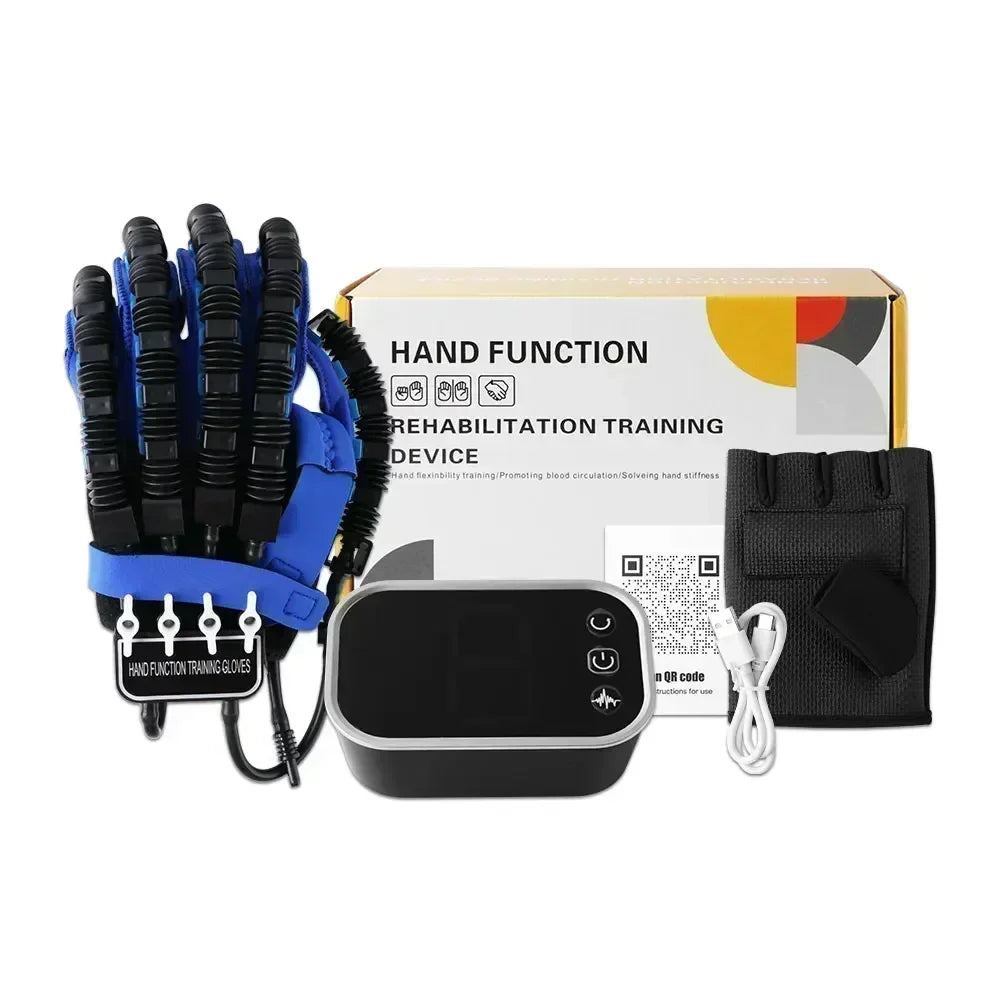
Robotic hand glove supporting hand mobility therapy and rehabilitation training. See it in action.
When to Combine Gloves and Exercises for Best Results
Rehab Progression Plan
The best outcomes often come from combining assisted movement with active strengthening rather than choosing only one approach. Grip strengthening gloves vs hand therapy exercises effectiveness depends on matching each method to your current level of function.
- Early rehabilitation: Use a therapy glove or robotic device to improve range of motion and reduce stiffness.
- Mid-stage recovery: Add light grip, pinch, and finger coordination exercises as voluntary movement improves.
- Advanced strengthening: Progress to resistance-based exercises to develop endurance, dexterity, and functional grip for everyday activities.
Daily Routine Example
- 5–10 minutes of assisted finger movement using a rehabilitation device
- 10–15 minutes of grip and dexterity exercises
- Gentle stretching to maintain flexibility
- Rest between sessions if pain or excessive fatigue develops
Therapist-Recommended Approach
Many occupational and hand therapists recommend using assisted devices to prepare stiff joints and activate movement before performing active exercises. This sequence can improve exercise quality while reducing unnecessary strain during rehabilitation.
Who Should Choose Each Option?
Choose Grip Strengthening Gloves If You:
- Have limited hand mobility or significant weakness.
- Are recovering from stroke, nerve injury, or surgery.
- Need guided movement because active finger motion is difficult.
- Want structured home rehabilitation between therapy sessions.
Choose Hand Therapy Exercises If You:
- Can actively move your fingers and wrist.
- Want to increase long-term grip strength and endurance.
- Need better dexterity for work, sports, or daily activities.
- Are maintaining progress after formal rehabilitation.
Best Results: When to Combine Both
If you're wondering whether therapy gloves are better than exercises, the answer is usually no—each serves a different purpose. Gloves help restore movement, while exercises develop lasting strength and coordination.
For a hybrid approach, try this hand rehab device that supports both assisted motion and resistance training. You can also explore additional rehabilitation tools in Body Care and Health Devices.
Final Verdict: Gloves vs Exercises for Long-Term Hand Strength
Best Overall Strategy
Grip strengthening gloves are valuable during the early stages of rehabilitation because they assist movement when muscles cannot generate enough force independently. Hand therapy exercises become increasingly important as recovery progresses because they build functional strength through active muscle engagement.
- Therapy gloves improve mobility and support early rehabilitation.
- Hand exercises produce stronger long-term improvements in grip strength and coordination.
- Combining both methods typically delivers the most complete recovery.
- Progress should gradually shift from assisted movement to active strengthening whenever possible.
Next Steps
If you're recovering from stroke, nerve injury, or reduced hand function, begin with a structured rehabilitation plan that matches your current ability level. Consistent practice, gradual progression, and appropriate equipment can make a meaningful difference over time.
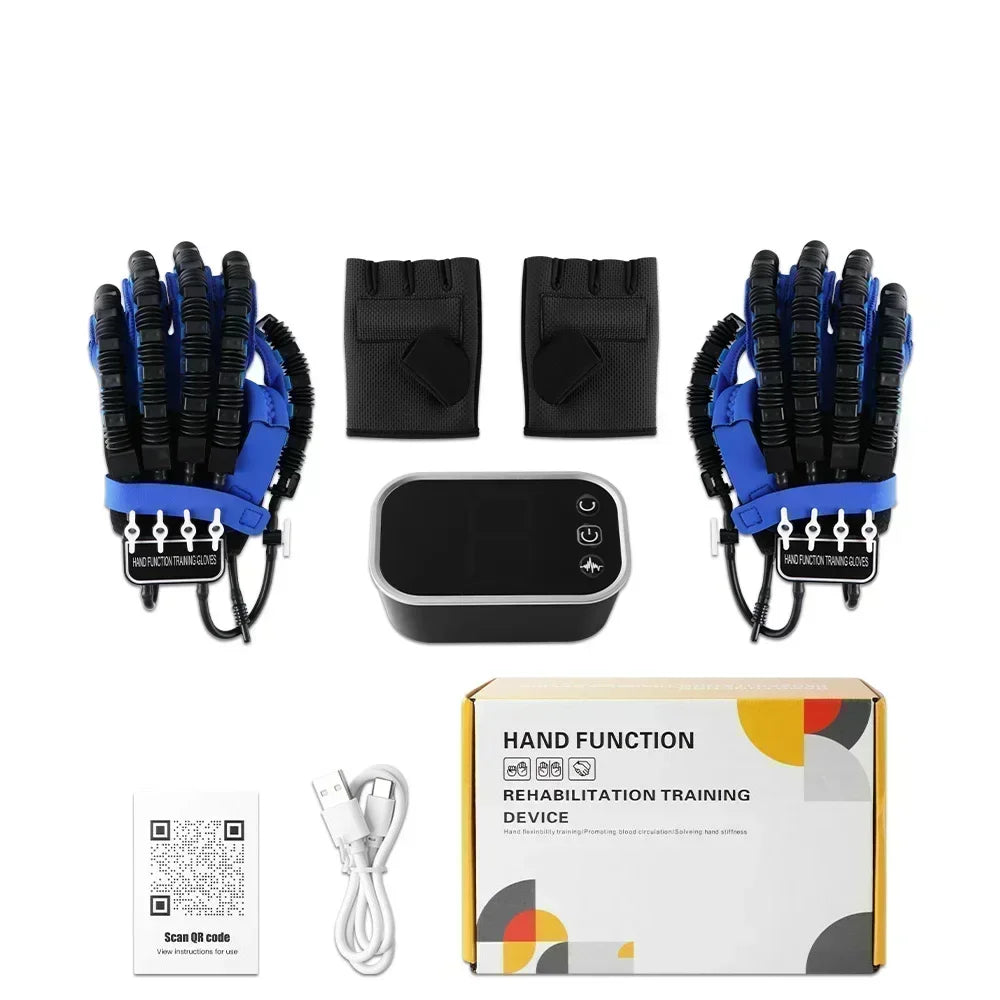
Hand therapy machine for stroke hand recovery and grip strength training. See it in action.
FAQ
Are grip strengthening gloves effective for arthritis?
Yes. They can support gentle movement, reduce joint stiffness, and make hand exercises more comfortable. However, they do not replace strengthening exercises that help preserve long-term hand function.
Can exercises replace therapy devices?
Yes, once you have enough voluntary movement to perform exercises safely and effectively. During early rehabilitation, therapy devices can provide valuable assistance until active movement improves.
What’s better for stroke recovery: glove or exercises?
Both play important roles. Therapy gloves are often most useful early after a stroke when finger movement is limited, while exercises become essential for rebuilding strength, coordination, and independence later in recovery.
How often should you train grip strength?
Many rehabilitation programs recommend short daily mobility sessions with strengthening exercises performed 3–5 times per week, depending on your condition, recovery stage, and therapist's guidance.
Are robotic gloves worth it for home use?
Robotic gloves can be worthwhile for people with significant weakness or limited finger movement because they provide consistent assisted motion at home. They are most effective when paired with an active exercise program as strength returns.
Can beginners start with gloves or exercises?
Beginners with very limited mobility often benefit from starting with assisted gloves, while those who can already move their hands independently can usually begin with simple strengthening and dexterity exercises. The ideal starting point depends on current function rather than age or fitness level.
Related Guide: Occupational Therapy Devices Compared: Top Picks













