

How to Use a Leg Compression Massager for Daily Recovery (Step-by-Step Guide)
⏱ 5 min read
Tired, heavy legs can drain your energy after long workdays, workouts, or travel. Learning how to use a leg compression massager correctly helps you get the most from every session. By delivering rhythmic air pressure to your feet, calves, and thighs, these wearable recovery devices support circulation, reduce muscle fatigue, and encourage relaxation with minimal effort.
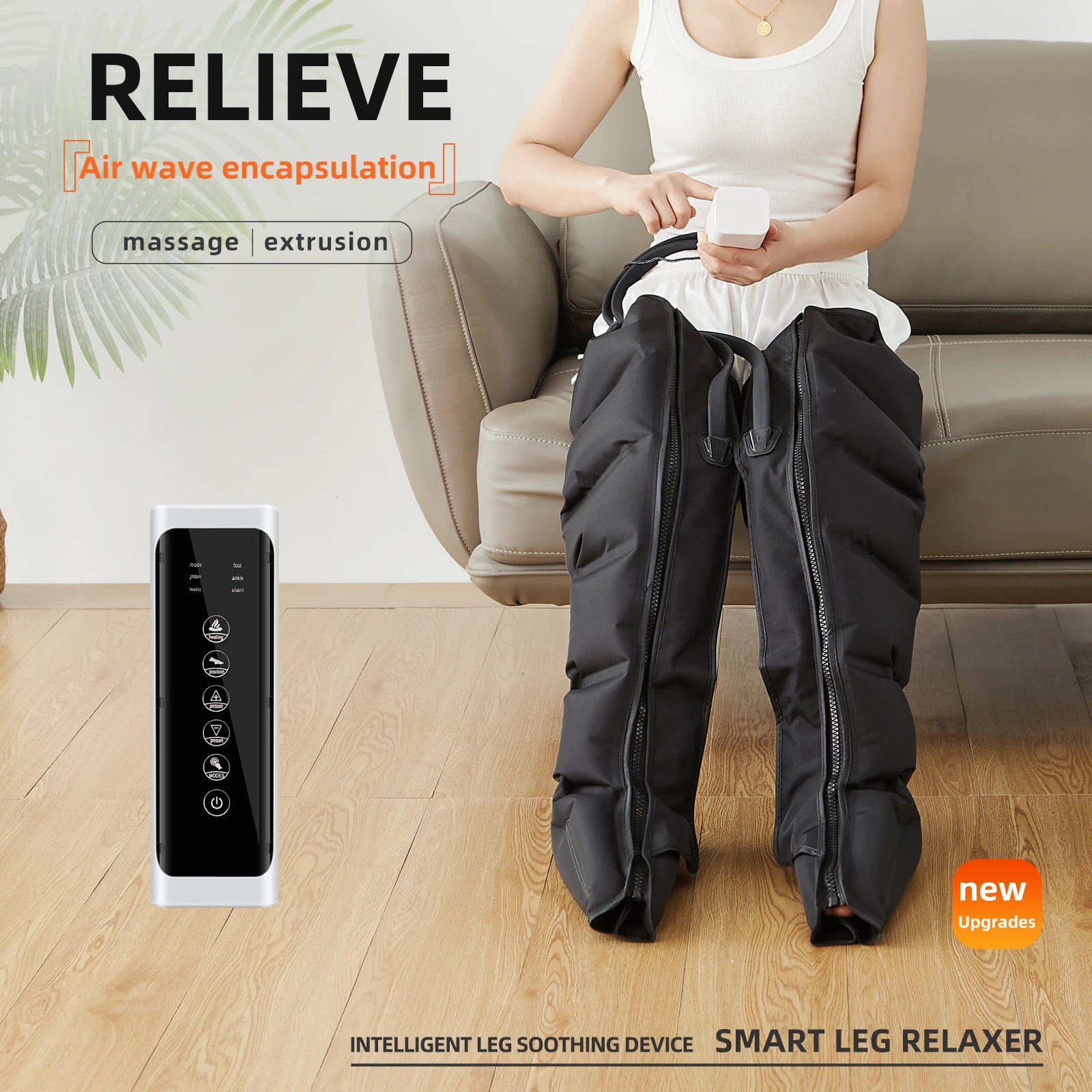
Hands free leg massage for effortless daily recovery. See it in action.
What Is a Leg Compression Massager and How It Works
A leg compression massager is a wearable recovery device that uses inflatable air chambers to apply controlled pressure around the feet, calves, and sometimes the thighs. Unlike static compression garments, it repeatedly inflates and deflates in programmed sequences, creating a massage-like effect that supports healthy circulation and muscle recovery.
How sequential air compression improves circulation
An air compression leg massager for circulation inflates chambers from the feet upward in sequence. This graduated pressure encourages blood and lymphatic fluid to move toward the heart rather than pooling in the lower legs.
- Supports healthy blood circulation
- Helps reduce temporary fluid buildup after standing or sitting
- May improve comfort after long travel or desk work
- Delivers consistent pressure that is difficult to achieve manually
What happens during each compression cycle
Each cycle gently squeezes one section of the leg before releasing it and moving to the next chamber. This wave-like motion helps relax tight muscles, reduce feelings of heaviness, and provide a comfortable recovery experience without requiring physical effort.
Leg recovery devices: how they work
Modern leg recovery devices combine adjustable pressure levels, multiple massage modes, and timed programs. While they do not replace medical treatment, they can complement stretching, walking, hydration, and other healthy recovery habits for everyday muscle fatigue.
Leg Compression Massager Benefits for Circulation and Recovery
Regular use offers both immediate comfort and long-term support when incorporated into a consistent recovery routine.
Benefits for circulation
- Supports healthy blood flow after prolonged sitting or standing
- Helps reduce temporary swelling in the feet and calves
- May improve overall leg comfort during daily activities
Benefits for muscle recovery
- Reduces feelings of post-workout muscle fatigue
- Relaxes tight calves and thighs
- Helps decrease stiffness after exercise
- Provides a hands-free recovery option at home
Expected results timeline
Many people notice lighter, more relaxed legs after a single 15- to 20-minute session. More consistent improvements in recovery, comfort, and reduced muscle soreness typically become noticeable after one to two weeks of regular use. Individual results vary depending on activity level, circulation, and overall health.
Related Guide: How to Improve Leg Circulation Step by Step at Home
Why Legs Feel Heavy After Long Days or Workouts
Heavy legs commonly result from muscle fatigue, prolonged sitting, standing for extended periods, or temporary fluid accumulation. Intense exercise can also create microscopic muscle stress that contributes to soreness and stiffness.
Stretching, walking, hydration, and compression therapy for legs at home can all support recovery, although persistent swelling, severe pain, or sudden changes should always be evaluated by a healthcare professional.
Ask yourself: Are you giving your legs structured recovery, or simply waiting for soreness to disappear?
How to Use a Leg Compression Massager (Step-by-Step Guide)
Device setup and fit
- Sit comfortably in a chair or lie on a bed or sofa.
- Wrap each sleeve snugly without restricting movement.
- Connect the air hoses securely.
- Verify the controller recognizes both sleeves before starting.
Correct leg positioning
Keep your legs relaxed and, if comfortable, slightly elevated with a pillow. Avoid standing or walking while the device is operating.
Choose pressure level and mode
- Beginners: low pressure
- Regular users: medium pressure
- Experienced users after intense exercise: medium to high pressure if comfortable
Increase pressure gradually over several sessions instead of starting at the highest setting.
Session duration and posture
Most sessions last between 15 and 30 minutes . Allow the device to complete its programmed compression cycles while remaining relaxed.
After-session recovery tips
- Remove the sleeves slowly.
- Stand up gradually.
- Drink water.
- Take a short walk or perform gentle stretching.
- Repeat consistently throughout the week for the best results.
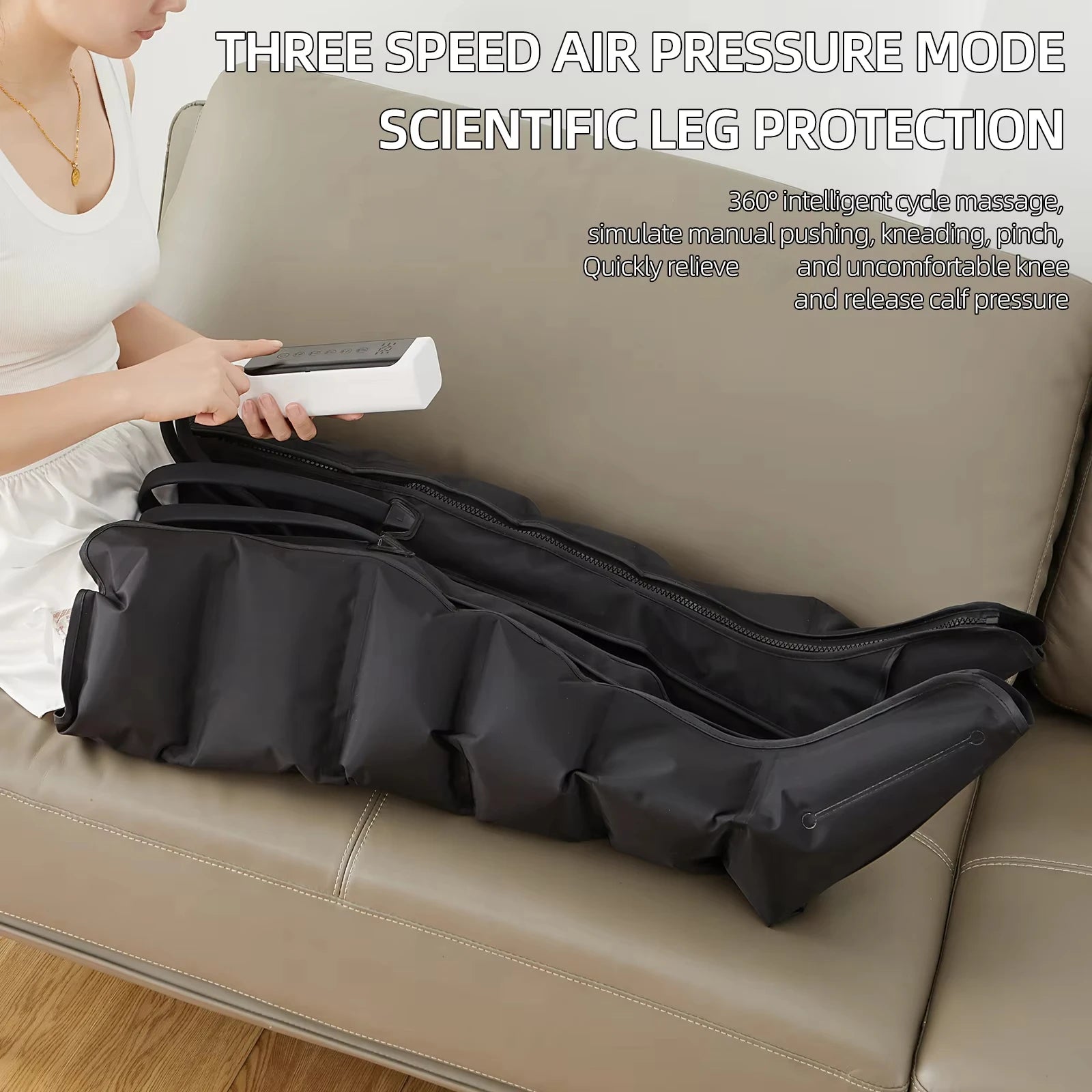
Air compression leg massager for circulation and calm recovery. See it in action.
Best Way to Use Compression Boots for Different Goals
After workouts
Use compression boots within 30 to 60 minutes after exercise for approximately 20 to 30 minutes. This timing can help ease post-workout soreness and support recovery.
For swelling and circulation
Choose a low or medium pressure setting for 15 to 25 minutes after prolonged standing, sitting, or travel. Elevating your legs slightly may improve comfort.
Before exercise
A brief 10- to 15-minute session on a gentle setting may help loosen tight muscles before activity, although it should not replace a proper warm-up.
Daily recovery routine
Many users include a relaxing evening session while reading, watching television, or winding down before bed. Consistency is generally more beneficial than occasional long sessions.
How Often Should You Use a Leg Compression Massager?
Recommended frequency by goal
- General recovery: 15–30 minutes daily
- Circulation support: 3–5 sessions each week
- After demanding activity: Following intense workouts as needed
Athletes
Athletes often benefit from using compression boots after training sessions or competitions to support muscle recovery.
Office workers and travelers
People who spend long hours sitting or traveling may find evening sessions particularly helpful for reducing feelings of heaviness.
Older adults
Older adults should begin with lower pressure levels and consult their healthcare provider if they have vascular disease, heart conditions, or other medical concerns.
Are Leg Compression Massagers Safe? (Precautions & Who Should Avoid Them)
For most healthy adults, leg compression massagers are safe when used according to the manufacturer's instructions.
Who should avoid use
- People with deep vein thrombosis (DVT)
- Individuals with severe peripheral arterial disease
- Those with active skin infections or open wounds
- Anyone instructed by a healthcare provider to avoid compression therapy
When to stop a session
Stop immediately if you experience severe pain, numbness, unusual swelling, dizziness, or skin discoloration.
Medical precautions
If you have diabetes with reduced sensation, heart failure, severe circulation disorders, or are recovering from vascular surgery, speak with your healthcare provider before using compression devices.
Compression Modes, Pressure Levels, and How to Choose the Right Setting
Low vs medium vs high pressure
- Low: Best for beginners, relaxation, and daily comfort.
- Medium: Suitable for regular recovery and mild muscle fatigue.
- High: Reserved for experienced users who tolerate stronger compression comfortably.
Sequential vs full-leg modes
Sequential modes inflate one chamber after another to create a wave-like massage. Full-leg modes compress multiple chambers simultaneously, producing a firmer sensation that some users prefer for muscle recovery.
Adjusting for comfort
The best setting is one that feels firm but never painful. If your feet become numb or the sleeves feel excessively tight, reduce the pressure immediately.
Common Leg Compression Massager Mistakes to Avoid
- Choosing pressure that is too high too quickly
- Wearing sleeves that fit too tightly
- Skipping regular sessions
- Standing or walking during treatment
- Ignoring pain, tingling, or unusual discomfort
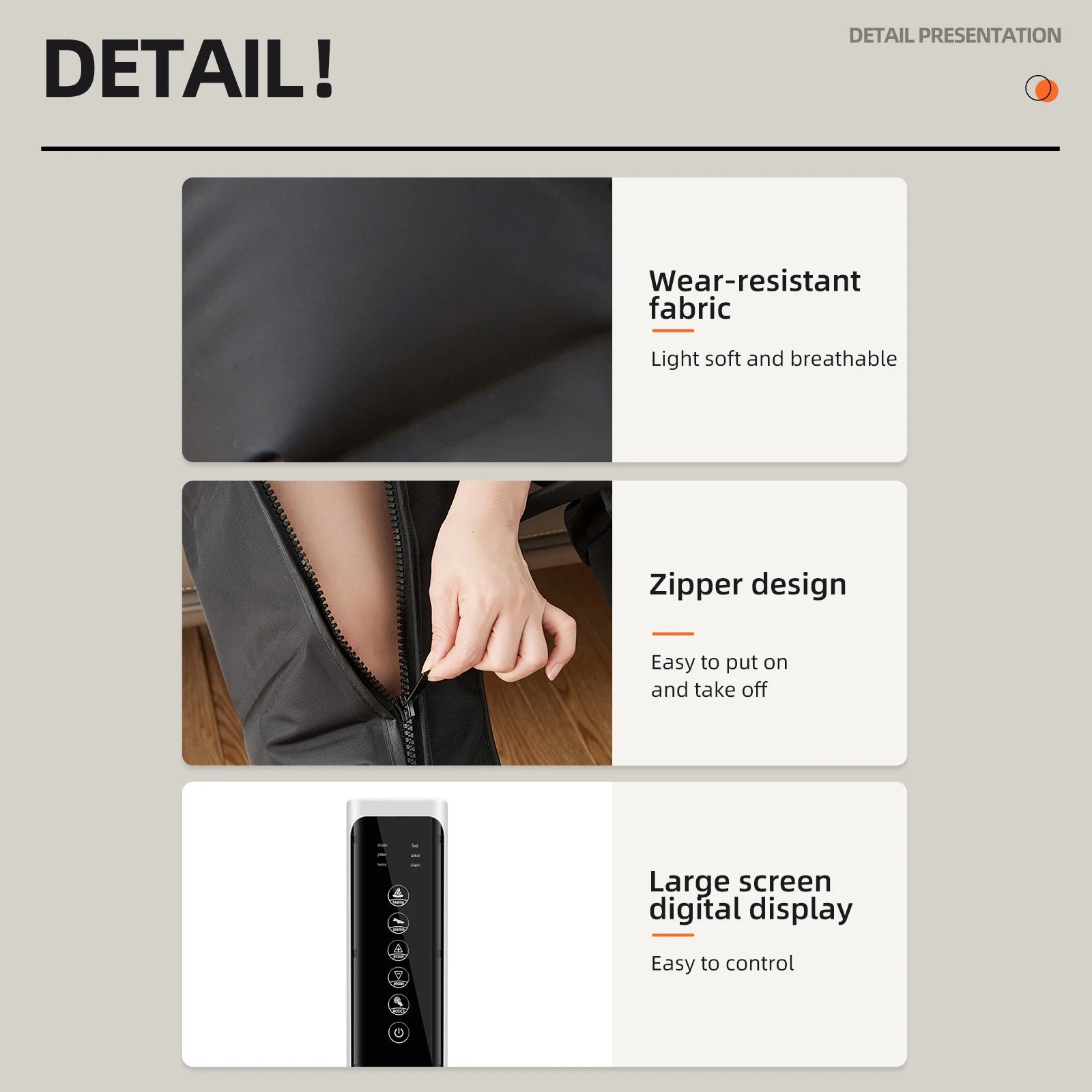
Compression massage boots for confident daily recovery. See it in action.
Leg Compression Massager vs Manual Massage
| Feature | Compression Massage | Manual Massage |
|---|---|---|
| Effort required | None | Requires another person or therapist |
| Pressure consistency | Programmed and repeatable | Depends on technique |
| Convenience | Use anytime at home | Requires scheduling |
| Best for routine recovery | Excellent | Occasional sessions |
Who Benefits Most From Compression Therapy at Home
Athletes
Supports recovery after running, cycling, strength training, and recreational sports.
Older adults
Can provide gentle comfort for tired legs when used appropriately and with medical guidance when necessary.
Office workers
Helps relieve heaviness caused by sitting for extended periods.
Frequent travelers
Useful after long flights or road trips to promote relaxation and improve leg comfort.
Compression therapy works best as one part of a complete recovery routine alongside walking, stretching, hydration, and other tools available in Body Care and Health Devices .
Cleaning, Maintenance, and Troubleshooting
Cleaning sleeves
Wipe the sleeves with a soft damp cloth after use. Avoid soaking electronic components or using harsh cleaning chemicals.
Storage tips
- Store in a cool, dry place.
- Avoid sharply folding the air hoses.
- Disconnect the controller before storage.
Common issues and fixes
- Weak compression: Check hose connections.
- Uneven inflation: Ensure sleeves are wrapped evenly.
- Unexpected shutdown: Confirm the power supply is securely connected and allow the device to cool if recommended by the manufacturer.
Mini FAQ (Usage, Safety, Timing)
How often should I use a leg compression massager?
Most people benefit from daily sessions or at least three to five sessions each week.
How long should each session last?
Fifteen to thirty minutes is appropriate for most users.
Can I use it before or after exercise?
Yes. A short low-pressure session may help before exercise, while longer recovery sessions are commonly used afterward.
Is it safe to use every day?
Yes, daily use is generally safe for healthy adults when comfortable pressure settings are used.
Can it help swollen legs?
It may help reduce temporary swelling caused by prolonged sitting, standing, or travel. Persistent or unexplained swelling should be evaluated by a healthcare professional.
Can it replace stretching or walking?
No. Compression therapy complements movement and stretching rather than replacing them.













