

Hot Stuffy Room Cooling: 12 Practical Ways to Cool Any Space
A hot, stuffy room can stay uncomfortable even when a fan is running. The reason is simple: moving air is not always the same as removing heat. Effective hot stuffy room cooling starts by identifying whether the main problem is trapped air, direct sunlight, indoor humidity, heat-producing electronics, poor ventilation, or insufficient cooling capacity. The 12 strategies below separate room-level cooling from personal cooling so you can match the solution to the actual problem.
Why Does a Room Feel Hot and Stuffy Even With a Fan Running?
A room can feel hot and stuffy because air movement, ventilation, and cooling solve different problems. A fan can move air across your skin and make you feel cooler without significantly lowering the room's actual temperature. If hot air remains trapped indoors, sunlight continues entering through windows, or humidity is high, the room may still feel uncomfortable.
Airflow vs. Ventilation vs. Cooling
Airflow means moving air around the room. A desk fan or ceiling fan can improve air movement and increase perceived cooling.
Ventilation means exchanging indoor air with outdoor air. Opening windows or using an exhaust-oriented fan can help remove trapped heat when outdoor conditions are cooler than indoor conditions.
Cooling means actively reducing temperature, such as with an air conditioner. Evaporative cooling can also provide cooling under suitable dry conditions, but it works differently and can be less effective when indoor humidity is already high.
Common Causes of a Hot Stuffy Room
- Trapped hot air with little air exchange
- Direct sunlight entering through windows
- Computers, monitors, lighting, and other electronics adding heat
- Poor natural or mechanical ventilation
- High indoor humidity
- An undersized or insufficient cooling system
12 Practical Ways to Cool a Hot, Stuffy Room
The most effective approach is usually layered: improve airflow and ventilation first, reduce incoming heat, then add targeted or room-level cooling when necessary.
1. Improve Cross-Ventilation With Windows and Doors
When outdoor air is cooler than indoor air, opening windows or doors on different sides of a space can create cross-ventilation. This gives hot indoor air a route out while allowing cooler air to enter.
Cross-ventilation works best when there is a meaningful temperature difference between indoors and outdoors. During a hot afternoon, opening every window may have the opposite effect by allowing hotter outdoor air and sunlight into the room. In that situation, keep windows closed and shaded until outdoor conditions become more favorable.
2. Position Fans to Exhaust Hot Air
A portable fan does not have to point directly at you. If a room contains trapped hot air, position a fan near a window so it helps push indoor heat outdoors. Another opening can provide the intake path for replacement air.
This setup is especially useful in a small room or home office where heat accumulates around electronics. The goal is to create directional airflow rather than simply circulating the same warm air.
3. Use Ceiling Fans to Improve Air Movement
Ceiling fans can make a room feel more comfortable by increasing air movement across the skin. This is useful when the room is warm but does not necessarily need full air conditioning.
Because a ceiling fan primarily improves perceived cooling rather than removing heat from the room, turn it off when the space is unoccupied. Its greatest benefit comes when people are actually present and can experience the increased airflow.
4. Block Direct Sunlight and Reduce Heat Gain
Sunlight can add substantial heat to a room, particularly through windows receiving direct afternoon sun. Use blinds, curtains, blackout shades, or other window coverings during the hottest parts of the day.
Reducing heat gain is often more effective than trying to cool a room continuously after heat has already accumulated. If one window is responsible for most of the solar exposure, prioritize that area first.
5. Turn Off Unnecessary Heat Sources
Small rooms can become noticeably warmer when several heat-producing devices operate simultaneously. Computers, monitors, lamps, kitchen appliances, chargers, and other electronics can contribute to the heat load.
Turn off equipment that is not needed, reduce unnecessary lighting, and avoid leaving heat-producing appliances running in a small enclosed space. In a home office, minimizing equipment heat can make personal cooling noticeably more effective.
6. Reduce Indoor Humidity
High humidity can make warm air feel more oppressive because sweat evaporates less efficiently from the skin. If a room feels both hot and damp, simply increasing fan speed may not solve the underlying comfort problem.
Ventilation can help when outdoor conditions are appropriate. In persistently humid spaces, a dehumidifier or air conditioner may be more suitable than relying on airflow alone. An evaporative cooler is generally less attractive when humidity is already high because adding moisture can further reduce its effectiveness.
7. Use a Portable Fan for Targeted Personal Cooling
When only one person needs relief, targeted airflow can be much more practical than attempting to cool an entire room. A portable fan placed near a desk or bed can direct airflow exactly where it is needed.
This approach is particularly useful for working, reading, sleeping, or relaxing in a specific part of a warm room. The limitation is important: a portable fan primarily improves personal comfort and does not substantially lower the temperature of the entire room.
8. Try an Evaporative Cooler When Conditions Are Dry
Evaporative coolers use water evaporation to provide a cooler-feeling airflow. They can be useful in dry environments because evaporation can remove heat from the air while increasing moisture.
The same principle creates a limitation: performance can decline in humid conditions because the air has less capacity to absorb additional moisture. Before choosing a water-based cooling device, consider the room's humidity and whether you need personal airflow or whole-room temperature reduction.
9. Use a Portable Air Conditioner When Room-Level Cooling Is Needed
If the entire enclosed room needs meaningful temperature reduction, a portable air conditioner can be more appropriate than a fan or personal cooler. Portable AC systems actively remove heat rather than simply moving air around.
However, they require appropriate exhaust ventilation and are affected by room size, insulation, sunlight, and overall heat load. They can also introduce more noise, energy use, and installation requirements than compact personal cooling devices.
10. Create a Cooler Desk Setup
A hot desk often needs a different strategy from a hot entire house. Start by blocking direct sunlight, reducing unnecessary monitor and equipment heat, and creating airflow across the person rather than randomly circulating air around the room.
For a compact workspace, keep the cooling device close enough to provide useful personal airflow without blocking your work area. If ventilation is possible, use a separate airflow path to move accumulated heat out of the space.
11. Cool the Person Instead of the Whole Room
If you are the only person affected by the heat, personal cooling can be more efficient than trying to lower the temperature of the entire room. Focused airflow can provide comfort at a desk, bedside, or other stationary location.
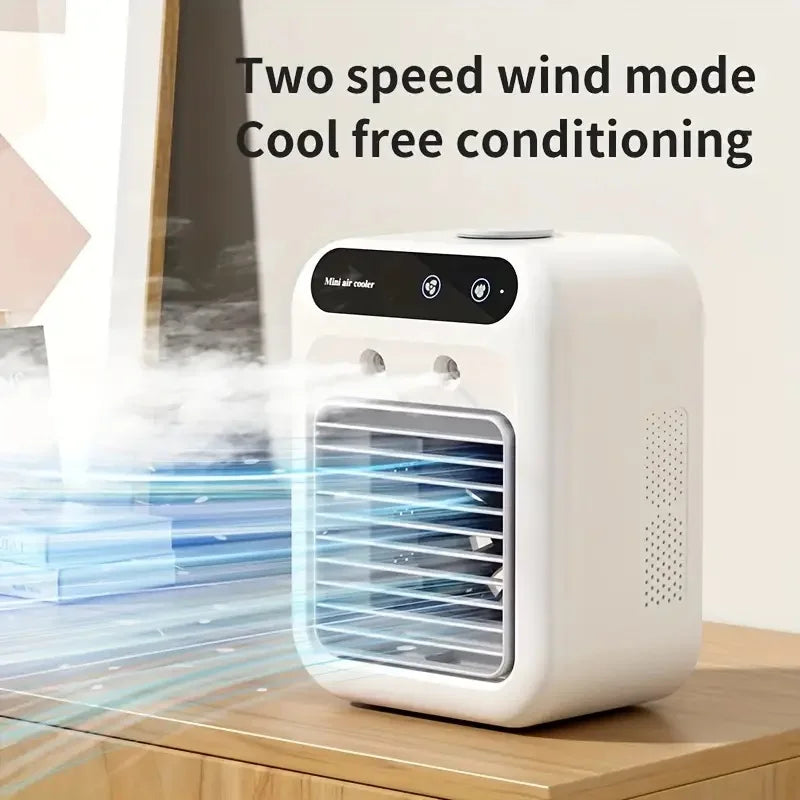
A compact rechargeable air cooler fan can be useful in this situation when you want focused airflow without a bulky appliance. The KentDo portable air cooler fan combines a 500ml water capacity, 9-blade airflow system, rechargeable battery, and USB charging for personal cooling in desks, bedrooms, offices, and other small spaces.
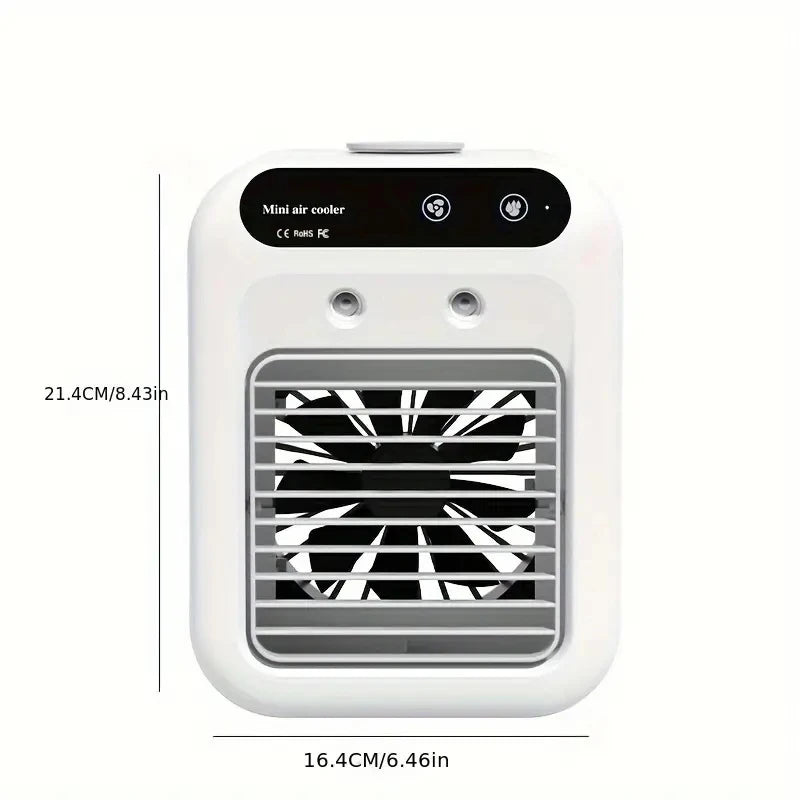
Its role is best understood as targeted comfort rather than a replacement for room-level air conditioning. For one person working in a warm space, that distinction can make a compact cooling device a practical option.
12. Combine Cooling Methods for Poorly Ventilated Spaces
Poorly ventilated rooms often require more than one tactic. Start by reducing heat entering the room, then improve whatever airflow or ventilation is available. After that, choose personal or room-level cooling based on the actual need.
For example, a small office with afternoon sun may benefit from window shades, reduced electronics heat, an exhaust-oriented fan when outdoor conditions allow, and targeted personal airflow at the desk. Combining these measures can be more effective than expecting one small device to solve every source of heat.
How to Choose the Right Cooling Method for a Hot, Stuffy Space
The best cooling method depends on what is making the space uncomfortable. Diagnose the main problem before buying or adding another cooling device.
If the Main Problem Is Trapped Hot Air
Prioritize ventilation. Open suitable windows or doors when outdoor conditions are cooler, and use a fan to help move hot air toward an exit. The objective is to exchange air rather than continuously circulate warm indoor air.
If the Main Problem Is Sun and Heat Gain
Start with window coverings and heat-source reduction. Blocking direct sunlight before it heats the room can reduce the cooling burden later.
If the Main Problem Is High Humidity
Fans can improve airflow but may not resolve the uncomfortable combination of heat and moisture. Consider ventilation when outdoor humidity is favorable, or use dehumidification or air conditioning when humidity remains high.
If the Room Has Poor or No Ventilation
Compare cooling options based on the scale of the problem. A portable AC is more appropriate when the entire enclosed room needs active cooling. A fan is useful for airflow and personal comfort. An evaporative cooler can be considered in dry conditions, while a compact personal cooling device makes sense when only one person needs relief.
If Only One Person Needs Cooling
Targeted airflow is often the simplest solution. Cooling the person rather than the entire room can make sense when you work at a fixed desk, sleep in one part of a bedroom, or share a space where other occupants do not need the same level of cooling.
Best Cooling Setup for a Small Office or Hot Desk
A small office can become uncomfortable quickly because the space may combine direct sunlight, electronics, limited ventilation, and a single person working for hours. A practical setup should address each factor instead of relying on one fan.
Simple Desk Cooling Setup
First, block direct sunlight if the desk is near a bright window. Next, turn off unnecessary equipment and position your fan or personal air cooler so airflow reaches you directly. If the room permits ventilation, create an exhaust path for accumulated hot air.
A compact rechargeable device can be particularly convenient when desk space is limited or you do not want to remain beside a wall outlet.
When a Desk Fan Is Not Enough
If the entire room remains hot despite strong airflow, the problem may be larger than personal comfort. Persistent heat, high humidity, poor ventilation, or substantial solar exposure can require ventilation, dehumidification, or active room-level cooling.
A useful test is to distinguish between “I feel hot at my desk” and “the entire room is excessively hot.” The first situation can often be addressed with targeted personal cooling. The second may require a change to the room's heat or ventilation conditions.
Personal Cooling Devices for Workspaces
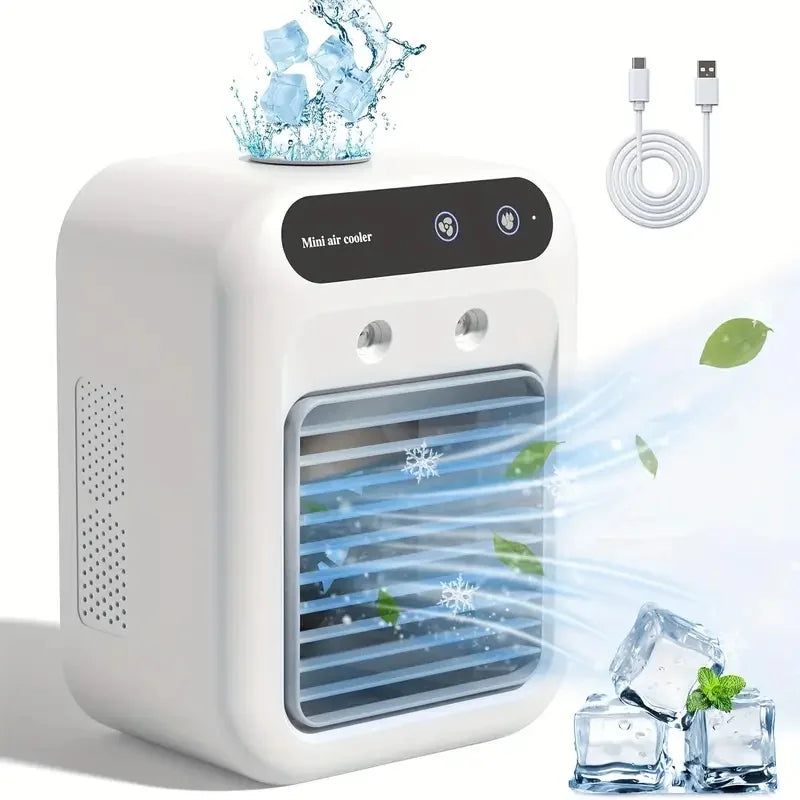
For one-person workspaces, a portable air cooler fan can combine focused airflow with water-assisted cooling in a compact format. The KentDo model has a 500ml reservoir, nine-blade fan design, rechargeable battery, and USB charging, making it suited to desk, bedroom, and small-office use.
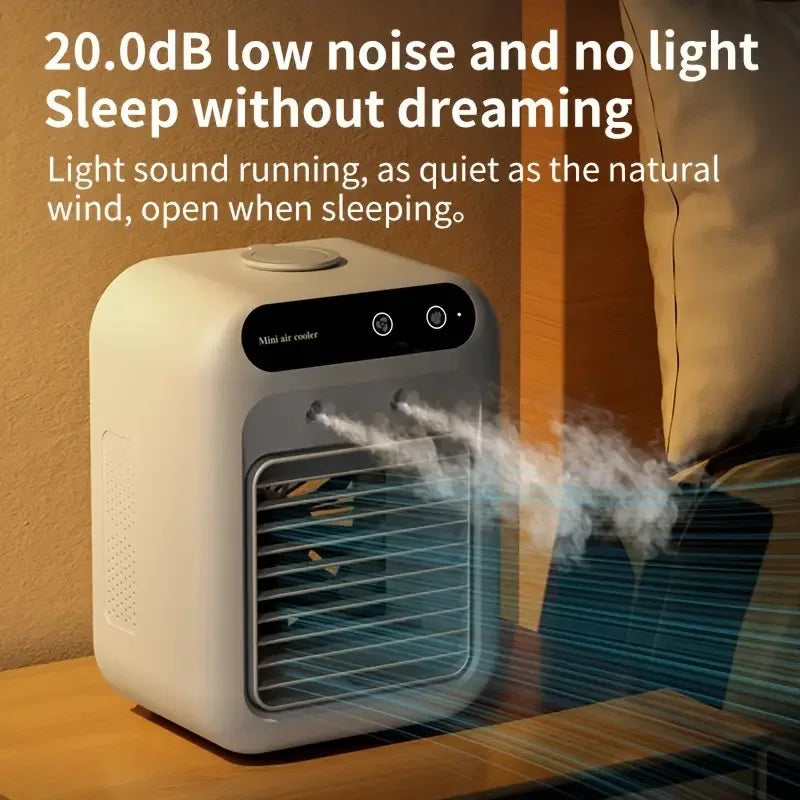
Explore the portable air cooler fan if your main goal is focused personal cooling rather than whole-room temperature control.
What Cooling Methods Work—and What Often Fails
Fans: Great for Airflow, Not Room Temperature
Fans can be excellent for perceived cooling because moving air increases evaporation from the skin. But if the room itself is hotter than desired, a fan alone does not remove that accumulated heat. Use fans strategically for personal airflow or to assist ventilation.
Evaporative Coolers: Best in Dry Conditions
Water-based evaporative cooling is more useful when the surrounding air is dry. In humid conditions, the additional moisture can limit evaporation and reduce the cooling benefit. Match this type of device to the climate rather than assuming more water automatically means more cooling.
Portable ACs: Stronger Room-Level Cooling With Tradeoffs
Portable ACs provide active cooling for enclosed spaces, but they require exhaust arrangements and typically involve greater energy use, noise, and equipment size than a personal cooling device. They are better suited to situations where the whole room needs temperature reduction.
Why Opening Windows Can Sometimes Make the Room Hotter
Window ventilation only helps when the incoming outdoor air is favorable. If outdoor temperatures are higher, humidity is excessive, or sunlight is entering directly through the window, opening it can increase the room's heat load. Timing matters: ventilation can be most useful when outdoor conditions are cooler than the indoor space.
Hot Stuffy Room Troubleshooting Checklist
Step 1: Check Airflow
Determine whether air is actually moving through the space. If air is stagnant, improve fan placement or create a suitable ventilation path.
Step 2: Check Heat Gain
Look for direct sunlight, computers, monitors, appliances, lighting, and other heat sources. Remove or reduce unnecessary sources before increasing cooling power.
Step 3: Check Humidity
If the room feels warm and damp, humidity may be limiting comfort. Consider whether ventilation, dehumidification, or air conditioning is more appropriate than simply adding another fan.
Step 4: Match the Cooling Tool to the Problem
Use ventilation for trapped air, fans for airflow and perceived cooling, evaporative cooling when conditions are dry, portable AC for room-level cooling, and personal cooling devices when one person needs targeted relief.
Conclusion
The best approach to hot stuffy room cooling is not always to buy a stronger fan. Start by identifying the cause: trapped hot air, sunlight and heat gain, indoor humidity, electronics, poor ventilation, or inadequate room-level cooling. Improve airflow and ventilation where possible, block unnecessary heat, and then choose between fans, evaporative coolers, portable ACs, and personal cooling devices based on the space and climate.
For a small office, bedroom, or desk where only one person needs cooling, targeted airflow can be a practical alternative to cooling the entire room. A rechargeable portable air cooler fan can provide focused personal airflow while taking up less space than a larger appliance.
Shop the portable air cooler fan for compact personal cooling with a 500ml water capacity, nine-blade airflow, rechargeable battery, and USB charging.
Pillar Article: Best Bedroom Cooling Devices for 2026: Compare Your Options













