

Finger Exercises After Stroke: Step-by-Step Recovery Guide for Regaining Hand Movement
Finger exercises after stroke are among the most effective rehabilitation strategies for restoring hand movement, improving dexterity, and reducing stiffness. Whether you're beginning rehabilitation or continuing recovery months or even years later, structured practice helps strengthen the connection between your brain and hand through neuroplasticity.
This guide explains when to start, which exercises to perform at each recovery stage, how to build a daily routine, and when assistive devices such as a robotic glove for stroke recovery may help support home rehabilitation.
Regaining hand movement after a stroke can feel frustrating, especially when stiff fingers refuse to cooperate. The good news is that structured finger exercises, combined with consistency and the right tools, can gradually restore mobility and independence in everyday tasks.
⏱ 8 min read
Have you noticed your fingers feel tight, weak, or unresponsive—even months after rehab ended?
Recovery often continues long after formal rehabilitation ends. Repetitive, purposeful movement gives your nervous system ongoing opportunities to strengthen new pathways that support functional hand use.
Discover supportive tools designed for home recovery
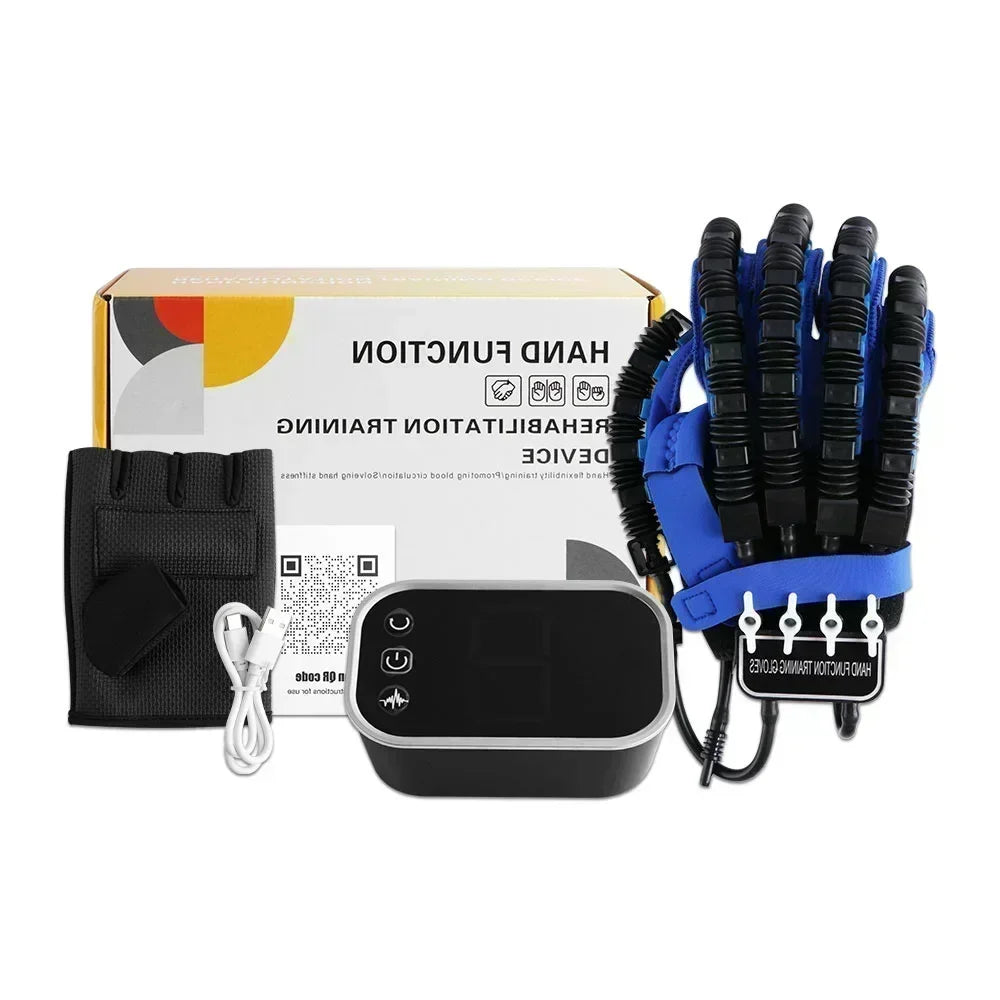
Improving finger flexibility after stroke with robotic glove stroke support.
How Finger Exercises After Stroke Support Recovery
How stroke affects hand and finger movement
A stroke may interrupt communication between the brain and the muscles that control your hand. Depending on the location and severity of the stroke, you may experience weakness, reduced coordination, muscle tightness, or difficulty opening and closing your fingers.
Why repetitive practice builds neuroplasticity
Neuroplasticity is the brain's ability to reorganize and develop new neural pathways. Repeating finger exercises after stroke encourages the brain to relearn movement patterns. Frequent, high-quality practice is generally more beneficial than occasional intense sessions.
Recovery goals by rehabilitation stage
- Early stage: Preserve joint mobility and prevent stiffness.
- Middle stage: Improve voluntary movement and grip control.
- Later stage: Restore fine motor skills for daily activities like eating, dressing, and writing.
When to Start Hand Exercises After Stroke
When to begin rehabilitation
Many people can begin gentle hand exercises after stroke within days, but only after receiving medical clearance. Early movement may reduce stiffness and support long-term recovery while protecting vulnerable joints.
How often and how long to exercise
Consistency is more important than intensity. A practical routine includes:
- 10–20 minutes per session
- 2–3 sessions daily
- 10–15 slow, controlled repetitions for each movement
- Rest between exercises if fatigue develops
Signs of safe progression
- Less finger stiffness
- Improved hand opening and closing
- Better control during everyday tasks
- Reduced need for assistance
Stop exercising and consult your healthcare provider if you experience severe pain, swelling, or worsening muscle tightness.
Why Finger Stiffness Happens After Stroke
Common causes of stiffness
Finger stiffness after stroke often develops because damaged brain pathways alter muscle activation. Over time, muscles may become tight while joints receive less regular movement, increasing the risk of reduced flexibility.
Passive vs active movement
Passive movement uses your unaffected hand or caregiver assistance to move your fingers through their range of motion. Active movement requires your own muscles to perform the motion. Both forms of exercise play valuable roles throughout rehabilitation.
Preventing contractures
Regular range-of-motion exercises, gentle stretching, proper positioning, and daily hand use may help reduce the risk of long-term joint contractures. Maintaining flexibility makes future strength training more effective.
For additional wellness tools that support recovery at home, explore Body Care and Health Devices.
Progressive Finger and Hand Exercises After Stroke
Stage 1: Flaccid hand and passive range of motion
If little or no active movement is present, use your unaffected hand to slowly guide each finger.
- Gently bend and straighten every finger.
- Hold each position for 3–5 seconds.
- Repeat 10 repetitions for each finger.
- Perform movements slowly without forcing joints.
Stage 2: Assisted movement exercises
As movement begins returning, combine your own effort with gentle assistance.
- Assist fingers into a fist.
- Practice supported finger extension.
- Gradually reduce assistance over time.
Stage 3: Active finger and grip exercises
- Open and close your hand.
- Touch each fingertip to your thumb.
- Lift fingers individually from a flat surface.
- Squeeze a soft therapy ball.
Stage 4: Advanced dexterity and coordination
- Pick up coins or buttons.
- Move small objects between containers.
- Practice writing or drawing.
- Use therapy putty or resistance tools when appropriate.
10 Therapist-Recommended Stroke Hand Therapy Exercises
- Finger stretches
- Thumb opposition
- Finger tapping
- Finger lifting
- Grip strengthening with a soft ball
- Pinch strengthening
- Object transfer exercises
- Coin pickup practice
- Button or zipper practice
- Release-and-reach exercises
These exercises improve fine motor skills, grip strength, coordination, and functional independence. Begin with movements appropriate for your current abilities and increase difficulty gradually.
Learn step-by-step how to restore motion at home
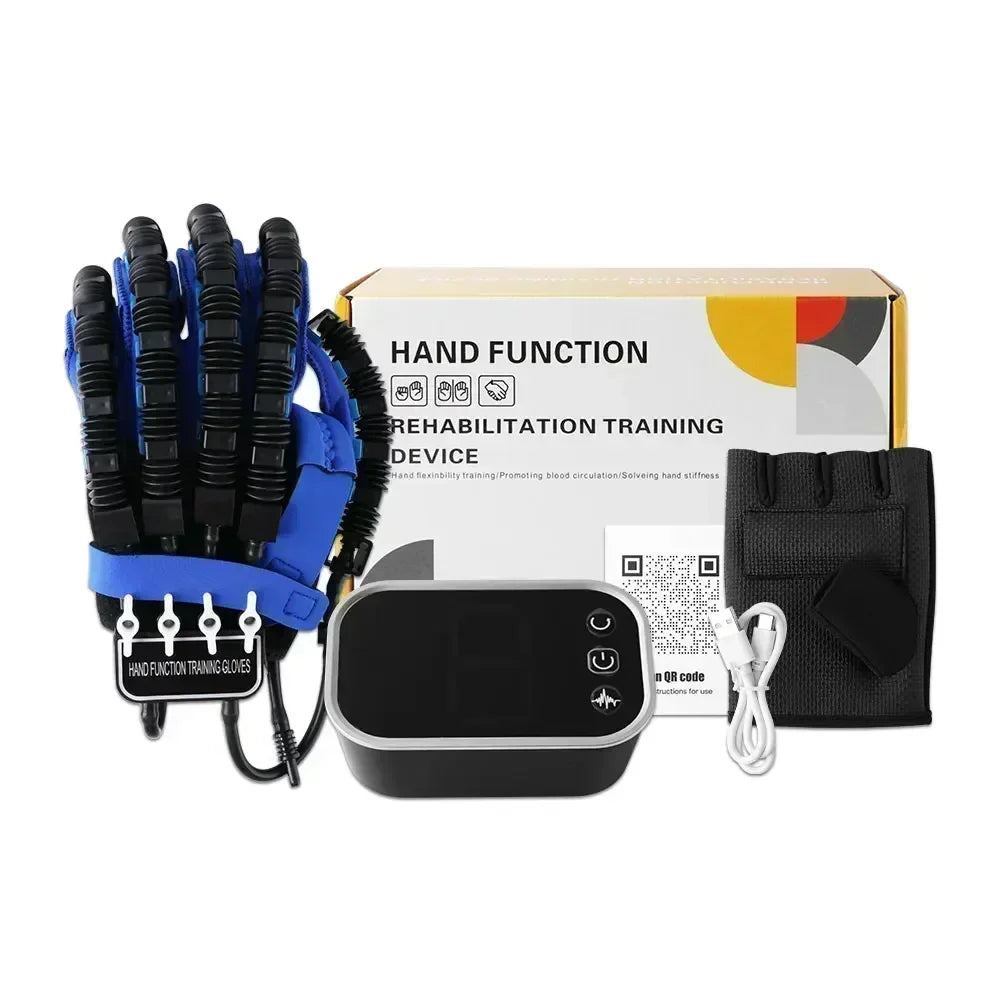
Robotic hand glove for consistent stroke hand exercises.
Fine Motor Activities for Everyday Hand Function
Buttoning and zipping
Practice fastening clothing slowly to improve finger coordination required for dressing independently.
Picking up coins
Collect small objects one at a time to strengthen pinch grip and improve precision.
Writing practice
Start with large letters, tracing exercises, or drawing simple shapes before progressing to everyday handwriting.
Household task training
Activities such as folding towels, sorting utensils, stacking cups, or opening lightweight containers provide practical opportunities to regain hand movement after stroke while improving confidence.
Daily Hand Therapy Routine and Progression Plan
10–20 minute routine
- Warm-up with gentle finger stretches (2 minutes).
- Passive or assisted exercises (5 minutes).
- Active finger exercises (5–10 minutes).
- Fine motor activities or coordination training (3–5 minutes).
Weekly progression
- Weeks 1–2: Emphasize passive and assisted movement.
- Weeks 3–4: Increase active movement repetitions.
- After one month: Add resistance and more complex functional activities.
Tracking improvements
Keep a simple journal recording exercise frequency, range of motion, grip strength, and functional milestones such as holding utensils or fastening clothing. Tracking progress helps maintain motivation and identify improvements over time.
Safety Tips and Common Mistakes During Stroke Hand Exercises
When to stop exercising
Stop immediately if you develop sharp pain, swelling, excessive fatigue, or significant increases in muscle tightness.
Avoiding compensatory movements
Focus on quality rather than speed. Avoid lifting the shoulder excessively or using body movements to compensate for limited finger motion, as this may reinforce inefficient movement patterns.
Caregiver support
Caregivers should support the wrist and fingers gently, avoid forcing joints beyond their comfortable range, and encourage regular practice while monitoring for discomfort.
Can Robotic Gloves and Hand Therapy Devices Help?
Who may benefit
Individuals with limited finger extension, significant weakness, or difficulty completing enough daily repetitions may benefit from assistive technology that guides movement.
Evidence and limitations
Robotic devices can increase the number of repetitions performed during training sessions and may improve engagement. However, they work best as part of a comprehensive rehabilitation program rather than replacing therapist-guided exercise.
Combining devices with therapy
The robotic hand glove is designed specifically as a glove for stroke patient recovery at home. Combining guided movement from assistive devices with active participation, stretching, strengthening, and functional task practice may provide the greatest benefit.
For those exploring broader self-care tools during recovery, you may also find support through Lifestyle solutions designed for comfort and daily wellness.
Recovery Timeline: What to Expect
First month
Many people notice improvements in joint flexibility, reduced stiffness, and small gains in voluntary finger movement with regular practice.
Months 2–3
Grip strength, coordination, and performance during everyday activities often continue improving as exercise intensity increases.
Long-term recovery
Recovery is highly individual. Continued practice beyond three months remains valuable because neuroplasticity can continue supporting functional improvements long after the initial stroke.
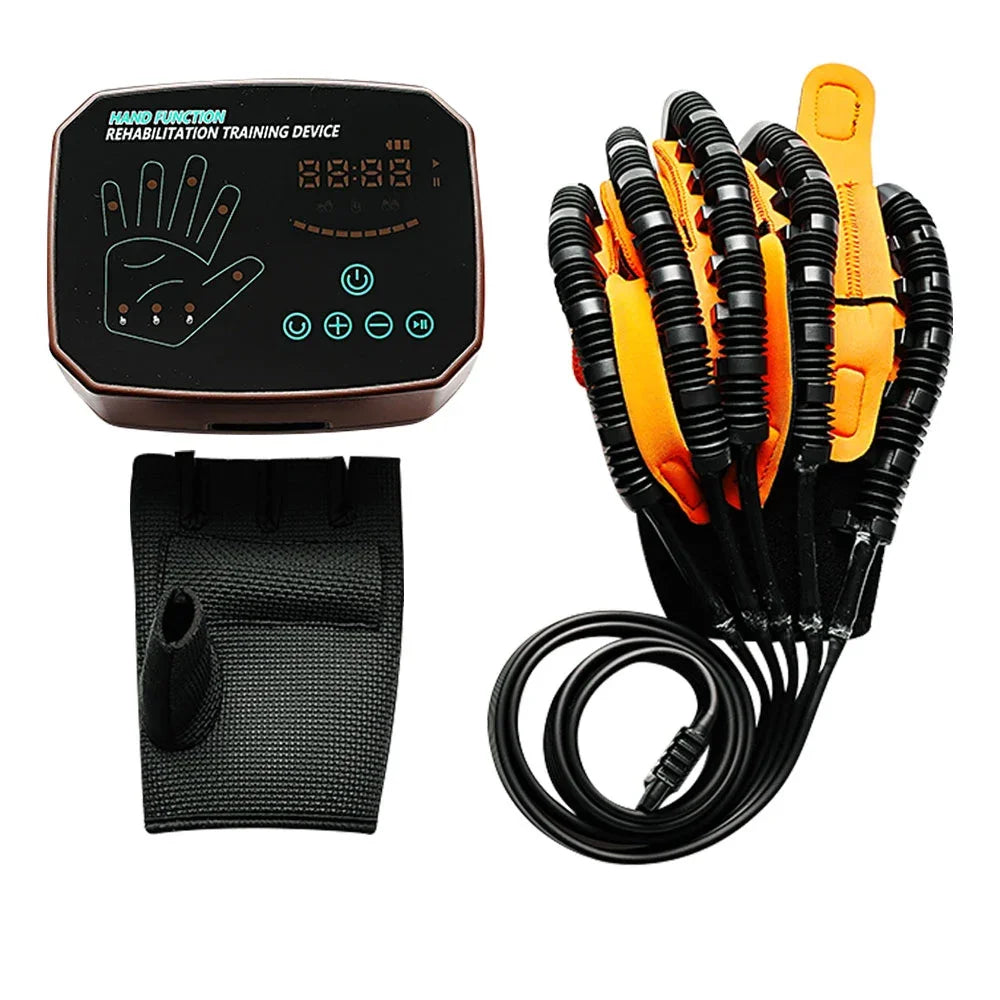
Hand therapy machine for improving finger flexibility after stroke.
If you're ready to regain control and independence, explore the robotic glove for stroke recovery today.
Get yours now — limited stock!
When to See a Physical or Occupational Therapist
Warning signs
Seek professional evaluation if your hand becomes increasingly stiff, painful, swollen, or if progress has stalled despite consistent home exercise.
Benefits of supervised therapy
Physical and occupational therapists can assess muscle tone, adjust exercise intensity, recommend adaptive equipment, and develop individualized rehabilitation plans that match your recovery goals.
Questions to ask your therapist
- Which exercises are most appropriate for my recovery stage?
- Am I performing movements with proper technique?
- Would assistive devices benefit my home program?
- How should I measure my progress?
Frequently Asked Questions
How long does it take to regain hand movement after stroke?
Recovery timelines vary widely. Some people notice improvements within several weeks, while others continue gaining function over many months through consistent rehabilitation.
Can finger movement fully return after stroke?
Recovery depends on stroke severity, affected brain regions, and rehabilitation intensity. Many individuals achieve meaningful improvements even if complete recovery is not possible.
How many times per day should I perform hand exercises?
Most rehabilitation programs recommend two to three sessions per day lasting 10–20 minutes each, provided exercises remain comfortable.
Are robotic gloves effective for stroke recovery?
Robotic gloves may help increase repetition and guided movement, particularly for people with limited finger mobility. They are generally most effective when combined with active therapy.
What if my hand does not move at all?
Begin with passive range-of-motion exercises under medical guidance. Even when voluntary movement is absent, gentle motion may help preserve flexibility while supporting future recovery.
Can you improve finger movement years after a stroke?
Yes. Although recovery is often fastest during the first months, many people continue improving years later through regular, task-specific practice and consistent rehabilitation.
Should finger exercises cause pain?
No. Mild stretching discomfort may occur, but sharp pain is a signal to stop and consult your healthcare provider or therapist.
What exercises help if the hand is completely flaccid?
Passive range-of-motion exercises, assisted finger movement, positioning techniques, and therapist-guided rehabilitation are typically recommended during this stage.
How long should each therapy session last?
Ten to twenty minutes is appropriate for many people, although your therapist may recommend longer or shorter sessions based on your condition.
Are robotic gloves better than manual exercises?
Neither replaces the other. Manual exercises build active control, while robotic gloves can increase guided repetitions. Using both together often provides the greatest benefit.
Can caregivers safely assist with hand exercises?
Yes. Caregivers can assist safely by supporting the hand properly, moving joints gently, avoiding forceful stretching, and following guidance from rehabilitation professionals.
Related Guide: How to Improve Mobility Safely at Home













