Safest Kerosene Heater for Indoor Use: Is It Really Safe?
Yes—an indoor safe kerosene heater can be used safely at home when it is specifically designed for indoor operation and used exactly as directed. The safest kerosene heater for indoor use should include UL or CSA certification , an Oxygen Depletion Sensor (ODS) , tip-over protection , and automatic shutoff . These features help reduce common risks, but they do not eliminate the need for proper ventilation and safe operation.
Even certified kerosene heaters produce small amounts of carbon monoxide during combustion. For that reason, you should always provide fresh air by opening a window slightly, install a working carbon monoxide detector nearby, and use only clean 1-K kerosene . Never operate outdoor-only or unvented heaters inside a home.
- Choose models with UL or CSA safety certification.
- Look for an Oxygen Depletion Sensor (ODS) and tip-over shutoff.
- Use only 1-K kerosene for cleaner combustion.
- Keep a window cracked open for continuous fresh air.
- Install a carbon monoxide detector in the same living area.
Indoor Safe Kerosene Heater Reviews: Which One Fits Your Home
⏱ 7 min read
An indoor safe kerosene heater can provide dependable warmth during winter storms, power outages, or rising heating costs. The challenge is choosing a model with the right combination of safety features, heating capacity, runtime, and efficiency. This guide compares today's safest options and explains how to use them responsibly indoors.
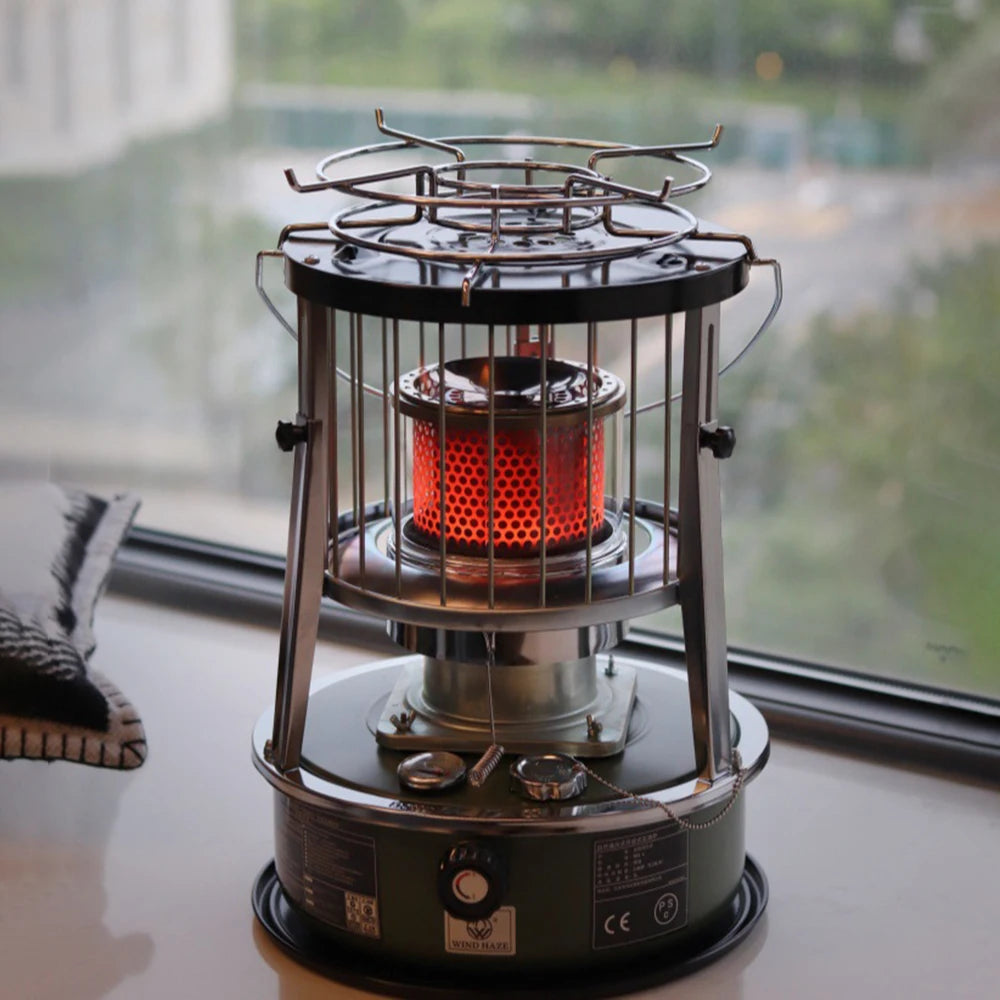
An indoor safe kerosene heater designed for steady warmth and peace of mind. See it in action.
How We Evaluated the Safest Indoor Kerosene Heaters
To identify the safest indoor safe kerosene heaters, we compared each model using practical criteria that matter most in everyday use instead of focusing on heat output alone.
Safety Testing Criteria
- Safety certifications: Preference for UL or CSA listed models.
- Automatic protection: ODS sensors, tip-over switches, and automatic shutoff.
- Emissions: Cleaner combustion with proper 1-K kerosene.
- Runtime: Longer burn times without sacrificing efficiency.
- Ease of operation: Simple ignition, visible fuel gauge, and stable construction.
- Maintenance: Easy wick replacement and spill-resistant fuel systems.
Quick Comparison of the Safest Indoor Kerosene Heaters
| Model | Recommended Room Size | Runtime | Tank Capacity | Key Safety Features |
|---|---|---|---|---|
| Mr. Heater F260550 | Up to 500 sq ft | About 8 hours | 1.2 gallons | ODS, tip-over switch, automatic shutoff, UL/CSA |
| HeatMate IndoorSafe K-400 | Up to 400 sq ft | About 7 hours | 1 gallon | ODS, spill-resistant tank, UL listed |
| Corona HC-200 | Up to 450 sq ft | About 6 hours | 1 gallon | ODS, tip-over protection, CSA certified |
Best Indoor Safe Kerosene Heaters Reviewed
Best Overall
Mr. Heater F260550 offers one of the strongest balances of heating performance, safety features, and runtime. With both ODS protection and automatic shutoff, it is well suited for medium-sized living spaces and emergency use.
Pros:
- Multiple built-in safety systems
- Excellent coverage for family rooms
- Long runtime per tank
Cons:
- Higher fuel consumption than compact units
Best for Large Rooms
Corona HC-200 distributes heat evenly across larger open spaces while maintaining dependable safety protections.
Best for Small Spaces
HeatMate IndoorSafe K-400 provides efficient heating for bedrooms, offices, cabins, or apartments where conserving fuel is important.
Best Emergency Backup
The portable kerosene heater stove is an excellent backup heating option because it combines portability, steady heat output, and simple operation during power outages.
Best Value
Compact indoor-safe models with ODS protection often deliver the best balance between purchase price, operating cost, and everyday reliability.
Key Safety Features to Look For
Not all heaters marketed for indoor use provide the same level of protection. Prioritize these features before comparing price.
- Oxygen Depletion Sensor (ODS): Shuts the heater off if oxygen levels become too low.
- Tip-over protection: Stops fuel combustion if the heater falls.
- Automatic fuel shutoff: Helps prevent overheating.
- Low-emission combustion: Cleaner burning systems reduce soot and odor.
- Protective grille: Lowers the risk of accidental contact with hot surfaces.
- Stable base: Improves balance on flat indoor flooring.
- High-quality wick: Produces more consistent combustion with fewer emissions.
Choose the Right Heater for Your Room Size
Selecting the proper heater size improves both efficiency and safety. Oversized heaters waste fuel, while undersized models struggle to maintain comfortable temperatures.
Room Size Guide
- Up to 250 sq ft: Small heaters producing roughly 8,000–10,000 BTUs are generally sufficient.
- 250–500 sq ft: Mid-sized heaters around 10,000–23,000 BTUs provide balanced performance.
- Over 500 sq ft: Larger heaters or multiple properly positioned units provide more even heating.
Regardless of room size, always leave adequate clearance around the heater and maintain fresh air ventilation throughout operation.
The portable kerosene heater stove offers balanced heat output and quiet operation, making it suitable for many bedrooms and living rooms.
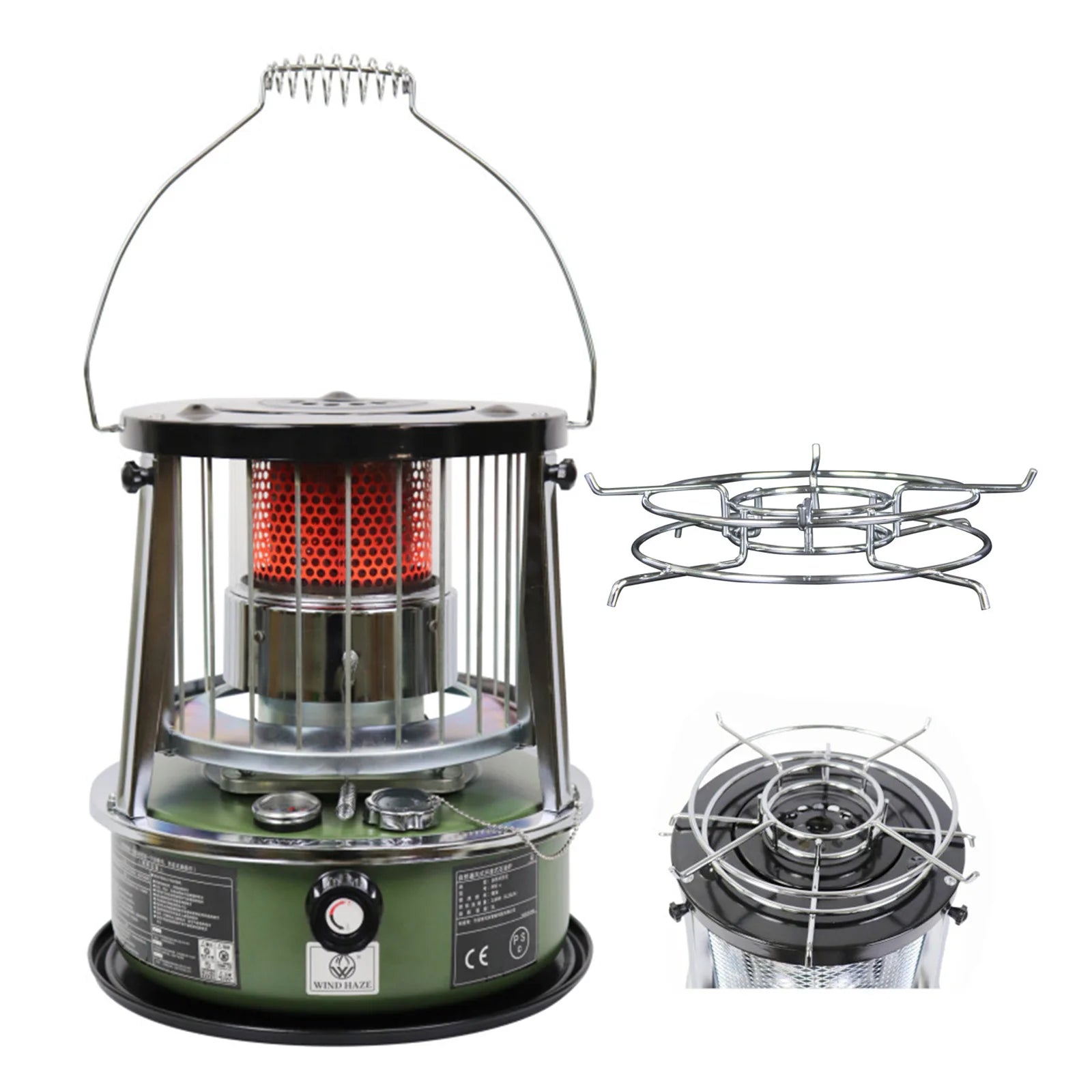
Comparing indoor safe kerosene heater designs for real homes. See it in action.
How to Use a Kerosene Heater Safely Indoors
Ventilation
Keep a window open approximately one inch or follow the manufacturer's recommendations for fresh air. Proper ventilation significantly reduces carbon monoxide buildup.
Fuel Handling
Use only clean 1-K kerosene stored in approved fuel containers. Never refill a hot heater, and always perform refueling outdoors after the unit has completely cooled.
Placement
Position the heater on a level, noncombustible surface with generous clearance from curtains, furniture, bedding, and walkways.
Carbon Monoxide Prevention
Install a working carbon monoxide detector in the room, test it regularly, and replace batteries according to the manufacturer's schedule. If the alarm sounds, turn off the heater immediately and move everyone to fresh air.
Many homeowners preparing for winter emergencies also browse the Body Care and Health Devices collection for additional cold-weather essentials.
Maintenance Tips for Safe Indoor Operation
- Inspect and replace worn wicks when performance declines.
- Clean soot and dust from air passages regularly.
- Empty old fuel before long-term seasonal storage.
- Store kerosene only in approved containers away from living spaces.
- Inspect seals, fuel lines, and ignition components before each heating season.
Routine maintenance helps preserve clean combustion, improve efficiency, and extend heater lifespan.
Many homeowners also explore practical cold-weather products in the Lifestyle collection to complement their emergency preparedness plans.
Final Verdict: Which Is the Safest Kerosene Heater for Indoor Use?
The safest kerosene heater for indoor use combines certified safety features with proper operation. Models equipped with an Oxygen Depletion Sensor, tip-over protection, automatic shutoff, and recognized UL or CSA certification provide the highest level of protection available for indoor kerosene heating.
- Best Overall: Mr. Heater F260550
- Best for Small Rooms: HeatMate IndoorSafe K-400
- Best for Larger Areas: Corona HC-200
- Best Emergency Backup: Portable kerosene heater stove
Regardless of which model you choose, proper ventilation, clean fuel, routine maintenance, and carbon monoxide monitoring remain essential for safe indoor use.
Frequently Asked Questions
Can you use a kerosene heater indoors safely?
Yes, provided the heater is designed and certified for indoor use, uses clean 1-K kerosene, operates with adequate ventilation, and includes modern safety features such as an ODS sensor and automatic shutoff.
What is the safest kerosene heater for indoor use?
The safest models combine UL or CSA certification with tip-over protection, oxygen depletion monitoring, automatic shutoff, stable construction, and low-emission combustion.
Do indoor kerosene heaters produce carbon monoxide?
Yes. All fuel-burning heaters produce some carbon monoxide. Proper ventilation and a functioning carbon monoxide detector are essential whenever a kerosene heater operates indoors.
How much ventilation does a kerosene heater need?
Follow the manufacturer's instructions, but in most homes, opening a window slightly provides the fresh air needed for safer operation.
Can you sleep with a kerosene heater on?
It is generally safer to avoid sleeping with a kerosene heater operating unless the manufacturer specifically permits overnight use and all ventilation and carbon monoxide safety recommendations are followed.
How long can a kerosene heater run?
Most indoor-safe models operate for approximately 8 to 12 hours on a full tank, depending on fuel capacity and heat output.
Are indoor kerosene heaters UL certified?
Some are, while others carry CSA certification or other recognized safety listings. Always verify certification before purchasing.
What size kerosene heater do I need for my room?
Match the heater's recommended coverage area and BTU output to your room size. A properly sized heater heats efficiently without unnecessary fuel consumption.
Related Guide: Portable Kerosene Heaters Compared for Safe Indoor Use