
Memory Foam vs Gel Seat Cushion: Which Is Better for Comfort, Cooling, and Pain Relief?
Choosing between a memory foam vs gel seat cushion can make a big difference in how comfortable you feel during long drives or workdays. Both materials aim to improve posture, reduce pressure on the lower back, and prevent sitting fatigue—but they achieve those goals in different ways. Understanding how each material performs in terms of comfort, cooling, durability, and pain relief can help you choose the best option for your needs.
⏱ 7 min read

See it in action: memory foam car seats designed for superior back support
Memory Foam vs Gel Seat Cushion: Quick Verdict for Different Users
If you're trying to decide between a memory foam vs gel seat cushion, the right choice depends largely on how long you sit, your body type, your pain points, and whether cooling performance matters more than pressure relief.
Best for Office Workers
Memory foam seat cushions are usually the better option for office workers who sit for 6–10 hours daily. They conform to the body, distribute pressure evenly, and provide long-term comfort during prolonged sitting sessions.
Best for Drivers and Long Commutes
Memory foam generally performs better for driving because it absorbs vibration, supports posture, and reduces fatigue during long commutes.
Best for Tailbone Pain and Sciatica
High-density memory foam cushions with coccyx cutouts typically provide superior pressure relief for tailbone pain, sciatica, and lower back discomfort.
Best for Hot Climates
Gel seat cushions excel in warm environments because their open-cell structure and thermal conductivity help dissipate body heat more effectively.
Best Budget Option
Traditional gel cushions often cost less upfront, although premium memory foam cushions may provide better long-term value due to their durability and support retention.
Memory Foam vs Gel Seat Cushion: Side-by-Side Comparison Table
Here's a direct comparison of gel vs memory foam seat cushion performance across the factors most buyers care about.
- Pressure Relief: Memory Foam ★★★★★ | Gel ★★★☆☆
- Cooling: Memory Foam ★★☆☆☆ | Gel ★★★★★
- Tailbone Support: Memory Foam ★★★★★ | Gel ★★★☆☆
- Sciatica Relief: Memory Foam ★★★★★ | Gel ★★★☆☆
- Long Sitting Comfort: Memory Foam ★★★★★ | Gel ★★★☆☆
- Heat Retention: Memory Foam ★★☆☆☆ | Gel ★★★★★
- Durability: Memory Foam ★★★★☆ | Gel ★★★☆☆
- Portability: Memory Foam ★★★☆☆ | Gel ★★★★☆
- Cleaning: Memory Foam ★★★☆☆ | Gel ★★★★★
- Heavy User Support: Memory Foam ★★★★☆ | Gel ★★★☆☆
- Driving Comfort: Memory Foam ★★★★★ | Gel ★★★☆☆
- Price: Memory Foam ★★★☆☆ | Gel ★★★★☆
| Body Weight | Recommended Material |
|---|---|
| Under 150 lbs | Gel or Hybrid |
| 150–220 lbs | Memory Foam or Hybrid |
| Over 220 lbs | High-Density Memory Foam |
How Memory Foam Seat Cushions Work
Memory foam seat cushions are made from viscoelastic polyurethane foam that reacts to body weight and temperature. When you sit down, the foam softens slightly and molds to your body, creating a customized support surface.
The Science Behind Memory Foam Pressure Relief
This contouring effect spreads pressure evenly rather than concentrating force around the hips, tailbone, or lower back. This helps reduce pressure points and improve sitting comfort during prolonged use.
Memory foam cushions are commonly recommended for:
- Long driving sessions
- Office work lasting several hours
- Tailbone or coccyx discomfort
- Sciatica and lower back pain
Learn more about coccyx-support memory foam cushions.
When Memory Foam Works Best
Memory foam performs best for users who sit for extended periods and require stable ergonomic support with consistent pressure redistribution.
How Gel Seat Cushions Work
Gel seat cushions typically use flexible polymer gel arranged in a grid or honeycomb pattern. Rather than contouring deeply, they distribute body weight while maximizing airflow.
How Gel Distributes Weight and Heat
When pressure is applied, gel cells compress and redistribute force across the cushion surface. The open structure simultaneously improves airflow and reduces heat buildup.
When Gel Seat Cushions Are the Better Choice
- Hot climates or warm offices
- Drivers experiencing seat heat buildup
- Users preferring firmer support
- Short sitting sessions
Hybrid Gel Memory Foam Cushions: The Third Option Most Buyers Overlook
Many shoppers assume they must choose between gel and memory foam. In reality, hybrid cushions combine both materials to provide pressure relief and cooling performance simultaneously.
How Hybrid Cushions Combine Both Technologies
Most hybrid designs use a high-density memory foam base combined with a gel-infused layer or gel honeycomb insert. The memory foam provides contouring support, while the gel layer improves airflow and temperature regulation.
Who Should Buy a Hybrid Cushion
- People who sit longer than 6 hours daily
- Drivers taking frequent long trips
- Users with moderate tailbone pain
- Individuals living in warmer climates
- Buyers wanting a balance of comfort and cooling
Memory Foam vs Gel Seat Cushion: Detailed Performance Comparison
Comfort and Pressure Distribution
Memory foam conforms to body contours and distributes pressure across a larger surface area. Gel cushions provide firmer support but generally create fewer contouring benefits.
Cooling Performance and Heat Retention
Gel cushions transfer heat away from the body more efficiently than traditional memory foam, making them ideal for warm climates.
Support and Spinal Alignment
High-density memory foam maintains pelvic alignment and posture more effectively during prolonged sitting sessions.
Durability and Material Breakdown
Premium memory foam cushions typically last 2–5 years, whereas gel cushions often experience compression or structural fatigue sooner.
Weight Capacity and Body Types
Heavier individuals generally benefit from dense memory foam because it provides more consistent support under sustained pressure.
Portability and Travel Friendliness
Gel cushions tend to weigh less and can be easier to transport, although compact memory foam travel cushions are increasingly common.
Cleaning and Maintenance
Gel cushions can often be washed directly, while memory foam usually requires removable covers and spot cleaning.
Price and Value
Entry-level gel cushions are usually cheaper, while premium memory foam cushions often deliver better long-term value.
Memory Foam vs Gel Seat Cushion for Different Use Cases
Office Workers Sitting 8+ Hours
Memory foam provides superior pressure redistribution and comfort during full workdays.
See ergonomic support recommendations.
Drivers and Long Commutes
Memory foam absorbs road vibration and reduces pressure buildup during extended driving sessions.
Explore top cushions for drivers.
Tailbone Pain and Coccyx Injuries
Memory foam cushions with coccyx cutouts typically deliver the best relief.
Sciatica and Lower Back Pain
Memory foam offers better contouring support and spinal alignment for users managing sciatica symptoms.
Learn more about sciatica-friendly seat support.
Wheelchair Users
Depending on medical needs, users may benefit from pressure-relieving memory foam or specialized medical-grade gel cushions.
Air Travel and Portable Seating
Lightweight gel cushions may provide better portability, while compact memory foam travel cushions offer improved comfort.
Pros and Cons: Memory Foam vs Gel Seat Cushions
Memory Foam Seat Cushion
- Excellent pressure relief for long sitting sessions
- Contours to body shape for ergonomic support
- Helpful for tailbone and lower back pain
- May retain heat in warm environments
Gel Seat Cushion
- Superior cooling and airflow
- Firm and responsive support
- Lightweight and portable
- Less contouring for pressure points
Hybrid Gel Memory Foam Cushion
- Combines cooling and pressure relief
- Suitable for long sitting periods
- Improved temperature control
- Usually costs more
How Long Do Memory Foam and Gel Seat Cushions Last?
Typical Lifespan by Material
- Low-density memory foam: 1–2 years
- High-density memory foam: 3–5 years
- Gel cushions: 1–3 years
- Hybrid cushions: 2–4 years
Signs It's Time to Replace Your Cushion
- Visible flattening
- Reduced pressure relief
- Permanent indentations
- Cracking or gel leakage
- Increased discomfort during sitting
Learn how to extend cushion lifespan.
Memory Foam in Car Seats: Is It Actually Better for Driving?
Drivers often prefer memory foam because prolonged sitting inside vehicles creates pressure points, vibration fatigue, and posture challenges that contouring foam addresses effectively.
Why Drivers Prefer Memory Foam
- Better vibration absorption
- Improved pressure distribution
- Enhanced lower back support
- Reduced tailbone discomfort
When Gel Car Seat Cushions Make More Sense
Gel car seat cushions may be preferable in extremely hot climates or for drivers who experience excessive heat buildup while driving.
Which Is Better: Gel or Memory Foam Seat Cushion?
Choose Memory Foam If:
- You sit longer than 4 hours daily
- You experience tailbone pain or sciatica
- You drive frequently
- You prioritize comfort and support
Choose Gel If:
- You live in a hot climate
- You prefer firmer seating
- You sweat easily
- You want easier cleaning and maintenance
Choose Hybrid If:
- You want both cooling and pressure relief
- You work long office hours
- You want balanced performance
Final Verdict
For most users, memory foam remains the best overall seat cushion material because of its superior pressure relief, comfort, and ergonomic support. However, gel cushions remain an excellent choice for hot environments and users who prioritize cooling performance over contouring comfort.
Why the KentDO Memory Foam Cushion Stands Out
The KentDO memory foam cushion for car seat is designed to improve ergonomic seating during long drives or workdays.
What Makes KentDO Unique?
The KentDO cushion uses contoured high-density memory foam designed to support the lumbar curve and sacrum while reducing pressure on the tailbone.
Who Should Buy It?
- Daily commuters
- Office workers
- Drivers with lower back discomfort
- Users seeking ergonomic posture support
Pros & Cons
| Pros | Cons |
|---|---|
| ✔ High-density memory foam | ✖ Not machine washable (spot clean only) |
| ✔ Tailored support for back and tailbone | ✖ May take a few days to break in |
| ✔ Lightweight & travel-friendly | ✖ Premium price vs. basic cushions |

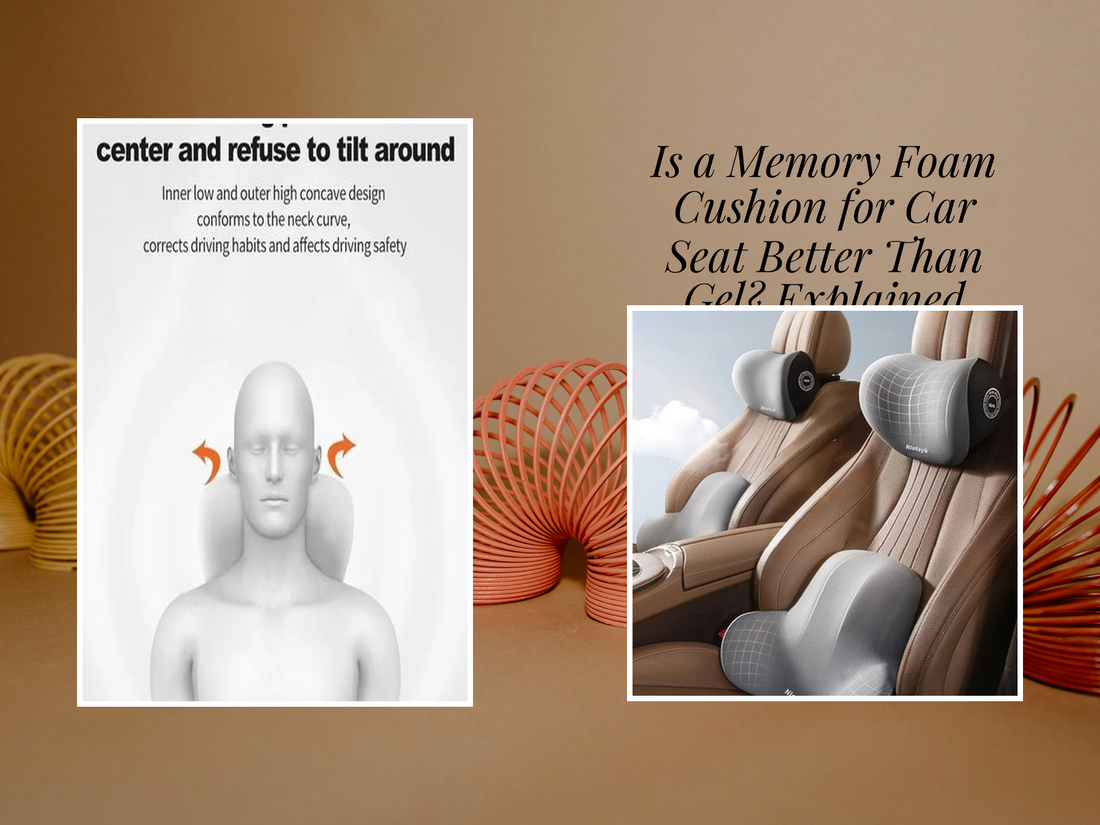
Memory foam car seats give you real relief from seat fatigue

Designed for posture: foam car seat cushion with comfort curves
Frequently Asked Questions
Which is better, gel or memory foam seat cushion?
Memory foam is generally better for comfort, pressure relief, and pain reduction, while gel cushions excel at cooling and temperature management.
Is memory foam good for seat cushions?
Yes. High-density memory foam is widely considered one of the best materials for ergonomic seat cushions.
Are gel seat cushions better in hot weather?
Yes. Gel cushions dissipate heat more efficiently and remain cooler during prolonged sitting.
Which seat cushion is best for tailbone pain?
Memory foam cushions with coccyx cutouts typically provide the best relief.
Do memory foam seat cushions flatten over time?
Yes, but high-quality memory foam cushions can maintain their shape and support for several years.
Are gel cushions suitable for long-distance driving?
They can be, but most drivers find memory foam more comfortable during extended trips.
Should heavier people choose gel or memory foam?
Heavier individuals usually benefit more from high-density memory foam.
What is the best seat cushion for office chairs?
For most office workers, high-density memory foam provides the best balance of comfort, support, and durability.
Pillar Article: Memory Foam Cushion Car Seat Benefits You Didn't Know You Needed
Other Related Articles:
Explore More:













