
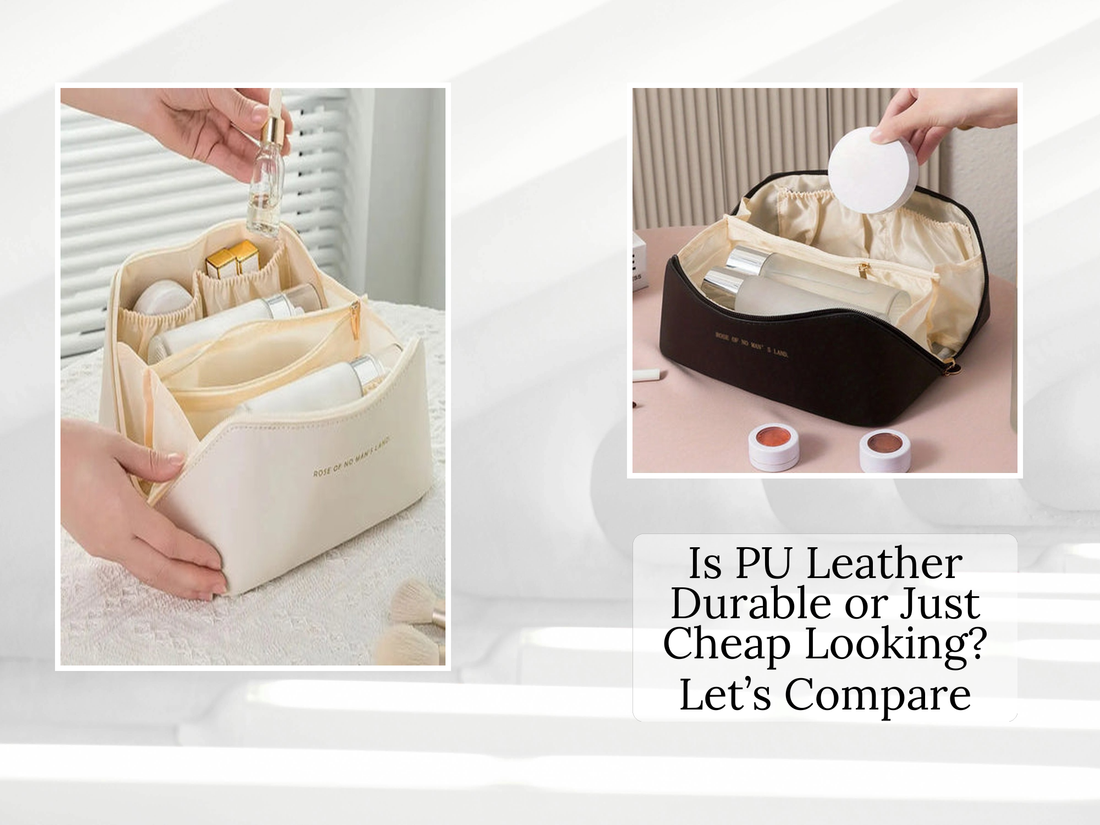
How Long Does PU Leather Last? Lifespan, Durability & Peeling Explained
PU leather is widely used in bags, jackets, furniture, and accessories because it offers a leather-like appearance at a more affordable price. But how long does PU leather last in everyday use? In most cases, PU leather lasts between 2 and 5 years , although premium products that are properly maintained may last longer. In this guide, you'll learn what affects PU leather lifespan, why it cracks or peels, how it compares to genuine leather, and how to extend its durability.
⏱ 6 min read
PU leather makeup pouches that stay flawless — See it in action
How Long Does PU Leather Last? (Average Lifespan Explained)
PU leather typically lasts around 2 to 5 years with normal use, although high-quality PU leather products with proper care can last longer. The actual lifespan depends on material quality, coating thickness, frequency of use, exposure to heat or moisture, and how well the surface is maintained.
Unlike genuine leather, PU leather does not naturally develop a patina or become stronger over time. Instead, its protective coating gradually wears down, which can eventually lead to cracking, peeling, or surface deterioration.
Average PU Leather Lifespan by Product Type
- Bags and accessories: 3–5 years with regular use
- Jackets and clothing: 2–4 years depending on wear frequency
- Furniture upholstery: 2–3 years in high-traffic areas
- Low-cost fashion items: 1–2 years
How Long Does Polyurethane Leather Last Compared With Other Materials?
Polyurethane leather usually offers a shorter lifespan than full-grain or genuine leather but can provide better affordability and easier maintenance. Compared with lower-quality synthetic materials, premium PU leather may offer improved durability and appearance retention.
What Determines PU Leather Lifespan?
The durability of PU leather depends on several factors that influence how quickly the surface coating wears down:
- Material quality: Higher-quality PU leather generally uses stronger backing materials and more durable coatings.
- Coating thickness: A thicker polyurethane layer usually improves resistance to friction and everyday wear.
- Usage frequency: Frequently used items such as bags, chairs, and car seats typically wear faster.
- Environmental exposure: Heat, sunlight, humidity, and moisture can accelerate cracking and peeling.
- Maintenance: Regular cleaning and proper storage help preserve the surface.
For more guidance on preserving synthetic leather products, see our related resources on leather care, material comparisons, and long-term furniture maintenance.
Is PU Leather Durable? Understanding PU Leather Durability
PU leather is considered reasonably durable for everyday products, especially when compared with cheaper synthetic materials. It offers a smooth finish, flexibility, and easy cleaning, making it popular for furniture, bags, shoes, and accessories.
However, PU leather durability has limits. The polyurethane coating can eventually break down, especially when exposed to constant friction, heat, moisture, or poor maintenance.
Why PU Leather Can Be Durable for Everyday Use
- Resists stains and is easy to clean
- Maintains a consistent appearance when cared for properly
- Costs less than genuine leather
- Provides good comfort and flexibility
Weaknesses That Affect PU Leather Durability
- Surface coating can peel after years of use
- Cannot be restored in the same way as genuine leather
- Heat and humidity can speed up deterioration
PU Leather Durability vs Real Leather and PVC Leather
PU leather sits between affordability and durability. Genuine leather usually lasts longer because it is made from natural hide, while PVC leather is often less flexible and may feel less natural.
- PU leather: Affordable, attractive, moderate lifespan.
- Genuine leather: Higher durability, longer lifespan, higher cost.
- PVC leather: Budget-friendly but often less breathable and flexible.
Why Does PU Leather Crack, Peel, or Flake Over Time?
PU leather cracking and peeling occur because the polyurethane coating gradually degrades. Unlike natural leather fibers that remain flexible, synthetic coatings can dry out, weaken, and lose elasticity as they age.
How PU Leather Construction Affects Lifespan
Most PU leather products contain three layers:
- A base fabric layer (polyester or cotton)
- A polyurethane coating that creates the leather-like surface
- A protective finish that adds texture and color
Over time, tiny cracks can develop in the surface coating. Repeated bending, stretching, and friction gradually widen these weak points.
Why PU Leather Peeling Happens
- Breakdown of the polyurethane coating
- Loss of flexibility as the material ages
- Repeated folding or stretching
- Lower-quality manufacturing materials
Heat, Moisture, Friction, and Other Causes of Damage
- Direct sunlight and UV exposure
- High temperatures
- Humidity fluctuations
- Long periods of unused storage
- Frequent rubbing against clothing or hard surfaces
Once peeling begins, the coating cannot be permanently restored, making preventive care especially important.
How Long Does PU Leather Last in Real-World Use?
Durable PU stays sleek even after months of use — Test it yourself
The lifespan of PU leather changes depending on the product. Items exposed to frequent movement and friction usually wear faster than decorative or lightly used products.
PU Leather Bags: Expected Lifespan and Wear Patterns
A PU leather bag often lasts around 2 to 5 years depending on usage. Handles, corners, straps, and areas that rub against clothing usually show wear first.
PU Leather Furniture: How Long Sofas and Chairs Usually Last
PU leather furniture commonly lasts several years with proper care. Sofas and chairs used daily may show cracking or peeling sooner because of constant pressure, body heat, and friction.
PU Leather Jackets and Accessories: Durability Expectations
PU leather jackets, wallets, and travel accessories can last multiple seasons when protected from excessive moisture, sunlight, and rough handling.
For additional care recommendations, explore related guides covering bag durability, furniture care, and synthetic leather maintenance.
Signs Your PU Leather Is Wearing Out
Early Signs of PU Leather Aging
- Surface becomes less flexible
- Texture starts feeling dry or stiff
- Color begins fading
- Small wrinkles appear in frequently bent areas
Cracking, Peeling, and Surface Breakdown
The most common signs of aging are cracking and peeling. These happen when the polyurethane coating loses flexibility and separates from the backing material. Once the backing fabric becomes visible, replacement is often more practical than repair.
How to Make PU Leather Last Longer
Although PU leather eventually deteriorates, proper care can extend its lifespan significantly.
Cleaning and Maintenance Tips
- Wipe regularly with a soft damp cloth
- Avoid harsh chemical cleaners
- Use mild soap for deeper cleaning
- Remove spills promptly to prevent staining
Protecting PU Leather From Heat and Moisture
- Keep PU leather away from direct sunlight
- Avoid prolonged heat exposure
- Limit contact with excessive humidity
- Allow wet items to air dry naturally
Storage Practices That Prevent Premature Damage
- Store items in cool, dry places
- Avoid folding bags or jackets tightly
- Use dust bags to reduce friction and dust buildup
- Maintain airflow around stored items
Following these simple practices can help PU leather products reach the upper end of their expected lifespan.
For step-by-step cleaning tutorials and product care guidance, see our detailed maintenance resources below.
PU Leather vs Genuine Leather: Which Lasts Longer?
When comparing durability, genuine leather usually lasts much longer than PU leather. Natural leather contains dense fibers that can remain strong for decades, while polyurethane coatings gradually degrade over time.
Lifespan Comparison
- PU leather: typically 2–5 years
- Genuine leather: 10–20+ years with proper care
Maintenance and Repair Differences
- PU leather requires minimal conditioning
- Real leather benefits from periodic conditioning
- PU leather cannot be restored once peeling starts
- Real leather can often be refinished or repaired
Is PU Leather Worth Buying for Long-Term Use?
PU leather can be a practical choice if you want a leather-like appearance at a lower cost. It works well for products that you expect to use for several years rather than decades.
If maximum lifespan is the priority, genuine leather or other high-durability materials may provide better long-term value.
For deeper comparisons, explore our guides covering genuine leather, leather grades, and material durability differences.
Is PU Leather a Good Choice?
PU leather remains a practical option for many consumers because it balances affordability, appearance, and ease of maintenance.
When PU Leather Is the Better Option
- For travel accessories exposed to spills and moisture
- For everyday bags used in varying weather conditions
- If you prefer vegan or cruelty-free materials
- When you want stylish accessories with lower cost
When Real Leather or Other Materials Make More Sense
- When maximum lifespan is the main priority
- For heirloom-quality products
- When repairability is important
- For items exposed to heavy daily wear over many years
The PU leather bag that turns heads — See it in action
While it may not age like full-grain leather, quality PU leather provides a practical balance of durability, appearance, and value for everyday use.
Frequently Asked Questions About PU Leather Lifespan
Does PU Leather Last Long?
PU leather typically lasts between 2 and 5 years depending on quality, usage frequency, maintenance habits, and environmental exposure.
Does PU Leather Crack?
Yes. Over time the polyurethane coating can dry out and lose flexibility, which may lead to cracking in areas that bend frequently.
Does PU Leather Peel Over Time?
Peeling occurs when the polyurethane layer separates from the fabric backing. This usually happens after several years of wear or exposure to damaging environmental conditions.
Is Polyurethane Leather Durable?
Polyurethane leather is moderately durable and works well for bags, accessories, furniture, and fashion products designed for several years of use.
How Long Does a PU Leather Bag Last?
Most PU leather bags last around 3–5 years with regular use. Higher-quality versions may last longer when protected from heat, moisture, and excessive friction.
Pillar Article: Polyurethane Leather vs Real Leather—Which One Lasts Longer?
Other Related Articles:
- Best Polyurethane Travel Bags of the Year—Are They Worth It?
- Does Polyurethane Leather Peel? What You Didn’t Expect
- What’s the Real Difference Between Faux Leather and Polyurethane?
- Is Polyurethane Leather Durable? Real Reviews Say Yes—But…
Explore More:













