

What Is the Difference Between Fog and Haze?
How Fog Machines Work
If you're learning how to use a fog machine without too much smoke , it's helpful to understand what the machine actually produces. Most party fog machines heat a water- and glycol- or glycerin-based fog fluid into a fine vapor that condenses into tiny airborne droplets as it cools. The result is a visible fog that makes light beams, lasers, and spotlights stand out.
The amount of visible fog depends on several factors, including the machine's output, the type of fluid used, room temperature, humidity, and airflow. A higher-powered machine doesn't always mean a room full of smoke—it simply gives you more control over how much fog you can produce.
Why Light Haze Looks Better Than Heavy Fog
Many people expect dramatic lighting effects, but they often achieve better results with a light haze rather than dense fog. Heavy fog can obscure guests, reduce visibility, and flatten photos, while a thin layer evenly highlights lighting effects without overwhelming the room.
In practice, the best approach is to use short bursts and allow the fog to disperse naturally before adding more. This creates the cinematic look most DJs, photographers, and event planners aim for.
Does a party fog machine really create dramatic effects without filling the room with smoke?
A party fog machine produces controlled mist that spreads evenly to enhance lighting and atmosphere without overwhelming guests. Modern designs allow precise output, quick warm-up, and adjustable density, helping you achieve professional-looking stage fog effects while keeping air breathable and visibility clear for photos, dancing, and comfort.
⏱ 6 min read
How to Use a Fog Machine Without Too Much Smoke
Too much fog can quickly ruin a party—blocking visibility, triggering discomfort, and overwhelming the space. The key isn't avoiding fog machines, but controlling them properly. With the right setup, timing, placement, and ventilation, you can create clean, cinematic effects without filling the room with heavy smoke.
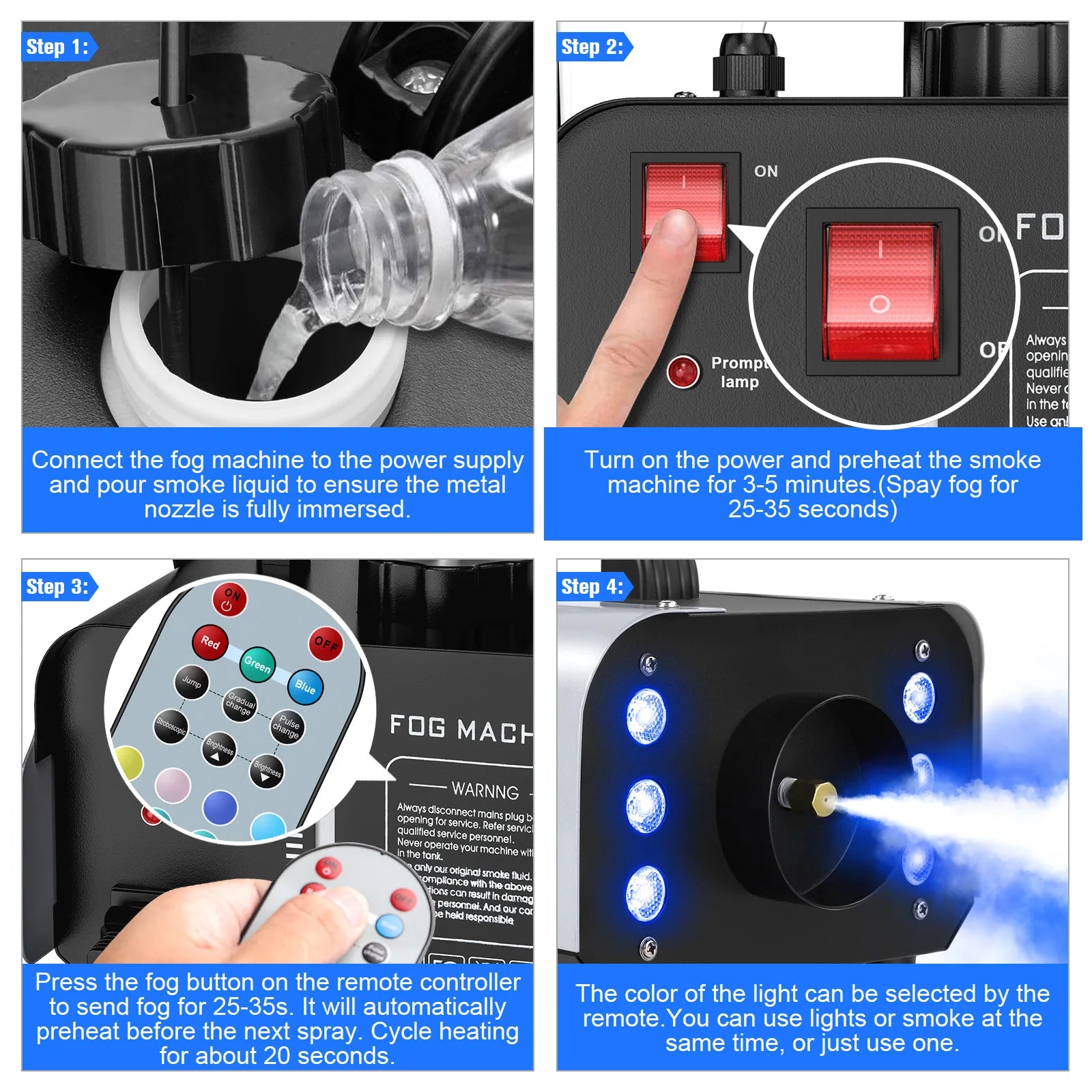
Soft stage fog effects transform lighting — See it in action
Quick Fix: How to Reduce Fog Machine Smoke Immediately
If your fog machine is producing too much smoke, you can usually fix it within seconds by adjusting output, airflow, placement, and timing.
5 Fast Adjustments That Work Instantly
- Use shorter bursts: Hold the trigger for only 1–2 seconds.
- Increase airflow: Use a fan on low speed or crack open a door.
- Raise the machine: Elevating the unit helps fog spread evenly.
- Use lighter fog fluid: Lower-density fluids dissipate faster.
- Pause between bursts: Wait 20–40 seconds before spraying again.
Quick Reference Settings by Room Size
| Room Size | Burst Length | Recommended Interval | Ventilation |
|---|---|---|---|
| Small bedroom | 1 second | 30–40 seconds | Low fan or cracked window |
| Living room | 1–2 seconds | 20–30 seconds | Gentle airflow |
| Large hall | 2–3 seconds | 10–20 seconds | Fans for even circulation |
These adjustments help reduce fog machine smoke indoors while maintaining visible lighting effects.
Why Fog Machines Produce Too Much Smoke (And How to Control It)
Too much fog is rarely caused by a faulty machine. It's usually the result of output settings, environmental conditions, or fluid selection.
Key Factors That Affect Fog Density
- Machine wattage: Higher output requires shorter bursts.
- Fluid type: Heavy-density fluids linger much longer.
- Humidity: Moist air often allows fog to remain visible longer.
- Room size: Smaller spaces reach high fog density quickly.
- Air circulation: Gentle airflow distributes fog evenly.
- Warm-up cycle: Fully heated machines produce smoother, more consistent fog.
- Output duration: Continuous spraying rapidly fills enclosed rooms.
Common Causes of Overproduction
- Holding the trigger continuously.
- Choosing high-density fog fluid indoors.
- Poor ventilation.
- Positioning the machine in a corner.
- Not allowing the machine to complete its warm-up cycle.
Step-by-Step: How to Use a Fog Machine Without Overdoing It
Setup and Pre-Check
Before your event, inspect the machine, fill it with manufacturer-approved fog fluid, and allow it to complete its warm-up cycle. Test output before guests arrive so you can fine-tune settings.
Controlled Output Technique
Instead of continuous spraying, use controlled bursts lasting 1–3 seconds. Observe how quickly the fog spreads before deciding whether another burst is necessary.
Timing and Intervals for Best Results
- Small rooms: every 20–30 seconds.
- Medium rooms: every 15–25 seconds.
- Large venues: every 10–20 seconds.
Recommended Settings by Scenario
| Scenario | Recommended Fog Level |
|---|---|
| House party | Light to medium |
| Dance floor | Medium with regular short bursts |
| Photography | Very light haze |
| Halloween display | Medium to heavy outdoors, light indoors |
Fog Machine Placement Tips for Balanced Coverage
Indoor Placement Strategies
- Position the machine about 1–2 meters above the floor when possible.
- Avoid corners and enclosed spaces.
- Aim the output toward open areas instead of walls.
- Place a fan beside—not directly in front of—the machine to distribute fog naturally.
Small Room vs Large Room Adjustments
- Small rooms: Use shorter bursts and maximize gentle airflow.
- Large spaces: Spread fog throughout the venue rather than concentrating it in one area.
How to Control Fog Machine Output (Advanced Methods)
Using Timers and Remote Controls
Timer remotes automate short bursts at consistent intervals, helping maintain a balanced atmosphere throughout an event.
DMX Control for Precision
Professional users often connect compatible machines to DMX controllers for precise scheduling, output adjustments, and synchronized lighting cues.
Adjusting Fluid Type for Density
- Light fluid: Fast-dissipating haze for smaller rooms.
- Medium fluid: Balanced visibility and longevity.
- Heavy fluid: Thick atmospheric effects for larger spaces or outdoor use.
Indoor Fog Machine Usage Guide (Safe & Clean Effects)
Ventilation Techniques That Don't Kill the Effect
- Run a fan on low speed.
- Open a window slightly instead of fully.
- Avoid strong drafts that remove fog immediately.
How Much Fog Machine Smoke Is Too Much
If people across the room become difficult to see or guests begin noticing stale, heavy air, reduce your output immediately. The ideal effect highlights lighting while keeping conversations, dancing, and movement comfortable.
Essential Fog Machine Safety Tips
- Use only fog fluid recommended for your machine.
- Keep the nozzle clear of decorations and flammable materials.
- Allow adequate cool-down before moving the unit.
- Keep cables secured to reduce trip hazards.
- Follow venue rules regarding smoke detectors and special effects equipment.
Fog Machine Tips for Parties, Events, and Photography
Party Setup Best Practices
- Trigger fog during music transitions or lighting effects.
- Pair fog with LED lights or moving heads.
- Avoid constant output throughout the event.
Wedding and Photography Use Cases
- Create a subtle haze behind subjects.
- Test the effect before the session begins.
- Adjust output gradually until light beams become visible without hiding people.
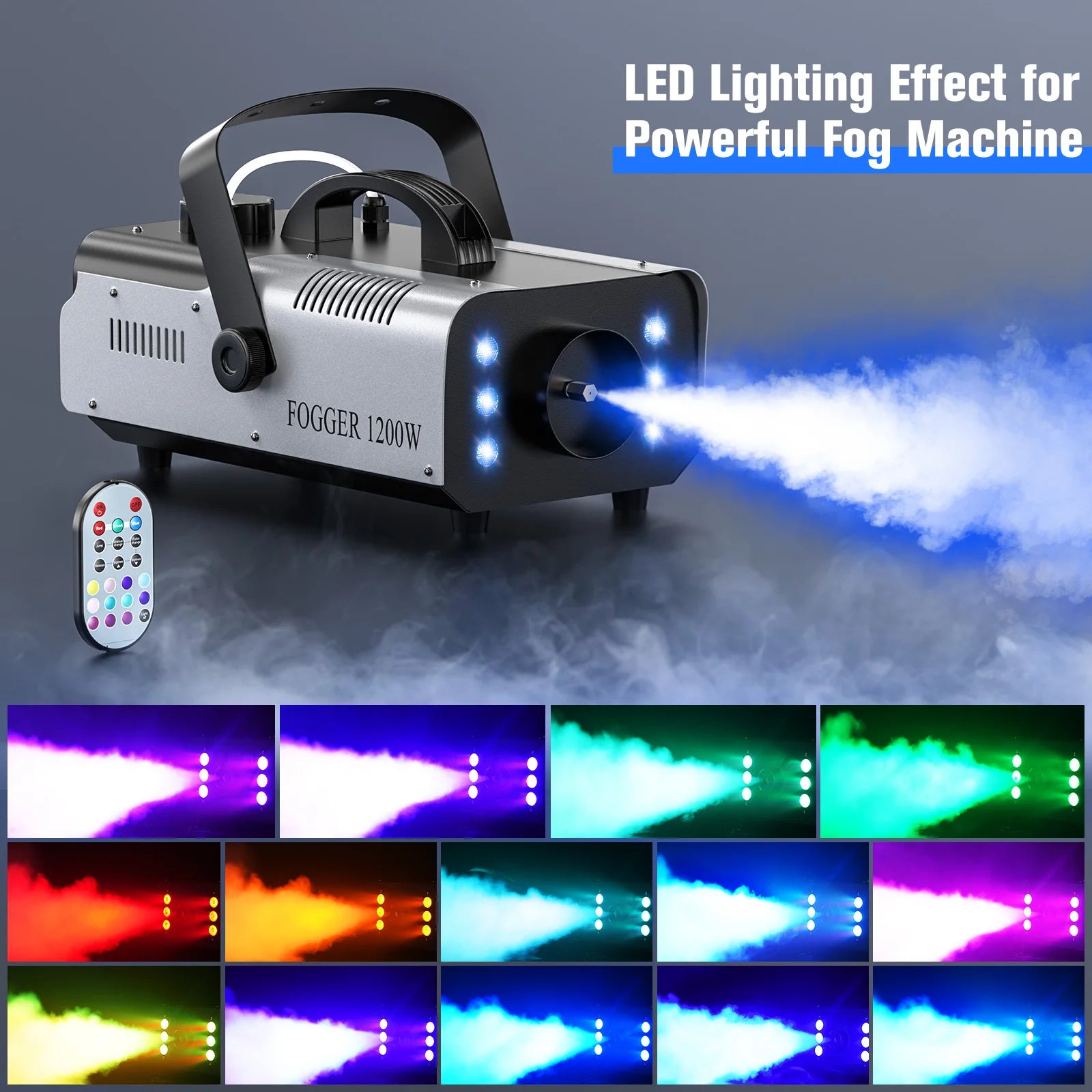
Professional fog flow with adjustable output — See it in action
Common Fog Machine Mistakes That Cause Too Much Smoke
- Using continuous output.
- Ignoring room size.
- Using the wrong fog fluid.
- Poor machine placement.
- Skipping ventilation.
- Not testing settings before guests arrive.
Fog Machine Troubleshooting
Fog Too Thick or Not Dissipating
- Reduce burst duration.
- Improve airflow.
- Switch to lighter fog fluid.
- Pause longer between bursts.
Machine Spitting or Inconsistent Output
- Clean the nozzle.
- Allow full warm-up.
- Use fresh, high-quality fog fluid.
- Check the fluid level.
Troubleshooting Quick Reference Table
| Problem | Likely Cause | Solution |
|---|---|---|
| Room fills too quickly | Bursts are too long | Reduce spray time |
| Fog stays too long | Poor airflow or high humidity | Increase gentle ventilation |
| Weak output | Machine not fully heated | Wait until ready indicator appears |
| Spluttering nozzle | Dirty nozzle or unsuitable fluid | Clean the machine and use recommended fluid |
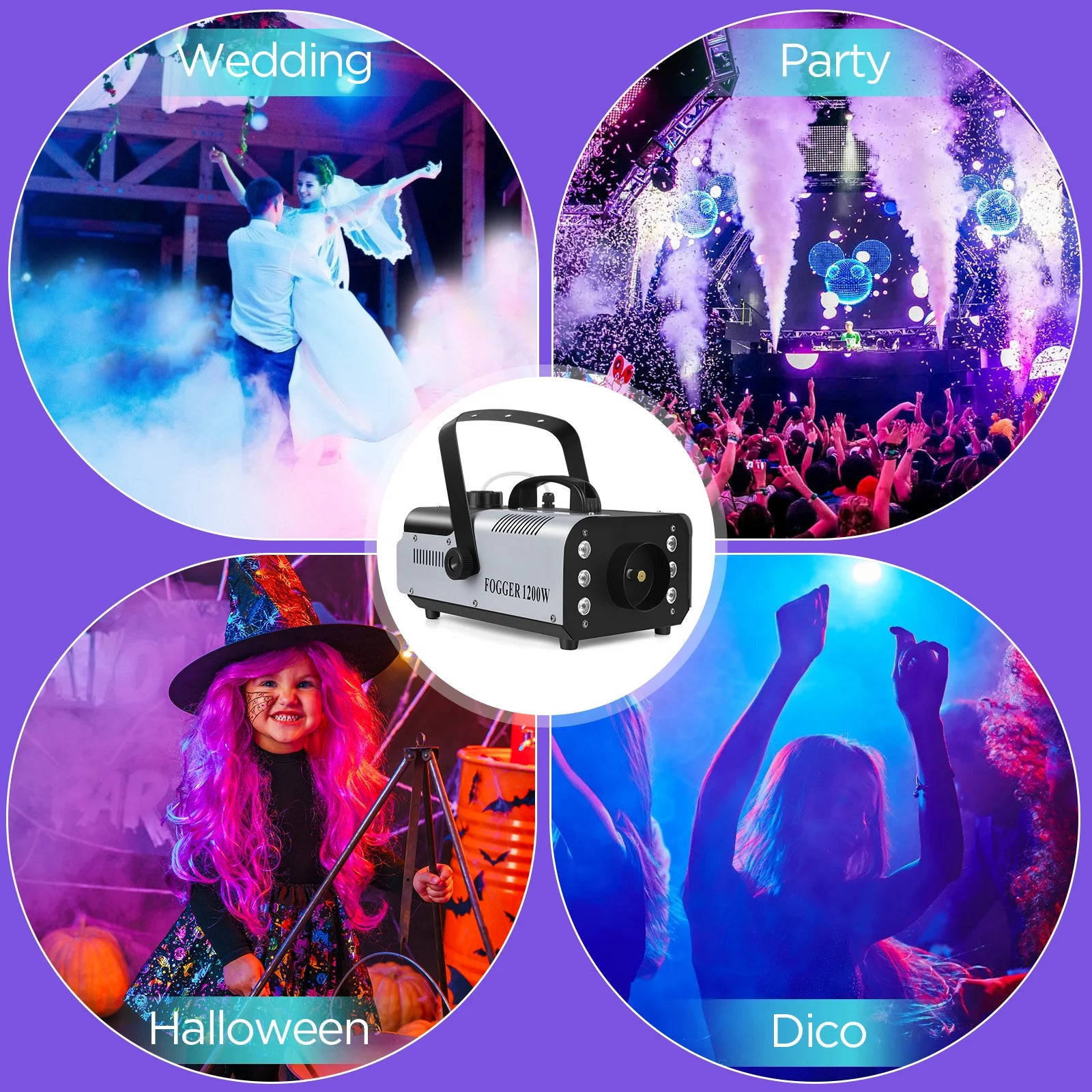
Balanced fog coverage across the room — See it in action
Quick FAQ
Can a fog machine create a light haze instead of thick smoke?
Yes. Use light-density fog fluid, short bursts, and gentle airflow to create a subtle haze instead of dense fog.
What room size affects fog density the most?
Small rooms fill much faster than large spaces, so they require shorter bursts and longer pauses.
Does humidity make fog last longer?
It can. Higher humidity often slows dissipation, allowing fog to remain visible for a longer period.
Should I point a fan directly at the fog machine?
No. Position the fan beside or slightly behind the output path so it gently spreads the fog instead of blowing it away immediately.
What fog fluid creates the lightest effect?
Light-density or fast-dissipating fog fluids are generally best for indoor parties and photography.
How long should I wait between fog bursts?
Most home users achieve good results by waiting 20–40 seconds between bursts, depending on room size.
Why does my fog machine leave fog hanging in the room?
This is usually caused by insufficient airflow, high humidity, or using heavy-density fog fluid in a small space.
Related Guide: Fog Machine Setup Guide Step by Step for Perfect Effects













