
Portable Pedal Resistance Band for Travel: How to Choose the Right One
Maintaining a consistent workout routine while traveling can be difficult when hotel gyms are unavailable, luggage space is limited, or carrying dumbbells is impractical. A portable pedal resistance band offers another option: a compact exercise system that combines elastic resistance tubes, foot pedals, and handles for upper-body, lower-body, and core movements.
However, not every pedal resistance trainer offers the same level of comfort, versatility, or durability. Before buying one, consider its tube configuration, elastic construction, pedal stability, handle ergonomics, attachment security, and storage requirements. These factors determine whether the equipment is genuinely convenient for hotel-room workouts, business trips, vacations, and small-space home training.
This guide explains how portable pedal resistance bands work, compares them with other travel fitness equipment, and provides practical buying recommendations and exercises to help you choose a suitable model.
What Is a Portable Pedal Resistance Band for Travel?
A portable pedal resistance band is a compact strength-training accessory that uses elastic resistance tubes connected to foot pedals and hand grips. Users generate tension by pulling the handles, extending their legs, or changing their body position while keeping the pedals securely positioned under their feet.
Unlike traditional weights, this equipment relies on elastic resistance rather than fixed external loads. It is designed for controlled pulling, pressing, stretching, and stabilization movements without requiring a large workout area.
How Portable Pedal Resistance Bands Work
The equipment generally combines three functional components:
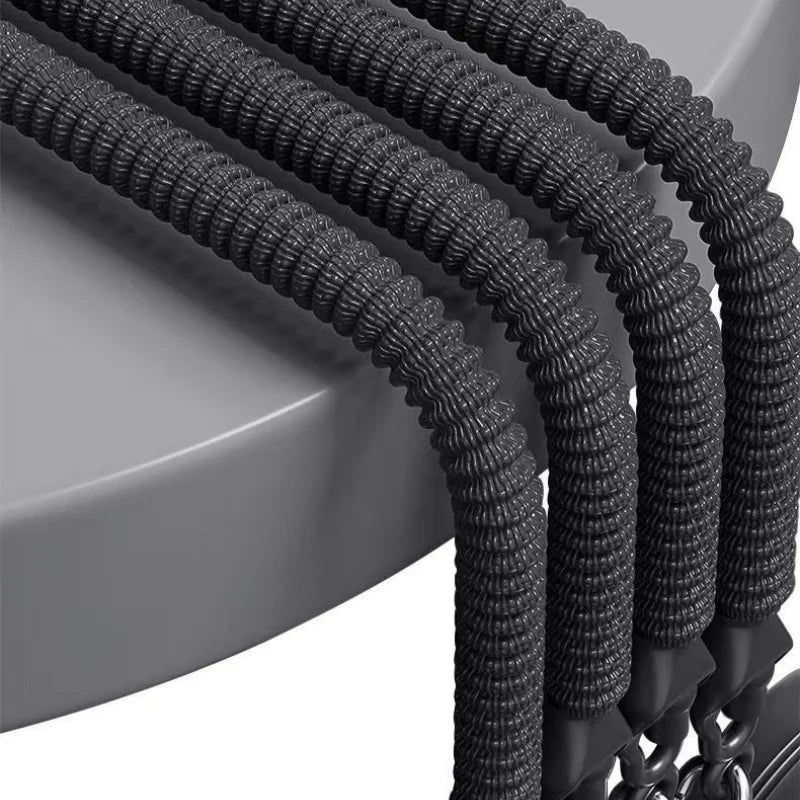
- Elastic resistance tubes: Stretch under tension and provide resistance throughout the movement. The amount of tension changes as the tubes elongate.
- Foot pedals: Provide contact points for the feet, allowing users to stabilize the equipment during seated or selected standing exercises.
- Handles: Allow users to perform pulling and pressing movements while maintaining a grip on the resistance system.
During a seated biceps curl, for example, the user places both feet on the pedals and pulls the handles upward. The elastic tubes stretch as the hands move, creating resistance against the curling motion.
Resistance depends on the tube configuration, starting position, stretch length, and movement technique. It is therefore important not to assume that every pedal resistance band provides a standardized resistance level.
Common Travel and Home Workout Applications
A portable pedal resistance trainer can support several practical workout situations:
- Hotel-room workouts: Perform simple resistance exercises without relying on hotel gym facilities.
- Business trips: Pack compact equipment to maintain familiar upper-body and lower-body movements between work commitments.
- Vacation exercise: Add short resistance sessions to an otherwise busy travel schedule.
- Small apartments: Store a lightweight training accessory without dedicating space to bulky gym equipment.
- Home fitness routines: Supplement bodyweight exercises with elastic resistance for selected muscle groups.
Who Should Consider This Type of Exercise Equipment?
Portable pedal resistance bands may suit beginners, casual fitness enthusiasts, frequent travelers, and people who prefer simple resistance equipment that can be stored easily.
They are particularly useful for people who want to practice controlled arm curls, shoulder movements, seated rows, leg extensions, and basic core exercises. However, experienced strength athletes who require substantial external loading may need additional equipment.
How to Choose the Right Portable Pedal Resistance Band
The best purchasing decision depends on more than the number of resistance tubes. A practical evaluation should consider seven areas: resistance configuration, material quality, pedal construction, handle comfort, portability, attachment security, and exercise versatility.
1. Resistance Configuration and Adjustability
Resistance configuration determines how the equipment generates tension and which exercise variations it can support.
Common configurations include:
- Single-tube systems: Use one elastic tube and generally offer a straightforward setup.
- Multiple-tube systems: Combine several elastic tubes to provide a different resistance configuration and more pulling options.
- Adjustable systems: Allow users to change the number of active tubes or resistance attachments when the manufacturer specifically provides this function.
For travel workouts, a multi-tube design can offer useful versatility. However, four tubes do not automatically mean four standardized resistance levels or a specific maximum resistance rating.
Check whether the tubes can be used individually, whether their connections are secure, and whether the manufacturer explains how resistance configurations should be changed.
2. Tube Material and Elastic Construction
Resistance tubing must stretch repeatedly without developing visible damage or losing its functional integrity. Material quality is therefore an important consideration for long-term use.
Look for:
- Consistent tube thickness and construction.
- Secure connections between elastic tubes and attachment points.
- Flexible material without visible cracking or surface deterioration.
- Reinforced connection areas where applicable.
- Clear manufacturer instructions for cleaning, storage, and replacement.
Some pedal resistance products use TPE and other elastic materials. These materials should be evaluated according to their actual construction rather than assuming that a particular material guarantees a specific service life.
3. Pedal Design and Non-Slip Grip
Pedal stability is especially important because the feet provide an anchor point during many resistance exercises.
Before purchasing, examine the following features:
- Pedal width: The foot platform should accommodate your feet comfortably.
- Surface texture: A suitable surface can help reduce unwanted foot movement.
- Foot placement: Your feet should remain securely positioned during controlled repetitions.
- Contact comfort: Padding or foam-covered surfaces may improve comfort during longer sessions.
- Connection stability: Pedals should remain securely connected to the resistance system.
Do not assume that every foam-covered pedal is non-slip. Inspect the actual surface and test foot placement before increasing tension.
4. Handle Ergonomics and Grip Comfort
Handles influence how comfortably you can perform pulling and pressing movements. Poor grip design can make otherwise simple exercises uncomfortable.
Consider handle shape, grip diameter, surface texture, and cushioning. Foam-covered handles can provide a softer contact surface, particularly during repeated biceps curls and seated rows.
Check whether the handles remain comfortable when your hands are slightly sweaty and whether their attachment points can withstand repeated pulling without becoming loose.
5. Portability, Weight, and Storage Convenience
A travel-friendly resistance trainer should be easy to pack, carry, and set up. Compact dimensions matter more than marketing descriptions that simply label a product lightweight.
Evaluate:
- Overall dimensions when stored.
- Whether handles or other components can be detached.
- Whether the tubing can be packed without sharp folds or excessive compression.
- Whether a storage bag is included.
- Whether the complete accessory set fits comfortably in your luggage.
For frequent business travelers, quick setup and minimal accessories may be more important than having numerous exercise attachments.
6. Attachment Security and Overall Build Quality
Connection points are often overlooked when comparing portable resistance equipment. However, loose connectors or damaged attachment areas can create safety problems when elastic tubing is stretched.
Inspect the connections between:
- Resistance tubes and pedals.
- Resistance tubes and handles.
- Separate tube sections, if the design uses multiple connections.
- Any included door anchor and its attachment system.
A well-designed product should have clearly identifiable connection points and instructions explaining correct assembly. Avoid equipment with loose components, exposed damage, or unclear attachment arrangements.
7. Exercise Versatility and Beginner Accessibility
A useful portable pedal resistance band should support movements that match your actual training preferences. Common applications include arm curls, shoulder presses, seated rows, leg extensions, and basic trunk-stabilization exercises.
Beginners should prioritize straightforward setup, comfortable grips, stable pedals, and manageable initial tension. More experienced users may prefer multiple-tube configurations and secure attachments that support a wider range of controlled movements.
After comparing these criteria, you can explore four-tube pedal resistance workout equipment as one example of this compact training category.
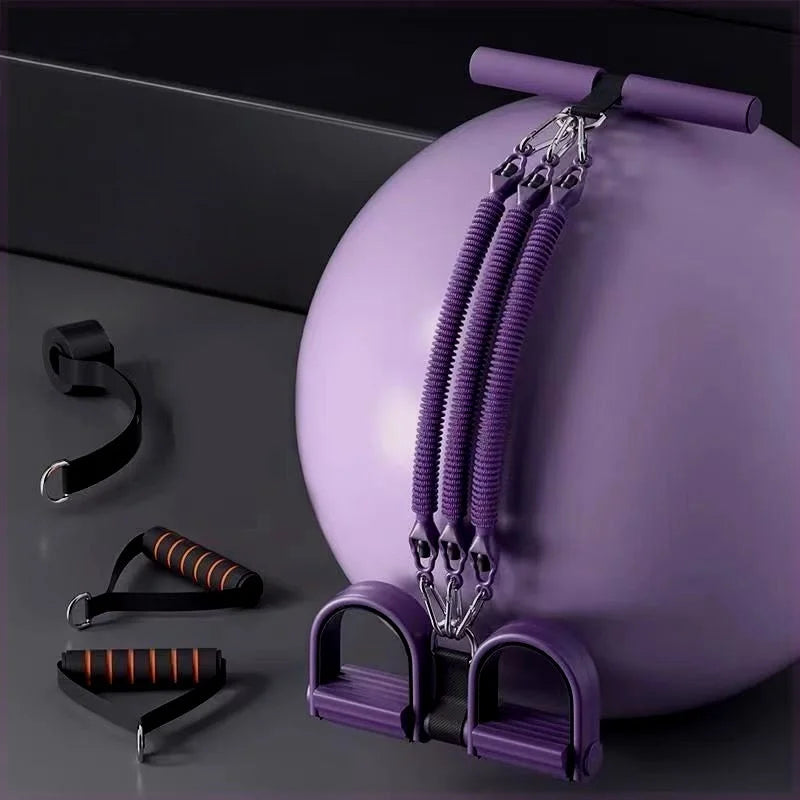
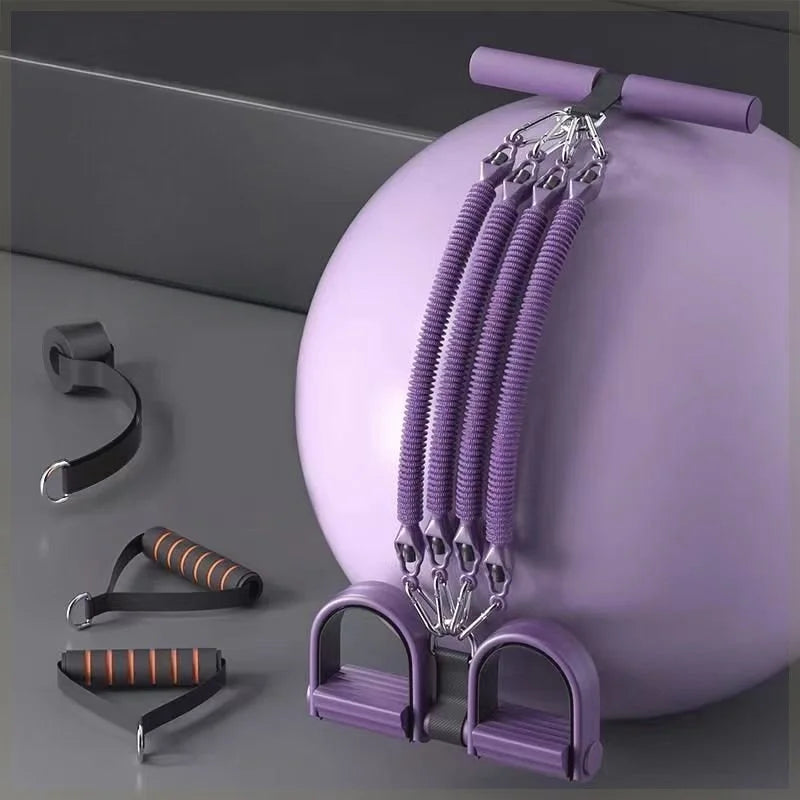
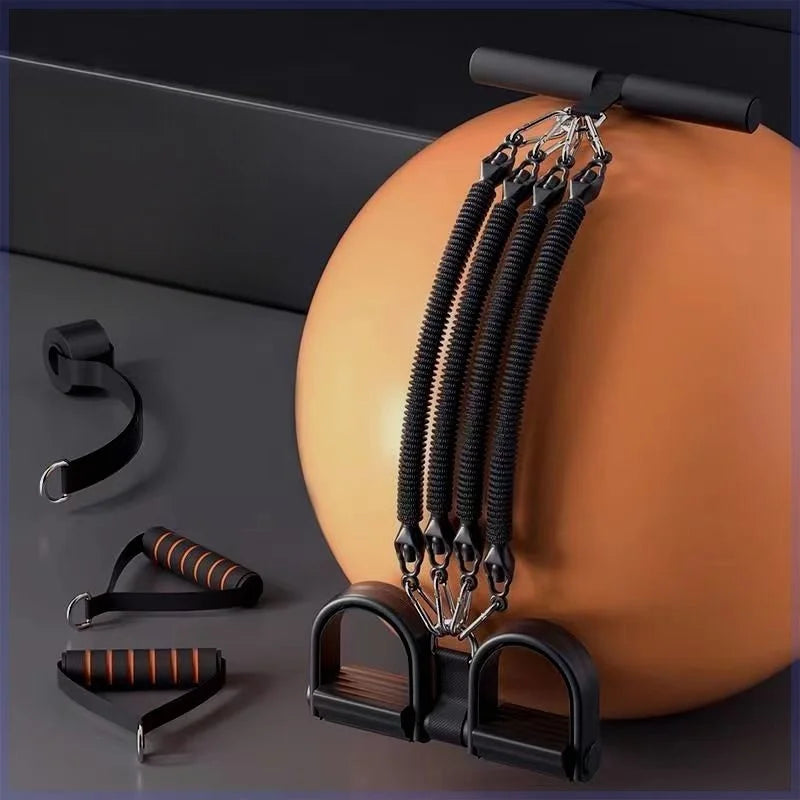
This model uses four elastic tubes, TPE and elastic materials, foam-covered handles and pedals, and a compact design measuring approximately 52 × 26.5 cm. Its listed package includes one pedal tension rope, two handles, and one door anchor. It is available in black and purple.
For people comparing compact workout accessories, the body care and health devices collection provides another place to explore home fitness-related equipment.
Portable Pedal Resistance Bands vs. Other Travel Fitness Equipment
Pedal resistance systems are not interchangeable with every type of resistance band or compact exercise accessory. Their main distinction is the combination of foot-supported anchoring, elastic tubing, and hand grips.
Pedal Resistance Bands vs. Conventional Loop Resistance Bands
Loop resistance bands are continuous elastic loops commonly used for glute activation, lateral walks, squats, and mobility exercises.
Pedal resistance bands use a different exercise setup. The user anchors the equipment with the feet and pulls or presses through attached handles.
- Pedal resistance bands: Better suited to selected seated pulling, pressing, and foot-anchored exercises.
- Loop resistance bands: Better suited to lower-body activation, lateral movement, and exercises that require a simple elastic loop.
Loop bands are generally simpler in construction, while pedal systems provide an integrated handle-and-pedal arrangement.
Pedal Resistance Bands vs. Tube Resistance Kits
Tube resistance kits commonly include elastic tubes, handles, and different anchoring accessories. Some systems allow users to change tubes or attachment configurations.
Pedal resistance systems integrate foot pedals into the exercise arrangement. This can make certain seated movements easier to set up without requiring a separate foot anchor.
However, a conventional tube kit may offer more attachment flexibility, depending on its included accessories. Buyers should compare the complete package rather than judging equipment by its name alone.
Pedal Resistance Bands vs. Other Compact Travel Workout Equipment
Other portable fitness accessories serve different purposes:
- Suspension trainers: Use bodyweight and adjustable straps anchored to a suitable secure point. They offer different movement options but require an appropriate anchor.
- Exercise sliders: Support controlled sliding movements for core and lower-body exercises, usually on a compatible surface.
- Adjustable dumbbells: Provide external resistance through physical weights but are generally less convenient to carry when traveling.
- Jump ropes: Support cardiovascular exercise rather than the same type of controlled elastic resistance training.
Quick Comparison: Which Equipment Type Fits Your Needs?
The following matrix compares general equipment characteristics. Exact dimensions, materials, resistance ratings, and included accessories vary by manufacturer and model.
| Equipment type | Resistance configuration | Typical construction | Portability | Storage needs | Best suited to |
| Pedal resistance band | Elastic tubes with foot-supported tension | Pedals, tubes, handles | High for compact models | Small | Seated pulling, pressing, and general resistance exercises |
| Loop resistance bands | Continuous elastic loops | Elastic rubber or similar materials | Very high | Very small | Glute activation, lower-body movements, and mobility |
| Tube resistance kit | Elastic tubes, sometimes interchangeable | Tubes, handles, anchors, and connectors | High | Small to moderate | Versatile pulling and pressing exercises |
| Suspension trainer | Bodyweight-based resistance | Adjustable straps and handles | High when packed | Small | Bodyweight training with a secure anchor |
| Adjustable dumbbells | Fixed external weight settings | Metal or composite weight components | Low to moderate | Moderate to large | Progressive strength training with external loads |
How Much Resistance Do You Need for Travel Workouts?
The right resistance level is the one that allows you to complete your intended exercise with controlled movement and appropriate technique. A higher tube count or advertised maximum resistance does not automatically mean better training results.
Choosing Resistance for Beginners
Beginners should start with manageable tension and movements that are easy to control. The objective is to learn correct positioning before increasing exercise difficulty.
- Begin with a comfortable starting position.
- Use a smaller movement range if the tubing feels too tight.
- Perform slow repetitions without jerking the handles.
- Maintain stable foot placement throughout the exercise.
- Increase difficulty gradually when technique remains consistent.
A beginner-friendly system should be easy to understand without requiring complicated tube adjustments.
Choosing Resistance for Intermediate and Experienced Users
More experienced users may need greater variation in exercise difficulty. Multiple-tube systems can provide additional configuration options when their construction allows different tubes to be engaged safely.
Exercise difficulty can also be influenced by changing the starting position, movement range, and degree of tube elongation. However, these adjustments should remain within the manufacturer's recommended limits.
People accustomed to heavy resistance training should recognize that compact pedal systems may not provide sufficient loading for their usual strength exercises.
Signs That Your Resistance Level Is Too Light or Too Difficult
The resistance may be too light when:
- You can complete repetitions without feeling a meaningful muscular challenge.
- The movement provides little resistance throughout its range.
- You can maintain the same speed and effort indefinitely without adjustment.
The resistance may be too difficult when:
- You cannot complete the movement with controlled technique.
- Your shoulders, back, or joints compensate for excessive tension.
- You need to jerk or swing the handles to complete repetitions.
- The tubing approaches excessive elongation.
- Your feet or pedals become unstable during the movement.
Why Maximum Resistance Ratings Do Not Tell the Whole Story
Elastic resistance changes as the tube stretches. Consequently, perceived difficulty depends on several factors:
- Initial tube length and starting position.
- Amount of elongation during the movement.
- Number of active resistance tubes.
- Direction of pulling or pressing.
- Individual strength and exercise technique.
When a manufacturer does not provide verified resistance measurements, avoid relying on estimated kilogram or pound ratings. Evaluate the actual exercise experience and follow the stated equipment limits instead.
Best Exercises to Perform With a Portable Pedal Resistance Band
A portable pedal resistance band can support a practical combination of upper-body, lower-body, and core exercises. The following movements illustrate how to use the equipment without requiring a large training space.
Upper-Body Exercises
1. Seated Biceps Curl
- Sit upright with both feet positioned securely on the pedals.
- Hold the handles with your palms facing forward or toward each other.
- Keep your elbows close to your sides.
- Pull the handles upward by bending your elbows.
- Lower them slowly to the starting position.
Perform 10–12 controlled repetitions if the resistance is comfortable. Avoid swinging your torso to generate momentum.
2. Seated Shoulder Press
- Begin in a stable seated position with your feet anchoring the pedals.
- Hold the handles near shoulder height.
- Engage your abdominal muscles and maintain an upright torso.
- Press the handles upward within a comfortable range.
- Lower them slowly without forcing your shoulders.
Use lighter tension if you experience discomfort or cannot maintain controlled shoulder movement.
3. Seated Row
- Sit with your legs positioned comfortably and the pedals securely anchored.
- Extend your arms forward while maintaining gentle tension.
- Pull the handles toward your torso.
- Keep your elbows moving backward rather than shrugging your shoulders.
- Return to the starting position slowly.
This exercise emphasizes the upper back and arm muscles while encouraging controlled pulling mechanics.
Lower-Body Exercises
1. Seated Leg Extension
- Sit upright with one foot positioned securely on the appropriate pedal.
- Begin with your knee comfortably bent.
- Extend your leg against the elastic resistance.
- Pause briefly without locking your knee.
- Return slowly to the starting position.
Complete the movement on both sides, using a comfortable range of motion.
2. Standing Squat Variation
- Check that the equipment configuration is appropriate for the movement.
- Position your feet securely and maintain balanced footing.
- Hold the handles with controlled tension.
- Lower into a comfortable squat while keeping your knees aligned with your feet.
- Return to standing without allowing the tubing to snap back.
Only perform this variation if the pedals and equipment remain stable throughout the movement. If foot placement is unreliable, choose a seated exercise instead.
Core Exercises
1. Seated Abdominal Crunch
- Sit upright and position the equipment securely.
- Hold the handles with light, manageable tension.
- Engage your abdominal muscles.
- Perform a small, controlled trunk-flexion movement.
- Return slowly to an upright position.
Avoid pulling excessively on the handles or using momentum to force the movement.
2. Seated Core Bracing
- Sit upright with your feet stable.
- Hold the handles in a comfortable position.
- Create gentle resistance without excessively stretching the tubes.
- Brace your abdominal muscles while keeping your torso steady.
- Maintain the position for approximately 10–15 seconds while breathing normally.
This exercise focuses on trunk stabilization rather than repeated spinal movement.
A Simple 15-Minute Hotel-Room Workout
The following routine combines basic upper-body, lower-body, and core movements. Adjust the repetitions according to your fitness level and available resistance.
- Minutes 0–2: Gentle warm-up with shoulder circles, arm movements, and comfortable leg movements.
- Minutes 2–4: Seated biceps curls, 10–12 repetitions.
- Minutes 4–6: Seated rows, 10–12 repetitions.
- Minutes 6–8: Seated leg extensions, 10 repetitions per leg.
- Minutes 8–10: Comfortable shoulder presses, 8–10 repetitions.
- Minutes 10–12: Seated core bracing, three 10–15-second holds.
- Minutes 12–15: Rest between movements, gentle stretching, and cool-down.
These timings provide a simple travel-workout framework rather than a performance target. Take additional rest whenever necessary and stop if you experience pain, dizziness, or unusual discomfort.
For this type of routine, a four-tube pedal resistance band with foam-covered handles offers an integrated setup for selected seated and foot-anchored movements.
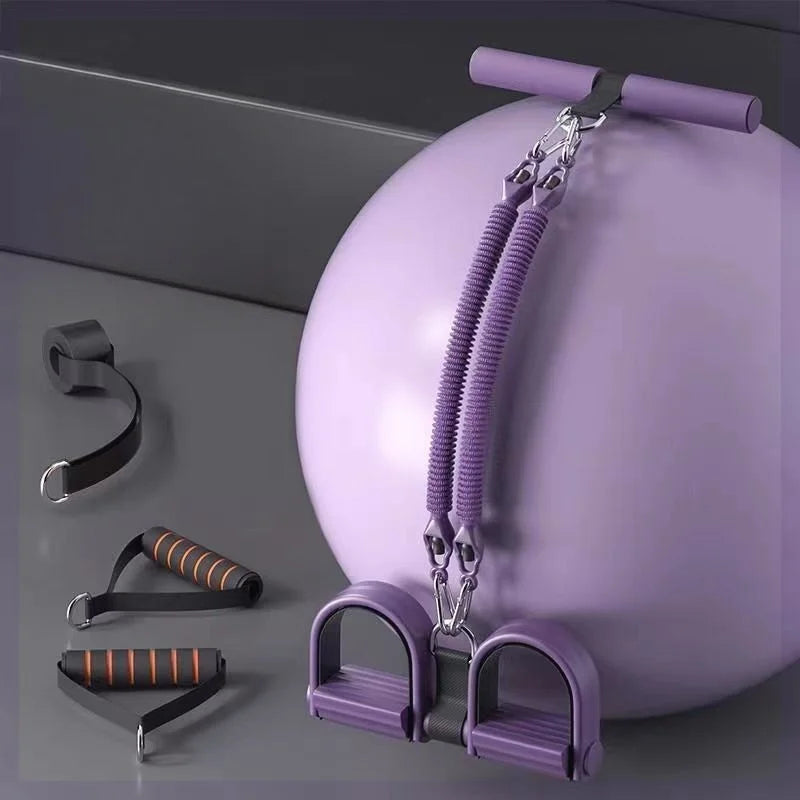
Its four-tube construction, two handles, and included door anchor provide several equipment components in one package. Review the manufacturer's instructions to determine which attachments and movements are appropriate for your particular setup.
Buyer Recommendation Matrix: Which Portable Pedal Resistance Band Fits Your Needs?
Rather than choosing a product based only on tube count or marketing claims, match the equipment to your travel habits, exercise experience, and training priorities.
For Frequent Business Travelers
Frequent travelers should prioritize:
- Compact dimensions that fit easily into luggage.
- Lightweight construction.
- Simple assembly and minimal setup time.
- Comfortable handles for short exercise sessions.
- Secure connections that can be inspected quickly.
A basic pedal resistance system may be sufficient if your main goal is to perform a few familiar movements in a hotel room.
For Vacation and Occasional Travelers
Occasional travelers may prefer equipment that balances affordability, versatility, and straightforward operation.
A multi-tube pedal trainer can be a practical choice when you want one accessory for several upper-body, lower-body, and core exercises without carrying separate weights.
For Beginners and Casual Fitness Users
Beginners should prioritize manageable tension, comfortable foam grips, stable foot pedals, and clear setup instructions.
A four-tube configuration can provide a useful starting point when the system is easy to inspect and operate. However, beginners should not assume that all four tubes must be used simultaneously.
For Experienced Users and More Challenging Workouts
Experienced users should pay particular attention to tube configuration, attachment durability, and the range of resistance options.
Check whether the system supports the movements you intend to perform. If your training requires heavy progressive loading, a compact elastic system may be insufficient as your primary strength-training equipment.
For People With Limited Storage Space
People living in apartments or smaller homes should prioritize compact dimensions and minimal accessories.
A pedal resistance trainer measuring approximately 52 × 26.5 cm, such as the listed four-tube model, provides a useful specification to consider when comparing available storage space. Confirm the actual packed dimensions before purchasing, since the listed product dimensions may not represent the complete package size.
For buyers considering this configuration, the Pedal Resistance Band – 4-Tube Full Body Workout Trainer includes four elastic tubes, foam-covered handles and pedals, and a door anchor. These features make it relevant for people looking for an integrated resistance setup for selected home and travel exercises.
What to Check Before Buying: Safety, Durability, and Maintenance
Portable elastic equipment is convenient, but its safety depends on correct positioning, appropriate tension, and regular inspection. A compact design should never be treated as maintenance-free.
Check Pedal Stability and Foot Placement
Before exercising, make sure your feet fit comfortably on the pedals and that the equipment remains stable during movement.
- Position your feet centrally and securely.
- Check that pedal surfaces are clean and dry.
- Avoid movements that cause the pedals to shift.
- Do not increase tension if your feet cannot remain stable.
- Use seated movements when standing exercises create balance difficulties.
Inspect Elastic Tubes and Attachment Points
Examine the resistance tubes before every session, especially when using equipment that has been stored in luggage or exposed to changing temperatures.
Look for:
- Small cracks or cuts in the elastic material.
- Fraying or visible deformation.
- Loose connectors or attachment points.
- Uneven stretching between tubes.
- Changes in elasticity or unusual surface damage.
Do not use damaged tubing. Replacing worn components according to the manufacturer's instructions is safer than continuing to exercise with visibly deteriorated equipment.
Use Safe Stretching and Exercise Techniques
Elastic tubes can recoil if they slip or become detached while under tension. Proper setup and controlled movement are therefore essential.
- Inspect the equipment before use.
- Start with low tension and increase gradually.
- Keep your face away from stretched tubing.
- Avoid overstretching beyond the manufacturer's recommended range.
- Do not release handles suddenly.
- Keep movements controlled throughout both lifting and lowering phases.
- Stop exercising if a connection becomes loose or unstable.
If using the included door anchor, follow its instructions and verify that the door, anchor position, and attachment are suitable before applying tension. Do not attach resistance equipment to an unstable or unsuitable surface.
How to Maintain Resistance Tubing During Travel
Proper storage helps reduce unnecessary wear on elastic materials.
- Wipe the equipment with a soft cloth when necessary.
- Allow the tubes to dry completely before storage.
- Avoid prolonged exposure to direct sunlight and excessive heat.
- Keep tubing away from sharp objects and abrasive surfaces.
- Avoid tight knots, sharp folds, or unnecessary compression.
- Follow the manufacturer's specific cleaning and maintenance instructions.
Pre-Purchase Checklist
Use this checklist before selecting a portable pedal resistance band:
- Does the tube configuration match your intended exercises?
- Are resistance options and adjustment instructions clearly explained?
- Is the tube material identified by the manufacturer?
- Are the pedals comfortable and stable?
- Do the handles provide a comfortable grip?
- Are tube-to-pedal and tube-to-handle connections secure?
- Are the dimensions suitable for your luggage or storage area?
- Are all included accessories clearly listed?
- Does the manufacturer provide maintenance and safety instructions?
- Is warranty coverage available and clearly explained?
What Portable Pedal Resistance Bands Cannot Replace
Portable pedal resistance equipment is useful for convenient resistance exercises, but it has limitations. Understanding these differences helps prevent unrealistic expectations and makes it easier to choose complementary fitness equipment.
Limited Maximum Resistance Compared With Gym Equipment
Elastic resistance systems generally have a different loading capacity from barbells, weight machines, and adjustable dumbbells. Even when multiple tubes are used, their available tension may not be sufficient for heavy strength-training exercises.
People whose primary goal is lifting progressively heavier loads may benefit from conventional strength equipment instead.
Resistance Depends on User Position and Movement
Unlike fixed-weight equipment, elastic resistance changes as the tubes stretch.
Two people performing the same exercise may experience different levels of difficulty because of differences in arm length, starting position, movement range, and tube elongation.
This variability makes proper technique and controlled positioning especially important.
Some Compound Exercises Are Difficult to Replicate
Pedal resistance bands can support selected squat variations and other full-body movements, but they do not necessarily reproduce the loading mechanics of heavy barbell squats, deadlifts, or other compound exercises.
They are better understood as compact supplemental training accessories rather than complete replacements for gym-based strength equipment.
When a Different Fitness Equipment Option Makes More Sense
Consider alternative equipment when your training objectives require features that a pedal resistance system does not provide.
- Choose loop resistance bands when your priority is glute activation, mobility, and simple lower-body exercises.
- Choose a tube resistance kit when you want interchangeable handles, anchors, or additional attachment options.
- Choose adjustable dumbbells when you need measurable external loads for progressive strength training.
- Choose a suspension trainer when you prefer bodyweight movements and have access to an appropriate anchor point.
- Choose gym equipment when your training requires heavier loading, specialized machines, or a broader range of strength-training options.
Other home fitness accessories can complement a compact training setup. For example, explore the lifestyle collection when comparing additional products for everyday home use and convenience.
Final Thoughts: Choosing a Portable Pedal Resistance Band for Travel
The right portable pedal resistance band should balance compact storage, appropriate elastic tension, comfortable handles, stable pedals, secure tube connections, and practical exercise versatility.
For frequent travelers, lightweight construction and quick setup may be the most important factors. Beginners should prioritize comfortable grips, manageable resistance, and simple instructions. Experienced users should examine resistance configurations and recognize the limitations of elastic training compared with heavier strength equipment.
A four-tube model with TPE and elastic construction, foam-covered handles and pedals, and a compact listed size of approximately 52 × 26.5 cm is one option worth considering for selected home and travel exercises. The included two handles and door anchor also provide additional setup components.
If this configuration matches your exercise preferences, take a closer look at the Pedal Resistance Band – 4-Tube Full Body Workout Trainer and review its specifications before deciding whether it fits your routine.
Ultimately, portable resistance equipment works best when its capabilities match your actual training needs. Choose a model that is comfortable, easy to maintain, and suitable for your preferred exercises rather than relying on tube count or exaggerated performance claims.
Pillar Article: Adjustable Pedal Resistance Workout Equipment: Buying Guide & Exercises