
Adjustable Pedal Resistance Workout Equipment: Buying Guide & Exercises
Choosing compact home workout equipment that supports multiple muscle groups without requiring a bulky gym setup can be challenging. Adjustable pedal resistance workout equipment offers a practical alternative by combining elastic resistance tubes, foot pedals, and exercise handles into a multifunctional training tool. Whether you want to strengthen your arms, shoulders, legs, or core, a pedal resistance trainer can help you incorporate resistance exercises into your daily routine.
However, not all pedal resistance trainers provide the same resistance range, comfort, or exercise flexibility. Understanding tube configurations, adjustment mechanisms, material quality, and ergonomic design can help you select equipment that matches your fitness goals.
This guide explains how pedal resistance workout equipment works, how to use it for different exercises, and what to evaluate before purchasing a compact resistance trainer for home workouts.
What Is Adjustable Pedal Resistance Workout Equipment?
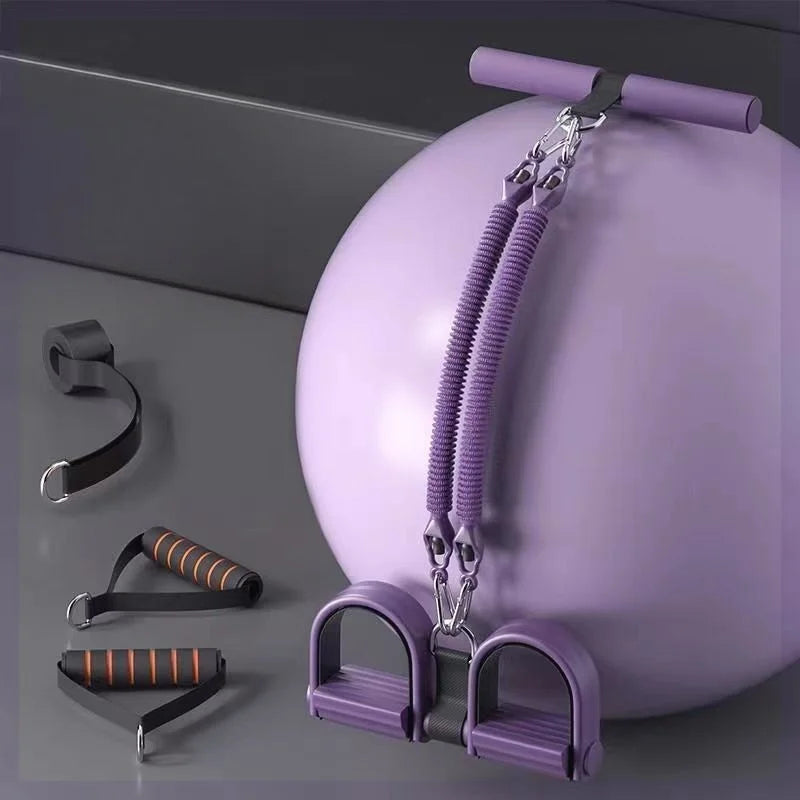
Adjustable pedal resistance workout equipment is a compact fitness device that uses elastic tubes connected to foot pedals and handles to create tension during exercise. Users stretch the tubes through controlled arm, leg, or torso movements, creating resistance that challenges muscles throughout the movement.
Unlike traditional free weights, this type of trainer relies on elastic tension rather than fixed weight plates. Its integrated pedal-and-handle design allows users to perform several exercise variations without assembling a large home gym.
How a Pedal Resistance Trainer Works
Elastic resistance tubes generate force as they stretch. When you pull the handles away from the foot pedals, the tubes lengthen and create tension that your muscles must overcome. Returning to the starting position under control also requires muscular effort.
The amount of resistance you experience generally depends on several factors:
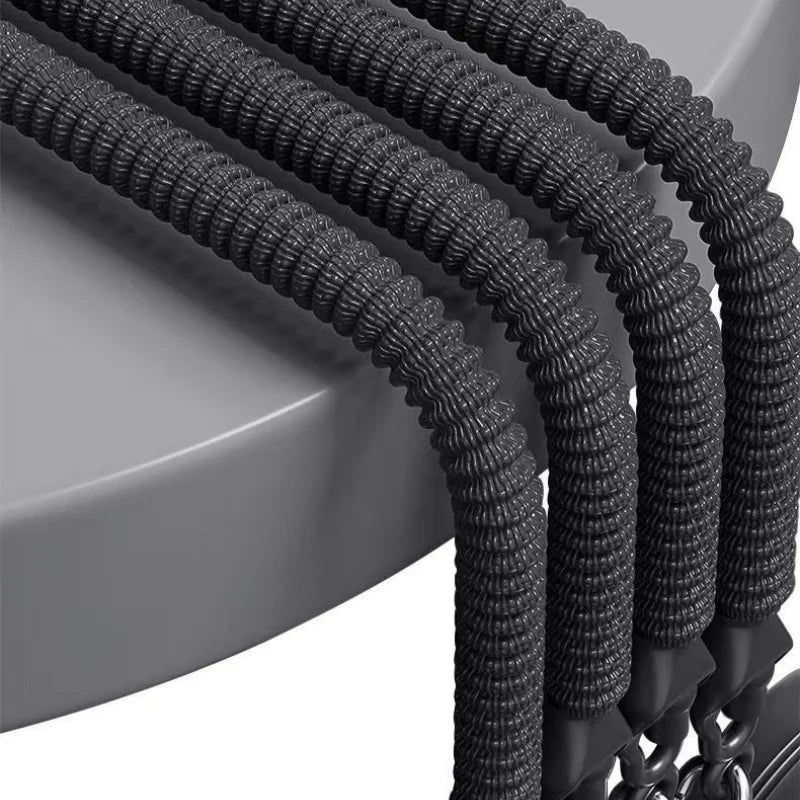
- Tube material: Different elastic materials have different stretching characteristics.
- Tube diameter and construction: These can influence the force required to stretch the tubes.
- Stretching distance: Greater extension usually increases elastic tension, although the relationship varies by product.
- Number of active tubes: Multiple tubes working together may increase the overall resistance.
- Exercise position: Your posture, limb length, and starting position affect how much tension you experience.
Resistance is therefore not necessarily constant throughout a repetition. The tension can increase as the tubes stretch farther, making controlled movement important.
Main Components: Foot Pedals, Resistance Tubes, and Handles
A pedal resistance trainer typically combines several components that work together to support different exercise movements.
- Elastic resistance tubes: Provide the tension used for pulling, pressing, stretching, and strengthening movements.
- Foot pedals: Create a stable contact point for the feet during exercises involving the arms or legs.
- Exercise handles: Allow users to grip the equipment comfortably while performing upper-body and core movements.
- Connection points: Join the elastic tubes to the handles and pedals. Their security is essential during exercise.
Foam-covered handles and pedals may improve grip comfort during repeated movements. However, comfortable padding does not automatically guarantee stability or durability, so the construction and connections should also be evaluated.
Who Can Benefit From This Type of Home Workout Equipment?
A compact pedal resistance trainer may be useful for several types of users:
- Beginners: People starting a resistance-training routine who prefer simple, controlled movements.
- Home fitness enthusiasts: Users who want additional resistance exercises without bulky equipment.
- Travelers: People who need lightweight exercise equipment that is convenient to carry and store.
- Small-space households: Users who want a compact workout tool that does not require a dedicated gym area.
- General fitness users: People looking to incorporate upper-body, lower-body, and core exercises into their routines.
Suitability depends on the available resistance, exercise technique, and individual training requirements. A compact elastic trainer should not be assumed to replace heavy free weights or specialized strength equipment.
How Adjustable Resistance Works: Understanding Tube Configurations
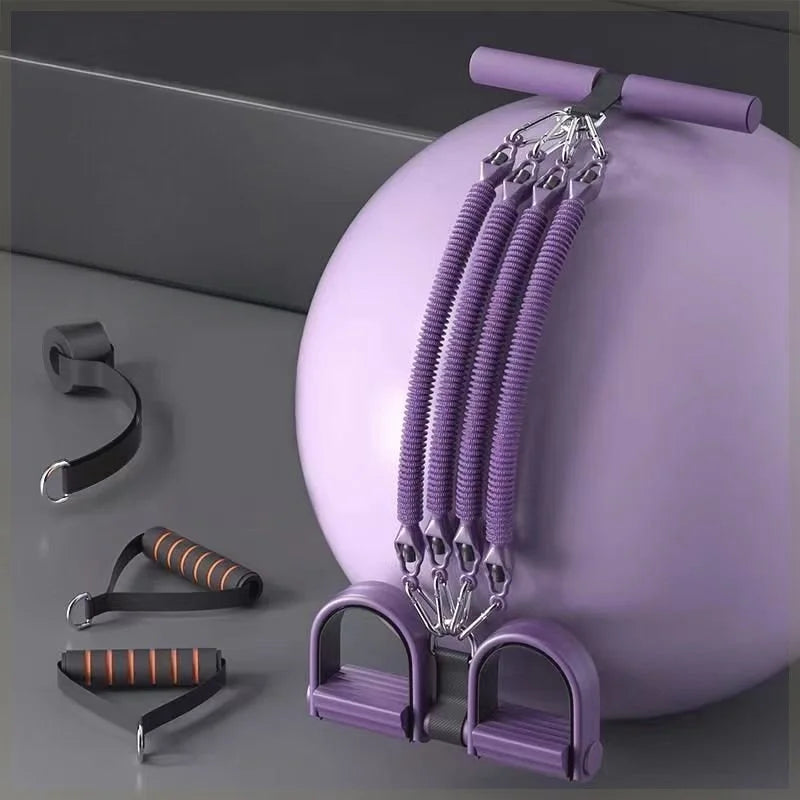
Tube configuration is an important factor when evaluating pedal resistance workout equipment. Some trainers use two tubes, while others incorporate four or six tubes. A greater number of tubes may provide more resistance combinations when the design allows users to select or combine them.
However, tube count alone does not establish how strong a resistance trainer is. Material properties, tube dimensions, elasticity, and the manufacturer's resistance specifications also matter.
How to Adjust Resistance on a Pedal Resistance Rope Trainer
Resistance adjustment methods vary by equipment design. Some products use detachable tubes or selectable connections, while others have fixed tube configurations.
Before attempting to change the resistance, check the manufacturer's instructions. If the trainer supports selectable tubes, use the following general procedure:
- Place the equipment on a stable surface and inspect the tubes and connectors.
- Identify the intended resistance adjustment mechanism.
- Select the appropriate configuration for your exercise and current ability.
- Reconnect any detachable components according to the manufacturer's instructions.
- Check that the handles, pedals, and connection points are secure.
- Perform a gentle test movement before beginning your workout.
Do not assume that every four-tube pedal resistance trainer offers independently adjustable resistance. Some products have a fixed configuration. Avoid modifying tubes, connectors, or attachment points unless the manufacturer specifically permits it.
2-Tube vs. 4-Tube vs. 6-Tube Resistance Configurations
Understanding the differences between common tube configurations helps shoppers evaluate the potential flexibility of a resistance trainer.
- 2-tube systems: Often have a simpler configuration and may suit basic resistance movements when their tension is appropriate.
- 4-tube systems: Can provide a broader range of training possibilities if the tubes can be combined or selected independently. A four-tube design may also have a fixed resistance configuration.
- 6-tube systems: May offer additional resistance combinations when the design supports adjustment. More tubes can also introduce additional setup considerations.
For a meaningful comparison, evaluate the actual resistance specifications and adjustment mechanism rather than relying exclusively on the tube count.
Understanding Resistance Levels for Different Fitness Levels
Beginners should start with manageable resistance that allows them to maintain proper posture and complete controlled repetitions. The goal is to develop movement consistency before increasing the difficulty.
As exercise technique improves, progression may involve:
- Increasing the number of repetitions.
- Adding another set.
- Using a greater range of motion when comfortable.
- Selecting a stronger resistance configuration if the trainer supports it.
- Reducing rest periods gradually when appropriate.
Progressive overload means gradually increasing the training challenge over time. It does not require stretching elastic tubes as far as possible. Excessive tube extension can increase the risk of equipment failure and loss of control.
Why Resistance Adjustability Matters for Workout Versatility
Resistance flexibility can make a compact trainer more practical for users who want to perform several types of exercise. A suitable resistance range may support lighter movements for shoulders and arms as well as more demanding pulling or leg exercises.
For example, a seated biceps curl may require a different level of tension from a controlled leg press. Equipment that supports appropriate resistance selection can make it easier to adapt exercises to individual needs.
For shoppers comparing compact options, the Pedal Resistance Band – 4-Tube Full Body Workout Trainer combines four elastic tubes with foot pedals and exercise handles for multiple pulling and stretching movements. Its documented design is a four-tube system; specific adjustable resistance levels are not provided in the product specifications.
Best Exercises Using Adjustable Pedal Resistance Workout Equipment
A pedal resistance trainer can support several exercise categories. The movements below demonstrate practical ways to use the handles and foot pedals for upper-body, lower-body, and core training.
Upper-Body Exercises With Pedal Resistance Equipment
Upper-body movements can target the biceps, shoulders, chest, and back. Begin with a comfortable resistance and focus on controlled movement.
1. Seated Biceps Curl
- Sit on a stable chair or the floor with your feet positioned securely on the pedals.
- Hold the handles with your palms facing upward.
- Keep your elbows close to your torso.
- Slowly bend your elbows to bring the handles toward your shoulders.
- Lower the handles under control.
Suggested beginner starting point: 8–12 repetitions for one or two sets.
2. Standing Row
- Stand with a stable stance and position the resistance trainer according to its intended use.
- Hold the handles with your arms extended comfortably.
- Pull the handles toward your torso while keeping your elbows close to your body.
- Maintain a neutral spine and avoid leaning backward.
- Return to the starting position slowly.
This movement can engage the upper back, shoulders, and arms. Only use a standing setup that is supported by the equipment's design and instructions.
3. Shoulder Press
- Position your feet securely on the pedals.
- Hold the handles near shoulder level.
- Press upward in a controlled motion without forcefully locking your elbows.
- Lower the handles slowly to the starting position.
Use a lighter resistance if your shoulders feel strained or you cannot maintain control.
4. Chest Press
A chest press variation may be possible when the trainer's setup allows a secure resistance path. Keep your torso stable, move the handles forward without excessive shoulder extension, and return slowly. Do not use an unsupported anchoring arrangement.
Lower-Body Exercises Using Foot Pedals
Foot pedals can provide a contact point for controlled lower-body exercises.
1. Seated Leg Extension
- Sit on a stable chair with your posture upright.
- Position your feet securely against the pedals.
- Extend one leg gradually against the resistance.
- Avoid forcefully locking the knee.
- Return to the starting position under control.
Repeat on the other side if the equipment setup permits unilateral movement.
2. Controlled Leg Press
- Sit in a stable position with the resistance trainer securely placed.
- Position both feet against the pedals.
- Press your legs forward gradually while maintaining comfortable knee alignment.
- Stop before your knees reach a forceful locked position.
- Return slowly without allowing the elastic tubes to snap back.
This variation can engage the quadriceps, glutes, and other lower-body muscles depending on the movement and resistance.
3. Seated Leg Curl Variation
Some pedal trainer setups may support a controlled leg-curl movement. If permitted by the product instructions, position the resistance so that the knee bends against tension without unstable pedal placement. Do not improvise a setup that causes the tubes or pedals to slip.
Core Exercises With a Multifunctional Resistance Rope
Core training involves maintaining trunk stability while moving the arms or legs. A pedal resistance trainer can be incorporated into selected controlled movements.
1. Seated Abdominal Pull
- Sit upright on a stable surface.
- Secure the equipment according to its instructions.
- Hold the handles in front of your torso.
- Engage your abdominal muscles while performing a small, controlled pulling movement.
- Return slowly without rounding your back excessively.
2. Controlled Torso Rotation
When a safe and supported setup is available, controlled torso rotations can incorporate elastic resistance. Keep the range of motion comfortable and avoid twisting forcefully through the lower back.
3. Anti-Rotation Core Hold
If the equipment's approved setup permits resistance from the side, hold the handles in front of your torso while resisting unwanted rotation. Keep your hips and shoulders aligned. Do not use an improvised door attachment or unstable anchor.
How to Build a Simple Full-Body Resistance Workout
A beginner-friendly routine can combine upper-body, lower-body, and core movements in a manageable sequence.
- Warm-up: 5 minutes of gentle walking or comfortable mobility movements.
- Seated biceps curls: 8–12 repetitions.
- Standing rows: 8–12 repetitions, if supported by the equipment setup.
- Shoulder presses: 8–10 controlled repetitions.
- Seated leg extensions: 8–12 repetitions per leg.
- Controlled leg presses: 8–12 repetitions.
- Core exercise: 8–10 controlled repetitions or a short comfortable hold.
Start with one set of each exercise and rest approximately 30–60 seconds between movements, or longer if needed. If the routine feels manageable and your technique remains consistent, gradually progress to two sets.
Train at a comfortable pace rather than rushing through repetitions. Allow recovery between sessions, especially when you are new to resistance training.
For those interested in trying these movements with compact equipment, the four-tube pedal resistance workout trainer combines foot pedals, foam-covered handles, and elastic tubes in one portable design.
How to Use Foot Pedals and Exercise Handles Correctly
Proper equipment positioning helps improve exercise control and reduces the likelihood of slipping or losing balance. Before starting, inspect the resistance tubes and ensure all connections are secure.
Foot Pedal Ergonomics and Proper Foot Placement
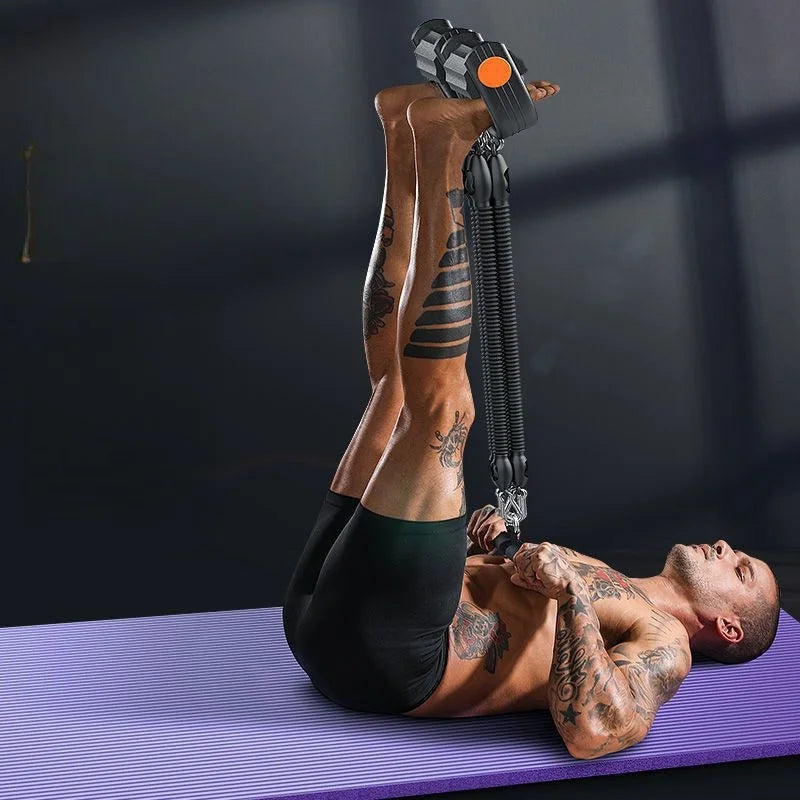
Foot placement should provide stable contact with the pedals throughout the movement.
- Position your feet securely within the intended pedal contact area.
- Keep your feet aligned comfortably with your knees.
- Avoid placing your feet near unstable edges.
- Maintain contact with the pedals throughout each repetition.
- Use a stable chair or floor position when performing seated exercises.
Foot pedals with comfortable padding may improve the exercise experience, but users should still evaluate pedal dimensions, grip, and stability.
Choosing Comfortable and Ergonomic Exercise Handles
Exercise handles influence grip comfort and movement control. When evaluating a resistance trainer, consider:
- Grip surface: Foam covering can help provide a comfortable contact surface.
- Handle dimensions: The handles should be suitable for your hand size.
- Connection quality: Handles should attach securely to the resistance tubes.
- Grip stability: The surface should remain manageable during controlled repetitions.
- Material condition: Foam and connectors should not show obvious damage.
Comfortable handles can support consistent use, but they should not be considered a substitute for proper technique or equipment inspection.
Common Setup and Exercise Mistakes to Avoid
Several common mistakes can make resistance-tube exercises less controlled.
- Incorrect foot positioning: Unstable pedal contact can interfere with movement control.
- Excessive tube stretching: Stretching beyond the intended range can damage elastic materials.
- Loose connections: Unsecured handles or attachments can separate during exercise.
- Uncontrolled repetitions: Allowing the tubes to snap back can reduce control and increase injury risk.
- Poor posture: Excessive arching, rounding, or twisting can place unnecessary strain on the body.
- Using damaged tubes: Cracks, cuts, thinning, or other visible wear can indicate that equipment should no longer be used.
Inspect the equipment before every workout. Stop immediately if a tube, handle, pedal, or connection becomes unstable or shows signs of damage.
How to Choose the Best Adjustable Pedal Resistance Workout Equipment
The best pedal resistance trainer is one that matches your intended exercises, available space, comfort preferences, and required resistance. A practical buying decision should focus on the product's actual specifications rather than broad marketing claims.
Resistance Range and Adjustment Mechanism
Resistance range is one of the most important purchasing considerations.
Check whether the product provides:
- A clearly documented resistance range.
- Selectable or adjustable resistance configurations.
- Detachable tubes or fixed resistance construction.
- Suitable tension for your intended exercises.
- Clear instructions for changing resistance safely.
If resistance levels are not specified, avoid assuming the product can support advanced or heavy strength-training requirements.
Tube Material, Elasticity, and Durability
Resistance tubes must withstand repeated stretching. Material specifications and construction quality can influence the equipment's durability.
When evaluating a product, look for:
- Clearly identified tube materials.
- Consistent elastic construction.
- Secure attachment points.
- Protective features where provided.
- Manufacturer care and maintenance instructions.
The featured four-tube pedal resistance trainer uses TPE, elastic material, and foam. Its construction is designed for repeated fitness sessions, although actual service life depends on frequency of use, stretching practices, storage conditions, and maintenance.
Foot Pedal Stability and Handle Comfort
Comfort and stability affect how easily you can perform exercises.
Consider the following:
- Whether the pedals provide sufficient contact area for your feet.
- Whether the pedal surface helps maintain grip.
- Whether the handles feel comfortable during repeated repetitions.
- Whether tube connections remain secure during movement.
- Whether the equipment supports your preferred exercise positions.
Foam-covered handles and foot pedals may be beneficial for users who prioritize comfort during home resistance training.
Portability, Storage, and Space Requirements
Compact equipment can be useful for people who do not have a dedicated workout room.
Before purchasing, consider:
- The overall dimensions of the equipment.
- Whether it can be stored in a drawer, cabinet, or gym bag.
- How quickly it can be set up for exercise.
- Whether its weight and size are practical for travel.
- Whether sufficient space is available for the intended movements.
A lightweight resistance trainer can make it easier to exercise in different locations. However, portability should not take priority over safe positioning and sufficient room to complete each movement.
Choosing Equipment for Beginners, Intermediate Users, and Experienced Trainees
Different fitness levels require different resistance and exercise considerations.
Beginners: Look for manageable tension, comfortable handles, stable pedals, and clear instructions. Simple exercises such as seated curls and controlled leg extensions can help develop movement familiarity.
Intermediate users: Consider equipment that supports a suitable range of exercises and resistance options. The ability to adapt tension may be helpful when progressing through a routine.
Experienced trainees: Evaluate the maximum resistance and available exercise variations carefully. A compact pedal trainer may complement an existing strength program, but it may not provide sufficient loading for advanced heavy-resistance exercises.
Quick Buying Checklist: What to Check Before Purchasing
Use this checklist to compare pedal resistance workout equipment before making a purchase.
- Clearly specified resistance adjustment mechanism.
- Suitable resistance range for intended exercises.
- Appropriate number and configuration of resistance tubes.
- Durable elastic tube construction.
- Comfortable ergonomic exercise handles.
- Stable foot pedals with suitable grip.
- Secure tube connections and attachment points.
- Compact design and convenient storage.
- Clear usage and maintenance instructions.
- Product dimensions and included accessories.
For shoppers looking for a compact four-tube system, the Pedal Resistance Band – 4-Tube Full Body Workout Trainer offers a combination of elastic resistance tubes, foam-covered handles, and foot pedals.
Featured product specifications:
- Design: Four-tube pedal resistance system.
- Material: TPE, elastic material, and foam.
- Size: Approximately 52 × 26.5 cm.
- Colors: Black and Purple.
- Training areas: Arms, shoulders, waist, abdomen, and legs.
- Suitable for: Men and women.
- Package includes: 1 pedal tension rope, 2 handles, and 1 door anchor.
These specifications make it a practical option for shoppers seeking compact equipment for general resistance exercises. The listed specifications do not establish a numerical resistance range, maximum load rating, or independently selectable tube tension.
Explore the four-tube pedal resistance trainer and review its product details.
Adjustable Pedal Resistance Equipment vs. Traditional Resistance Bands
Pedal resistance trainers and traditional resistance bands both use elastic tension to support strength exercises. However, their designs can affect the range of movements they support and how they are used.
Key Differences in Design and Exercise Applications
- Pedal resistance trainers: Typically integrate foot pedals, elastic tubes, and exercise handles into one compact system.
- Traditional resistance bands: May include flat bands, loop bands, or resistance tubes with separate handles. They often require users to choose or configure their own anchoring positions.
- Integrated pedal systems: Can provide a convenient contact point for selected seated and pulling exercises.
- Traditional bands: May offer broader exercise flexibility depending on their length, resistance, and available attachments.
The better choice depends on your workout style. Users who prefer integrated foot pedals may find pedal resistance equipment convenient, while those who want a broader selection of anchoring options may prefer traditional resistance bands.
Advantages and Limitations of Pedal Resistance Trainers
Advantages
- Compact design that is convenient for storage.
- Integrated foot pedals and handles.
- Multiple exercise applications for upper-body, lower-body, and core movements.
- Lightweight construction that can be practical for travel.
- Resistance-based training without bulky weight equipment.
- Potentially convenient for simple home exercise routines.
Limitations
- Resistance capacity may be limited compared with heavy free weights or gym machines.
- Elastic tension changes as the tubes stretch.
- Exercise options depend on the trainer's design and approved setup.
- Some models have fixed tube configurations rather than adjustable resistance levels.
- Elastic tubes require regular inspection and careful storage.
- Improper anchoring can create safety risks.
When a Multifunctional Pedal Trainer Makes Sense
A pedal resistance trainer may be a sensible choice when you want to add light-to-moderate resistance exercises to a home workout routine without investing in large equipment.
It can be especially useful when:
- You have limited workout space.
- You prefer simple, portable exercise equipment.
- You want to combine arm, leg, and core exercises in one routine.
- You are building a general fitness habit.
- You want a resistance-based complement to walking, mobility work, or bodyweight exercise.
For people exploring other compact wellness products, the Body Care and Health Devices collection provides a broader selection of home-use devices.
Is Adjustable Pedal Resistance Workout Equipment Worth Buying?
Adjustable pedal resistance workout equipment can be worth considering if your primary goal is convenient, compact resistance training. Its value depends on whether the resistance, ergonomics, and supported exercises match your workout requirements.
For general fitness users, a pedal resistance trainer can offer a convenient way to exercise several muscle groups without requiring a large gym setup.
Who Should Consider Buying a Pedal Resistance Trainer?
A pedal resistance trainer may be suitable for:
- People starting a home resistance-training routine.
- Users who prefer compact workout equipment.
- Travelers who want portable exercise tools.
- Individuals interested in simple upper-body and lower-body exercises.
- Fitness enthusiasts seeking an additional resistance-training option.
People with joint injuries, significant mobility limitations, or medical conditions affecting exercise tolerance should seek appropriate professional guidance before beginning a new resistance-training routine.
What to Expect From a Compact Home Resistance Trainer
A compact resistance trainer can support a variety of controlled exercises, but expectations should remain realistic.
It can provide resistance for pulling, pressing, stretching, and selected core movements. It may help users develop a consistent exercise routine and complement other physical activities.
However, results depend on training consistency, exercise technique, resistance selection, recovery, and individual fitness levels. The equipment alone does not guarantee muscle growth, weight loss, or specific body-shaping outcomes.
For shoppers who prioritize compact construction, integrated pedals, and multiple exercise applications, the Pedal Resistance Band – 4-Tube Full Body Workout Trainer is a practical option to evaluate against the buying checklist.
Frequently Asked Questions
What Is Adjustable Pedal Resistance Workout Equipment and How Does It Work?
Adjustable pedal resistance workout equipment uses elastic tubes connected to foot pedals and exercise handles to generate tension during movement. Users perform controlled pulling, pressing, and stretching exercises against elastic resistance. The available resistance depends on the tube configuration, material, and adjustment mechanism.
How Do You Adjust Resistance on a Pedal Resistance Rope Trainer?
Resistance adjustment depends on the equipment's design. Some trainers allow users to select or combine detachable tubes, while others have fixed configurations. Follow the manufacturer's instructions, check every connection, and test the selected resistance with a gentle movement before exercising.
What Is the Difference Between 2-Tube, 4-Tube, and 6-Tube Pedal Resistance Equipment?
Tube count indicates how many elastic tubes are included in the system. More tubes may provide additional resistance combinations when the design allows independent selection. However, tube count alone does not determine resistance strength; tube material, diameter, elasticity, and configuration also matter.
Can Adjustable Pedal Resistance Workout Equipment Train Your Arms, Legs, and Core?
Yes. Depending on its design, a pedal resistance trainer can support exercises such as biceps curls, shoulder presses, seated leg extensions, controlled leg presses, and selected core movements. Proper positioning and controlled repetitions are essential for safe use.
How Do You Choose the Right Pedal Resistance Workout Equipment for Beginners?
Beginners should prioritize manageable resistance, comfortable handles, stable pedals, secure connections, and clear usage instructions. Choose equipment that supports your intended exercises and allows you to maintain proper technique without excessive tube stretching.
Conclusion: Choosing a Compact Resistance Trainer for Home Workouts
The best adjustable pedal resistance workout equipment combines suitable resistance, comfortable handles, stable foot pedals, durable elastic tubes, and convenient portability. These features can support a range of upper-body, lower-body, and core exercises while making resistance training more accessible in smaller spaces.
When comparing equipment, focus on the actual resistance range, tube configuration, adjustment mechanism, material specifications, and supported movements rather than relying on tube count or marketing claims alone.
If you are looking for a compact multifunctional resistance trainer for general home workouts, the Pedal Resistance Band – 4-Tube Full Body Workout Trainer combines four elastic tubes, foam-covered handles, foot pedals, and a portable design. Reviewing its specifications can help you determine whether it matches your preferred exercise routine and fitness requirements.
With appropriate resistance, consistent practice, and controlled movement, a pedal resistance trainer can become a useful addition to a practical home fitness routine.
Related Articles:
- Portable Pedal Resistance Band for Travel: How to Choose the Right One
- 15 Pedal Resistance Band Workouts for a Full-Body Home Routine
- Pedal Resistance Band Exercises for Abs: 8 Beginner-Friendly Moves to Strengthen Your Core at Home
- Multifunctional Pedal Resistance Rope: Compare 2, 4 & 6-Tube Systems
- Lightweight Pedal Tension Rope for Home: A Small-Space Buying Guide
- How to Use Pedal Resistance Bands: 8 Beginner-Friendly Exercises
- 15 Full Body Resistance Band Exercises for a Complete Home Workout
- Four Tube Elastic Resistance System: Features, Benefits & Buying Guide
- 15 Pedal Resistance Band Workouts for a Full-Body Home Workout
- Arm and Leg Workout at Home: 8 Resistance Band Exercises for Full-Body Strength