

Professional Facial Skin Analyzer Device: How to Choose the Right Technology
A professional facial skin analyzer device can turn a routine visual consultation into a more structured assessment by combining facial imaging, measurable skin indicators, software analysis, and repeatable documentation. However, professional analyzers are not interchangeable. Imaging methods, spectrum coverage, camera resolution, AI interpretation, reporting tools, data tracking, and workflow integration can vary significantly.
The right choice is therefore not simply the machine that advertises the largest number of skin metrics. A better approach is to evaluate how the device captures information, how consistently scans can be repeated, how results are presented, and whether the technology fits the way your salon, spa, aesthetic practice, or skincare business works.
This guide explains what professional facial skin analyzers measure, how RGB, polarized, UV, and multispectral imaging differ, how AI-assisted analysis should be interpreted, how to standardize scans, and what to verify before purchasing.
What Is a Professional Facial Skin Analyzer Device?
A professional facial skin analyzer device is an imaging-based system designed to help skincare professionals assess facial skin characteristics in a structured digital format. Instead of relying only on what can be observed under ordinary lighting, the system captures facial images and applies imaging technologies and software analysis to identify patterns involving characteristics such as pigmentation, pores, wrinkles, moisture, sebum, skin tone, acne, and elasticity.

How Professional Skin Analysis Fits Into a Consultation
A professional skin analysis can be used at the beginning of a consultation to establish a documented baseline. The practitioner can then discuss visible and image-derived observations with the client, connect those observations to skincare recommendations, and retain the results for future comparison.
This workflow can be especially useful when changes are difficult to judge consistently with the naked eye. Digital images and structured reports give professionals another reference point when discussing skin condition and monitoring changes over time.
What These Devices Can Measure
Depending on the system, a facial analyzer may assess pigmentation, acne, pores, wrinkles, skin texture, redness, tone, sebum, moisture, and elasticity. The exact indicators, scoring methods, imaging modes, and interpretation algorithms should always be verified with the manufacturer rather than assumed from generic terms such as “AI” or “3D analysis.”
Cosmetic Assessment vs. Medical Diagnosis
A skin analyzer should be treated as a cosmetic assessment and consultation-support tool unless it has a specific medical indication and appropriate regulatory authorization. Image-derived scores and visual maps can help organize observations, but they should not automatically be presented as proof of a medical condition or diagnosis.
For professional practices, this distinction matters. A responsible consultation explains what the system observes, what the result may suggest for cosmetic skincare planning, and where professional or medical evaluation is necessary.
What Does a Professional Facial Skin Analyzer Measure?
The value of a professional analyzer depends partly on the quality and usefulness of its measurements. More metrics are not automatically better. Each indicator should be understood in terms of what the imaging system can actually observe and how the software converts image information into a result.
Facial Pigmentation and UV-Related Patterns
Imaging systems can help visualize differences in pigmentation and uneven tone. Some technologies are also designed to reveal patterns that are less apparent under ordinary visible light. When evaluating a device, ask which imaging modes are used, what type of pigmentation analysis the software provides, and whether results can be compared consistently between sessions.
Pores and Skin Texture
High-resolution facial imaging can make pores and surface texture easier to visualize. A useful professional system should help distinguish an image-based observation from a generalized score. Camera resolution, lighting, facial positioning, and image processing can all influence how texture appears in a scan.
Wrinkles and Fine Lines
Facial imaging can document the appearance and distribution of wrinkles and fine lines. For follow-up consultations, consistent imaging conditions are important because changes in lighting, facial expression, camera distance, and positioning can alter the apparent appearance of lines.
Redness and Visible Skin Tone Variation
Digital facial imaging can help professionals identify areas of visible redness or tone variation. These observations can support consultation discussions, but image-based redness should not automatically be interpreted as a medical diagnosis.
Sebum and Oil Distribution
Sebum-related analysis can provide information about oil distribution when the analyzer and its software support this measurement. Professionals should confirm how the system generates the result and what preparation is required before scanning.
Skin Hydration and Related Indicators
Moisture or hydration-related results can be useful when discussing skincare routines and changes over time. However, buyers should verify whether a device directly measures a physical property or generates an image-derived indicator. Understanding the underlying methodology is more useful than relying on a single numerical score.
For businesses adding digital assessment to a broader professional setup, the Skin and Beauty Care Devices collection provides a relevant category for exploring additional skincare equipment.
How Facial Skin Analyzer Imaging Technologies Work
RGB Imaging: Visible-Light Facial Analysis
RGB imaging uses visible-light information to capture conventional facial images. It is useful for documenting visible characteristics such as skin tone, texture, pores, wrinkles, and other surface-level features. Because it resembles ordinary visual photography, RGB imaging can provide an intuitive baseline for consultations.
Polarized Light Imaging: Reducing Surface Reflection
Polarized imaging uses controlled polarization to alter the way reflected light is captured. This can reduce certain surface reflections and make particular visual patterns easier to examine. For professional buyers, the important question is not simply whether polarized imaging is included, but what information the system derives from it and how that information contributes to the consultation.
UV Imaging: Revealing Subsurface and Fluorescence-Related Patterns
UV-based imaging can reveal patterns that may not be apparent in standard visible-light photography. Depending on the system, UV-related imaging can be used to examine fluorescence or other visual characteristics associated with skin surface and subsurface patterns.
Because UV imaging is a specialized imaging method, buyers should request clear documentation describing the wavelengths or imaging conditions used and exactly how the software interprets the resulting images.
Multispectral Imaging: Combining Multiple Light Conditions
Multispectral imaging captures information under multiple spectral conditions rather than relying on a single conventional image. This approach can provide a broader set of image data for analyzing different skin characteristics.
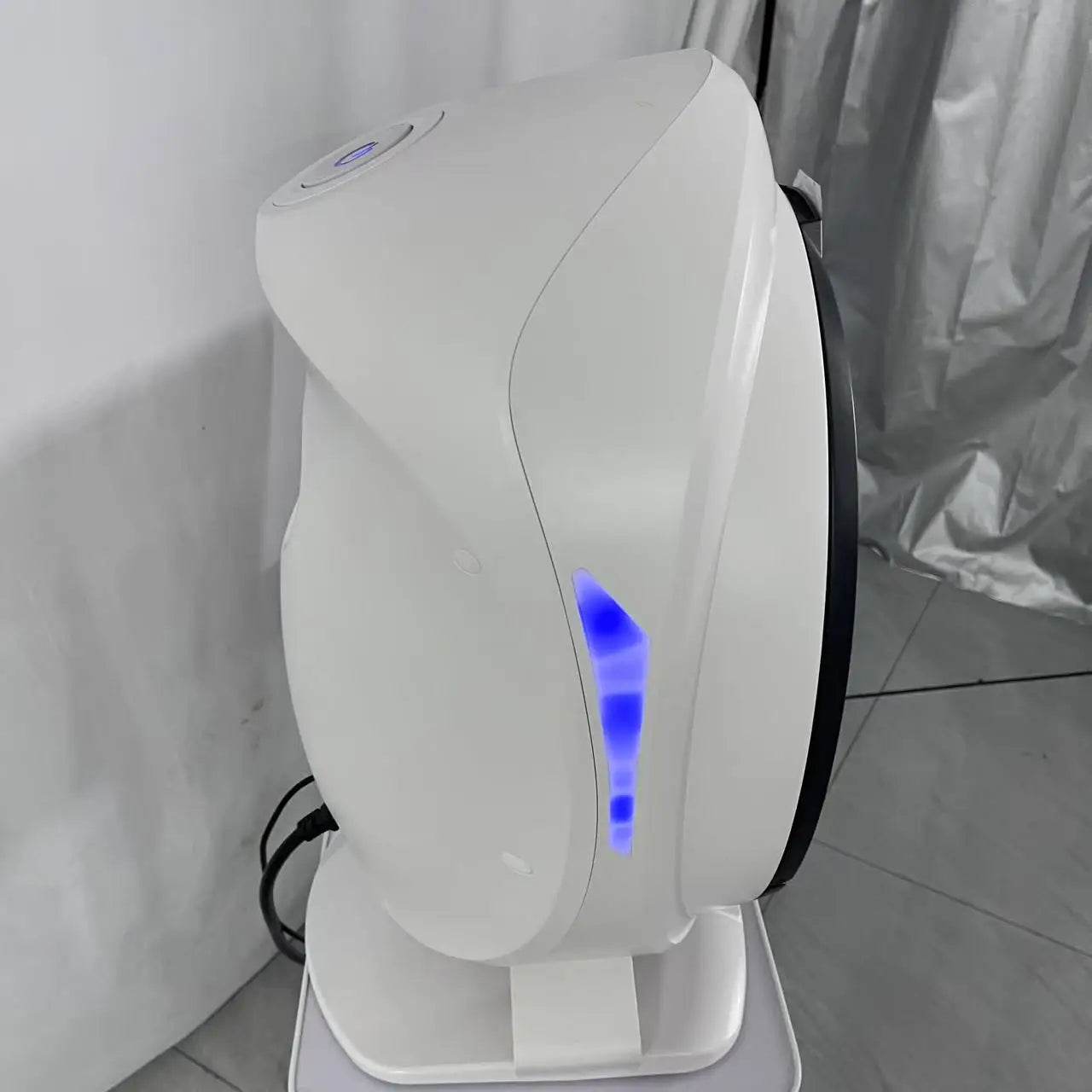
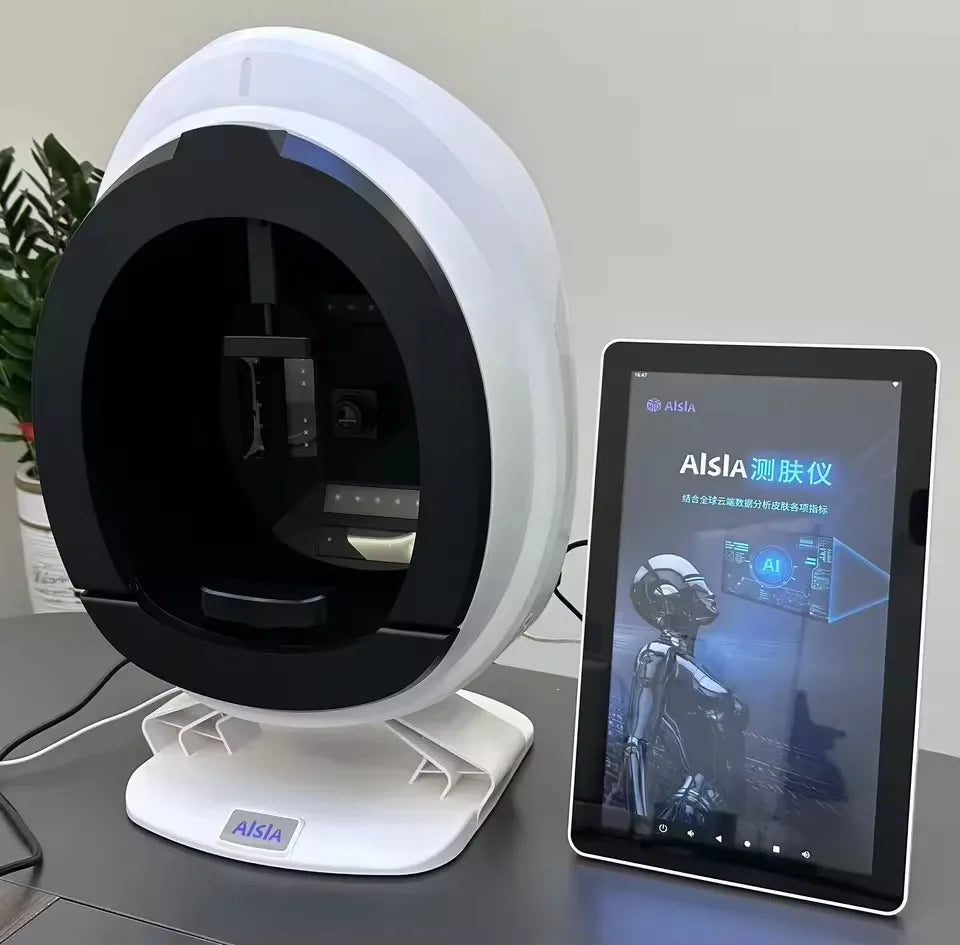
The KentDo AI Skin Analyzer for Professional 3D Facial Skin Analysis uses 8-spectrum imaging alongside AI-powered analysis and a 36MP industrial HD camera. According to the supplied product specifications, it is designed for professional beauty salons, skincare clinics, and skin management businesses.
How Artificial Intelligence and Computer Vision Interpret Images
AI and computer vision can process facial images and transform image patterns into structured indicators, scores, maps, or reports. The practical value depends on how the algorithms are designed, trained, validated, and implemented in the software.
For that reason, “AI-powered” should be treated as a description of functionality rather than automatic evidence of accuracy. A professional buyer should ask what the AI analyzes, how results are validated, whether software versions affect results, and whether the manufacturer provides meaningful technical documentation.
RGB vs. Polarized vs. UV vs. Multispectral Skin Analysis
Technology Comparison Matrix
| Technology | Primary Role | Typical Strength | Important Limitation | Professional Consideration |
| RGB | Visible facial imaging | Natural documentation of visible skin characteristics | Limited to information available in visible-light images | Useful as a baseline and for client communication |
| Polarized | Controlled reflected-light imaging | Can reduce certain surface reflections | Results depend on imaging setup and interpretation | Useful when controlled imaging adds information beyond standard photography |
| UV | UV-related facial imaging | Can reveal patterns not readily visible under ordinary light | Requires specialized imaging conditions and careful interpretation | Verify wavelengths, methodology, and reporting claims |
| Multispectral | Multiple spectral imaging conditions | Broader image information for skin analysis | More imaging modes do not automatically prove greater accuracy | Evaluate actual indicators, repeatability, and software methodology |
Which Imaging Approach Fits Different Professional Needs?
A solo aesthetician may prioritize ease of use, repeatable scans, and straightforward reports. A high-volume spa may place greater importance on fast workflows and client-friendly presentation. A clinic may prioritize technical documentation, data management, repeatability, and clear boundaries around medical interpretation.
Businesses focused heavily on consultation and skincare recommendations may place particular value on reports that clearly connect image observations with client discussions.
Why More Imaging Modes Do Not Automatically Mean Better Accuracy
Additional imaging modes can provide more information, but accuracy depends on much more than the number of spectra or cameras. Image consistency, calibration, lighting, camera positioning, software processing, algorithm validation, and interpretation all influence the usefulness of the final result.
How Accurate Are Professional Facial Skin Analyzer Devices?
Accuracy is one of the most important questions to ask before purchasing a professional facial skin analyzer. However, accuracy should not be treated as a single marketing number. Professionals should evaluate both accuracy and repeatability, then examine how the manufacturer supports its claims.
Accuracy vs. Repeatability: What Professionals Should Check
Accuracy concerns how closely a measurement represents the characteristic it is intended to assess. Repeatability concerns whether similar conditions produce consistent results. For a consultation system used to track changes over time, repeatability is particularly important because inconsistent scans can make genuine changes harder to distinguish from imaging variation.
How Lighting, Camera Position, and Skin Preparation Affect Results
Lighting can change how pigmentation, redness, texture, and wrinkles appear. Camera distance and facial angle can also alter the image. Skin preparation matters because temporary surface conditions may affect what the camera sees.
For this reason, a professional workflow should use standardized scanning conditions whenever results are intended for longitudinal comparison.
How AI Claims Should Be Evaluated
Ask the manufacturer what the AI actually does. Does it segment facial regions? Identify visual patterns? Generate scores? Compare images? Produce recommendations? The answer should be specific.
Also ask whether the software methodology is documented, whether results can change after software updates, and whether validation information is available. Transparent explanations are more useful than broad claims that a system is simply “smart” or “highly accurate.”
Manufacturer Validation, Technical Documentation, and Evidence
Before purchasing, request technical specifications, imaging methodology, supported indicators, software information, sample reports, warranty details, and available validation documentation. If the manufacturer makes accuracy or AI-performance claims, ask what evidence supports them.
How to Standardize Facial Skin Analyzer Scans
Standardization is essential when the goal is to compare a client's skin condition across multiple consultations.
Prepare the Client and Skin Before Imaging
Use a consistent preparation routine for each assessment. Document meaningful variables such as recent cleansing, skincare application, or other factors that could alter the appearance of the skin surface.
Control Lighting and Environmental Conditions
Use the same imaging environment whenever possible. Avoid unnecessary changes in ambient lighting and keep the scan area consistent. The goal is to reduce environmental variation between baseline and follow-up images.
Standardize Camera Distance, Position, and Facial Expression
Keep the client's head position, camera distance, facial angle, and expression as consistent as practical. Small positioning changes can affect how pores, wrinkles, facial contours, and tone are represented.
Use Consistent Imaging Settings for Follow-Up Scans
If the system allows imaging settings to be controlled, use the same settings for repeat assessments. Consistency makes longitudinal comparisons more meaningful.
Document Variables That Could Change the Results
Keep notes about factors that could influence an individual scan. This creates context around the images instead of treating every numerical difference as a confirmed change in skin condition.
How AI Skin Analysis Results Should Be Interpreted
From Image Data to Skin Scores and Visual Maps
Professional software may transform captured facial images into scores, color-coded maps, categories, or written reports. These outputs can make complex image information easier to communicate, particularly during a consultation.
Understanding Thresholds, Scores, and Relative Rankings
A score is meaningful only when its methodology is understood. Professionals should determine whether a number represents an absolute measurement, an image-derived estimate, a relative ranking, or a software-defined category.
When comparing results over time, the same device, imaging conditions, and software workflow should ideally be maintained. This reduces the risk of interpreting technical variation as a real change in skin condition.
Why AI Results Need Professional Context
AI analysis should support professional judgment rather than replace it. A practitioner can combine the digital report with the client's concerns, visual examination, skincare history, and consultation goals to produce a more useful recommendation.
Reports, Client Communication, and Tracking Results Over Time
A strong professional skin analyzer should fit the entire consultation workflow, not just the scanning step. Reports can give clients a visual explanation of what was observed and create a reference point for future assessments.
What a Useful Professional Skin Analysis Report Should Include
A useful report should clearly identify the assessed indicators and make results understandable without exaggerating their meaning. Ideally, it should provide visual references alongside relevant scores or observations.
Before-and-After and Longitudinal Tracking
Tracking results over time is one of the strongest practical reasons to use digital analysis. Consistent baseline and follow-up images can help professionals discuss changes in pigmentation, pores, wrinkles, tone, moisture-related indicators, or other supported metrics.
Using Reports to Explain Skincare Recommendations
Reports can help shift a consultation from generalized recommendations toward a discussion based on documented observations. The professional can explain which characteristics are most relevant, what the client is currently doing, and why a particular skincare approach may be appropriate.
Software, Client Profiles, Exporting, and Data Management
Before purchasing, confirm how client profiles are stored, whether reports can be retained, what data can be exported, and how historical images are accessed. Privacy and data-handling practices should be evaluated alongside imaging specifications.
For businesses building a broader professional beauty technology setup, related equipment can be explored through the Body Care and Health Devices collection.
One example worth evaluating against these criteria is the AI Skin Analyzer for Professional 3D Facial Skin Analysis. Its supplied specifications include 36MP HD imaging, 8-spectrum imaging, AI analysis, digital reporting, image tracking, and analysis of acne, pigmentation, pores, wrinkles, moisture, sebum, tone, and elasticity.
Professional Facial Skin Analyzer Buying Criteria
1. Imaging Methodology and Measurement Coverage
Start by identifying exactly how the device captures facial information. Confirm whether it uses RGB, polarized, UV, multispectral, or another approach. Then determine which skin indicators are actually supported by the software.
2. Measurement Repeatability and Scan Standardization
Ask how the manufacturer recommends positioning the client, controlling lighting, preparing the skin, and repeating scans. A device that is easy to standardize may be more useful for ongoing client tracking than one with more theoretical features but a difficult workflow.
3. AI and Computer Vision Transparency
Look beyond the phrase “AI skin analysis.” Request an explanation of what the algorithms identify, how outputs are generated, and what documentation supports the system's analysis claims.
4. Software, Reporting, and Client History
Evaluate report quality, historical tracking, client profiles, data management, and any available export functionality. These capabilities can directly affect how useful the device becomes after the initial purchase.
5. Workflow Integration and Ease of Use
Consider how long a scan takes, how much training staff need, how results are presented, and whether the workflow fits your consultation process. A technically sophisticated system still needs to be practical in daily use.
6. Privacy, Data Handling, and Security
Facial images and client profiles are sensitive business data. Confirm where information is stored, who can access it, how long it is retained, and what controls are available for managing client records.
7. Warranty, Training, Technical Support, and Updates
Verify warranty coverage, training resources, technical support, and software-update policies. The supplied product information for the MYOSLIM AI skin analyzer specifies a one-year warranty and CE and RoHS certification.
8. Total Cost of Ownership
Do not evaluate price based only on the machine itself. Consider training, software requirements, support, maintenance, accessories, future updates, data management, and the operational time required for each assessment.
Pros and Cons of a Professional Facial Skin Analyzer
- Pros: Creates a structured digital baseline for consultations.
- Pros: Can evaluate multiple skin indicators from facial imaging.
- Pros: Supports repeat assessments and visual comparison when scans are standardized.
- Pros: Reports can make consultation findings easier to communicate.
- Pros: AI-assisted analysis can organize complex image information into structured outputs.
- Cons: Results can be affected by lighting, positioning, preparation, and other imaging variables.
- Cons: AI labels do not automatically establish clinical accuracy.
- Cons: Different systems may use different algorithms and scoring methods, making results difficult to compare across devices.
- Cons: Cosmetic analyzer results should not automatically be treated as medical diagnoses.
For a system specifically intended for professional facial analysis, the MYOSLIM AI skin analyzer can be evaluated using the same criteria: imaging methodology, supported indicators, reporting, repeatability, workflow, data handling, warranty, and documentation.
Which Professional Facial Skin Analyzer Is Right for Your Practice?
Best Fit for Aestheticians and Solo Practitioners
Solo practitioners generally benefit from systems that combine meaningful imaging capabilities with a manageable consultation workflow. Ease of use, clear reporting, repeatable scans, and straightforward client communication may matter more than a long list of advanced features.
Best Fit for Spas and High-Volume Consultations
High-volume environments should prioritize speed, consistency, simple staff workflows, and efficient report generation. If several practitioners use the device, standardized procedures become particularly important.
Best Fit for Dermatology and Aesthetic Clinics
Clinics may require greater scrutiny of methodology, documentation, data management, repeatability, software controls, and the boundary between cosmetic imaging and medical assessment. Manufacturer documentation should be reviewed carefully before relying on analyzer outputs in a clinical workflow.
Best Fit for Businesses Focused on Consultation and Product Recommendations
Businesses where consultation is central should emphasize clear reports, client history, repeat imaging, and easy-to-understand visual outputs. The strongest system is one that improves communication without encouraging professionals to overstate what an image-derived result proves.
Quick Professional Decision Matrix
| Practice Need | Priority Features | What to Verify |
| Solo aesthetician | Ease of use, clear reports, repeatable scans | Workflow and training requirements |
| High-volume spa | Fast imaging, standardized procedures, reporting | Staff workflow and client-data management |
| Aesthetic clinic | Technical documentation, repeatability, data controls | Validation and interpretation boundaries |
| Consultation-focused business | Visual reports, client history, tracking | Report quality and historical comparison |
Limitations and Professional Boundaries of Facial Skin Analysis Technology
Lighting and Environmental Variability
Changes in lighting can affect the appearance of facial tone, redness, pigmentation, texture, and wrinkles. Consistent environmental conditions therefore matter when comparing scans.
Skin Preparation and Temporary Surface Changes
Temporary changes on the skin surface can affect imaging results. Professionals should use a consistent preparation protocol and record relevant variables whenever longitudinal tracking is important.
Algorithm and Software-Version Differences
Two analyzers can produce different results from the same face because they may use different imaging conditions, processing methods, algorithms, thresholds, and software versions. Even updates to the same system may require professionals to understand how outputs have changed.
Why Analyzer Results Should Not Be Presented as Medical Diagnoses
A professional facial skin analyzer provides image-based assessment information. Unless a particular system has the appropriate clinical validation and authorization for a specific medical use, its output should not be represented as a medical diagnosis. When a finding raises a medical concern, appropriate professional evaluation should take precedence.
Professional Facial Skin Analyzer Pre-Purchase Checklist
Questions to Ask the Manufacturer
- What imaging technologies does the system use?
- Which skin indicators are directly measured or image-derived?
- How are AI-generated scores and classifications produced?
- What scan conditions are recommended for repeat assessments?
- Are sample reports available for review?
- How are client images and analysis data stored?
Technical Specifications to Verify
- Camera resolution and camera type
- Imaging technologies and spectrum coverage
- Supported skin indicators
- Software and reporting capabilities
- Power and installation requirements
- Certifications and warranty coverage
For example, the supplied specifications for the MYOSLIM system identify a 36MP industrial HD camera, AI and 8-spectrum imaging technology, 220V power, CE and RoHS certification, and a one-year warranty.
Evidence and Documentation to Request
Ask for technical documentation supporting imaging and AI claims. If the manufacturer uses terms such as “accurate,” “professional,” or “AI-powered,” determine exactly what those terms mean in the context of the device.
Workflow and Support Questions to Confirm
- How much staff training is required?
- How are software updates delivered?
- How are client records managed?
- Can reports be saved or exported?
- What technical support is available?
- What happens if the software or hardware requires service?
If your broader business also needs professional skincare equipment, you can review the Skin and Beauty Care Devices category alongside the analyzer evaluation.
FAQ
What does a professional facial skin analyzer device measure?
A professional facial skin analyzer can evaluate supported characteristics such as acne, pigmentation, pores, wrinkles, moisture, sebum, skin tone, and elasticity. The exact indicators depend on the device and its software.
How accurate are professional facial skin analyzer devices?
Accuracy varies by technology, methodology, imaging conditions, software, and validation. Professionals should evaluate both accuracy and repeatability rather than relying only on an advertised accuracy claim.
What is the difference between RGB, polarized, UV, and multispectral skin analysis?
RGB captures visible-light facial information. Polarized imaging changes how reflected light is captured. UV imaging uses ultraviolet conditions to reveal additional visual patterns. Multispectral imaging combines information from multiple spectral conditions. The most appropriate approach depends on the professional assessment goals and the manufacturer's methodology.
How should professionals standardize facial skin analyzer scans for consistent results?
Use consistent skin preparation, lighting, camera distance, facial position, expression, and imaging settings. Document variables that could affect the scan and use the same procedure for follow-up assessments whenever possible.
Can a professional facial skin analyzer device diagnose medical skin conditions?
Not automatically. A cosmetic facial analyzer should not be presented as a medical diagnostic device unless its specific medical use has appropriate validation and authorization. Image-derived results should be interpreted within the device's stated professional boundaries.
Conclusion: Choose the Analyzer by Methodology, Not Marketing Metrics
The best professional facial skin analyzer device is not necessarily the machine with the longest list of advertised measurements. A stronger buying decision starts with the imaging methodology, then evaluates repeatability, supported indicators, AI transparency, reporting, client tracking, workflow integration, privacy, support, and total ownership requirements.
For professional buyers, the central question is simple: can the system produce useful, consistent information that fits your consultation workflow and can be responsibly explained to clients?
The supplied AI Skin Analyzer for Professional 3D Facial Skin Analysis is one option to evaluate against that framework. Its stated configuration combines 36MP high-definition imaging, 8-spectrum technology, AI-powered analysis, multiple skin indicators, digital reporting, and image tracking for professional skincare environments.
Whether you operate a salon, spa, aesthetic practice, or skincare consultation business, evaluate the technology based on what it actually captures, how consistently it can be used, how clearly it reports results, and where its professional limitations begin. That approach provides a more reliable basis for choosing a facial skin analysis system than comparing marketing metrics alone.
Pillar Article: AI Facial Analyzer for Estheticians: Best Options Compared













