

Professional Skin Analysis: How It Works & What It Measures
Professional skin analysis goes beyond looking at the face under ordinary lighting. Dehydration, excess sebum, pigmentation patterns, enlarged pores, texture changes, and other skin characteristics may be difficult to assess consistently with the naked eye. A structured assessment combines consultation, visual examination, imaging, measurements, and professional interpretation to create a more complete picture of skin condition.
For salons, skincare clinics, and professional skin management businesses, the goal is not simply to generate a score. The useful outcome is a clearer understanding of which skin concerns deserve attention, what information supports that conclusion, and how the findings can guide a personalized skincare or treatment plan.
What Is Professional Skin Analysis?
Professional skin analysis is a structured evaluation of skin condition using consultation, trained visual observation, and, when appropriate, digital imaging or specialized measurement tools. Depending on the equipment and workflow, an assessment may examine characteristics such as hydration, sebum, pigmentation, pores, wrinkles, acne, texture, skin tone, and elasticity.
Unlike a basic visual skin check, professional skin analysis creates a repeatable framework for collecting and interpreting information. Digital imaging can also provide standardized facial records that make it easier to document findings and compare skin changes over time.
Professional Skin Analysis vs. Basic Skin Assessment
A basic assessment may rely primarily on what can be seen and felt during a consultation. Professional analysis can add structured imaging and measurements to that observation. This distinction matters because different information sources answer different questions.
- Visual assessment: Identifies visible concerns such as redness, wrinkles, pores, uneven tone, and surface texture.
- Consultation: Adds information about skincare history, lifestyle, sensitivities, previous treatments, and personal goals.
- Digital imaging: Documents facial characteristics under controlled or specialized imaging conditions.
- Instrument-based measurement: Provides data about selected characteristics such as moisture or sebum when appropriate equipment is available.
- Professional interpretation: Connects the findings with the individual's skin history and objectives.
Why Objective Measurements Matter
Objective measurements can improve consistency because professionals have more than a subjective visual impression to reference. They can also make consultations easier to document and repeat. However, a measurement should not automatically be treated as a diagnosis. Skin analysis technology supports assessment and decision-making; clinical concerns that require medical diagnosis should be evaluated by an appropriately qualified healthcare professional.
How Professional Skin Analysis Works: Step by Step
1. Consultation and Skin History
A strong skin analysis begins before the camera or measuring device is used. The professional should understand the client's primary concerns, current skincare routine, product use, previous cosmetic procedures, known sensitivities, and relevant lifestyle factors.
This context helps prevent isolated measurements from being interpreted incorrectly. For example, a person experiencing dryness after changing their skincare routine may require a different recommendation from someone with a consistently dry skin profile.
2. Visual Skin Examination
The professional then examines the skin directly. Visible characteristics may include pores, acne, pigmentation, redness, wrinkles, fine lines, uneven tone, texture, and areas of dryness or oiliness.
Visual examination remains important even when advanced imaging is available. It provides context and allows the professional to consider characteristics that may not be represented by a particular device measurement.
3. Instrument-Based Measurements and Imaging
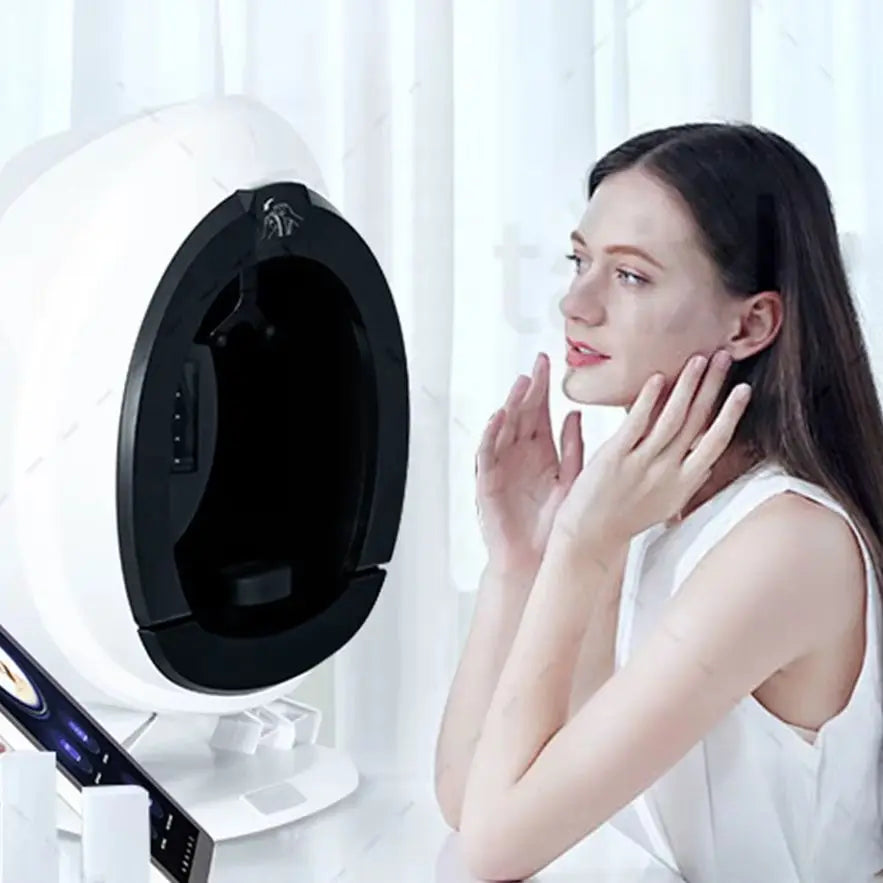
Digital skin imaging can standardize the way facial information is captured and help reveal patterns that are difficult to evaluate under ordinary lighting. Depending on the system, specialized imaging may be used to assess pigmentation, pores, wrinkles, texture, moisture-related characteristics, sebum, and other indicators.
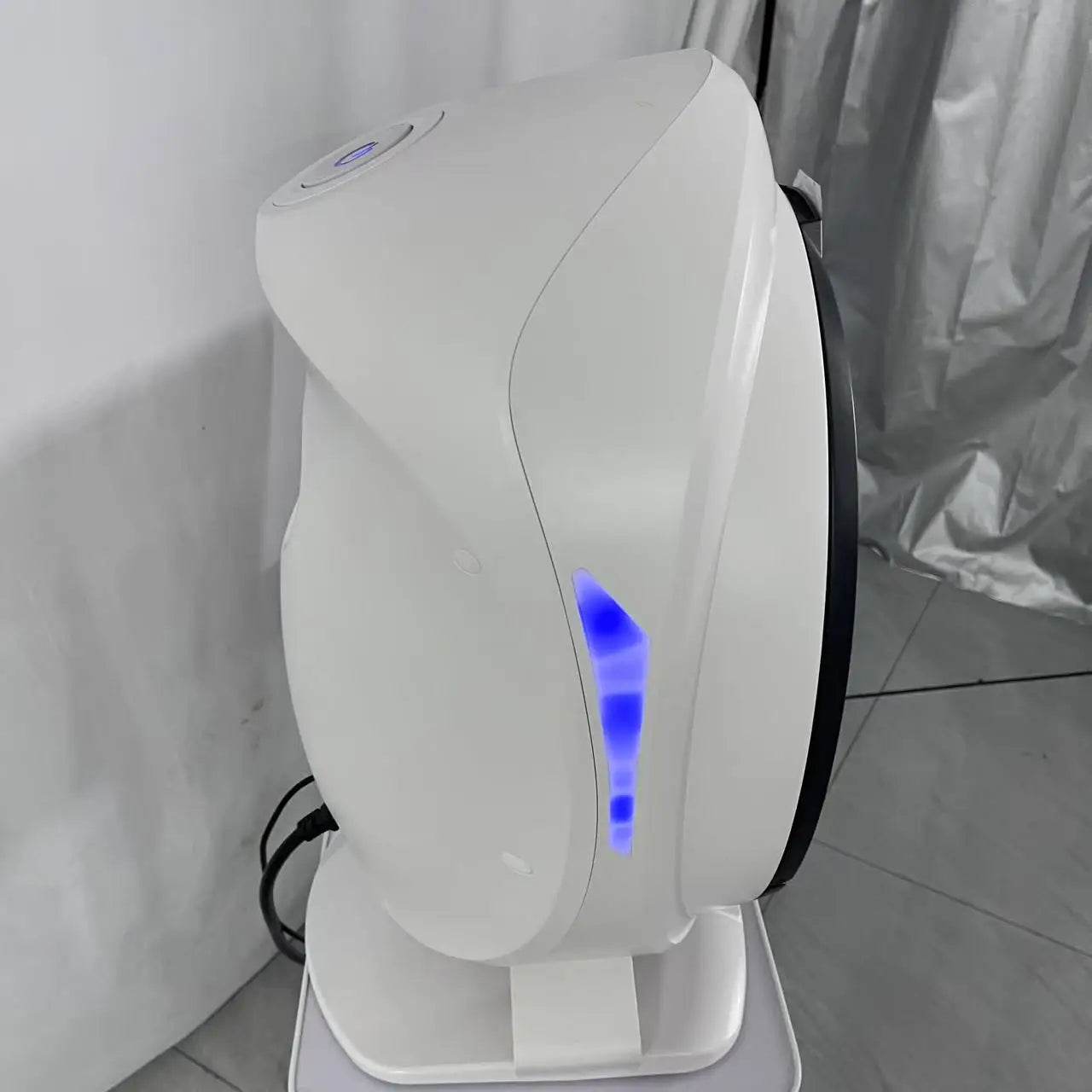
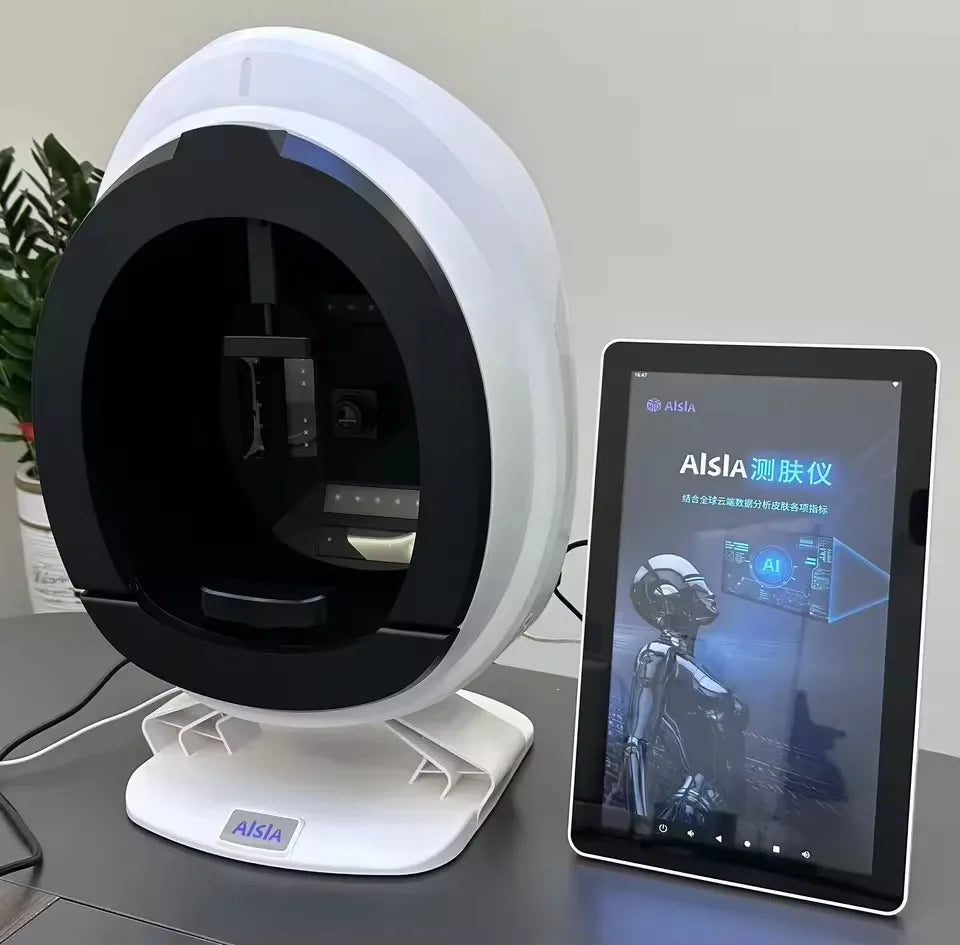
For professional environments that want a more structured digital workflow, an AI Skin Analyzer for Professional 3D Facial Skin Analysis combines a 36MP industrial HD camera with 8-spectrum imaging and AI-powered analysis. According to the product specifications, it evaluates characteristics including acne, pigmentation, pores, wrinkles, moisture, sebum, skin tone, and elasticity while generating digital analysis reports.
4. Results Review and Interpretation
Measurements are most useful when considered together. A professional should look for relationships between indicators instead of treating each score as an independent diagnosis.
For example, visible uneven tone combined with pigmentation findings may create a different priority from isolated dryness. Likewise, visible pores should be interpreted alongside oiliness, congestion, texture, and the person's overall skin condition.
5. Personalized Recommendations and Treatment Planning
The final stage converts information into practical action. Depending on the findings and the professional's scope of practice, recommendations may include changes to basic skincare, targeted product categories, professional treatments, sun-protection habits, or a follow-up assessment.
The purpose of professional analysis is therefore not simply to produce more data. It is to make the consultation more structured and help prioritize appropriate next steps.
What Does Professional Skin Analysis Measure?
Skin Hydration and Moisture Levels
Hydration assessment looks at characteristics associated with the skin's moisture condition. Understanding moisture status can help professionals distinguish between a routine that may need more barrier-supportive care and one that may require different priorities.
When people ask how to measure skin moisture, it is important to distinguish specialized instruments from ordinary visual observation. A dedicated measurement device can provide a numerical or standardized reading, while imaging systems may evaluate moisture-related characteristics as part of a broader analysis.
Sebum Production and Oiliness
Sebum assessment helps professionals understand oil-related characteristics that may influence the appearance of pores, congestion, and shine. Excess oil is not automatically a problem, and low oil levels do not automatically mean the skin is healthier. Interpretation should consider the individual's overall skin condition and routine.
Skin Texture and Surface Condition
Texture analysis focuses on surface irregularities, roughness, and visible changes in the skin's appearance. Digital facial imaging can help document these characteristics and make comparisons more consistent when images are captured under similar conditions.
Pores and Congestion
Professional skin analysis can assess pore visibility and characteristics associated with congestion. Pores should not be interpreted as a standalone measure of skin health because their appearance can be influenced by sebum, skin texture, lighting, age, and other factors.
Hyperpigmentation and Uneven Skin Tone
Facial pigmentation analysis examines visible differences in tone and pigmentation patterns. Specialized imaging can make some variations easier to document than standard photography, particularly when multiple imaging conditions or spectrum-based technologies are used.
For professionals building a broader device-based skincare workflow, skin and beauty care devices can provide additional options for complementary skincare technology.
Wrinkles and Fine Lines
Wrinkle analysis considers visible lines and surface changes, including their location and distribution. Consistent imaging can help document changes over time, although photographs should not be interpreted as precise medical measurements unless the specific system has been validated for that purpose.
UV Damage and Sun-Related Changes
Some specialized facial imaging systems use additional wavelengths or spectrum-based imaging to highlight pigmentation or other patterns that may not be obvious under ordinary visible lighting. These findings can be useful for educational consultation and skincare planning, but they should not be presented as a medical diagnosis of sun damage or another disease.
Skin Barrier and Overall Condition
Skin barrier status is broader than a single device score. Hydration, dryness, sensitivity, surface condition, and the individual's skincare history can all contribute to the professional's overall assessment. This is why professional interpretation remains important even when advanced imaging is available.
How Skin Analysis Identifies Different Skin Concerns
Visible Signs vs. Instrument-Based Findings
Visible examination and instrument-based analysis answer complementary questions. A professional may see redness or uneven tone during a visual examination while digital imaging provides additional documentation of pigmentation patterns or other characteristics.
This combination can be especially useful when the objective is to track changing skin condition rather than simply describe how the face looks during one consultation.
Patterns That Matter More Than a Single Score
A single measurement rarely tells the whole story. A more reliable consultation considers multiple indicators alongside skin history, current products, goals, and environmental factors.
For example, a client may show higher sebum characteristics and visible pores while also experiencing dehydration. Treating the situation as simply “oily skin” could overlook an important part of the assessment.
Common Assessment Categories
- Hydration and moisture-related characteristics
- Sebum and oiliness
- Acne and congestion
- Pores and surface texture
- Pigmentation and uneven tone
- Wrinkles and fine lines
- Elasticity-related characteristics
- Overall surface condition and skin appearance
How Professional Skin Analysis Results Are Interpreted
Prioritize the Most Relevant Skin Concerns
Professionals should prioritize findings according to the client's goals, skin condition, history, and the significance of each concern. The most visually noticeable characteristic is not necessarily the most important one to address first.
Consider Skin Type, History, and Current Routine
Two people can have similar measurements but require different recommendations. Existing products, recent treatments, sensitivity, lifestyle, age-related changes, and individual goals can all influence the appropriate next step.
Turn Measurements Into Actionable Priorities
The best professional skin analysis consultation connects data to action. Instead of simply showing a report, the professional can explain which findings are most relevant, which concerns can be addressed through routine adjustments, and which issues may justify professional treatment or further evaluation.
How Skin Analysis Guides Personalized Skincare

Choosing Products Based on Measured Needs
Assessment findings can help determine which product categories deserve priority. For example, hydration findings may support a focus on moisturizing and barrier-supportive products, while oil and congestion findings may influence cleansing or pore-care priorities. Pigmentation and uneven tone findings may shift attention toward brightening and daily sun-protection strategies.
The goal is to avoid creating an unnecessarily complicated routine. Professional analysis should help identify priorities rather than encourage clients to use every available product.
Building a Simple Treatment or Skincare Plan
A practical plan can be organized into foundational care, targeted care, and optional professional treatments. This approach helps keep recommendations manageable while allowing the professional to address the most relevant concerns first.
For businesses evaluating technology that can support this process, the professional AI skin analyzer is designed for beauty salons, skincare clinics, and skin management centers. Its 36MP imaging, 8-spectrum technology, and digital reporting are intended to support facial assessment, consultation, and ongoing image tracking.
Monitoring Progress Over Time
Repeat analysis can help document changes when the same equipment, imaging conditions, and assessment process are used consistently. This makes longitudinal comparison more meaningful than relying on casual selfies taken under different lighting.
A digital analysis workflow can also make it easier for a professional to review previous records during follow-up consultations and discuss whether the client's skin characteristics have changed.
Professional Skin Analysis Methods and Equipment
Visual and Manual Assessment
Trained observation remains a fundamental part of professional skin assessment. It provides context that technology alone cannot fully capture and allows the professional to ask questions about the client's experience, routine, and goals.
Digital Skin Imaging
Digital imaging creates a visual record that can support structured consultation and progress tracking. Advanced systems may use high-resolution cameras, multiple imaging conditions, or spectrum-based technologies to capture additional information about facial skin characteristics.
Hydration, Sebum, and Other Measurement Tools
Dedicated instruments may be used when a professional needs a specific measurement. These tools can complement facial imaging rather than necessarily replacing it. The right combination depends on the consultation model, the indicators being evaluated, and the level of precision required.
What Equipment Can and Cannot Tell You
Skin analysis equipment can provide useful measurements, images, and patterns, but it does not eliminate the need for professional judgment. Device outputs can be affected by lighting, positioning, preparation, environmental conditions, skin products, and the technical characteristics of the equipment.
For this reason, an AI skin analyzer should be viewed as a professional consultation tool rather than a replacement for clinical diagnosis. When a finding suggests a medical skin condition, appropriate referral to a qualified healthcare professional remains important.
AI Skin Analyzer vs. Skin Scanner vs. Basic Facial Imaging
These terms are sometimes used interchangeably, but they can describe different approaches. A useful comparison is to consider what each technology contributes to the assessment process.
Comparison Matrix: Choosing an Assessment Approach
- Basic facial camera: Primarily documents visible appearance; useful for ordinary photographs and simple before-and-after records.
- Digital skin imaging system: Provides more structured facial imaging and may offer specialized imaging modes for particular skin characteristics.
- Skin measurement instrument: Focuses on selected indicators such as moisture or sebum rather than providing a complete facial image.
- AI facial skin analyzer: Combines high-resolution imaging with software-based analysis and reporting to organize multiple skin characteristics within one workflow.
- Professional assessment workflow: Combines consultation, visual examination, imaging, measurements, interpretation, recommendations, and monitoring rather than depending on a device alone.
This distinction is important when comparing an AI skin analyzer vs. a skin scanner or a digital skin analyzer vs. a conventional camera. The most useful option depends on whether the professional needs simple documentation, a specific measurement, advanced facial imaging, or a broader consultation workflow.
A Practical Professional Skin Assessment Framework
Assess → Measure → Interpret → Prioritize → Recommend → Monitor
A practical framework for professional skin analysis can be reduced to six connected steps:
- Assess: Understand the client's concerns, history, routine, and goals.
- Measure: Capture relevant visual, imaging, and instrument-based information.
- Interpret: Consider measurements together rather than treating individual scores as diagnoses.
- Prioritize: Identify the concerns most relevant to the client's goals and current skin condition.
- Recommend: Translate the findings into appropriate skincare, product, or professional treatment priorities.
- Monitor: Repeat assessments under consistent conditions when progress tracking is useful.
Example: Turning Multiple Findings Into One Routine
Imagine a hypothetical consultation showing increased sebum characteristics, visible pores, uneven tone, and signs associated with dehydration. A poor approach would be to address every finding with multiple aggressive products at once.
A more structured approach could prioritize gentle foundational cleansing and hydration first, then introduce targeted care according to the pigmentation and oil-related findings. Follow-up imaging could subsequently help document whether the skin's appearance and measured characteristics are changing.
The example illustrates the central principle of professional skin analysis: measurements are inputs into a decision-making process, not the decision itself.
What to Expect From a Professional Skin Analysis
Before the Assessment
Clients may be asked about recent skincare products, makeup, professional treatments, sun exposure, sensitivities, and current concerns. Assessment conditions can influence imaging and measurements, so professionals should use a consistent preparation process whenever possible.
During the Assessment
A typical workflow may include consultation, visual examination, facial imaging or measurements, review of results, and discussion of goals. The exact process varies according to the professional's methods and the equipment being used.
After the Assessment
The professional should explain the most relevant findings in understandable terms and connect them with practical next steps. Depending on the situation, those steps may include routine changes, product categories, professional treatments, monitoring, or referral for further evaluation.
For broader beauty-device resources that may complement a professional skincare workflow, explore body care and health devices alongside facial-focused equipment.
Professional Skin Analysis: Key Takeaways
Professional skin analysis works best when it combines several information sources rather than relying on a single score or photograph. Consultation establishes the client's context, visual examination identifies observable characteristics, digital imaging and measurement tools add structured information, and professional interpretation turns those findings into practical priorities.
The main indicators may include moisture, sebum, acne, pores, pigmentation, skin tone, texture, wrinkles, and elasticity. Advanced facial imaging can also help document changes over time when assessments are performed consistently.
For salons and clinics that want to add digital facial assessment to their consultation workflow, the AI Skin Analyzer for Professional 3D Facial Skin Analysis offers 36MP HD imaging, 8-spectrum technology, AI-powered analysis, digital reporting, and image-tracking capabilities designed for professional skincare environments. It can be considered as one component of a broader assess-measure-interpret-recommend-monitor workflow, rather than as a substitute for professional judgment.
For continued education and practical skincare topics, the Beauty & Self-Care Blog provides additional resources for understanding beauty technology, skincare routines, and self-care.
Pillar Article: AI Facial Analyzer for Estheticians: Best Options Compared













