

RV Heater Diesel Reviews: Performance, Reliability, and Real-World Value
Choosing the right RV heater diesel system can make the difference between a comfortable winter adventure and an uncomfortable night in freezing temperatures. Modern diesel RV heaters are known for excellent diesel heater fuel efficiency, low operating costs, dependable cold-weather performance, and reliable operation in remote camping locations where electric hookups are unavailable.
This buyer-focused guide compares real-world heating performance, fuel consumption, operating costs, noise levels, installation requirements, and long-term reliability. Whether you travel in a compact camper van, fifth wheel, or Class A motorhome, you'll learn how to choose the best diesel heater for RV use based on your camping style and interior space.
⏱ 6 min read
Explore real-world performance, ownership costs, and practical buying advice below.
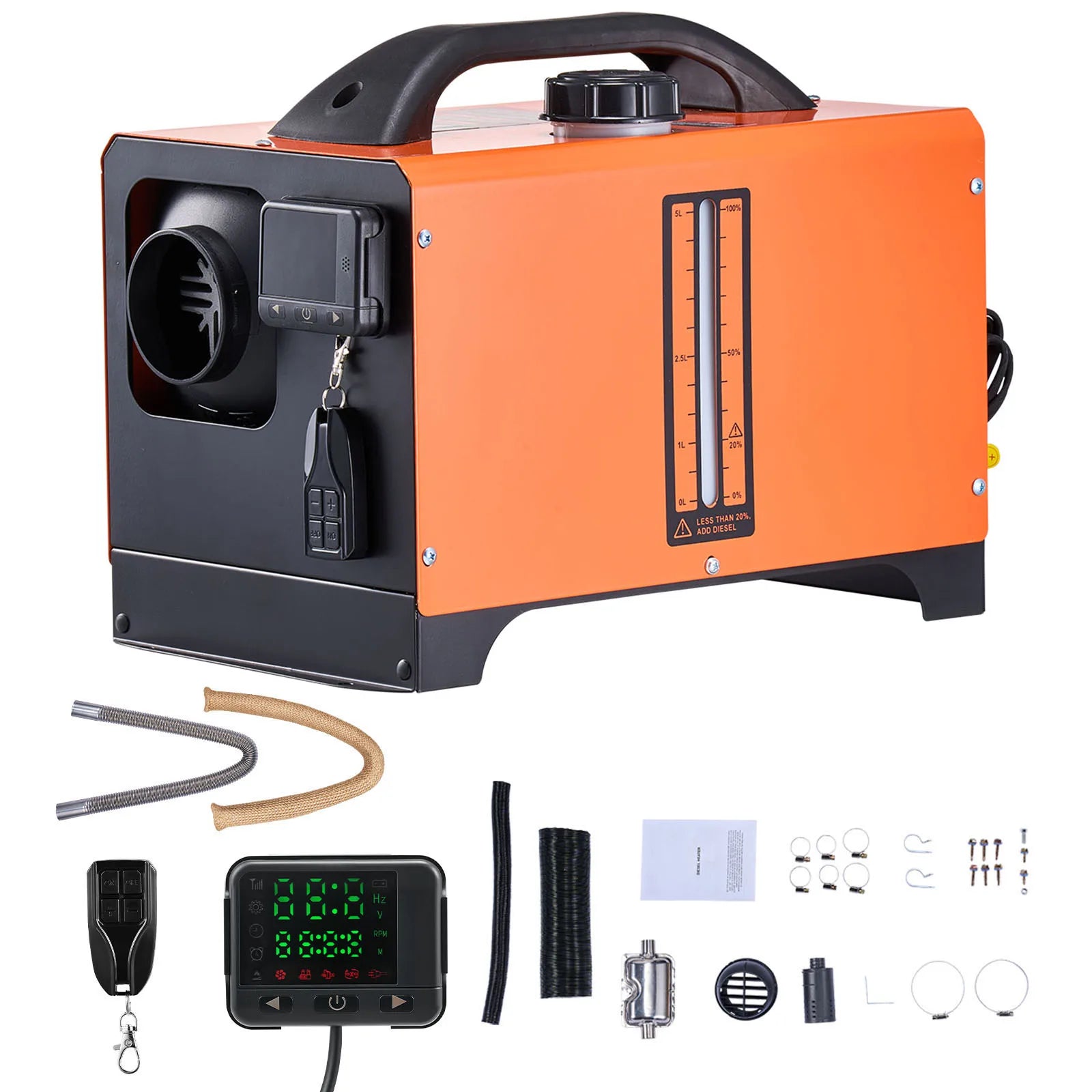
RV heater diesel heating power with impressive fuel efficiency — See it in action
Cold nights ruining your RV trips? A properly sized diesel heater provides fast, dry heat with minimal fuel use, making it a popular upgrade for frequent winter campers and off-grid travelers.
Does an RV Heater Diesel Really Keep RVs Warm Efficiently?
Yes. Modern RV heaters diesel systems are among the most efficient heating solutions available for cold-weather camping. Unlike propane furnaces that cycle on and off frequently, a diesel air heater burns fuel inside a sealed combustion chamber while transferring heat through a separate heat exchanger. Warm, dry cabin air circulates inside the RV, while combustion gases are safely exhausted outdoors.
This design improves diesel heater efficiency , reduces interior moisture, and delivers consistent temperatures throughout the night without introducing combustion fumes into the living space.
Heating performance depends on matching heater output to RV size. As a general guideline:
- Small camper vans and truck campers benefit from lower-output heaters.
- Mid-size travel trailers and Class C RVs are well suited to mid-range diesel heaters.
- Large fifth wheels and Class A motorhomes typically require higher-output models or well-planned ducting.
In real-world winter camping, an appropriately sized 8kW heater can often bring a 30–40 ft RV to a comfortable temperature within minutes while consuming approximately 0.1–0.3 liters of diesel per hour, depending on outdoor conditions and thermostat settings. During overnight operation, most owners report steady cabin temperatures with significantly less window condensation than propane heating because diesel heaters produce dry circulating air.
Typical performance highlights include:
- Efficient heat delivery with low hourly fuel consumption
- Typical fuel use of approximately 0.1–0.3 liters/hour depending on output
- Affordable overnight operating costs for extended boondocking
- Reliable heating in freezing conditions when properly installed and maintained
- Dry heat that helps minimize condensation on windows and interior surfaces
Why RV Owners Are Switching to Diesel Heaters
Many RV owners choose a diesel parking heater because it balances heating performance, operating cost, and long-term reliability better than many traditional RV heating systems. Rather than relying solely on campground electricity or frequent propane refills, diesel heaters provide a dependable heat source for extended travel and off-grid camping.
Compared with propane furnaces, diesel systems typically consume less fuel for continuous overnight heating while maintaining a stable cabin temperature. Diesel fuel is also widely available along major travel routes, making refueling convenient during long-distance trips.
Common reasons RV owners upgrade include:
- Lower operating costs through excellent diesel heater fuel efficiency
- Reliable heating for boondocking and dispersed camping without electrical hookups
- Consistent performance during extended cold-weather travel
- Reduced interior condensation thanks to dry heated air
- Improved performance at higher elevations when using models with altitude compensation
While propane furnaces remain a practical option for occasional camping, many full-time RVers and winter travelers appreciate the combination of fuel economy, comfort, and dependable operation that diesel heaters provide during long periods of continuous use.
Many off-grid travelers now rely on diesel parking heater systems as their primary winter heat source. For RV lifestyle upgrades, check the Lifestyle collection for convenient off-grid accessories.
How an RV Heater Diesel Performs in Real Conditions
Manufacturer specifications only tell part of the story. In everyday camping, diesel RV heaters are valued for maintaining stable temperatures over many hours while using relatively little fuel. Proper installation, insulation quality, outside temperature, and airflow all influence overall heating performance and reliability.
Key Performance Benefits RVers Notice Immediately
- Rapid warm-up after startup, especially in insulated RVs
- Steady thermostat-controlled temperatures with fewer heating cycles
- Dry heat that helps reduce condensation and damp bedding
- Quiet operation once the heater reaches normal running speed
- Low diesel heater fuel consumption during overnight use
Noise Levels, Battery Draw, and Altitude Performance
Most diesel heaters produce their highest noise level during startup as the fuel pump, glow plug, and fan begin the combustion cycle. After reaching operating temperature, fan speeds typically decrease, making continuous operation noticeably quieter than many factory propane furnaces.
- Typical running noise is around 30–40 dB at lower fan speeds.
- Startup briefly requires higher electrical demand before settling into low continuous battery usage.
- Most quality heaters operate from a standard 12V RV electrical system with modest ongoing power consumption.
- Models with altitude compensation maintain cleaner combustion and more reliable performance above approximately 8,000–9,000 feet.
- Regular maintenance and clean fuel contribute significantly to long-term diesel heater performance and reliability.
Compare real-world performance specs now.
Diesel vs Propane vs Electric Heating
Each RV heating system has advantages depending on where and how you travel. A modern RV heater diesel setup typically delivers the best balance of efficiency, fuel economy, and off-grid capability, while propane and electric heaters remain practical in specific situations.
| Feature | Diesel Heater | Propane Furnace | Electric Heater |
|---|---|---|---|
| Operating Efficiency | Very high with low fuel consumption (typically 0.1–0.3 L/h) | Moderate fuel efficiency | Efficient on shore power but unsuitable for extended off-grid use |
| Typical Overnight Cost | Low, depending on local diesel prices | Higher due to greater fuel consumption | Low with campground electricity; expensive on battery power |
| Fuel Availability | Diesel widely available along highways and travel routes | Requires propane refills or tank exchanges | Requires reliable electrical hookup or large battery bank |
| Installation Complexity | Moderate; requires fuel, exhaust, and electrical connections | Usually factory-installed in many RVs | Minimal for portable units |
| Noise Level | Generally quiet after startup | Noticeable blower cycling | Quiet operation |
| Moisture Control | Dry heat with minimal condensation | Can contribute to interior moisture depending on system design | Neutral |
| Cold-Weather Reliability | Excellent when properly maintained | Good but fuel use increases in prolonged cold | Limited without continuous electrical power |
| Best Use Case | Boondocking, winter camping, long-distance travel | Weekend trips and factory-equipped RVs | Campgrounds with full hookups |
What Makes Diesel Heater Fuel Efficiency So Impressive
The excellent diesel heater fuel efficiency of modern units comes from electronically controlled fuel delivery and efficient combustion. Instead of running at full power continuously, quality heaters adjust fuel flow and fan speed to maintain a stable cabin temperature while minimizing fuel consumption.
- Typical diesel heater fuel consumption ranges from approximately 0.1–0.3 liters per hour depending on output.
- Smaller heaters often provide 20–40 hours of runtime from a compact auxiliary tank.
- Stable combustion reduces unnecessary fuel waste during overnight operation.
- Cleaner combustion helps minimize carbon buildup when the heater is operated correctly.
Compared with propane heating, diesel systems generally require less frequent refueling during extended winter trips because fuel consumption remains low even during long heating cycles. Actual runtime varies according to outdoor temperature, insulation quality, thermostat settings, and heater size.
For example, with diesel priced at approximately $5 per gallon (about 3.8 liters), a heater consuming around 0.2 liters per hour would cost roughly $0.26 per hour to operate, making overnight heating affordable for frequent travelers.
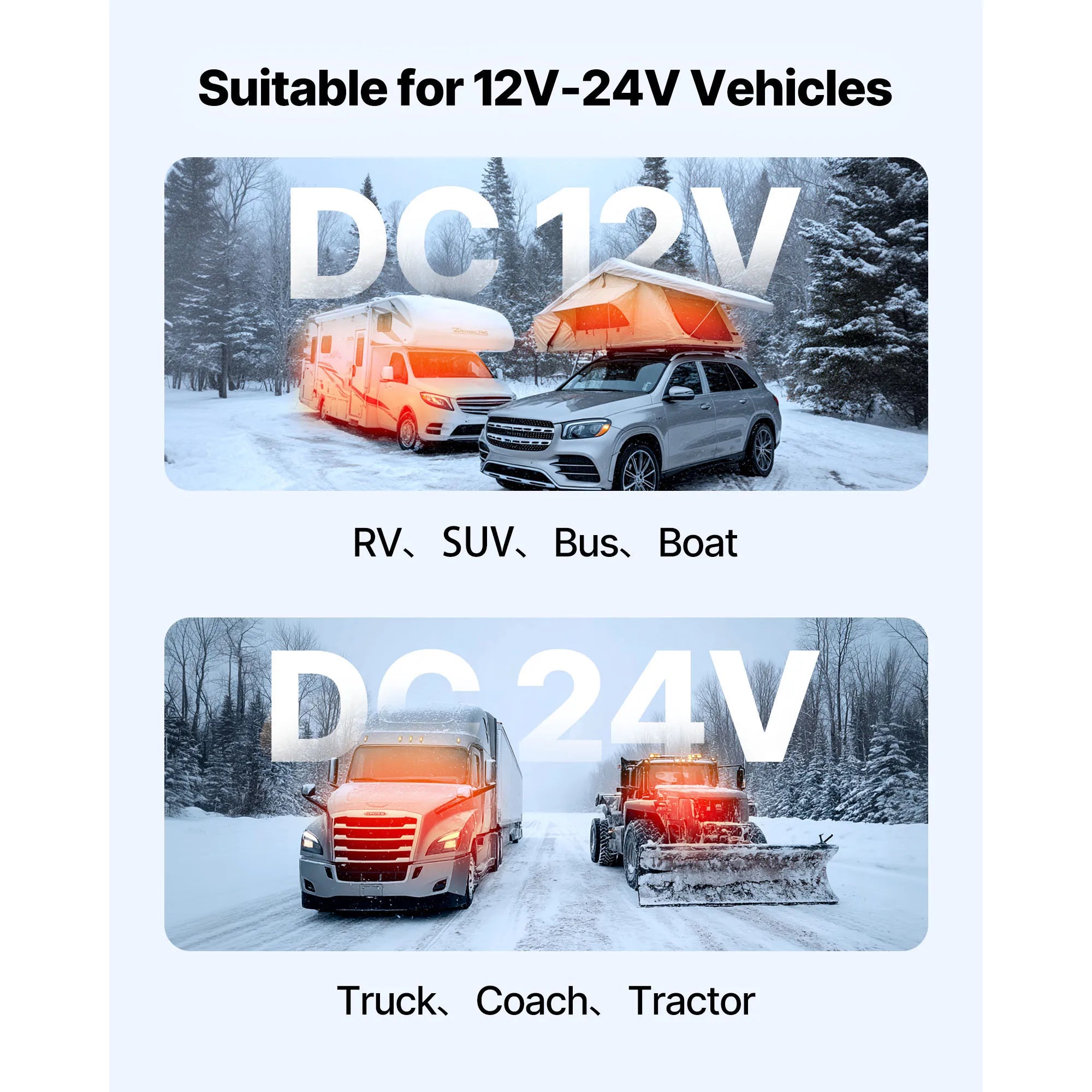
Diesel heater fuel consumption stays low even in freezing weather — See it in action
Using a Diesel Parking Heater in Your RV
A diesel parking heater can be installed in many camper vans, travel trailers, and motorhomes. While experienced DIY owners often complete the installation successfully, professional installation may be worthwhile if fuel system modifications or custom ducting are required.
Installation Requirements and Difficulty
Most installations involve the following components:
- Mount the heater securely beneath a seat, inside a storage compartment, or another protected location with adequate clearance.
- Connect the fuel line to an auxiliary or main diesel supply according to the manufacturer's instructions.
- Install warm-air ducting to distribute heat efficiently throughout the RV.
- Connect the 12V electrical supply with appropriate fuse protection.
- Route the combustion exhaust and intake through the floor or exterior wall using approved hardware.
Professional installation typically costs between $300 and $600 depending on the RV layout and labor requirements. DIY installation can reduce costs but requires familiarity with fuel systems, electrical wiring, and safe exhaust routing.
Exhaust Routing, Combustion Air, and Ventilation
Safe installation is just as important as heater performance. The combustion air intake and exhaust system should always remain separate from the RV's interior air supply. Exhaust components should be securely mounted away from combustible materials and positioned where fumes cannot re-enter the living space through windows or vents.
Many modern controllers allow programmable temperatures and automatic operation, helping reduce unnecessary fuel use while maintaining comfortable overnight warmth. Many RVers complement this setup with smart accessories from the Lifestyle collection.
Best Diesel Heater for RV: Top Picks & Comparisons
The best diesel heater for RV use depends on your vehicle size, camping conditions, and preferred balance of heating output, fuel economy, and noise. Rather than choosing the highest power rating available, match the heater to your RV's interior volume and expected winter temperatures for the best overall performance.
| Model | Best For | Key Strengths | Considerations |
|---|---|---|---|
| Diesel Air Heater 5kW | Small camper vans, truck campers, compact trailers | Low fuel consumption, affordable purchase price, efficient heating for smaller interiors | Not intended for large motorhomes in severe winter conditions |
| Diesel Air Heater 8kW | Medium travel trailers and Class C RVs | Excellent balance of heating capacity, quiet operation, remote digital controls, dependable daily use | Requires proper duct layout for maximum efficiency in larger floor plans |
| Diesel Air Heater 10kW | Large fifth wheels, Class A motorhomes, extreme winter camping | Maximum heat output, strong cold-weather performance, suitable for high-demand heating | Oversized for compact RVs where frequent cycling may reduce efficiency |
Best Budget Diesel Heaters
For weekend travelers and owners of compact RVs, the Diesel Air Heater 5kW offers an excellent balance of affordability and dependable performance. Its lower fuel consumption makes it well suited for smaller living spaces where excessive heating capacity isn't necessary.
Best Quiet Diesel Heaters
If nighttime comfort is a priority, the Diesel Air Heater 8kW is an excellent choice. Its combination of stable temperature control, efficient fuel use, and quieter operation makes it a strong option for full-time RVers and frequent winter campers who value both comfort and long-term reliability.
Best Diesel Heaters for Cold Climates and High Altitude
Travelers regularly camping in mountain regions or harsh winter conditions may benefit from the Diesel Air Heater 10kW . The higher heating capacity provides faster recovery after opening doors and maintains comfortable temperatures during prolonged freezing weather when matched to larger RVs.
Real RV Owner Experiences
Many RV diesel heater reviews highlight the same practical advantages after several months of use: lower heating costs, more consistent cabin temperatures, and improved comfort during overnight camping.
⭐⭐⭐⭐⭐ "We camp in Colorado throughout winter, and our diesel heater reduced heating costs while keeping the RV consistently warm all night."
⭐⭐⭐⭐⭐ "Once it finishes the startup cycle, it's surprisingly quiet. We sleep better and no longer worry about running through propane every few days."
⭐⭐⭐⭐⭐ "Our heater continues performing well above 9,000 feet where our previous propane system struggled to maintain reliable heat."
Owners of camper vans often appreciate the compact installation and fuel economy, while larger motorhome owners frequently mention dependable heating during extended stays in cold climates. The most common recommendations are to size the heater correctly, install it carefully, and perform routine maintenance to maintain long-term reliability.
Is an RV Heater Diesel Worth the Investment?
For travelers who camp regularly in cold weather or spend time away from electrical hookups, a modern RV heater diesel system can provide meaningful long-term value. Lower fuel consumption, dependable cold-weather performance, and reduced reliance on propane make diesel heating particularly attractive for extended trips and winter camping.
- Lower operating costs during frequent cold-weather travel
- Reliable heating for boondocking and remote camping
- Dry cabin heat that helps reduce condensation
- Long service life when properly installed and maintained
- Potential return on investment for frequent winter RV users
However, diesel heating is not the ideal solution for every traveler. If you primarily stay at campgrounds with full electrical hookups or only camp occasionally in mild weather, a portable electric heater or factory-installed propane furnace may provide sufficient comfort with less installation effort.
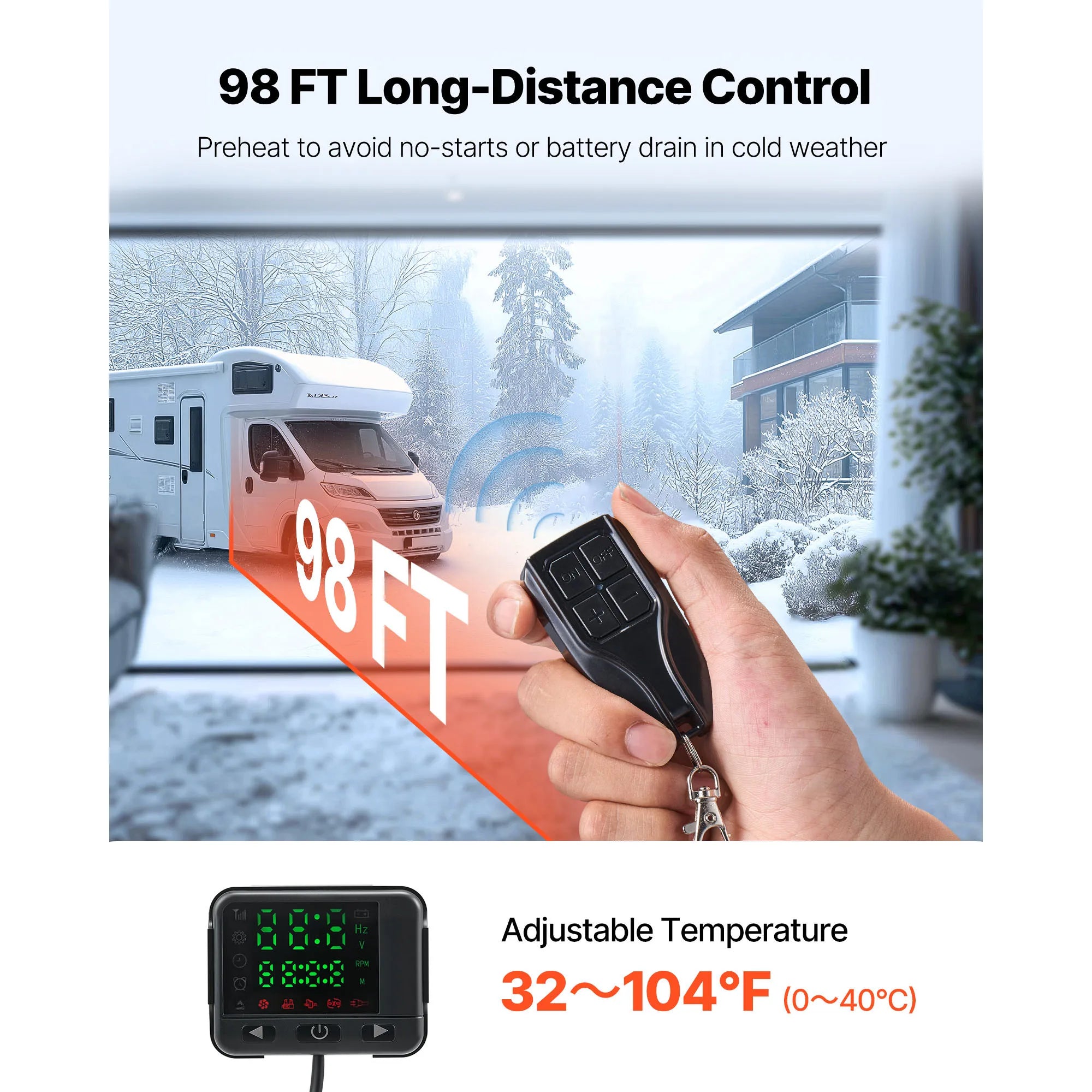
RV heater diesel delivers dependable warmth anywhere you park — See it in action
Upgrade your RV heating today
Safety Considerations & Maintenance Tips
Proper installation and routine maintenance are essential for maximizing the safety, efficiency, and service life of diesel RV heaters. Following the manufacturer's maintenance schedule and inspecting the system regularly helps ensure dependable performance throughout the camping season.
- Verify that combustion exhaust is routed completely outside the RV and remains unobstructed.
- Inspect fuel lines, fittings, and clamps periodically for signs of wear or leaks.
- Clean the combustion chamber, air intake, and exhaust components as recommended to reduce carbon buildup.
- Operate the heater at higher output occasionally to help minimize soot accumulation.
- Install and routinely test carbon monoxide detectors inside the RV.
- Follow manufacturer service intervals and warranty recommendations for long-term reliability.
Diesel RV Heater Installation Guide and Safety Checklist
Carbon Monoxide Protection
Modern diesel RV heaters use sealed combustion systems that keep exhaust gases separate from the cabin air. Even so, proper installation remains critical. Exhaust pipes should terminate outside the vehicle, intake and exhaust openings should remain clear of snow or debris, and all connections should be inspected regularly.
- Install at least one functioning carbon monoxide detector inside the living area.
- Inspect the exhaust system before extended trips and after driving on rough roads.
- Never operate the heater if the exhaust or combustion air intake is damaged.
- Keep exterior vents free from mud, ice, leaves, and other obstructions.
Battery and Electrical Setup
Most diesel parking heaters operate from a 12V electrical system. Startup briefly requires more power to activate the glow plug before settling into relatively low continuous power consumption.
- Use the correctly sized wiring and fuse recommended by the heater manufacturer.
- Ensure the RV battery is in good condition before extended winter camping.
- Secure all electrical connections to prevent vibration-related failures.
- Consider additional battery capacity or portable power solutions for prolonged off-grid use.
Quick FAQ
How much fuel does a diesel RV heater use per hour?
Most modern diesel heaters consume approximately 0.1 to 0.3 liters of fuel per hour, depending on the heater size, thermostat setting, outside temperature, and insulation quality.
How long can a diesel heater run overnight?
With a typical auxiliary fuel tank, many heaters can operate for 20–40 hours before refueling. Running at lower heat settings generally extends runtime.
Are diesel heaters safe inside RVs?
Yes. Properly installed diesel heaters use sealed combustion systems that keep exhaust gases outside while circulating clean, heated air inside the RV. A carbon monoxide detector is still strongly recommended.
Do diesel heaters work at high altitude?
Many modern models perform well above 8,000 feet, particularly those equipped with automatic or adjustable altitude compensation to maintain an efficient fuel-air mixture.
Do diesel heaters create condensation?
No. Because combustion occurs in a sealed chamber and heated cabin air remains dry, diesel heaters generally produce less interior condensation than many propane heating systems.
How much battery power does a diesel heater need?
Power demand is highest during startup while the glow plug ignites the burner. After ignition, electrical consumption drops significantly and remains relatively low during normal operation.
How do you maintain a diesel RV heater?
Routine maintenance includes inspecting fuel lines, cleaning the combustion chamber and air intake, checking the exhaust system, replacing worn components when necessary, and periodically operating the heater at higher output to reduce carbon buildup.
What size diesel heater is best for my RV?
Choose a heater based on your RV's interior volume, insulation, and expected winter temperatures. Smaller campers typically benefit from 5kW models, medium-sized RVs commonly use 8kW units, and larger motorhomes may require 10kW heaters or higher-capacity systems.
Related Guide: Do Diesel Heaters Produce Carbon Monoxide Full Safety Review













