

Skin Analysis Machine Buying Guide: Compare Types, Features & Costs
A skin analysis machine can turn a subjective facial assessment into a more structured evaluation of skin characteristics, but machines differ significantly in what they can measure, how they capture data, and how useful their software is in a real consultation. The best system is not necessarily the one with the highest camera resolution or the most AI features. It should match the measurements, imaging depth, workflow, reporting requirements, and budget of the business using it.
What Is a Skin Analysis Machine?
A skin analysis machine uses facial imaging, sensors, computer vision, artificial intelligence, or a combination of these technologies to evaluate measurable or image-derived skin characteristics. Depending on the system, analysis may include hydration, sebum, pigmentation, skin tone, pores, wrinkles, texture, redness, acne-related characteristics, and elasticity.
Professional systems can standardize facial image capture and convert those images into digital reports. This makes it easier for an esthetician, clinic, med spa, or skincare consultant to discuss observed characteristics with a client and compare changes over time.
What a Skin Analyzer Can Actually Measure
Different devices produce different types of measurements. Imaging systems may quantify visual characteristics such as pores, wrinkles, pigmentation patterns, redness, and texture. Sensor-based systems may directly measure specific properties such as hydration or sebum at the measurement point. A machine that labels many skin concerns is not automatically measuring each concern directly.
Objective Measurement vs. Cosmetic Recommendations
A skin analysis report should also be separated from a skincare recommendation. Measurement and image classification describe characteristics detected by the device; recommendations are an additional interpretation based on those findings. A useful professional system makes that distinction clear instead of treating an automated score as a medical diagnosis or guaranteed treatment outcome.
For businesses building a broader device offering, the Skin and Beauty Care Devices collection can also be used to evaluate complementary skincare equipment.
Skin Analysis Machine Types Compared
The right machine type depends primarily on the level of analysis and workflow you need.
Professional Facial Imaging Systems
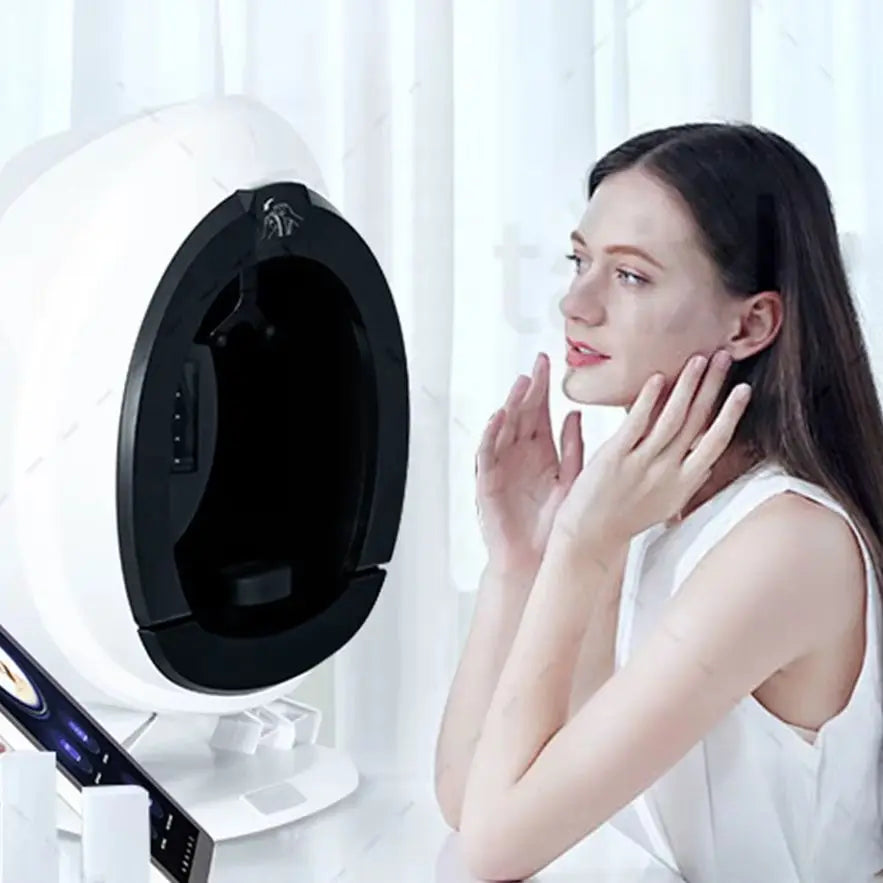
Professional facial imaging systems are designed for controlled image capture and detailed consultations. They may use multiple cameras, lighting conditions, filters, or imaging modes to expose differences that are difficult to evaluate through ordinary facial photography. They are particularly useful for clinics, med spas, advanced esthetic practices, and professional skincare consultations.
AI and Computer Vision Skin Analyzers
AI skin analyzers use software to interpret standardized facial images. Computer vision can identify regions of interest, classify visible characteristics, calculate scores, compare images, and generate structured reports. AI can improve consistency and speed, but an AI label by itself does not prove that a system measures an underlying biological condition accurately.
Sensor-Based Skin Measurement Devices
Sensor-based devices use probes or sensors to evaluate properties such as hydration or sebum. Their advantage is that they can provide a measurement from the specific area being tested rather than estimating a characteristic solely from a photograph. Their limitation is that the measurement may be localized rather than a complete facial assessment.
Consumer and Home Skin Analyzers
Home analyzers generally emphasize affordability, convenience, and personal tracking. They can be useful for monitoring changes under consistent conditions, but they usually provide less controlled imaging, fewer professional workflow features, or less detailed reporting than systems designed for commercial skincare environments.
Skin Analysis Machine Comparison Matrix
| Machine Type | Imaging / Measurement | Typical Concerns | AI / Software | Reporting | Best For | Key Limitation |
|---|---|---|---|---|---|---|
| Professional facial imaging | Controlled multi-image capture | Texture, pores, wrinkles, tone, pigmentation, redness | Often advanced | Detailed | Clinics, med spas, estheticians | Higher equipment cost |
| AI computer vision analyzer | Standardized facial images | Visible and image-derived characteristics | Core feature | Usually automated | Digital consultations and high-volume workflows | Accuracy depends on validation and image quality |
| Sensor-based analyzer | Point-based sensor readings | Hydration, sebum, selected parameters | Varies | Basic to advanced | Targeted measurements | Limited facial coverage |
| Consumer/home analyzer | Basic imaging or sensors | General skin tracking | Often app-based | Usually simplified | Personal use | Less controlled and less comprehensive |
When comparing systems, focus first on the measurements and workflow you actually need. A suitable professional solution should be judged by its imaging method, measurable parameters, reporting capabilities, repeatability, and vendor evidence rather than feature count alone.
Imaging Technologies: What Each One Can and Cannot Measure
Standard Visible-Light Photography
Visible-light photography provides the baseline for most facial imaging. It is useful for documenting visible pigmentation, wrinkles, pores, texture, redness, and overall tone. Its main limitation is that characteristics that are not visibly apparent under ordinary lighting may be difficult to distinguish.
Polarized Light Imaging
Polarized imaging changes how reflected light is captured and can help make certain surface characteristics and optical differences easier to visualize. This can support the assessment of redness, texture, and other facial characteristics that may be less obvious in conventional photography.
UV Photography
UV imaging can reveal certain pigmentation-related patterns and optical differences that are not as apparent under visible light. However, UV imaging should not be interpreted as a direct measurement of every hidden skin concern. What the system can identify depends on the imaging method, software, and validation behind it.
Multispectral Imaging
Multispectral or spectrum-based imaging captures information across multiple wavelengths. Compared with standard photography, this can provide a richer optical dataset for software analysis. For professional buyers, the important question is not simply how many wavelengths a machine lists, but what those wavelengths contribute to the actual analysis and whether the resulting outputs have been validated.
Which Skin Parameters Should a Machine Measure?
Skin Hydration Measurement
Hydration is a common parameter in skincare consultations, but buyers should determine whether a device directly measures hydration with a sensor or estimates it through image analysis. These are different measurement approaches and should not be treated as interchangeable.
Sebum Measurement
Sebum can also be measured directly with dedicated sensors or estimated through visual characteristics. A system that reports oiliness from facial images should be evaluated differently from one that provides a direct sensor reading.
Melanin and Pigmentation Analysis
Professional imaging can identify pigmentation patterns and provide image-derived scores. Buyers should distinguish between an optical indicator or software score and a direct biological measurement. This distinction is especially important when comparing manufacturer claims.
Skin Texture, Pores, Wrinkles, and Redness
Standardized facial imaging and computer vision can quantify or score visible characteristics such as pores, wrinkles, texture, redness, and uneven tone. Consistent lighting, camera position, facial orientation, and image-processing methods are important because changes in capture conditions can influence the results.
How AI and Software Change Skin Analysis
AI Skin Analysis vs. Traditional Skin Analysis
Traditional analysis may rely heavily on visual examination and the professional's experience. AI-assisted analysis can standardize image interpretation, identify patterns, calculate scores, and generate reports more quickly. The strongest workflow combines technology with professional interpretation rather than assuming automated output eliminates the need for human judgment.
Computer Vision and Automated Scoring
Computer vision can segment facial regions, detect features, compare standardized images, and track changes. For a business conducting repeated consultations, automated scoring and image history can make longitudinal tracking easier than relying exclusively on memory or subjective notes.
Reports, Treatment Recommendations, and Digital Skincare Consultation
Software can transform analysis results into client-facing reports and consultation records. Some platforms may also support product recommendations, progress comparisons, or customer records. These functions are valuable when they fit the business workflow, but they should not be confused with proof that every recommendation is clinically appropriate.
What to Verify Before Trusting an AI Accuracy Claim
Ask the vendor how accuracy was evaluated. Look for information about the reference standard, sample population, test methodology, repeatability, performance metrics, and known limitations. A claim such as “AI-powered” describes the technology approach; it does not independently establish accuracy.
How Accurate Are Skin Analysis Machines?
Accuracy vs. Repeatability
Accuracy and repeatability are different. A repeatable machine can produce consistent readings under the same conditions, while accuracy asks whether those readings correspond closely to the characteristic being measured. A buyer should evaluate both.
Why Lighting, Positioning, and Skin Preparation Matter
Lighting, camera distance, facial positioning, skin preparation, makeup, and environmental conditions can all affect image-based analysis. Professional systems can reduce some of these variables through standardized capture procedures, which is one reason controlled imaging matters in repeat consultations.
How to Evaluate Manufacturer Validation Evidence
Before purchasing, request validation documentation and ask what the device was compared against. Determine whether testing involved an appropriate reference method, whether the sample population resembles your clients, and whether the manufacturer reports limitations rather than presenting only favorable results.
Professional vs. Home Skin Analysis Machines
Professional Machines
Professional systems prioritize controlled image capture, detailed reporting, client records, repeat measurements, and consultation workflow. They are better suited to businesses where skin analysis is part of the customer experience and where consistent documentation can support ongoing consultations.
Home Skin Analyzers
Home systems prioritize convenience and affordability. They can be useful for personal tracking, especially when measurements are taken consistently, but they generally offer fewer professional workflow capabilities and may have less controlled imaging conditions.
Which One Should You Buy?
Choose a professional machine when you need structured consultations, higher-volume assessments, detailed reports, or longitudinal client tracking. Choose a home analyzer when simplicity, affordability, and personal monitoring are the primary goals.
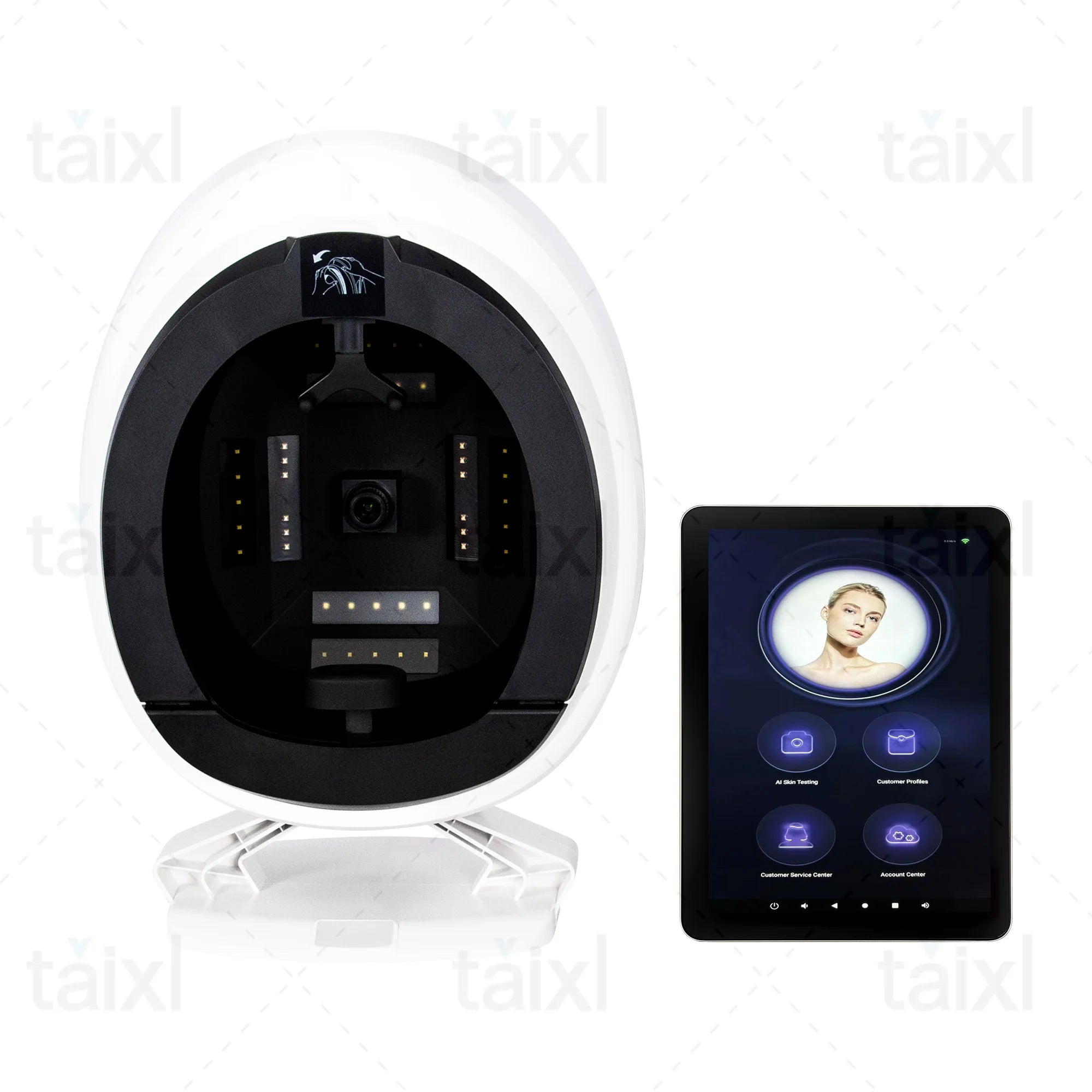
For professional buyers looking for a dedicated facial assessment system, the AI Skin Analyzer for Professional 3D Facial Skin Analysis is designed for beauty salons, skincare clinics, and professional skin management environments, with 36MP HD imaging, 8-spectrum technology, AI analysis, multiple skin indicators, and digital reporting.
Skin Analysis Machine Cost: What You Are Really Paying For
Consumer and Entry-Level Price Range
Lower-cost systems typically emphasize basic imaging, simplified sensors, or app-based tracking. They can be appropriate for personal use, but price should not be treated as a direct measure of analytical quality.
Professional Price Range
Professional machines cost more because buyers may be paying for higher-resolution imaging, multiple imaging modes, sensors, software, reporting, client management, technical support, and controlled workflows. The total value depends on which capabilities the business will actually use.
Hidden and Recurring Costs
Check beyond the purchase price. Software subscriptions, cloud storage, upgrades, accessories, calibration, training, technical support, warranty coverage, and replacement components can affect the total cost of ownership. A less expensive machine may become more costly if important software functions require recurring fees.
Best Skin Analysis Machine by Use Case
Best for Professional Skincare Consultations
Prioritize standardized imaging, multiple measurable indicators, detailed reporting, and a workflow that helps professionals explain findings to clients. A system with structured digital reports can make consultations easier to document and compare over time.
Best for Med Spas and High-Volume Clinics
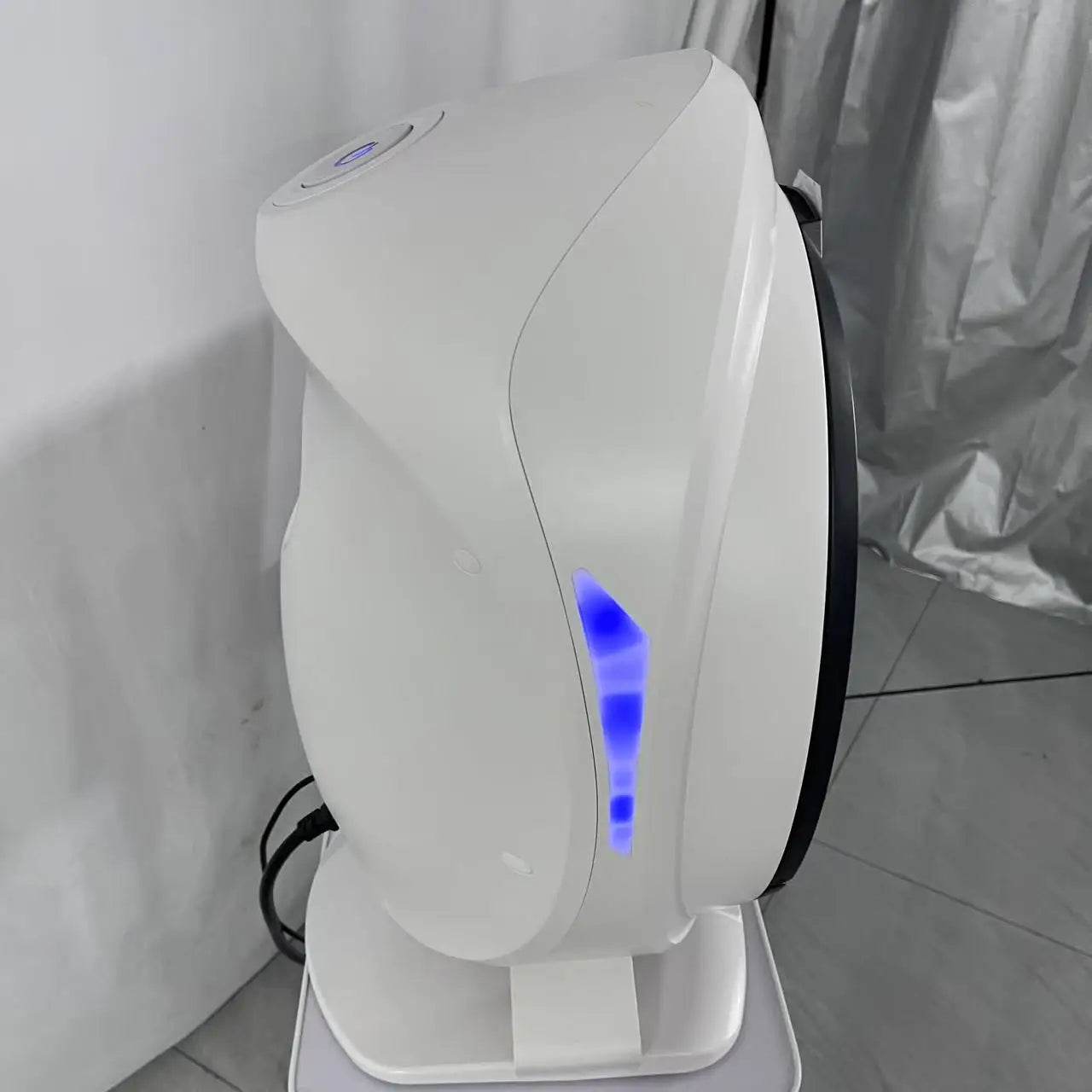
High-volume environments should prioritize capture speed, repeatability, client records, workflow efficiency, and scalable reporting. Automation becomes more valuable when professionals need to perform many consultations while maintaining consistent documentation.
Best for Retail and Digital Skincare Consultation
Retail and digital consultation workflows benefit from easy operation, automated reports, connectivity, and clear client-facing outputs. The system should help staff communicate measurable observations without turning automated scores into unsupported medical claims.
Best for Personal Home Tracking
Home users should prioritize affordability, simplicity, consistent measurements, and longitudinal tracking. A simpler device can be the better choice if advanced professional reporting will never be used.
For professional facial assessment, the MYOSLIM AI skin analyzer provides a professional-oriented combination of 36MP industrial HD imaging, AI and 8-spectrum imaging, multiple skin indicators, digital reports, and image tracking.
Pros and Cons of a Professional AI Skin Analysis Machine
Pros
- Provides structured facial imaging instead of relying only on visual inspection.
- Can evaluate multiple skin characteristics in one workflow.
- AI and computer vision can support automated scoring and comparisons.
- Digital reports can improve client communication and consultation documentation.
- Image tracking can help professionals monitor changes over time.
- Multi-spectrum imaging can provide richer optical information than standard photography.
Cons
- AI labeling does not automatically prove measurement accuracy.
- Lighting and capture conditions can influence image-derived results.
- Professional equipment generally costs more than consumer analyzers.
- Software subscriptions and other recurring costs may increase ownership cost.
- Image-based scores should not automatically be interpreted as direct biological measurements or medical diagnoses.
Skin Analysis Machine Buyer Checklist
Measurement and Imaging Checklist
- Which imaging technologies are included?
- What skin parameters are actually measured or estimated?
- What camera resolution and imaging conditions are provided?
- Are capture conditions standardized for repeat testing?
- Can results be compared over time?
Software and Workflow Checklist
- Does the system generate professional reports?
- Can client records and previous images be stored?
- Does the software support automated scoring or trend tracking?
- Can reports be exported or shared?
- Are recommendations clearly separated from measurements?
- Are subscriptions or cloud fees required?
Accuracy and Vendor-Claim Checklist
- What validation evidence does the manufacturer provide?
- What reference method was used?
- How large and representative was the test population?
- Are repeatability and performance metrics reported?
- What are the known limitations?
- What warranty, training, support, and maintenance are included?
After narrowing your options, review the Beauty & Self-Care Blog for additional skincare-device education and consultation topics.
Conclusion: Choose the Machine That Matches the Measurement
The best skin analysis machine is the one that matches the measurements, imaging conditions, workflow, reporting needs, and budget of the person using it. Professional buyers should look beyond camera megapixels and AI terminology to examine what the system actually measures, how results are generated, how repeatable the process is, and what validation evidence supports manufacturer claims.
For salons, clinics, and professional skincare businesses that need detailed facial imaging and structured analysis, a system such as the AI Skin Analyzer for Professional 3D Facial Skin Analysis can be evaluated against those requirements rather than treated as a universal “best” machine. Its stated specifications include a 36MP industrial HD camera, AI and 8-spectrum imaging, CE and RoHS certification, and a 1-year warranty.
The most important buying rule is simple: define the skin characteristics and consultation workflow you need first, then choose the imaging technology, software, reporting, validation, and total cost that support those requirements.
Pillar Article: AI Facial Analyzer for Estheticians: Best Options Compared













