

Skin Tone Analysis: How Accurate Are AI & Human Assessments?
Skin tone analysis sounds simple until you try to measure the same face under different lighting, cameras, or image-processing settings. The color visible in a photograph is not necessarily a direct measurement of the skin itself. Illumination, white balance, exposure, camera sensors, pigmentation, blood flow, undertone, and even surrounding colors can change how skin appears.
That distinction matters whether you are choosing foundation, evaluating pigmentation, building a professional skincare consultation, comparing facial images over time, or assessing an AI skin analyzer. A useful skin tone analysis should therefore be judged by more than whether the result “looks right.” You also need to consider repeatability, measurement method, image quality, calibration, population coverage, and the purpose of the assessment.
This guide compares human assessment, Fitzpatrick classification, RGB image analysis, colorimetry, spectrophotometry, and AI computer vision. It also explains how skin tone differs from undertone and skin condition, why lighting can change results, how AI systems process facial images, and how professionals can evaluate whether a digital skin analysis system is appropriate for their workflow.
What Is Skin Tone Analysis?
Skin tone analysis is the process of evaluating the visible color and pigmentation characteristics of skin using visual observation, standardized scales, color measurements, imaging, or computer-vision methods. Depending on the technology, an assessment may describe lightness, color coordinates, pigmentation patterns, or a broader skin-tone category.
Importantly, skin tone analysis is not the same as diagnosing a skin disease. A digital system may identify differences in pigmentation, redness, tone, pores, or other visible characteristics, but those observations should not automatically be interpreted as a medical diagnosis.
What Skin Tone Analysis Measures
A basic assessment may focus on apparent lightness and color. More technical systems can quantify reflected light using color spaces such as CIELAB or analyze spectral reflectance. In CIELAB, L* represents lightness, while a* and b* represent opposing color dimensions. Colorimetric devices can therefore produce measurements that are more reproducible than subjective color names.
Skin color itself is influenced by several biological chromophores and physical characteristics, including melanin and blood-related pigments. The measured result also depends on the anatomical location and measurement conditions.
Skin Tone vs. Undertone vs. Skin Condition
| Term | What It Means | Why It Matters |
| Skin tone | The observable or measurable color/lightness of the skin surface. | Useful for color matching, imaging, pigmentation assessment, and standardized comparisons. |
| Undertone | A descriptive concept referring to underlying warm, cool, neutral, or similar color characteristics. | Often used in cosmetics and shade matching, but it is not interchangeable with measured skin color. |
| Skin condition | A broader description of characteristics such as acne, dryness, pigmentation, redness, pores, wrinkles, or other changes. | Provides context for skincare analysis but should not automatically be treated as a medical diagnosis. |
| Fitzpatrick skin type | A phototype classification historically associated with how skin responds to ultraviolet exposure. | Useful in specific dermatological and research contexts but not a precise substitute for instrumental color measurement. |
Why Skin Tone Is Harder to Measure Than It Looks
Human observers do not see color in isolation. The visual system adapts to surrounding illumination, adjacent colors, and environmental context. Two people can therefore describe the same skin differently, particularly when the lighting is inconsistent.
Digital photography introduces additional variables. Smartphone cameras automatically modify exposure, white balance, contrast, HDR processing, sharpening, and sometimes skin appearance. Consequently, two images of the same person can contain different pixel values even when the person's actual skin has not changed.
For professional use, consistency is therefore just as important as resolution. A highly detailed photograph captured under uncontrolled conditions can still produce a less reliable comparison than a lower-resolution image captured under standardized conditions.
The Science Behind Skin Tone: Melanin, Light and Skin Reflectance
How Melanin Influences Visible Skin Color
Melanin is one of the major contributors to visible skin coloration. The two principal forms, eumelanin and pheomelanin, have different optical characteristics, while other biological factors also contribute to observed skin color.
Skin color can also change because of tanning, inflammation, vascular changes, pigmentation disorders, skincare treatments, environmental exposure, or physiological variation. This is one reason a single facial region should not always be treated as representative of the entire face.
Skin Reflectance and Illumination
A camera does not directly measure an abstract property called “skin tone.” It records light reaching its sensor after light has interacted with the skin. The resulting image is therefore influenced by both the skin and the illumination source.
Colorimeters and spectrophotometers address this problem more directly by measuring reflected light under controlled conditions. Spectrophotometry can capture spectral characteristics, while colorimetry can convert measurements into standardized color coordinates.
Expert perspective: Cutaneous colorimetry is described in dermatology literature as a way to objectively quantify skin color and color changes, while CIELAB provides standardized lightness and color coordinates. This makes instrumental measurement particularly useful when repeatability matters.
Why the Same Skin Can Look Different Under Different Light
Warm indoor bulbs can shift apparent skin color toward yellow or orange. Cool lighting can introduce a bluish appearance. Direct sunlight, shade, flash, fluorescent lighting, and mixed illumination can each produce different results.
Shadows are another problem. A shadow across the cheek may make one region appear darker even though pigmentation has not changed. Specular highlights can make oily or moisturized areas appear brighter. A professional skin analysis workflow should therefore minimize uncontrolled illumination whenever possible.
The Main Methods of Skin Tone Analysis Compared
| Method | Primary Approach | Repeatability | Best Use | Main Limitation |
| Human visual assessment | Observer interpretation | Low to moderate | Consultations and practical visual judgment | Observer and lighting variability |
| Fitzpatrick scale | Phototype classification | Moderate | Phototype-related applications | Not a precise colorimetric measurement |
| RGB image analysis | Pixel color values | Variable | Basic digital image analysis | Highly dependent on camera and illumination |
| CIELAB colorimetry | Standardized color coordinates | High under controlled conditions | Quantitative color measurement | Requires appropriate measurement conditions |
| Spectrophotometry | Spectral reflectance | High under controlled conditions | Research and precise measurement | Higher cost and equipment requirements |
| AI computer vision | Automated image interpretation | Potentially high | Scalable facial analysis and professional workflows | Dependent on data, image quality, model design, and validation |
Visual Human Assessment
Human assessment is inexpensive, fast, and capable of incorporating contextual information that a narrow algorithm may overlook. Experienced professionals can also recognize makeup, tanning, temporary redness, uneven pigmentation, and environmental factors.
Its weakness is reproducibility. Different observers may classify the same skin differently, and even the same observer can change an assessment when lighting or surrounding colors change.
Fitzpatrick Skin Type Scale
The Fitzpatrick scale is widely recognized, but it should not be treated as a six-step colorimeter. It was developed primarily around skin phototype and response to ultraviolet exposure rather than precise measurement of visible skin color.
Modern research also highlights limitations when Fitzpatrick categories are used as labels for computer-vision datasets. Recent comparisons have found variability among human raters, reinforcing the importance of defining exactly what a skin-tone label is intended to represent.
Colorimetry and CIELAB
Colorimetry provides a more objective approach by measuring reflected light and translating it into standardized color coordinates. CIELAB is especially useful because it separates lightness from two chromatic dimensions, making it easier to quantify differences than relying solely on labels such as “fair,” “medium,” or “deep.”
For high-precision measurement, however, the instrument and measurement protocol matter. A standardized color value produced under controlled conditions is fundamentally different from an uncontrolled RGB value extracted from an ordinary selfie.
Spectrophotometry
Spectrophotometers measure spectral reflectance rather than simply recording three broad RGB channels. This can provide substantially richer information about how skin interacts with different wavelengths of light.
The trade-off is practical. Spectrophotometric equipment can be more expensive and specialized than a camera-based system, making it less convenient for routine beauty consultations.
RGB-Based Digital Analysis
RGB analysis is accessible because virtually every digital camera produces RGB-based imagery. The problem is that RGB values are not inherently standardized measurements of physical skin color. Camera sensors, image profiles, white balance, exposure, compression, and computational photography all influence them.
RGB analysis can still be useful when the entire image-capture process is standardized. Without that control, however, comparing raw RGB values across different cameras can be misleading.
How AI Skin Tone Analysis Works
An AI skin analyzer typically turns facial imaging into a structured analysis through several stages. The exact architecture varies between systems, but the conceptual workflow is similar: capture the face, identify relevant regions, extract image information, interpret patterns, and present the result.
Step 1: Image Capture and Quality Control
The process begins with image acquisition. Focus, facial positioning, exposure, distance, illumination, and camera characteristics all influence the quality of the input.
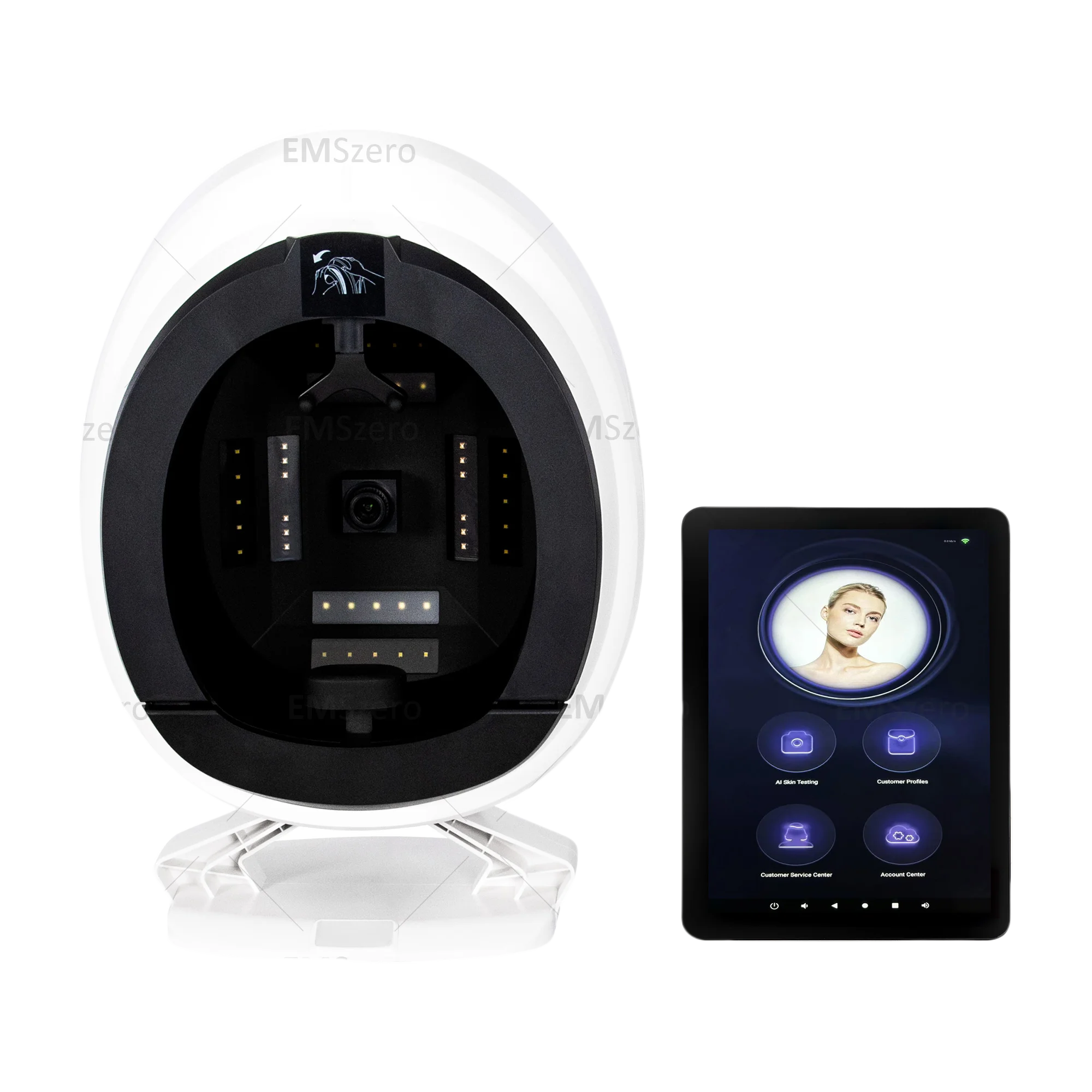
A professional system with a high-resolution industrial camera can provide substantially more image detail than a casual smartphone photograph. The AI Skin Analyzer for Professional 3D Facial Skin Analysis, for example, is specified with a 36MP industrial HD camera and 8-spectrum imaging technology. Its intended setting is professional rather than casual consumer photography.
Step 2: Face and Skin Region Detection
Computer vision can identify facial regions and separate relevant skin areas from hair, eyes, lips, clothing, and background. This matters because including non-skin pixels can distort color and texture calculations.
Step 3: Color Extraction and Normalization
Depending on the system, image information may be processed through RGB values, alternative color spaces, spectral information, or learned visual representations. Normalization can attempt to reduce the effect of illumination and other environmental variables.
However, “AI” does not automatically mean calibrated measurement. Professionals should ask what the device actually measures, how images are standardized, and whether performance has been independently validated.
Step 4: Classification or Prediction
The model may classify tone, identify pigmentation patterns, detect visual characteristics, or generate broader skincare-related observations. More sophisticated systems can analyze several characteristics simultaneously rather than reducing the face to a single tone label.
The MYOSLIM professional system described for this article combines AI and 8-spectrum imaging and is designed to evaluate characteristics including acne, pigmentation, pores, wrinkles, moisture, sebum, tone, and elasticity. That broader workflow is more relevant to a professional skin consultation than a tool designed solely to assign a cosmetic shade.
Step 5: Confidence, Validation and Output
A credible AI workflow should be evaluated by more than its marketing label. Look for information about testing conditions, reference measurements, sample diversity, repeatability, and performance across relevant subgroups.
Research into automated skin-tone classification illustrates why this matters. One recent study found substantially different performance when an AI algorithm was evaluated against Fitzpatrick versus Monk skin-tone categories, demonstrating that the choice of reference scale itself can affect apparent accuracy.
For professionals considering digital analysis, a useful principle is: measure the method, not merely the machine.
AI vs. Human Skin Tone Assessment: Which Is More Accurate?
There is no universal winner. AI can improve consistency and scalability, while human professionals can incorporate context and recognize factors that may not be encoded in an algorithm. Accuracy depends on what is being measured and what reference standard is used.
Human Assessment: Strengths and Sources of Error
- Fast and inexpensive.
- Can incorporate contextual information.
- Useful for consultation and cosmetic interpretation.
- Can recognize makeup, tanning, temporary redness, and unusual presentation.
- Subject to observer variability and environmental conditions.
AI Assessment: Strengths and Sources of Error
- Can standardize repeated workflows.
- Can process multiple facial characteristics consistently.
- Can create structured reports for consultations.
- Can support longitudinal image tracking.
- Depends on image quality and capture conditions.
- Can inherit limitations or bias from training data.
- May perform differently across populations or image conditions.
- Does not automatically provide clinical diagnostic validity.
Accuracy Comparison Matrix
| Criterion | Human | Basic Camera | Calibrated Instrument | AI Imaging System |
| Repeatability | Variable | Variable | High under controlled conditions | Potentially high |
| Scalability | Low | High | Moderate | High |
| Contextual interpretation | High | Low | Low to moderate | Depends on system |
| Lighting sensitivity | High | Very high | Lower under controlled protocols | Depends on capture and normalization |
| Objectivity | Limited | Moderate at best | High | Potentially high for standardized tasks |
| Training-data dependence | Human experience | None in the traditional sense | Low | High |
| Diagnostic capability | Depends on professional qualifications | None by itself | Measurement only | Not established simply by using AI |
What “Accurate” Should Mean in Skin Tone Analysis
Accuracy can mean several different things. An AI model might agree with human labels but disagree with a colorimeter. Another system might produce highly repeatable measurements without claiming to diagnose a condition.
For this reason, ask four questions:
- What exactly is being measured?
- What reference standard is used?
- How repeatable are results under the same conditions?
- Does the measurement serve the intended application?
Can AI Skin Tone Analysis Work Across All Fitzpatrick Skin Types?
It can potentially analyze a broad range of skin tones, but no responsible system should assume identical performance across every skin tone simply because its algorithm works on facial images.
Why Skin-Tone Diversity Matters in AI
AI models learn statistical relationships from their training and evaluation data. If some skin tones, lighting conditions, or facial characteristics are poorly represented, performance may become less reliable for those groups.
Research in dermatology AI continues to document skin-tone-related performance differences. Recent work has specifically investigated methods for reducing subgroup disparities and has emphasized that improved fairness still requires validation outside the datasets used during development.
Fitzpatrick Types I–VI: What the Scale Can and Cannot Tell You
Fitzpatrick types are useful in contexts where phototype and ultraviolet response are relevant. They should not be interpreted as six exact points on a universal color scale.
Modern automated skin-tone research has also explored alternatives such as the Monk Skin Tone Scale and continuous color measurements. A recent automated analysis study found considerably stronger classification performance against Monk categories than against Fitzpatrick categories, illustrating how different labels can produce very different conclusions about model performance.
Common Edge Cases for Computer Vision
- Very dark or very light skin tones.
- Strong hyperpigmentation or localized discoloration.
- Redness or inflammation.
- Recent tanning.
- Heavy foundation or concealer.
- Facial hair and occlusion.
- Strong reflections from sebum or skincare products.
- Mixed lighting.
- Extreme exposure or HDR processing.
How to Evaluate Inclusivity Before Trusting an AI Tool
| Validation Question | What to Look For |
| Who was included? | Diverse skin tones, demographics, and real-world image conditions. |
| Was subgroup performance reported? | Results separated by relevant skin-tone groups rather than one overall accuracy number. |
| What was the reference? | Human labels, colorimetry, spectrophotometry, or another clearly defined standard. |
| Were conditions standardized? | Controlled lighting, camera settings, distance, pose, and exposure. |
| Was external validation performed? | Testing on data different from the development dataset. |
How Lighting, White Balance and Camera Calibration Change Results
Lighting Temperature and Color Cast
Lighting has a direct effect on the light entering a camera. Warm light can shift apparent color toward yellow-red tones, while cooler illumination can create a blue cast.
For before-and-after analysis, the practical goal is not simply “good lighting.” It is consistent lighting. If the lighting changes between sessions, a software system may detect a visual difference that is partly environmental rather than biological.
White Balance
White balance attempts to make neutral objects appear neutral under different lighting. Automatic white balance can change from one image to another, especially when the composition contains large areas of different colors.
For skin analysis, uncontrolled automatic correction can therefore become another source of variation. A standardized workflow should use consistent capture settings whenever the equipment permits it.
Camera Calibration and Sensor Differences
Two cameras can record different RGB values from the same face because their sensors, lenses, image profiles, and processing pipelines differ.
This is one reason a professional imaging system can be preferable to asking clients to submit random smartphone photographs when repeatability is important. The objective is not merely a sharper photograph; it is a more controlled measurement environment.
Exposure, HDR and Computational Photography
Modern phones perform extensive processing before the final image is saved. HDR, local contrast adjustments, noise reduction, face detection, sharpening, and other computational techniques can alter the image used for analysis.
These features are useful for ordinary photography but are not necessarily designed for quantitative skin-color measurement.
A Reproducible Skin Tone Analysis Workflow
Step 1: Prepare the Skin and Remove Confounding Factors
When the objective is to compare skin appearance rather than makeup, remove foundation, concealer, tinted sunscreen, and other products that can change the apparent color. Where appropriate, also allow temporary redness caused by heat, exercise, or recent cosmetic procedures to settle before comparison.
Step 2: Standardize the Environment
Use the same room, lighting setup, background, camera, and approximate time of day when tracking changes. Avoid mixing daylight with artificial light.
Step 3: Capture a Controlled Image
Maintain a consistent distance, facial angle, focus, and exposure. Keep the face in a repeatable position. For professional workflows, standardized imaging can reduce the environmental variability that makes longitudinal comparisons difficult.
Step 4: Analyze Multiple Facial Regions
Do not assume one cheek represents every part of the face. The forehead, cheeks, nose, and jaw can have different pigmentation, vascular appearance, texture, and exposure history.
A multi-region approach can help distinguish a localized difference from a broader change in facial appearance.
Step 5: Cross-Check the Result
When high precision matters, compare image-based findings with an appropriate reference method. A consumer photograph may be sufficient for general cosmetic decisions, while research or quantitative applications may justify calibrated colorimetry or spectrophotometry.
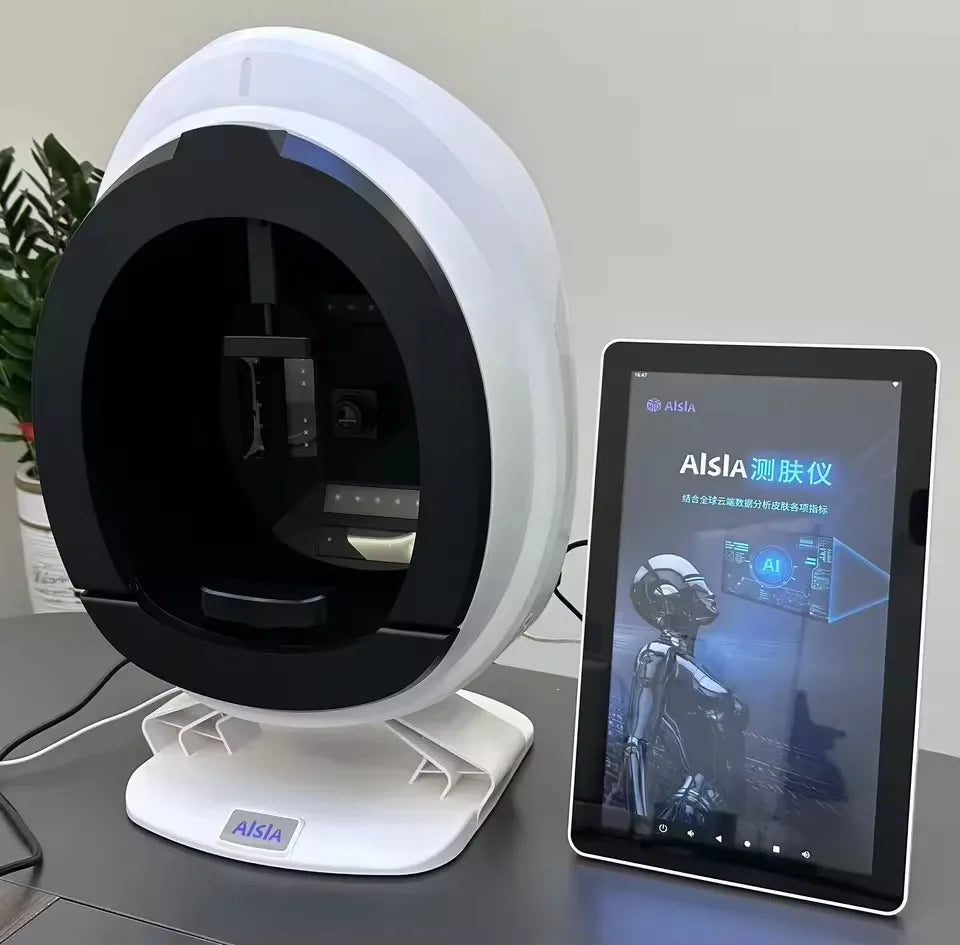
For professional consultations, a system such as the professional AI facial skin analysis system can fit naturally into a standardized workflow by combining high-resolution facial imaging with AI-supported analysis and digital reporting. Its stated capabilities include analysis of tone, pigmentation, moisture, sebum, pores, wrinkles, acne, and elasticity.
How to Read Skin Tone Results: A Practical Decision Framework
If the Result Is Consistent Across Images
When repeated images captured under standardized conditions produce similar results, confidence in the measurement process increases. Consistency does not automatically prove biological accuracy, but it is an important quality-control signal.
If Results Change Significantly With Lighting
Large differences between images taken under different lighting should first trigger a capture-quality review. Check illumination, white balance, exposure, shadows, camera position, and image processing before concluding that the skin itself has changed.
If Tone and Undertone Results Conflict
Remember that tone and undertone describe different concepts. A person can have a particular measured lightness and color while still being described cosmetically as having a warm, cool, or neutral undertone.
When to Use Instrumental or Professional Assessment
Consider a professional or instrumental approach when results will influence repeated treatment tracking, research, standardized cosmetic consultation, or other applications where consistency matters more than convenience.
Common Skin Tone Analysis Mistakes
Analyzing Skin Under Colored or Uneven Lighting
A colored wall, warm lamp, strong window light, or partial shadow can alter the captured appearance. Standardize the environment before interpreting changes.
Using a Phone Camera Without Standardization
A phone is convenient, but convenience does not equal measurement consistency. Different phones and even different camera modes can process the same face differently.
Confusing Undertone With Skin Tone
“Warm,” “cool,” and “neutral” are commonly used cosmetic descriptors. They should not be treated as substitutes for measured skin-color coordinates.
Treating Fitzpatrick Type as a Precise Color Measurement
Fitzpatrick classification serves a different purpose from colorimetry. Using it as a universal numerical representation of skin color can oversimplify the underlying biology and create labeling problems in AI datasets.
Assuming an AI Result Is a Medical Diagnosis
An AI-generated analysis report is not automatically a clinical diagnosis. A facial imaging system may help organize observations and support cosmetic consultations, but suspected medical conditions require appropriate professional evaluation.
How Skin Tone Analysis Is Used in Cosmetics, Skincare and Personalization
Foundation and Concealer Matching
Skin-tone information can support cosmetic shade selection, particularly when combined with undertone assessment and real-world product testing. However, a digital result should be treated as a decision aid rather than an infallible replacement for evaluating the actual cosmetic formula.
Skincare Personalization
Image-based analysis can help organize visible characteristics such as uneven tone, pigmentation patterns, pores, wrinkles, and apparent moisture-related changes. This can make a consultation more structured and provide a baseline for future comparison.
For professionals building a broader beauty-device workflow, the Skin and Beauty Care Devices collection can also provide context for how digital analysis fits alongside other skincare equipment.
Professional Beauty and Salon Consultations
Standardized facial imaging can help professionals move beyond subjective descriptions. Instead of simply saying that a client's skin “looks uneven,” a structured report can organize multiple observable characteristics and create a reference point for future consultations.
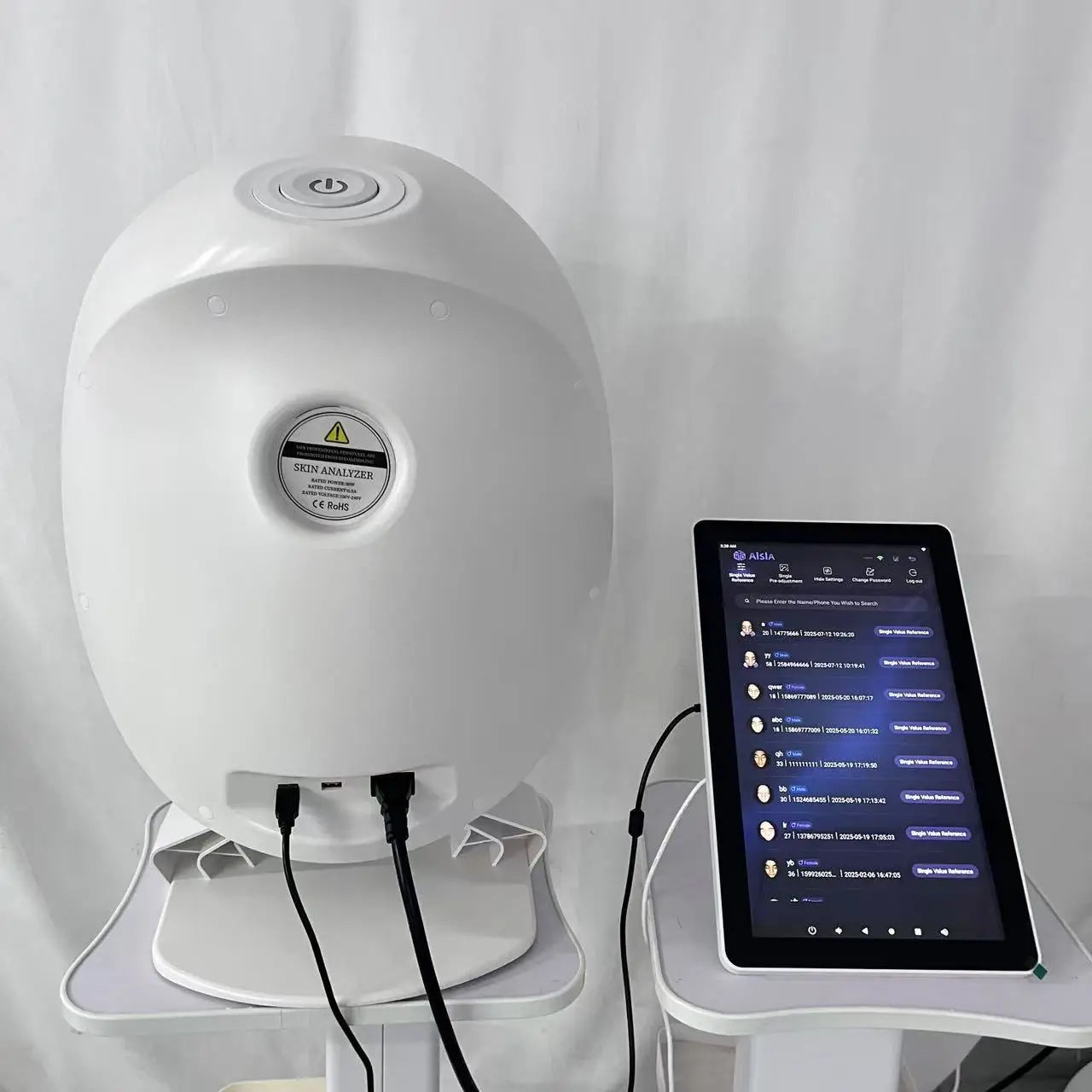
The AI Skin Analyzer for professional facial analysis is designed for beauty salons, skincare clinics, and skin-management businesses. Its reported workflow combines 36MP imaging, 8-spectrum technology, AI analysis, digital reports, and image tracking. These capabilities are most appropriately understood as tools for professional skin-management workflows rather than claims of laboratory-grade colorimetry or independent medical diagnosis.
Telehealth and AI-Powered Skin Platforms
Remote skin analysis introduces additional considerations: image quality, consent, privacy, secure handling, algorithm validation, and the limitations of interpreting skin from photographs.
AI systems can potentially improve scalability, but scaling an unreliable measurement process does not make the process reliable. Privacy and performance validation should therefore be considered alongside technical features.
How to Evaluate an AI Skin Tone Analyzer Before Using It
Check the Measurement Method
Ask whether the system uses ordinary RGB photography, calibrated colorimetry, multi-spectrum imaging, computer vision, machine learning, or a combination. “AI-powered” is not itself a measurement methodology.
Look for Validation Data
Ideally, validation should identify the reference standard, sample characteristics, image conditions, and performance metrics. A single overall accuracy percentage is less informative if subgroup performance is unknown.
Check Performance Across Diverse Skin Tones
Do not assume that performance on one population generalizes to another. Look for evidence covering a broad range of skin tones and real-world conditions.
Review Privacy and Image-Handling Policies
Facial images can be sensitive data. Before deploying a digital facial-analysis workflow, professionals should understand how images are captured, stored, transmitted, accessed, and deleted.
Ask Whether the Output Is Diagnostic or Cosmetic
This distinction should be explicit. A professional skincare report can support consultation and personalization without being presented as a medical diagnosis.
Skin Tone Analysis Reference Table: Methods, Accuracy and Best Uses
Quick Method Comparison
| Goal | Recommended Approach | Why |
| Quick cosmetic assessment | Human visual assessment plus controlled photography | Accessible and practical for everyday consultations. |
| Phototype assessment | Fitzpatrick classification where appropriate | Designed around phototype rather than exact color measurement. |
| Quantitative skin color | Colorimetry | Provides standardized color coordinates under controlled conditions. |
| Spectral research | Spectrophotometry | Captures richer spectral reflectance information. |
| Professional facial analysis | Validated AI or multi-spectrum imaging system | Can combine imaging, automated analysis, reporting, and longitudinal tracking. |
| Medical diagnosis | Qualified clinician and appropriate diagnostic methods | Skin imaging alone should not be assumed to provide a medical diagnosis. |
Which Method Is Best for Which Goal?
There is no single “most accurate” skin tone analysis method for every situation. If the goal is laboratory-style quantitative color measurement, calibrated instrumentation has advantages. If the goal is scalable professional facial analysis, a validated imaging system may be more practical. If the goal is cosmetic shade selection, human interpretation combined with controlled digital references can be sufficient.
The key is matching the measurement method to the decision that follows.
Limitations, Bias and Diagnostic Boundaries
Measurement Is Not the Same as Diagnosis
Skin tone analysis can describe appearance and measurable color characteristics. It cannot, by itself, establish the cause of a skin change or diagnose a dermatological condition.
Model and Dataset Bias
AI systems can inherit biases from their development data. Recent dermatology AI research continues to examine disparities in performance associated with skin tone, particularly where darker skin is underrepresented or image characteristics differ between groups.
This is not an argument against AI. It is an argument for transparent validation. A responsible buyer should ask whether the system has been evaluated on the populations and image conditions in which it will actually be used.
Image Quality and Environmental Limitations
Lighting, makeup, shadows, camera differences, exposure, facial positioning, and computational photography can all affect image-based analysis. Even sophisticated algorithms cannot recover information that was never captured reliably.
When a Dermatologist or Validated Instrument Is More Appropriate
Escalate to qualified clinical assessment when a skin change is persistent, concerning, symptomatic, rapidly changing, or potentially medical. For high-precision research or quantitative color measurement, use an appropriately validated instrument and protocol rather than assuming a general-purpose camera or AI analyzer provides equivalent measurement.
Skin Tone Analysis Glossary
Fitzpatrick Skin Type
A six-category phototype classification associated primarily with skin response to ultraviolet exposure. It is not a substitute for precise instrumental color measurement.
Melanin
A major biological pigment contributing to skin coloration and optical properties.
Colorimetry
The quantitative measurement of color, often using standardized color coordinates.
CIELAB
A standardized color space representing lightness and two chromatic dimensions, commonly written as L*, a*, and b*.
Skin Reflectance
The light reflected from the skin after illumination interacts with its optical properties.
White Balance
A camera-processing adjustment intended to represent neutral colors consistently under different illumination conditions.
Camera Calibration
A process intended to improve consistency between captured image values and a defined reference or measurement standard.
Computer Vision
The use of computational methods to extract and interpret information from images or video.
Frequently Asked Questions About Skin Tone Analysis
What is skin tone analysis and how does it work?
Skin tone analysis evaluates visible or measurable skin color using visual assessment, standardized scales, colorimetry, spectrophotometry, digital imaging, or AI computer vision. The reliability of the result depends heavily on the measurement method and capture conditions.
How accurate is AI skin tone analysis compared with human assessment?
Neither is universally more accurate. AI can improve repeatability and scalability, while humans can incorporate context. Accuracy should be judged against a defined reference standard and validated under representative conditions.
What is the difference between skin tone, undertone, and skin condition?
Skin tone describes observable or measurable color and lightness. Undertone is a cosmetic color descriptor, while skin condition refers to broader characteristics such as pigmentation, acne, wrinkles, pores, redness, or moisture-related appearance.
How can lighting, white balance, and camera calibration affect skin tone analysis?
They can substantially change the colors recorded by a camera. Consistent illumination, camera settings, positioning, and white balance improve repeatability between images.
Can skin tone analysis work accurately across all Fitzpatrick skin types?
It can be designed to cover a broad range of skin tones, but performance must be validated rather than assumed. Fitzpatrick categories themselves are also not equivalent to precise color measurements.
What is the most accurate method for measuring skin tone?
For quantitative color measurement, calibrated colorimetry provides objective color coordinates, while spectrophotometry can provide richer spectral information. The appropriate method depends on the intended application.
Is an AI skin tone analyzer more reliable than a phone camera?
A purpose-built professional system can provide a more standardized workflow than an uncontrolled phone photograph, particularly when it uses dedicated imaging hardware and consistent capture conditions. However, reliability still depends on the system's methodology and validation.
Can RGB values accurately determine skin tone?
RGB values can describe colors within an image, but they are strongly affected by the camera, illumination, white balance, and image processing. Raw RGB values should not automatically be treated as standardized physical measurements of skin color.
Why does my skin tone look different in photos taken with different cameras?
Different cameras use different sensors, lenses, image-processing pipelines, white-balance algorithms, and exposure settings. Those differences can change the recorded appearance even when the skin itself has not changed.
Can skin tone analysis diagnose skin conditions?
No. Skin tone analysis can support observation and cosmetic personalization, but an imaging result should not be treated as an independent medical diagnosis. Suspected dermatological conditions require appropriate professional evaluation.
Conclusion: The Best Skin Tone Analysis Method Depends on the Question
Skin tone analysis is more sophisticated than assigning a face to a color category. Human perception, Fitzpatrick classification, RGB photography, CIELAB colorimetry, spectrophotometry, and AI imaging each answer somewhat different questions.
Human assessment remains useful because it incorporates context, but it can vary between observers. Fitzpatrick classification remains valuable for phototype-related applications but should not be mistaken for a precise colorimeter. Colorimetry and spectrophotometry offer stronger quantitative measurement under controlled conditions. AI can add repeatability, scalability, multi-feature analysis, and structured reporting when its imaging workflow, training data, validation, and limitations are understood.
For professional skincare businesses, the strongest approach is usually not to ask whether AI or humans are “better.” Instead, ask whether the system produces sufficiently consistent and useful information for the decision being made. A professional facial imaging workflow can be particularly valuable when the objective is to document multiple skin characteristics, standardize consultations, and track changes over time.
For professionals exploring digital facial analysis, the AI Skin Analyzer for Professional 3D Facial Skin Analysis is one option to evaluate alongside the imaging methodology, workflow, reporting capabilities, and validation criteria discussed above.
For broader professional skincare equipment, you can also explore body care and health devices and related resources in the Body & Face Blog. The goal should remain the same: use measurable, repeatable information to support better-informed skincare conversations without confusing cosmetic analysis with medical diagnosis.
Pillar Article: AI Facial Analyzer for Estheticians: Best Options Compared













