

Does Electrical Neuromuscular Stimulation Really Work?
Yes. Electrical neuromuscular stimulation (EMS) can help activate muscles, support rehabilitation, and complement exercise-based recovery when used correctly. EMS sends controlled electrical impulses through electrodes to trigger muscle contractions, while TENS primarily targets sensory nerves to help modulate pain. The best choice between wireless and wired systems depends on your treatment goal, desired intensity, mobility, electrode coverage, and how often you plan to use the device.
How EMS and TENS Technology Works
EMS and TENS are both forms of electrical stimulation, but they are designed for different purposes. EMS targets motor nerves and muscles to create controlled contractions, making it relevant to muscle activation, rehabilitation, and certain recovery routines. TENS primarily stimulates sensory nerves and is commonly used as a non-drug approach to temporary pain relief.
When comparing an EMS machine, a wireless vs wired TENS unit, or other muscle recovery devices, look beyond the word “stimulation.” The waveform, intensity range, available programs, electrode placement, and intended use can affect the experience and results.
Evidence for Muscle Recovery and Pain Relief
Research on electrical stimulation supports its use as a complementary tool in selected rehabilitation and recovery settings, although results vary according to the device, protocol, body area, and individual. EMS should not be viewed as a replacement for strength training, physical therapy, medical care, or a diagnosis when an underlying injury or condition is present.
For recovery, electrical stimulation may be useful when the goal is to encourage muscle activation or complement a structured routine. For pain management, TENS-style stimulation may be more appropriate than muscle-focused EMS. Understanding this distinction helps you make a more accurate EMS machine comparison instead of assuming every electrical stimulation device performs the same function.
Wireless vs Wired Muscle Stimulator: Which One Is Better for You?
Wireless vs Wired Muscle Stimulator — Quick Comparison
Side-by-Side Feature Table
| Feature | Wireless Muscle Stimulator | Wired Muscle Stimulator |
|---|---|---|
| Portability | Highly portable with fewer cables | Less portable because electrodes connect to a control unit |
| Power Output | Depends on the device and battery system | Often provides stable output from a dedicated control unit |
| Signal Stability | Generally reliable but may depend on device design and placement | Direct cable connections provide consistent signal transmission |
| Ease of Use | Quick setup and often app- or remote-controlled | More hands-on setup with a separate control unit |
| Battery Life | Requires charging and has a finite operating time | May use replaceable batteries or continuous power, depending on the model |
| Electrode Coverage | Usually prioritizes compactness and convenience | Often supports more flexible multi-channel configurations |
| Best For | Travel, convenience, everyday recovery, and users who value mobility | Structured home therapy, multi-area use, and users who prioritize control |
Key Differences at a Glance
- Wireless systems prioritize mobility and convenience.
- Wired systems prioritize direct control and configuration flexibility.
- Neither design is automatically better for every user.
- The right choice depends on treatment goals, electrode coverage, portability, and long-term use.
Who Should Choose Each Type?
- Choose wireless if you travel frequently, want a compact portable EMS device, or prefer minimal cables during everyday recovery.
- Choose wired if you want a dedicated control unit, broader electrode configurations, or a more structured home therapy setup.
- Consider both types if you want a portable device for convenience and a more configurable system for planned sessions.
Explore the technology behind better recovery

Wireless muscle stimulation in action — flexible recovery anywhere
What Is a Wireless Muscle Stimulator?
A wireless muscle stimulator is a portable EMS device that delivers electrical impulses through electrode pads without requiring a cable connection between the stimulation unit and a separate wired controller. Many models use rechargeable batteries and may be operated through an integrated control system, remote, or app.
How a Wireless Muscle Stimulator Works
After the electrodes are positioned on the intended muscle area, the device sends programmed electrical impulses that can produce controlled stimulation. The compact design reduces cable clutter and makes the device easier to transport between home, work, travel, or recovery sessions.
Wireless systems are particularly attractive to users who value quick setup and mobility. However, a wireless design does not automatically mean stronger stimulation or better clinical performance. Always evaluate the device's intensity range, program options, electrode quality, and intended use.
- Compact and portable design
- Rechargeable battery operation
- Minimal cable management
- Quick setup for everyday use
- Useful for convenience-focused users and frequent travelers
What Is a Wired Muscle Stimulator?
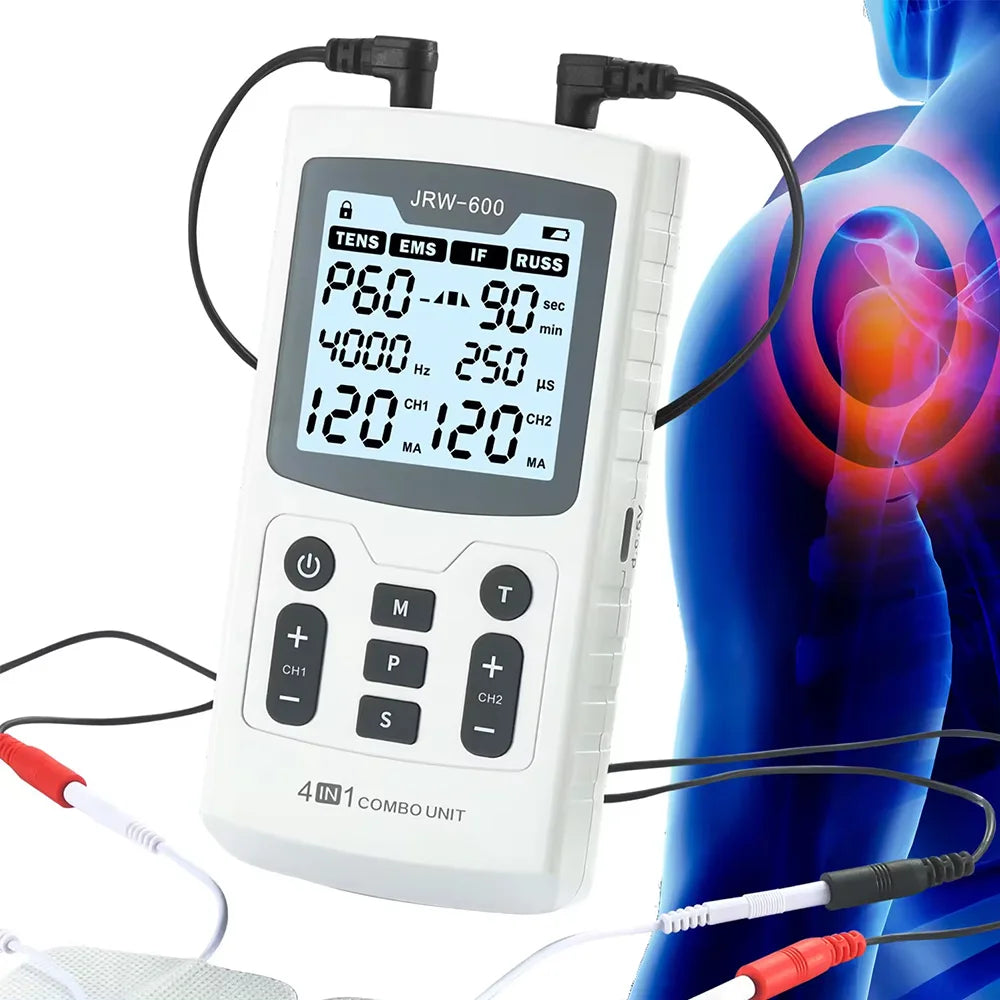
A wired muscle stimulator uses electrode pads connected by cables to a dedicated control unit. This design is common in home physical therapy devices and professional rehabilitation settings because the user can position multiple electrodes and manage stimulation from a separate controller.
How Wired EMS Systems Deliver Stimulation
The control unit sends electrical impulses directly through the connected electrode leads. Depending on the model, wired systems may provide multiple channels, a wider range of programs, and more flexibility for targeting different muscle groups during a structured session.
The trade-off is reduced mobility. The cables and controller require more setup and make wired devices less convenient for moving around during treatment. For users who prioritize control and planned sessions over portability, however, a wired muscle stimulator can be a practical home physical therapy device.
- Direct connection between the controller and electrodes
- Consistent signal transmission
- Potentially broader multi-channel configurations
- Useful for structured home and clinical sessions
Wireless vs Wired Muscle Stimulator: Key Differences Explained
Portability and Mobility
Wireless stimulators have the clear advantage when portability matters. Fewer cables make them easier to pack, set up, and use in different locations. This can make a wireless muscle stimulator especially convenient for travel or short recovery sessions.
Wired devices are better suited to stationary use. Their cables may limit movement, but the separate controller can also provide a more deliberate and organized treatment setup.
Output Consistency and Signal Quality
In a wireless vs wired muscle stimulator comparison, signal quality depends more on the specific device design than on the label alone. Wired systems send stimulation through a direct physical connection, while wireless devices rely on their internal electronics and battery system.
A high-quality wireless device can provide reliable stimulation, while a poorly designed wired device may still have limitations. Compare the actual intensity range, programs, controls, and electrode connection quality rather than assuming that one format always delivers superior results.
Electrode Reliability and Coverage
Electrode quality affects comfort, signal transmission, and consistency in both device types. Worn, dirty, or poorly adhered pads can reduce performance regardless of whether the system is wireless or wired.
Wired systems often provide more flexibility for using multiple electrode pairs or channels. Wireless models typically emphasize compactness, which may limit coverage depending on the design. If you need to stimulate several muscle groups in one session, check the number of channels and supported electrode configurations before buying.
Battery Life and Charging
Wireless devices require regular charging. Battery life becomes especially important for frequent users and travelers because a low battery can interrupt a planned session.
Wired systems may reduce dependence on an integrated rechargeable battery, although the exact power source varies by model. If you plan to use a device frequently, compare charging time, expected battery life, replacement battery requirements, and the availability of compatible accessories.
Durability and Long-Term Ownership Cost
Long-term cost depends on more than the initial purchase price. Wireless devices may require attention to battery health and charging components, while wired systems may involve replacing cables, electrode leads, or pads over time.
For either type, the most important ownership costs often include replacement electrodes, compatible accessories, battery components, and device durability. A slightly higher upfront cost may provide better value if the device is easier to maintain and replacement parts are readily available.
Pros and Cons of Wireless vs Wired Muscle Stimulators
Wireless Muscle Stimulator Pros and Cons
- Pros: Portable, compact, quick to set up, travel-friendly, and easier to use with minimal cable management.
- Cons: Requires charging, depends on battery capacity, and may offer fewer electrode channels depending on the design.
Wired Muscle Stimulator Pros and Cons
- Pros: Direct electrode connections, consistent signal transmission, flexible configurations, and strong suitability for structured therapy sessions.
- Cons: Less portable, more cable management, and less convenient for moving during a session.
Which Muscle Stimulator Is Better for Your Needs?
Home Physical Therapy
A wired system may be a strong choice for structured home physical therapy because it can offer a dedicated controller and flexible electrode placement. However, the best device depends on the treatment plan provided by a qualified healthcare professional and the features required for your specific condition.
Sports Recovery
Athletes and active users may prefer a wireless muscle stimulator for quick, convenient sessions after training or during travel. A wired system may be preferable when a user wants more configuration options or a planned multi-area session.
Chronic Pain Management
For pain management, the most important consideration is whether the device is designed for the appropriate form of electrical stimulation. TENS is generally associated with pain-relief applications, while EMS is designed primarily for muscle stimulation. If you are managing persistent or unexplained pain, consult a healthcare professional rather than relying solely on an electrical stimulation device.
Travel and Everyday Portability
Wireless systems are usually the most convenient choice for frequent travelers. They take up less space, reduce cable clutter, and can be easier to use when you do not have a dedicated treatment area.
Clinical Rehabilitation
Clinical rehabilitation often requires precise protocols, specific electrode placement, and professional supervision. Wired systems may be preferred in some clinical environments because of their control and configuration options, but device selection should follow the requirements of the rehabilitation plan.
Buying Guide: How to Choose the Best Muscle Stimulator
Features That Matter Most
- Intensity range: Look for enough adjustment range to support gradual progression without forcing users to start at an uncomfortable level.
- Programs and modes: Consider whether the available settings match your intended use, such as muscle activation, recovery, or pain management.
- Electrode channels: More channels can provide greater flexibility for targeting multiple areas, but may also increase setup complexity.
- Electrode quality: Reusable electrodes should adhere reliably and be compatible with the control unit.
- Controls: A simple interface can improve everyday usability, while advanced controls may be valuable for structured routines.
- Portability: Wireless systems are generally easier to transport, while wired systems may offer more configuration flexibility.
- Build quality: Check the construction of the controller, cables, charging system, and electrode connectors.
Budget and Long-Term Cost
Compare the total cost of ownership rather than only the purchase price. Consider replacement electrodes, charging equipment, batteries, cables, and other compatible accessories. A wireless device may be more convenient but require battery replacement or charging maintenance. A wired system may have fewer battery-related costs but could require replacement leads or cables.
Safety and Contraindications
Follow the manufacturer's instructions and use electrodes only as directed. Electrical stimulation devices should not be placed across the front or side of the neck, across the chest in a way that could affect the heart, or over areas where use is contraindicated by the device instructions or a healthcare professional.
People with implanted electronic medical devices, certain medical conditions, or other health concerns should seek professional advice before using electrical stimulation. Do not use EMS or TENS to delay evaluation of severe, unexplained, or worsening symptoms.
Common Buying Mistakes
- Choosing portability without checking whether the device meets your actual treatment needs.
- Assuming every EMS and TENS device provides the same type of stimulation.
- Ignoring electrode quality and replacement costs.
- Buying based only on the maximum intensity setting.
- Overlooking battery life, charging time, or cable durability.
- Failing to check whether the device is appropriate for your intended body area and use.
How to Use a Muscle Therapy Machine Effectively
Electrode Placement Tips
- Read the device instructions before the first session.
- Clean and dry the target skin area.
- Place electrodes according to the manufacturer's placement guidance.
- Make sure the pads have good contact with the skin before increasing intensity.
- Do not place electrodes on prohibited areas or over damaged skin.
Choosing EMS Programs
Select a program that matches your intended goal. Muscle-focused EMS programs are designed for stimulation and activation, while TENS-oriented programs are intended for pain-management applications. Start with a comfortable setting and increase intensity gradually only when appropriate for the device and your tolerance.
Session Duration and Frequency
Use the session duration and frequency recommended by the device manufacturer or your healthcare professional. More intense or longer sessions are not automatically better. Consistent, appropriate use is generally more useful than simply selecting the highest available intensity.
After each session, inspect the electrodes and store the device according to the manufacturer's instructions. Good skin preparation and proper electrode care can help maintain consistent performance.
Compact wireless EMS device designed for convenience and mobility
Recommended Wireless and Wired Muscle Stimulators
Best Wireless Option
A wireless muscle stimulator is the best fit for users who prioritize portability, quick setup, and everyday convenience. Look for reliable controls, sufficient battery life, comfortable electrodes, and an intensity range appropriate for your intended use.
Best Wired Option
A wired muscle stimulator is often the better choice for users who want a dedicated controller, stable direct connections, and more flexibility for structured electrode placement. This format can be particularly practical for planned home therapy sessions.
Best Value Choice
The best value is not necessarily the cheapest device. Choose the model that matches your most frequent use while keeping replacement electrodes, charging requirements, accessories, and long-term durability in mind. For many casual users, a well-designed wireless device may offer the best convenience-to-cost balance. Users who need more configuration flexibility may get greater value from a wired system.
Frequently Asked Questions
Is a wireless muscle stimulator better than a wired model?
Not universally. A wireless muscle stimulator is generally better for portability, convenience, and travel, while a wired model may be better for structured sessions, flexible electrode configurations, and users who prioritize direct control. The best option depends on your intended use.
Can wireless EMS deliver the same treatment intensity as wired devices?
It depends on the specific devices. Wireless EMS does not automatically have lower output than wired EMS, and wired does not automatically mean more effective. Compare the actual intensity range, programs, electrode configuration, and intended use of each device.
Which type is better for home physical therapy?
Either type can be appropriate depending on the treatment plan. Wired devices may offer more control and electrode-placement flexibility, while wireless devices can make regular home use more convenient. Follow the recommendations of your healthcare professional when electrical stimulation is part of rehabilitation.
Are wireless muscle stimulators accurate for athletic recovery?
Wireless devices can be convenient for athletic recovery when they provide appropriate programs, reliable stimulation, and properly maintained electrodes. They should complement, rather than replace, fundamentals such as appropriate training, rest, hydration, and professional care when an injury is suspected.
Do wired EMS machines require less maintenance?
Not necessarily. Wired systems avoid some battery-related maintenance but may require care for cables, connectors, and electrode leads. Wireless systems require charging and battery care. Both types require proper electrode maintenance and storage.
What are the long-term costs of wireless vs wired muscle stimulators?
Long-term costs can include replacement electrodes, batteries, charging components, cables, and other accessories. Wireless devices may have more battery-related costs, while wired devices may require replacement leads or cables. Check accessory availability before buying.
Can both types be used for TENS pain relief?
Only if the device is specifically designed for TENS or includes an appropriate TENS mode. EMS and TENS have different primary purposes, so do not assume that every muscle stimulator can provide TENS pain relief.
Which muscle stimulator is best for frequent travelers?
A wireless muscle stimulator is usually the more convenient option for frequent travelers because it is compact, easier to pack, and has fewer cables. Check battery life, charging requirements, and the device's travel-friendly design before choosing.
For a well-rounded self-care routine, explore complementary tools within the Beauty & Self-Care Blog and Body & Face Blog collections.
Related Guide: Best Electric Muscle Stimulator Device Compared for Home Use













