

Body Contouring Machine With RF: 2026 Comparison Guide
Choosing a body contouring machine with RF is less about finding the device with the longest feature list and more about matching the technology, controls, applicators, safety systems, and service support to your treatment goals. Two machines may both advertise RF body sculpting while differing significantly in RF specifications, energy controls, treatment coverage, temperature management, operator requirements, and intended setting.
For buyers comparing equipment in 2026, the practical approach is to evaluate measurable specifications first, then consider treatment areas, workflow, safety documentation, ownership costs, and realistic cosmetic expectations. This guide uses that specification-first framework rather than simply ranking machines by marketing claims.
What Is a Body Contouring Machine With RF?
A body contouring machine with RF uses radiofrequency (RF) energy to deliver controlled electromagnetic energy into targeted tissue during a cosmetic treatment. Depending on the device design and intended use, RF may be used to produce controlled tissue heating associated with temporary changes in skin appearance, firmness, or contour.
RF body contouring is generally considered a non-invasive aesthetic technology. It does not involve surgical incisions, but non-invasive does not mean risk-free. The actual treatment parameters, applicator design, temperature control, operator technique, and device labeling all matter.
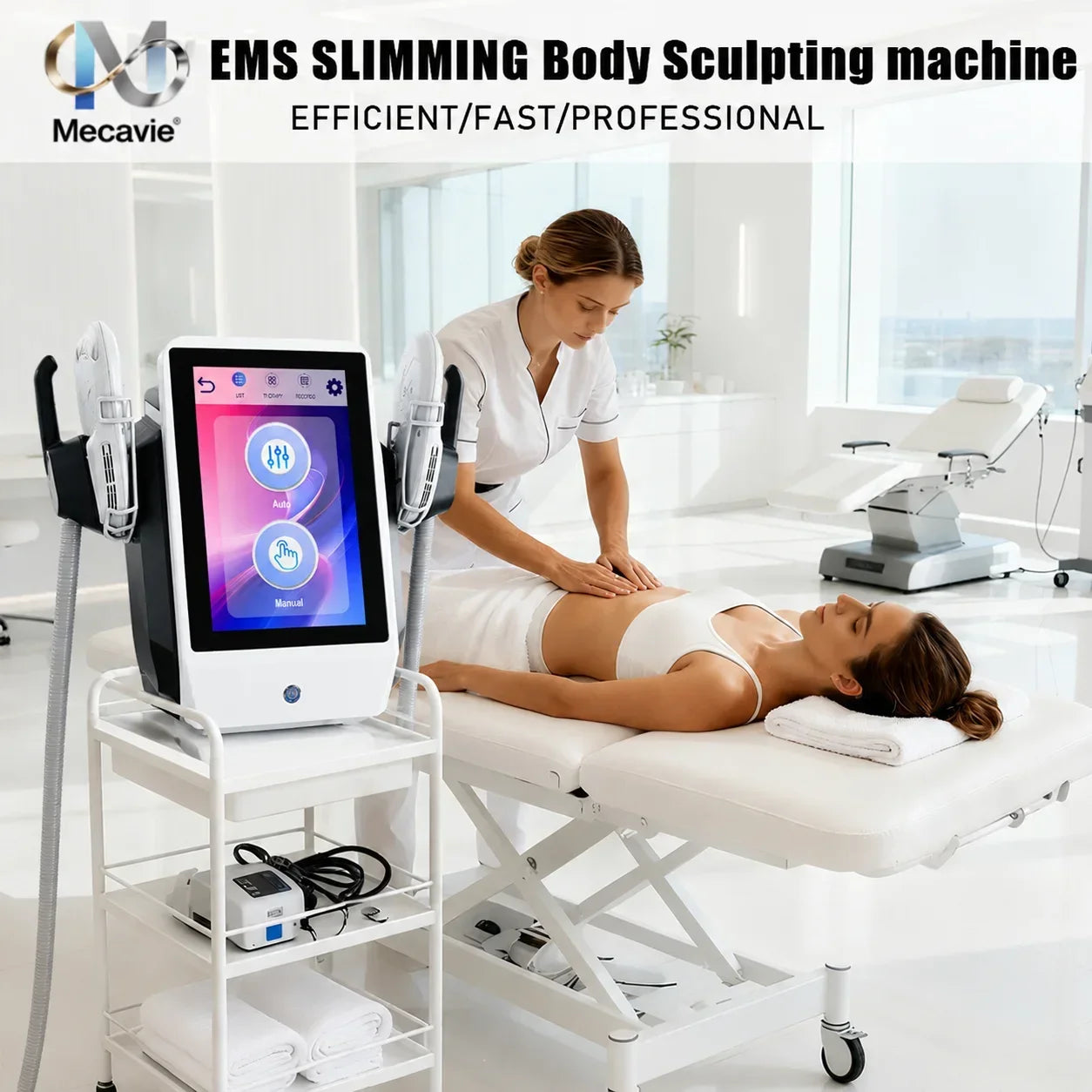
How Radiofrequency Energy Works in Body Treatments
Radiofrequency technology generates electromagnetic energy that can produce controlled heating in tissue. In aesthetic applications, this heating is used as part of protocols intended to improve the appearance of treated areas. The depth and distribution of energy depend on the device's RF frequency, electrode or applicator configuration, power delivery, treatment protocol, and tissue characteristics.
That is why the phrase "RF body contouring" alone is not enough to evaluate equipment. Buyers should examine the actual technical documentation rather than assuming every RF device produces the same treatment effect.
RF Body Contouring vs. Weight Loss
RF body contouring should not automatically be interpreted as weight-loss treatment. Cosmetic contouring focuses on the appearance of a specific body area, while weight loss involves broader changes in body mass and requires different approaches.
When comparing machines, be cautious with claims promising dramatic fat loss, guaranteed inches lost, permanent results, or effortless weight reduction. A more defensible evaluation focuses on the device's documented intended use, operating specifications, treatment protocol, and cosmetic objectives.
Common Cosmetic Goals: Skin Tightening and Body Sculpting
People typically investigate RF body contouring when they want to address concerns such as the appearance of lax skin, uneven contour, or localized areas that have been difficult to improve through lifestyle routines alone. Expectations should remain cosmetic and device-specific rather than being framed as guaranteed medical outcomes.
For readers exploring other equipment for body-focused wellness and beauty routines, Body Care and Health Devices provides a broader category of relevant devices.
RF Body Contouring Machine Specifications Compared
The most useful comparison begins with specifications that can actually influence how a machine is operated. Instead of treating every feature as equally important, prioritize the specifications that determine energy delivery, treatment coverage, control, safety, and ownership.
RF Frequency
RF frequency describes the frequency at which the device delivers radiofrequency energy. Different RF configurations can interact with tissue differently, so frequency should be evaluated together with applicator construction, electrode configuration, energy delivery, and the manufacturer's documented intended use.
A higher or lower number is not automatically better. Buyers should ask what the stated frequency is designed to accomplish and whether the manufacturer provides meaningful technical documentation for that configuration.
Energy Output and Intensity Settings
Energy output tells you more about a machine than a headline wattage number alone. Look for clearly documented intensity controls, operating ranges, adjustable treatment parameters, and information explaining how the operator selects appropriate settings.
Maximum power should never be treated as a proxy for treatment quality. Excessive energy without appropriate controls can create unnecessary safety concerns, while inadequate control can make it harder to tailor a treatment protocol.
RF Applicator Design and Treatment Coverage
Applicator geometry affects contact with the treatment area, coverage, maneuverability, and workflow. Smaller applicators can be useful where precision matters, while larger treatment surfaces may make sense for broader body zones.
For professional buyers, also consider how quickly an operator can reposition or switch applicators and whether the design is practical for repeated sessions.
Treatment Areas and Body-Zone Compatibility
Do not assume that every RF machine is appropriate for every body area. Check the manufacturer's stated treatment areas and device instructions. Common cosmetic body-contouring zones may include the abdomen, hips, thighs, arms, or buttocks, but the appropriate areas depend on the exact device and its labeling.
Temperature Monitoring and Heat Control
Temperature management is one of the most important specifications when evaluating an RF system. Buyers should look for documented temperature controls, monitoring capabilities, treatment limits, and protective mechanisms rather than relying on vague references to "safe heating."
Treatment Modes and Session Controls
Automatic programs can simplify operation by providing preset treatment routines, while manual controls may allow trained operators to adjust parameters according to the device's protocol. A system that provides both approaches can offer flexibility for different operator experience levels.
The Emsnova EMS Body Sculpting Machine combines HIEMT muscle stimulation with RF and provides both automatic and manual operation. Its documented specifications include a 6500W power rating, AC power supply, and CE and RoHS certifications. These specifications make it particularly relevant for buyers comparing multifunctional professional-style body-contouring equipment.
Safety Mechanisms, Certifications, and Manufacturer Documentation
Safety evaluation should include more than a certification badge. Look for documented operating instructions, treatment parameters, electrical safety information, temperature controls, monitoring systems, and clear contraindication guidance.
Depending on the equipment and market, buyers may also encounter references to FDA requirements, CE marking, RoHS, ASTM standards, or CPSC requirements. These terms are not interchangeable. A CE mark, for example, should not automatically be interpreted as FDA clearance, while compliance with an electrical or product-safety standard does not establish that a device is clinically effective for every advertised cosmetic outcome.
Warranty, Training, Service, and Total Cost of Ownership
The purchase price is only one part of the cost. Professional operators should also evaluate training, installation, consumables, replacement parts, technical support, downtime, warranty duration, and repair availability.
The Emsnova system is listed with a 2-year warranty and 5-year spare-parts service. For a salon or aesthetic business, that type of support can be more consequential over time than a small difference in initial purchase price.
RF Body Contouring Machine Comparison Matrix
| Specification | What to Compare | Why It Matters |
| RF frequency | Exact frequency and technical documentation | Helps establish how the system is designed to deliver RF energy |
| Energy/intensity | Output range and adjustable settings | Determines how treatment parameters can be controlled |
| Applicators | Size, configuration, contact design, and available options | Affects precision, coverage, and workflow |
| Treatment areas | Documented compatible body zones | Prevents purchasing equipment that does not match your intended services |
| Temperature control | Monitoring, limits, and heat management | Important for controlled RF treatments and operator safety |
| Treatment modes | Automatic, manual, or programmable operation | Determines flexibility and ease of operation |
| Session guidance | Manufacturer protocol and operating instructions | Helps operators establish consistent procedures |
| Safety features | Monitoring, controls, shutoff mechanisms, and instructions | Supports safer operation when used according to the device documentation |
| Certifications | Applicable certifications and supporting documentation | Helps verify compliance claims rather than relying on marketing language |
| Warranty | Duration and coverage | Reduces financial exposure if equipment requires service |
| Service support | Training, repairs, replacement parts, response times | Particularly important for commercial treatment environments |
| Intended user | Home, salon, aesthetic professional, or clinic | Determines whether the device's controls and support match the operator |
If your goal is a multifunctional professional-style system rather than an RF-only platform, the Emsnova HIEMT and RF body sculpting system is worth evaluating against these criteria. Its documented configuration combines HIEMT, RF, and EMS technologies rather than relying on RF alone.
What Each Specification Means for Buyers
A good comparison asks whether a specification solves a real workflow problem. For example, adjustable intensity matters when different treatment protocols require different settings. Applicator options matter when a business treats multiple body zones. Temperature management matters because RF intentionally generates heat. Warranty and parts support matter because commercial downtime has a direct business cost.
Which Specifications Matter Most for Your Use Case?
- Home use: prioritize simplicity, clear instructions, appropriate safety controls, and a device specifically intended for home use.
- Small salon: prioritize versatility, ease of operation, treatment coverage, training, and service support.
- High-volume salon: prioritize workflow efficiency, durable applicators, reliable controls, warranty coverage, and replacement-part availability.
- Professional aesthetic clinic: prioritize detailed technical documentation, intended-use labeling, operator training, safety systems, regulatory documentation, and service infrastructure.
Review the Emsnova professional-style body sculpting machine if your purchasing criteria include combined HIEMT/EMS muscle stimulation and RF functionality.
Professional vs. At-Home RF Body Contouring Machines
The professional-versus-home distinction is not simply about machine size or price. It involves intended use, operating controls, energy delivery, training requirements, treatment protocols, safety documentation, and technical support.
When an At-Home RF Device May Make Sense
An at-home device can make sense for consumers who want a simpler cosmetic routine and are willing to follow the manufacturer's instructions closely. The most important criteria are not maximum power but appropriate home-use design, understandable controls, safety mechanisms, and clear treatment instructions.
Consumers should avoid assuming that professional equipment is automatically better for home use. A professional machine may have operating parameters and risks that require trained users.
When a Professional Aesthetic Device Is the Better Fit
Professional equipment becomes more relevant when a trained operator needs broader treatment capabilities, more adjustable parameters, multiple treatment areas, or higher workflow efficiency. Professional buyers should also consider whether the manufacturer provides training and technical support.
A system such as the Emsnova EMS Body Sculpting Machine for muscle toning and body contouring is positioned for professional-style use and combines HIEMT/EMS with RF. Its automatic and manual operating modes can accommodate different levels of operator involvement, although users should always follow the manufacturer's operating protocol.
Professional Clinic vs. Salon Considerations
A salon may prioritize versatility and return on equipment investment, while a professional clinic may place greater emphasis on technical documentation, regulatory status, operator qualifications, treatment protocols, and risk management.
Before purchasing, determine exactly who will operate the equipment, which services you intend to offer, how frequently it will be used, and what level of training and documentation your jurisdiction requires.
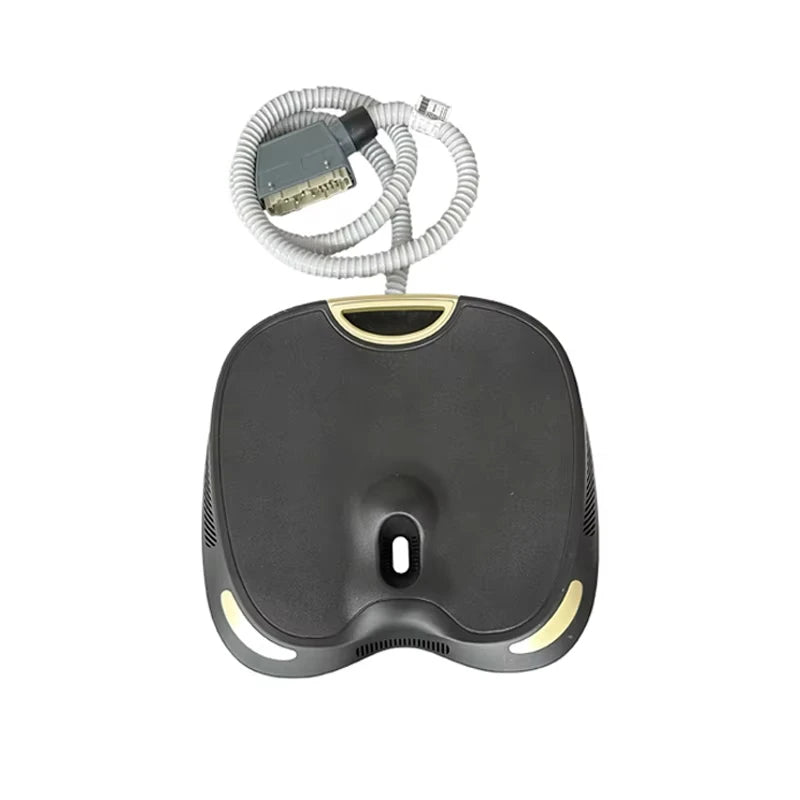
For businesses building a broader aesthetic equipment portfolio, Skin and Beauty Care Devices can also help place body-contouring equipment within a wider professional beauty-device selection.
How to Choose an RF Machine by Treatment Goal
Best Configuration for Small Treatment Areas
For smaller or more localized areas, prioritize applicator precision, maneuverability, contact quality, and adjustable energy delivery. A large applicator may cover more tissue quickly but can be less convenient when precise positioning is important.
Best Configuration for Larger Body Zones
For larger zones such as the abdomen or thighs, treatment coverage and workflow efficiency become more important. Consider applicator dimensions, repositioning requirements, cable management, session controls, and whether the machine is practical for repeated treatments.
Best Features for Beginners
Beginners benefit from intuitive interfaces, automatic programs, clear treatment guidance, and built-in monitoring or safety controls. Preset modes can reduce unnecessary complexity, but they do not eliminate the need to understand the device's instructions and contraindications.
Best Features for Salons and High-Volume Practices
High-volume operators should evaluate durability, treatment speed, operator workflow, applicator changes, service response, spare-parts availability, and warranty coverage. A machine that is slightly cheaper but frequently unavailable for service can be more expensive over its useful life.
Best Features for Professional Clinics
Clinics should put technical documentation and regulatory verification near the top of the purchasing checklist. Look for an identifiable model number, manufacturer documentation, intended-use information, operating parameters, safety instructions, training resources, and service support.

What Results Can You Realistically Expect From RF Body Contouring?
RF body contouring should be approached as a cosmetic treatment category, not a substitute for weight management or strength training. Results can vary considerably based on the technology, treatment protocol, treatment area, tissue characteristics, operator technique, and individual response.
Skin Appearance and Tightening Expectations
RF treatments may be selected for cosmetic improvement in the appearance of skin firmness and contour. However, the degree of visible change should not be assumed from the device's maximum power or an advertisement's before-and-after photographs.
Why Results Vary Between Devices and Users
Two RF machines can have substantially different applicators, frequencies, energy controls, treatment depths, and protocols. Individual factors also affect how the treated area looks and responds. Consequently, one person's outcome cannot reliably predict another person's result.
Temporary, Gradual, and Maintenance Results
Some cosmetic changes may appear gradually, and maintenance treatments may be recommended depending on the device and treatment objective. Buyers should ask manufacturers for realistic treatment timelines and avoid guarantees of permanent contour changes.
RF Treatment Frequency and Maintenance
There is no single universal RF treatment schedule that applies to every machine. Frequency should be based on the exact device protocol, treatment area, operating parameters, individual circumstances, and professional guidance where applicable.
How Often Should RF Body Contouring Be Performed?
Follow the manufacturer's specified treatment intervals rather than copying a schedule from another RF device. Differences in energy delivery and applicator design can make seemingly similar machines unsuitable for the same frequency of use.
Initial Treatment Series vs. Maintenance Sessions
Some professional protocols may use an initial series followed by maintenance sessions, but the appropriate schedule depends on the treatment system and cosmetic objective. A responsible manufacturer should provide operating guidance rather than expecting buyers to determine treatment frequency solely from marketing materials.
Why Manufacturer Treatment Protocols Matter
Treatment protocols connect the machine's technical capabilities with practical operation. They can specify applicable body areas, operating settings, session duration, treatment intervals, contraindications, and other instructions that cannot be determined from the product name alone.
RF Body Contouring Safety: Features to Check Before Buying
Because RF body contouring deliberately produces controlled heating, safety deserves the same attention as performance. The right machine should provide appropriate controls and documentation for its intended use.
Temperature Control and Overheating Protection
Temperature management can help operators maintain controlled treatment conditions. Examine whether the machine provides temperature monitoring, limits, alarms, cooling, or automatic protective functions, and verify how those features operate in the manufacturer's documentation.
Energy and Intensity Adjustment
Adjustable energy settings can provide greater control, but flexibility also increases the importance of proper operator training. More adjustment options do not mean higher settings are better.
Automatic Shutoff and Treatment Monitoring
Depending on the device, monitoring or automatic shutoff features may help prevent operation outside specified parameters. Buyers should identify exactly which protective functions are included rather than accepting generic statements about "advanced safety."
Contraindications and When RF Treatment May Not Be Appropriate
RF treatment may not be appropriate for everyone. Device-specific contraindications can involve implanted electronic devices, certain metal implants, active skin conditions, impaired sensation, pregnancy, or other medical circumstances. The exact restrictions vary by technology and manufacturer.
Consumers should review the device's contraindications and seek appropriate professional advice when uncertain. Commercial operators should follow applicable training, scope-of-practice, and local regulatory requirements.
How to Evaluate FDA and Other Regulatory Claims
Regulatory terminology requires careful verification. FDA clearance, FDA approval, registration, establishment listing, CE marking, RoHS compliance, and general electrical safety certifications represent different concepts.
Ask the seller for the exact device model, applicable regulatory documentation, certification numbers where relevant, and the intended-use statement. Do not treat a generic statement such as "FDA registered" as proof that every advertised cosmetic claim has been evaluated or cleared.
How to Evaluate Manufacturer Claims Before You Buy
Check the Exact Device Model and Intended Use
Start with the model number and technical documentation. Product pages sometimes use broad terms such as "HIEMT," "EMS," "RF," or "body sculpting" without explaining the precise configuration.
Verify Certifications and Regulatory Documentation
Ask for supporting documentation instead of relying exclusively on logos displayed on a product page. Verify that the documentation corresponds to the exact equipment being purchased.
Look for Published Technical Specifications
A credible specification sheet should provide meaningful details such as technology type, power supply, operating modes, applicators, treatment areas, controls, certifications, and warranty. If critical specifications are missing, ask the manufacturer before committing to the purchase.
Separate Device Capabilities From Marketing Outcomes
A machine can legitimately have a particular RF frequency or power rating without those specifications proving a specific cosmetic result. Keep the distinction clear: technology describes what the machine does; clinical or cosmetic outcomes require appropriate evidence and context.
Assess Warranty, Training, Repairs, and Replacement Parts
For professional equipment, after-sales support can be as important as the initial specification sheet. Confirm warranty terms, repair procedures, spare-parts availability, technical support, training, and expected service timelines before purchase.
RF Body Contouring Machine Buying Checklist
Technical Specifications
- Confirm the exact RF frequency and technology configuration.
- Check energy output and adjustable intensity settings.
- Review applicator size, design, and available configurations.
- Confirm approved treatment areas.
- Identify automatic and manual operating modes.
Safety and Compliance
- Review temperature monitoring and heat-control functions.
- Check for documented protective mechanisms and shutoff functions.
- Read the complete contraindications and warnings.
- Verify applicable certification and regulatory documentation.
- Confirm that documentation matches the exact model being purchased.
Treatment Workflow
- Determine who will operate the equipment.
- Review training requirements.
- Confirm manufacturer treatment protocols.
- Evaluate treatment coverage and applicator maneuverability.
- Estimate realistic session volume.
Business and Ownership Costs
- Compare purchase price with warranty coverage.
- Check spare-parts availability.
- Ask about repairs and technical support.
- Factor in training and installation costs.
- Estimate downtime risk for commercial use.
Expected Cosmetic Outcomes
- Define the specific appearance-related goal.
- Avoid equating contouring with weight loss.
- Look for realistic manufacturer claims.
- Ask how results are expected to develop over time.
- Determine whether maintenance treatments may be part of the protocol.
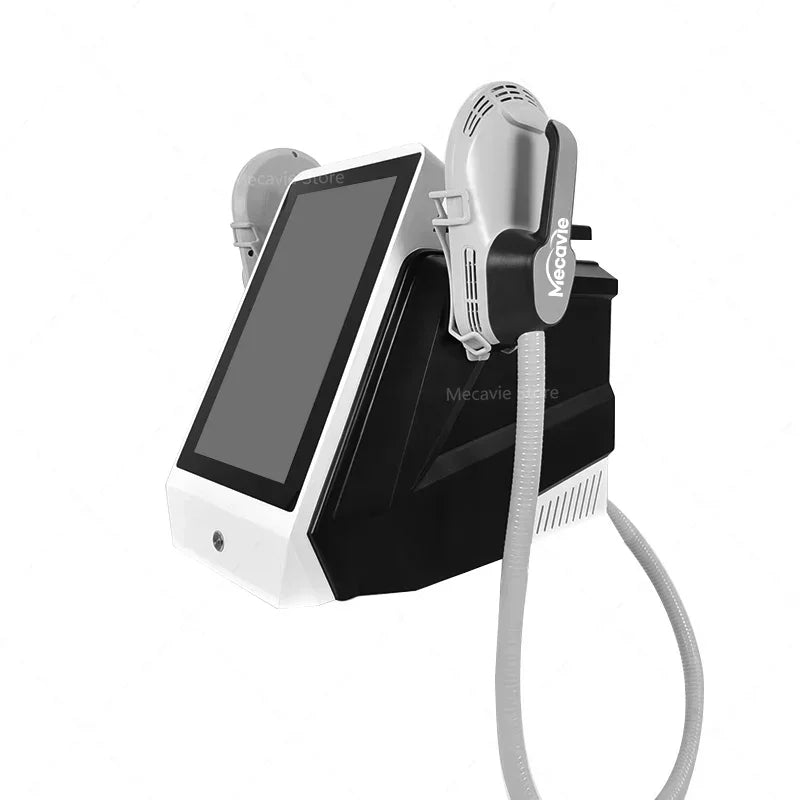
For buyers whose specifications point toward combined muscle stimulation and RF rather than an RF-only device, explore the Emsnova EMS Body Sculpting Machine and compare its documented specifications with your treatment and workflow requirements.
Pros and Cons of Choosing a Multifunctional HIEMT + RF System
Pros
- Combines HIEMT/EMS muscle stimulation with RF technology in one platform.
- Can address multiple body areas, including the abdomen, buttocks, arms, and legs, according to the supplied product specifications.
- Offers automatic and manual operating modes.
- Provides a professional-style equipment option for buyers seeking broader functionality.
- Includes a stated 2-year warranty and 5-year spare-parts service.
- CE and RoHS certifications are listed in the supplied specifications.
Cons
- A multifunctional system may be more equipment than a consumer needs for a single cosmetic objective.
- Professional-style equipment requires careful attention to operating instructions and appropriate training.
- The listed 6500W power rating should not be interpreted by itself as proof of superior treatment results.
- RF and HIEMT/EMS technologies address different aspects of a body-contouring workflow, so buyers should understand why they need each technology.
- Exact RF operating parameters and treatment protocols should be confirmed with the manufacturer before purchase.
Final Takeaway: Match the RF Machine to the Job
The best body contouring machine with RF is not necessarily the machine with the highest advertised power, the most applicators, or the most aggressive marketing claims. The better choice is the system whose documented specifications match your treatment goals, operator skill, treatment environment, safety requirements, and ownership expectations.
For an RF-focused purchase, start with RF frequency, energy controls, applicator design, treatment coverage, temperature management, treatment modes, safety documentation, certifications, warranty, and service support. Then decide whether you actually need an RF-only platform or whether a multifunctional system makes more sense.
The Emsnova system is particularly relevant for buyers who want a professional-style platform combining HIEMT + RF + EMS, with automatic and manual operation and documented support terms. As with any aesthetic equipment purchase, its suitability should ultimately be determined by the exact treatment goals, operating environment, applicable regulations, and manufacturer's instructions.
When you're ready to compare equipment against your own requirements, view the Emsnova EMS body sculpting machine and evaluate its specifications alongside the criteria in this guide.
For additional equipment categories and body-focused device options, you can also explore Body & Face Blog and Beauty & Self-Care Blog for related educational content.
Pillar Article: Abdominal Muscle Stimulation Device: Benefits, Safety & Buying Guide













