

Electrical Muscle Stimulation Machines: How They Work, Types & Buying Guide
Electrical muscle stimulation machines are designed to use controlled electrical signals to activate nerves and produce muscle contractions. But not every electrical stimulation device does the same job. EMS, NMES, TENS, professional body-contouring systems, rehabilitation stimulators, and consumer fitness devices can differ substantially in purpose, controls, stimulation parameters, electrode configuration, and intended user.
That distinction matters if you are comparing an electrical muscle stimulation machine for rehabilitation, muscle activation, fitness, body conditioning, or professional aesthetic use. The right machine is not necessarily the one with the highest advertised intensity or the most programs. It is the one whose technology, controls, treatment configuration, safety information, and intended use match your actual goal.
This guide explains how electrical muscle stimulation works, separates EMS from NMES and TENS, compares major machine categories, explains the specifications worth evaluating, and provides a practical framework for choosing a professional or consumer EMS system.
What Are Electrical Muscle Stimulation Machines?
Electrical muscle stimulation machines deliver controlled electrical pulses through electrodes or applicators to stimulate nerves associated with targeted muscles. When the electrical signal reaches an appropriate motor nerve, it can trigger a muscle contraction. Depending on the device and its intended application, stimulation may be used for muscle activation, re-education, strengthening support, conditioning, or other specific applications defined by the manufacturer.
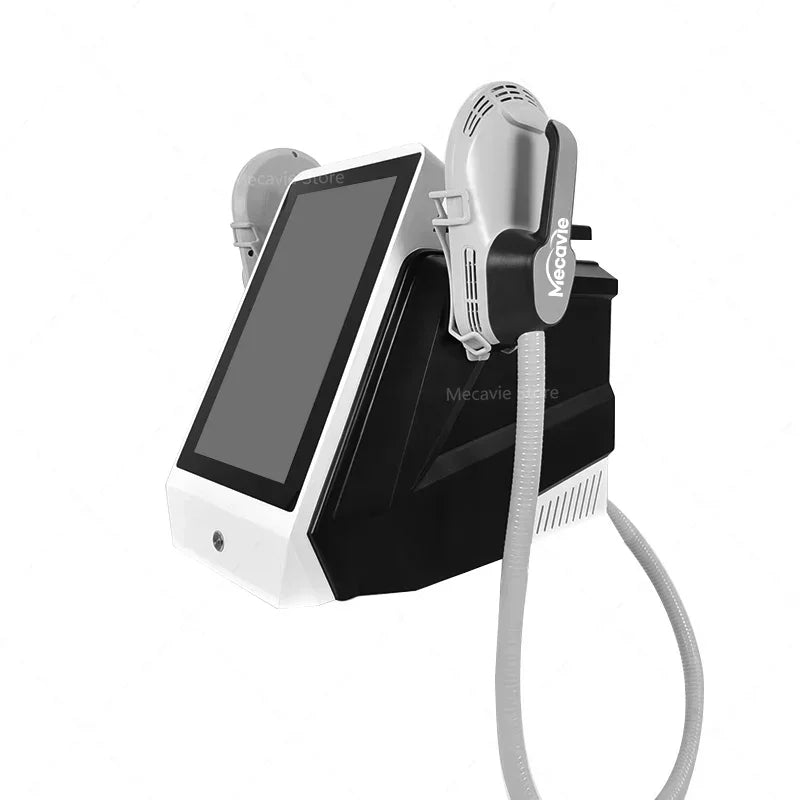
How electrical stimulation produces muscle contraction
Voluntary movement normally begins when the nervous system sends signals to motor nerves, which then activate muscle fibers. Electrical stimulation introduces an external signal into this process. When the signal reaches the appropriate nerve and reaches sufficient intensity, it can cause the connected muscle fibers to contract.
The resulting contraction can be adjusted by changing characteristics such as stimulation intensity, pulse frequency, pulse width, timing, and electrode placement. These variables help determine how strong, comfortable, sustained, or frequent the contractions feel.
EMS and neuromuscular activation
Electrical muscle stimulation is therefore fundamentally about neuromuscular activation rather than simply delivering electricity to the body. The objective is to create a controlled interaction between the stimulation signal, nerves, and target muscles.
This is also why electrode or applicator placement matters. A technically powerful machine cannot compensate for inappropriate positioning, unsuitable settings, or an incorrect treatment protocol.
What electrodes, current, and stimulation signals do
Electrodes provide the interface between the stimulation system and the body. Their location, size, contact quality, and configuration influence how stimulation reaches the underlying tissues.
Professional systems may provide multiple applicators or channels so different areas can be addressed during a session. Other machines use adhesive electrodes positioned manually over specific muscles. In either case, the manufacturer's placement instructions should take priority over generic diagrams or assumptions.
EMS vs NMES vs TENS: What Is the Difference?
EMS, NMES, and TENS are related forms of electrical stimulation, but they should not automatically be treated as interchangeable terms.
Electrical muscle stimulation (EMS)
EMS is a broad term commonly used for electrical stimulation intended to produce or support muscle contractions. Commercial EMS devices can range from portable consumer products to professional systems designed for fitness, conditioning, or aesthetic applications.
Neuromuscular electrical stimulation (NMES)
NMES generally refers more specifically to electrical stimulation intended to activate motor nerves and produce muscle contractions. The term is particularly common in rehabilitation and physical therapy contexts, where stimulation parameters and treatment protocols may be selected according to a defined clinical objective.
Transcutaneous electrical nerve stimulation (TENS)
TENS is primarily associated with electrical stimulation intended to influence sensory nerves and provide symptomatic pain-management support. It is therefore conceptually different from a muscle-stimulation system whose primary objective is producing muscle contractions.
Why these terms should not be treated as interchangeable
The biggest mistake when comparing electrical stimulation machines is assuming that every device marketed as EMS can perform every possible electrical stimulation function. Always look beyond the acronym.
- Check the intended use.
- Identify whether the device is designed to produce motor-level muscle contractions.
- Review the available stimulation parameters.
- Check electrode or applicator configuration.
- Read the manufacturer's treatment instructions and warnings.
- Confirm whether the machine is intended for professional, clinical, fitness, or consumer use.
In other words, compare the actual technology and intended application rather than comparing acronyms alone.
Types of Electrical Muscle Stimulation Machines
Clinical-grade NMES and rehabilitation systems
Clinical-grade systems are designed around controlled therapeutic or rehabilitation applications. They may offer detailed adjustment of stimulation parameters and are typically used according to structured protocols. Their suitability depends on the patient's condition, treatment objective, and professional guidance.
These systems are not simply more powerful versions of consumer EMS products. Their value often comes from precise control, treatment documentation, appropriate accessories, and compatibility with professional protocols.
Professional EMS systems for fitness and body conditioning
Professional EMS machines may be designed for gyms, wellness facilities, aesthetic businesses, or other professional environments. These systems can provide larger applicators, multiple treatment areas, programmed sessions, adjustable intensity, and more comprehensive control than small wearable devices.
For professional buyers, usability matters alongside output. A machine used repeatedly in a business should also be evaluated for setup time, applicator configuration, cleaning requirements, service support, warranty coverage, and operator instructions.
Portable consumer EMS devices
Portable EMS products prioritize convenience. They may use compact electrode pads, rechargeable batteries, simplified controls, or preset programs. They can be attractive for users who want a convenient approach to targeted muscle stimulation without operating a larger professional system.
However, portability usually comes with trade-offs in channel count, treatment area, customization, and control. A portable product should be evaluated according to its intended use rather than compared directly with a professional machine on power alone.
Multi-function electrical stimulation systems
Some professional systems combine electrical muscle stimulation with another technology. For example, a body-contouring machine may combine HIEMT-style electromagnetic muscle stimulation concepts with radiofrequency technology.
These systems require especially careful specification review because the presence of multiple technologies does not automatically mean every technology is appropriate for every treatment goal.
Electrical Muscle Stimulation Machine Decision Matrix
The following framework helps match machine category to the user's primary objective.
| Machine type | Typical intended use | Control level | Electrode or applicator setup | Portability | Typical buyer |
|---|---|---|---|---|---|
| Clinical-grade NMES | Rehabilitation, muscle re-education, clinical applications | High | Targeted electrodes | Low to medium | Clinics and qualified professionals |
| Professional EMS | Muscle activation, conditioning, professional fitness applications | Medium to high | Multiple electrodes or applicators | Medium | Fitness and wellness professionals |
| Professional body-contouring system | Targeted muscle stimulation and aesthetic body conditioning | Medium to high | Dedicated applicators | Low | Salons, clinics, aesthetic businesses |
| Consumer EMS | Convenient personal muscle stimulation | Low to medium | Compact pads or wearable electrodes | High | Individual consumers |
Which type fits rehabilitation, muscle activation, training, or general consumer use?
For rehabilitation, the priority should be clinically appropriate functionality and professional guidance. For fitness and muscle activation, adjustable stimulation and reliable electrode placement become more important. For professional body conditioning, buyers may prioritize treatment-area coverage, multiple applicators, operating modes, workflow, and service support.
For personal use, simplicity and portability can outweigh advanced controls. The key is to define the intended use before comparing individual machines.
For related professional wellness equipment, you can also explore the Body Care and Health Devices collection when evaluating different device categories.
Key EMS Settings: Frequency, Pulse Width, Intensity & Duty Cycle
Technical specifications can make EMS machines appear complicated, but four concepts are particularly useful when comparing systems.
Pulse frequency
Frequency describes how frequently electrical pulses are delivered, commonly expressed in hertz (Hz). Different frequencies can produce different contraction characteristics and sensations. The appropriate frequency depends on the device, target muscle, objective, and protocol.
Pulse width
Pulse width describes the duration of an individual electrical pulse. It interacts with stimulation intensity and frequency to influence nerve activation and the resulting muscle response.
Stimulation intensity
Intensity determines how strong the electrical stimulation is. More intensity is not automatically better. The goal is controlled, appropriate stimulation rather than simply reaching the highest available setting.
Duty cycle, rest periods, and ramp time
A duty cycle describes the relationship between active stimulation and rest. Ramp time refers to how quickly stimulation increases or decreases. These timing features can affect comfort, contraction characteristics, fatigue, and the overall treatment experience.
Why higher intensity does not automatically mean better results
Muscles can fatigue. Excessive stimulation can also make a session uncomfortable and may not improve the outcome. Effective electrical stimulation depends on the relationship among intensity, frequency, pulse width, placement, treatment duration, recovery, and the user's specific objective.
Research on electrical stimulation and strength training has also used substantially different protocols, which is one reason broad claims about a single “best” EMS setting should be treated cautiously.
Electrode Placement and Motor Point Targeting

Why electrode placement matters
Placement influences which nerves and muscle regions receive the strongest stimulation. Poor contact, incorrect positioning, or placing electrodes too far from the intended target can change the contraction or reduce the effectiveness of the session.
What a motor point is
A motor point is an area where a motor nerve enters or is particularly responsive within a muscle. Stimulating near an appropriate motor point can help generate a contraction at a lower stimulation requirement than less favorable placement.
General placement principles by muscle group
Placement should always follow the instructions supplied with the specific machine. General anatomy can help explain why positioning matters, but it should not replace manufacturer guidance or professional instruction.
For abdominal muscle stimulation, for example, applicators should be positioned according to the system's approved configuration rather than simply placing them wherever the user feels the abdomen most strongly.
Why manufacturer and professional placement guidance matters
Different machines use different electrode sizes, applicator shapes, output characteristics, and treatment protocols. A placement method appropriate for one system may not be appropriate for another.
What Can Electrical Muscle Stimulation Machines Be Used For?
Rehabilitation and muscle re-education
NMES has established applications in rehabilitation settings, where it can support muscle activation and re-education as part of a broader treatment plan. The precise indication and protocol should come from the appropriate healthcare professional.
Muscle activation and strengthening support
Electrical stimulation can create repeated muscle contractions and may contribute to strength adaptations under suitable protocols. However, results vary with the stimulation method, muscle group, training status, intensity, duration, and whether stimulation is combined with voluntary exercise.
Sports training and conditioning
Some athletes and coaches use electrical stimulation as a complement to conventional training. It may be considered when a targeted muscle stimulus is useful, but it should not automatically be treated as a replacement for progressive resistance training, movement practice, conditioning, or sport-specific work.
Consumer fitness and body conditioning
Consumer EMS products are often positioned around muscle activation, toning, or conditioning. Users should distinguish these goals from broader claims about losing body fat. Muscle stimulation and fat reduction are different physiological concepts.
For broader self-care and wellness equipment, the Lifestyle collection provides another category context when comparing personal-use devices.
Can EMS Machines Build or Strengthen Muscle?
They can contribute to muscle-strengthening outcomes under appropriate conditions, but the answer is more nuanced than “EMS builds muscle without exercise.” Electrical stimulation can produce contractions strong enough to create a training stimulus, and research has reported strength improvements in various populations and protocols.
What electrically induced muscle contractions can accomplish
A sufficiently strong and appropriately applied stimulus can recruit motor units and create repeated contractions. Over time, that mechanical and neural stimulus can contribute to adaptations.
EMS compared with voluntary resistance training
EMS and conventional resistance training do not operate in exactly the same way. Voluntary exercise allows a person to control movement, load, range of motion, coordination, and progressive resistance. EMS primarily introduces an external electrical stimulus to activate targeted muscles.
Some research suggests EMS can be useful as an adjunct or alternative under specific circumstances, while other evidence indicates conventional resistance training remains highly effective and should not automatically be displaced by electrical stimulation.
Factors that influence muscle-strengthening outcomes
- Stimulation intensity
- Pulse frequency and pulse width
- Electrode or applicator placement
- Treatment duration and frequency
- Muscle group being stimulated
- User training status
- Whether EMS is combined with voluntary exercise
- Consistency of the overall program
Why EMS should not be presented as a complete replacement for training
Muscle strength is only one part of physical performance. Conventional training also develops movement coordination, balance, connective-tissue tolerance, cardiovascular capacity, and skill. Therefore, electrical stimulation is best evaluated according to the specific role it is intended to play rather than marketed as a universal replacement for exercise.
EMS Muscle Stimulation vs Fat Reduction and Body Contouring
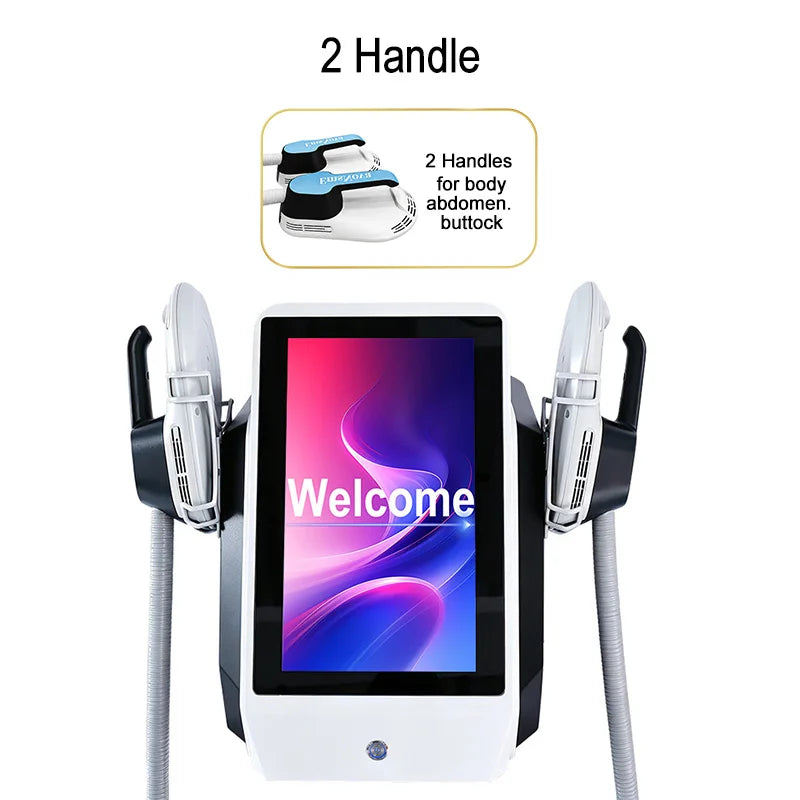
What EMS directly targets
Electrical muscle stimulation primarily targets neuromuscular activation. Its immediate objective is to stimulate nerves and create muscle contractions.
Why muscle contraction is not the same as fat reduction
A visible muscle contraction does not prove that a device has directly reduced body fat. Muscle tissue and adipose tissue are different tissues with different biological processes.
This distinction is especially important when evaluating body-contouring products. A machine may be designed to support muscle tone or body conditioning without being a general weight-loss solution.
How to evaluate body-contouring claims
Look for a clear explanation of the technology, intended treatment area, stimulation method, operating parameters, treatment protocol, and realistic outcomes. Avoid assuming that terms such as “sculpting,” “toning,” or “contouring” mean the same thing as fat loss.
For professional buyers specifically interested in combined muscle-stimulation and body-contouring technology, the Body & Face Blog can provide additional context around body-focused device categories.
Safety, Contraindications & When to Seek Professional Guidance
Electrical stimulation should be treated as a device-based intervention rather than an ordinary fitness accessory. Always follow the specific machine's instructions, contraindications, electrode-placement guidance, and operating limits.
Common precautions when using electrical stimulation
- Use the device only for its intended purpose.
- Inspect electrodes, applicators, cables, and connectors before use.
- Do not use damaged accessories.
- Follow the manufacturer's recommended placement.
- Begin at an appropriate intensity rather than immediately selecting the maximum setting.
- Do not place stimulation electrodes in prohibited areas.
- Stop if unexpected pain, significant skin irritation, dizziness, or another concerning response occurs.
Who should avoid EMS or obtain professional clearance
People with implanted electronic medical devices, certain heart conditions, neurological conditions, unexplained symptoms, recent surgery, significant skin problems, or other relevant medical circumstances should not assume that electrical stimulation is appropriate for them.
Pregnancy is another situation in which safety must be addressed according to the specific device labeling and medical guidance. When there is uncertainty, professional clearance is more appropriate than experimenting with stimulation settings.
Skin, electrode, intensity, and placement considerations
Electrical stimulation can produce skin irritation or discomfort in some users. Good electrode contact and correct placement are important. The device should never be used in a way that conflicts with its instructions or approved treatment configuration.
When a clinician, physical therapist, or qualified professional should guide use
Professional guidance is particularly important when electrical stimulation is being used for rehabilitation, following surgery or injury, for a medical condition, or when the user has a relevant implant or health concern.
For professional systems, safety documentation and clear operating instructions should be considered essential purchasing criteria rather than optional extras.
How to Choose an Electrical Muscle Stimulation Machine
1. Start with the intended use
First decide whether the machine is primarily for rehabilitation, muscle activation, fitness, professional body conditioning, or personal convenience. This immediately eliminates many unsuitable products.
2. Check adjustable stimulation parameters
Look for clearly documented controls for intensity and, where relevant, frequency, pulse width, timing, ramping, and duty cycle. A specification sheet should explain what the controls actually do rather than simply listing technical numbers.
3. Evaluate channels and electrode configuration
Consider how many areas can be treated at once and whether the applicators match the muscles or body areas you intend to target. Professional users should also consider whether the configuration makes treatment setup efficient.
4. Look for appropriate programs and control options
Automatic programs can simplify operation, while manual controls may be more useful for experienced operators who need greater customization. The best option depends on who will operate the system.
5. Consider portability, battery, and ease of setup
For personal use, portability can be decisive. For professional environments, a larger system may be acceptable if it provides better treatment-area coverage, controls, and workflow.
6. Verify safety features, instructions, and intended-user requirements
A professional-looking machine should still have clear operating instructions, warnings, contraindications, accessory information, and maintenance guidance. Certifications such as CE or RoHS can be useful compliance signals, but they should not be treated as proof that a device is suitable for every medical or aesthetic purpose.
7. Compare build quality, support, warranty, and total ownership cost
For a professional machine, the purchase price is only one part of ownership cost. Consider warranty duration, spare-parts availability, technical support, consumables, maintenance, training, and expected service life.
One example for buyers researching professional body-conditioning equipment is the Emsnova EMS Body Sculpting Machine. The supplied product specifications identify HIEMT + RF + EMS technology, manual and automatic operation, a 6500W power specification, AC power, multiple handle options, CE and RoHS certification, a two-year warranty, and five-year spare-parts service. It is positioned for body areas including the abdomen, buttocks, arms, and legs.
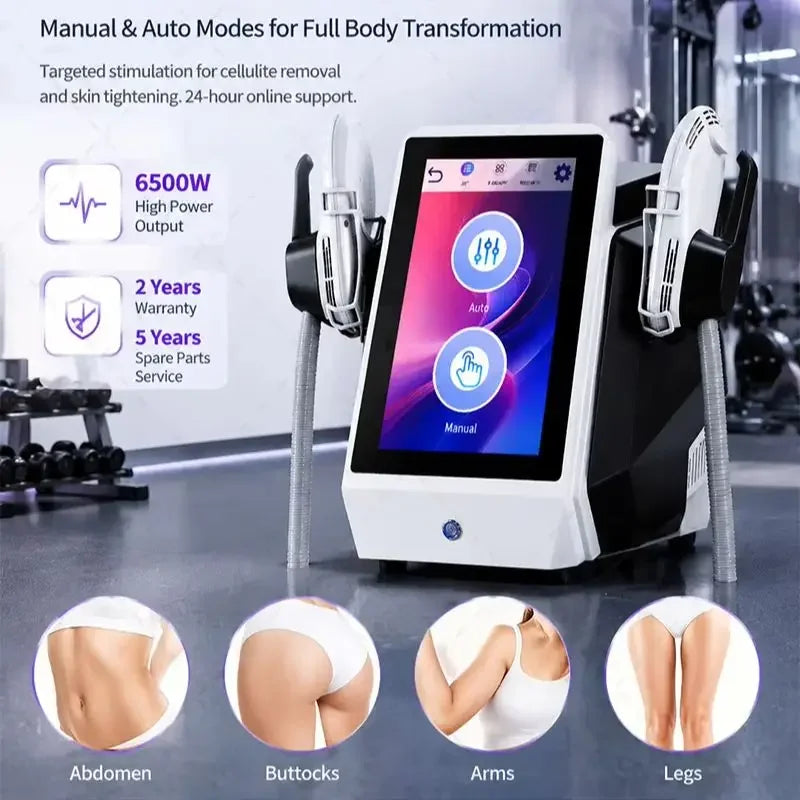
For a buyer comparing this type of system with other electrical muscle stimulation machines, the important question is not simply whether it has more technology. Instead, evaluate whether the combined technology, applicators, operating modes, service coverage, and intended treatment areas fit the planned professional workflow.
Electrical Muscle Stimulation Machine Buying Checklist
Must-have specifications
- Clearly stated intended use
- Documented stimulation technology
- Appropriate intensity controls
- Clearly described electrode or applicator configuration
- Operating instructions and safety information
- Appropriate power requirements
- Warranty and service information
- Manufacturer or supplier support
Useful features versus marketing extras
Multiple automatic programs can improve convenience, but program count alone does not demonstrate effectiveness. Similarly, a large display, premium housing, or a high maximum-output number may have limited value if the machine does not provide the controls, applicators, documentation, and workflow you actually need.
Red flags to check before buying
- Unclear intended use
- No detailed operating instructions
- Vague claims about guaranteed muscle growth or fat loss
- No explanation of electrode or applicator placement
- No meaningful safety information
- Unclear warranty coverage
- No information about replacement parts or support
- Technical specifications without practical explanations
Frequently Asked Questions About Electrical Muscle Stimulation Machines
What are electrical muscle stimulation machines and how do they work?
Electrical muscle stimulation machines deliver controlled electrical signals through electrodes or applicators to stimulate motor nerves and produce targeted muscle contractions. The exact effect depends on the device, stimulation parameters, placement, and intended use.
What is the difference between EMS, NMES, and TENS?
EMS is a broad term associated with electrical muscle stimulation. NMES specifically describes stimulation intended to activate motor nerves and create muscle contractions, particularly in rehabilitation and training contexts. TENS is generally associated with sensory nerve stimulation for pain-management applications rather than intentionally producing strong muscle contractions.
Can electrical muscle stimulation machines build or strengthen muscle?
Electrical stimulation can contribute to strength adaptations when appropriate stimulation creates sufficient muscle contractions and is used consistently. However, outcomes vary by protocol and user, and EMS should not automatically be presented as a complete replacement for conventional resistance training.
How do pulse frequency, pulse width, intensity, and duty cycle affect EMS treatment?
Frequency controls how often pulses are delivered, pulse width describes pulse duration, intensity controls stimulation strength, and duty cycle describes the relationship between stimulation and rest periods. Together, these variables influence contraction characteristics, comfort, fatigue, and the overall stimulation protocol.
Who should avoid electrical muscle stimulation machines or consult a professional before use?
Anyone with a relevant implanted electronic device, certain medical conditions, recent surgery or injury, significant skin problems, pregnancy, or uncertainty about whether electrical stimulation is appropriate should follow the specific device warnings and seek qualified professional guidance when indicated.
Final Takeaway: Choose the Machine Around the Goal
The best electrical muscle stimulation machine is not necessarily the most powerful machine, the most expensive machine, or the one with the largest number of programs. It is the machine whose technology and controls match the intended application.
For rehabilitation, clinical appropriateness and professional supervision come first. For training and muscle activation, stimulation parameters, placement, and program design matter. For professional body conditioning, treatment-area coverage, applicator configuration, operating modes, safety documentation, warranty, and service support become equally important.
If you are comparing professional systems for targeted muscle stimulation and body conditioning, the Emsnova EMS Body Sculpting Machine is one option to evaluate against those criteria rather than simply comparing headline power specifications.
The most useful next step is to return to the buying checklist, define the primary use case, and compare machines based on documented capabilities, appropriate controls, treatment configuration, safety information, and long-term support.
Pillar Article: Abdominal Muscle Stimulation Device: Benefits, Safety & Buying Guide













