

EMS Machine vs Body Sculpting: Which Is Right for You?
When comparing an EMS machine vs body sculpting, the most important distinction is simple: EMS primarily focuses on electrical muscle stimulation and muscle activation, while body sculpting is a broad category that includes technologies designed for muscle toning, body contouring, skin-focused treatments, or fat reduction. Neither approach is automatically better for everyone. The right choice depends on the result you want, the treatment area, and how the technology fits into your routine.
If your main concern is hard-to-tone muscles or improving muscle definition, an EMS-focused approach may be more relevant. If your priority is reducing the appearance of localized fat or achieving broader contouring, another body sculpting technology may be better aligned with that goal. Understanding the mechanism behind each option makes the decision much easier.
EMS Machine vs Body Sculpting: What's the Difference?
An EMS machine uses electrical impulses to stimulate nerves and produce controlled muscle contractions. EMS, or electrical muscle stimulation, is therefore primarily associated with muscle activation and muscle-focused training or toning support.
Body sculpting machines, by contrast, describe a much larger group of non-invasive technologies. Depending on the device, body sculpting may target muscle activity, tissue heating, skin appearance, or subcutaneous fat. That means comparing “EMS” with “body sculpting” is not exactly a comparison between two equivalent technologies. EMS can actually be one component of a broader body-contouring strategy.
EMS and Electrical Muscle Stimulation Explained
Electrical muscle stimulation delivers controlled electrical signals through electrodes or applicators. These signals can activate motor nerves and cause muscles to contract. The intensity and treatment pattern depend on the specific device and its settings.
Neuromuscular electrical stimulation (NMES) is a related clinical term used when electrical stimulation is intended to activate muscles. In consumer and aesthetic settings, “EMS” is often used more broadly for devices designed to create muscle contractions.
The key point is that EMS is fundamentally muscle-focused. It should not automatically be described as equivalent to conventional resistance training, nor should it be presented as a universal solution for weight loss or spot fat removal.
What Body Sculpting Machines Do
Body sculpting is an umbrella term covering multiple non-invasive approaches. Some technologies emphasize muscle stimulation, while others are designed around tissue heating or fat reduction.
For example, electromagnetic muscle stimulation is designed around strong muscle contractions without relying on the same electrical pathway as conventional surface EMS. Radiofrequency (RF) body-contouring systems use controlled electromagnetic energy to heat tissue. Cryolipolysis uses controlled cooling as a fat-reduction approach.
Because these technologies have different mechanisms and objectives, “body sculpting” should never be treated as a single treatment type.
EMS vs Body Sculpting at a Glance
| Factor | EMS | Body Sculpting |
| Primary focus | Muscle activation and toning | Varies by technology |
| Basic mechanism | Electrical stimulation | May use electrical, electromagnetic, RF, cooling, or other technology |
| Muscle contractions | Central to the treatment | Depends on the modality |
| Fat reduction | Not the primary purpose of conventional EMS | Some technologies specifically target fat reduction |
| Treatment objective | Muscle activation, toning, and definition support | May include muscle toning, contouring, skin-focused goals, or fat reduction |
| Best matched to | People prioritizing muscle-focused outcomes | People choosing a technology based on a specific contouring objective |

How EMS Machines Work for Muscle Toning
How Electrical Stimulation Creates Muscle Contractions
Muscles contract when their motor nerves receive appropriate signals. EMS devices use electrical impulses to stimulate these nerves, producing controlled contractions in the targeted muscle group.
The sensation can vary according to the device, electrode placement, intensity, and individual sensitivity. A properly selected setting should follow the manufacturer's instructions rather than simply maximizing intensity.
For aesthetic applications, the appeal of EMS is its ability to provide targeted muscle stimulation without requiring the user to perform the contraction voluntarily in the same way as a traditional exercise movement.
EMS for Muscle Toning and Definition
EMS may be relevant when the primary goal is muscle activation, toning, or supporting the appearance of muscle definition. This can be particularly appealing for people who have difficulty consistently targeting certain muscle groups through conventional routines.
However, visible definition depends on more than muscle stimulation. Overall body composition, existing muscle mass, activity level, nutrition, genetics, and consistency can all influence appearance.
For readers researching different wellness and body-focused devices, the Body Care and Health Devices collection provides a broader category view beyond muscle stimulation alone.
What EMS Does Not Do
One of the biggest mistakes in an EMS machine vs body sculpting comparison is treating muscle stimulation and fat reduction as interchangeable outcomes.
EMS is not automatically a weight-loss treatment. It should not be marketed as a way to selectively remove belly fat simply because electrodes are placed over the abdominal muscles. A stronger muscle contraction does not mean that the device is directly removing subcutaneous fat from that area.
Similarly, EMS should not automatically replace exercise. A more accurate way to position it is as a technology for targeted muscle stimulation that may complement an individual's broader fitness or body-contouring routine.
What Counts as a Body Sculpting Machine?
The phrase “body sculpting machine” can refer to several very different technologies. This is why choosing a device based only on the body-sculpting label can lead to unrealistic expectations.
Electromagnetic Muscle Stimulation
Electromagnetic muscle stimulation uses electromagnetic energy to induce muscle contractions. HIEMT and HIFEM are terms commonly associated with high-intensity electromagnetic muscle stimulation systems.
The concept is different from conventional surface EMS, even though both can produce muscle contractions. When comparing HIEMT vs electrical muscle stimulation, focus on the actual energy source, treatment design, applicator system, intended outcome, and device-specific claims rather than assuming that every muscle-stimulation technology works identically.
This distinction is especially useful when evaluating a professional EMS body sculpting machine that combines multiple technologies rather than relying on one modality alone.
Radiofrequency (RF) Body Contouring
RF body contouring uses radiofrequency energy to heat targeted tissue. Its treatment objective is different from the primary purpose of electrical muscle stimulation.
RF may be incorporated into body-focused systems intended to support contouring or tissue appearance, while EMS is primarily concerned with activating muscles. Some devices combine both technologies, but the presence of RF does not mean that RF and EMS have the same mechanism.
Cryolipolysis and Fat Reduction
Cryolipolysis is another non-invasive body-contouring approach. Instead of stimulating muscles, it uses controlled cooling to target fat tissue.
That makes cryolipolysis fundamentally different from EMS. Someone primarily interested in muscle activation should not select a cooling-based fat-reduction technology simply because both treatments are described as body sculpting.
EMS vs Body Sculpting for Muscle Toning
If your primary objective is muscle activation or toning, EMS may be the more directly relevant category. The technology is specifically designed around controlled muscle contractions.
When EMS May Be the Better Fit
- You want to focus on muscle activation.
- You are interested in supporting muscle toning or definition.
- You want targeted stimulation of specific muscle groups.
- You have difficulty consistently targeting certain muscles with conventional routines.
- Your primary goal is muscle-focused rather than fat-focused.
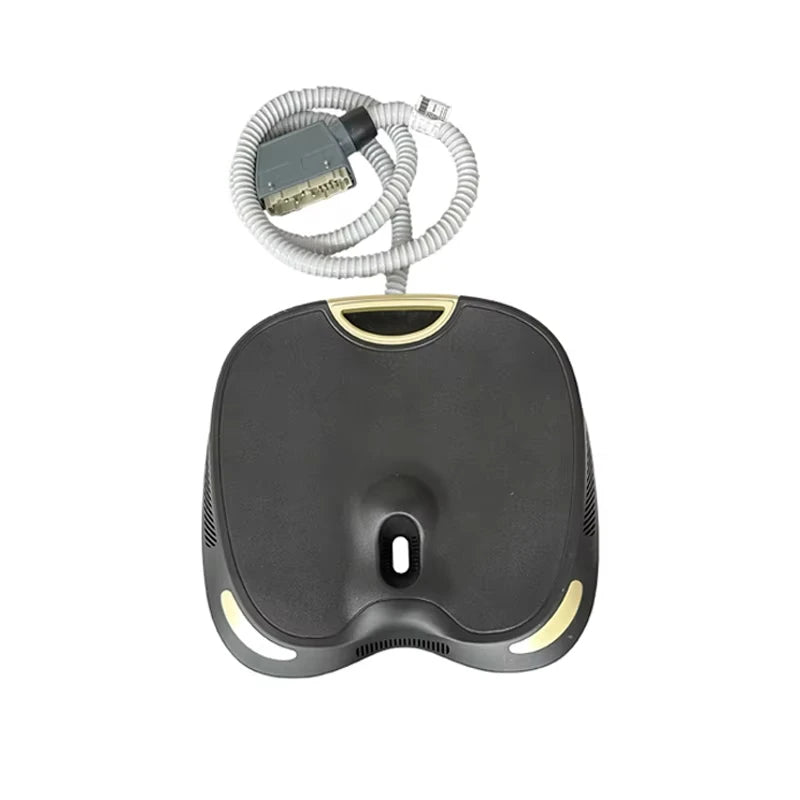
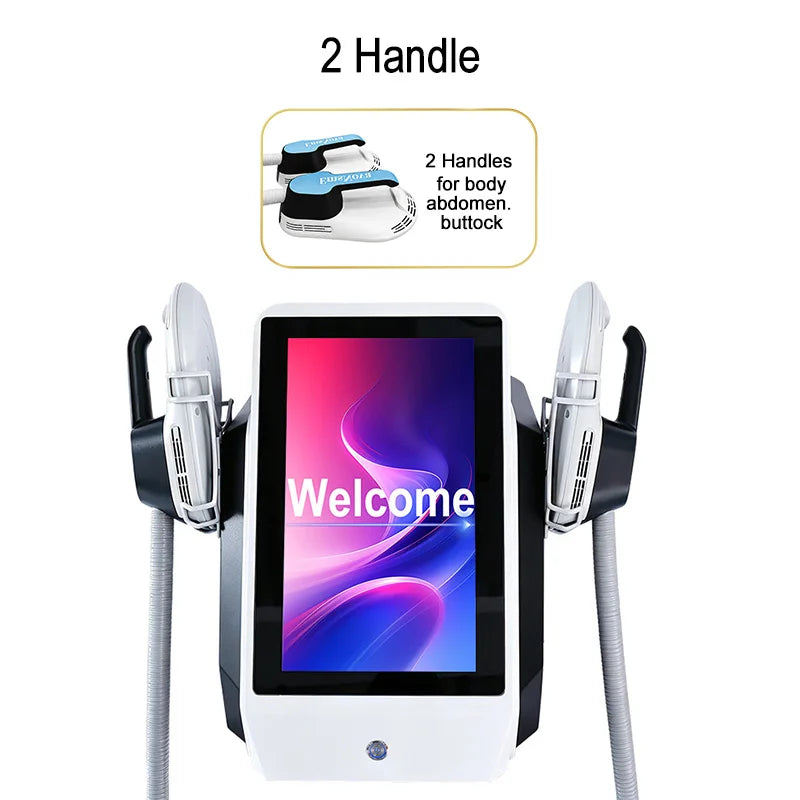
For professional or aesthetic environments, a system combining EMS or HIEMT with additional functionality may offer more flexibility. For example, the Emsnova EMS Body Sculpting Machine is described as combining HIEMT muscle stimulation with RF technology and providing automatic and manual operating modes.
When a Broader Body Sculpting Treatment May Make More Sense
A broader body sculpting treatment may be more appropriate when your primary concern is not muscle activation. If you are specifically researching fat reduction, localized contouring, or another tissue-focused outcome, you should evaluate technologies designed for that objective.
The right question is therefore not simply “Which machine is stronger?” Instead, ask: Which technology is designed around the result I actually want?
Can EMS Help With Body Contouring?
Yes, EMS can be part of a body-contouring strategy, but it is important to distinguish muscle definition from fat reduction. Improving muscle activation may influence the appearance of a treated area, but that does not make EMS equivalent to a technology specifically designed to reduce subcutaneous fat.
Muscle Definition vs Fat Reduction
Body appearance is influenced by both muscle and surrounding tissue. When muscle tone or definition improves, the treated area may appear more defined. However, reducing the amount of subcutaneous fat is a separate physiological objective.
This distinction matters for people concerned about stubborn belly fat areas. If the main issue is insufficient muscle definition, muscle-focused stimulation may be relevant. If the primary concern is localized fat, the appropriate technology should instead be evaluated according to its specific fat-reduction mechanism.
Where EMS Fits Into a Body-Contouring Strategy
EMS can occupy the muscle-focused part of a larger body-contouring plan. Depending on the device, it may be used for areas such as the abdomen, buttocks, arms, or legs.
For example, the product information supplied for the Emsnova system identifies the abdomen, buttocks, arms, and legs as common target areas. It also combines HIEMT, RF, and EMS technologies, making it an example of a multifunctional body-focused system rather than a conventional single-purpose EMS unit.
EMS vs Other Body Sculpting Technologies
The most useful way to compare body sculpting technologies is to start with the desired outcome. The table below provides a practical decision matrix rather than ranking one modality as universally superior.
EMS vs Electromagnetic Muscle Stimulation
Both approaches can be muscle-focused, but their energy delivery mechanisms differ. Conventional EMS uses electrical impulses delivered through electrodes or conductive applicators, while electromagnetic systems use electromagnetic fields to induce muscle contractions.
When comparing them, consider the intended treatment area, device design, intensity controls, treatment protocols, and the manufacturer's stated purpose. The word “muscle stimulation” alone does not tell you how a device operates.
EMS vs RF Body Contouring
EMS and RF address different primary objectives. EMS focuses on muscle activation. RF body contouring focuses on controlled tissue heating and may be incorporated into systems intended for broader contouring goals.
Some professional devices combine both modalities. In that situation, the technologies should still be evaluated separately because adding RF does not change the fundamental mechanism of EMS muscle stimulation.
EMS vs Cryolipolysis
EMS and cryolipolysis are even more distinct. EMS creates muscle contractions through electrical stimulation, whereas cryolipolysis uses controlled cooling as a fat-reduction approach.
If your priority is muscle tone, an EMS-focused technology is more directly aligned with that objective. If your priority is a fat-reduction treatment, compare options according to their fat-targeting mechanism and appropriate candidacy.
Which Technology Targets Which Goal?
| Goal | Technology to Investigate | Why |
| Muscle activation | EMS | Designed to produce electrical muscle stimulation |
| Muscle toning | EMS or electromagnetic muscle stimulation | Both categories focus on muscle contractions, but mechanisms differ |
| Broader body contouring | Technology depends on the specific concern | Body sculpting includes several different modalities |
| Fat reduction | Fat-focused body-contouring technologies | Some modalities are specifically designed around fat reduction |
| Combined muscle and tissue-focused treatment | Multimodal systems | Some professional machines combine technologies such as EMS/HIEMT and RF |
How to Choose Between EMS and Body Sculpting
Choosing between EMS and a broader body sculpting approach becomes easier when you work backward from your desired outcome.
Step 1: Define Your Primary Goal
Start by identifying the single most important result. Is it muscle activation? Muscle toning? A more defined appearance? Localized contouring? Fat reduction?
Do not select a technology simply because the marketing description says “body sculpting.” That term can describe fundamentally different treatment mechanisms.
Step 2: Match the Technology to the Goal
Once your goal is clear, match the mechanism to the objective. EMS makes the most sense to investigate when muscle stimulation is the priority. A fat-focused modality may be more relevant when reducing localized fat is the primary concern.
Multifunctional professional systems can be worth considering when an aesthetic practice wants more than one treatment capability. The EMS Body Sculpting Machine for muscle toning and body contouring, for instance, is described as combining HIEMT, RF, and EMS in one system.
Step 3: Consider Treatment Area and Routine
Think about where you want to use the technology and how consistently you can follow its recommended treatment schedule. The device should fit the intended treatment area and your operating routine.
Consistency also matters when evaluating results. A theoretically suitable technology may not be practical if its treatment process does not fit the user's schedule or professional workflow.
Step 4: Check Device Features and Safety Guidance
Before choosing an EMS or body sculpting machine, review the available intensity controls, automatic or manual programs, applicator or electrode design, treatment instructions, power requirements, certifications listed by the manufacturer, warranty terms, and device-specific contraindications.
For professional environments, operational flexibility can also matter. The Emsnova product information specifies both manual and automatic operation, along with CE and RoHS certification and a stated 2-year warranty with 5-year spare-parts service.
If you are exploring other beauty and wellness equipment alongside body-focused devices, the Skin and Beauty Care Devices collection can help put the category into a broader equipment context.
What Results Can You Realistically Expect?
EMS Results for Muscle Toning
EMS is best evaluated according to its ability to provide targeted muscle stimulation. Results can vary according to the device, treatment settings, target area, individual characteristics, and consistency.
Visible muscle definition should not be treated as guaranteed. Someone starting with limited muscle mass or a higher level of surrounding body fat may see a different visual outcome from someone who already has substantial muscle development.
Body Sculpting Results for Contouring and Fat Reduction
Results from body sculpting also depend heavily on the modality being used. A muscle-stimulation treatment and a fat-reduction treatment should not be expected to produce identical changes.
Individual response, treatment protocol, target area, baseline characteristics, and adherence to the recommended treatment plan can all affect the outcome. A responsible comparison should therefore focus on realistic treatment objectives rather than promising a specific visual result.
Why Consistency and Expectations Matter
Body contouring is not simply a question of purchasing the most powerful-looking machine. Treatment consistency, correct application, appropriate settings, and realistic expectations all influence how useful a device may be in practice.
For that reason, evaluate claims carefully and distinguish between what a technology is designed to do and what an individual person may actually experience.
Safety and Use Considerations for EMS and Body Sculpting Devices
Follow the Device's Instructions
Always follow the manufacturer's instructions for electrode or applicator placement, intensity, treatment duration, cleaning, maintenance, and recommended treatment frequency.
More intensity is not automatically better. Treatment parameters should be selected according to the device instructions and the user's tolerance rather than based on a desire to produce the strongest possible sensation.
Who Should Avoid or Seek Guidance Before Use?
Contraindications vary by technology and device, so the manufacturer's safety documentation should be reviewed before treatment. People with implanted electronic devices or relevant medical conditions should seek appropriate professional guidance before using electrical, electromagnetic, RF, or other energy-based equipment when the device documentation calls for such precautions.
Professional operators should also understand the device-specific instructions before treating clients. A certification label alone does not replace proper training, appropriate application, or adherence to the manufacturer's operating guidance.
Stop if Use Causes Significant Discomfort
Stop treatment if unexpected or significant pain, a concerning skin reaction, or another unusual symptom occurs. Review the device instructions and seek appropriate professional advice when necessary.
Safety should remain part of the purchasing decision, not an afterthought. A device with clear operating instructions, defined treatment controls, and appropriate manufacturer support can be easier to integrate into a professional workflow.
EMS Machine vs Body Sculpting: Which Is Better for You?
The answer to “EMS machine vs body sculpting: which is better?” depends on your goal.
Choose EMS If Your Priority Is Muscle Activation or Toning
Choose an EMS-focused approach when your primary objective is targeted muscle stimulation, muscle activation, toning support, or improving the appearance of muscle definition.
For professional users looking for a multifunctional example, the Emsnova EMS Body Sculpting Machine combines HIEMT, RF, and EMS and is designed for areas including the abdomen, buttocks, arms, and legs. Its automatic and manual operating modes provide different approaches to treatment setup.
Consider Other Body Sculpting Technologies If Your Priority Is Fat Reduction or Broader Contouring
If your primary goal is fat reduction, do not assume EMS is automatically the best choice. Investigate body sculpting technologies specifically designed for that objective and compare their mechanisms, candidacy requirements, expected outcomes, and safety information.
Likewise, if your concern involves broader contouring rather than muscle activation, a multimodal approach may be worth evaluating. The key is to select based on the desired outcome rather than the generic label attached to the machine.
Frequently Asked Questions
What is the difference between an EMS machine and body sculpting?
An EMS machine primarily uses electrical stimulation to produce targeted muscle contractions. Body sculpting is a broader category that can include EMS, electromagnetic muscle stimulation, RF body contouring, cryolipolysis, and other technologies. The appropriate option depends on whether the goal is muscle activation, toning, contouring, or fat reduction.
Is EMS better than body sculpting for muscle toning?
EMS can be the more directly relevant option when muscle toning and activation are the primary goals because EMS specifically targets muscle contractions. However, “body sculpting” includes several technologies, so the comparison depends on which body sculpting modality is being considered.
Can an EMS machine help with body contouring?
EMS can contribute to a body-contouring strategy by focusing on muscle activation and definition. However, muscle toning is not the same as reducing subcutaneous fat. If fat reduction is the main objective, a technology specifically designed for that purpose may be more appropriate.
What are the best body sculpting machine alternatives?
There is no single best alternative for every goal. Electromagnetic muscle stimulation may be relevant for muscle-focused treatments, RF may be used for tissue-heating and contouring applications, and cryolipolysis is a distinct fat-reduction approach. Compare technologies according to the outcome you want rather than choosing by category name alone.
How do I choose between EMS and other body sculpting treatments?
First define your primary goal, then match the treatment mechanism to that goal. Consider the treatment area, routine, device controls, manufacturer instructions, contraindications, certifications, and realistic expectations. If muscle activation is the priority, investigate EMS or electromagnetic muscle stimulation. If fat reduction is the priority, investigate technologies specifically designed around that outcome.
Final Takeaway: Match the Technology to the Goal
EMS and body sculpting are not competing categories in every situation. EMS is primarily a muscle-focused technology, while body sculpting describes a wider range of technologies designed to address different aesthetic objectives.
If you want targeted muscle activation or toning support, EMS may be the logical category to investigate. If you are primarily interested in fat reduction or a broader contouring objective, compare technologies specifically designed for those outcomes.
For professional settings that want a muscle-focused system with additional RF functionality, the Emsnova EMS Body Sculpting Machine is one example of a combined HIEMT, EMS, and RF platform. The best choice, however, should always be based on your treatment goals, operating needs, device instructions, and realistic expectations rather than the promise that one technology is universally superior.
For a wider look at equipment that can complement a body-focused wellness setup, explore the Body & Face Blog for additional educational content on beauty and body-care technologies.
Pillar Article: Abdominal Muscle Stimulation Device: Benefits, Safety & Buying Guide













