

EMS Treatment Frequency Guide: How Often Should You Use EMS?
There is no single EMS treatment frequency that works for every device or goal. How often you should use EMS depends on the technology, stimulation intensity, treatment area, session length, intended outcome, device instructions, and how well your muscles recover between sessions.
That distinction matters because a consumer electrical muscle stimulation device, a professional electromagnetic muscle-stimulation system, and a rehabilitation-oriented NMES device do not necessarily use the same treatment schedule. In particular, you should not assume that using EMS every day will produce faster results. The safest starting point is always the protocol supplied with the specific device or provided by a qualified professional.
For readers interested in body contouring, it is also important to separate muscle stimulation from claims about fat reduction or weight loss. The FDA describes non-invasive body contouring as a category that can include technologies intended to change body shape, reduce small areas of fat, or improve muscle tone and firmness, but these procedures are not weight-loss treatments. :contentReference[oaicite:0]{index=0}
How Often Should You Use EMS?
A practical EMS frequency guide starts with the modality rather than a universal number. Professional electromagnetic muscle stimulation may use spaced treatment sessions, while home EMS devices can have their own daily or weekly instructions. NMES used for rehabilitation is another category with protocols determined by the clinical objective and device labeling.
Quick EMS Frequency Guide by Goal
- Professional electromagnetic body sculpting: Follow the treatment schedule specified for the particular cleared device and treatment protocol. Sessions are generally planned with recovery time rather than assuming daily treatment.
- NMES or electrical muscle stimulation: Frequency depends heavily on the clinical or training objective, stimulation parameters, treated muscle, and device instructions.
- Home EMS training: Use the manufacturer's recommended frequency, session duration, intensity limits, and treatment areas rather than copying a professional clinic schedule.
- Recovery-oriented stimulation: Follow the device-specific recovery protocol because lower-intensity stimulation intended for recovery is not equivalent to high-intensity muscle conditioning.
- Body contouring: Think in terms of a treatment course and recovery intervals rather than simply maximizing the number of sessions.
Why There Is No Single EMS Schedule
EMS is an umbrella term. Electrical muscle stimulation generally uses electrical current delivered through electrodes to stimulate nerves and muscles, whereas electromagnetic systems use a changing magnetic field to induce electrical currents in tissue and trigger muscle contractions. The FDA separately classifies powered electrical muscle stimulators and electromagnetic muscle stimulators, which illustrates why protocols should not automatically be transferred from one technology to another. :contentReference[oaicite:1]{index=1}
Your objective also changes the equation. Muscle activation, strength or hypertrophy support, rehabilitation, recovery, and aesthetic body contouring are different use cases. Treatment intensity matters as well: a stronger contraction can create more muscle fatigue, making recovery more relevant.
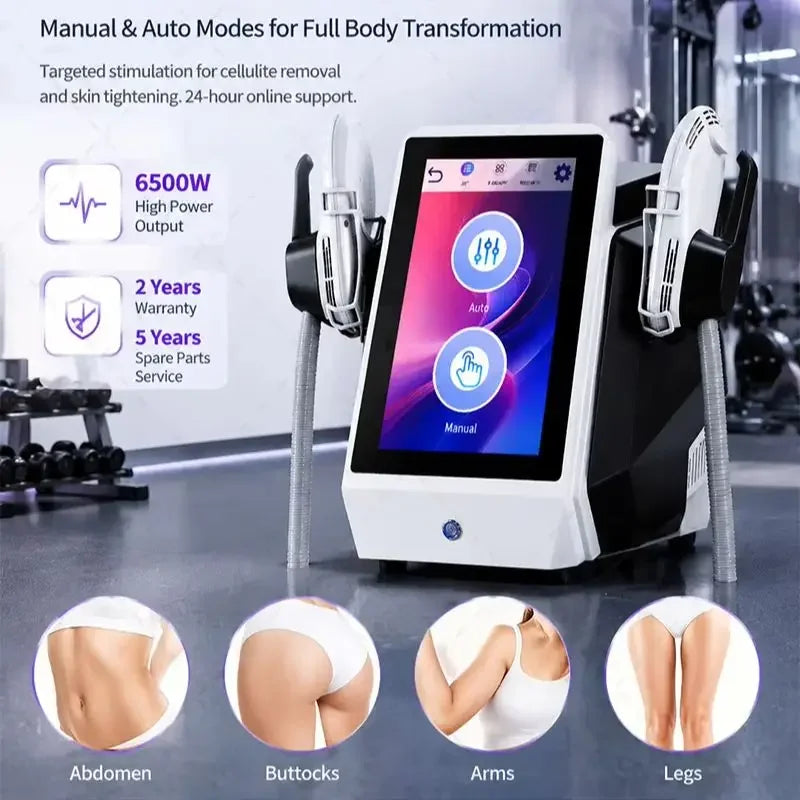
EMS Treatment Frequency by Modality
Professional Electromagnetic Muscle Stimulation
Professional electromagnetic body-sculpting systems are designed to create repeated muscle contractions without placing electrodes directly on the skin. FDA information describes magnetic-field body-contouring technology as using pulsed magnetic fields to trigger muscle contractions that may improve muscle tone and firmness; muscle soreness and cramps can occur as potential complications. :contentReference[oaicite:2]{index=2}
Because the contraction can be intense, professional protocols typically separate treatment sessions instead of treating the same muscle continuously every day. The exact interval should come from the specific device's labeling and the provider's protocol.
Research on aesthetic electromagnetic muscle stimulation has evaluated treatment courses for areas including the abdomen and buttocks, but evidence quality varies across studies and technologies. A systematic review found evidence supporting effects on abdominal contouring while also noting the need for larger controlled studies for several other treatment areas. :contentReference[oaicite:3]{index=3}
NMES and Electrical Muscle Stimulation
Neuromuscular electrical stimulation, or NMES, uses electrical stimulation to produce muscle contractions through cutaneous electrodes. FDA classifications include powered muscle stimulators used for rehabilitation and devices intended for muscle conditioning. These categories have different intended uses, so a frequency used in rehabilitation should not automatically be copied for aesthetic body sculpting. :contentReference[oaicite:4]{index=4}
For rehabilitation-oriented EMS, the prescribing or treating professional may determine the appropriate treatment frequency. FDA guidance also emphasizes that device labeling should specify indications, directions for use, contraindications, warnings, and precautions. :contentReference[oaicite:5]{index=5}
Home EMS Devices
Home EMS products vary considerably in output, electrode configuration, programming, intended body areas, and session duration. That means a schedule found online for one consumer device may be inappropriate for another.
If you use a home device, begin with its instructions. Pay attention to maximum session duration, recommended weekly frequency, intensity progression, electrode placement, prohibited treatment areas, and rest periods. If the instructions conflict with a generic online EMS schedule, the device-specific instructions should take priority.
For readers comparing wellness and body-care equipment, the Body Care and Health Devices collection can also provide broader context when evaluating different types of devices.
EMS vs. TENS: Frequency Is Not the Same
TENS and EMS are often grouped together because both use electrical stimulation, but they are not interchangeable. TENS is primarily associated with nerve stimulation for pain-management applications, while EMS and NMES are designed to stimulate muscle contractions.
Consequently, a TENS schedule should not be used as an EMS treatment-frequency guide. The device's intended use, waveform, intensity, electrode placement, and labeling all matter.
How Long Should an EMS Session Last?
Typical Session-Duration Ranges
There is no universal EMS session length. Professional body-sculpting treatments can use substantially different treatment windows from consumer EMS products, while rehabilitation protocols may use yet another duration.
Rather than selecting a duration based only on what seems comfortable, check the device's instructions. A session may involve a warm-up or lower-intensity phase followed by stronger stimulation and a cooldown, depending on the system.
For a professional HIEMT or EMS body-sculpting machine, session duration should be established from the device's operating protocol and the intended treatment area. For home EMS, do not extend a session simply because a longer treatment feels like it should produce better results.
Why Longer Sessions Are Not Necessarily Better
Muscle stimulation creates physiological work. Increasing duration or intensity without allowing adequate recovery can increase fatigue, soreness, or discomfort without guaranteeing better results.
A useful principle is progressive consistency rather than maximum stimulation. A sustainable schedule that follows the device protocol is generally more sensible than repeatedly extending sessions beyond recommended limits.
EMS Frequency for Muscle Stimulation and Training
How Often Should You Use EMS for Muscle Stimulation?
If your objective is muscle activation or conditioning, frequency should reflect the intensity of the contractions and the amount of recovery required. High-intensity stimulation can produce substantial contractions, so daily use should never be assumed to be appropriate.
Traditional resistance training also demonstrates why recovery matters: muscles need time to adapt after demanding work. EMS does not eliminate that basic consideration simply because the contraction is produced through a device.
EMS and Muscle Recovery
Recovery-oriented electrical stimulation is different from high-intensity muscle-conditioning stimulation. A protocol intended to support circulation or recovery may use different parameters from one designed to create strong repeated contractions.
Do not interpret the phrase "recovery EMS" as permission to perform additional high-intensity sessions every day. Follow the intended protocol for the specific device.
EMS for Muscle Hypertrophy: What Frequency Can and Cannot Do
EMS can create muscle contractions, but that does not mean EMS alone automatically produces the same adaptations as a complete resistance-training program. Muscle growth depends on multiple variables, including mechanical loading, training stimulus, nutrition, recovery, and individual response.
For aesthetic body contouring, it is also important to distinguish increased muscle tone or firmness from generalized weight loss. The FDA specifically states that EMS devices should not be assumed to provide weight loss or girth reduction unless the particular device has appropriate authorization for such claims. :contentReference[oaicite:6]{index=6}
How Often Should You Use EMS for Body Sculpting?
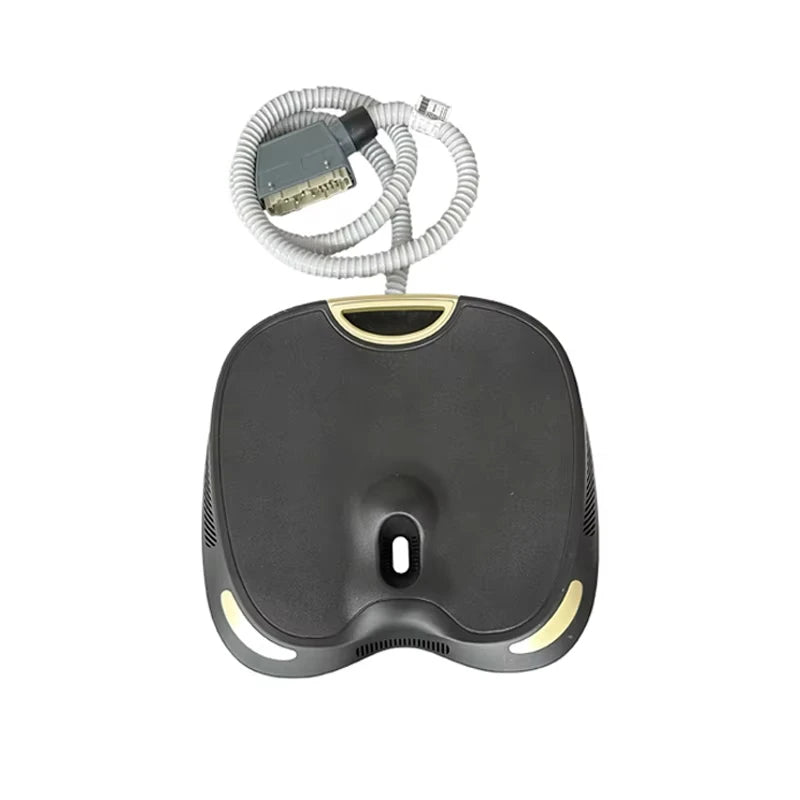
Professional Body-Sculpting Treatment Schedules
For professional body sculpting, the better question is not "How many EMS sessions can I fit into one week?" but "What treatment interval is appropriate for this specific system, body area, intensity, and intended outcome?"
Professional treatment courses commonly use spaced sessions so the treated muscles have time to respond and recover. The exact interval can vary between technologies, applicators, treatment areas, and manufacturer protocols. A clinic should therefore follow the applicable device labeling and its professional treatment protocol rather than copying a generic internet schedule.
EMS Muscle Stimulation vs. Fat-Reduction Claims
Muscle contraction and fat reduction are separate mechanisms. Electromagnetic stimulation can produce repeated muscle contractions, while some body-contouring technologies use different mechanisms to affect fat tissue or skin appearance.
Combining technologies does not automatically mean every treatment produces every claimed outcome. For example, RF uses electromagnetic energy to heat tissue, while electromagnetic muscle stimulation is designed to induce muscle contraction. The FDA treats these as distinct body-contouring technologies. :contentReference[oaicite:7]{index=7}
This distinction is especially important when evaluating a skin and beauty care device collection or comparing devices that combine multiple technologies.
When Maintenance Treatments May Be Appropriate
Maintenance should be considered a separate phase from an initial treatment course. If a professional body-contouring system produces a desired appearance, ongoing treatments may sometimes be recommended because effects can be temporary and may require maintenance. The FDA notes that some non-invasive body-contouring results can be temporary and that more than one treatment may be necessary. :contentReference[oaicite:8]{index=8}
Maintenance frequency should still follow the device-specific protocol. More frequent maintenance is not automatically better.
Sample EMS Treatment Schedules: 4- to 8-Week Frameworks
The following frameworks are educational planning examples, not universal medical prescriptions. The actual schedule should always be adapted to the specific device instructions, treatment goal, stimulation intensity, and professional guidance where applicable.
Example 4-Week EMS Muscle-Stimulation Schedule
- Week 1: Begin conservatively and establish tolerance to the stimulation. Record the treatment area, session duration, intensity, and muscle response.
- Week 2: Continue according to the manufacturer's recommended frequency. Do not increase frequency and intensity simultaneously.
- Week 3: Maintain consistent treatment spacing and assess recovery before progressing intensity.
- Week 4: Review measurable changes in strength, muscle activation, comfort, and consistency rather than relying only on appearance.
Example 6-Week Professional Body-Sculpting Course
- Weeks 1–2: Complete initial sessions according to the professional device protocol and document baseline measurements.
- Weeks 3–4: Continue with appropriately spaced treatments while monitoring muscle soreness and response.
- Weeks 5–6: Complete the planned course and assess whether the intended outcome has changed before considering maintenance.
A professional provider may modify this framework based on the device, treatment area, applicator configuration, patient factors, and response.
Example 8-Week Home EMS Routine
- Weeks 1–2: Learn correct placement and controls and use only the manufacturer's recommended settings.
- Weeks 3–4: Maintain the recommended frequency rather than automatically adding sessions.
- Weeks 5–6: Evaluate consistency, muscle response, and recovery.
- Weeks 7–8: Continue only if the schedule remains comfortable and consistent with the device instructions.
How to Adjust the Schedule Based on Recovery
Recovery should influence your schedule. Significant muscle soreness, persistent fatigue, worsening discomfort, skin irritation, or an unusual response is a reason to pause rather than simply adding another session.
If symptoms persist or seem unusual, discontinue use and seek appropriate professional advice. Never increase stimulation intensity to compensate for missed sessions.
When Will You See Results From EMS?
What You May Notice After the First Few Sessions
Early experiences can include a clearer awareness of muscle activation, temporary firmness, or post-treatment muscle soreness. These sensations should not be confused with permanent changes in body composition.
Individual response varies according to the device, treatment parameters, body area, baseline muscle condition, consistency, and the outcome being measured.
Results After 4 to 8 Weeks
A four- to eight-week period can be useful for evaluating consistency and measurable changes, but it should not be treated as a guaranteed results deadline. Professional electromagnetic muscle-stimulation research has reported changes in muscle thickness and abdominal fat thickness in some treatment studies, while systematic reviews have emphasized variation in evidence quality and the need for additional controlled research. :contentReference[oaicite:9]{index=9}
For that reason, track the outcome that actually matters to you: muscle performance, circumference, visual contour, firmness, or another defined metric. Avoid relying solely on short-term sensations after treatment.
Why Results Differ Between EMS Devices
Two machines described as "EMS" can differ substantially in technology. Output, frequency, pulse characteristics, electrode or applicator design, treatment area, session duration, and programming all influence the treatment experience.
This is one reason a professional EMS body sculpting machine for muscle toning and body contouring should be evaluated by its actual specifications and intended use rather than by the word "EMS" alone.
Can You Use EMS Every Day?
Not necessarily. Daily EMS should never be treated as a universal recommendation. Whether it is appropriate depends on the device, stimulation intensity, body area, goal, session duration, and manufacturer instructions.
When Daily EMS May Not Be Appropriate
Daily high-intensity stimulation can be inappropriate when muscles have not adequately recovered. It may also conflict with device-specific treatment limits. FDA materials warn that electrical muscle stimulation can cause adverse effects such as pain, skin irritation, bruising, burns, or shocks when devices are improperly designed, marketed, or used. :contentReference[oaicite:10]{index=10}
Signs You Need More Recovery Time
- Unusually strong or persistent muscle soreness
- Persistent fatigue in the treated muscle
- Unexpected pain or discomfort
- Skin irritation that does not resolve normally
- Muscle cramping that is unusually severe or persistent
- Any unexpected reaction that concerns you
Follow the Device's Instructions First
Generic frequency guides can help explain the concepts, but they should not replace the device manual. FDA guidance emphasizes that powered muscle-stimulator labeling should address directions for use, indications, contraindications, warnings, precautions, and adverse reactions. :contentReference[oaicite:11]{index=11}
EMS Safety, Contraindications, and When to Avoid Treatment
Common EMS Contraindications and Precautions
Safety depends on the exact technology and device. Certain implanted electronic devices, including pacemakers and implanted defibrillators, can present a significant concern for electrical or magnetic stimulation. FDA materials specifically identify implanted cardiac devices as a contraindication or precaution for relevant muscle-stimulation and magnetic-field technologies. :contentReference[oaicite:12]{index=12}
Pregnancy, recent surgery, implanted metal or other medical devices, damaged or irritated skin, and certain medical conditions can also require avoidance or professional clearance depending on the technology. Do not assume that a device is appropriate simply because it is described as non-invasive.
FDA Clearance and Device-Specific Indications
FDA clearance is not a generic endorsement of every claim made about every EMS product. The authorized indication and labeling matter. FDA explains that electrical muscle stimulators can have specific cleared uses and that manufacturers must meet applicable premarket requirements before legally marketing devices in the United States. :contentReference[oaicite:13]{index=13}
When evaluating a professional system, check its intended use, U.S. regulatory status where applicable, labeling, contraindications, and operating instructions. Do not assume that CE or RoHS certification is equivalent to FDA clearance.
Stop Treatment and Seek Professional Advice If Needed
Stop treatment if you experience unusual pain, persistent skin reactions, unexpected symptoms, or a response that concerns you. If you have an implanted medical device, are pregnant, have recently undergone surgery, or have a significant medical condition, consult an appropriate healthcare professional before using EMS or electromagnetic muscle stimulation.
How to Build an EMS Schedule That Fits Your Goal
Step 1: Identify Your EMS Modality
Determine whether your system uses conventional EMS/NMES, electromagnetic muscle stimulation, HIFEM-style technology, TENS, or a combination such as EMS/HIEMT with RF. Do not use a frequency recommendation for one technology as a protocol for another.
Step 2: Define the Primary Goal
Decide whether the goal is muscle activation, conditioning, training support, recovery, or aesthetic body contouring. A clearly defined goal makes it easier to choose the appropriate protocol and measure progress.
Step 3: Start With the Manufacturer or Provider Protocol
For professional equipment, the provider should understand the device's operating parameters and treatment protocol. For home devices, follow the supplied instructions. For example, the Emsnova HIEMT and EMS body sculpting machine is described as combining HIEMT, EMS, and RF technology with manual and automatic operating modes. Its specifications should therefore be considered together with its operating instructions rather than applying a generic EMS schedule.
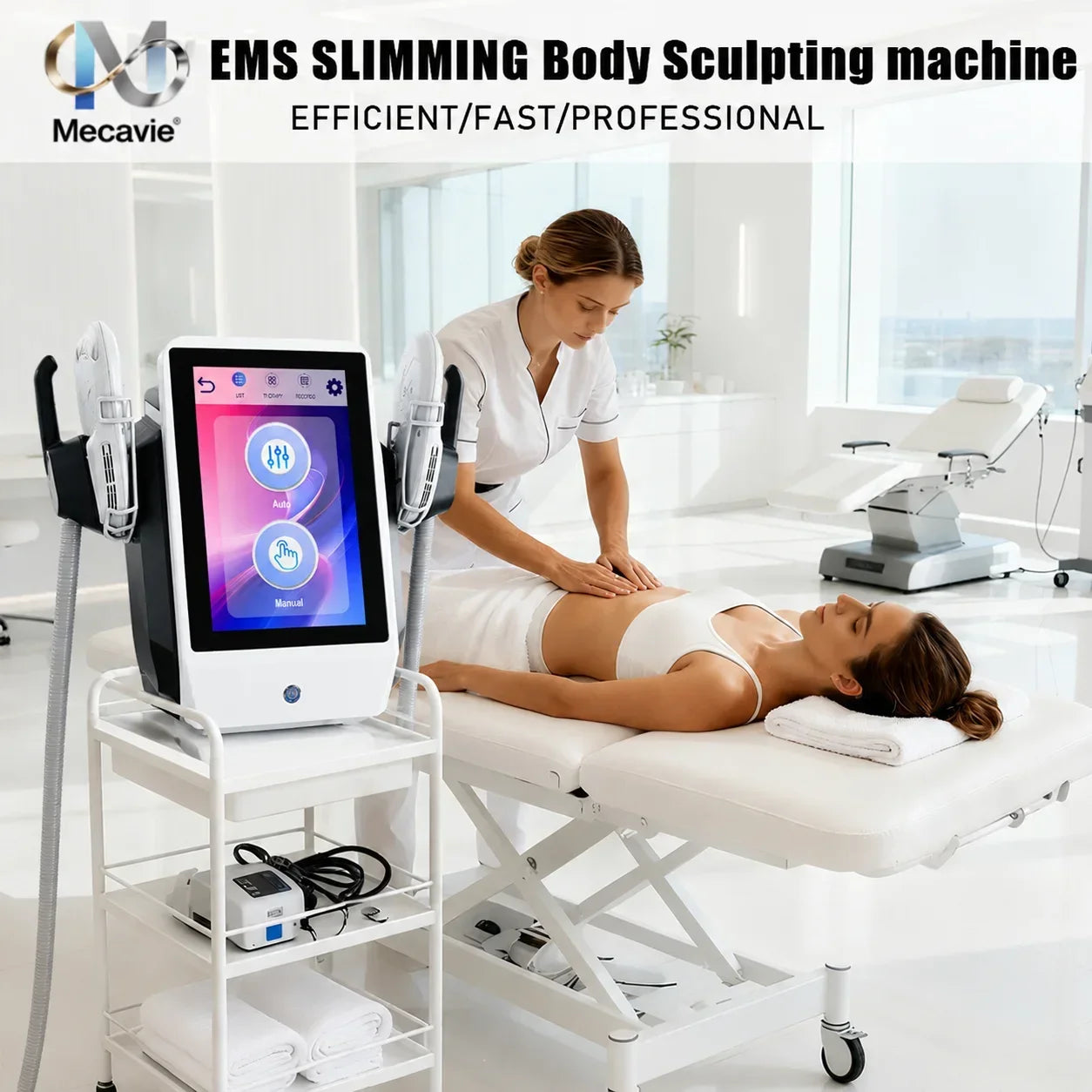
The Emsnova system is described for areas including the abdomen, buttocks, arms, and legs and includes professional-oriented features such as manual and automatic operation. Those characteristics can be useful when evaluating a machine for an aesthetic or wellness setup, but they do not establish a universal treatment frequency.
Step 4: Track Sessions and Recovery
Keep a simple record of treatment date, duration, intensity, treatment area, muscle response, soreness, and any visible or measurable changes. Tracking helps reveal whether a schedule is sustainable and prevents the common mistake of increasing treatment frequency simply because results are not immediately visible.
EMS Frequency Comparison Matrix
Professional vs. Home EMS: Frequency at a Glance
- Professional electromagnetic body sculpting: Provider-led protocol; sessions are typically spaced according to the specific system and treatment goal; recovery and response should be monitored.
- Professional EMS/NMES: Protocol varies according to intended use, stimulation parameters, and treatment objective; rehabilitation applications may require professional supervision.
- Home EMS: Follow the exact consumer-device instructions; do not copy clinic schedules or assume higher frequency means faster results.
- Recovery-oriented EMS: Uses a different objective from high-intensity conditioning; frequency and intensity should follow the intended recovery protocol.
- EMS combined with RF: Treat the two technologies as distinct components; RF-related precautions and EMS-related precautions may both matter.
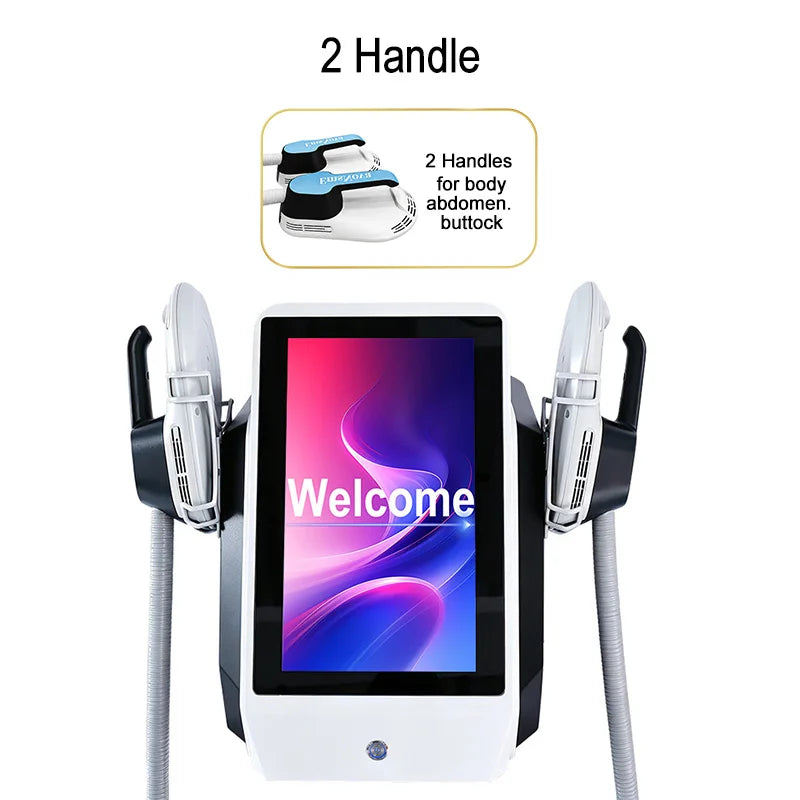
EMS Treatment Frequency: The Practical Bottom Line
The best EMS treatment frequency guide is not a single number. Effective scheduling depends on the technology, treatment goal, stimulation intensity, session duration, treated body area, device labeling, and recovery response.
If you are using EMS for muscle stimulation, prioritize consistent sessions and adequate recovery. If you are considering professional body sculpting, use the treatment protocol established for the specific electromagnetic system rather than borrowing a schedule from another machine. If you are using a consumer EMS device, follow its instructions precisely.
For readers comparing professional body-care equipment, the Body & Face Blog offers a useful place to explore related body-care and aesthetic-device topics before choosing a system.
When evaluating a professional system such as the Emsnova EMS Body Sculpting Machine, focus on its technology, treatment controls, intended areas, operating modes, specifications, support, and applicable safety guidance—not simply on how often you can run a session.
The central rule is simple: do not assume that more EMS sessions automatically produce faster results. Start with the manufacturer's or qualified provider's protocol, allow appropriate recovery, monitor your response, and adjust only when the device guidance and your circumstances support doing so.
Pillar Article: Abdominal Muscle Stimulation Device: Benefits, Safety & Buying Guide













