

Facial Lymphatic Drainage Tools: Best Options, How to Use Them & What to Choose in 2026
When your face looks puffy after sleeping, your cheeks feel swollen, or your jawline looks less defined than usual, a gentle facial massage can become an appealing part of your morning routine. The challenge is knowing which tool actually fits your goals. Gua sha, facial rollers, lymphatic drainage brushes, vibrating massagers, and simple manual tools all work differently.
The best facial lymphatic drainage tool is not necessarily the most expensive or technologically advanced option. Your choice should depend on the type of pressure you prefer, your skin sensitivity, the areas you want to massage, how much control you want, how easy the tool is to clean, and whether you need something portable.
This guide compares the main facial lymphatic drainage tools, explains how they differ from ordinary facial massage, shows how to use them with gentle technique, and provides a practical framework for choosing the right option for your routine.
What Are Facial Lymphatic Drainage Tools?
Facial lymphatic drainage tools are massage tools designed to help guide gentle, controlled strokes across the face and neck. They can be used as part of a cosmetic self-care routine focused on temporarily reducing the appearance of puffiness, refreshing tired-looking skin, and creating a more sculpted-looking appearance.
Unlike a powered beauty device, a manual drainage tool depends primarily on the user's technique. The tool may make certain movements easier or more comfortable, but it does not replace appropriate direction, light pressure, or a consistent sequence.
How facial lymphatic drainage differs from ordinary facial massage
Ordinary facial massage can involve a variety of movements and pressure levels for relaxation, skincare application, or general facial stimulation. Lymphatic-style facial massage is typically more deliberate. It emphasizes gentle pressure and controlled directional movements rather than aggressive kneading or forceful manipulation.
The distinction matters because harder pressure is not automatically better. A tool intended for a drainage-focused routine should allow you to maintain comfortable, light movements instead of encouraging excessive force.
What these tools are designed to help with
Facial lymphatic drainage tools are commonly used for cosmetic concerns such as morning facial puffiness, tired-looking skin, puffy cheeks, and a less-defined-looking jawline. A massage routine may also provide a relaxing sensory experience and temporarily create a more refreshed or sculpted appearance.
These cosmetic benefits should not be confused with treatment for an underlying medical cause of facial swelling. Persistent, unexplained, painful, or significant swelling requires appropriate medical evaluation rather than relying on a beauty tool.
Can a tool replace manual lymphatic drainage?
A facial massage tool is an aid, not a guaranteed replacement for professionally performed manual lymphatic drainage. Technique remains important regardless of whether you use your hands, a gua sha, roller, brush, or powered device.
“Technique remains important regardless of the tool.” — Expert-informed takeaway
For a simple at-home cosmetic routine, a tool can make repetitive movements easier to perform consistently. Professional lymphatic drainage is different because it involves individualized assessment and hands-on technique appropriate to the person's circumstances.
Best Facial Lymphatic Drainage Tools Compared
There is no universal winner among facial massage tools. Each category offers a different combination of pressure, coverage, convenience, and control.
Gua Sha Tools
Gua sha tools generally have a flat, contoured surface designed to glide across facial areas such as the cheeks, jawline, forehead, and neck. Their shape can make them useful for targeted facial massage and sculpting-style routines.
Pros:
- Provides direct manual control over pressure.
- Useful for targeted cheeks and jawline massage.
- Compact and generally easy to store.
- Can fit naturally into a longer facial massage routine.
Cons:
- Requires attention to technique and pressure.
- Flat edges may feel too firm for some users.
- Incorrect or excessive pressure can make the routine uncomfortable.
Gua sha can be a good choice for users who specifically enjoy a more hands-on, targeted massage experience.
Facial Rollers
Facial rollers use one or more rounded rolling surfaces rather than a flat scraping-style edge. They are intuitive for beginners because the rolling motion is easy to understand and can provide a cooling or soothing sensation.
Pros:
- Simple rolling motion is beginner-friendly.
- Can feel cooling and refreshing.
- Convenient for broad facial areas.
- Easy to incorporate into a short morning routine.
Cons:
- Rolling action provides less direct pressure control than some manual tools.
- Small facial areas can be harder to target precisely.
- Moving parts may require additional cleaning attention.
Lymphatic Drainage Brushes
Lymphatic drainage brushes are designed around directional facial massage rather than rolling. Depending on the construction, the contact surface may be soft or flexible, allowing the user to make light strokes over facial contours.
For readers searching specifically for a manual lymphatic face brush, the most important considerations are softness, comfort, grip, surface material, cleanability, and whether the shape makes it easy to follow the cheeks and jawline.
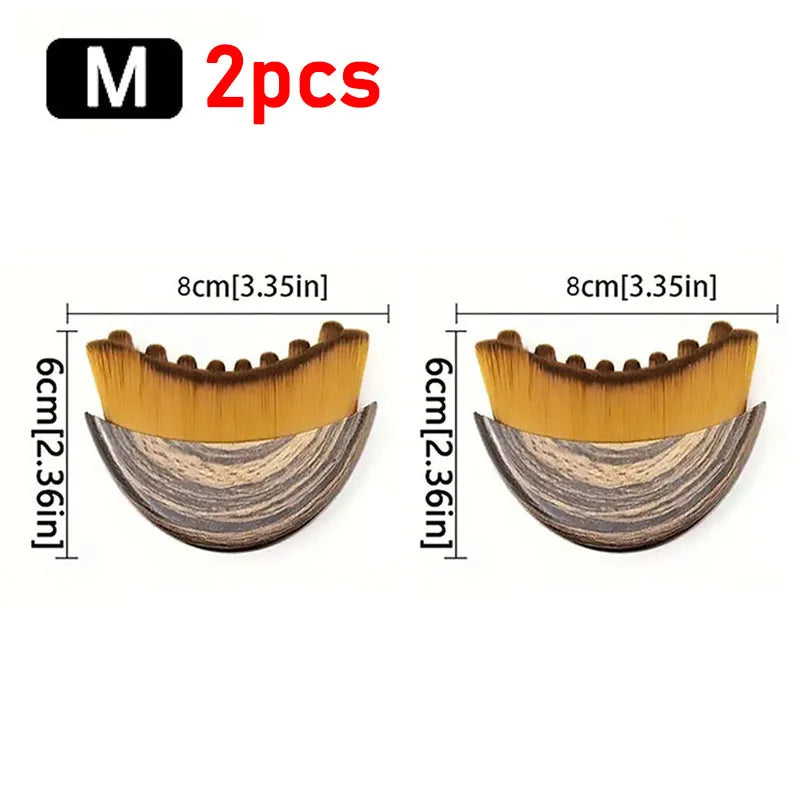
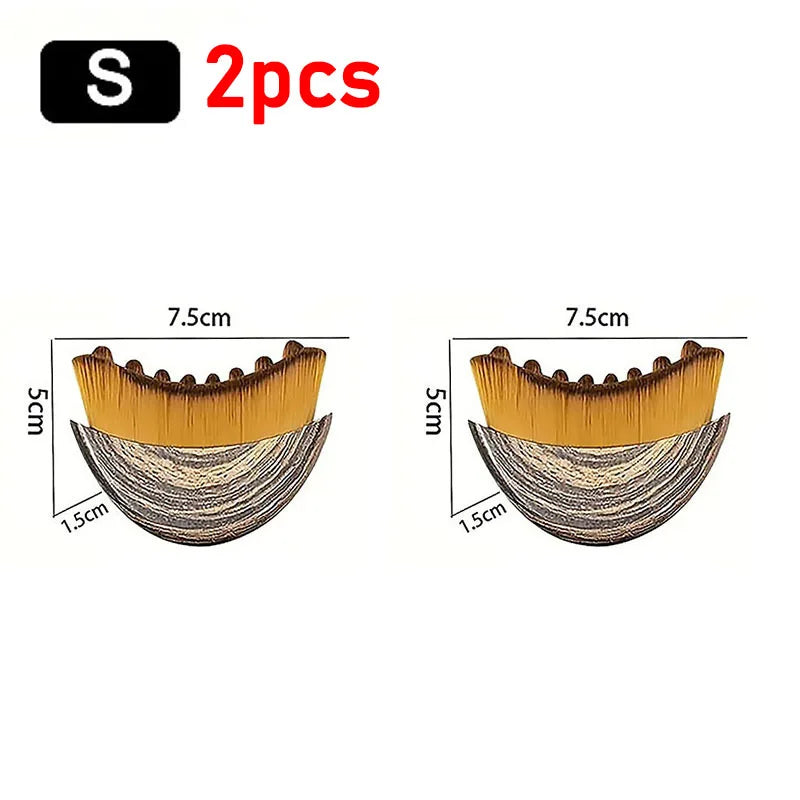
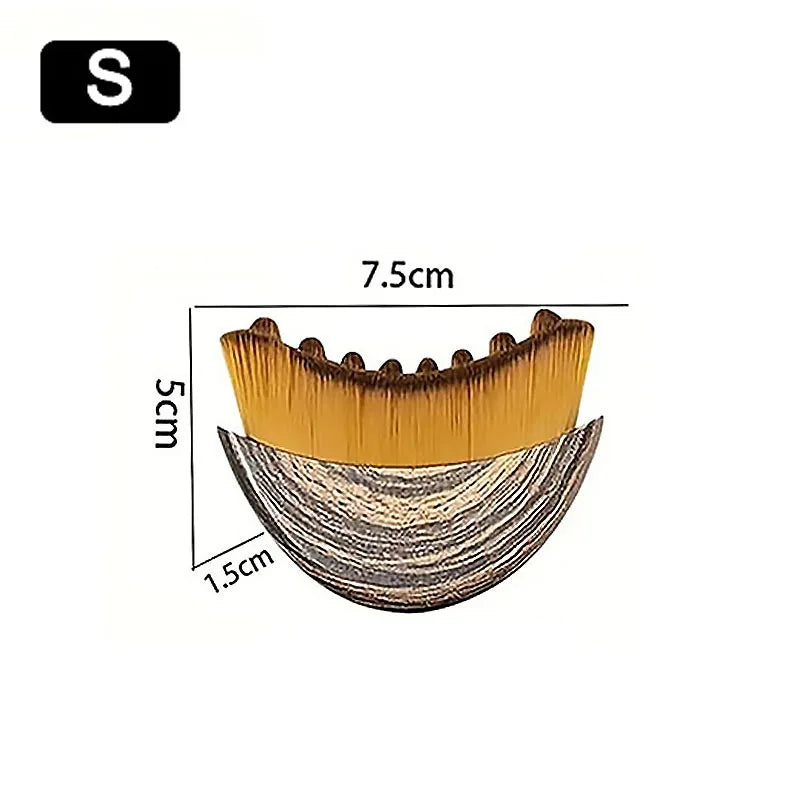
A contoured manual brush can be particularly appealing when you want a simple tool that does not require batteries, charging, or electronic settings. For example, the Lymphatic Face Brush is a rubber manual facial massage tool with a contoured design, ergonomic shape, no power source, and a travel-friendly format.
Pros:
- Supports gentle, directional facial massage.
- Manual design provides user-controlled pressure.
- No batteries, cords, or charging requirements.
- Easy to incorporate into a regular skincare routine.
- Compact option for travel.
Cons:
- Does not provide powered vibration or additional electronic functions.
- Results depend heavily on consistent technique.
- Users who prefer cooling stone or metal surfaces may prefer another tool type.
Vibrating Facial Massage Tools
Vibrating facial massage tools use powered movement to add vibration to the routine. Some models provide adjustable intensity or multiple modes, which can appeal to users who prefer powered convenience.
However, more intensity is not automatically better for lymphatic-style massage. If your primary goal is gentle facial massage for temporary puffiness, the ability to maintain comfortable pressure and controlled movement is more important than simply maximizing vibration.
Pros:
- Powered vibration can make massage feel convenient.
- Some models offer intensity or mode adjustments.
- May appeal to users who enjoy multifunction beauty devices.
Cons:
- Requires charging or batteries.
- More settings can make a simple routine unnecessarily complicated.
- Higher intensity is not inherently preferable for gentle lymphatic-style massage.
- Additional electronic components can increase maintenance requirements.
Manual Facial Massage Tools
Manual facial massage tools include simple non-powered devices that rely entirely on your hand movements. Their major advantage is control: you determine the direction, speed, duration, and pressure.
They can be particularly useful for people who want a straightforward facial massage routine without electronics. A manual tool can also be convenient for travel because there is no charging cable, battery, or electronic control system to manage.
Electronic Facial Massage and Multi-Function Devices
Electronic facial massage devices can combine massage with additional functions such as vibration, warming, light-based features, or other cosmetic technologies. These devices may be attractive when you want a broader beauty routine rather than a dedicated lymphatic-style massage tool.
The trade-off is complexity. More functions can mean more settings, cleaning requirements, charging considerations, and manufacturer instructions. If your main objective is simply a gentle morning massage, a manual tool may provide everything you actually need.
Facial Lymphatic Drainage Tool Comparison Chart
The following matrix focuses on the characteristics that matter most when choosing a tool for an at-home facial massage routine.
| Tool Type | Pressure Control | Ease of Use | Portability | Best Suited For | Main Limitation |
| Gua Sha | High | Moderate | High | Targeted facial massage and sculpting-style routines | Requires careful technique |
| Facial Roller | Moderate | High | High | Beginners and cooling massage | Less targeted pressure control |
| Lymphatic Drainage Brush | High | High | High | Gentle directional massage and morning puffiness routines | No powered features |
| Vibrating Tool | Moderate to High | Moderate | Moderate | Users who prefer powered convenience | Requires charging and appropriate intensity control |
| Manual Massage Tool | High | Moderate to High | High | Simple, controlled facial massage | Depends entirely on user technique |
| Multi-Function Device | Varies | Moderate | Low to Moderate | Users seeking multiple cosmetic functions | More complexity and maintenance |
Which tool is best for each goal?
| Your Goal | Tool Category to Consider | Why |
| Morning facial puffiness | Lymphatic drainage brush or manual tool | Simple, gentle, repeatable movements |
| Beginner-friendly massage | Facial roller or simple manual tool | Easy movement with relatively straightforward technique |
| Targeted jawline work | Gua sha or contoured manual tool | Allows more deliberate directional control |
| Travel | Manual brush, roller, or compact gua sha | No charging requirement and easy storage |
| Powered convenience | Vibrating facial massage tool | Provides powered movement and may offer adjustable settings |
| Minimalist routine | Manual facial massage tool | Fewer components and no electronic setup |
If you prefer a simple, non-electric approach, you can explore the broader Skin and Beauty Care Devices collection for related beauty-care tools.
How to Choose the Right Facial Lymphatic Drainage Tool
Start with your main goal
First decide what you actually want the tool to do. If your priority is temporary morning puffiness, you may not need a device with multiple electronic functions. If you primarily want facial relaxation, a roller may be sufficient. If targeted jawline massage is important, a contoured manual tool or gua sha may provide better control.
Separating your goal from the marketing feature list helps prevent overbuying.
Consider pressure and skin sensitivity
Gentle pressure should be a central consideration for a drainage-focused facial massage routine. If a tool encourages you to press hard to feel that it is "working," it may not be the best match for your intended use.
People with sensitive or easily irritated skin should prioritize smooth, comfortable contact and controlled movements. Stop if the massage causes pain, significant redness, irritation, or discomfort.
Choose the right tool shape and coverage
Think about the areas you want to reach. A broad surface can be convenient for cheeks and forehead, while a contoured edge may make the jawline easier to target. Rounded rollers provide a different contact pattern from flat gua sha surfaces or flexible massage brushes.
The shape should help you maintain a controlled movement without forcing your wrist or fingers into an uncomfortable position.
Manual vs. powered tools
Manual tools are best suited to people who want direct control and minimal maintenance. Powered tools can provide additional convenience for users who enjoy vibration or adjustable settings.
The important question is not whether powered technology is "better." Ask whether the additional feature solves a real problem in your routine. If you want a five-minute massage without charging another device, manual may be the more practical choice.
Material, hygiene, and durability
The contact surface matters because the tool will repeatedly touch your skin. Look for a material and construction that are comfortable, durable, and practical to clean according to the manufacturer's care instructions.
For a manual brush, also consider whether the surface can be cleaned thoroughly and dried properly between uses.
Portability and storage
A tool that is easy to store is more likely to become part of a consistent routine. Travelers may especially prefer manual designs because there are no batteries or charging cables.
A compact tool can also make it easier to maintain your facial massage routine away from home.
Price versus useful features
Do not assume that a higher price automatically means a better lymphatic drainage tool. Compare the features that actually matter: comfort, pressure control, shape, coverage, cleaning, durability, portability, and ease of use.
A simple manual tool may outperform a complicated device for someone whose only goal is a short, gentle morning massage.
How to Use Facial Lymphatic Drainage Tools Correctly
- Clean your face and hands. Start with clean skin and clean hands to create a more hygienic facial massage routine.
- Apply suitable facial slip. Depending on the tool and your skincare routine, a suitable facial oil, serum, or moisturizer can help reduce unnecessary friction. Follow the tool manufacturer's instructions.
- Begin around the neck and drainage pathways. Rather than immediately moving randomly across the cheeks, establish a consistent sequence that incorporates the neck.
- Work from the center of the face outward. Use controlled movements across the cheeks, jawline, and forehead while following the contours of your face.
- Use light, controlled pressure. Avoid aggressive scraping, pressing, or dragging. The goal is a comfortable massage rather than forceful manipulation.
- Finish with the neck. Complete the sequence with appropriate directional strokes around the neck rather than stopping abruptly at the jawline.
How long should a facial lymphatic drainage routine take?
There is no need to make the routine excessively long. A short, consistent session can be easier to maintain than an elaborate routine. For beginners, approximately five minutes is a practical starting point for learning the sequence and observing how your skin responds.
Comfort and technique are more important than trying to maximize session length.
Common Mistakes When Using Facial Lymphatic Drainage Tools
Using too much pressure
One of the most common mistakes is assuming that stronger pressure produces better results. Facial massage should remain comfortable. Excessive force can increase friction and irritation rather than improving the experience.
Dragging the tool over dry skin
Using a massage tool on dry skin can create unnecessary friction. Depending on the tool, a suitable skincare product may help it glide more comfortably. Always make sure the product you use is compatible with both your skin and the tool.
Ignoring the neck
A facial massage routine does not have to stop at the jawline. Including the neck can help create a more consistent sequence and prevent the routine from becoming a collection of disconnected facial strokes.
Moving randomly instead of following a consistent sequence
Random movements make it harder to repeat the routine consistently. A simple sequence is easier to remember: prepare the neck area, work through the face in controlled outward movements, and finish around the neck.
Overusing aggressive or vibrating settings
If you use a vibrating tool, resist the temptation to select the strongest setting simply because it feels more noticeable. Gentle facial massage and high-intensity cosmetic-device use are not the same thing.
Failing to clean the tool
Facial massage tools repeatedly contact your skin, so cleaning should be part of ownership. Follow the manufacturer's cleaning instructions, especially if the device has electronic components, seams, bristles, or other areas where residue can accumulate.
For additional self-care options, the Body Care and Health Devices collection provides another place to explore at-home care tools.
Are Facial Lymphatic Drainage Tools Safe?
For ordinary cosmetic self-care, gentle facial massage may be appropriate for many people. However, a beauty tool should not be treated as a medical treatment for unexplained facial swelling or a diagnosed lymphatic disorder.
When gentle facial massage may be appropriate
A gentle routine can be used as part of ordinary skincare and relaxation when the skin is comfortable and free from obvious irritation or injury. Use light pressure and discontinue the routine if it causes discomfort.
When to avoid facial massage tools
Avoid massaging over active irritation, open wounds, significant inflammation, or areas that are painful or unusually swollen. If facial swelling is unexplained, persistent, severe, or accompanied by other concerning symptoms, a healthcare professional should evaluate the underlying cause.
When to ask a healthcare professional first
If swelling or lymphatic concerns are connected to an underlying medical condition, surgery, treatment, or another health issue, ask an appropriate healthcare professional before beginning self-massage. Professional guidance is particularly important when therapeutic lymphatic drainage is the actual objective.
Facial Lymphatic Drainage Tools vs. Manual Lymphatic Drainage
Control and pressure
With your hands, you have direct feedback from the skin and can adjust pressure immediately. A manual tool provides a similar user-controlled approach while changing the contact surface and shape. Powered tools add movement but may reduce some of the direct simplicity of hand-controlled massage.
Convenience and consistency
At-home tools can make a routine easier to repeat. A dedicated brush or roller can provide a physical reminder to spend a few minutes on facial care, while a non-electric tool eliminates charging and battery management.
When professional lymphatic drainage is different
Professional lymphatic drainage is not simply a stronger version of cosmetic facial massage. Professional care may involve individualized technique based on a person's circumstances. A consumer facial massage tool should therefore be viewed as a self-care accessory rather than a substitute for therapeutic treatment.
Best Facial Lymphatic Drainage Tool by User Type
Best for beginners
Beginners should prioritize an intuitive design, comfortable grip, gentle pressure, and simple maintenance. A facial roller or straightforward manual brush can be easier to understand than a device with numerous settings.
Best for sensitive skin
For sensitive skin, prioritize a comfortable contact surface and precise pressure control. Avoid assuming that harder or faster movements will provide better results. A manual tool that allows you to control every stroke can be a practical choice.
Best for morning facial puffiness
For a morning routine, simplicity matters. A lightweight, non-electric tool that can be used quickly after cleansing may be more practical than a device requiring charging and multiple settings.
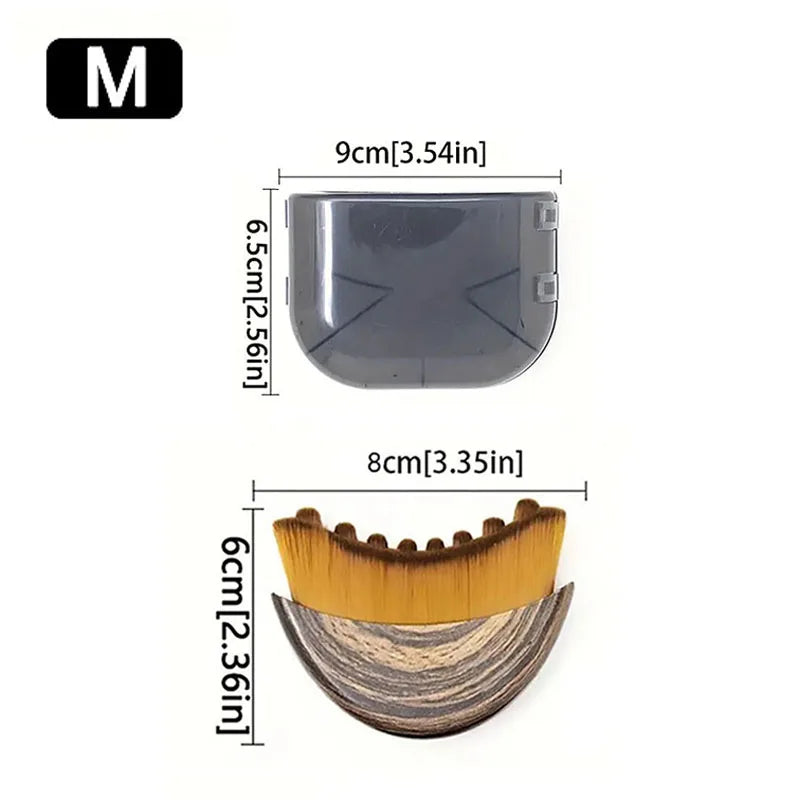
The Lymphatic Face Brush for facial puffiness care fits this use case because it is a manual rubber tool with a contoured design, ergonomic grip, and no power source. It is designed for light, outward and upward facial massage rather than complicated electronic treatment.
Best for targeted jawline and cheek massage
For targeted facial work, look for an ergonomic shape that follows facial contours. Gua sha tools and contoured manual brushes can both provide deliberate control around the cheeks and jawline.
Best for travel
Manual tools are especially convenient for travel. A non-electric design eliminates the need for charging and reduces the number of accessories you need to pack.
Best for a hands-free or powered routine
If you strongly prefer powered convenience, a vibrating facial massage device may be worth considering. Just make sure its available settings are appropriate for the gentle routine you intend to perform, and follow its manufacturer instructions.
How to Build a Simple Facial Lymphatic Drainage Routine
A 5-minute beginner routine
- Clean your hands and face.
- Apply an appropriate skincare product if needed to reduce friction.
- Begin with gentle movements around the neck.
- Move to the lower face and jawline.
- Massage the cheeks using controlled outward strokes.
- Move across the forehead with similarly gentle movements.
- Return to the neck to finish the sequence.
Keep the pressure light and make each movement slow enough that you can maintain control. The objective is consistency rather than intensity.
A gentle morning routine for temporary puffiness
If your face looks puffy after sleeping, keep the morning routine particularly simple. Start after cleansing, use a suitable product for glide if necessary, and spend a few minutes working through the face with controlled outward movements before finishing around the neck.
A manual tool can be convenient for this routine because there is no waiting for a device to charge or selecting the correct electronic program.
How often should you use a facial lymphatic drainage tool?
A gentle manual tool can be incorporated into a regular facial massage routine when your skin remains comfortable. The product specifications provided for the Lymphatic Face Brush describe its gentle, non-electric design as suitable for regular facial massage.
For powered devices, follow the specific manufacturer's instructions regarding frequency, duration, and intensity. If your skin becomes irritated or uncomfortable, reduce use or stop.
What to Look for Before Buying a Facial Lymphatic Drainage Tool
Pressure control and ergonomics
Look for a tool that feels easy to hold and lets you make precise, light movements. Ergonomics become especially important when you are working around smaller areas such as the jawline and cheeks.
Materials and skin contact surface
Consider what material touches your skin and whether its texture feels comfortable during repeated use. The Lymphatic Face Brush described for this article uses rubber and is designed as a manual facial massage tool.
Cleaning and maintenance requirements
A good facial massage tool should fit naturally into your hygiene routine. Before purchasing, check how the manufacturer recommends cleaning and storing it. Simple construction can be advantageous when your priority is low-maintenance ownership.
Battery, charging, and warranty for powered tools
Powered devices introduce additional ownership factors. Consider battery life, charging requirements, replacement needs, warranty coverage, and whether the electronic features are genuinely useful to you.
Brand instructions and safety information
Read the manufacturer's intended-use information before incorporating a new tool into your routine. Pay attention to cleaning instructions, pressure recommendations, skin-contact guidance, and any stated situations in which the product should not be used.
For readers comparing beauty devices more broadly, the Beauty & Self-Care Blog can provide additional context for building a practical at-home routine.
Facial Lymphatic Drainage Tools: Final Buying Checklist
- Define the goal first: Decide whether you want temporary de-puffing, relaxation, targeted massage, cooling, or a broader beauty routine.
- Choose technique over technology: A tool is only useful when you can use it comfortably and consistently.
- Prioritize gentle pressure: More force is not automatically better.
- Match the shape to your face: Consider cheeks, jawline, forehead, and neck coverage.
- Check the contact material: Choose a surface that feels comfortable and is practical to maintain.
- Think about maintenance: Manual tools can simplify cleaning and ownership, while powered tools may require additional care.
- Consider portability: If you travel frequently, a compact non-electric tool can be particularly convenient.
- Ignore unnecessary features: Pay for functions that solve a real problem in your routine.
- Follow manufacturer guidance: Especially when using powered or multi-function devices.
If your ideal routine is simple, controlled, and non-electric, a tool such as the manual Lymphatic Face Brush may be a practical fit for gentle daily facial massage. Its rubber construction, contoured shape, ergonomic grip, and lack of batteries or cords make it particularly relevant for beginners, morning routines, and travel.
Frequently Asked Questions About Facial Lymphatic Drainage Tools
What is the best facial lymphatic drainage tool for beginners?
For beginners, the best option is usually the tool that is easiest to control and use gently. A facial roller or simple manual lymphatic drainage brush can be a practical starting point because the routine does not require complicated settings.
Do facial lymphatic drainage tools really work?
Facial massage tools can support a temporary refreshed, less-puffy, or more sculpted-looking appearance when used as part of a consistent cosmetic routine. They should not be presented as treatments for underlying medical causes of swelling or lymphatic disorders.
What is the difference between a gua sha and a lymphatic drainage brush?
A gua sha generally uses a flat, contoured surface and is suited to targeted manual massage. A lymphatic drainage brush uses a brush-style contact surface and is typically oriented toward gentle directional strokes. Both rely on user-controlled technique.
Can I use a facial lymphatic drainage tool every day?
A gentle manual facial massage tool can be incorporated into regular skincare when used comfortably. The Lymphatic Face Brush is described as suitable for regular facial massage. For powered tools, follow the manufacturer's recommended frequency and duration.
How much pressure should I use with a facial lymphatic drainage tool?
Use light, controlled pressure. Avoid aggressive scraping, pressing, or movements that cause pain or significant irritation. The ability to maintain comfortable pressure is one of the most important factors when choosing a tool.
Can facial lymphatic drainage tools help with a puffy face?
Gentle facial massage may help temporarily improve the appearance of facial puffiness and create a more refreshed-looking appearance. Persistent or unexplained facial swelling should not be managed solely with a cosmetic massage tool.
Should I use oil or serum with a facial lymphatic drainage tool?
A suitable facial oil, serum, or moisturizer may help reduce friction during massage, depending on the tool and your skincare routine. Choose a product appropriate for your skin and follow the tool's care instructions.
Are vibrating facial massage tools good for lymphatic drainage?
Vibrating tools can provide powered massage and may be convenient for some users, but more vibration or higher intensity is not automatically better for a gentle lymphatic-style routine. Controlled technique remains important.
How do I clean a facial lymphatic drainage tool?
Follow the manufacturer's cleaning instructions for the specific tool. In general, regular cleaning is an important part of facial tool maintenance because the device repeatedly contacts your skin. Pay particular attention to seams, textured surfaces, or areas where skincare residue can accumulate.
When should I avoid using a facial lymphatic drainage tool?
Avoid using facial massage tools over open wounds, active irritation, significant inflammation, or painful areas. If swelling is unexplained, persistent, severe, or connected to an underlying medical condition or treatment, seek appropriate professional guidance before using a massage tool.
Conclusion: Choose the Tool That Fits Your Technique
There is no single best facial lymphatic drainage tool for everyone. Gua sha can suit targeted manual massage, rollers offer a simple rolling experience, vibrating devices provide powered convenience, and manual brushes can deliver a straightforward approach to gentle directional facial massage.
The smartest choice starts with your routine rather than the feature list. Consider your desired pressure, skin sensitivity, facial areas, comfort, portability, cleaning requirements, and whether you actually need powered functions.
For someone focused on simple morning facial puffiness care, a non-electric, contoured manual tool can be an especially practical option. The Lymphatic Face Brush is designed around that approach, providing a rubber contact surface, ergonomic control, and a battery-free format for regular facial massage at home or while traveling.
Ultimately, choose the tool that makes gentle, consistent technique easiest to maintain. The right facial lymphatic drainage routine is less about using the most advanced device and more about selecting a comfortable tool you can use appropriately and consistently.
Pillar Article: Face Brush for Lymphatic Drainage: How to Choose the Right Tool













