

HIEMT vs EMS Body Sculpting: What’s the Difference?
HIEMT and EMS both create muscle contractions, but they use different stimulation methods. EMS delivers electrical current through electrodes to stimulate peripheral nerves, while HIEMT generally uses high-intensity electromagnetic energy to induce involuntary muscle contractions without direct electrode contact. The two terms are not automatically interchangeable, and results depend on the specific device, treatment protocol, target area, and evidence supporting that system.
HIEMT vs EMS: What’s the Difference?
The main difference between HIEMT and EMS is how the stimulation reaches the muscles. Traditional EMS uses electrodes placed on or near the skin to deliver electrical stimulation. HIEMT uses a changing electromagnetic field to induce currents within tissue and stimulate motor nerves without surface electrodes.
HIEMT vs EMS at a Glance
| Feature | EMS | HIEMT |
| Stimulation method | Electrical current delivered through electrodes | High-intensity electromagnetic stimulation |
| Skin contact | Usually requires electrode contact | Typically uses an applicator positioned over the treatment area |
| Muscle activation | Electrical stimulation activates peripheral nerves and muscles | Electromagnetic energy induces stimulation of motor nerves |
| Common applications | Muscle conditioning, rehabilitation, re-education, and selected cosmetic uses | Non-invasive muscle stimulation and body-contouring applications |
| Treatment areas | Depends on electrode placement and device design | Depends on applicator design and device indications |
| Main limitation | Results and safety depend heavily on electrode placement, settings, and device design | Evidence and outcomes can be highly device-specific |
The Key Difference in One Sentence
EMS stimulates muscles through electrode-delivered electrical current, while HIEMT uses electromagnetic energy to stimulate muscle contractions without direct electrode contact.
What Is EMS and How Does Electrical Muscle Stimulation Work?
Electrical muscle stimulation, commonly called EMS, uses controlled electrical impulses to activate nerves that cause muscles to contract. Depending on the device and intended use, EMS may be used in physical therapy, rehabilitation, muscle re-education, conditioning, or specific cosmetic applications.
How Electrical Muscle Stimulation Activates Muscles
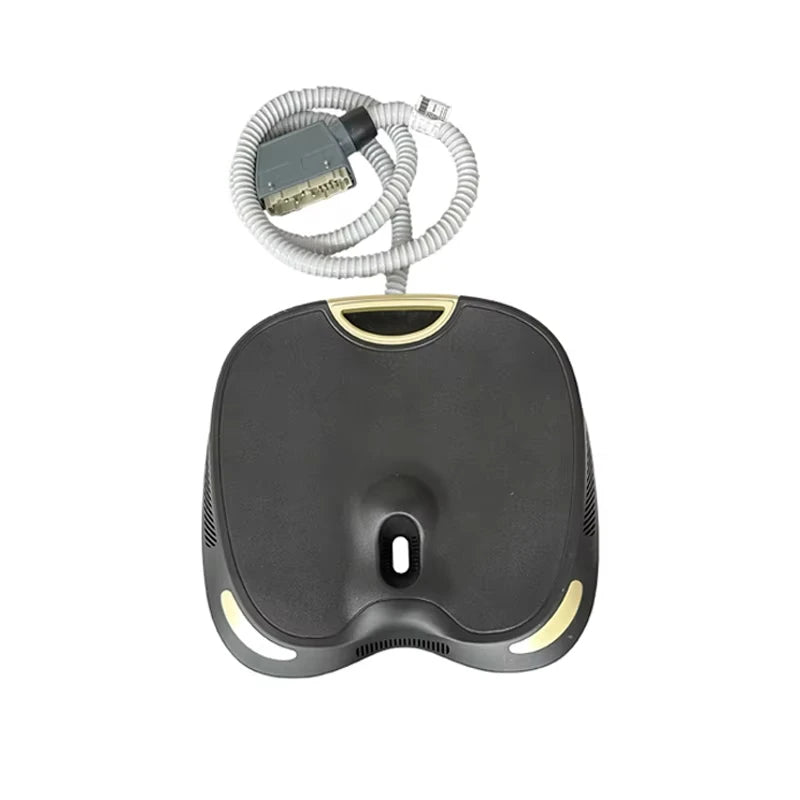
With conventional EMS, electrodes are positioned against the skin. The device delivers electrical pulses through the electrodes, stimulating peripheral nerves and producing muscle contractions. Settings such as pulse characteristics, intensity, electrode placement, and treatment duration can influence the treatment experience and physiological response.
EMS should therefore not be treated as a single standardized technology. Different devices can use different waveforms, frequencies, electrode configurations, and intended-use protocols.
EMS for Muscle Strengthening and Conditioning
Neuromuscular electrical stimulation can produce measurable muscle contractions and has established uses in rehabilitation and muscle re-education. Research also suggests that structured NMES training can contribute to improvements in muscle strength, although outcomes vary according to the population, protocol, muscle group, and whether stimulation is combined with voluntary exercise.
That distinction matters when evaluating cosmetic EMS claims. Evidence that supports therapeutic muscle stimulation does not automatically prove that every consumer EMS device will produce substantial muscle growth, fat loss, or visible body contouring.
Common EMS Treatment Uses and Limitations
FDA guidance and cleared-device indications show that powered muscle stimulators can have uses such as muscle re-education, prevention of disuse atrophy, maintaining range of motion, and relaxation of muscle spasms. However, FDA has also warned that many promotional claims for EMS devices go beyond the evidence or regulatory indications for particular products.
For body shaping, it is especially important to separate muscle contraction from fat reduction. Creating a contraction does not automatically mean that a device has been demonstrated to reduce body fat or produce major changes in body composition.
What Is HIEMT and How Does Electromagnetic Muscle Stimulation Work?
HIEMT generally refers to high-intensity electromagnetic muscle stimulation. Instead of placing electrodes on the skin, the device uses an electromagnetic field generated by an applicator. The changing field can induce electrical currents in tissue and stimulate motor nerves, resulting in strong involuntary muscle contractions.
How Electromagnetic Field Stimulation Produces Muscle Contractions
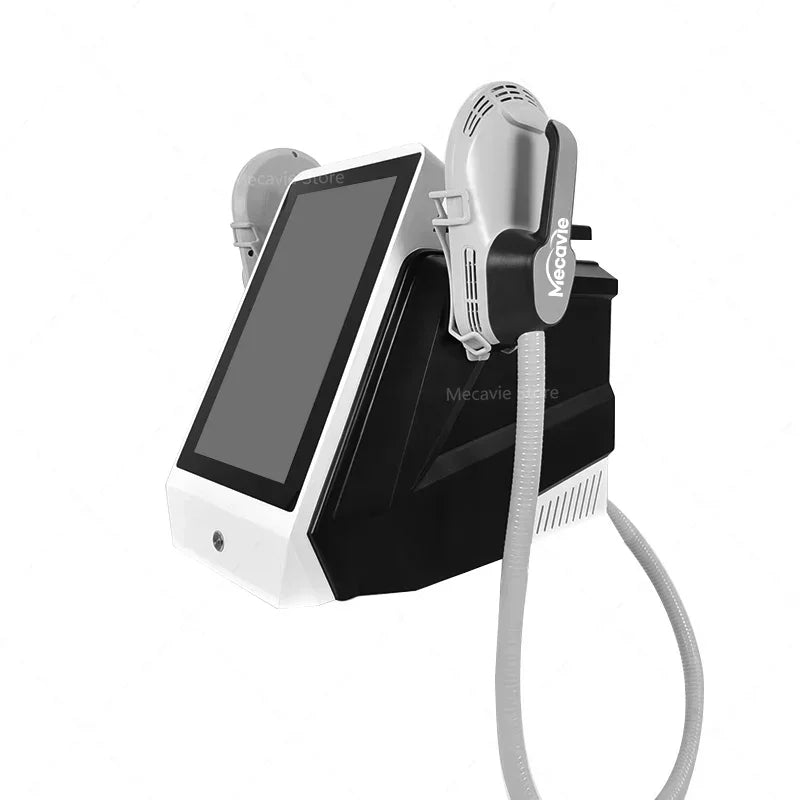
Electromagnetic stimulation works through electromagnetic induction rather than direct electrode delivery. A treatment applicator generates a changing electromagnetic field, which can induce electrical activity within the underlying tissue. When motor nerves are sufficiently stimulated, the targeted muscles contract.
This allows electromagnetic systems to create intense involuntary contractions without attaching conventional adhesive electrodes directly to the skin. The actual output, field characteristics, treatment depth, intensity, and clinical effect depend on the specific device.
What Does HIEMT Actually Mean?
HIEMT is a descriptive technology term rather than a guarantee of a standardized treatment outcome. Two devices marketed as HIEMT can differ in electromagnetic output, applicator design, treatment protocols, controls, intended use, and supporting evidence.
For that reason, comparing devices only by the word “HIEMT” can be misleading. Buyers should examine the actual technology specifications, intended use, safety instructions, regulatory information, and clinical evidence for the particular system.
HIEMT vs HIFEM: Are They the Same?
HIEMT and HIFEM are closely related terms, but they should not automatically be treated as identical. HIFEM is commonly used in connection with high-intensity focused electromagnetic technology and particular branded body-contouring systems, while HIEMT is often used more broadly by manufacturers to describe high-intensity electromagnetic muscle stimulation.
A device using the HIEMT label is not automatically equivalent to a branded HIFEM system. Clinical results from one named device should not be transferred to every machine using similar terminology.
HIEMT vs EMS: Key Differences in Muscle Stimulation
Stimulation Pathway
EMS uses electrodes to deliver electrical stimulation from the surface toward the targeted nerves and muscles. HIEMT uses an electromagnetic field generated by an applicator to induce electrical activity within tissue without conventional surface electrodes.
The different delivery pathways affect the treatment setup, sensation, applicator design, and practical positioning requirements.
Contraction Pattern and Intensity
Both technologies can create involuntary muscle contractions, but the contraction experience depends on device output and treatment programming. High-intensity electromagnetic systems used for aesthetic body contouring are designed to produce powerful contractions, while EMS intensity and contraction patterns are controlled through electrical stimulation parameters.
Higher intensity does not automatically mean better results. Treatment effectiveness depends on appropriate dosing, target muscle, protocol, recovery, and the evidence behind the specific device.
Treatment Depth and Muscle Coverage
It is tempting to claim that one technology always reaches deeper or activates more muscle than the other, but universal depth claims are difficult to justify because devices differ substantially.
Applicator geometry, electromagnetic field characteristics, electrode placement, current distribution, tissue characteristics, and treatment settings can all affect stimulation. Device-specific specifications are therefore more useful than broad claims about “deep” stimulation.
Treatment Experience
EMS usually involves electrode contact, while HIEMT treatments generally position applicators over the treatment area without conventional electrodes. Both can produce noticeable muscle contractions, and the sensation can vary considerably according to intensity and protocol.
HIEMT vs EMS for Muscle Building, Strength, and Body Contouring
Muscle Strengthening and Conditioning
Both technologies can activate muscles, but muscle activation is not synonymous with conventional strength training. Repeated stimulation may contribute to adaptations when the protocol provides an adequate training stimulus, yet exercise remains an important component of overall strength and physical conditioning.
Research on NMES has found that electrical stimulation can improve strength under certain conditions, particularly in rehabilitation and structured training protocols. The result should not be interpreted as proof that every EMS device can replace resistance training.
Muscle Hypertrophy and Muscle Building
Muscle hypertrophy means an increase in muscle size resulting from physiological adaptation to training. Electrical stimulation can contribute to strength and muscle-related adaptations, but the magnitude of muscle growth depends on the stimulation protocol and the individual.
Evidence for electromagnetic body-contouring systems has reported increases in muscle thickness in some treatment studies, but the quality and size of the available evidence vary. Results from a specific clinical system should not automatically be generalized to every HIEMT machine.
Fat Reduction and Body Contouring
Body contouring is a separate question from muscle stimulation. Some high-intensity electromagnetic systems have been studied for non-invasive body contouring, including systems that combine electromagnetic energy with radiofrequency.
A systematic review of HIFEM-based body-contouring studies found evidence of changes in abdominal muscle thickness and fat thickness in studied systems, but also noted methodological limitations and the need for stronger evidence. Importantly, those findings are device-specific and should not be used to promise identical outcomes from every HIEMT or EMS machine.
Likewise, FDA has stated that reviewed EMS devices should not be assumed to provide weight loss or major girth-reduction effects simply because they produce muscle contractions.
What Results Should You Realistically Expect?
Expectations should be based on the device, treatment protocol, baseline condition, treatment area, and evidence quality. Muscle stimulation may support muscle activation or conditioning, while certain electromagnetic body-contouring systems may produce measurable changes in treated areas.
Visible results are not guaranteed, and maintenance may be necessary. A body-contouring treatment should also not be presented as a substitute for nutrition, resistance exercise, or appropriate medical care.
HIEMT vs EMS: Treatment Areas Compared
Abdominal Muscle Stimulation
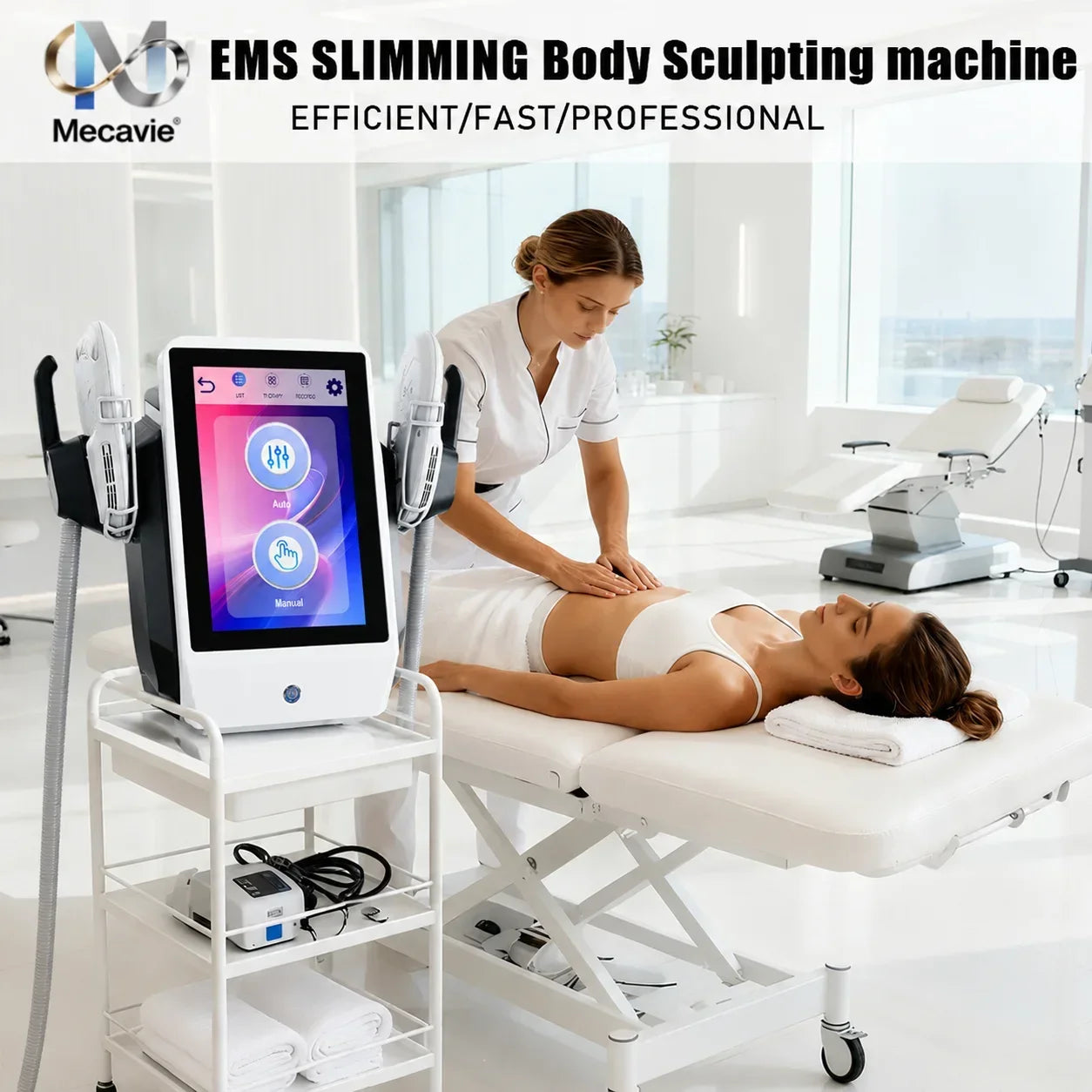
The abdomen is a common target for both electrical and electromagnetic muscle stimulation. However, activating abdominal muscles does not guarantee visible abdominal definition or localized fat loss.
Glutes, Thighs, and Other Large Muscle Groups
Large muscle groups such as the glutes and thighs may be targeted by electromagnetic or EMS systems designed for those anatomical regions. Applicator size, shape, placement, output, and manufacturer instructions determine whether a specific device is appropriate for a particular area.
For anyone evaluating body and face wellness topics, it is useful to distinguish a device's marketed treatment areas from its validated or intended applications.
Areas That May Require Special Consideration
Not every stimulation device is designed for every part of the body. Treatment eligibility depends on anatomy, applicator design, intended use, contraindications, and manufacturer instructions.
Which Is Better: HIEMT or EMS?
Neither technology is universally better. The more appropriate option depends on the goal, device design, treatment area, desired treatment experience, evidence quality, and safety requirements.
Choose EMS If Your Priority Is...
- Electrode-based neuromuscular stimulation.
- Muscle re-education or rehabilitation under appropriate professional guidance.
- A stimulation protocol that integrates with voluntary exercise.
- Precise electrode placement for a particular muscle group.
Consider HIEMT If Your Priority Is...
- Non-contact electromagnetic muscle stimulation.
- Strong involuntary muscle contractions.
- Professional aesthetic body-contouring applications.
- A treatment setup that uses external applicators rather than conventional surface electrodes.
For professional wellness or aesthetic environments, a device such as the Emsnova EMS Body Sculpting Machine illustrates how a commercial system can combine HIEMT, EMS, and RF technologies in one platform. Its product specifications should be evaluated independently from evidence for other HIEMT or HIFEM systems.
When Neither Should Replace Exercise or Medical Care
Muscle stimulation should be viewed as a targeted technology rather than a universal replacement for resistance training, rehabilitation programs, nutrition, or medical evaluation. People with an underlying medical condition should follow appropriate professional guidance rather than selecting a stimulation device based solely on marketing terminology.
Safety, Contraindications, and Who Should Avoid Muscle Stimulation
Potential Side Effects and Treatment Sensations
Muscle stimulation can produce noticeable contractions, temporary soreness, discomfort, or skin reactions depending on the technology and treatment settings. FDA has reported adverse events associated with some electrical muscle stimulators, including shocks, burns, bruising, skin irritation, and pain.
These reports reinforce the importance of using properly designed equipment and following the manufacturer's instructions rather than assuming that all stimulation devices have identical safety profiles.
Common Contraindications and Precautions
Contraindications vary by device, but electrical muscle stimulation may be inappropriate for people with certain implanted electronic devices, including cardiac pacemakers. FDA guidance also identifies precautions involving pregnancy, certain heart conditions, epilepsy, recent surgery, impaired sensation, and stimulation over inappropriate anatomical areas.
For any HIEMT, EMS, or combined technology, users should review the specific device labeling and obtain medical clearance when appropriate. Do not assume that a non-invasive treatment is automatically safe for everyone.
Why Device Instructions Matter
HIEMT, HIFEM, EMS, and RF systems can differ in output, intended use, contraindications, treatment protocols, and regulatory status. The technology label alone is therefore not enough to determine whether a device is appropriate.
What Does the Evidence Say About HIEMT and EMS?
Evidence for Electrical Muscle Stimulation
EMS and NMES have a substantial research history, particularly in rehabilitation and muscle strengthening. Systematic reviews have found that NMES can improve strength in selected populations and protocols, although outcomes vary between studies.
The strongest interpretation is not that EMS universally outperforms exercise, but that appropriately designed electrical stimulation can be a useful tool for muscle activation, rehabilitation, and conditioning in suitable circumstances.
Evidence for High-Intensity Electromagnetic Muscle Stimulation
Research on high-intensity electromagnetic muscle stimulation has reported changes in muscle thickness and body-contouring measurements for certain systems. However, the evidence base remains more device-specific than the broad commercial terminology may suggest.
A critical review of aesthetic muscle stimulation studies identified research involving hundreds of participants but classified many studies as moderate, low, or very low quality. A more recent systematic review likewise identified clinical studies of specific HIFEM systems while noting limitations in study populations, methodology, and long-term evidence.
How to Interpret Manufacturer-Reported Results
Manufacturer specifications can explain what a machine is designed to do, but they should not be treated as equivalent to independent clinical evidence. When comparing products, look for:
- Independent clinical studies.
- Clearly defined treatment protocols.
- Study sample sizes and follow-up periods.
- Objective measurements rather than satisfaction alone.
- Device-specific evidence rather than evidence borrowed from another brand.
- Regulatory indications that match the advertised use.
HIEMT vs EMS: Limitations and Buying Considerations
What to Check Before Choosing a Device
Before choosing a professional EMS or HIEMT system, evaluate the actual technology, intended use, treatment areas, intensity controls, applicator configuration, safety instructions, electrical specifications, regulatory documentation, warranty support, and evidence available for that specific device.

Professional Treatment vs At-Home EMS Devices
Professional systems and consumer EMS devices should not automatically be considered interchangeable. Professional equipment may provide different power levels, applicator configurations, controls, treatment protocols, and supervision requirements. Consumer devices may be designed around narrower indications and lower-complexity use.
For professional operators researching beauty and self-care device guidance, the most useful comparison is not simply “stronger versus weaker.” It is whether the device's specifications, intended use, training requirements, safety documentation, and evidence fit the planned application.
Product Example: Where an EMS Device Fits
The Emsnova EMS Body Sculpting Machine is described as a professional HIEMT system combining HIEMT, RF, and EMS technologies. According to the supplied product specifications, it offers manual and automatic operation, is designed for areas including the abdomen, buttocks, arms, and legs, and carries CE and RoHS certifications.
Those specifications describe the product itself; they should not be interpreted as proof that every HIEMT, HIFEM, EMS, or RF device produces the same clinical or cosmetic results. For buyers comparing professional body-care equipment, the skin and beauty care device collection provides additional context for evaluating related device categories.
How Often Can You Use HIEMT or EMS?
HIEMT Treatment Frequency
HIEMT treatment frequency varies according to the device, treatment intensity, target muscle, treatment area, and manufacturer's protocol. Clinical studies of particular HIFEM systems have used treatment schedules involving multiple sessions over several weeks, but those protocols should not be copied automatically to another device.
EMS Treatment Frequency
EMS frequency also depends on the stimulation intensity, purpose, muscle group, recovery needs, and manufacturer instructions. Rehabilitation protocols, conditioning programs, and cosmetic applications can use very different schedules.
Why More Intensity or More Sessions Is Not Always Better
More stimulation is not necessarily better stimulation. Excessive intensity or inadequate recovery can increase fatigue, discomfort, or soreness. A sensible protocol should follow the device instructions and allow appropriate recovery between demanding sessions.
Final Takeaway: HIEMT vs EMS Body Sculpting
HIEMT and EMS both stimulate muscle contractions, but they do so through different delivery mechanisms. EMS uses electrode-delivered electrical current, while HIEMT generally uses high-intensity electromagnetic energy without conventional electrode contact.
If your priority is electrode-based neuromuscular stimulation, EMS may be the better fit. If you are evaluating non-contact electromagnetic muscle stimulation for professional body-contouring applications, HIEMT may be more relevant. Neither label alone guarantees superior results.
The most important factors are the specific device, intended use, treatment area, protocol, safety requirements, and quality of supporting evidence. For professional operators considering a combined technology platform, the Emsnova EMS Body Sculpting Machine is one example of a system that combines HIEMT, EMS, and RF in a single setup.
For broader evaluation of body-focused technology, explore the Body Care and Health Devices collection and compare devices according to their actual specifications and intended applications rather than relying on technology labels alone.
Pillar Article: Abdominal Muscle Stimulation Device: Benefits, Safety & Buying Guide













