

HIEMT vs Traditional Muscle Training: What Works Best?
If you are trying to improve muscle tone, build strength, or address areas that seem resistant to conventional workouts, the choice between HIEMT and traditional muscle training can be confusing. Both can produce strong muscle contractions, but they do so differently. The important distinction is that making a muscle contract is not automatically equivalent to training it through progressive resistance.
Traditional resistance training remains the more comprehensive foundation for strength, hypertrophy, movement skill, and overall fitness. HIEMT and other muscle-stimulation technologies may provide targeted, time-efficient stimulation and can be useful as a complement for appropriate users. Evidence on electrical muscle stimulation shows potential improvements in muscle strength and mass, but protocols vary considerably, and results should not be treated as interchangeable with a complete exercise program. :contentReference[oaicite:0]{index=0}
That distinction matters when comparing HIEMT, EMS, and conventional exercise for muscle toning, body contouring, and long-term physical performance.
HIEMT vs Traditional Muscle Training: The Key Difference
HIEMT uses externally generated stimulation to trigger muscle contractions
HIEMT is commonly used to describe high-intensity electromagnetic muscle stimulation. Rather than requiring you to voluntarily contract a muscle against an external load, the technology uses an externally generated field to induce muscle contractions. The FDA describes magnetic-field body-contouring technology as using pulsed magnetic fields that trigger electrical currents in muscle, producing repeated contractions. :contentReference[oaicite:1]{index=1}
These contractions can be substantial, making HIEMT attractive for targeted muscle stimulation and body-contouring applications.
Traditional training relies on voluntary contractions under resistance
Traditional resistance training includes exercises such as squats, presses, rows, lunges, deadlifts, and other movements in which you voluntarily produce force against resistance. The load, repetitions, sets, range of motion, exercise selection, and training frequency can be progressively adjusted.
That progressive-overload component is important. A large systematic review and network meta-analysis found that resistance-training programs consistently improved muscle strength and hypertrophy compared with no exercise, with higher-load approaches particularly effective for strength development. :contentReference[oaicite:2]{index=2}
Bottom line: HIEMT is generally better viewed as a complement, not a universal replacement
HIEMT can create powerful contractions without conventional lifting, but it does not automatically reproduce everything that happens during a complete resistance-training session. Exercise also trains coordination, movement patterns, balance, joint control, work capacity, and the ability to produce force during real-world movements.
What Is HIEMT and How Does It Stimulate Muscle?
HIEMT vs EMS: Are They the Same?
HIEMT and EMS are related but should not automatically be treated as identical technologies. EMS is a broad term for electrical muscle stimulation, while HIEMT generally refers to high-intensity electromagnetic stimulation systems designed to induce muscle contractions without conventional surface electrodes delivering the stimulation in the same way as typical EMS units.
Electrical muscle stimulation itself has a substantial research history. A systematic review of EMS in healthy adults found strength gains across the included studies, but also emphasized major differences in stimulation duration, intensity, frequency, electrode placement, and protocols. Importantly, the review did not establish a universal optimal protocol. :contentReference[oaicite:3]{index=3}
How electrically induced muscle contractions differ from voluntary contractions
During conventional exercise, your nervous system recruits muscles voluntarily to perform a movement. With stimulation-based approaches, the device supplies an external stimulus that produces muscle activation.
That distinction is why a strong contraction should not automatically be interpreted as evidence that a device provides every training stimulus associated with progressive resistance exercise. Muscle activation is one component of training, not the entire training process.
Muscle activation is not the same as complete strength training
The difference becomes particularly important when the goal is functional strength. A person may develop greater force production in a stimulated muscle while still needing conventional training to improve movement-specific strength, coordination, stability, cardiovascular fitness, and physical skill.
For body-contouring purposes, the objective can also be different from athletic performance. The FDA notes that magnetic-field body-contouring procedures may improve muscle tone or firmness in treated areas, but effects can be temporary and may require ongoing treatments. :contentReference[oaicite:4]{index=4}
HIEMT vs Traditional Training: Side-by-Side Comparison
| Factor | HIEMT / Muscle Stimulation | Traditional Resistance Training |
| Muscle activation | Externally induced contractions | Voluntary contractions |
| Progressive overload | Controlled through device settings and protocol | Controlled through load, reps, sets, volume, and exercise selection |
| Muscle strength | Can support strength adaptations depending on protocol | Strong evidence for improving strength through structured resistance training |
| Muscle hypertrophy | Potential exists, but results depend heavily on technology and protocol | Well-established training pathway for hypertrophy |
| Functional movement | Limited compared with active exercise | Directly trains movement and force production |
| Cardiovascular conditioning | Not a substitute for dedicated aerobic exercise | Can be incorporated into conditioning-focused programs |
| Targeted stimulation | Strong advantage for focused treatment areas | Can target muscles but requires exercise selection and execution |
| Convenience | Potentially efficient for targeted sessions | Requires active participation and dedicated training time |
| Body composition | May influence treated-area appearance or muscle-related measures; not a standalone weight-loss solution | Supports muscle development and physical activity within a broader body-composition strategy |
The comparison suggests there is no single winner for every goal. Traditional training has the broader advantage for comprehensive physical development, while HIEMT may be attractive when targeted muscle stimulation and convenience are priorities.
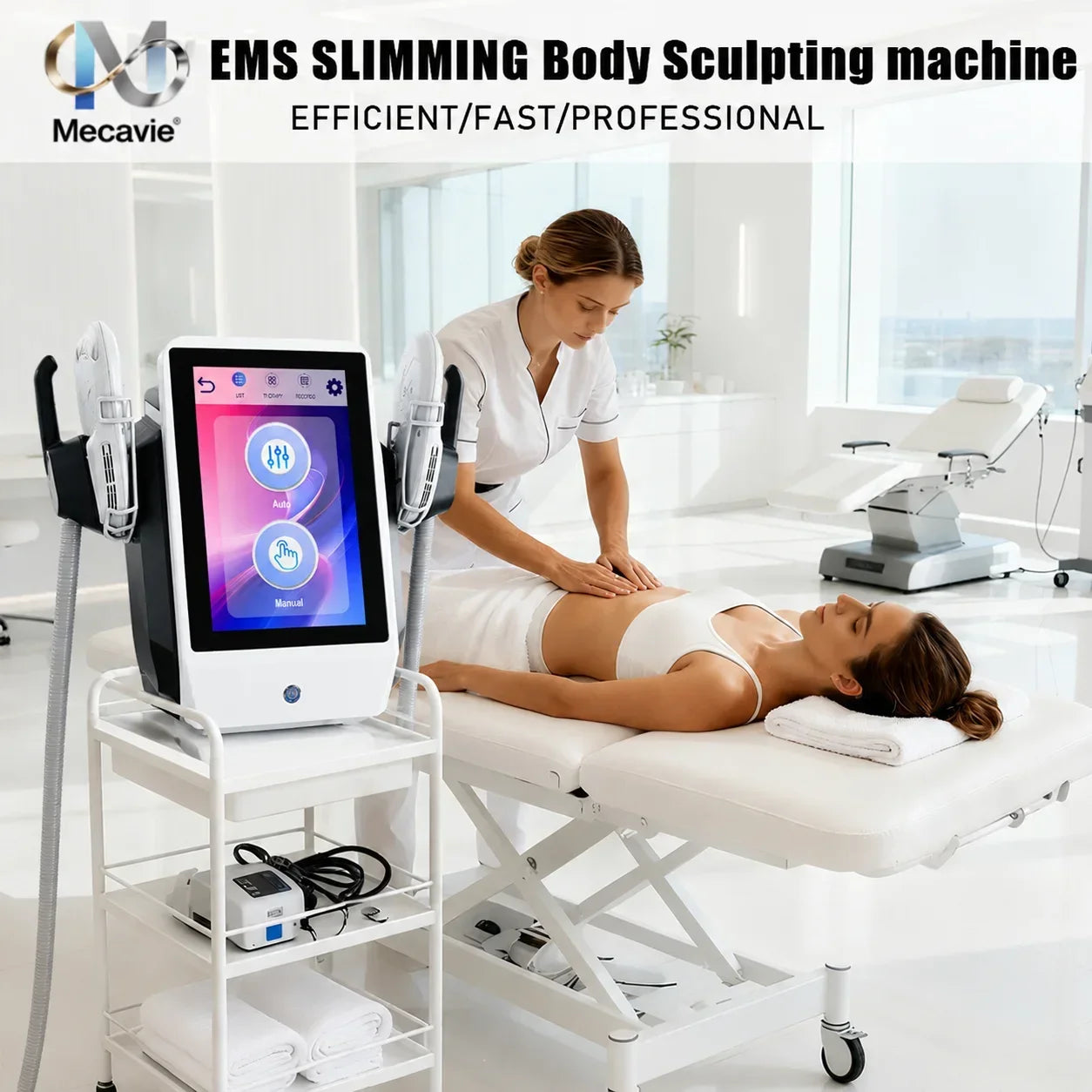
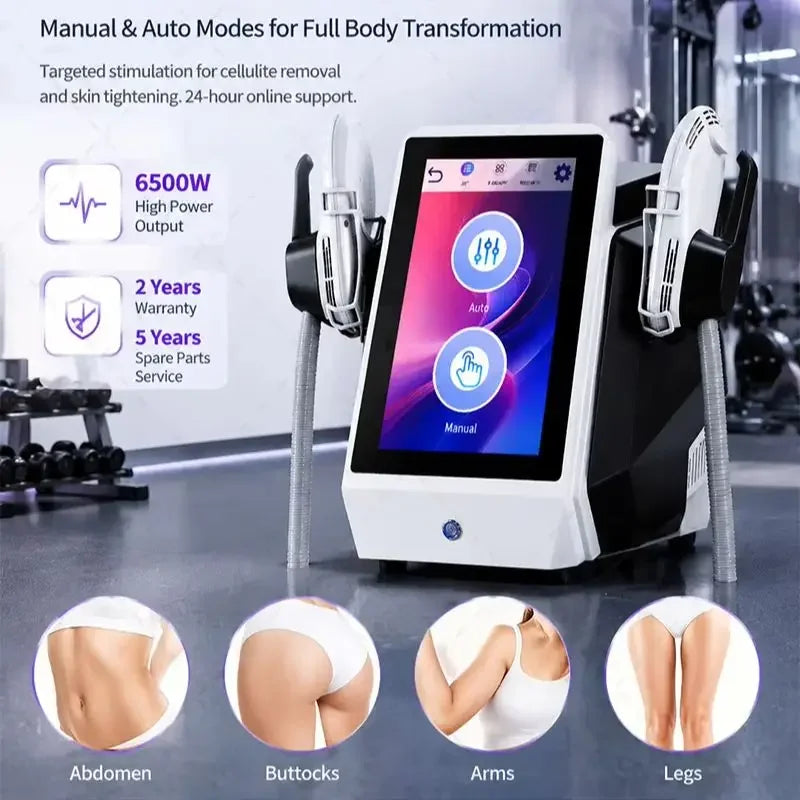
For professionals evaluating equipment for targeted muscle stimulation, the Emsnova EMS Body Sculpting Machine combines HIEMT, EMS, and RF technologies with automatic and manual operating modes. Its stated treatment areas include the abdomen, buttocks, arms, and legs.
Muscle Activation, Strength, and Hypertrophy: What Can You Realistically Expect?
Does HIEMT build muscle?
Muscle stimulation can contribute to measurable muscle adaptations, but the strength of the evidence depends on the specific technology and protocol. Research on whole-body electromyostimulation has reported improvements in muscle mass and strength, although studies have used substantially different frequencies, durations, populations, and intervention designs. :contentReference[oaicite:5]{index=5}
Therefore, the most defensible answer is potentially yes, but do not assume that every HIEMT device produces the same muscle-building effect as a structured resistance-training program.
HIEMT and muscle strength
Electrical stimulation has demonstrated the ability to improve measured strength in research settings. However, a systematic review found that improvements in strength-related measurements did not necessarily translate into improvements in functional strength outcomes. :contentReference[oaicite:6]{index=6}
This is an important distinction for anyone comparing HIEMT with traditional training. If your goal is to lift more weight, perform a better squat, improve athletic performance, or become stronger during complex movements, active resistance exercise remains highly relevant.
Why progressive overload still matters
Progressive overload means gradually increasing the training demand placed on the body. In resistance training, that can mean adding weight, increasing repetitions, increasing sets, changing exercise difficulty, or manipulating other training variables.
This gives conventional training a major advantage: the entire workout can be deliberately progressed around measurable performance goals. HIEMT can provide controlled stimulation, but it does not automatically reproduce the progressive movement demands of a complete strength program.
Muscle toning: what the term actually means
“Toning” is largely a visual description rather than a separate physiological process. A more defined appearance generally involves some combination of muscle development and lower levels of overlying body fat.
Consequently, stimulating a muscle may support its firmness or development, but visible definition cannot be guaranteed simply by making the muscle contract repeatedly.
HIEMT vs Exercise for Fat Loss and Body Composition
Does HIEMT burn fat?
This is one of the areas where marketing claims can easily go too far. Muscle stimulation and fat loss are not the same outcome.
The FDA specifically states that non-invasive body contouring should not be considered a treatment for obesity or a method of achieving the health benefits associated with weight loss. It also notes that results may be temporary and that not everyone achieves the desired effect. :contentReference[oaicite:7]{index=7}
Research on whole-body EMS has produced mixed findings for body fat. One 2021 meta-analysis found significant effects on muscle-related outcomes but no statistically significant effect on body fat mass, while a later meta-analysis reported modest improvements across several body-composition outcomes. :contentReference[oaicite:8]{index=8}
HIEMT and changes in body composition
Body composition involves several separate variables, including muscle mass and fat mass. A change in one does not necessarily mean an equivalent change in the other.
That is why a body-contouring treatment should not be described as a replacement for nutrition, physical activity, or a structured fitness program. It may have a role in targeted aesthetic goals, but broader body-composition changes depend on the overall strategy.
Why nutrition and physical activity still matter
Traditional exercise provides benefits that extend beyond muscle contraction. Walking, running, cycling, resistance training, sports, and other activities contribute to energy expenditure, cardiovascular conditioning, coordination, mobility, and physical capacity.
Readers interested in building a broader wellness routine can also explore body care and health devices as part of a wider approach rather than treating one device as a complete substitute for physical activity.
Is HIEMT More Time-Efficient Than Traditional Training?
HIEMT session length and muscle stimulation
One reason HIEMT appeals to busy users is its targeted format. Instead of spending an entire workout performing multiple exercises, a stimulation session can focus on selected treatment areas.
That can make the technology attractive for people who have limited time or want targeted stimulation as an addition to an existing routine.
What traditional training provides beyond muscle contraction
A conventional workout can train multiple physical qualities simultaneously. Depending on the program, you can develop strength, muscular endurance, balance, coordination, joint control, cardiovascular capacity, and movement proficiency.
For example, a squat is not simply an exercise for making the quadriceps contract. It also involves positioning, balance, trunk control, hip and knee coordination, and the ability to produce force through a specific movement pattern.
Time efficiency vs training completeness
A shorter HIEMT session may be more convenient than a complete gym workout, but convenience should not be confused with comprehensiveness. If your objective is simply targeted muscle stimulation, a focused session may be useful. If your objective is overall physical fitness, conventional exercise covers considerably more ground.
Safety, Recovery, and Limitations of HIEMT
Who may be a poor candidate for electrical or electromagnetic muscle stimulation?
Suitability depends on the specific technology, device labeling, treatment area, and individual circumstances. The FDA warns that magnetic-field body-contouring devices should not be used by people with active implanted electronic devices such as pacemakers or implantable cardioverter-defibrillators, or with certain metal implants in the treatment area. :contentReference[oaicite:9]{index=9}
Electrical muscle stimulators also have documented safety considerations. The FDA has reported adverse events associated with some EMS products, including shocks, burns, bruising, skin irritation, pain, and interference with implanted devices. :contentReference[oaicite:10]{index=10}
Anyone considering professional muscle stimulation should therefore review the exact device instructions and contraindications and seek qualified medical guidance when there is uncertainty about suitability.
Potential discomfort, fatigue, and recovery considerations
Strong induced contractions can create muscle soreness, fatigue, or cramping. The FDA specifically lists muscle soreness and cramps among potential complications associated with magnetic-field body-contouring technology. :contentReference[oaicite:11]{index=11}
More intensity is not automatically better. Treatment settings should follow the device's intended protocol rather than being increased simply to create a stronger sensation.
Why device quality and professional guidance matter
Technology names alone do not establish performance or safety. Operators and buyers should consider intended use, instructions, treatment protocols, electrical specifications, certifications, maintenance requirements, and manufacturer support.
The Emsnova system described for this article lists CE and RoHS certification, automatic and manual operation, and professional support including a 2-year warranty and 5-year spare-parts service. These are product-level specifications, not proof that every individual will achieve a particular clinical or cosmetic outcome.
HIEMT vs Traditional Training: Cost and Value
What you are paying for with HIEMT
With professional HIEMT equipment, the value proposition generally centers on targeted stimulation, treatment efficiency, equipment capability, and professional or aesthetic applications. For a salon, wellness business, or aesthetic setting, equipment selection also involves maintenance, operator training, treatment protocols, and long-term support.
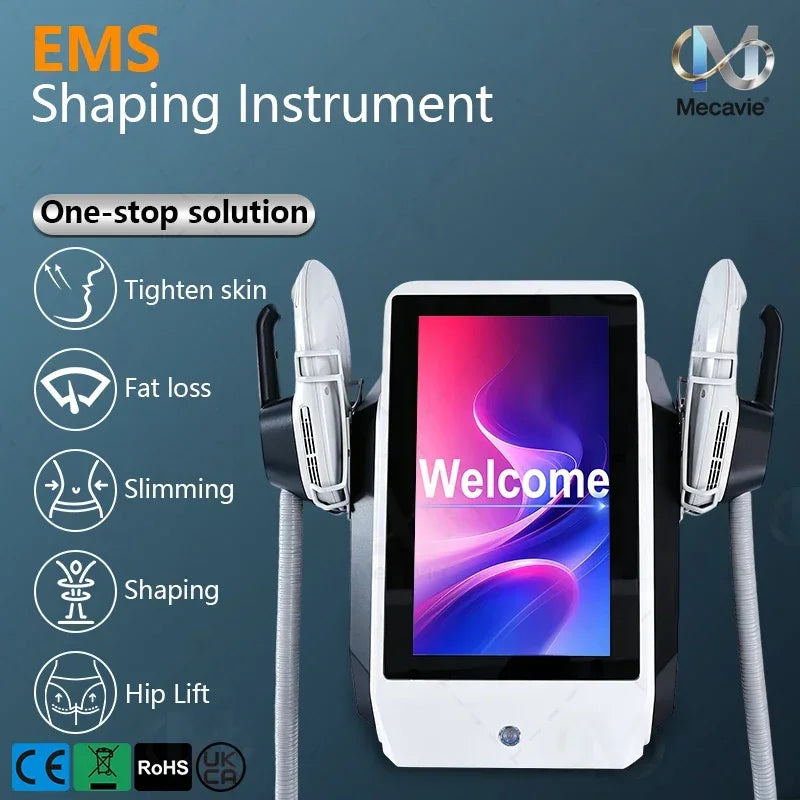
A professional system such as the Emsnova HIEMT and EMS body sculpting system is specified with HIEMT + RF + EMS technology, 6500W power, manual and automatic operation, and treatment options for areas including the abdomen, buttocks, arms, and legs.
What traditional resistance training costs
Traditional training can range from virtually no equipment for bodyweight exercise to significant spending on gym memberships, free weights, machines, coaching, or a complete home gym.
Its major advantage is scalability. A basic resistance program can be progressed for years by changing exercises, resistance, volume, repetitions, and training frequency.
Which delivers better value depends on your goal
If your primary objective is comprehensive fitness and measurable strength progression, traditional resistance training usually provides the stronger foundation. If your objective is targeted muscle stimulation or body-contouring support and you have access to an appropriate professional system, HIEMT may provide a different type of value.
How Often Can You Use HIEMT?
Why HIEMT frequency should follow the device protocol
There is no responsible universal answer such as “use HIEMT every day.” Research protocols for muscle stimulation vary substantially, including differences in session frequency, duration, intensity, muscle groups, and intervention length. :contentReference[oaicite:12]{index=12}
Use frequency should therefore follow the specific device's instructions and professional treatment protocol rather than copying a schedule from another EMS or HIEMT machine.
Recovery between high-intensity stimulation sessions
High-intensity induced contractions can place a meaningful demand on muscle tissue. If a session produces significant fatigue or soreness, additional stimulation before adequate recovery may be counterproductive.
Recovery requirements also depend on the treatment area, intensity, individual conditioning, and whether conventional exercise is performed at the same time.
How HIEMT frequency compares with a resistance-training schedule
Traditional resistance training is usually organized around planned training and recovery days. HIEMT can potentially be incorporated into that structure, but it should not be assumed that a device-specific schedule can simply replace the programming principles used for resistance training.
Who Should Choose HIEMT, Traditional Training, or Both?
Choose traditional resistance training if your priority is overall strength and fitness
Traditional training is the clearest choice when you want to develop broad physical capacity. It allows you to progressively increase resistance, practice functional movements, improve coordination, and build strength across multiple movement patterns.
It is also the more established foundation for people who want long-term exercise capacity rather than a narrowly targeted body-contouring objective.
Consider HIEMT if targeted muscle stimulation and convenience are priorities
HIEMT may be worth considering when targeted muscle contractions are the primary objective, particularly in professional aesthetic or wellness settings. It can be relevant for people interested in focused stimulation of areas such as the abdomen, buttocks, arms, or legs.
Before purchasing, evaluate the actual technology, intended use, treatment areas, operating modes, manufacturer instructions, safety information, and support rather than choosing a machine based only on the HIEMT label.
Consider combining HIEMT with structured exercise
A combination approach can make more sense than treating HIEMT and exercise as competitors. A recent meta-analysis found that adding NMES to resistance training produced greater gains in strength and muscle mass than resistance training alone, although the studies showed substantial variability and this evidence concerns NMES rather than proving that every HIEMT system provides the same additive effect. :contentReference[oaicite:13]{index=13}
That distinction is important: the evidence supports investigating stimulation as a complement to training, not assuming that one commercial device automatically duplicates the results of a complete workout program.
A simple goal-based decision checklist
- Overall strength and fitness: prioritize traditional resistance training.
- Progressive muscle development: use structured resistance training as the foundation.
- Targeted muscle stimulation: HIEMT may be worth considering when appropriate.
- Convenience: HIEMT can offer a focused alternative for targeted stimulation, but not complete fitness training.
- Body-contouring support: evaluate the specific technology, treatment indication, realistic outcomes, and safety requirements.
- Combined strategy: consider appropriate stimulation alongside, rather than automatically instead of, structured exercise.
For professionals comparing equipment options, the Emsnova EMS Body Sculpting Machine for muscle toning and body contouring is one example of a system designed around HIEMT + RF + EMS, with manual and automatic operating modes. Its specifications should be evaluated against the intended treatment workflow and applicable safety requirements.
Realistic HIEMT Results: Timeline, Expectations, and Limitations
What may change first
The earliest noticeable change may simply be the sensation of muscle contraction or temporary post-treatment fatigue. These immediate sensations should not be confused with long-term muscle hypertrophy or permanent body-composition changes.
Meaningful physical adaptations generally require repeated exposure over time. Research on whole-body EMS has used intervention periods ranging from several weeks to more than a year, illustrating why a single session is not an appropriate benchmark for long-term results. :contentReference[oaicite:14]{index=14}
Why results vary between people
Results can vary according to baseline fitness, age, body composition, treatment protocol, stimulation intensity, treatment area, consistency, nutrition, recovery, and concurrent exercise.
Device differences matter as well. Evidence from one EMS protocol should not automatically be transferred to another technology, especially when stimulation method, intensity, electrode or applicator configuration, and treatment objectives differ.
What HIEMT cannot replace
HIEMT does not inherently provide cardiovascular conditioning, movement practice, balance training, mobility work, sport-specific skill development, or the full progressive-loading environment of conventional resistance exercise.
Likewise, body-contouring treatment should not be framed as a substitute for weight management or the broader health benefits of physical activity. The FDA explicitly cautions that non-invasive body contouring is not intended to treat obesity or provide the health benefits associated with weight loss. :contentReference[oaicite:15]{index=15}
For additional education around body-focused devices and routines, readers can explore the Body & Face Blog for related body-care topics.
HIEMT vs Traditional Muscle Training: Final Verdict
Best overall for comprehensive fitness: traditional training
Traditional resistance training remains the better overall choice when your goal is progressive strength, hypertrophy, movement quality, physical capacity, and long-term fitness. Its greatest advantage is not simply that it makes muscles contract; it allows the entire training stimulus to be progressively manipulated.
Best as a targeted or time-efficient complement: HIEMT
HIEMT has a different value proposition. It can create externally induced muscle contractions and may be useful for targeted stimulation or body-contouring applications. Evidence from related EMS research supports the possibility of improvements in strength and muscle-related outcomes, but protocols and technologies differ, so claims should remain specific and evidence-qualified. :contentReference[oaicite:16]{index=16}
Best combined strategy: structured exercise plus appropriate HIEMT
For many users, the most reasonable way to think about HIEMT vs traditional muscle training is not “which one wins?” but “what role does each one serve?” Traditional exercise can provide the foundation for strength and fitness, while appropriately selected muscle stimulation may serve as a targeted complement.
If you are evaluating professional equipment for that complementary role, you can review the specifications and intended applications of the Emsnova EMS Body Sculpting Machine before deciding whether its HIEMT + RF + EMS configuration fits your professional or wellness setup.
The most credible approach is also the simplest: use HIEMT for what the technology and evidence can reasonably support, use progressive resistance training when you need comprehensive strength development, and avoid treating muscle stimulation as a universal shortcut for exercise.
Pillar Article: Abdominal Muscle Stimulation Device: Benefits, Safety & Buying Guide













