
Is the high frequency wand safe for skin?
Yes — when used correctly, the high frequency wand is generally safe and effective for most skin types. These devices use a low-level electrical current that stays on the skin’s surface to boost circulation, fight acne-causing bacteria, and support skin healing. However, overuse or use on sensitive skin conditions may lead to irritation, so moderation and proper guidance are essential.
Is the High Frequency Wand Safe? 7 Things You Need to Know
Is high frequency wand safe for daily use—or are there hidden downsides no one talks about? From high frequency wand side effects to how electrotherapeutic devices actually impact your skin, we’re unpacking the truth. Curious if the high frequency facial wand does it work for acne or aging? Or if a high frequency skin wand could be your skincare game-changer? This guide explains what dermatology experts and estheticians say about safety, risks, and real benefits.
⏱ 7 min read

💡 Curious about the high frequency wand side effects? See it in action before you decide.
Is High Frequency Wand Safe?
Yes—high frequency facial wands are generally considered safe when used correctly and in moderation. These skincare devices deliver a very low-level electrical current through a glass electrode to stimulate circulation, disinfect the skin surface, and support healing.
The current used in most facial high frequency devices ranges between approximately 100,000 and 250,000 Hz. This electrical frequency is extremely low in intensity and is designed to stay on the skin’s surface rather than penetrate deeply into tissue.
Because of this, dermatologists and estheticians have safely used high frequency treatments in professional facials for decades. At-home versions use even lower power levels to reduce the risk of irritation or injury.
What Dermatologists Say About High Frequency Facial Safety
Most skincare professionals consider high frequency facials safe for common concerns such as acne, dull skin, and mild inflammation. The treatment works by increasing circulation and creating a mild antibacterial effect on the skin’s surface.
However, safety depends on proper usage. Using the device too frequently, applying it on broken skin, or ignoring medical contraindications can increase the risk of irritation or unwanted side effects.
At-Home vs Professional High Frequency Treatments
Professional high frequency machines used in clinics may produce stronger electrical output and are applied by trained estheticians. At-home devices, often marketed as derma wands or high frequency facial tools, are designed with lower power levels and simplified settings for consumer safety.
When used according to manufacturer instructions—usually for sessions lasting 5 to 10 minutes—most people tolerate at-home high frequency treatments without serious side effects.
How High Frequency Wands Work on Skin
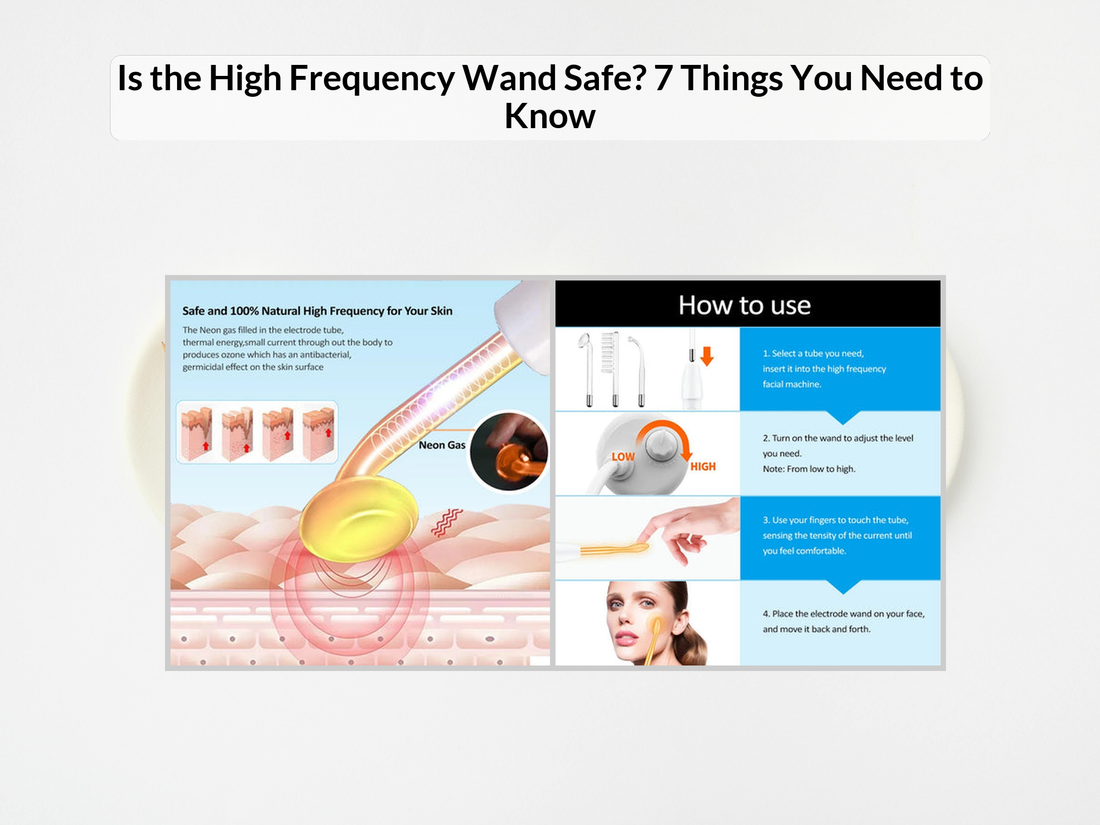
High frequency facial devices generate a mild electrical current that travels through a glass electrode filled with inert gas. When the electrode touches the skin, the current produces gentle vibrations and a faint glow inside the glass tube.
This interaction stimulates circulation, helps oxygenate the skin, and creates a small amount of ozone that has antibacterial properties. These combined effects are why high frequency treatments are commonly used for acne-prone or congested skin.
Electrical Current and Glass Electrodes Explained
The wand connects to interchangeable glass electrodes designed for different treatment areas, such as mushroom-shaped heads for the face or pointed electrodes for targeting blemishes.
When the device is activated, a low electrical current travels through the electrode and transfers mild energy to the skin's surface. Most users experience only a light tingling or warming sensation.
Argon vs Neon Gas Electrodes
High frequency electrodes typically contain either argon gas or neon gas.
- Argon electrodes glow violet or blue and are commonly used for acne treatments because they enhance antibacterial activity.
- Neon electrodes glow orange or red and are often used for anti-aging treatments focused on circulation and skin rejuvenation.
Ozone Production and Antibacterial Effects
When the electrical current passes through the electrode and contacts the skin, a small amount of ozone is generated. Ozone is a form of oxygen known for its antimicrobial properties.
This mild antibacterial action helps reduce acne-causing bacteria on the skin’s surface, which is why high frequency facials are frequently used as part of acne treatments.
High Frequency Wand Side Effects and Risks
Although high frequency facial devices are generally safe, they can still cause side effects if used incorrectly or on sensitive skin. Most reactions are mild and temporary.
Common Temporary Side Effects
- Skin redness or warmth after treatment
- Mild tingling sensation
- Temporary dryness or tightness
- Increased sensitivity if used too frequently
These effects usually disappear within a few hours after the treatment session.
Rare or Improper-Use Side Effects
Problems are more likely to occur if the device is used improperly or too aggressively.
- Minor skin irritation
- Over-drying of acne-prone areas
- Small surface burns from high power settings
- Broken capillaries in very sensitive skin
Following recommended treatment times and using the lowest effective intensity can significantly reduce these risks.
Can High Frequency Wands Cause Cancer?
There is currently no scientific evidence that cosmetic high frequency facial devices cause cancer. The electrical current used in these tools is extremely low and does not produce ionizing radiation, which is the type associated with cancer risk.
Unlike medical radiation therapies or UV exposure, high frequency facial machines operate on surface-level electrical stimulation that does not damage DNA.

💡 Discover the difference a high frequency facial wand can make in your skin clarity and tone.
High Frequency Facial Contraindications (Who Should Avoid It)
Even though high frequency facials are considered safe for most people, certain medical conditions make the treatment unsuitable.
Medical Conditions That Should Avoid High Frequency
- Pregnancy
- Pacemakers or implanted electrical devices
- Epilepsy or seizure disorders
- Severe rosacea or fragile capillaries
- Heart conditions
- Metal implants in the treatment area
Electrical stimulation may interfere with certain medical devices or trigger unwanted reactions in these conditions.
Medications and Skin Treatments That Conflict
High frequency treatments should also be avoided if you are currently using:
- Isotretinoin or recent acne medication courses
- Strong chemical peels
- Recent laser or microneedling treatments
- Open wounds or inflamed skin infections
If you have a chronic skin condition or are unsure about safety, it is best to consult a dermatologist before using a high frequency wand.
How to Use a High Frequency Wand Safely
Using the device correctly greatly reduces the risk of irritation or side effects. Most at-home devices are designed for short sessions and low power output.
Recommended Session Length and Frequency
- Use the device for 5–10 minutes per session
- Limit treatments to 2–3 times per week
- Allow skin recovery time between sessions
Safe Power Levels for Home Devices
Start with the lowest intensity setting and gradually increase only if your skin tolerates it well. Higher power levels do not necessarily produce better results and may increase irritation.
Hygiene and Electrode Cleaning
Always clean glass electrodes before and after each treatment using alcohol or a disinfecting wipe. This prevents bacteria transfer and keeps the device safe for repeated use.
Does a High Frequency Wand Hurt?
Most people do not find high frequency treatments painful. Instead, the device typically produces a mild tingling sensation or gentle warmth on the skin.
You may also hear a light buzzing sound and notice a faint glow inside the glass electrode. These effects are normal and indicate that the device is working.
If the treatment feels painful or causes burning, the intensity is likely too high or the electrode is not moving smoothly across the skin.
Proven Benefits of High Frequency Facial Wands
Acne-Reducing Effects
The antibacterial action created by ozone production can help reduce acne-causing bacteria on the skin’s surface. This makes high frequency facials a common add-on treatment in acne-focused skincare routines.
Circulation and Skin Oxygenation
The electrical stimulation increases blood circulation and oxygen flow to the skin. Improved circulation may help support natural healing processes and give the skin a brighter appearance.
Improved Product Absorption
High frequency treatments may help skincare products absorb more effectively when used after cleansing and before applying serums or moisturizers.
Support for Skin Repair
Regular treatments may assist with mild inflammation and support the skin’s natural repair response over time.

💡 From acne to anti-aging, a high frequency skin wand does more than you think.
Mini FAQ
- Are high frequency wands safe for daily use?
- No. Most experts recommend using the device only 2–3 times per week to prevent irritation or overstimulation.
- Can high frequency wands cause cancer?
- No scientific evidence links cosmetic high frequency facial devices to cancer. The electrical stimulation is low intensity and does not produce ionizing radiation.
- Are high frequency facials safe during pregnancy?
- Most professionals recommend avoiding electrical facial treatments during pregnancy as a precaution.
- Does a high frequency wand hurt?
- No. Most people experience only mild tingling or warmth during treatment.
Related Articles:
- Can You Use a High Frequency Wand Every Day? Here’s What Experts Say
- Electrotherapy or Facial Wand? What Actually Works Better
- High Frequency Wand Results: What Real Users Are Saying
- The Hidden Difference Between Argon vs Neon High Frequency Wands
- Top 5 High Frequency Wands Compared: Which One Fits Your Skin Goals?
Pillar Articles:













