

Muscle Contraction Body Sculpting: How It Works, Evidence & Results
Muscle contraction body sculpting uses externally applied energy to create repeated, intense muscle contractions without requiring the person to perform the contractions voluntarily. The best-known approaches use high-intensity focused electromagnetic (HIFEM) or related high-intensity electromagnetic stimulation technologies to activate motor nerves and produce involuntary contractions. Some systems also combine electromagnetic stimulation with radiofrequency (RF) energy.
The important distinction is that intense induced contractions are not automatically equivalent to resistance training, and a device category should not be judged solely by dramatic marketing language. The useful questions are: What tissue is being targeted? How are contractions produced? What has actually been measured in clinical studies? Which outcomes are supported for a particular device?
Clinical literature on HIFEM-based body contouring has reported measurable changes in muscle thickness, subcutaneous fat, circumference, and abdominal separation in selected study populations. However, the evidence varies substantially by device, protocol, sample size, measurement method, follow-up period, and study design. A systematic review identified 15 eligible clinical studies involving 476 participants, with four 30-minute treatments being the most common protocol. :contentReference[oaicite:0]{index=0}
What Is Muscle Contraction Body Sculpting?
Muscle contraction body sculpting in simple terms
Muscle contraction body sculpting is a non-invasive aesthetic approach designed to stimulate muscles through externally delivered energy. Instead of relying entirely on voluntary exercise, the equipment creates a stimulus that activates motor nerves and causes the underlying muscles to contract.
In practical terms, the goal is different from simply heating or cooling a fat layer. The primary target is muscle activity. Depending on the technology, treatment may also influence surrounding adipose tissue or be paired with another modality intended to address fat or skin-related body-contouring goals.
This makes muscle contraction body sculpting particularly relevant to people concerned about limited muscle definition, difficult-to-tone areas, or body contours that remain unsatisfactory despite conventional exercise. It should still be viewed as an aesthetic treatment rather than a substitute for a complete fitness program.
HIFEM, HI-EMS, HI-SMS, and electromagnetic muscle stimulation
Terminology varies across manufacturers. HIFEM generally refers to high-intensity focused electromagnetic energy used to stimulate muscle contractions. Related marketing terms can include HI-EMS, HI-SMS, electromagnetic muscle stimulation, or high-intensity electromagnetic muscle stimulation.
These labels should not automatically be treated as interchangeable proof that two machines deliver identical clinical outcomes. A device's field characteristics, applicator design, energy delivery, frequency, intensity, treatment protocol, and regulatory status can all differ.
How muscle sculpting differs from fat-focused body contouring
Muscle-focused treatment and fat-focused body contouring address different biological targets. Electromagnetic stimulation is primarily intended to create muscle contractions. RF, cryolipolysis, ultrasound, and other modalities may instead focus more directly on adipose tissue or thermal effects.
Some systems combine technologies. Clinical research on simultaneous HIFEM and synchronized RF has reported both muscle and fat-related changes, but those findings belong to the specific investigated technology and protocol rather than automatically applying to every EMS/RF machine on the market. :contentReference[oaicite:1]{index=1}
How Muscle Contraction Normally Works
Motor neurons and neuromuscular signaling
Normal skeletal muscle movement begins with the nervous system. A motor neuron carries an electrical signal toward a muscle. At the neuromuscular junction, chemical signaling ultimately triggers an electrical response in the muscle fiber, leading to the molecular processes responsible for contraction.
A group consisting of a motor neuron and the muscle fibers it controls is called a motor unit. The nervous system can adjust force by recruiting additional motor units and changing how frequently they are activated.
Depolarization and muscle fiber contraction
When a muscle fiber receives the appropriate electrical signal, its membrane undergoes depolarization. This initiates a sequence involving calcium release inside the muscle cell and interaction between contractile proteins. The result is shortening and tension development within the muscle fiber.
Electrical stimulation technologies take advantage of this basic neuromuscular principle. Rather than asking the person to consciously initiate every contraction, the external stimulus can activate motor nerves and trigger contractions involuntarily.
Motor unit recruitment and contraction intensity
Muscle force is influenced by which motor units are recruited, how many are active, and the timing of their activation. This is one reason the phrase muscle contraction alone tells you very little about the actual training or treatment stimulus.
A device that produces a visible contraction is not necessarily producing the same stimulus as a heavy resistance exercise. The distribution of activation, contraction pattern, duration, intensity, and fatigue response all matter.
Voluntary contractions during resistance training
During resistance training, the brain voluntarily activates muscles against an external load. The exercise also involves coordination, stabilization, connective tissues, cardiovascular demands, and progressive overload. These broader adaptations are part of why electromagnetic muscle stimulation should not automatically be described as a replacement for strength training.
How HIFEM and HI-SMS Induce Intense Muscle Contractions
From electromagnetic field to neuromuscular stimulation
High-intensity electromagnetic systems generate an electromagnetic field around an applicator positioned over a treatment area. The changing field can induce electrical activity in excitable tissue, including motor nerves, when the delivered stimulus is sufficient.
The resulting neural activation can produce involuntary muscle contractions. Repeated stimulation can therefore create a treatment session in which the target muscle repeatedly contracts without the patient performing conventional repetitions.
How induced contractions differ from voluntary contractions
Voluntary exercise and induced stimulation share fundamental neuromuscular physiology, but they are not identical experiences. In exercise, the nervous system determines when and how the muscle contracts as the person responds to resistance. With external stimulation, the device determines important characteristics of the stimulus.
That difference matters when interpreting claims such as “equivalent to thousands of crunches.” A numerical comparison based only on contraction count does not establish equivalence in muscle adaptation, strength development, cardiovascular conditioning, movement skill, or overall fitness.
Why treatment can produce repeated high-intensity contractions
High-intensity electromagnetic stimulation can be programmed to produce repeated contraction cycles during a session. Depending on the device and protocol, the experience may involve progressively stronger contractions, rhythmic contractions, or other programmed patterns.
The actual treatment parameters should therefore be evaluated from the device specifications and professional protocol rather than inferred from the product category alone.
What “supramaximal contractions” actually means
Supramaximal is a technical marketing and treatment term used to describe contractions claimed to exceed the intensity a person could voluntarily achieve under normal conditions. It should not be interpreted as meaning that every device produces a contraction literally beyond every possible voluntary contraction.
The meaningful question is whether the specific system has credible evidence showing its delivered stimulus and clinical outcomes. Mechanistic plausibility is not the same as clinical proof.
What Happens to Muscle During and After Treatment?
Acute muscle activity during a session
During treatment, the primary immediate event is repeated involuntary muscle activation. Users may experience strong tightening, pulsing, or contracting sensations as the intensity changes.
After a sufficiently intense session, temporary fatigue or soreness can occur, much as it can after unfamiliar physical activity. The absence of surgery does not mean the treatment has no physiological effect; it means the procedure does not require an incision or surgical recovery period.
Muscle adaptation and potential hypertrophy
Repeated loading or stimulation can provide a signal associated with muscular adaptation. Published HIFEM research has reported increases in measured muscle thickness after treatment series, including MRI and CT assessments of abdominal musculature. :contentReference[oaicite:2]{index=2}
That evidence is encouraging, but “muscle thickness increased” is not synonymous with “the treatment produces the same benefits as progressive resistance training.” The studies should be interpreted according to their population, protocol, controls, and outcome measures.
Changes in muscle thickness and muscle volume
Imaging methods provide a more objective way to investigate body-contouring claims than photographs alone. MRI and CT can measure muscle dimensions and surrounding tissue thickness, while ultrasound can also provide information about selected muscle structures.
For example, one MRI study of HIFEM treatment reported a 15.4% increase in rectus abdominis thickness two months after treatment in its study population. :contentReference[oaicite:3]{index=3}
What the evidence suggests about subcutaneous fat
Some HIFEM studies have also reported reductions in subcutaneous abdominal fat. A 2019 CT study involving 22 participants reported an average 17.5% reduction in measured abdominal subcutaneous fat and a 14.8% increase in rectus abdominis thickness after eight treatments. :contentReference[oaicite:4]{index=4}
These results should not be converted into a universal fat-loss promise. Study protocols differ, and a localized change in subcutaneous fat is not equivalent to whole-body weight loss.
Muscle building versus “toning” and visual contour changes
“Toning” is largely an aesthetic description rather than a precise physiological endpoint. A more defined appearance can result from a combination of muscle thickness, muscle shape, subcutaneous fat thickness, circumference, posture, and individual anatomy.
For that reason, a credible treatment evaluation should separate muscle adaptation, fat reduction, and visual contour improvement instead of treating them as one outcome.
What Does the Clinical Evidence Show?
Evidence overview: what clinical studies have measured
The published evidence includes prospective studies, imaging studies, multicenter investigations, clinical trials, and smaller pilot studies. The systematic review identified 15 studies involving 476 total participants. Most investigated HIFEM-based systems, while some evaluated HIFEM combined with RF. :contentReference[oaicite:5]{index=5}
The evidence base is therefore substantial enough to investigate the technology seriously, but it is not equivalent to decades of large randomized trials across every device and treatment area.
Typical treatment protocols in published research
Four sessions are especially common in published HIFEM research. The systematic review found four 30-minute treatments to be the most prevalent protocol, while individual studies have used three or eight sessions. :contentReference[oaicite:6]{index=6}
This is an important distinction for anyone searching for an EMS treatment frequency guide: research protocols provide useful reference points, but they do not establish one universal schedule for every machine.
Muscle outcomes: MRI, CT, ultrasound, and other measurements
MRI and CT are particularly useful in this field because they allow researchers to evaluate muscle and fat tissue rather than relying exclusively on circumference or photographs. One-year follow-up research involving MRI or CT assessments reported maintained changes in abdominal muscle thickness, fat measurements, and abdominal separation in its study group. :contentReference[oaicite:7]{index=7}
Fat and circumference outcomes
Several studies have reported reductions in local fat thickness or waist circumference. However, circumference can be influenced by multiple factors, including posture, measurement technique, abdominal contents, muscle thickness, and fat distribution. It should therefore be interpreted alongside imaging and other measurements when available.
Follow-up duration and durability of results
Follow-up periods range from immediate or short-term assessments to several months and, in some research, approximately one year. A one-year MRI/CT study reported that its measured changes remained detectable at follow-up, while also noting the need for further research to verify long-term durability. :contentReference[oaicite:8]{index=8}
Study limitations, sample sizes, and conflicts of interest
Evidence quality matters. Some studies have small sample sizes, lack a sham control, use a single device, or evaluate relatively short treatment periods. Some publications also involve investigators or institutions connected with aesthetic practices or device manufacturers.
The right conclusion is not that every positive finding is invalid. It is that individual results should be weighed according to study design and independently replicated evidence rather than generalized across every electromagnetic muscle stimulation machine.
Evidence Summary: Muscle Contraction Body Sculpting Results at a Glance
- Systematic review: 15 eligible clinical studies involving 476 participants; four 30-minute treatments were the most common protocol. :contentReference[oaicite:9]{index=9}
- MRI abdominal study: 22 participants received four HIFEM treatments; reported average increases in rectus abdominis thickness and reductions in fat thickness and abdominal separation at follow-up. :contentReference[oaicite:10]{index=10}
- CT abdominal study: 22 participants received eight treatments; CT assessment reported 17.5% lower subcutaneous fat thickness and 14.8% greater rectus abdominis thickness at one-month follow-up. :contentReference[oaicite:11]{index=11}
- HIFEM + RF MRI study: 41 participants received three weekly abdominal treatments; MRI assessment reported changes in muscle thickness, subcutaneous fat, abdominal separation, and waist circumference. :contentReference[oaicite:12]{index=12}
- Lateral-abdomen HIFEM + RF study: 61 participants were scheduled for four weekly 30-minute treatments; MRI reported increases in oblique muscle measurements and reductions in adipose measurements at follow-up. :contentReference[oaicite:13]{index=13}
- One-year follow-up: 21 participants were evaluated with MRI or CT at an average of approximately 333 days after the original treatment series, with measured changes remaining significant in the study group. :contentReference[oaicite:14]{index=14}
The most important takeaway is that these are study-specific results, not guaranteed outcomes for every patient or every EMS, HIEMT, HIFEM, or RF combination system.
How Many Sessions Are Typically Needed?
Common research protocols: four treatments over 2–4 weeks
Four treatments spaced roughly one week apart appear frequently in published HIFEM research. Other protocols exist, including three-session and eight-session studies. :contentReference[oaicite:15]{index=15}
What happens during a typical session
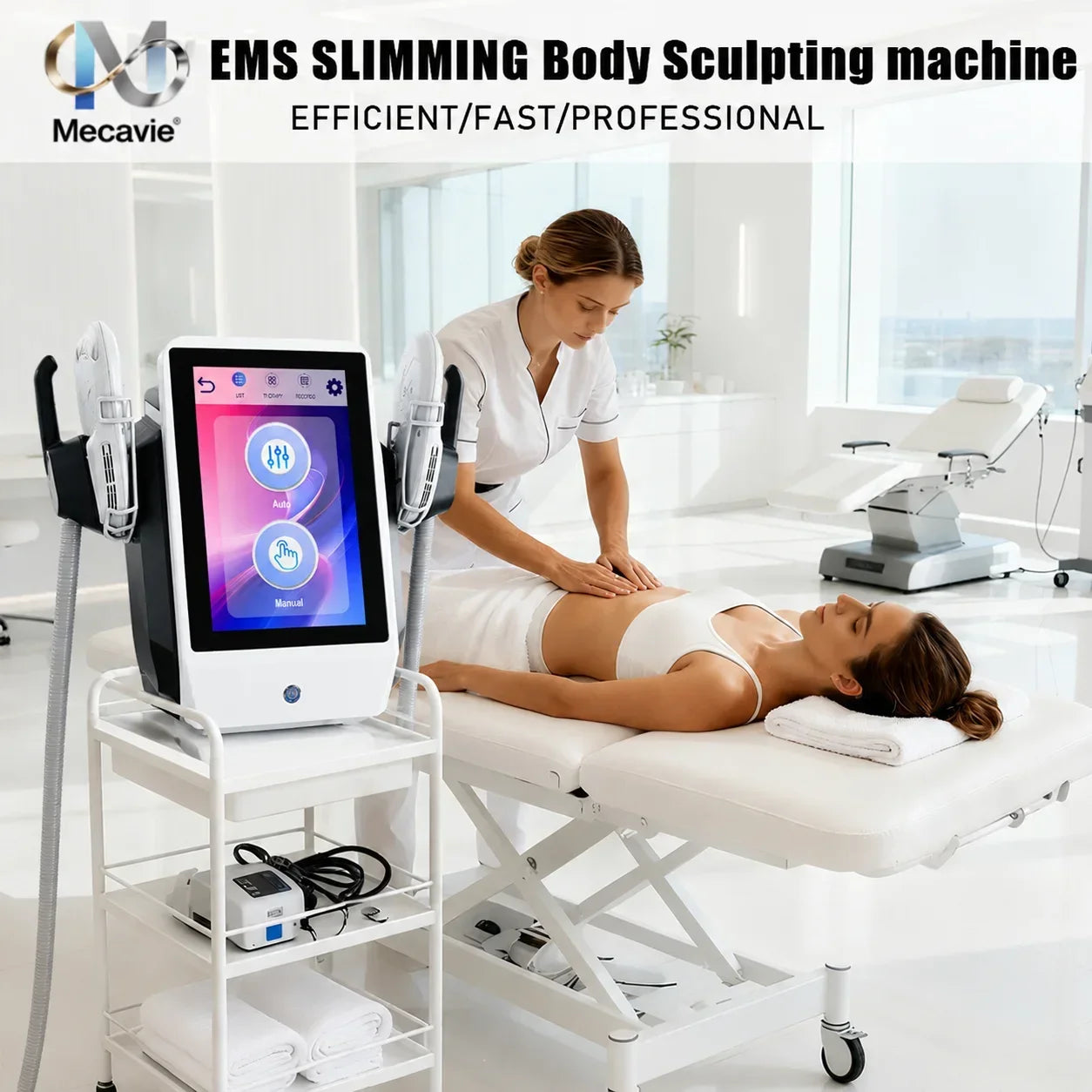
A practitioner positions the applicator over the intended treatment area and begins at an appropriate intensity. The patient typically feels muscle contractions that become stronger as the session progresses. The exact sensation and operating sequence depend on the device.
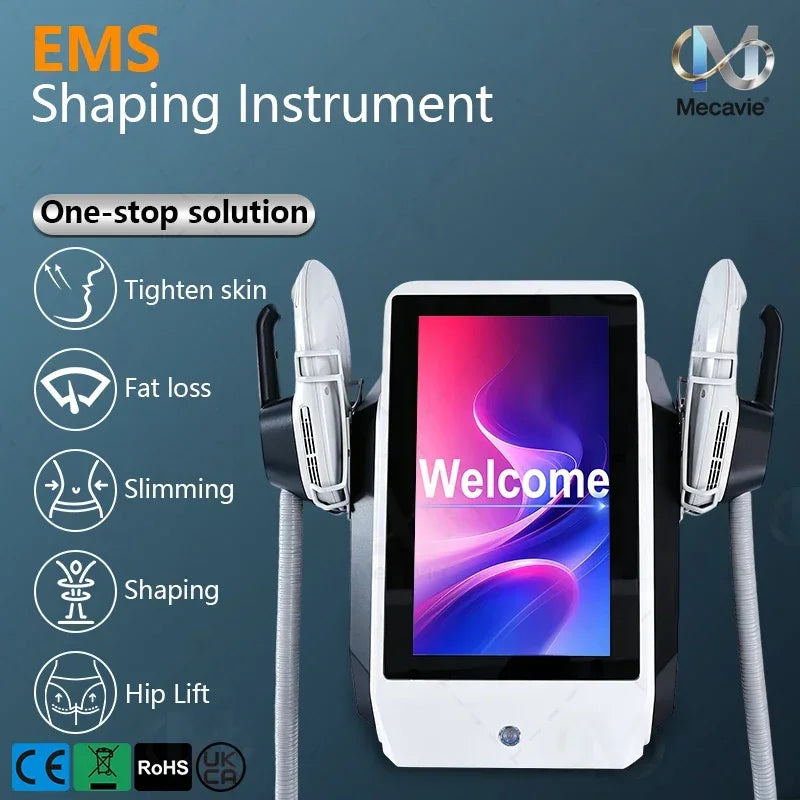
Professional systems may provide automatic programs as well as manual controls. For example, the Emsnova EMS Body Sculpting Machine is specified with both automatic and manual operation, allowing treatment settings to be approached differently depending on operator experience and intended workflow.
When results are commonly assessed
Research assessments commonly occur weeks or months after the treatment series rather than immediately after a single session. This is important because muscular adaptation and measurable tissue changes do not necessarily appear at their maximum immediately after treatment.
Why maintenance schedules vary
Maintenance depends on the individual, treatment objective, device protocol, lifestyle, and the durability of the initial response. A maintenance schedule should therefore come from the device's validated protocol and qualified professional guidance rather than a generic internet recommendation.
Where Can Muscle Contraction Body Sculpting Be Used?
Abdomen
The abdomen is one of the most extensively studied areas in HIFEM body sculpting research. Published imaging studies have evaluated rectus abdominis thickness, abdominal fat, waist circumference, and abdominal separation. :contentReference[oaicite:16]{index=16}
Buttocks
The buttocks are another commonly investigated treatment area because electromagnetic stimulation can create repeated contractions in the gluteal musculature. However, evidence from abdominal studies should not automatically be transferred to the gluteal area. Treatment parameters and outcome measurements matter.
Arms, thighs, and other treatment areas
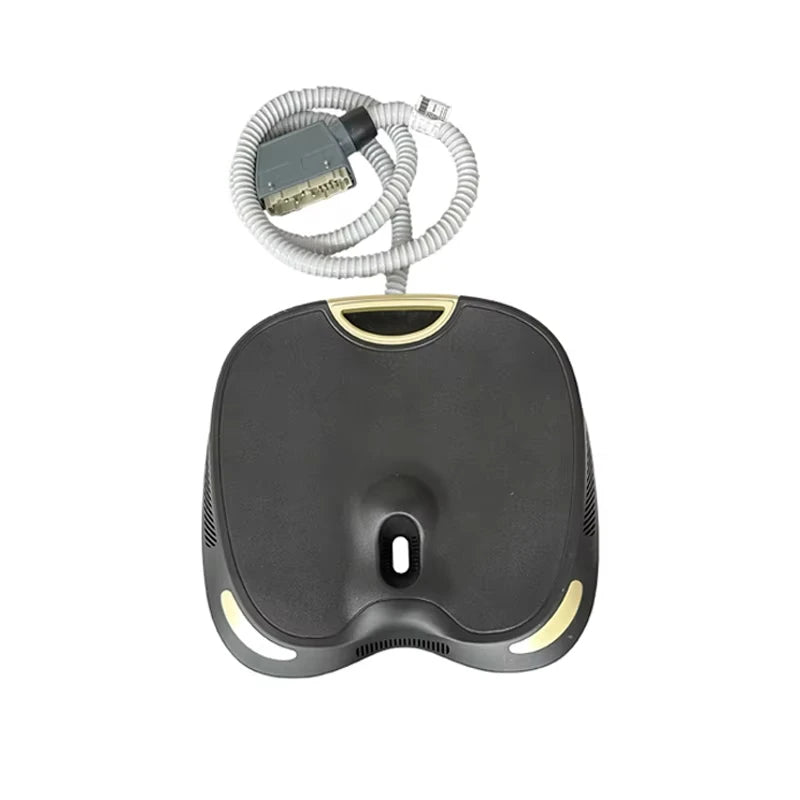
Commercial systems may be designed for multiple areas, including the arms and legs. The Emsnova HIEMT and EMS body sculpting system, for example, is specified for the abdomen, buttocks, arms, and legs.
When evaluating a professional machine, confirm which applicators are supplied, what anatomical areas the manufacturer specifies, and whether independent evidence exists for those specific treatment sites.
Diastasis recti: what is and is not established
Some HIFEM abdominal studies have measured changes in abdominal separation. For example, an MRI study reported a reduction in rectus abdominis separation after treatment, while a postpartum pilot study also reported reductions in abdominal separation. :contentReference[oaicite:17]{index=17}
These findings should not be interpreted as establishing electromagnetic body sculpting as a treatment for every case of diastasis recti. Diastasis can involve functional, structural, postpartum, and musculoskeletal considerations that require appropriate clinical assessment.
Muscle Contraction Body Sculpting vs Exercise
Electrically induced contractions vs voluntary resistance training
Both approaches can cause muscle contraction, but they are not interchangeable. Resistance training provides voluntary loading, progressive overload, movement practice, stabilization demands, and broader physical adaptations.
Motor unit recruitment and training stimulus
Electrical or electromagnetic stimulation changes how muscle activation is initiated. The external stimulus can recruit motor nerves without the same conscious sequence used during voluntary exercise. That difference makes direct “one treatment equals X workouts” comparisons scientifically weak unless they are supported by appropriately designed comparative research.
Muscle hypertrophy: what can be compared fairly
A fair comparison asks a narrower question: Can repeated stimulation produce measurable changes in muscle tissue? Published imaging studies suggest that it can in selected settings. The broader question—whether it produces all the strength, performance, metabolic, cardiovascular, and functional benefits of resistance training—is different.
Why electromagnetic stimulation should not automatically replace exercise
Muscle contraction body sculpting can be considered an adjunctive aesthetic option, particularly for targeted areas and people interested in non-invasive treatment. It should not be presented as a complete replacement for physical activity, resistance exercise, nutrition, or general health habits.
Best use cases for treatment versus conventional training
- Choose exercise as the foundation when the objective includes strength, endurance, mobility, cardiovascular fitness, and functional performance.
- Consider muscle stimulation as an adjunct when targeted aesthetic muscle activation is the primary objective and the person is an appropriate candidate.
- Consider other body-contouring technologies when the dominant concern is localized adipose tissue rather than muscle definition.
- Consider combined technologies carefully when both muscle and fat are treatment goals, while verifying evidence for the actual device rather than assuming category-wide equivalence.
Muscle Contraction Body Sculpting vs Other Body-Contouring Technologies
- HIFEM/HI-SMS: primarily emphasizes neuromuscular stimulation and intense muscle contractions.
- RF body contouring: uses radiofrequency energy to create controlled heating and may be used for body-contouring applications involving soft tissue.
- HIFEM + RF: combines electromagnetic muscle stimulation with RF in systems designed to address muscle and adipose-tissue goals simultaneously.
- Fat-focused technologies: target adipose tissue through mechanisms that differ from neuromuscular stimulation.
- Exercise: provides voluntary muscle loading together with broader physiological and functional benefits.
This comparison is more useful than asking which technology is simply “best.” The appropriate modality depends on whether the priority is muscle activation, localized fat, combined contouring, fitness, or another aesthetic objective.
What Results Can You Realistically Expect?
Early sensations and short-term changes
During treatment, users may notice powerful contractions and localized muscle fatigue. Temporary soreness or tenderness can occur after an intense session, particularly when the muscles are not accustomed to the stimulus.
When visible contour changes may appear
Published studies often evaluate outcomes several weeks or months after a treatment series. MRI research has reported measurable changes at one-, two-, three-, six-, and twelve-month follow-up points depending on the study. :contentReference[oaicite:18]{index=18}
Muscle definition and body contour outcomes
Visible definition depends on the relationship between muscle thickness and the overlying fat layer. Increasing muscle dimensions while leaving a substantial fat layer unchanged may produce a different visual result from increasing muscle thickness while also reducing localized subcutaneous fat.
Why results vary between individuals
Outcomes can vary because of baseline muscle mass, body composition, age, treatment area, device characteristics, treatment parameters, adherence to the protocol, physical activity, nutrition, and measurement methodology.
What treatment cannot realistically promise
- Guaranteed fat loss or weight loss.
- Whole-body fitness improvement from localized stimulation alone.
- Results identical to those reported in clinical studies of another manufacturer's device.
- Permanent results regardless of lifestyle or subsequent muscle activity.
- Correction of every abdominal or musculoskeletal condition.
Pros and Cons of Muscle Contraction Body Sculpting
Pros
- Non-invasive approach with no surgical incision.
- Can create targeted involuntary muscle contractions.
- May be useful for localized muscle-definition goals.
- Clinical studies have used objective imaging methods to investigate changes in muscle and adipose tissue.
- Some systems combine electromagnetic stimulation with RF for a broader body-contouring approach.
Cons
- Evidence quality and device-specific data vary.
- It should not automatically be considered equivalent to resistance training.
- Results vary between individuals and treatment protocols.
- Localized body contouring is not the same as whole-body weight loss.
- Medical screening may be necessary for certain users.
- Marketing claims can be broader than the evidence supporting a particular device.
Safety, Side Effects, and Contraindications
Common short-term effects reported after treatment
Reported experiences can include temporary muscle soreness, fatigue, localized discomfort, or sensations associated with intense contractions. Published HIFEM studies have generally reported favorable tolerability, but the absence of serious events in a particular study does not establish that every person or device has zero risk. :contentReference[oaicite:19]{index=19}
Who should not receive electromagnetic muscle stimulation
Eligibility depends on the specific device and its labeling. People with certain implanted electronic or metallic devices, pregnancy, significant medical conditions, or other contraindications may require exclusion or medical clearance.
Why implants, pregnancy, and certain medical conditions require screening
Electromagnetic energy can interact with certain implanted or conductive materials and electronic devices. Pregnancy also requires special caution because aesthetic electromagnetic stimulation is not something that should be undertaken casually without appropriate professional guidance.
When to consult a qualified clinician before treatment
Professional screening is appropriate when there is uncertainty about an implanted device, significant medical history, recent surgery, pregnancy or postpartum concerns, unexplained pain, neurological conditions, or another factor listed in the manufacturer's contraindications.
For professional operators, reviewing the machine's instructions for use, contraindications, operating limits, electrical requirements, certification documentation, and maintenance procedures is essential before treatment.
Who Is a Good Candidate—and Who May Not Be?
People primarily seeking muscle definition
A potentially suitable candidate is someone whose primary objective is localized muscle definition or targeted body contouring rather than general weight loss. Expectations should remain realistic and should be based on the treatment area and available evidence.
People seeking both muscle and body-contour changes
People interested in both muscle and localized fat changes may investigate systems combining electromagnetic stimulation with RF. Clinical studies of specific combined systems have reported simultaneous changes in muscle and adipose measurements, including MRI-evaluated outcomes. :contentReference[oaicite:20]{index=20}
A professional system such as the Emsnova EMS Body Sculpting Machine for muscle toning and body contouring combines HIEMT/EMS with RF and is specified with automatic and manual operating modes. Its listed specifications include 6500W power, AC operation, CE and RoHS certification, and a 2-year warranty with 5-year spare-parts service. These are manufacturer specifications and should be kept distinct from independent clinical evidence.
When exercise or another treatment may be more appropriate
If the main objective is strength development, cardiovascular fitness, weight management, or long-term physical performance, conventional exercise remains fundamental. If the primary concern is localized adipose tissue, another body-contouring approach may be more directly aligned with the goal.
Questions to ask a provider before choosing a system
- What exact technology does the machine use?
- Which treatment areas are supported by the manufacturer's instructions?
- What treatment protocol is recommended for this device?
- What independent clinical evidence exists for this exact device?
- What contraindications and screening requirements apply?
- How are intensity, frequency, applicator placement, and treatment duration controlled?
- What maintenance, warranty, and spare-parts support are available?
If you are comparing professional equipment, it can also be useful to review the broader Body Care and Health Devices collection alongside the technical specifications of the individual machine rather than choosing based only on headline power or marketing terminology.
How to Evaluate Claims About Muscle Contraction Body Sculpting
FDA clearance is not the same as proof of superiority
Regulatory clearance, where applicable, indicates that a specific device has met the relevant regulatory pathway for its intended use. It does not automatically prove that one device is clinically superior to another, that every marketing statement is established, or that results from one cleared device transfer to a different machine.
Look for peer-reviewed clinical evidence
Prioritize studies published in peer-reviewed medical or scientific journals. A stronger evidence package should identify the device, population, treatment protocol, control or comparator, measurement method, follow-up duration, adverse events, and statistical findings.
Check sample size, protocol, measurement method, and follow-up
A study involving 20 people should not be interpreted the same way as a large randomized trial. Likewise, a photograph-based assessment is not equivalent to blinded MRI or CT measurement. The most persuasive evidence usually comes from appropriately designed studies using objective outcomes and meaningful follow-up.
Separate device-specific evidence from category-wide claims
This is one of the most important purchasing principles. Evidence for one HIFEM system does not automatically validate another manufacturer's HIEMT machine. Similar terminology does not guarantee identical electromagnetic fields, energy delivery, applicator geometry, or treatment outcomes.
Watch for unsupported exercise-equivalence and fat-loss claims
Claims that electromagnetic stimulation replaces exercise, creates guaranteed weight loss, or produces universal fat reductions deserve scrutiny. A credible article or provider should distinguish muscle stimulation, muscle adaptation, localized fat changes, and general fitness rather than combining them into one promise.
For readers researching aesthetic technology more broadly, the Skin and Beauty Care Devices collection provides additional context for comparing device categories without assuming that every technology targets the same tissue or outcome.
Frequently Asked Questions
What is muscle contraction body sculpting?
Muscle contraction body sculpting is a non-invasive approach that uses external energy, often electromagnetic stimulation, to trigger repeated involuntary muscle contractions. The goal is typically localized muscle activation and body contouring. Some systems combine electromagnetic stimulation with RF to address both muscle and adipose-tissue objectives.
How does high-intensity electromagnetic muscle stimulation cause muscle contractions?
A high-intensity electromagnetic field can induce electrical activity in excitable tissue and stimulate motor nerves. When the stimulus reaches the appropriate threshold, motor nerves activate and cause the associated skeletal muscles to contract. Repeated stimulation creates the contraction cycles experienced during treatment.
Is electromagnetic muscle stimulation as effective as exercise for building muscle?
It should not automatically be considered equivalent to exercise. Clinical studies have reported measurable increases in muscle thickness following some HIFEM treatment protocols, but resistance training provides a much broader set of physiological and functional adaptations. Electromagnetic stimulation is better considered a targeted adjunct rather than a universal replacement for exercise.
Does muscle contraction body sculpting reduce fat as well as build muscle?
Some clinical studies have reported reductions in localized subcutaneous fat alongside increases in muscle measurements. Studies involving HIFEM combined with RF have also reported simultaneous muscle and fat changes. However, results are device- and protocol-specific and should not be interpreted as guaranteed whole-body fat loss. :contentReference[oaicite:21]{index=21}
How long do muscle contraction body sculpting results last?
Published follow-up data extend from several months to approximately one year in some HIFEM studies. One MRI/CT study reported that measured abdominal changes remained at one-year follow-up, although the researchers emphasized the need for additional research. :contentReference[oaicite:22]{index=22}
The Bottom Line
Muscle contraction body sculpting is best understood as a targeted neuromuscular stimulation technology rather than a shortcut that makes exercise irrelevant. High-intensity electromagnetic systems can create powerful involuntary muscle contractions, and clinical research has reported measurable changes in muscle thickness and, in some protocols, localized adipose tissue and circumference.
The evidence is strongest when you look at the actual device, treatment protocol, study population, measurement method, and follow-up instead of relying on broad category claims. Research has included MRI and CT assessments, prospective studies, multicenter investigations, and a systematic review of 15 clinical studies. At the same time, limitations such as small samples, varying protocols, device-specific evidence, and limited long-term data mean that results should not be presented as universal. :contentReference[oaicite:23]{index=23}
If you are evaluating a professional EMS or HIEMT system, start with your actual objective: muscle definition, localized contouring, fat reduction, or a combination. Then compare the technology, treatment areas, applicators, operating controls, safety requirements, independent evidence, warranty, and professional support. For a system combining HIEMT/EMS and RF, the Emsnova EMS Body Sculpting Machine can be reviewed against those criteria rather than judged by marketing claims alone.
Before purchasing or booking treatment, verify that the selected system is appropriate for the intended treatment area, that the operator understands its protocol and contraindications, and that expectations are based on evidence rather than guaranteed outcomes. The most defensible approach to body sculpting is simple: match the technology to the tissue you want to influence, match the evidence to the exact device, and match the expected result to what the research actually measured.
Pillar Article: Abdominal Muscle Stimulation Device: Benefits, Safety & Buying Guide













