

Non Invasive Body Sculpting Machine: EMS vs RF vs Cryolipolysis
Choosing a non invasive body sculpting machine starts with one question: what result are you trying to support? EMS and HIFEM-style systems focus primarily on muscle stimulation and contraction, RF systems use controlled radiofrequency heating for body contouring and skin-firmness goals, while cryolipolysis and certain laser systems are primarily associated with localized fat-reduction approaches. Combination systems bring multiple technologies together for broader treatment versatility.
For buyers comparing equipment for a clinic, spa, aesthetic business, or carefully specified personal-use application, the best machine is therefore not necessarily the one with the most features. It is the one whose technology, applicators, controls, operating requirements, documentation, and intended use match the treatment goals.
Non Invasive Body Sculpting Machine: Which Technology Is Right for You?
Quick comparison: EMS/HIFEM vs RF vs cryolipolysis vs laser
| Technology | Primary mechanism | Main goal | Common areas | Best fit |
| EMS / HIFEM | Electrical or electromagnetic stimulation that produces muscle contractions | Muscle stimulation, toning and contour definition | Abdomen, buttocks, arms, legs | Muscle-focused body sculpting |
| RF | Radiofrequency energy creates controlled tissue heating | Skin firmness and contour refinement; some systems also target body fat | Abdomen, thighs, arms and other body areas depending on applicator | Skin-tightening and contour-focused treatments |
| Cryolipolysis | Controlled cooling of targeted tissue | Localized fat reduction | Areas suitable for the specific applicator | Fat-focused body contouring |
| Laser body contouring | Non-invasive light/laser energy delivered to targeted tissue | Primarily localized fat-focused contouring, depending on technology | Application-dependent | Buyers specifically seeking laser-based contouring |
| Combination systems | Two or more energy modalities in one platform | Multiple body-contouring objectives | Varies by applicators and manufacturer | Professional operators wanting a broader treatment menu |
Best technology by treatment goal
- Muscle stimulation and definition: EMS or HIFEM-style electromagnetic muscle stimulation is the most directly aligned category.
- Localized fat reduction: Cryolipolysis and certain laser, RF, or combination systems may be relevant depending on their specific intended use.
- Skin firmness and contour refinement: RF is commonly selected when controlled heating and skin-tightening objectives are important.
- Multiple goals: A combination machine may be more practical when a professional wants muscle stimulation plus another contouring modality.
If your broader interest is professional wellness and aesthetic equipment, explore body care and health devices to see how body-focused equipment fits into a wider treatment setup.
How Non-Invasive Body Contouring Technologies Work
EMS and HIFEM for muscle stimulation
Electrical muscle stimulation (EMS) uses electrical impulses to stimulate nerves and produce muscle contractions. In body-contouring applications, the objective is generally targeted muscle activation rather than replacing conventional exercise or serving as a general weight-loss treatment.
High-intensity electromagnetic muscle stimulation, commonly marketed as HIFEM or HIEMT depending on the system, uses electromagnetic energy to induce intense muscle contractions without electrodes delivering the stimulation in the same manner as conventional EMS. The practical distinction matters when comparing machines because manufacturers may use different terminology, technologies, output specifications, applicator designs, and treatment protocols.
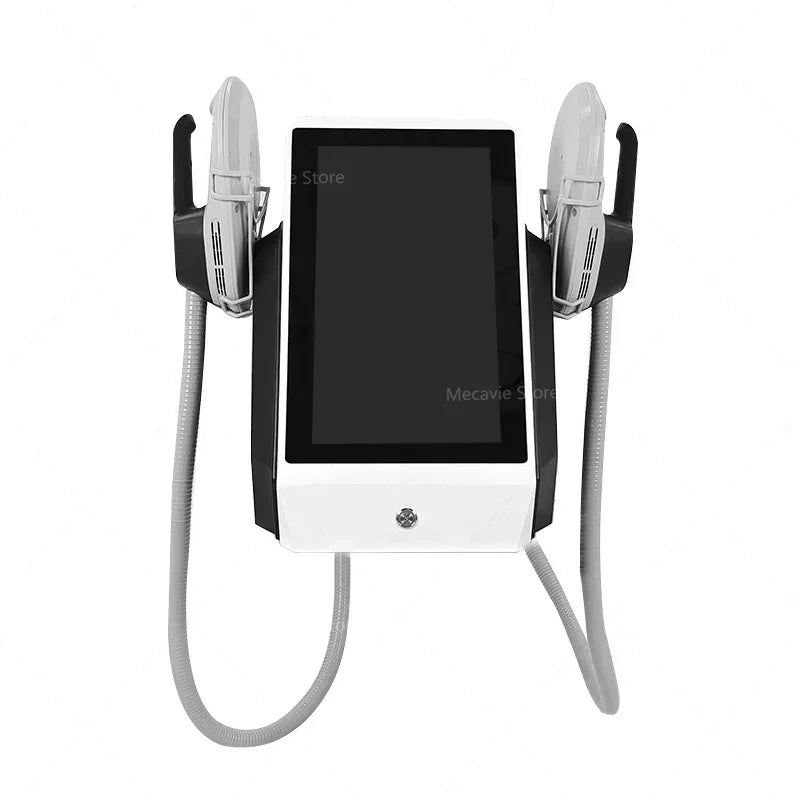
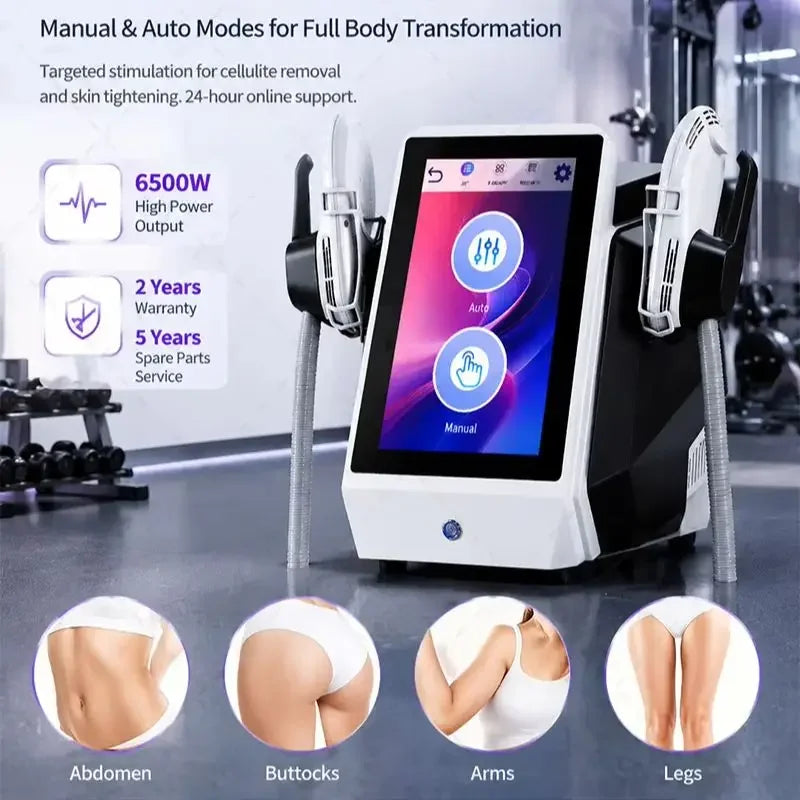
For buyers specifically interested in targeted abdominal, gluteal, arm, or leg muscle stimulation, a machine such as the Emsnova EMS Body Sculpting Machine combines HIEMT, EMS, and RF technologies in one professional-oriented system. Its stated operating modes include automatic programs and manual customization.
Radiofrequency (RF) for heating and skin tightening
Radiofrequency body-contouring systems deliver RF energy into tissue and generate controlled heating. Depending on the specific device and its intended use, RF may be incorporated into aesthetic treatments focused on skin firmness, contour refinement, and other body-contouring objectives.
RF should not be treated as interchangeable with EMS or HIFEM. The technologies have different energy-delivery mechanisms and different primary treatment objectives. A buyer primarily concerned with muscle activation should evaluate muscle-stimulation technology first, while someone prioritizing skin firmness may place greater weight on RF capabilities.
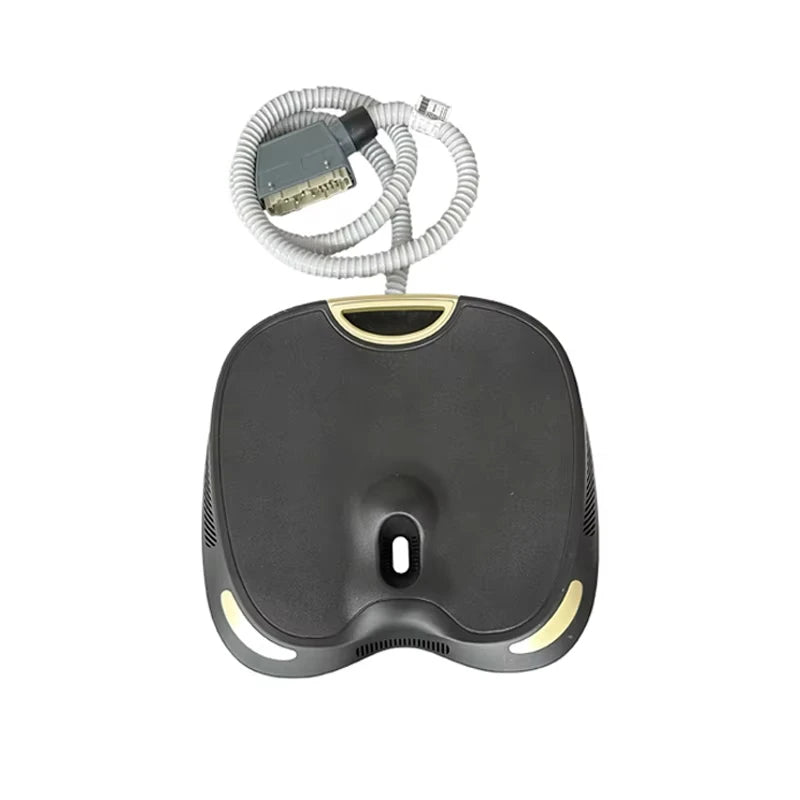
Cryolipolysis for localized fat reduction
Cryolipolysis takes a fundamentally different approach. Rather than stimulating muscle or heating tissue with RF, the technology uses controlled cooling to target localized fat tissue. Applicator design is particularly important because the device must be appropriate for the body area and tissue profile being treated.
That makes cryolipolysis a poor substitute for a muscle-stimulation machine when the primary goal is improving muscle activation or definition. Conversely, someone whose main objective is localized fat reduction should not assume that an EMS machine is equivalent to a fat-focused cryolipolysis platform.
Laser body contouring
Non-invasive laser body-contouring systems use specific light-based energy rather than electrical muscle stimulation, electromagnetic fields, or controlled cooling. Their precise mechanism, treatment claims, applicable body areas, and operating requirements vary by device.
When evaluating a laser machine, look beyond the word “laser.” The wavelength, delivery method, intended use, treatment protocol, regulatory documentation, operator requirements, and manufacturer specifications all matter. A laser-based body-contouring device should be compared against machines with similar intended outcomes rather than simply against every non-invasive technology as if they were interchangeable.
Combination body sculpting systems
Combination machines can be attractive because one platform may support more than one treatment modality. This can simplify equipment purchasing and potentially broaden the services an aesthetic business offers.
However, additional technology also means additional complexity. Buyers should consider training, operating procedures, maintenance, electrical requirements, treatment protocols, applicator compatibility, safety documentation, and service support. A machine with more technologies is not automatically a better investment.
EMS vs RF vs Cryolipolysis vs Laser: Key Differences
Muscle building and muscle definition
When muscle stimulation is the priority, EMS and HIFEM-style systems are the most directly relevant technologies in this comparison. Their central function is to induce muscle contractions through electrical or electromagnetic stimulation.
This makes them particularly relevant to people or businesses focused on abdominal muscle stimulation, gluteal activation, or targeted muscle toning. They should nevertheless be positioned as body-contouring or muscle-stimulation technologies rather than guaranteed replacements for strength training or comprehensive fitness programs.
Localized fat reduction
Fat-focused technologies operate differently from muscle-stimulation systems. Cryolipolysis uses controlled cooling, while some laser and RF platforms are designed around fat-focused body-contouring applications. The exact result depends on the technology, device specifications, treatment protocol, and appropriate candidate selection.
For this reason, “fat reduction” should be treated as a separate purchasing objective from “muscle toning.” A buyer trying to solve stubborn areas should first determine whether the concern is primarily localized adipose tissue, limited muscle definition, skin laxity, or a combination.
Skin tightening and contour refinement
RF becomes particularly relevant when skin firmness is an important part of the desired treatment profile. Controlled RF heating can make it a useful technology category for contour-refinement strategies where skin appearance matters in addition to overall body shape.
Some combination machines integrate RF with muscle stimulation so that a professional can address more than one aesthetic objective using a single platform. The specific claims and treatment parameters must still be verified against the manufacturer's documentation.
Treatment experience, recovery, and limitations
Non-invasive does not mean that every technology feels the same or carries identical operating considerations. EMS and electromagnetic muscle stimulation may create noticeable muscle contractions. RF treatments can produce a sensation of controlled warmth. Cryolipolysis involves controlled cooling and applicator contact, while laser systems depend on the particular energy-delivery design.
“No downtime” or “no recovery period” should therefore be interpreted in the context of the specific device and its intended use. Buyers should rely on manufacturer instructions, contraindication guidance, and applicable professional protocols rather than assuming that all non-invasive technologies are suitable for every person or body area.
Best Non Invasive Body Sculpting Machine by Buyer Type
Best for professional clinics
Professional clinics should prioritize technology-to-treatment alignment, documented operating parameters, appropriate applicators, safety systems, training, regulatory documentation, warranty coverage, technical support, and service availability. A professional machine also needs to fit the clinic's workflow and expected treatment volume.
For a clinic where muscle-focused contouring is central, a multi-technology platform such as the Emsnova HIEMT and RF body sculpting machine may be worth evaluating because its listed configuration combines HIEMT, EMS, and RF, with manual and automatic operating modes.
Best for spas and aesthetic businesses
Spas may place greater emphasis on operational simplicity, treatment versatility, client comfort, applicator coverage, staff training, cleaning and maintenance, and how easily a device can be incorporated into an existing service menu.
A combination system can make sense when the business wants multiple treatment capabilities without purchasing separate machines. However, operators should calculate whether the additional functionality will actually be used frequently enough to justify the additional complexity and cost.
Best for home use
Home buyers need to be particularly careful when comparing professional equipment with consumer devices. A professional aesthetic machine may require specialized training, controlled treatment protocols, dedicated electrical requirements, or professional screening that makes it inappropriate for unsupervised home use.
Always verify the manufacturer's intended-use labeling, instructions, operating requirements, and safety information before purchasing equipment for personal use. Do not assume that a professional machine is suitable simply because its treatment is described as non-invasive.
Best for multi-goal body contouring
Combination equipment is most compelling when the buyer genuinely needs multiple modalities. A system combining muscle stimulation and RF, for example, may offer a broader body-contouring workflow than a single-purpose muscle stimulator.
The trade-off is complexity. Evaluate each technology independently before deciding that combining them in one chassis creates better value.
For businesses building a broader beauty-equipment offering, the skin and beauty care devices collection can also help put body-contouring equipment into the context of a larger aesthetic equipment portfolio.
How to Choose a Non Invasive Body Sculpting Machine
1. Match the technology to the treatment goal
Start with the desired outcome instead of starting with the machine. Muscle stimulation, localized fat reduction, skin tightening, and multi-goal contouring are different objectives. Once the primary goal is clear, eliminate technologies that do not directly address it.
2. Check applicator design and treatment areas
Applicators determine how efficiently a machine can address specific body areas. Check their size, shape, attachment system, coverage, positioning, and intended treatment areas. If your business expects to treat the abdomen, buttocks, thighs, arms, and legs, verify that the supplied applicators actually support those areas rather than relying on generic marketing language.
3. Evaluate output controls and treatment customization
Look for clearly documented intensity controls, treatment modes, timers, presets, and manual adjustments. Customization can be valuable for professional operators because different treatment areas and client circumstances may require different settings.
The Emsnova system, for example, is specified with both automatic and manual operation. Its listed technology configuration is HIEMT + RF + EMS, while its stated power specification is 6500W. These specifications should be evaluated alongside the manufacturer's operating documentation rather than viewed in isolation.
4. Verify certifications, regulatory status, and documentation
Do not treat a certification logo as a substitute for regulatory due diligence. Buyers should verify applicable regulatory status or clearance where relevant, electrical and safety certifications, manufacturer documentation, labeling, intended-use claims, and market-specific requirements.
CE and RoHS are listed for the Emsnova machine. Those marks should still be verified against the actual supplied documentation and the regulatory requirements applicable to the buyer's country and intended use. In the United States, claims involving FDA status should be independently verified rather than relying on vague phrases such as “FDA approved” without identifying the specific regulatory basis.
5. Review operating requirements and maintenance
Before purchase, check power requirements, cooling systems, cleaning procedures, consumables, maintenance intervals, replacement parts, warranty terms, and technical service. These factors directly affect total ownership cost.
A machine that is inexpensive to purchase but difficult to service can become more expensive over its operating life than a better-supported system with a higher initial price.
6. Consider training and operator requirements
Professional buyers should establish who will operate the equipment, what training is required, how contraindications are screened, what treatment protocols are supplied, and how technical questions are handled after installation.
Manufacturer training and documentation can be especially important for systems that combine multiple technologies or offer extensive manual customization.
7. Compare total cost, not just purchase price
The real equipment investment includes more than the purchase price. Compare accessories, applicators, installation, training, maintenance, replacement parts, consumables, warranty coverage, technical support, and potential downtime.
The Emsnova product information states a 2-year warranty and 5-year spare-parts service, which are useful factors to consider when calculating long-term ownership value.
Safety and Suitability: What Buyers Should Check Before Treatment
Follow the manufacturer's intended use
Every body-contouring machine should be operated according to its labeling, instructions, treatment parameters, intended population, and stated treatment areas. A technology being non-invasive does not eliminate the need for appropriate operating procedures.
Screen for contraindications and treatment limitations
Professional operators should follow the manufacturer's contraindication and precaution guidance and apply appropriate screening procedures before treatment. Particular attention should be paid to the type of energy delivered, the treatment area, implanted devices or other relevant conditions, and any restrictions identified in the device documentation.
Do not confuse body contouring with weight-loss treatment
Non-invasive body contouring is generally intended to address localized aesthetic concerns rather than serve as a substitute for comprehensive weight-management care. A machine should not be marketed or selected on the assumption that it can replace nutrition, physical activity, medical weight-management treatment, or other evidence-based approaches to managing body weight.
For additional body-focused wellness content and equipment, readers can also explore the Body & Face Blog.
Non Invasive Body Sculpting Machine Buying Checklist
Essential specifications to compare
- Technology: Determine whether the system uses EMS, HIFEM/HIEMT-style electromagnetic stimulation, RF, cryolipolysis, laser, or a combination.
- Treatment goal: Confirm whether the primary purpose is muscle stimulation, localized fat reduction, skin tightening, or multi-goal contouring.
- Applicators: Check size, design, attachment, coverage, and supported treatment areas.
- Output controls: Review intensity, modes, timers, presets, and manual customization.
- Power requirements: Verify voltage, power requirements, cooling, installation, and electrical infrastructure.
- Documentation: Request manuals, technical specifications, intended-use information, safety documentation, and applicable regulatory records.
- Certifications: Verify claims such as CE, RoHS, electrical safety certifications, or applicable U.S. regulatory status.
- Training: Determine whether operator training and treatment protocols are included.
- Warranty: Compare warranty duration and exactly what components are covered.
- Service: Check spare-parts availability, repair support, response times, and long-term manufacturer assistance.
If the core criteria point toward a professional muscle-stimulation and RF platform, you can review the Emsnova EMS body sculpting machine against these specifications before making a purchasing decision.
Red flags to avoid
- Guaranteed or unrealistic body-sculpting outcomes.
- Unclear manufacturer identity or missing technical documentation.
- Vague “FDA approved” claims without identifiable regulatory information.
- Certification claims that cannot be verified through documentation.
- Unclear treatment parameters or missing operating instructions.
- No meaningful warranty or after-sales service information.
- Professional equipment marketed for unsupervised home use without appropriate intended-use documentation.
- Claims that body contouring is equivalent to weight-loss treatment.
Which Non Invasive Body Sculpting Machine Should You Choose?
Choose EMS/HIFEM when muscle stimulation is the priority
If your primary concern is targeted muscle activation, toning, or improving the appearance of muscle definition, EMS and HIFEM-style technologies deserve priority. They are fundamentally designed around muscle contraction rather than controlled cooling or RF heating.
Choose RF when skin tightening and contour refinement matter most
RF is the more logical starting point when skin firmness and heat-based contour refinement are central objectives. A combination platform can be considered when RF needs to coexist with muscle stimulation in the same treatment strategy.
Choose cryolipolysis or laser when localized fat reduction is the priority
For buyers primarily concerned with localized fat, investigate technologies specifically designed around fat-focused body contouring. Cryolipolysis and certain laser systems belong in this category, although their mechanisms, treatment protocols, applicators, and safety requirements differ substantially.
Choose a combination system for a broader treatment menu
A combination machine is worth considering when a professional business has genuine demand for multiple treatment objectives. The value comes from practical versatility, not simply from having more technologies listed on a specification sheet.
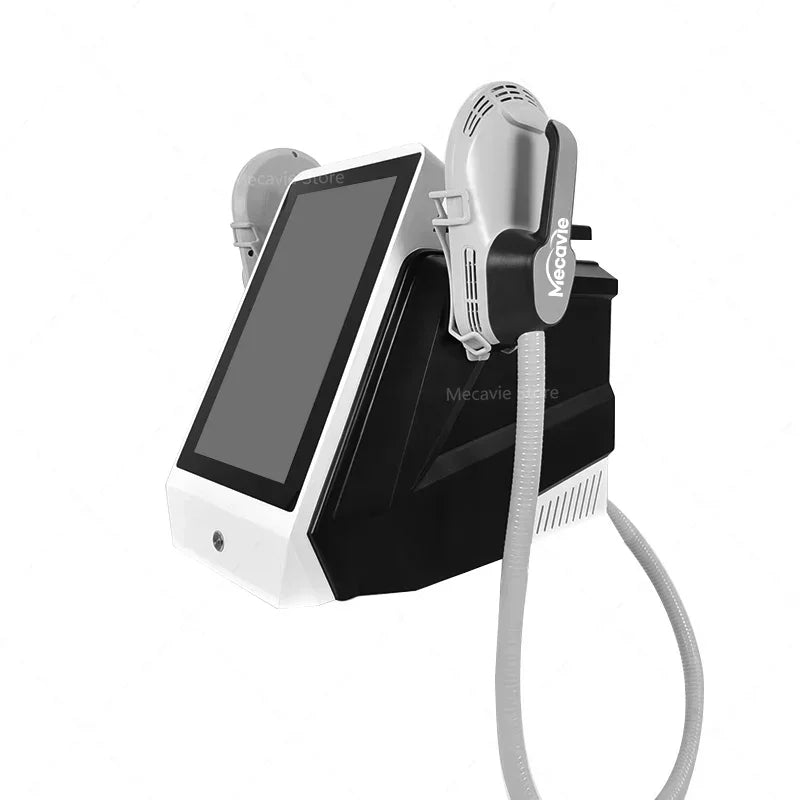
Pros and Cons of Combination Body Sculpting Machines
Pros
- Can combine multiple treatment technologies in one platform.
- May support a broader professional treatment menu.
- Can reduce the need to purchase separate equipment for certain treatment goals.
- May provide both automatic and customized operating workflows on some systems.
- Can be useful for businesses serving clients with different body-contouring objectives.
Cons
- More technologies can mean greater operational complexity.
- Training requirements may be higher than for a single-purpose device.
- Maintenance and service can become more involved.
- A combination machine may cost more than equipment designed for one specific purpose.
- Extra features have limited value if the business does not use them.
- One platform does not necessarily perform every modality as effectively or appropriately as a dedicated system.
The Bottom Line: Match the Machine to the Outcome
There is no universally best non invasive body sculpting machine. The right choice depends on what you need the equipment to accomplish.
Choose EMS or HIFEM-style muscle stimulation when targeted muscle contraction and muscle-focused contouring are the priority. Consider RF when controlled heating, skin firmness, and contour refinement are central goals. Evaluate cryolipolysis or appropriate laser systems when localized fat reduction is the primary objective. Choose a combination system when a broader treatment menu justifies the additional equipment complexity.
For professional buyers, the final decision should come down to verified technology specifications, applicator coverage, treatment controls, intended use, regulatory and safety documentation, operator requirements, warranty, maintenance, and after-sales support—not simply the number of features advertised.
For buyers whose priority is targeted muscle stimulation combined with RF-based functionality, the Emsnova EMS Body Sculpting Machine for muscle toning and body contouring is one option to evaluate against the same criteria. Its listed configuration includes HIEMT + RF + EMS, automatic and manual operation, and treatment areas including the abdomen, buttocks, arms, and legs.
Before purchasing any professional aesthetic device, verify the manufacturer's current specifications, applicable regulatory requirements, safety documentation, training provisions, and intended use for your market. That decision-first approach will help you select equipment that fits your actual treatment goals rather than simply choosing the machine with the longest feature list.
Pillar Article: Abdominal Muscle Stimulation Device: Benefits, Safety & Buying Guide













