

Professional HIEMT Muscle Stimulator: 2026 Comparison Guide
Choosing a professional HIEMT muscle stimulator is not simply a matter of finding the machine with the highest advertised power. Professional buyers need to compare electromagnetic stimulation technology, applicator configuration, treatment coverage, operating controls, cooling, electrical requirements, certifications, warranty, training, service support, and total cost of ownership. Two machines can look similar on a product page yet deliver very different clinic workflows and purchasing value.
This guide takes a specification-first approach so clinics, salons, wellness centers, and aesthetic practices can evaluate a HIEMT body sculpting machine based on what matters after installation—not just what appears in a marketing headline.
What Is a Professional HIEMT Muscle Stimulator?
A professional HIEMT muscle stimulator uses electromagnetic energy to induce controlled muscle contractions without directly passing electrical current through the skin in the same way conventional electrical muscle stimulation does. HIEMT is commonly described as high-intensity electromagnetic muscle stimulation, and professional systems are positioned for targeted muscle stimulation and body-contouring applications.
The important distinction for buyers is that HIEMT is a technology category, not a guarantee of identical performance across machines. Output characteristics, applicator design, treatment parameters, cooling, software, and intended use can vary substantially between systems.
HIEMT vs. Conventional EMS and Electrical Muscle Stimulation
Conventional EMS typically uses electrodes to deliver electrical stimulation through the skin to activate muscles. HIEMT systems instead use electromagnetic stimulation to induce muscle contractions. Because the technologies work differently, buyers should avoid assuming that a consumer EMS device and a professional HIEMT system are interchangeable simply because both advertise muscle stimulation.
For professional purchasing, the more useful question is not whether one acronym sounds more advanced. Ask what the specific device is designed to deliver, what parameters operators can control, what documentation supports those claims, and whether its configuration fits the intended treatment workflow.
What Professional HIEMT Is Designed to Do
Professional HIEMT equipment is generally used as part of a body-contouring or muscle-toning service. The objective may include targeted muscle activation, supporting muscle definition, or complementing an existing aesthetic or wellness program. It should not be presented as a replacement for exercise, nutrition, medical care, or individualized clinical assessment.
For practices already offering body-focused services, a body care and health device collection can also help organize related equipment around a broader service strategy.
Professional HIEMT Muscle Stimulator Specifications at a Glance
The fastest way to compare professional systems is to build a specification matrix before discussing price. The following framework shows the categories worth putting side by side for every machine under consideration.
Professional HIEMT Comparison Matrix
- Technology: Determine whether the machine uses HIEMT, EMS, RF, or a combination of technologies.
- Electromagnetic output: Request the manufacturer's documented output specifications rather than relying only on phrases such as “high intensity.”
- Applicator count: Compare the number and configuration of handles or applicators and whether multiple areas can be treated during one session.
- Treatment areas: Verify which body areas are manufacturer-approved for the specific applicator configuration.
- Session parameters: Check available intensity, frequency, pulse patterns, session duration, presets, and manual controls.
- Cooling: Determine how the system manages heat generated during operation and whether cooling is continuous or treatment-dependent.
- Controls: Evaluate automatic programs, manual adjustment, display/interface, monitoring, and operator workflow.
- Electrical requirements: Confirm voltage, frequency, rated power, plug configuration, room requirements, and installation needs.
- Certifications: Request documentation supporting applicable certification and electrical or product-safety claims.
- Warranty and service: Compare warranty duration, replacement parts, repair procedures, technical support, and expected service response.
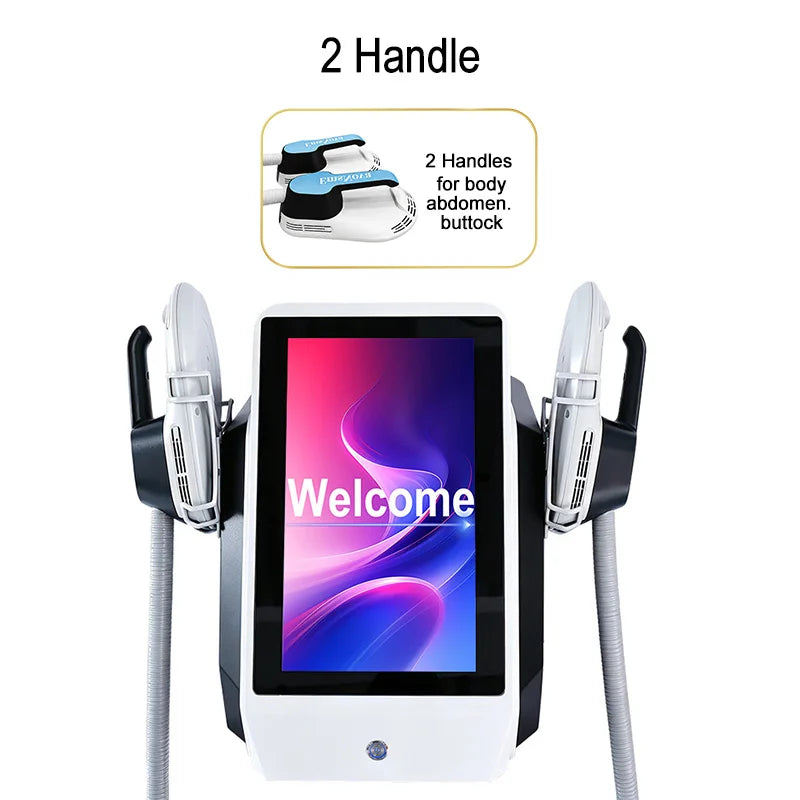
The Emsnova EMS Body Sculpting Machine is one example of a professional-style system to evaluate against this framework. Its listed configuration combines HIEMT, EMS, and RF technology, offers manual and automatic operation, uses AC power, and lists CE and RoHS certification. The manufacturer-provided specifications also list 6500W power, ABS + TPR construction, and multiple handle options.
Qualified professional buyers should review the complete technical documentation and intended-use information before deciding whether the configuration fits their practice.
How to Read the Specification Sheet
Do not treat the largest number on a specification sheet as the automatic winner. A maximum power figure does not, by itself, establish treatment effectiveness, patient suitability, operating efficiency, or long-term reliability.
Instead, ask how each number relates to actual operation. Frequency ranges indicate available operating parameters, while applicator configuration affects coverage and workflow. Cooling affects thermal management, and programmable controls affect how easily staff can follow manufacturer-specified treatment procedures.
The 10 Specifications That Matter Most When Buying a Professional HIEMT Machine
1. Electromagnetic Intensity and Output Range
Output is one of the most important—and most frequently misunderstood—specifications. A supplier should be able to explain exactly what its stated intensity or output measurement represents and how it was measured.
Look for technical documentation rather than vague claims about being “the strongest” or “most powerful.” Consistency, controllability, and documented operating parameters can be more useful to a professional practice than a single maximum figure.
2. Applicator Count and Configuration
Applicators determine how a machine translates into treatment workflow. A dual-applicator system may allow simultaneous treatment of corresponding areas, while systems with additional handles may provide greater flexibility across a broader service menu.
More applicators are not automatically better. Consider whether your staff can use them efficiently, whether your target areas require them, and whether the additional hardware increases maintenance or installation complexity.
3. Treatment Areas and Applicator Design
Common body-contouring targets can include the abdomen, buttocks, thighs, arms, and legs, but approved treatment areas depend on the individual device, applicator, labeling, and applicable regulations.
Before purchasing, request a treatment-area chart showing which applicator is intended for each area. This is particularly important when your business plans to market abdominal muscle stimulation, glute-focused services, or multi-area treatment packages.
4. Treatment Parameters and Programmability
Professional operators should understand which settings can actually be adjusted. Review intensity controls, frequency options, pulse patterns, session duration, automatic programs, ramping, and manual programming.
Automatic modes can simplify standardized workflows, while manual modes may provide greater flexibility for trained professionals. The ideal combination depends on staff experience and the manufacturer's operating instructions.
5. Cooling and Thermal Management
Cooling is easy to overlook when comparing body sculpting machines, but it can influence comfort, operating consistency, and equipment management. Ask how cooling works, how quickly the system reaches operating temperature, and what maintenance the cooling system requires.
A supplier should also explain any environmental or ventilation requirements associated with continuous professional operation.
6. Controls, Display, and Operator Workflow
A professional machine should be evaluated as a workflow tool, not merely a hardware specification. Operators need to understand how quickly they can select a program, adjust parameters, monitor a session, and complete routine cleaning or maintenance.
Ask for a demonstration whenever possible. A technically impressive machine can still be a poor operational choice if its interface is confusing or staff training is inadequate.
7. Electrical, Physical, and Installation Requirements
Confirm the machine's electrical requirements before ordering. The Emsnova system, for example, lists AC power and 6500W rated power. A clinic should verify whether its existing electrical infrastructure can safely accommodate the equipment and whether additional installation work is required.
Also consider footprint, mobility, storage, ventilation, cable management, and treatment-room layout. These factors directly affect how easily the machine fits into a working practice.
8. Certifications and Regulatory Documentation
Certification claims should be verified rather than copied from a sales page. Request the relevant certificates, model numbers, test documentation, labeling, user manual, intended-use information, and jurisdiction-specific regulatory materials.
CE marking and RoHS information can be relevant to product compliance, but buyers should not confuse a certification or conformity marking with FDA authorization, clinical effectiveness, or approval for a particular medical indication. Requirements vary by market and intended use.
9. Warranty, Parts, and Technical Service
A professional device is a business asset, so downtime has a financial cost. Compare the length of the warranty, what components are covered, whether labor and shipping are included, how replacement parts are supplied, and how repairs are handled.
The Emsnova product description lists a 2-year warranty and 5-year spare-parts service. Those terms should still be confirmed in writing before purchase, including exactly what the warranty and parts-service commitments cover.
10. Training and Clinical or Operator Support
Training should cover more than turning the machine on. Professional onboarding should address applicator placement, approved treatment areas, parameter selection, screening, cleaning, maintenance, troubleshooting, and documentation.
Ask whether training is live, remote, written, or video-based and whether updated technical support remains available after installation.
Professional HIEMT Treatment Areas and Typical Clinic Use
Abdomen and Core
The abdomen is one of the most common areas associated with muscle-stimulation body contouring. Buyers should evaluate applicator dimensions, positioning requirements, coverage, and whether the device documentation specifically supports abdominal use.
For a professional practice building a broader body-focused service category, related skin and beauty care devices can complement—not replace—the dedicated muscle-stimulation workflow.
Glutes and Thighs
Gluteal and thigh applications require appropriate applicator placement and adequate coverage. Consider whether the system can comfortably accommodate the body area and whether its handle configuration allows efficient positioning.
Other Treatment Areas
Arms and legs may be included among manufacturer-listed target areas, but professional buyers should never assume that an applicator is appropriate for every anatomical location. Always follow the device's intended-use documentation and applicable local requirements.
Professional HIEMT Treatment Protocols: What Operators Should Evaluate
Session Duration, Intensity, and Progression
There is no universal HIEMT protocol that should be copied from one machine to another. Treatment duration, intensity, frequency, and progression should follow the specific manufacturer's validated instructions and operator training.
A professional protocol should establish how staff select an initial setting, monitor tolerance, adjust parameters, and document the session. “Higher intensity” should never be treated as synonymous with “better treatment.”
Patient Selection and Treatment Planning
Professional treatment planning begins with the individual's goals, treatment area, relevant history, baseline condition, and expectations. Screening should identify contraindications and circumstances requiring referral or additional professional assessment.
Practices should also distinguish cosmetic body-contouring objectives from treatment of medical conditions. Marketing language should remain consistent with the device's intended use and applicable regulations.
Documenting Treatment Outcomes
Consistent documentation makes before-and-after evaluation more meaningful. Practices can use standardized photographs, measurements where appropriate, treatment dates, device settings, treated areas, and follow-up intervals.
This approach is more useful than relying on a single photograph or subjective impression when assessing whether a treatment program is producing the expected outcome.
Safety, Contraindications, and Professional Use Requirements
Who May Not Be a Suitable Candidate?
Contraindications vary by device and manufacturer. Depending on the technology and labeling, screening may need to consider implanted electronic devices, certain metallic implants, pregnancy, and other medical or anatomical circumstances.
Because electromagnetic and RF technologies can have different safety considerations, professional operators should use the exact contraindication and precaution list supplied for the machine rather than relying on a generic online protocol.
Why Manufacturer Instructions Matter
Professional use requires adherence to intended use, labeling, treatment parameters, screening procedures, and operating instructions. A device's specifications cannot substitute for training or professional judgment.
Practices should keep current manuals and safety documentation accessible to operators and establish a process for reviewing manufacturer updates.
Professional Risk Management
Good risk management includes documented screening, informed consent where appropriate, staff competency records, equipment maintenance logs, treatment records, cleaning procedures, and an incident-response process.
Where local regulations impose additional requirements for aesthetic equipment, the practice should verify those requirements independently before offering treatments.
Evidence, Expected Results, and Limitations of HIEMT
What Research Can and Cannot Tell Buyers
Research on electromagnetic muscle stimulation can help explain how externally generated electromagnetic fields can produce muscle contractions. However, evidence for one technology, protocol, or device should not automatically be treated as evidence for every commercial HIEMT machine.
Buyers should distinguish between evidence for muscle stimulation and broader marketing claims involving fat reduction, circumference changes, body contouring, or long-term aesthetic outcomes.
Results Depend on Device, Protocol, and Patient
Results can vary with the device configuration, treatment parameters, treatment area, patient characteristics, baseline condition, treatment schedule, and measurement method. This is why responsible product content should avoid guaranteeing a specific visual outcome.
How to Evaluate Before-and-After Claims
When a supplier presents clinical or before-and-after evidence, ask who was studied, how many participants were included, which device and protocol were used, how outcomes were measured, and how long participants were followed.
Photographs should also be evaluated for consistent lighting, positioning, camera distance, posture, and follow-up timing. Evidence is strongest for your purchasing decision when it actually applies to the specific machine being evaluated.
Pros and Cons of a Professional HIEMT Muscle Stimulator
Pros
- Provides targeted muscle stimulation without conventional resistance exercise during the session.
- Can support muscle-toning and body-contouring service offerings.
- Professional systems can provide adjustable treatment parameters and automated programs.
- Multiple applicators can improve coverage and workflow flexibility.
- Combined technology platforms may allow practices to offer more than one treatment modality in a single system.
- Professional warranty and spare-parts support can reduce long-term operational uncertainty.
Cons
- Professional systems require substantially more purchasing and operational planning than consumer EMS products.
- High advertised power does not by itself prove superior clinical or cosmetic outcomes.
- Applicator configuration can limit which areas can be treated efficiently.
- Installation, electrical requirements, maintenance, and staff training add to total ownership cost.
- Contraindications and treatment parameters must be followed carefully.
- Evidence and regulatory status may differ between technologies, devices, manufacturers, and markets.
How Much Does a Professional HIEMT Muscle Stimulator Cost?
What Drives Professional HIEMT Machine Pricing?
Professional HIEMT machine pricing can reflect electromagnetic output specifications, applicator count, cooling architecture, controls, construction, certifications, accessories, software, warranty, training, and supplier support.
A machine with a lower purchase price may become more expensive over time if parts are difficult to obtain, downtime is frequent, or training is limited.
Total Cost of Ownership
Calculate the full cost rather than comparing purchase prices alone. Include shipping, installation, electrical work, training, maintenance, replacement parts, warranty coverage, downtime, and any required accessories.
If the equipment will be used frequently, reliability and service responsiveness can matter as much as the initial invoice.
Questions to Ask Before Requesting a Quote
- What exactly is included in the quoted price?
- How many applicators or handles are included?
- What electrical requirements must the clinic provide?
- What training is included?
- What does the warranty cover and exclude?
- How are replacement parts ordered?
- What technical support is available after installation?
- Are certification and technical documents supplied with the exact model?
- Are there additional installation, shipping, software, or service charges?
Professional HIEMT Machine Supplier Due-Diligence Checklist
Verify the Device Documentation
Before placing an order, match the model number across the quotation, machine label, manual, certification documents, and technical specification sheet. Request documentation for the exact configuration being purchased.
Do not assume that a certification displayed for a manufacturer's product family necessarily applies to every variation or configuration.
Verify the Supplier
Supplier evaluation should cover business identity, warranty administration, technical support, spare-parts availability, training, repair procedures, and communication after purchase.
The best supplier relationship is not necessarily the one with the lowest initial quote. It is the one that provides sufficient documentation and practical support throughout the equipment's expected operating life.
Ask for a Demonstration or Technical Walkthrough
Whenever possible, request a demonstration before committing. Review the control interface, applicator operation, cooling system, automatic and manual modes, treatment workflow, cleaning requirements, and maintenance procedures.
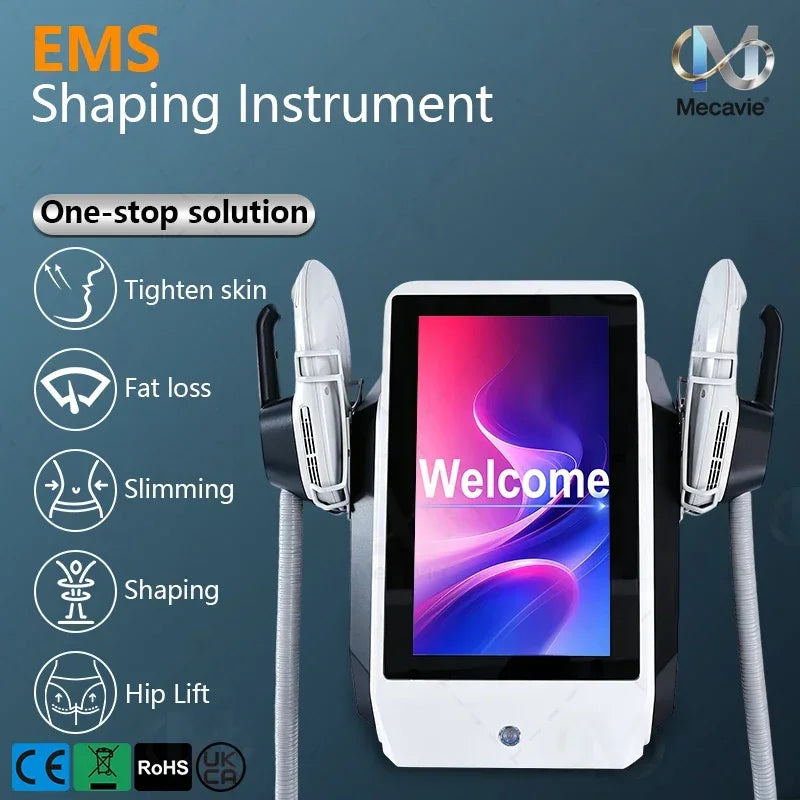
For buyers considering the Emsnova system, a practical next step is to review the Emsnova HIEMT body sculpting machine specifications and request confirmation of the technical documentation, certification details, warranty coverage, spare-parts service, and available training before purchase.
Which Professional HIEMT Muscle Stimulator Is Right for Your Practice?
Best Configuration for Single-Operator Clinics
Single-operator practices may benefit from a system that balances footprint, straightforward controls, essential treatment-area coverage, and dependable supplier support. Additional applicators are valuable only when they support the clinic's actual service volume.
Best Configuration for Higher-Volume Practices
Higher-volume practices should place greater emphasis on simultaneous treatment capacity, applicator flexibility, cooling performance, durable construction, operator workflow, and technical service response.
The goal is to minimize unnecessary interruptions while maintaining consistent treatment procedures across staff and appointments.
Best Configuration for Buyers Prioritizing Long-Term Value
Long-term value comes from balancing documented performance with serviceability. Consider technical specifications, intended use, certifications, warranty, spare-parts access, training, maintenance requirements, installation costs, and expected downtime together.
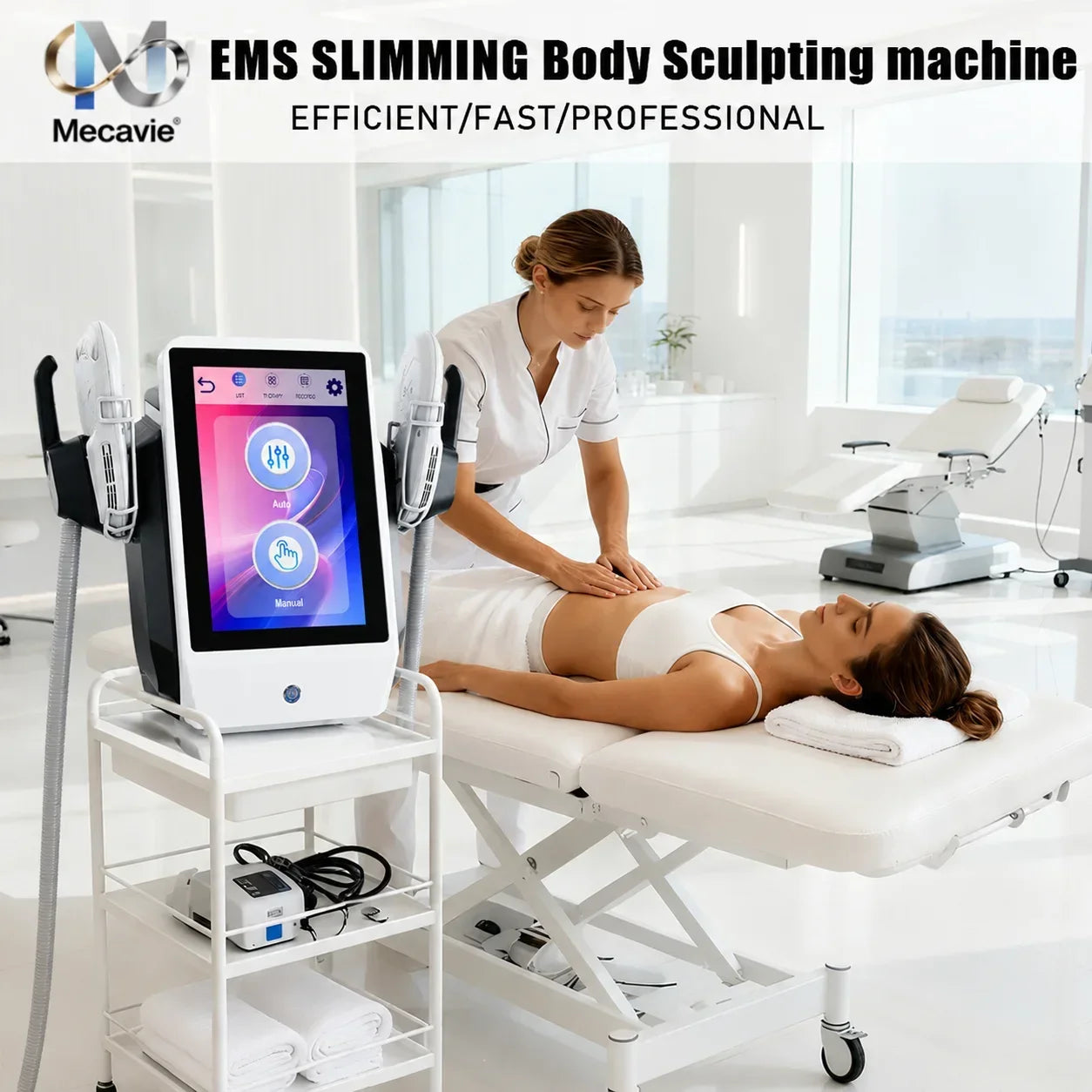
A system that combines multiple technologies can also be attractive when the additional capability is genuinely useful to the practice. For example, the Emsnova machine lists HIEMT + RF + EMS, manual and automatic operation, multiple handle options, CE and RoHS certification, a 2-year warranty, and 5-year spare-parts service. Those specifications should be verified against the buyer's specific service model rather than treated as universal advantages.
Practices building a broader aesthetics equipment offering can also explore body and face equipment guidance and related body-focused health devices when planning complementary services.
Final Buying Framework for a Professional HIEMT Muscle Stimulator
The best professional HIEMT muscle stimulator is not necessarily the machine with the biggest advertised output or lowest purchase price. A stronger buying decision comes from comparing verified specifications against the actual requirements of your practice.
- Verify the technology: Understand whether the system uses HIEMT, EMS, RF, or combined modalities.
- Verify output: Request meaningful technical documentation rather than relying on promotional intensity claims.
- Compare applicators: Match handle count and configuration to your expected treatment areas and appointment volume.
- Review parameters: Confirm available intensity, frequency, pulse, duration, automatic, and manual controls.
- Evaluate cooling: Determine whether thermal management supports the intended professional workload.
- Check installation: Confirm electrical, physical, ventilation, and room requirements before ordering.
- Verify compliance documentation: Match certifications, labeling, model numbers, and intended-use information to the exact device.
- Assess safety: Review contraindications, screening procedures, training requirements, and operator responsibilities.
- Calculate ownership cost: Include installation, training, maintenance, replacement parts, warranty, and downtime.
- Evaluate supplier support: Confirm technical assistance, spare-parts availability, warranty procedures, and post-sale training.
If the Emsnova configuration matches your practice's treatment goals and operating requirements, you can view the professional EMS body sculpting machine and use the product documentation as the starting point for a technical and purchasing discussion.
For professional buyers, the final decision should come down to verified specifications, appropriate treatment capabilities, safe operating procedures, reliable documentation, and dependable long-term support—not marketing power claims alone.
Pillar Article: Abdominal Muscle Stimulation Device: Benefits, Safety & Buying Guide













