

Professional vs Home EMS Machines: Which Is Right for You?
Professional vs home EMS machines come down to more than intensity or price. Professional systems are generally designed for practitioner-led treatments, greater parameter control, broader treatment workflows, and repeated client use, while home EMS devices prioritize convenience, portability, privacy, and personal use. Before comparing machines, it is important to understand that EMS, HIFEM, and HIEMT are not interchangeable terms. They use different stimulation approaches and can have different treatment goals, protocols, and regulatory considerations.
Professional vs Home EMS Machines: What's the Difference?
The main difference between professional and home EMS machines is the level of control, intended setting, and treatment workflow. Professional EMS or HIEMT systems are typically built around practitioner operation, adjustable treatment parameters, multiple treatment areas, and structured protocols. Home EMS devices are designed to be simpler to operate, easier to store, and convenient for individual users.
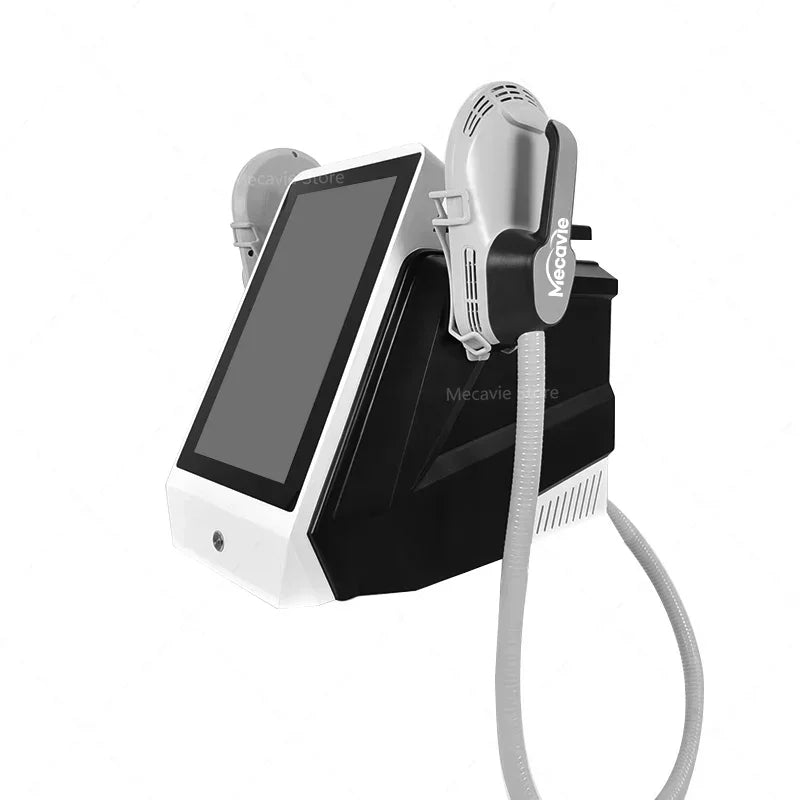
Professional EMS machines
Professional systems are intended for clinics, med spas, wellness businesses, aesthetic practitioners, or other qualified professional settings. Depending on the technology, they may provide broader applicator configurations, adjustable intensity, customizable treatment programs, and practitioner monitoring.
The professional advantage is not simply that the machine is “stronger.” It is that the system can support a more controlled treatment process. A practitioner can assess the intended treatment area, select an appropriate protocol, adjust settings according to the device instructions, and monitor the client's response.
Home EMS machines
Home EMS machines emphasize convenience and personal use. Their controls are generally simpler, and their treatment scope can be more limited than professional equipment. Portability and ease of use can make them attractive to people who want to incorporate muscle stimulation into an existing personal routine without visiting a clinic.
However, convenience does not mean that every home device is appropriate for every goal. Users should follow the manufacturer's instructions, use the device only for its intended purpose, and avoid assuming that a consumer EMS product provides the same technology or treatment capabilities as a professional HIEMT or HIFEM platform.
The key difference in one sentence
Professional equipment prioritizes treatment control and practitioner-led workflows, while home EMS prioritizes convenience, accessibility, and personal use.
EMS vs HIFEM vs HIEMT: Know Which Technology You're Comparing
One of the most important steps when comparing professional vs home EMS machines is identifying the actual stimulation technology. A product described broadly as an “EMS machine” may not operate in the same way as a high-intensity electromagnetic system.
What is Electrical Muscle Stimulation (EMS)?
Electrical Muscle Stimulation, or EMS, uses electrical stimulation delivered through electrodes to activate muscles and produce involuntary contractions. Conventional EMS devices can be used for muscle activation and stimulation, depending on the device's intended use and specifications.
Because EMS uses electrical stimulation through electrodes, it should not automatically be treated as equivalent to electromagnetic muscle stimulation. The device design, output, treatment area, and intended application all matter.
What is High-Intensity Electromagnetic Muscle Stimulation (HIFEM)?
High-Intensity Electromagnetic Muscle Stimulation, commonly abbreviated HIFEM, uses electromagnetic energy to induce involuntary muscle contractions. This makes it technically different from conventional electrode-based EMS.
HIFEM systems are commonly discussed in professional body-contouring contexts, but the appropriate way to evaluate a particular device is to examine its actual technology, intended use, treatment parameters, and regulatory documentation rather than relying only on terminology used in marketing.
What is HIEMT?
HIEMT is used to describe a high-intensity electromagnetic muscle-stimulation approach commonly marketed for body-contouring applications. Some professional machines combine HIEMT-style muscle stimulation with other technologies.
When evaluating a HIEMT body sculpting machine, look beyond the label. Compare the machine's stated technology, applicators, treatment controls, operating requirements, safety instructions, intended use, certification documentation, warranty, and supplier support.
Where does RF fit in?
Radiofrequency, or RF, is a separate energy modality. RF should not be described as EMS because it serves a different technological function. Some professional platforms combine muscle stimulation with RF to provide multiple treatment modalities within one system.
For example, the Emsnova EMS Body Sculpting Machine combines HIEMT, RF, and EMS technology in one professional platform. Its specifications identify 6500W power, manual and automatic operation, and CE and RoHS certification. These product specifications should be evaluated alongside the device's documentation and intended use rather than interpreted as guarantees of a particular clinical outcome.
Professional vs Home EMS: Side-by-Side Comparison
| Comparison factor | Professional EMS/HIEMT systems | Home EMS systems |
| Treatment capability | Designed for structured professional treatments and broader operational needs | Designed primarily for personal use |
| Parameter control | Often provides greater adjustment and protocol flexibility | Typically emphasizes simpler controls |
| Practitioner oversight | Yes, within the appropriate professional setting | Self-use |
| Treatment areas | May support multiple applicator configurations and areas | Often more limited by device design |
| Convenience | Requires professional setup and treatment workflow | High convenience for personal routines |
| Safety process | Can include consultation, screening, monitoring, and protocol management | Depends heavily on following manufacturer instructions |
| Maintenance | May involve servicing, training, accessories, and facility requirements | Generally simpler, depending on device |
| Cost structure | Higher equipment and operating investment | Lower initial investment in many cases |
| Commercial use | Suitable for businesses evaluating client treatments and utilization | Not intended as a clinic revenue-generating platform |
Which factors matter most for your use case?
A clinic buyer should prioritize treatment capability, parameter control, safety processes, versatility, device quality, service support, and total cost of ownership. A home user may place greater weight on convenience, portability, ease of operation, personal privacy, and initial price.
If you are evaluating professional equipment for a clinic or med spa, it can be useful to review the broader body care and health device collection alongside the specific machine specifications.
Intensity, Treatment Parameters, and Session Protocols
Intensity and stimulation control
Intensity is only one part of a treatment system. Professional machines may offer greater control over treatment parameters, applicator configurations, and program selection. Some systems provide automatic programs for simplified operation while also allowing trained professionals to customize settings.
Home devices generally prioritize straightforward operation. That can be an advantage for convenience, but it may also mean fewer options for customizing treatment parameters.
Session duration and treatment frequency
There is no single universal EMS treatment schedule that applies to every device. Session duration and frequency depend on the technology, treatment area, device design, treatment protocol, and individual tolerance.
For that reason, buyers should be cautious of claims suggesting that every EMS, HIFEM, or HIEMT machine should be used for exactly the same duration or frequency. The manufacturer's instructions and intended-use documentation should take priority.
Practitioner-led treatment protocols vs home routines
Professional treatment can incorporate assessment before use, selection of an appropriate treatment area, parameter adjustment, progression between sessions, and monitoring during the procedure. A home routine generally depends on the user applying the device according to its instructions without the same practitioner-led workflow.
Are Professional EMS Machines Stronger Than Home EMS Machines?
Not necessarily. Professional equipment can provide greater treatment control, broader applicator configurations, or higher operating capabilities, but “professional” does not automatically mean “stronger.” Output depends on the specific modality, device design, treatment area, applicator, and intended use.
Why professional systems can offer greater treatment control
Professional systems may provide adjustable intensity, multiple operating modes, different applicator configurations, and customizable treatment programs. These features can give qualified practitioners more control over how a treatment is delivered.
For example, the Emsnova system provides both automatic and manual operation, allowing simplified programs as well as customizable operation. Its product description identifies abdomen, buttocks, arms, and legs as common target areas.
Why higher intensity is not automatically better
The goal should be appropriate stimulation, not maximum intensity. Increasing intensity beyond an appropriate level can affect comfort and may not produce proportionally better outcomes. Treatment parameters should therefore be selected according to the device instructions and the user's tolerance and circumstances.
Results: What Can EMS, HIFEM, and HIEMT Realistically Do?
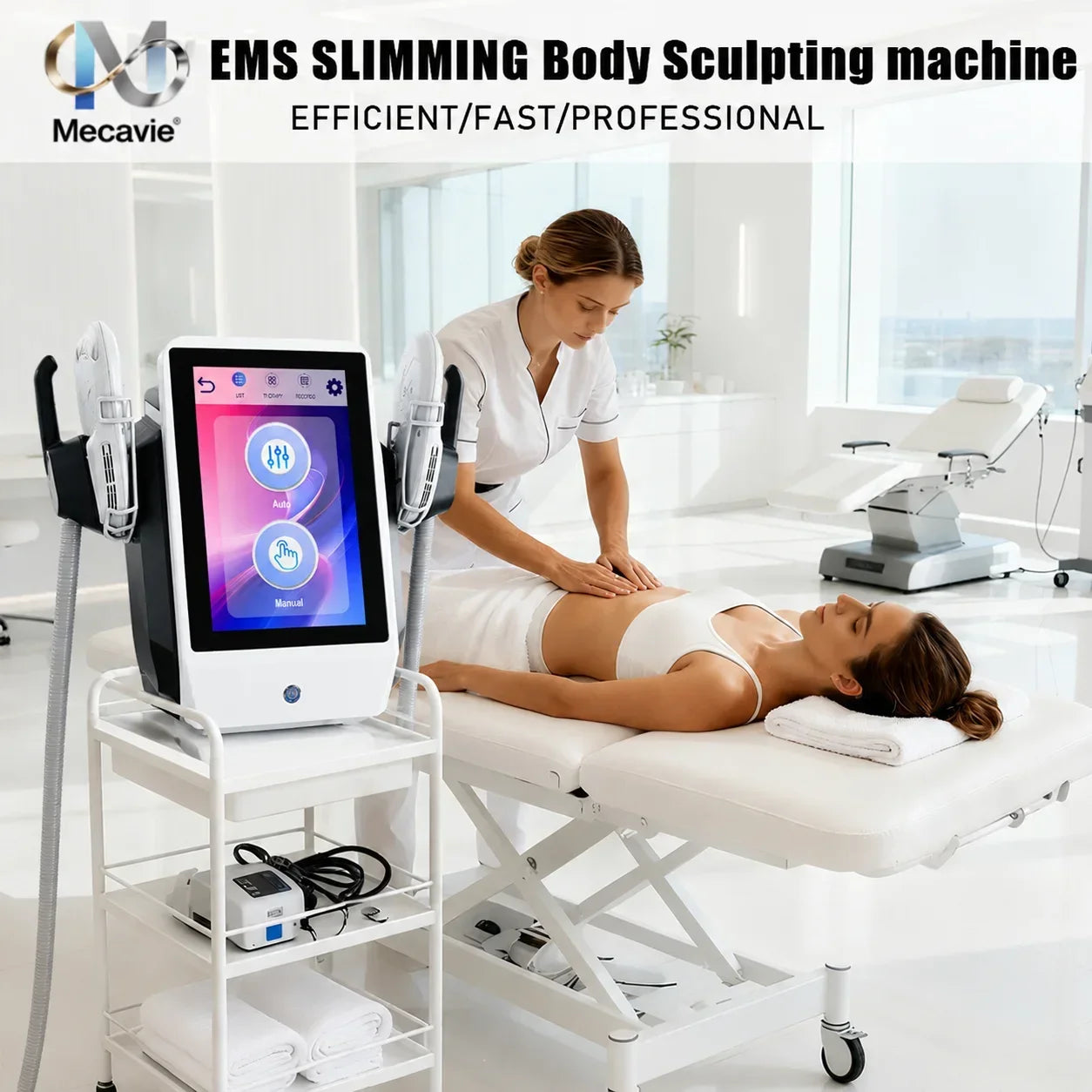
Muscle stimulation and muscle activation
Muscle-stimulation technologies are designed to produce involuntary muscle contractions. This targeted activation is different from voluntarily contracting a muscle during conventional exercise.
That distinction matters when evaluating results. An EMS or HIEMT device should not automatically be presented as a replacement for exercise, strength training, nutrition, or other elements of a comprehensive fitness and wellness routine.
Body contouring expectations
Body-contouring outcomes can vary according to technology, treatment protocol, treatment area, individual factors, and the specific intended use of the device. Marketing language can sometimes make results sound more predictable than they actually are.
Consumers and professional buyers should therefore focus on realistic expectations. Muscle stimulation may support muscle activation or body-contouring objectives depending on the technology, but no machine should be treated as a guarantee of fat loss, permanent reshaping, or a particular aesthetic result.
What professional treatment may offer that home use cannot
The professional advantage often lies in process rather than a guaranteed superior outcome. Professional treatment can provide more consistent protocols, practitioner monitoring, broader treatment configurations, and parameter customization. These advantages may be particularly relevant when treating multiple clients or multiple body areas.
How long do results take?
Results should generally be evaluated over an appropriate treatment course rather than assumed after one session. The timeline depends on the device, protocol, treatment area, individual factors, and the outcome being measured. Buyers should avoid products or providers that imply instant, permanent, or universally identical results.
Safety, Contraindications, and FDA Considerations
Professional safety screening and practitioner oversight
Professional treatment can include consultation, screening, treatment monitoring, and adherence to manufacturer protocols. This workflow is particularly useful when a client has questions about whether a specific device or treatment is appropriate for them.
Home-device safety considerations
Home users should read the complete device instructions before use. Correct placement, appropriate intensity progression, contact considerations, treatment duration, and authorized treatment areas all matter. A device should never be modified or used for purposes outside its stated instructions.
Common contraindications and when to seek professional guidance
Contraindications vary by technology and device. Anyone with a relevant medical concern, implanted electronic device, unexplained symptoms, or uncertainty about whether muscle stimulation is appropriate should consult a qualified healthcare or aesthetic professional and review the exact manufacturer's safety information before treatment.
FDA clearance, approval, registration, and marketing claims
“FDA approved” is not a generic quality label that can safely be applied to every aesthetic device. Buyers should verify the exact device's regulatory status and authorized intended use. Registration, clearance, approval, and establishment information can have different meanings, so vague regulatory language should not replace verification of the actual product documentation.
Device certification and quality signals
Professional buyers should examine manufacturer documentation, electrical safety information, labeling, certification records, warranty terms, training availability, service arrangements, and product traceability. CE and RoHS markings, for example, can be relevant quality and compliance signals, but they should be considered alongside the complete documentation applicable to the market where the device will be used.
How Much Do Professional and Home EMS Machines Cost?
Home EMS cost factors
The purchase price is only one part of the cost. Home buyers should consider accessories, replacement electrodes where applicable, warranty coverage, expected usable life, and whether the device can realistically meet their intended needs.
Professional EMS machine cost factors
Professional equipment can involve the initial machine purchase plus shipping, installation, staff training, maintenance, servicing, accessories, facility requirements, and ongoing operational expenses. A professional buyer should calculate these costs before deciding whether an equipment investment makes financial sense.
Total cost of ownership
A lower purchase price does not necessarily mean a lower long-term cost. Reliability, warranty coverage, service availability, spare parts, downtime, accessories, and training can all affect total ownership cost.
Revenue potential for clinics and med spas
For a commercial operator, revenue potential depends on treatment pricing, equipment utilization, appointment capacity, repeat sessions, operating expenses, maintenance, and local demand. Equipment should not be purchased on the assumption that profitability is guaranteed.
Treatment Areas and Versatility

Home EMS treatment areas
Home devices can be useful when a consumer wants stimulation for a specific area supported by the device. However, treatment-area flexibility depends on the applicator and product design. Buyers should verify which areas are explicitly supported instead of assuming that an EMS device can safely be used anywhere on the body.
Professional treatment-area flexibility
Professional platforms may support multiple treatment configurations and applicators. This can be valuable for clinics and med spas that need to accommodate different clients, body areas, or treatment protocols.
When a combined EMS/HIFEM + RF platform makes sense
A combined platform can make operational sense for a professional business that wants multiple modalities in one machine. The Emsnova EMS Body Sculpting Machine combines HIEMT, RF, and EMS, with the product description identifying abdomen, buttocks, arms, and legs as common treatment areas.
However, the technologies should still be evaluated separately. Muscle stimulation and RF-based tissue heating are different modalities, and combining them in one platform does not mean they produce identical effects.
Who Should Choose a Professional EMS Machine?
Choose professional equipment if you need
- Practitioner-led treatment workflows.
- Greater control over treatment parameters.
- Multiple treatment areas or applicator configurations.
- Repeat client treatments.
- Documented treatment protocols.
- Professional training and supplier support.
- Equipment intended for commercial operation.
- The ability to evaluate potential utilization and revenue generation.
Professional buyer checklist
- Verify the exact technology, including whether it is EMS, HIFEM, HIEMT, RF, or a combination.
- Review intended-use and regulatory documentation.
- Compare output specifications and available treatment parameters.
- Check applicator configuration and supported treatment areas.
- Confirm training requirements and supplier support.
- Review warranty and spare-parts policies.
- Estimate maintenance and operating costs.
- Evaluate total cost of ownership rather than purchase price alone.
For buyers evaluating a professional platform, the Emsnova EMS Body Sculpting Machine is one example of a professional HIEMT + RF + EMS configuration. The listed specifications include manual and automatic operation, 6500W power, and a 2-year warranty with 5-year spare-parts service.
Before purchasing, compare those specifications with your intended treatment workflow and verify the documentation applicable to your market and use case.
Who Should Choose a Home EMS Machine?
Choose home EMS if you prioritize
- Convenience and personal scheduling.
- Privacy during use.
- A lower initial equipment investment.
- Portability or easier storage.
- Simple personal-use controls.
- Incorporating stimulation into an existing wellness routine.
When home EMS may not be the right choice
Home EMS may not be appropriate when the user's expectations exceed the device's intended purpose, when professional assessment is needed, or when the desired treatment requires professional protocols or equipment capabilities that a consumer device does not provide.
If you are exploring other personal wellness equipment, you can also review relevant options in the Lifestyle collection rather than assuming one EMS category fits every personal-use goal.
What Are the Best HIEMT Alternatives for Body Contouring?
EMS-based body-contouring approaches
Conventional EMS can be considered when the objective involves electrical muscle stimulation, but it should not automatically be treated as equivalent to HIFEM or HIEMT. The stimulation mechanism and treatment capabilities can differ substantially between devices.
HIFEM-based systems
HIFEM represents a distinct category of electromagnetic muscle stimulation. Buyers considering a HIFEM alternative should evaluate the exact device, intended use, treatment parameters, applicator configuration, safety information, and regulatory documentation.
EMS + RF systems
Combination platforms can appeal to professional operators who want more than one modality in a single system. An EMS + RF machine should still be assessed according to the separate functions of each technology rather than treating the combination as one uniform treatment mechanism.
How to compare alternatives
When comparing HIEMT machine alternatives for contouring, use a consistent framework: energy modality, regulatory indication, treatment parameters, applicators, safety controls, evidence, service support, warranty, maintenance, and total cost. Avoid choosing a device solely because its marketing label sounds more advanced.
Professional or Home EMS? A Simple Decision Framework
Choose professional if...
- You operate or plan to operate a clinic, med spa, wellness business, or professional aesthetic setting.
- You need practitioner oversight and structured treatment protocols.
- You want greater control over treatment parameters.
- You expect repeated client treatments.
- You need broader treatment-area flexibility.
- You are prepared to manage training, maintenance, service, and operating costs.
Choose home if...
- You want convenience for personal use.
- You prefer private, at-home routines.
- You value portability and simple operation.
- You want a lower initial investment than professional equipment.
- Your expectations match the device's specific intended use and capabilities.
Choose neither until you verify...
- The actual stimulation technology.
- The exact intended use.
- Regulatory status and applicable documentation.
- Safety instructions and contraindications.
- Supported treatment areas.
- Available treatment parameters.
- Expected outcomes and limitations.
- Warranty, service, and supplier support.
- Total cost of ownership.
If you are comparing body-focused devices more broadly, the Body & Face Blog can provide additional context when evaluating equipment for body-care routines.
Pros and Cons: Professional vs Home EMS Machines
Professional EMS: Pros
- Greater treatment and parameter control.
- Practitioner oversight.
- Potentially broader treatment-area versatility.
- Designed for repeat professional workflows.
- Can combine multiple technologies on some platforms.
- Suitable for businesses evaluating commercial utilization.
Professional EMS: Cons
- Higher upfront investment.
- Training and operational requirements.
- Maintenance and service considerations.
- Requires an appropriate professional setting.
- Profitability is not guaranteed.
Home EMS: Pros
- Convenient personal use.
- Greater privacy.
- Portable and generally easier to store.
- Lower initial investment in many cases.
- Simple integration into personal routines.
Home EMS: Cons
- Typically less parameter flexibility.
- Potentially narrower treatment scope.
- No practitioner-led screening or monitoring.
- Not automatically equivalent to professional HIFEM or HIEMT equipment.
Professional vs Home EMS Machines: Final Verdict
The better choice depends on what you actually need. Professional EMS, HIFEM, or HIEMT equipment is generally better suited to practitioner-led treatments, greater parameter control, multiple treatment areas, structured protocols, and commercial operation. Home EMS is usually the more practical option when convenience, privacy, portability, and personal use matter most.
The most important buying decision is not simply choosing the machine with the highest advertised intensity. Compare the underlying technology, intended use, treatment parameters, safety requirements, regulatory documentation, treatment-area versatility, warranty, supplier support, and total cost of ownership.
For qualified professional buyers, the Emsnova professional EMS body sculpting machine provides an example of a HIEMT + RF + EMS platform with manual and automatic operation. Review its specifications alongside your treatment requirements rather than assuming that any single platform is universally best.
Whether you choose professional or home EMS, realistic expectations matter. Muscle stimulation can support targeted muscle activation and, depending on the technology and intended use, body-contouring objectives, but it should not be presented as a guaranteed substitute for exercise or as a promise of permanent body transformation.
Before making a purchase, verify the exact device documentation, safety instructions, intended use, applicable regulatory status, warranty, service support, and treatment protocol. That comparison will give you a much more reliable basis for deciding between professional vs home EMS machines.
Pillar Article: Abdominal Muscle Stimulation Device: Benefits, Safety & Buying Guide













