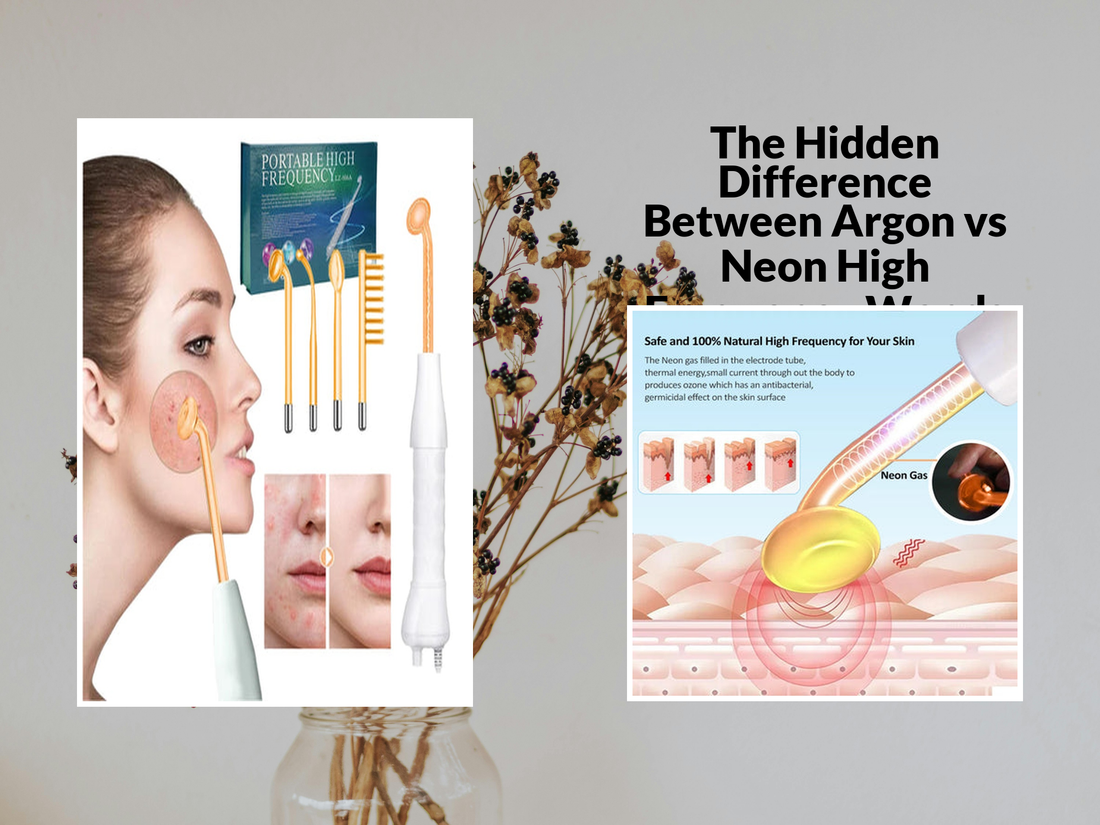
The Hidden Difference Between Argon vs Neon High Frequency Wands
Argon skin care isn’t just hype—it’s a powerful tool used in professional facials to target acne, inflammation, and skin recovery. But many people don’t realize that high frequency wands come in two main types: argon and neon. Each gas produces a different glow and serves a different skin goal. Understanding the difference can help you choose the right electrotherapy treatment for clearer skin, improved circulation, or anti-aging benefits.
⏱ 7 min read

💡 Argon skin care wand in action — fight breakouts fast with high frequency argon gas benefits
Neon vs Argon High Frequency: What’s the Actual Difference?
Quick Answer: Neon vs Argon in 30 Seconds
The main difference between neon and argon high frequency electrodes is the gas inside the glass electrode. Neon gas produces an orange glow and is commonly used to stimulate circulation and improve skin vitality. Argon gas produces a violet or purple glow and is typically used to target acne-causing bacteria and reduce breakouts.
Both electrode types use the same high frequency electrical technology, but the gas determines the color of the glow and the primary skin concern the treatment targets.
- Neon electrodes: orange glow, used for anti-aging, circulation, and skin rejuvenation
- Argon electrodes: violet glow, used for acne treatment and bacteria reduction
Why High Frequency Electrodes Glow Different Colors
The glow produced during a high frequency treatment comes from the gas sealed inside the glass electrode. When electrical current passes through the electrode, it excites the gas molecules inside.
Different gases produce different colors when energized:
- Neon gas creates a warm orange or reddish glow
- Argon gas creates a violet or purple glow
This glow is not just cosmetic—it reflects the type of gas used in the electrode and the way the treatment interacts with the skin.
How High Frequency Electrodes Work (Simple Science)
How Neon and Argon Gas Create Electrical Energy
High frequency facial wands use a mild electrical current that passes through a glass electrode filled with inert gas such as neon or argon. When the current flows through the electrode, it energizes the gas molecules, creating the visible glow and delivering electrical stimulation to the skin.
This stimulation can help increase blood circulation, oxygenate the skin, and support natural skin renewal processes. Many modern skin and beauty care devices use similar low-level electrical technologies to stimulate the skin without invasive procedures.
Why High Frequency Wands Produce Ozone
One of the most important effects of high frequency treatments is the creation of a small amount of ozone when the electrode contacts the skin. Ozone is a naturally occurring form of oxygen that has antibacterial properties.
This is why high frequency wands—especially argon electrodes—are commonly used for acne treatments. The ozone helps reduce acne-causing bacteria on the skin while the electrical stimulation promotes healing.
Neon vs Argon High Frequency Wand Comparison
Side-by-Side Comparison Chart
- Gas inside electrode: Neon vs Argon
- Glow color: Neon (orange/red), Argon (violet/purple)
- Primary purpose: Neon (circulation and skin rejuvenation), Argon (acne treatment)
- Best for: Neon (aging, dull skin), Argon (breakouts and oily skin)
- Antibacterial effect: Argon is typically stronger for acne-focused treatments
- Skin stimulation: Both improve circulation and skin oxygenation
Although both electrodes use the same high frequency technology, the gas type makes each one better suited for different skincare goals.
Argon vs Neon High Frequency: Which Skin Concerns Do They Treat?
Argon High Frequency for Acne and Breakouts
Argon electrodes are most commonly recommended for acne-prone skin. The violet glow produced by argon gas is associated with stronger antibacterial effects during treatment.
Estheticians frequently use argon electrodes for:
- Active acne breakouts
- Inflamed pimples
- Congested pores
- Oily skin
The ozone produced during the treatment helps reduce acne-causing bacteria while the electrical stimulation supports faster healing.

💡 High frequency argon gas benefits: precision acne clearing meets gentle electrotherapy
Neon High Frequency for Anti-Aging and Circulation
Neon electrodes are typically used for overall skin rejuvenation. The orange glow indicates neon gas, which is commonly associated with circulation-boosting and skin revitalizing treatments.
Neon high frequency treatments are often used for:
- Fine lines and wrinkles
- Dull or tired-looking skin
- Poor circulation
- General skin rejuvenation
By stimulating blood flow and oxygen delivery to the skin, neon electrodes can help improve skin tone and promote a healthier appearance.
Neon vs Argon for Acne: Which One Works Better?
Why Argon Targets Acne-Causing Bacteria
Argon high frequency electrodes are generally considered the better choice for acne treatments. The violet glow produced by argon gas is commonly associated with stronger antibacterial effects during high frequency therapy.
During treatment, the electrode produces ozone when it contacts the skin. Ozone helps reduce acne-causing bacteria while the electrical stimulation improves circulation and supports healing.
When Neon May Still Help Acne
Although argon is typically preferred for active breakouts, neon electrodes can still provide benefits for acne-prone skin. Neon treatments can improve circulation and help reduce inflammation, which may support the skin’s recovery process.
For this reason, some professionals use both electrode types during different stages of acne treatment.
When Should You Use Argon vs Neon?
Best Choice for Acne-Prone Skin
If your main concern is acne or frequent breakouts, argon high frequency electrodes are usually the better option. Their antibacterial properties make them well suited for targeting pimples and reducing bacteria on the skin.
Best Choice for Aging or Dull Skin
For anti-aging treatments or improving skin vitality, neon electrodes are typically recommended. They help stimulate circulation and may improve overall skin tone and brightness.
Best Choice for Sensitive Skin
People with sensitive skin may benefit from starting with neon electrodes because the treatment is often used for gentle circulation stimulation rather than acne-focused antibacterial treatments.
Do High Frequency Facial Wands Really Work?
Yes, high frequency facial wands can be effective when used correctly. They stimulate circulation, help oxygenate the skin, and reduce surface bacteria through mild electrical stimulation.
These devices have long been used in professional facial treatments and are now widely available for home skincare routines. When used consistently, they can support clearer skin, improved tone, and enhanced skincare absorption.
Paired with the right skincare routine, a high frequency wand can:
- ✔ Enhance product absorption
- ✔ Boost lymphatic drainage
- ✔ Reduce active breakouts and inflammation
- ✔ Support collagen production over time
Evidence Behind High Frequency Skin Treatments
High frequency facial treatments have been used in professional esthetician practices for decades. The technology is commonly used to support skin healing, improve circulation, and reduce acne-causing bacteria through ozone production.
While results vary depending on skin type and treatment consistency, many skincare professionals incorporate high frequency therapy as part of acne treatments and skin rejuvenation facials.

💡 Argon gas benefits for skin: fast breakout recovery, gentler treatments
FAQ: Neon vs Argon High Frequency Wands
What is the difference between neon and argon high frequency?
The main difference is the gas inside the electrode. Neon gas produces an orange glow and is typically used for circulation and skin rejuvenation, while argon gas produces a violet glow and is commonly used for acne treatments.
Is neon or argon better for acne?
Argon high frequency electrodes are generally considered better for acne because they are commonly used for their antibacterial effects during high frequency treatments.
Do professional estheticians use argon or neon?
Many professionals use both. Argon electrodes are often used for acne-focused treatments, while neon electrodes are used for skin rejuvenation and circulation.
Do high frequency wands come with both gases?
Many high frequency devices include multiple electrodes filled with different gases, allowing users to switch between argon and neon depending on the treatment goal.
Can you switch electrodes on the same device?
Yes. Most high frequency facial wands allow interchangeable electrodes, so users can switch between neon and argon tips for different skincare concerns.
Pillar Article: Is the High Frequency Wand Safe? 7 Things You Need to Know
Other Related Articles:
- Can You Use a High Frequency Wand Every Day? Here’s What Experts Say
- Electrotherapy or Facial Wand? What Actually Works Better
- High Frequency Wand Results: What Real Users Are Saying
- Top 5 High Frequency Wands Compared: Which One Fits Your Skin Goals?
Explore More: