
UV LED Eyelash Glue Curing Light: How to Choose the Right Lash Adhesive Curing System
Slow eyelash adhesive curing, inconsistent bonding, and difficulties maintaining an efficient application workflow can make professional lash extension appointments more challenging. For lash artists, choosing the right adhesive curing method is about more than simply finding a light that switches on. Adhesive compatibility, light output, application technique, working distance, and appropriate safety precautions all influence whether a curing system is suitable for a particular lash service.
A UV LED eyelash glue curing light is designed to support lash extension applications by using UV LED technology alongside compatible eyelash adhesive formulations. Compared with conventional air-curing workflows, a compatible UV curing system offers a different approach to managing adhesive polymerization. However, not every UV light works with every lash adhesive, and specifications must be verified before use.
This guide compares UV LED lash curing systems with conventional eyelash adhesive application methods, explains important technical specifications, examines common application problems, and helps professional lash technicians evaluate products such as the Professional UV LED Eyelash Glue Curing Light Kit.
What Is a UV LED Eyelash Glue Curing Light and How Does It Work?
A UV LED eyelash glue curing light is a specialized beauty tool designed to support the curing of compatible eyelash extension adhesives. Instead of relying exclusively on environmental conditions for adhesive curing, the system uses light exposure to activate a suitable adhesive formulation.
UV-curable adhesives typically contain photoinitiators. When exposed to an appropriate wavelength of light, these compounds initiate chemical reactions that cause adhesive components to polymerize and form a solid bond.
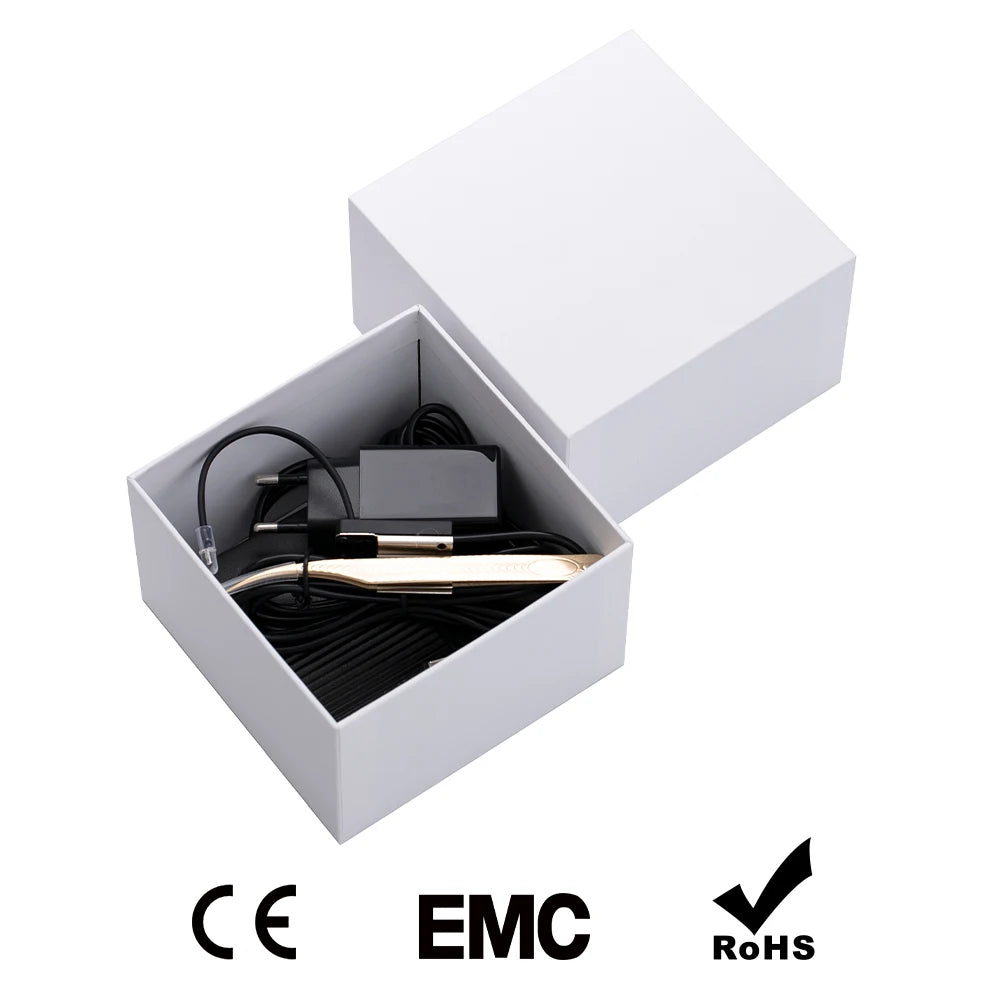
How UV Light Activates Eyelash Adhesive
In compatible UV-curable lash adhesives, light activates the photoinitiator system, initiating polymerization. This process changes the adhesive from its uncured state into a bonded material.
The actual curing response depends on several factors:
- Wavelength compatibility: The adhesive must respond to the wavelength emitted by the curing light.
- Light intensity: Sufficient irradiance must reach the adhesive during exposure.
- Exposure duration: The adhesive requires an appropriate light dose to cure according to its formulation.
- Application position: The light must reach the intended adhesive area.
- Adhesive formulation: Different products may have different photoinitiators and curing requirements.
UV exposure alone does not guarantee complete curing. Lash technicians should always follow the adhesive manufacturer's instructions rather than assuming that every adhesive will respond to the same curing light.
UV Lash Curing Versus Conventional Adhesive Drying
Traditional eyelash extension adhesives commonly depend on moisture-related curing reactions. Environmental humidity and temperature can influence their behavior, making application conditions important for professional results.
Compatible UV lash adhesives use light-activated chemistry instead. This changes the way technicians manage the adhesive application process.
- Conventional adhesive: Curing behavior is influenced by environmental conditions and the adhesive's moisture-related chemistry.
- UV-compatible adhesive: Curing depends on the formulation's response to the specified light wavelength and exposure conditions.
Neither method is universally better. The appropriate choice depends on the technician's experience, adhesive formulation, working environment, application requirements, and safety considerations.
Which Specifications Determine Lash Curing Performance?
Before purchasing a UV eyelash curing light, evaluate the technical information available from the equipment and adhesive manufacturers.
- Emitted wavelength and spectral output
- UV irradiance at the actual working distance
- Recommended exposure duration
- Light coverage and beam consistency
- Operating distance and positioning
- Adhesive compatibility
- Protective shielding and safety documentation
These specifications are particularly important because a product's advertised power rating does not independently establish its curing performance.
UV LED vs. Traditional Eyelash Adhesive Application: Which Should You Choose?
One of the most important purchasing decisions for lash artists is whether to continue using conventional adhesive application methods or introduce a compatible UV LED curing system.
The two approaches have different operating requirements. Understanding these differences helps technicians select equipment that fits their services rather than purchasing a tool based only on marketing claims.
UV LED Lash Curing Systems
UV LED lash curing systems are designed to work with compatible light-activated eyelash adhesives. They can support a more controlled application workflow when the adhesive and equipment specifications are correctly matched.
Potential advantages include:
- Light-activated curing for compatible lash adhesives.
- A dedicated approach to managing adhesive curing during extension application.
- Integration with professional lash placement tools.
- Potentially more consistent workflow management when exposure parameters are properly controlled.
Limitations: UV systems require compatible adhesives, suitable exposure conditions, and appropriate eye and skin protection. They should not be assumed to work with conventional lash glue.
Traditional Eyelash Adhesive Application
Conventional lash adhesive application remains an established method among extension professionals. These adhesives are generally selected according to their formulation, drying behavior, environmental requirements, and compatibility with the technician's application technique.
Potential advantages include:
- Availability of different adhesive formulations for professional lash services.
- No dedicated UV curing equipment required for conventional moisture-curing products.
- Established application workflows familiar to many lash technicians.
Limitations: Environmental conditions can influence curing behavior. Technicians must manage humidity, temperature, adhesive quantity, and placement technique to support consistent results.
UV LED vs. Conventional Lash Adhesive Comparison
| Comparison factor | UV LED lash system | Conventional lash adhesive |
| Curing mechanism | Light-activated adhesive chemistry | Typically moisture-related curing chemistry |
| Adhesive requirements | UV-compatible formulation | Formulation designed for conventional application |
| Equipment | Compatible UV LED curing light | No dedicated UV curing light |
| Environmental influence | Adhesive-specific conditions still matter | Humidity and temperature can influence curing |
| Exposure control | Requires manufacturer-approved light exposure | Requires management of application conditions |
| Safety considerations | UV exposure and eye protection are important | Adhesive ingredient exposure and ventilation are important |
| Best suited for | Technicians using compatible UV lash adhesives | Technicians using conventional lash adhesives |
For professionals considering a dedicated UV setup, compare adhesive requirements, equipment specifications, maintenance, and operating conditions before changing application methods.
365nm vs. 385nm vs. 395nm vs. 405nm: Understanding UV LED Wavelengths
Wavelength is one of the most important technical considerations when selecting a UV adhesive curing light. Different photoinitiator systems respond to different portions of the UV and violet spectrum.
Although 365nm, 385nm, 395nm, and 405nm LED systems are commonly discussed in UV curing applications, these wavelengths should not be treated as interchangeable.
365nm UV LED
A 365nm source operates in the UVA range. Certain UV-curable adhesive formulations are designed to respond to this wavelength region.
However, suitability depends on the adhesive's photoinitiator chemistry, spectral response, and the amount of light reaching the bonding area.
385nm UV LED
A 385nm UV LED operates at a longer wavelength than a 365nm source. It may be appropriate for adhesive formulations specifically designed to respond to this spectral region.
Its suitability for eyelash extensions must be established through the lash adhesive manufacturer's compatibility documentation.
395nm UV LED
A 395nm LED is close to the visible violet region. Some UV-curable formulations may respond to this wavelength, but visible brightness should not be confused with effective adhesive curing.
A light that appears brighter or more violet is not necessarily more effective for a particular adhesive.
405nm Violet LED
At 405nm, light is near the boundary between ultraviolet and visible violet light. Some photoinitiator formulations are designed for this region, but a 405nm source cannot automatically replace a shorter-wavelength UV system.
UV Adhesive Wavelength Compatibility Matrix
| Wavelength | Spectral region | Potential compatibility | Important consideration |
| 365nm | UVA | Selected UV-curable formulations | Verify photoinitiator response and substrate transmission. |
| 385nm | UVA | Selected near-UV formulations | Check the adhesive's specified activation range. |
| 395nm | Near-UV/violet boundary region | Selected longer-wavelength formulations | Visible brightness does not establish curing performance. |
| 405nm | Near-visible violet | Selected violet-responsive formulations | Confirm compatibility rather than assuming interchangeability. |
Important product specification limitation: The available product description for the Professional UV LED Eyelash Glue Curing Light Kit identifies UV LED technology but does not specify its exact wavelength, spectral bandwidth, irradiance, or exposure time. It is therefore not possible to assign this particular kit to the 365nm, 385nm, 395nm, or 405nm categories without additional manufacturer documentation.
If you are comparing UV lash equipment, first identify your adhesive's specified activation wavelength. Then compare that requirement against the curing light's documented output. You can also review the UV LED eyelash glue curing light kit and confirm the technical specifications with the seller before purchasing.
UV Irradiance vs. Curing Dose: What Determines Adhesive Curing Time?
Wavelength compatibility is only part of the selection process. Irradiance and curing dose also determine how much usable optical energy reaches an adhesive during exposure.
What Does UV Irradiance Mean?
UV irradiance describes the optical power reaching a particular surface area. It is commonly expressed in milliwatts per square centimeter (mW/cm²).
For example, a light source may advertise a particular output, but the irradiance reaching the adhesive can differ depending on working distance, beam distribution, and equipment design.
For meaningful comparisons, look for irradiance measurements taken at the actual recommended operating distance.
What Is UV Curing Dose?
UV curing dose describes the total radiant energy delivered per unit area during exposure. It is commonly expressed in millijoules per square centimeter (mJ/cm²).
When irradiance remains approximately constant, the calculation is:
Curing dose (mJ/cm²) = Irradiance (mW/cm²) × Exposure time (seconds)
Practical UV Curing Dose Calculation
Consider an illustrative UV source delivering 100 mW/cm² at the adhesive surface for five seconds.
100 mW/cm² × 5 seconds = 500 mJ/cm².
The resulting nominal dose is 500 mJ/cm². This is an example of the calculation, not a recommended exposure setting for eyelash adhesive. Actual curing requirements must come from the adhesive manufacturer.
Why Higher Wattage Does Not Always Mean Faster Curing
Electrical power and effective curing performance are different measurements. A higher wattage rating does not necessarily mean more wavelength-matched optical energy reaches the adhesive.
Several factors influence actual performance:
- Wavelength compatibility with the photoinitiator.
- Measured irradiance at the adhesive surface.
- Working distance between the light and application area.
- Beam uniformity across the illuminated area.
- Exposure duration and adhesive formulation.
For lash technicians, choosing equipment based on verified compatibility and manufacturer-approved exposure parameters is more meaningful than selecting the brightest or highest-wattage product.
Best UV LED Eyelash Glue Curing Light Specifications: What to Compare Before Buying
Professional lash equipment should be evaluated according to its intended application and documented technical characteristics. A product listing may describe a curing light as professional-grade or rapid-curing, but these descriptions do not replace measurable specifications.
UV LED Lash Curing Equipment Comparison
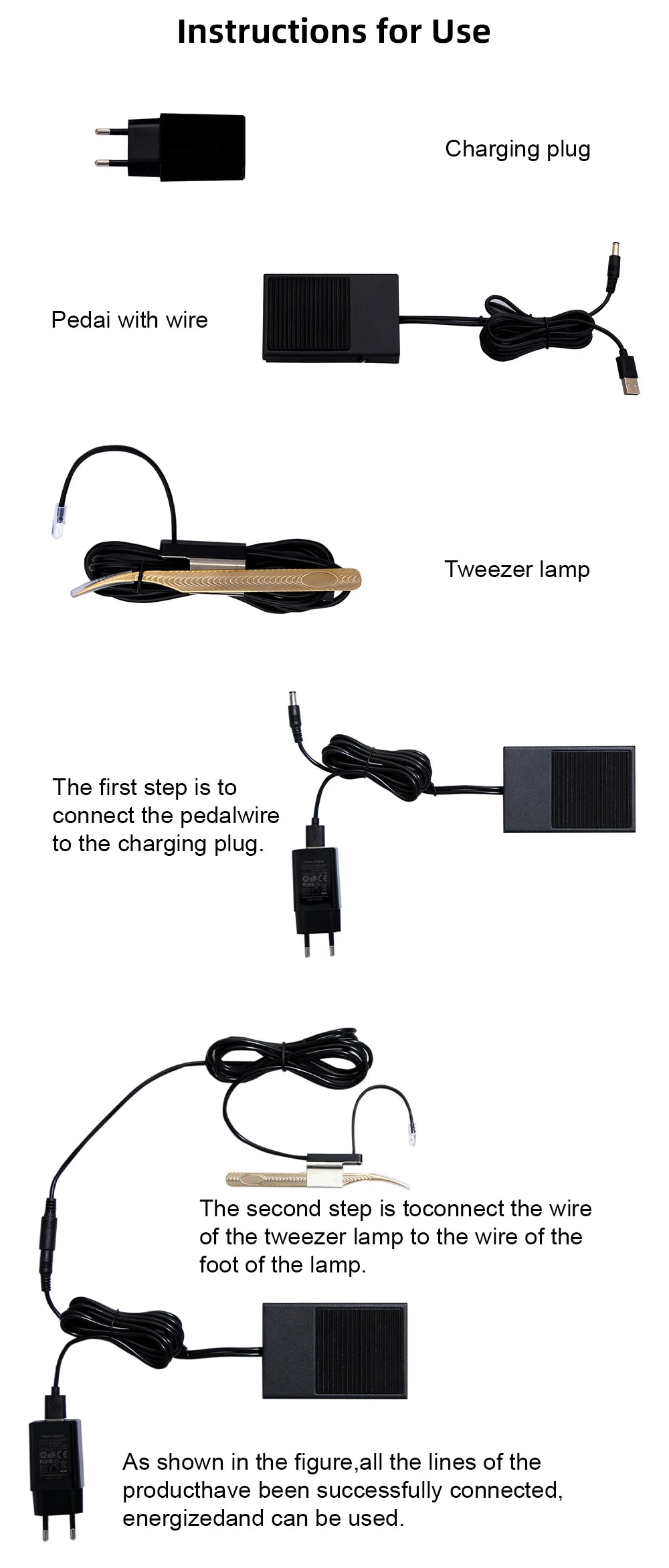
The following comparison separates general equipment categories from the specifications currently documented for the featured Pinky Leem TL02 kit.
| Comparison factor | Pinky Leem TL02 kit | What buyers should verify |
| Technology | UV LED | Exact spectral output |
| Wavelength | Not specified | Peak wavelength and spectral bandwidth |
| Irradiance | Not specified | Measured mW/cm² at working distance |
| Curing area | Not specified | Illuminated area and beam consistency |
| Working distance | Not specified | Manufacturer-recommended distance |
| Power source | Not specified | Power supply and operating requirements |
| Exposure control | Not specified | Timer, output adjustment, and operating controls |
| Included tools | Precision tweezers identified in product title | Included accessories and intended use |
| Material | Plastic | Construction and handling requirements |
| Listed weight | 0.5 kg | Confirm packaged or product weight with seller |
Wavelength and Spectral Bandwidth
Peak wavelength identifies the wavelength at which a light source produces its strongest output. Spectral bandwidth describes the range of wavelengths emitted around that peak.
Both matter when matching a light source with an adhesive. A product advertised with a nominal wavelength may still require further verification to establish its actual spectral distribution.
Irradiance and Beam Uniformity
Consistent light delivery matters in professional applications. A beam with uneven output may expose different parts of the intended application area to different energy levels.
Look for documented irradiance measurements, measurement distance, and information about the illuminated area. If these details are unavailable, request them before relying on the equipment for a professional workflow.
Working Distance and Exposure Control
Working distance determines the position of the light relative to the adhesive application area. Exposure control determines how the light is operated during curing.
Check whether the equipment provides manufacturer-defined positioning instructions, exposure settings, and suitable protective features. Avoid improvising exposure times or positioning close to the eye.
Power Source and Equipment Construction
The Pinky Leem TL02 listing identifies plastic construction and a listed product weight of 0.5 kg. The description does not establish whether the system is rechargeable, battery-powered, or mains-powered.
Before ordering, verify power requirements, operating instructions, maintenance needs, and available replacement components.
Manufacturer Datasheet Verification Checklist
Before buying a UV lash curing light, request confirmation of:
- Exact wavelength and spectral bandwidth.
- Measured irradiance at the intended working distance.
- Compatible eyelash adhesive formulations.
- Manufacturer-approved exposure conditions.
- Light coverage and positioning instructions.
- Eye and skin protection requirements.
- Power source and operating specifications.
- Product warranty and technical support.
These details help distinguish a documented professional curing system from a product supported primarily by general marketing descriptions.
How to Choose a UV Adhesive Curing Light for Different Lash Applications
Not every lash service has identical requirements. Classic extensions, volume applications, and detailed lash placement all involve different handling considerations. Technicians should consider the adhesive, placement precision, working environment, and equipment design together.
Classic Eyelash Extensions
Classic lash extensions involve attaching an individual extension to an isolated natural lash. Precision placement is important because the adhesive bond must be positioned correctly without creating unwanted contact between neighboring lashes.
A UV LED kit that combines a curing light with precision tweezers may be useful for technicians who want to organize their application equipment into one setup. Adhesive compatibility and documented safety requirements remain essential.
Volume Lash Extensions
Volume applications involve attaching lightweight extension fans to natural lashes. Technicians need controlled tweezer handling and consistent isolation to avoid unwanted lash bonding.
When evaluating UV equipment for volume services, consider whether the light's documented coverage and operating instructions suit the working area. Do not assume that a curing light eliminates the need for correct isolation.
Detailed Lash Placement and Precision Work
Precision is important when working around the delicate eye area. The tweezer design, handling comfort, and technician positioning all contribute to application control.
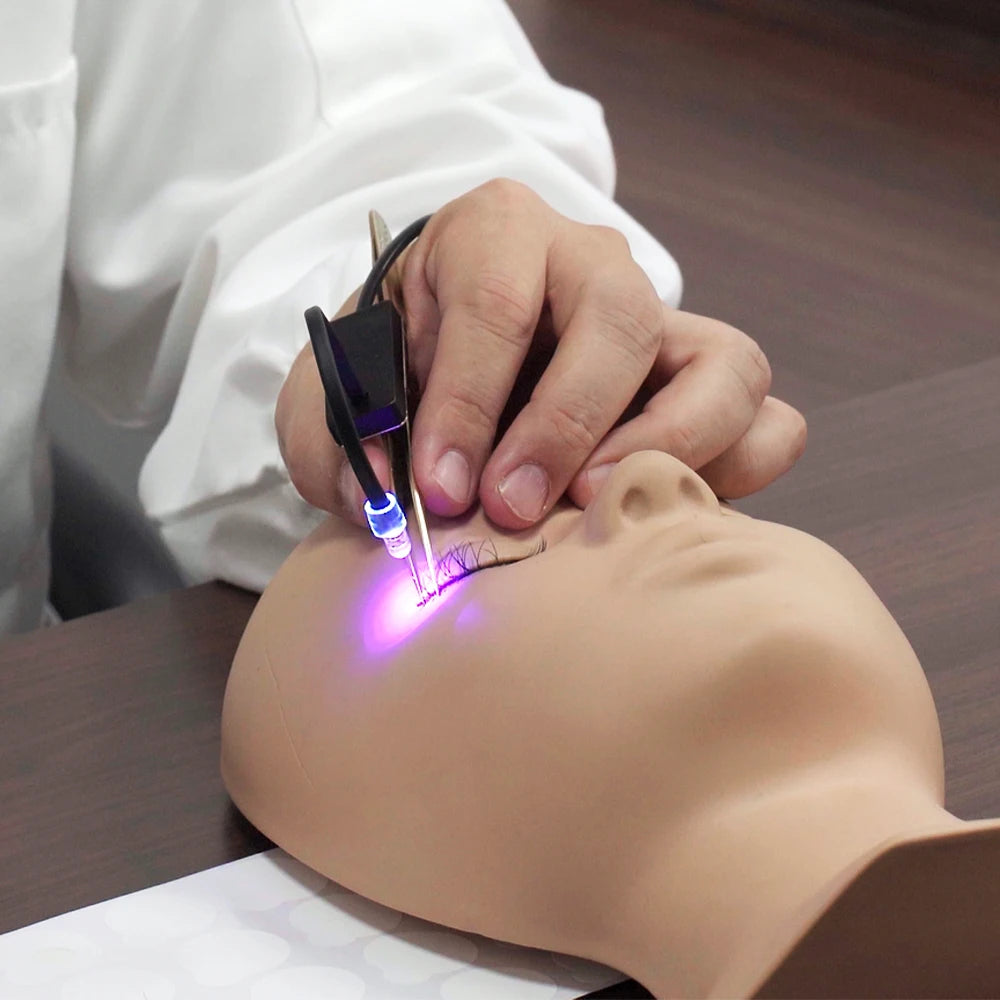
The Pinky Leem TL02 kit identifies precision tweezers as part of its product offering. This combination of lash handling tools and UV LED technology may appeal to professionals seeking a coordinated application kit.
Application-Based Equipment Selection
| Application requirement | Equipment priority | Important consideration |
| Classic extensions | Precise handling and compatible adhesive curing | Isolation and adhesive compatibility |
| Volume extensions | Controlled placement and suitable light coverage | Fan placement and natural lash separation |
| Detailed lash work | Precision tweezers and controlled positioning | Technician visibility and safe equipment placement |
| Professional salon workflow | Reliable equipment and repeatable operating conditions | Documented performance and safety instructions |
Choose equipment according to the adhesive and service you actually perform. For technicians upgrading their professional beauty setup, the Pinky Leem UV LED eyelash glue curing kit is one option to evaluate, particularly if a combined curing light and tweezer set fits your workflow.
Why UV Eyelash Adhesive Sometimes Fails to Cure Completely
Incomplete curing can affect adhesive performance and the quality of an extension application. Even when a UV light appears to operate normally, the adhesive may not receive the appropriate exposure.
Incorrect Adhesive Compatibility
One of the most important causes to investigate is an incompatible adhesive formulation. A conventional lash adhesive should not automatically be used with a UV curing system.
Check the adhesive manufacturer's instructions and confirm that the product is specifically designed for the light source being used.
Incorrect Working Distance
Moving a curing light farther from the intended area can change the irradiance reaching the adhesive. If the operating distance differs from the manufacturer's recommendation, the delivered exposure may also differ.
Incorrect Adhesive Quantity
Excessive adhesive can create application difficulties and may change how light reaches the intended bonding area. Use the adhesive manufacturer's recommended quantity and placement technique.
Incomplete Light Access
Light must reach the adhesive area for light-activated curing to occur. Poor positioning, obstruction, or incorrect application geometry can interfere with exposure.
Never attempt to solve incomplete curing by directing additional UV exposure toward the eye without manufacturer-approved guidance.
Environmental and Application Factors
Although UV-curable adhesives use light-activated chemistry, their formulation-specific storage, temperature, handling, and application requirements still matter.
Always check the adhesive instructions rather than assuming that UV technology removes every environmental or handling variable.
Step-by-Step: How to Use a UV LED Eyelash Glue Curing Light Correctly
Using a UV eyelash curing light requires more than switching on the device. Professional technicians should establish compatibility, understand the manufacturer's exposure instructions, and follow appropriate safety procedures before starting a service.
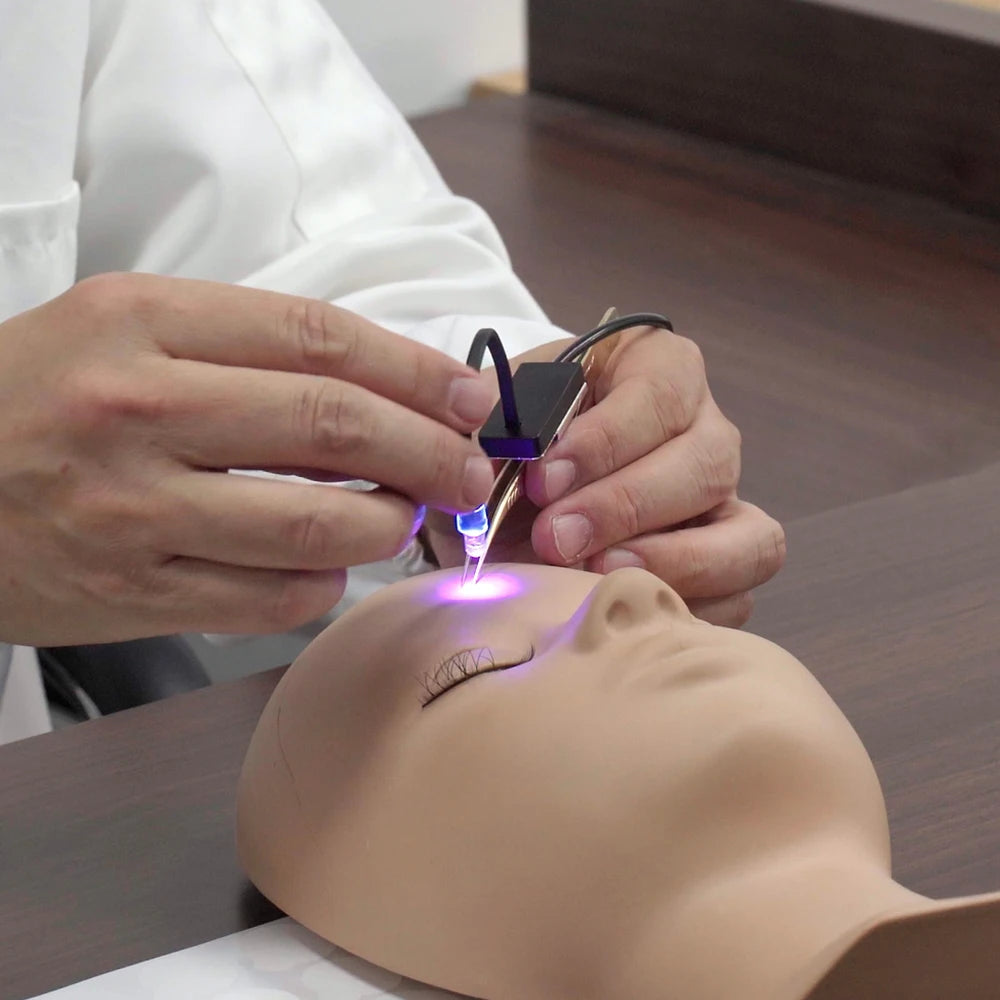
Step 1: Confirm Adhesive Compatibility
Identify the exact eyelash adhesive being used. Read its technical documentation and confirm that it is intended for UV LED curing.
Check the specified wavelength range, operating conditions, and any restrictions on use near the eye.
Step 2: Prepare the Lash Application Area
Prepare the natural lashes according to professional hygiene and application procedures. Ensure that the working area is organized and that the necessary lash isolation and placement tools are available.
Precision tweezers can help technicians separate natural lashes and position extensions accurately.
Step 3: Inspect the Curing Equipment
Check the light source, power connection, accessories, and operating controls. Review the equipment instructions and confirm that the device is appropriate for the selected adhesive.
If wavelength, irradiance, or exposure information is missing, obtain clarification before using the system professionally.
Step 4: Follow Manufacturer-Approved Exposure Parameters
Position and operate the light only as instructed by the equipment and adhesive manufacturers. Use the specified exposure conditions and protective arrangements.
There is no universal UV curing time that applies to every eyelash adhesive and curing device. Avoid copying exposure settings from unrelated UV equipment.
Step 5: Verify Application Quality
Inspect the lash application according to the adhesive manufacturer's and professional service guidelines. Check placement, isolation, and any specified indicators of adequate curing.
A surface that appears dry does not independently prove that an adhesive has achieved its intended performance.
Step 6: Maintain a Consistent Professional Workflow
Record relevant adhesive and equipment information when appropriate. Keeping track of the adhesive formulation, equipment settings, operating instructions, and application results can help identify inconsistencies.
For technicians comparing equipment options, the Professional UV LED Eyelash Glue Curing Light Kit provides a combined light-and-tweezer format to consider when reviewing compatible professional lash tools.
Common UV Eyelash Curing Light Buying Mistakes to Avoid
Choosing the Brightest Violet Light
Visible violet brightness does not establish the wavelength or effective irradiance required for adhesive curing. Always compare documented technical specifications.
Assuming Higher Wattage Guarantees Better Results
Electrical input power is not the same as wavelength-matched optical output. A higher wattage rating does not prove faster or more complete adhesive curing.
Ignoring Working Distance
Equipment performance must be evaluated at the intended operating distance. Measurements taken directly at a light source may not represent the energy delivered to the adhesive.
Buying Without Checking Adhesive Compatibility
This is a particularly important mistake for lash professionals. Conventional lash adhesive and UV-compatible lash adhesive are not automatically interchangeable.
Assuming UV Nail Lamps Can Cure Lash Adhesive
UV nail lamps and eyelash curing lights are designed for different applications. Their wavelength output, beam distribution, operating geometry, and safety characteristics may differ.
A nail lamp should only be considered if the adhesive manufacturer explicitly confirms that its specifications and operating conditions are suitable.
UV Eye and Skin Safety: How to Use Eyelash Curing Lights Responsibly
Safety is particularly important when using UV equipment near the eyes. The eye area is delicate, and direct or reflected exposure can present risks depending on wavelength, irradiance, and exposure duration.
Use Appropriate UV Protective Eyewear
Protective eyewear should have documented attenuation across the actual wavelengths emitted by the equipment. Ordinary sunglasses and generic tinted glasses should not be assumed to provide adequate UV protection.
For professional lash services, follow the equipment manufacturer's eye-protection requirements and any additional occupational safety guidance.
Protect Exposed Skin
Minimize unnecessary skin exposure to UV radiation. Use suitable protective clothing, shielding, and manufacturer-approved operating arrangements.
Do not direct the light toward the client's eyelids, eyes, or surrounding skin outside the specifically validated application procedure.
Control Direct and Reflected Light
UV and violet light can reflect from nearby surfaces. Organize the workstation to minimize unnecessary exposure and use suitable shielding or enclosed equipment where applicable.
Both the technician and client should be protected according to the equipment's safety documentation.
Follow Relevant Photobiological Safety Guidance
IEC 62471 provides a framework for assessing photobiological safety risks from lamps and lamp systems. ICNIRP also publishes guidance on exposure to ultraviolet radiation.
These references help explain why safety depends on the actual emission spectrum, exposure geometry, irradiance, and operating conditions. A product's UV LED designation alone does not establish that it is safe for direct use near the eyes.
UV Lash Adhesive Curing Troubleshooting: Common Problems and Solutions
When a lash application does not perform as expected, examine both the adhesive and equipment rather than immediately increasing exposure.
| Problem | Possible cause | Recommended action |
| Adhesive remains tacky | Incorrect adhesive compatibility or insufficient validated exposure | Check the adhesive instructions and verify equipment compatibility. |
| Inconsistent curing | Variable positioning or uneven light output | Review working distance and manufacturer equipment specifications. |
| Weak attachment | Incorrect adhesive handling or incomplete curing | Review adhesive application instructions and curing requirements. |
| Client discomfort | Possible exposure, adhesive irritation, or sensitivity | Stop the procedure and follow appropriate professional safety guidance. |
| Unreliable equipment operation | Power or equipment malfunction | Stop using the device and consult the manufacturer. |
When Should You Replace or Upgrade Your Equipment?
Consider equipment inspection, maintenance, or replacement if the light becomes unstable, physical components become damaged, operating controls stop functioning, or measured output no longer meets manufacturer specifications.
For professional use, equipment condition and verified performance are more important than appearance or marketing claims.
Final Buying Checklist: Choose the Right UV LED Eyelash Glue Curing Light
Choosing a UV lash curing light should involve evaluating the entire application system, including adhesive compatibility, light output, handling equipment, and safety documentation.
The Seven Specifications to Verify Before Ordering
- Compatible wavelength: Confirm that the light matches the adhesive manufacturer's specified activation range.
- Spectral output: Check the peak wavelength and spectral bandwidth.
- Measured irradiance: Look for optical output measurements at the actual operating distance.
- Exposure requirements: Verify the manufacturer's recommended curing conditions.
- Working distance: Confirm the appropriate positioning of the light source.
- Light coverage: Review the illuminated area and beam consistency.
- Safety controls: Check eye protection, shielding, operating instructions, and relevant safety documentation.
Is the Pinky Leem TL02 UV LED Curing Kit Worth Considering?
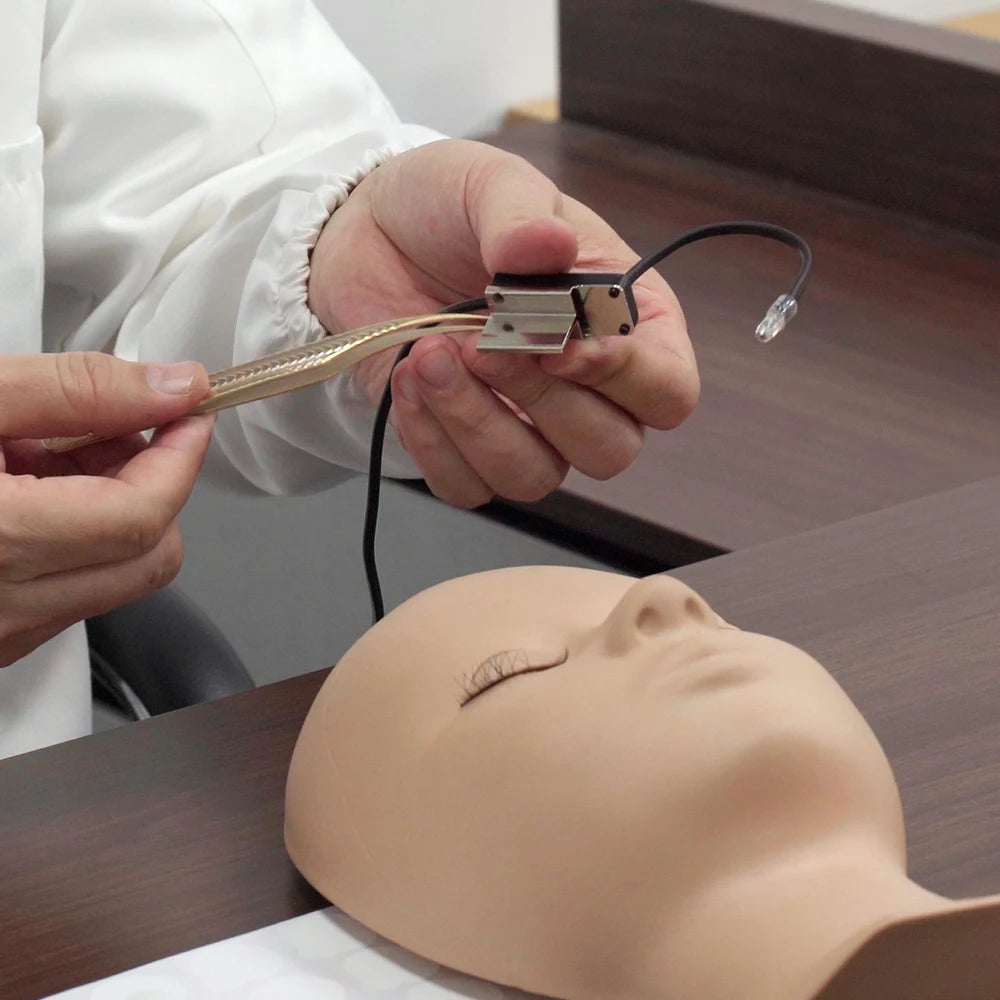
The Professional UV LED Eyelash Glue Curing Light Kit is listed under the Pinky Leem product name and is identified by model TL02. It combines a UV LED eyelash glue curing light with precision tweezers for professional eyelash extension applications.
Its listed specifications include:
- Brand: Pinky Leem (product listing name)
- Model: TL02
- Technology: UV LED
- Material: Plastic
- Item type: Makeup Tool Kit
- Listed product weight: 0.5 kg
- Quantity: One kit
- Included precision tweezers: Identified in the product title
Advantages:
- Combines UV LED curing technology and precision lash handling tools.
- Designed for professional eyelash extension applications.
- Offers a coordinated kit format for lash technicians.
- Plastic construction provides a lightweight material design.
Limitations to consider:
- Exact wavelength is not provided in the available product description.
- Irradiance and spectral bandwidth are not specified.
- Recommended working distance and exposure duration are not listed.
- Compatibility with individual eyelash adhesive formulations must be confirmed.
- Detailed UV safety documentation should be requested before professional use near the eye.
These limitations do not establish that the kit is unsuitable. They identify the technical information buyers should confirm before incorporating it into a professional lash service.
If you are evaluating a dedicated UV LED tool for your lash workstation, you can view the Pinky Leem TL02 eyelash glue curing light kit and check its current product details before ordering.
Final Recommendation: Match Your UV Lash Curing Light to Your Adhesive
The best UV LED eyelash glue curing light is not necessarily the brightest, most powerful, or most expensive option. It is the system that matches the adhesive manufacturer's specified wavelength and curing requirements while supporting a controlled and safe application process.
For professional lash technicians, the most important purchasing considerations are adhesive compatibility, verified wavelength output, irradiance, working distance, exposure instructions, and appropriate eye and skin protection.
The Pinky Leem TL02 Professional UV LED Eyelash Glue Curing Light Kit offers a combined curing light and precision tweezer format for lash extension applications. Its UV LED technology and professional positioning make it an option to investigate when upgrading a lash toolkit, provided its technical specifications and adhesive compatibility are confirmed before use.
Take time to compare the equipment with your adhesive manufacturer's documentation, review the safety requirements, and select a curing system that supports your actual professional workflow.
Ready to explore a dedicated lash application kit? Discover the Professional UV LED Eyelash Glue Curing Light Kit and review its specifications to determine whether it meets your professional application requirements.
Related Beauty and Professional Equipment
Building an effective beauty workstation involves choosing tools that suit each service. Explore additional eye care devices for equipment related to eye-area care, or browse skin and beauty care devices when evaluating other beauty equipment.
For more practical beauty equipment guidance and application advice, visit the Hair, Skin & Nail blog.
Pillar Article: Eyelash Adhesive Curing Lamp: Professional UV LED Buying Guide