

Best Classic Lash Trays Professionals: 2026 Buying Guide
The best classic lash trays for professionals are not necessarily the softest, most expensive, or most popular. A professional tray needs to deliver predictable fiber dimensions, stable curl, useful length options, clean strip organization, and consistent pickup from one service to the next. For lash artists and salons, those details affect mapping flexibility, application workflow, material waste, and inventory value.
This 2026 buying guide uses a professional selection framework rather than a generic “best lashes” ranking. We look at synthetic fiber quality, taper and finish, curl consistency, diameter and length selection, strip layout, lash count, pickup and release, workflow efficiency, retention-related considerations, and suitability for different client looks.
Best Classic Lash Trays for Professionals at a Glance
For most professional buyers, the right choice depends on the salon's client mix and application workflow. A natural-set specialist may prioritize refined diameters and moderate lengths, while a high-volume salon may value broad curl availability, readable labeling, predictable pickup, and efficient inventory control.
Quick Comparison: Professional Classic Lash Trays
| Professional priority | What to prioritize | Ideal tray characteristics | Best suited to |
|---|---|---|---|
| Natural-looking sets | Refined diameter, moderate lengths, consistent taper | Natural curl options and clean matte finish | Understated classic sets |
| Textured classic sets | Length and curl flexibility | Multiple useful increments and mapping versatility | Controlled texture and customized styling |
| Precision-focused work | Dimensional consistency | Predictable fiber size, clean strips, reliable separation | Detailed lash mapping |
| Speed-focused work | Pickup and organization | Readable labels, practical strip spacing, easy release | Busy salon schedules |
| High-volume inventory | Range and repeatability | Broad curl, diameter, and length availability | Salons serving varied client preferences |
| Broad styling versatility | Range of curls and lengths | Multiple curl families and 7–25 mm length coverage | Artists who customize frequently |
Which Classic Lash Tray Is Best for Your Workflow?
- Choose a natural-focused tray when your services emphasize subtle enhancement, conservative length selection, and seamless blending.
- Choose a versatile tray when you regularly create different maps and need multiple curls, diameters, and lengths.
- Choose highly organized strips when application speed and quick identification matter more than having every possible variation.
- Choose broad inventory coverage when multiple artists or a high-volume salon share supplies and client requirements vary substantially.
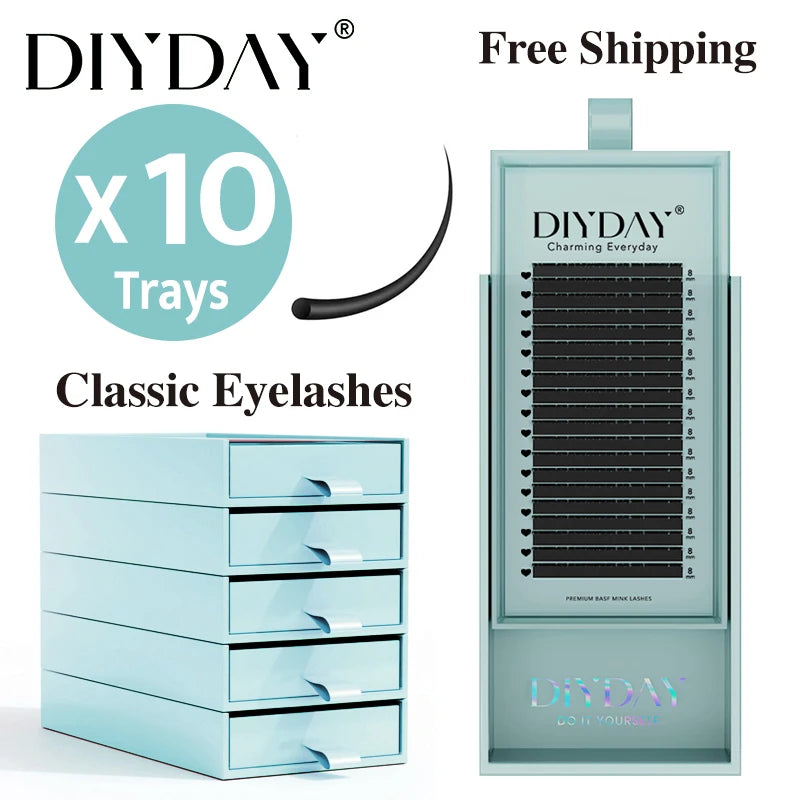
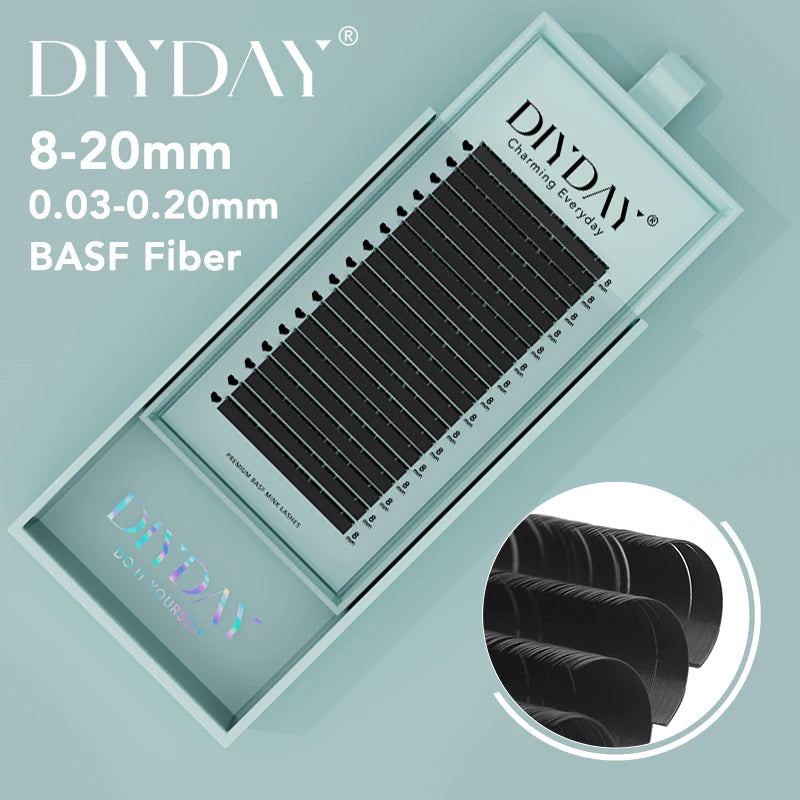
One professional option worth evaluating is the Classic Eyelash Extension 10 Trays Soft Natural Volume Pro+. Its listed specifications include premium synthetic fiber, matte black finish, B, C, CC, D, DD, L, L+, LU, LC, and LD curls, 7–25 mm lengths, and 10 trays per set. Those manufacturer-provided specifications make it particularly relevant for artists looking for broad styling coverage rather than a single specialized curl or length.
How We Evaluate Classic Lash Trays for Professional Use
A meaningful professional comparison needs to separate verified specifications from application observations. Manufacturer specifications can establish material, listed curl types, length range, and tray quantity. Actual pickup, release, separation, and workflow performance should be evaluated by the individual artist with the tweezers, adhesive, humidity, technique, and working speed used in their normal environment.
Fiber Consistency, Taper, and Finish
Classic extensions are applied individually, so dimensional consistency matters. Synthetic lash extension fibers should have predictable thickness, shape, and finish across the strip. A consistent taper can contribute to a cleaner transition between the extension and natural lash, while a consistent finish helps the finished set look uniform.
Look beyond words such as “premium” or “soft.” When assessing a tray, inspect whether individual fibers appear consistent under magnification, whether the tips are clean, whether the base construction is uniform, and whether fibers from different strips appear visually comparable.
Curl Consistency Across Strips
Curl is part of the styling system, not merely an aesthetic label. If two strips marked with the same curl behave differently, the artist may need to compensate during mapping or application.
Professionals should therefore compare several strips rather than judging a curl from a single sample. Consistency matters especially when a salon repeats the same maps across multiple clients or when several artists share inventory.
Diameter and Length Accuracy
Diameter should be selected according to the client's natural lash characteristics, the desired appearance, and the artist's professional training—not simply because a thicker extension looks fuller. Classic application uses one extension per isolated natural lash, so excessive weight can be inappropriate for an individual natural lash.
Length should also be treated as a mapping variable. A tray with useful incremental lengths gives an artist more control over transitions, spikes, open-eye effects, outer-corner direction, and customized styling.
Strip Layout and Pickup Behavior
Strip spacing can influence how quickly an artist identifies, separates, and picks up an individual extension. Label visibility also matters when multiple curls or lengths are placed on a working surface.
Pickup behavior should be assessed with the tweezers the artist actually uses. The extension should separate cleanly enough for the artist to maintain isolation and placement precision. A tray that works well with one tweezer design may feel different with another.
Application Speed, Waste, and Workflow
Speed should not be judged by a manufacturer's marketing claim alone. In practice, organized strips, readable labels, predictable separation, and consistent fibers can reduce unnecessary handling. That may make a tray more efficient for an individual artist, although actual time savings vary with experience and technique.
Waste is another useful metric. Extensions that are repeatedly rejected because of inconsistent shape, damaged tips, difficult pickup, or unsuitable lengths can increase the effective cost of a tray. For this reason, professional buyers should evaluate usable lash value, not just the purchase price.
Retention-Related Considerations
A lash tray does not independently determine retention. Retention is influenced by natural lash condition, isolation, attachment, adhesive selection, adhesive age, humidity, temperature, curing behavior, application technique, aftercare, and other environmental or service factors.
Tray characteristics can still matter indirectly. Consistent dimensions and predictable pickup can support controlled application, but no tray should be treated as a guarantee of a particular retention period.
What Makes a Classic Lash Tray Professional-Grade?
A professional-grade classic lash tray is best understood as a repeatable working material. The goal is not simply an attractive finished result once; it is predictable performance across repeated services.
Synthetic Lash Extension Fiber Quality
Most contemporary professional classic extensions use synthetic fibers designed to reproduce the visual characteristics of natural lashes while providing controlled curl and shape. Evaluate the fiber's surface appearance, softness, taper, dimensional uniformity, and finish.
A matte or low-shine finish can create a more natural visual effect than an excessively glossy fiber, depending on the client's requested look. Taper also influences how seamlessly the extension visually transitions from its base toward the tip.
Curl Options and Shape Stability
Professional inventory should be built around the curls your clients actually request. Common curl families include B, C, CC, D, and more specialized shapes. The correct selection depends on natural lash direction, eyelid characteristics, desired lift, and the artist's mapping strategy.
For salons with diverse client needs, broader curl availability can be more valuable than stocking a large quantity of only one curl.
Diameter-to-Natural-Lash Matching
Diameter is a technical selection rather than a simple fullness setting. Artists should assess natural lash thickness, density, length, condition, and the desired result before selecting an extension diameter.
A professional tray collection should therefore include the diameters appropriate for the salon's actual client population rather than assuming one diameter works for every classic set.
Length Range and Increment Selection
Shorter lengths can be useful for inner corners and conservative styling, while medium and longer lengths can support customized transitions and more dramatic maps. The important consideration is not simply maximum length but whether the tray offers practical increments throughout the range.
Strip Spacing and Lash Count
Lash count should be interpreted alongside strip organization and usable material. Two trays with similar sticker prices may deliver different practical value if one produces more usable extensions or creates less handling waste.
For salon purchasing, record the number of usable strips, lengths represented, curls available, and approximate service consumption before deciding which tray provides the better value.
Best Classic Lash Tray Features by Professional Use Case
Best for Natural-Looking Classic Sets
Natural classic sets generally benefit from controlled length selection, appropriate diameter, refined taper, and a curl that complements the client's natural direction. Look for trays with enough shorter and medium lengths to create gradual transitions rather than forcing a dramatic jump between sizes.
Pros: More subtle mapping, easier customization, and strong versatility for everyday looks.
Cons: A broad tray may include variations that a highly specialized natural-look artist rarely uses.
Best for Textured Classic Sets
Textured classics depend heavily on controlled variation. Useful length increments and multiple curl options give the artist more opportunities to introduce intentional peaks and transitions while maintaining a classic one-extension-per-natural-lash structure.
Pros: Greater mapping flexibility and more creative control.
Cons: More variations can require better tray organization and inventory tracking.
Best for Precision-Focused Lash Artists
Precision artists should prioritize consistent fiber dimensions, clean strip separation, predictable curl, and clear labeling. The more precisely an artist maps a set, the more inconvenient dimensional variation becomes.
Pros: Supports repeatable mapping and controlled placement.
Cons: Highly organized trays may cost more than basic training-oriented options.
Best for Speed-Focused Salon Work
Speed-focused workflows benefit from logical strip organization, easy identification, and pickup behavior that matches the artist's tweezers. A tray does not make an artist faster automatically, but removing unnecessary handling steps can improve workflow efficiency.
Pros: Efficient organization and potentially less handling.
Cons: Speed gains vary significantly by artist technique and workstation setup.
Best for High-Volume Salon Inventory
High-volume salons should prioritize repeatability and availability. A tray collection that covers frequently used curls, diameters, and lengths is generally more useful than buying every possible variation.
Pros: Easier standardization across artists and services.
Cons: Broader inventory requires more storage, labeling, and stock rotation.
Classic Lash Tray Specifications Professionals Should Compare
Fiber Type and Finish
Record the stated fiber material, color, finish, taper characteristics, and whether the manufacturer provides information about construction or manufacturing consistency.
Curl, Diameter, and Length Range
Before purchasing, document every available curl, diameter, and length rather than relying on a general product title. A broad range is useful only when those specifications match the services you actually perform.
Mixed-Length vs. Single-Length Trays
Mixed-length trays combine multiple lengths in one working unit, which can simplify certain maps and reduce the need to open several trays. Single-length trays provide more predictable consumption and can be easier to manage for artists who have highly standardized workflows.
Strip Layout and Labeling
Look for clearly identified lengths and curls, readable labels, practical strip spacing, and a backing design that allows the artist to remove individual extensions without unnecessarily disturbing neighboring fibers.
Lash Count and Cost Per Usable Lash
Use this simple purchasing calculation:
Cost per usable lash = tray price ÷ estimated number of usable lashes.
For a more realistic salon calculation, account for discarded or unsuitable fibers and the proportion of the tray that matches your actual service mix. A higher-priced tray can have better operational value if it produces less waste or requires less handling.
How to Choose Classic Lash Trays for Different Eye Shapes
Eye shape can influence mapping, but it should never be the sole basis for choosing a tray. Natural lash direction, density, strength, eyelid structure, desired finish, and professional technique must also be considered.
Round and Prominent Eyes
Artists may use length distribution and curl strategically to influence the visual balance of a round or prominent eye. The useful tray is one that provides enough length and curl choices to customize the map instead of forcing a single pattern.
Almond Eyes
Almond eyes are adaptable to multiple mapping approaches. A versatile tray with practical length increments gives the artist room to adjust emphasis toward the center, outer area, or overall symmetry.
Hooded or Deep-Set Eyes
Visibility of the curl and extension length becomes particularly important when the eyelid or brow structure changes how the finished set is seen. Artists should test the desired curl and length distribution against the client's natural lash direction rather than selecting solely from a generic eye-shape chart.
Downturned or Upturned Eyes
Length placement can influence perceived direction. Artists may use mapping to create balance rather than simply following the natural eye contour with progressively longer or shorter extensions.
Why Eye Shape Should Not Determine Tray Choice Alone
The same eye shape can have very different natural lash density, thickness, direction, and client preferences. Professional tray selection should therefore start with the natural lashes and desired result, then use eye shape as one mapping consideration.
Mixed-Length vs. Single-Length Classic Lash Trays
Advantages of Mixed-Length Trays
- Convenient for creating maps that require several lengths.
- Useful for artists testing new length combinations.
- Can reduce the number of separate trays needed at the workstation.
- Helpful when services regularly require customized transitions.
Advantages of Single-Length Trays
- Simple inventory tracking.
- Predictable consumption for standardized services.
- Useful for artists who prefer highly controlled workstation organization.
- Can simplify restocking around high-use lengths.
Which Format Is Better for a Professional Salon?
Neither format is universally superior. Choose mixed-length trays when mapping flexibility and workstation convenience are priorities. Choose single-length trays when your salon has predictable service patterns, high turnover of specific lengths, or a strong preference for standardized inventory.
How Classic Lash Trays Fit Into a Professional Application Workflow
A good tray should fit into the entire service system, including isolation, tweezers, adhesive, mapping materials, workstation organization, and client-specific styling. It should not be evaluated as an isolated product.
Tray Setup Before Classic Lash Application
Before beginning a service, identify the curls, diameters, and lengths needed for the intended map. Position frequently used strips where they are easy to reach and keep less frequently used options separate. This reduces interruptions and helps maintain a consistent workflow.
Pairing Trays With Lash Extension Tweezers
Tweezer tip geometry and grip interact with the physical behavior of individual extensions. Test the tray with your normal isolation and application tweezers before stocking large quantities. Pay attention to whether fibers separate cleanly and whether the extension remains controlled during pickup.
Pairing Trays With Lash Extension Adhesive
Adhesive compatibility should be considered as part of the complete application system. Adhesive performance depends on environmental conditions, product age, working speed, attachment technique, and manufacturer instructions. The tray itself should not be presented as guaranteeing retention.
Organizing Trays for Faster Client Turnover
High-volume artists can organize inventory by curl first, then diameter and length, or by their most frequently used lash maps. Labeling open trays with the date opened and maintaining a consistent storage system can make stock rotation easier.
When Is a Premium Classic Lash Tray Worth the Higher Price?
Pay More for Consistency When It Reduces Rework
Premium pricing can be justified when the additional cost corresponds to measurable operational advantages. Consistent curl, diameter, taper, and strip behavior can be more valuable to an experienced professional than simply choosing the lowest-cost tray.
Pay More When Pickup Speed Improves Service Efficiency
If an artist finds that a particular tray consistently separates and releases cleanly with their preferred tweezers, the workflow advantage may justify a higher unit price. However, this should be validated through actual use rather than assumed from marketing language.
Calculate Value Through Waste and Usable Lash Count
Compare purchase price, estimated usable lash count, rejected fibers, and typical consumption per service. A tray costing slightly more can be economically preferable if significantly less material is discarded.
When a Budget Tray Is the Better Choice
Lower-cost trays can make sense for training, experimentation, practice mapping, or low-volume services. The key is to verify that the tray still meets the technical requirements of the intended application and that lower purchase cost does not create excessive waste or workflow problems.
Professional Classic Lash Tray Buying Checklist
Before committing to salon inventory, verify the following:
Specifications to Verify Before Buying
- Fiber material and finish
- Taper and visual uniformity
- Available curl types
- Available diameters
- Minimum and maximum lengths
- Length increments
- Mixed-length or single-length configuration
- Strip spacing and labeling
- Tray quantity
- Estimated usable lash count
- Storage and organization requirements
Application Tests to Perform Before Stocking Up
- Test several strips rather than only one.
- Check whether curl appears consistent across the tray.
- Test pickup with your normal tweezers.
- Check separation and release.
- Inspect tips for visible inconsistencies.
- Compare the listed diameter and length with the physical product where practical.
- Evaluate whether the tray fits your usual mapping workflow.
Inventory Questions for Salon Owners
- Which curls are used most often?
- Which diameters and lengths turn over fastest?
- How much material is discarded during an average service?
- Can multiple artists use the same tray system consistently?
- Does the storage system make restocking easy?
- Would mixed-length trays reduce workstation clutter?
- Would single-length trays improve inventory forecasting?
For professionals comparing their requirements against a broad-range option, the Classic Eyelash Extension 10 Trays Soft Natural Volume Pro+ is worth reviewing for its listed 10-tray format, premium synthetic fiber, matte black finish, 7–25 mm length range, and multiple curl options. Treat those as manufacturer-provided specifications and evaluate actual pickup and workflow performance with your own tools before placing a larger salon order.
Final Verdict: Choosing the Best Classic Lash Trays for Professionals
The best classic lash trays for professionals are the ones that consistently fit the artist's actual workflow. Instead of choosing by brand popularity or price alone, evaluate fiber consistency, taper, finish, curl stability, diameter, length increments, strip organization, pickup and release, usable lash count, and compatibility with your existing application system.
Best Overall Selection Criteria
If you need a practical hierarchy, start with natural-lash compatibility, then evaluate fiber and dimensional consistency, curl and length coverage, pickup behavior, strip organization, and finally total usable value. This order keeps client suitability and professional application requirements ahead of marketing claims.
How to Build a Practical Professional Tray Collection
Do not automatically buy every available curl, diameter, and length. Start with the combinations your clients request most often. Add specialized variations only when your booking history or mapping preferences justify them.
For a salon, the strongest inventory system is usually one that is easy to teach, easy to restock, and predictable across artists. For an individual lash artist, the best system may instead prioritize creative flexibility and a smaller selection of highly versatile trays.
If a tray meets your required specifications, performs predictably with your tools, and produces acceptable usable value, it can earn a place in professional inventory. The goal is not to find one universal winner; it is to build a tray collection that consistently supports the services you actually sell.
Frequently Asked Questions
What should professionals look for in a classic lash tray?
Professionals should compare synthetic fiber consistency, taper, finish, curl stability, diameter and length accuracy, strip organization, lash count, pickup behavior, and usable value. The tray should also provide the curls, diameters, and lengths that match the salon's actual client mix.
How do you choose the right classic lash tray for different client eye shapes?
Use eye shape as one mapping consideration rather than the sole selection criterion. Natural lash direction, density, strength, desired finish, curl visibility, length distribution, and professional application technique should also guide the choice.
What lash diameter and length should professionals use for classic extensions?
The appropriate diameter and length depend on the client's natural lashes, desired appearance, mapping design, and professional assessment. Classic extensions should not be selected simply by choosing the thickest or longest option available. The extension must be appropriate for the individual natural lash and the intended service.
Are mixed-length or single-length classic lash trays better for salons?
Mixed-length trays are useful when artists frequently customize maps and want several lengths readily available. Single-length trays can be preferable for standardized services, predictable consumption, and straightforward inventory management. The better format depends on client mix, service volume, and workstation preferences.
When is a premium classic lash tray worth the higher price?
A premium tray can be worth the additional cost when consistent fibers, predictable curls, easier pickup, better organization, or lower material waste provide measurable value to the professional workflow. Compare cost per usable lash and actual application performance rather than relying on the purchase price alone.
For more beauty-related education and product discovery, explore the Beauty & Self-Care Blog, Eye Care Blog, and Skin and Beauty Care Devices collection.
Pillar Article: Lash Extension Curl Retention: What Pros Should Look For













