

C Curl Lash Extensions: How to Choose the Right Curl
C curl lash extensions create a noticeable but natural-looking lift with a smooth C-shaped curve. They sit between softer B curls and stronger CC or D curls, making them a versatile choice for many lash styles. However, the best curl depends on natural lash direction, eye shape, eyelid structure, desired finish, length, and thickness—not simply how dramatic the curl looks.
For lash artists and clients comparing lash curl options, C curl is best understood as a styling tool rather than a universal solution. The same C curl can look subtle on one natural lash and significantly more lifted on another. This guide explains how C curl behaves, when it works best, how it compares with B, CC, and D curls, and how to select it alongside lash mapping, length, and thickness.
What Are C Curl Lash Extensions?
C curl lash extensions are individual eyelash extensions formed with a rounded, C-shaped curvature that provides moderate-to-visible lift from the natural lash line. The curl creates more opening and elevation than a B curl while generally appearing less dramatic than CC or D curls.

C Curl Shape and Visual Effect
The defining characteristic of C curl is its balanced curvature. Rather than producing a very soft bend or an aggressively upward-facing effect, it creates a smooth transition from the base of the extension into a visibly lifted tip. This can make the lash line appear more open while retaining a relatively wearable appearance.
In a classic lash set, C curl can create a polished everyday result. In a wispy or textured set, the same curl can provide enough lift to make different lengths more visible without automatically creating the high-drama appearance associated with stronger curls.
How C Curl Differs From Other Lash Curls
Think of lash curls as a progression in visual lift. B curl generally creates a softer, more natural bend. C curl adds noticeable elevation. CC increases the lift further, while D curl creates a much stronger, more dramatic curve. The exact appearance can vary by manufacturer, so artists should evaluate the actual extension profile rather than relying on the letter alone.
How C Curl Changes the Lash Line
The effect of a lash curl comes from how the extension's curvature interacts with the direction of the natural lash. C curl does not simply make every eye look more open in the same way. Its final appearance depends on the angle at which the natural lash grows, where the extension is attached, and how the selected length is distributed across the lash line.
Lift, Openness, and Eye-Opening Effect
C curl can visually lift the lash line and make the eyes appear more open, particularly when the natural lashes grow relatively straight or have a modest downward angle. Because the curl is noticeable without being extremely tight, it can also work well when the goal is definition rather than an intensely curled finish.
Length changes this effect. A shorter C curl may look neat and understated, while a longer C curl can create substantially more visual drama. For that reason, curl should always be evaluated together with length.
Why Natural Lash Direction Matters
Natural lash direction is one of the most important factors in curl selection. Straight natural lashes may benefit from the visible elevation created by C curl. Downward-growing lashes can also benefit, but the artist needs to assess attachment and direction carefully so the extension sits correctly.
Upward-growing natural lashes present a different situation. A very strong curl may not always be necessary because the natural lash already contributes elevation. In some cases, a softer curl or a carefully selected mixed-curl map can create a more proportional result.
B vs C vs CC vs D Curl: Which Should You Choose?
The easiest way to compare lash curls is to evaluate four variables: curl intensity, visual lift, natural-lash compatibility, and the styling effect you want. C is often the middle-ground choice, but there is no universally correct curl for every client.
| Curl | Visual Lift | Typical Effect | Best Starting Point |
| B | Soft | Natural and understated | Clients wanting subtle enhancement |
| C | Moderate | Balanced, lifted, wearable | Everyday definition and visible lift |
| CC | Moderate to strong | More lifted and noticeable | Clients wanting extra elevation |
| D | Strong | Dramatic, pronounced curl | High-impact styling when compatible |
B Curl Lashes
B curl is a softer option that tends to preserve a more natural-looking lash direction. It can be useful when a client wants enhancement without an obviously curled appearance or when the natural lash direction already provides sufficient lift.
C Curl Lash Extensions
C curl is the balanced choice when you want visible lift without immediately moving into a highly dramatic curl. It is particularly useful for classic lash looks, polished everyday sets, and mapping designs where the artist wants definition while maintaining flexibility in length and placement.
CC Curl Lashes
CC curl provides more lift than C and can be useful when the desired result is brighter, more elevated, or more noticeable. The additional curvature should still be evaluated against the natural lash angle and eyelid structure.
D Curl Lash Extensions
D curl creates a stronger upward-facing effect and is generally better suited to dramatic styling when the client's natural lashes and eye structure support it. Choosing D simply because it looks more curled on a tray can lead to a mismatch if the desired result is actually balanced and wearable.
What Eye Shape Is Best for C Curl Lash Extensions?
There is no single eye shape that is automatically “best” for C curl. C curl is versatile because the final result can be changed substantially through length distribution and lash mapping. Eye shape should therefore guide the map rather than dictate the curl by itself.
C Curl for Almond Eyes
Almond eyes generally provide considerable styling flexibility, and C curl can create a balanced lifted appearance without requiring an extremely strong curl. Artists can adjust the longest lengths according to whether the goal is a natural, open-eye, or elongated effect.
C Curl for Round Eyes
With round eyes, placement matters as much as curl. Concentrating excessive length at the center can emphasize roundness. A more controlled distribution toward the outer portion of the lash line may create a visually elongated effect while retaining the lift of C curl.
C Curl for Hooded or Deep-Set Eyes
For hooded or deep-set eyes, the visible portion of the extension can change depending on eyelid structure. C curl may provide useful lift, but excessive length can become visually hidden or interact poorly with the lid. The artist should assess how much of the curl remains visible when the eyes are relaxed and open.
C Curl for Monolids
Monolids can benefit from carefully selected curl and placement because the eyelid can affect how much of the extension is visible. C curl may provide useful elevation, but the appropriate length and direction should be determined from the client's actual natural lash line rather than from eye-shape labels alone.
C Curl for Upturned or Downturned Eyes
For upturned or downturned eyes, mapping can help balance the overall appearance. A C curl does not need to be applied identically across the entire lash line. Adjusting lengths and transitions can create more symmetry without relying on a stronger curl to compensate for an eye-shape concern.

Are C Curl Lash Extensions Good for Straight or Downward-Growing Natural Lashes?
Yes, C curl can be a useful choice for straight or downward-growing natural lashes because its moderate curvature can introduce visible lift. However, the extension must still be selected and attached according to the natural lash direction. Curl strength alone should never be used to compensate for poor alignment or an unsuitable attachment angle.
Straight Natural Lashes
On relatively straight lashes, C curl can create a noticeable upward effect while remaining less intense than CC or D. This makes it a practical option when the client wants more lift than a very natural curl provides.
Downward-Growing Natural Lashes
Downward-growing lashes require closer assessment. A C curl may improve visible elevation, but the artist should make sure the extension can be attached in a stable, properly aligned position. If the extension direction and natural lash direction are poorly matched, the finished set may look uneven or feel uncomfortable.
Upward-Growing Natural Lashes
When natural lashes already point upward, a strong curl may create more lift than necessary. C can still work, but a B curl, mixed-curl strategy, or different length distribution may sometimes create a more proportional result.
How to Choose C Curl Lash Extensions by Lash Mapping
Lash mapping turns curl selection into a complete styling decision. Instead of placing one length everywhere, the artist assigns different lengths to zones of the lash line to control where the eye appears lifted, elongated, softened, or emphasized.
Natural, Open-Eye, and Wispy C Curl Maps
A natural C curl map can use a gradual increase toward the central or outer areas while avoiding abrupt changes. An open-eye map can emphasize the central region, although the amount of central length should be adjusted for rounder eyes. A wispy map can alternate shorter base lengths with selected longer spikes for texture.
Where to Place Shorter and Longer Extensions
Shorter lengths at the inner corner generally create a smoother transition into the main lash map. Longer lengths can be positioned where they best support the intended eye effect. The important principle is that the longest extension is not automatically the best extension for every zone.
For example, an elongated mapping approach may gradually increase length toward the outer third, while an open-eye design may place greater emphasis around the center. C curl provides the underlying lift, while the length pattern determines much of the final visual shape.
When to Mix C With Other Curls
Mixed curls can be useful when one curl does not visually match the entire lash line. An artist may use a softer curl in one area and C in another to create a smoother transition or account for differences in natural lash direction. This approach can be particularly useful when the inner, middle, and outer lashes grow at noticeably different angles.
Choosing C Curl by Lash Extension Length and Thickness
Curl is only one specification. A professional selection should also consider length, thickness, fiber characteristics, and the capacity of the natural lash. The objective is a stable, comfortable extension that achieves the desired appearance without relying on excessive weight.
C Curl and Lash Extension Length
Longer extensions make a given curl appear more prominent because more of the curved profile is visible. A short C curl can therefore look relatively subtle, while a long C curl can create a much stronger visual statement. Length should be selected according to the natural lash and the desired styling effect rather than chosen independently from curl.
C Curl and Lash Extension Thickness
Thickness affects density and visual weight. A thicker extension can make a C curl set appear darker and fuller, while a finer extension can produce a lighter finish. Natural lash strength and professional application technique should guide the selection of extension weight.
Selecting a C Curl Lash Tray
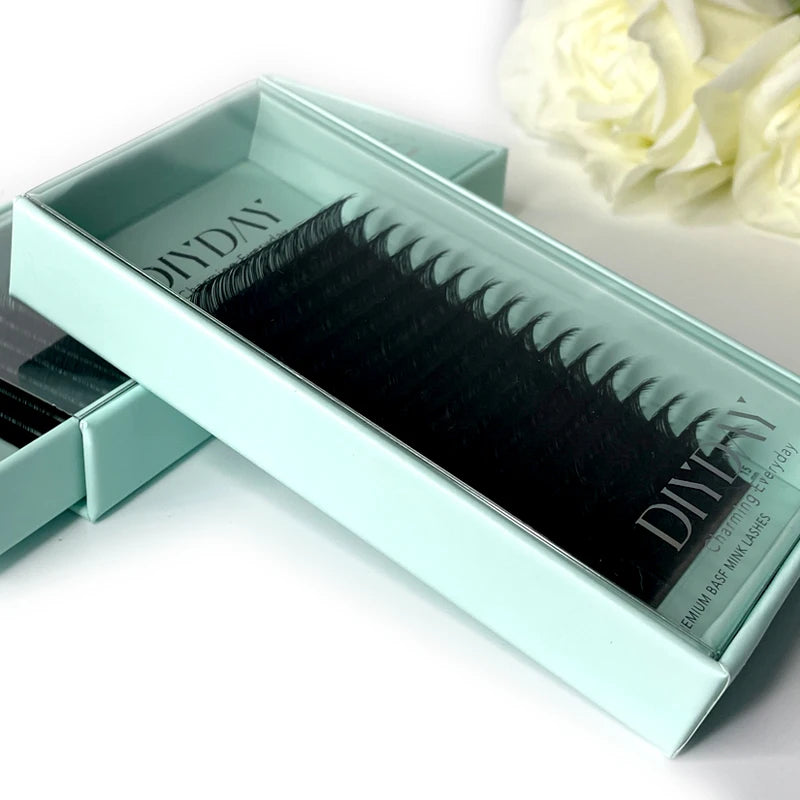
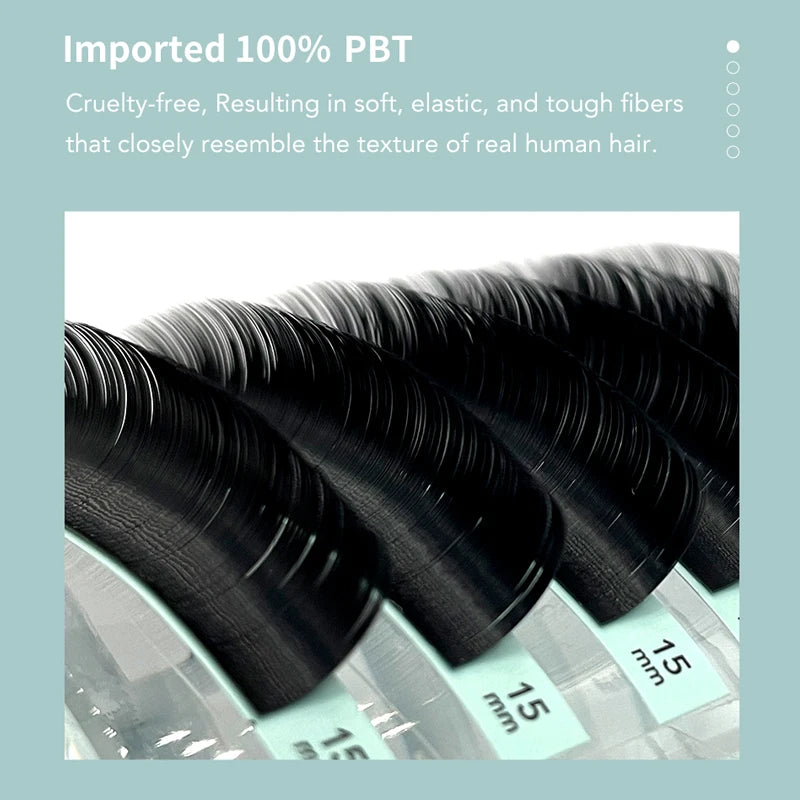
When evaluating a C curl lash tray, look for consistent curl formation, clearly labeled lengths and thicknesses, a useful length range, predictable fiber behavior, and specifications that make mapping easier. Having multiple curl options available can also help an artist adapt the set to individual clients rather than forcing every appointment into one curl profile.
For artists looking for a flexible professional option, Classic Eyelash Extension 10 Trays Soft Natural Volume Pro+ includes B, C, CC, D, DD, L, L+, LU, LC, and LD curl options with lengths from 7–25 mm. The handmade synthetic-fiber trays are designed around consistent styling specifications, making them useful when comparing curl and length combinations rather than purchasing a single fixed curl.
For broader beauty resources and related styling education, explore the Beauty & Self-Care Blog and Eye Care Blog.
Common C Curl Lash Extension Selection Mistakes
Choosing Curl Strength Without Checking Natural Lash Direction
A curl that looks ideal on a strip may behave differently when attached to a natural lash with a different growth angle. Always assess the direction and orientation of the natural lash before selecting the extension curl.
Choosing Length and Thickness Independently
Longer and thicker extensions can increase visual and physical load. Selecting these specifications without considering the natural lash can undermine both the appearance and wearability of the finished set.
Using the Same Curl Map for Every Eye Shape
Eye shape is not a standalone prescription, but it is an important mapping variable. Two clients can use C curl and still need completely different length distributions to achieve balanced results.
Choosing D or CC When C Would Better Match the Desired Effect
More curl is not automatically better. If the desired result is polished, balanced, and wearable, moving from C to CC or D simply for additional lift can create unnecessary intensity. Match the curl to the requested visual effect first.
C Curl Lash Extensions: Professional Application Considerations
Check Natural Lash Direction Before Application
A professional assessment should consider natural lash direction, density, length, strength, eye shape, eyelid structure, and the client's desired result. This assessment provides the foundation for selecting curl, length, thickness, and map as a coordinated system.
Match Extension Direction and Attachment
Correct attachment and directional alignment influence the appearance, stability, and comfort of an extension set. C curl should follow a deliberate styling direction rather than being applied simply because its profile looks attractive on the tray.
Keep Lash Health and Weight in Mind
Curl does not determine extension weight by itself. Length, thickness, fiber construction, and the natural lash all contribute to the final load. Professional lash work should prioritize an appropriate specification combination rather than maximizing length, thickness, or curl intensity.
Lash artists who are refining their broader beauty-service knowledge can also review related resources in the Hair, Skin & Nail Blog for additional styling and care topics.
How to Choose Between C, CC, and D Curl
The simplest decision process is to assess the natural lash first, define the desired visual effect second, and then select curl, length, thickness, and mapping together. This avoids the common mistake of treating curl as the only variable that determines the finished look.
Choose C Curl If You Want Balanced, Noticeable Lift
Choose C when you want a visible lift that remains versatile and wearable. It is a strong middle-ground option for classic, natural, polished, and many textured lash styles.
Choose CC If You Want More Lift
Choose CC when the desired effect calls for more elevation than C provides and the natural lash direction and eyelid structure support the additional curvature.
Choose D If You Want a More Dramatic Curl
Choose D when a pronounced, high-impact curl is intentional and compatible with the client's natural lash characteristics and styling goals. Stronger curl should be a deliberate design choice, not simply an upgrade in intensity.
Consider B If You Prefer a Softer, More Natural Finish
B is worth considering when subtle enhancement is the priority or when the natural lash already has substantial lift. It can also be useful as part of a mixed-curl strategy when a uniform C curl would not create the smoothest transition.
Final C Curl Selection Formula
C curl lash extensions are versatile because they provide a useful middle ground between soft and highly dramatic lash curls. But the best C curl set is not determined by curl letter alone. Start by assessing the natural lash direction and eyelid structure. Define whether the desired result is natural, open, elongated, wispy, or dramatic. Then select the curl, length, thickness, and lash map as one coordinated design.
If C provides the right level of lift, choose it for its balance rather than assuming a stronger curl will produce a better result. When you need more elevation, evaluate CC or D. When you want a softer finish, consider B. For professional selection, consistency across curl, length, thickness, and fiber specifications is just as important as the curl profile itself.
For artists ready to compare practical lash specifications, browse the Classic Eyelash Extension 10-Tray collection to review multiple curl and length options in one professional set.
Pillar Article: Lash Extension Curl Retention: What Pros Should Look For













