

Eyelash Extension Length Range: The Complete 7–25mm Guide
The eyelash extension length range typically spans about 7–25mm, but that does not mean every length is appropriate for every client. The best choice depends on the natural lash's length and strength, the eye area being styled, the extension's curl and diameter, the desired effect, and the lash artist's application technique. For classic 1:1 sets, the goal is not simply to use the longest extension available; it is to create a balanced result that the natural lash can comfortably support.
This guide breaks down the 7–25mm range, explains which lengths are commonly useful for classic lash extensions, and shows how to turn a length chart into a practical lash-mapping decision.
Eyelash Extension Length Chart: 7–25mm at a Glance
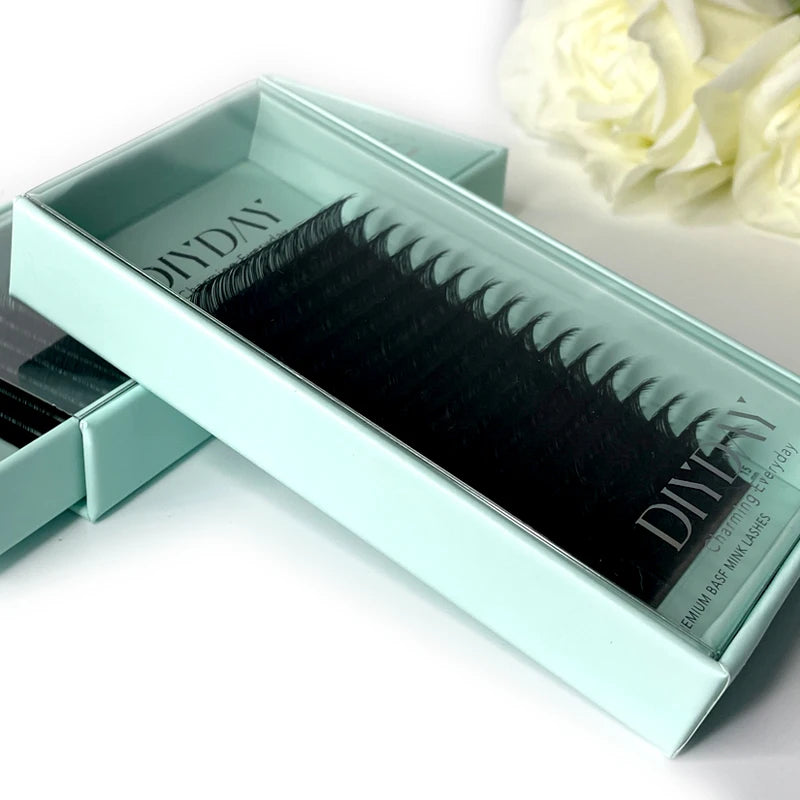
For professional lash work, shorter extensions are generally useful for smaller or finer natural lashes and inner-corner placement, while medium lengths cover much of everyday classic styling. Longer extensions move into more specialized territory and require increasingly careful consideration of natural-lash support, diameter, curl, and mapping.
| Length | Typical Use | Practical Classification |
|---|---|---|
| 7–8mm | Inner corners, shorter natural lashes, subtle sets | Common short length |
| 9–12mm | Everyday classic sets and transitional mapping | Common working range |
| 13–15mm | Defined, more noticeable classic styling | Longer styling range |
| 16–20mm | Advanced or specialty styling when natural lashes permit | Specialty range |
| 21–25mm | Highly specialized looks and controlled artistic styling | Specialty length |
7–8mm: Short Lengths for Inner Corners and Subtle Sets
Lengths around 7–8mm are especially useful near the inner corner, where natural lashes are often shorter and finer. They can also help create understated classic sets when the client's natural lashes do not support a longer extension. Rather than forcing a uniform length across the eye, a shorter inner-corner length can create a smoother transition into the main mapping.
9–12mm: Common Everyday Classic Lash Lengths
The 9–12mm range is one of the most versatile areas of a classic lash tray. These lengths can work well for natural-looking definition, transitional mapping, and many everyday 1:1 sets, provided the extension is appropriately matched to the natural lash. A lash artist may combine several millimeter lengths rather than selecting one size for the entire eye.
13–15mm: Longer Lengths for Definition and Drama
At 13–15mm, extensions become more visually prominent. These lengths can add stronger definition to a classic set when the client's natural lashes have sufficient length and strength and the selected diameter and curl are appropriate. Longer is not automatically better: the extension must remain proportionate to the natural lash and the intended design.
16–20mm: Advanced Lengths for Specialty Styling
Lengths from 16–20mm should be approached as advanced options rather than default classic-lash choices. The artist needs to consider natural-lash structure, extension weight, attachment quality, curl, direction, and the finished mapping. A dramatic millimeter number alone does not determine whether the result will look polished or remain appropriate for the natural lash.
21–25mm: Specialty Lengths, Not Default Choices
The 21–25mm range represents specialty territory. These lengths may be available in professional trays, but availability should never be interpreted as a universal recommendation. For many clients, these lengths would be excessive or unsuitable. Their use requires a specific artistic objective and careful assessment of the natural lash, extension specifications, and application method.
What Is the Standard Eyelash Extension Length Range?
The standard eyelash extension length range commonly encountered in professional products is approximately 7–25mm, with 7–15mm covering many practical lash-styling applications and longer lengths generally reserved for specialized work. The actual selection should be individualized rather than based on the full range printed on a tray.
Commonly Used vs. Specialty Lash Extension Lengths
For many classic lash sets, 7–15mm provides a practical working range. Shorter lengths help with inner-corner transitions, while approximately 9–12mm can form the core of natural-looking sets. Lengths around 13–15mm can increase definition when supported by appropriate natural lashes. Beyond that, the artist should move from routine selection to deliberate specialty styling.
Why 7–25mm Is a Range, Not a Recommendation
A lash tray's available lengths describe product options, not a prescription for every client. Natural lashes differ in length, diameter, growth cycle, density, direction, and strength. Consequently, a 25mm extension may be present in a professional tray without being suitable for routine application. Selection should always start with the natural lash rather than the desired millimeter number.
How to Choose the Right Lash Extension Length
Start With Natural Lash Length and Strength
The natural lash is the foundation of the set. Assess its length, thickness, density, direction, and overall condition before choosing an extension. Fine or short natural lashes generally call for a conservative extension choice. Stronger natural lashes may provide more styling flexibility, but even strong lashes have practical limits.
In classic application, each extension is attached to an individual natural lash. That makes the relationship between extension size and the supporting natural lash particularly important. If an extension is disproportionately long, heavy, or poorly attached, it can interfere with comfortable movement and compromise the finished appearance.
Consider the Eye Area: Inner, Middle, and Outer Corners
Length should also be selected according to location. Inner-corner lashes are commonly shorter. Medium lengths can create the central visual structure, while outer-corner lengths are selected according to the intended map rather than automatically being the longest available.
Match Length to the Desired Effect
For a soft, natural effect, shorter-to-medium lengths and gradual transitions are often effective. A defined classic set can use longer lengths where the natural lashes can support them. Dramatic styling requires more careful coordination of length, curl, diameter, and placement because increasing one variable can substantially change the visual result.
Account for Application Technique
Isolation, attachment, direction, placement distance, and lash-stick control all influence the practical outcome. A theoretically suitable length can still produce a poor result if it is attached incorrectly or placed against a natural lash with an incompatible direction. Professional technique therefore remains part of length selection, not merely a final application step.
Classic Lash Extension Lengths: What Works Best for 1:1 Sets?
Classic lash extensions use a 1:1 technique: one extension is applied to one isolated natural lash. Because there is no fan distributing multiple extensions across several lashes, the chosen extension's dimensions matter directly to the supporting natural lash. For many natural-looking classic sets, a practical starting range is around 8–13mm, with shorter inner-corner lengths and longer sections added only when the natural lashes and design support them.
Best Lengths for Natural-Looking Classic Lash Sets
There is no universal “best” length. However, 9–12mm is often a useful working zone for natural-looking classic styling, while 7–8mm can soften inner-corner transitions. Lengths around 13–15mm can provide more definition for clients whose natural lashes and desired mapping justify them.
Classic Lash Mapping Example: Inner to Outer Corner
A simple classic mapping might transition from 8mm → 9mm → 10mm → 11mm → 10mm, depending on eye anatomy and the desired effect. This is an example rather than a universal prescription. Another client may benefit from a shorter center, a different peak, or a tapered outer corner.
The important principle is that the map should follow the eye's structure and the natural lashes available in each zone. A lash artist should not automatically place the longest extension on the outermost lash.
Why One-Length Classic Sets May Not Suit Every Eye
Natural lashes are rarely identical from inner to outer corner. Eye width, lid structure, lash direction, and density also vary. Using one length everywhere can therefore create an unnecessarily uniform result. A customized map can distribute lengths more intentionally and create better visual balance.
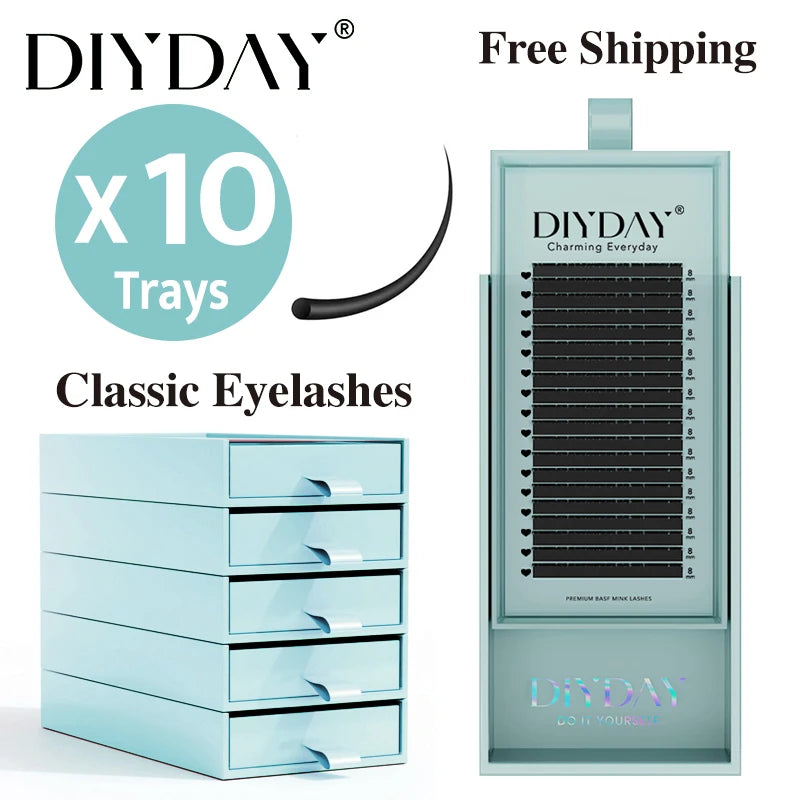
For artists looking to work with multiple lengths and curls in one professional setup, the Classic Eyelash Extension 10 Trays Soft Natural Volume Pro+ provides 7–25mm options with B, C, CC, D, DD, L, L+, LU, LC, and LD curl selections. The product is best viewed as a flexible tray system rather than an instruction to use every available length.
For broader beauty resources, readers can also explore the Skin and Beauty Care Devices collection or browse related education through the Beauty & Self-Care Blog.
How Lash Extension Curl Changes the Best Length
Length vs. Curl: Why the Same Millimeters Can Look Different
Two extensions with the same measured length can produce noticeably different visual results when their curls differ. A stronger curl changes the extension's lift and projection, while a softer curl creates a different relationship with the natural lash. As a result, a 12mm extension should not be judged by millimeters alone.
Choosing Length and Curl Together
Think of curl and length as a combined styling decision. If the design already creates substantial lift through curl, increasing length may produce more visual impact than expected. Conversely, a softer curl may make the same length appear less lifted. Eye shape, eyelid structure, natural-lash direction, and desired finish should guide the combination.
How Lash Extension Diameter Affects Safe Length Selection
Length, Diameter, and Extension Weight
Extension length and diameter work together to determine the physical dimensions of the extension. As dimensions increase, the extension can place greater demand on its supporting natural lash. That is why a length chart cannot be used independently of diameter.
For classic sets, the objective is to select an extension that is proportionate to the individual natural lash. A longer extension with a lighter, appropriately selected diameter may behave differently from a shorter extension with a substantially greater diameter.
Why Longer Does Not Always Mean Better
Longer lashes can increase visibility, but excessive length can make a set look heavy, uneven, or disconnected from the client's natural features. Dramatic styling comes from proportion and mapping, not simply maximizing millimeters.
Balancing Drama With Natural-Lash Health
Natural-lash health should remain the limiting factor. If the lash cannot comfortably support the selected extension, changing the length, diameter, curl, or overall styling plan is more appropriate than forcing the desired visual effect. Professional judgment and conservative selection are especially important when working with fragile, very fine, or unusually short natural lashes.
Recommended Lash Extension Lengths by Eye Area and Styling Goal
Inner Corner Lashes
Shorter lengths such as 7–8mm are commonly useful in the inner corner because this area often contains shorter natural lashes. A gradual transition into 9–11mm lengths can create a more natural-looking map.
Middle of the Eye
The middle section often carries the primary visual emphasis of a classic map. Depending on the client's natural lashes and desired result, medium lengths around 9–13mm can establish definition without requiring extreme extension lengths.
Outer Corner Lashes
The outer corner requires mapping judgment. Increasing length toward the outer edge can create a sweeping effect, but it can also emphasize a downward direction in some eyes. A tapered or slightly shorter outer corner may produce a more balanced result.
Natural, Defined, and Dramatic Styling
- Natural: approximately 7–11mm, with gradual transitions and conservative diameter choices.
- Defined: approximately 9–14mm where natural-lash strength and mapping permit.
- Dramatic: approximately 12–16mm or beyond only when the natural lash, diameter, curl, and design justify it.
These ranges are starting points rather than fixed rules. A professional lash artist should adjust them after assessing the individual client.
Choosing Lash Length by Eye Shape: Practical Starting Points
Round and Open-Looking Eyes
For round-looking eyes, the placement of the longest section can influence whether the finished set appears more elongated or more open. Instead of automatically adding length at the center, consider the desired proportion of the eye and use mapping to control the visual emphasis.
Almond-Shaped Eyes
Almond-shaped eyes often accommodate balanced transitions effectively. A gradual progression through short, medium, and longer lengths can follow the natural eye line while allowing the artist to customize the peak and outer taper.
Hooded or Deep-Set Eyes
For hooded or deep-set eyes, visible lift may be more important than simply adding millimeters. Curl selection, attachment direction, and strategic length placement can have a greater visual effect than choosing a much longer extension.
Downturned Eyes
With downturned eyes, placing the longest extensions at the extreme outer corner may visually reinforce the downward direction. A carefully tapered map that finishes with a shorter outer section can sometimes create a more lifted appearance.
7–25mm Lash Length Selection: Real-World Examples
Example 1: Short, Fine Natural Lashes
Suppose a client has short, fine natural lashes and wants a soft classic set. A conservative map using approximately 7–10mm extensions may be more appropriate than attempting 14–16mm lengths. The priority is maintaining proportion while creating visible definition.
Example 2: Strong Natural Lashes With a Defined Classic Look
A client with longer, stronger natural lashes may have more flexibility. A map using approximately 9–14mm lengths could create a defined classic effect, provided the selected diameter and curl remain appropriate and the individual natural lashes can support the extensions.
Example 3: Dramatic Styling With Specialty Lengths
If an artistic design calls for 16–20mm or longer extensions, the selection should be treated as specialty styling. The artist should evaluate natural-lash support, extension specifications, curl, attachment, direction, and the complete map before proceeding. The presence of 21–25mm lengths in a tray does not make them appropriate for routine use.
Common Lash Length Selection Mistakes to Avoid
Choosing Length Before Assessing Natural Lashes
Starting with the client's requested millimeter number instead of the natural lash reverses the correct decision process. Assess the natural lash first, then determine what the desired style can realistically achieve.
Using the Same Length Across the Entire Eye
A uniform length can work for some designs, but it is not automatically the best approach. Inner-corner, center, and outer-corner lashes often differ naturally, making customized transitions useful for balanced styling.
Ignoring Curl and Diameter
Length cannot be evaluated in isolation. Curl changes visual lift, while diameter contributes to the extension's overall dimensions and potential load. A professional selection considers all three together.
Treating 25mm as a Standard Length
Twenty-five millimeters is best regarded as a specialty option, not a default classic-lash length. A complete professional tray may offer it for advanced applications without implying that it belongs in everyday client work.
Quick Reference: How to Select an Eyelash Extension Length
5-Step Lash Length Selection Process
- Assess the natural lashes: Check length, thickness, density, direction, and condition.
- Identify the eye area: Determine whether the extension will sit at the inner corner, center, or outer section.
- Define the desired effect: Decide whether the client wants natural, defined, or dramatic styling.
- Match curl and diameter: Evaluate how these specifications change visual impact and physical suitability.
- Verify the map and attachment: Confirm that the selected extension is proportionate, appropriately placed, and supported by the natural lash.
For artists building a versatile working setup, a tray that includes multiple lengths, curls, and diameters can make customized mapping easier. The key is to treat those options as a professional toolkit rather than a menu of lengths that every client should receive.
When selecting supplies, prioritize consistency, appropriate specifications, and the ability to customize each set. Related resources can be found in the Eye Care Blog, while the broader Lifestyle collection provides additional beauty and self-care resources.
Final Takeaway: Choose the Length the Natural Lash Can Support
The 7–25mm eyelash extension length range describes the available spectrum of professional lash extensions, not a universal prescription. For classic 1:1 sets, many everyday applications can be built around shorter and medium lengths, while longer options require increasingly careful assessment.
The strongest length selection process starts with the natural lash, then considers eye area, mapping, desired effect, curl, diameter, and application technique. A well-designed classic set does not depend on maximum length. It depends on proportion, controlled transitions, appropriate extension dimensions, and a result that complements the client's natural features.
If you are building a professional lash kit, choose trays that give you enough length and curl flexibility to customize rather than forcing every client into the same map.
Pillar Article: Lash Extension Curl Retention: What Pros Should Look For













