

Handmade Classic Lash Extensions: A Pro Buyer’s Guide
Handmade classic lash extensions can look almost identical to machine-made lashes in a product photo, but the differences in fiber quality, strip construction, consistency, and manufacturing precision can affect application speed, client comfort, and the finished set. For lash artists, the right tray is not simply the one labeled “premium.” It should provide accurate diameter, stable curl, consistent lengths, a workable strip, and specifications that match classic 1:1 application. This guide explains what to evaluate before buying handmade classic eyelash extensions and when their craftsmanship may justify the additional cost.
What Are Handmade Classic Lash Extensions?
Handmade classic lash extensions are individual synthetic lash fibers assembled and finished through a manual or hand-guided manufacturing process rather than being produced entirely through automated machinery. They are designed for classic 1:1 application, where one extension is isolated and attached to one natural lash.
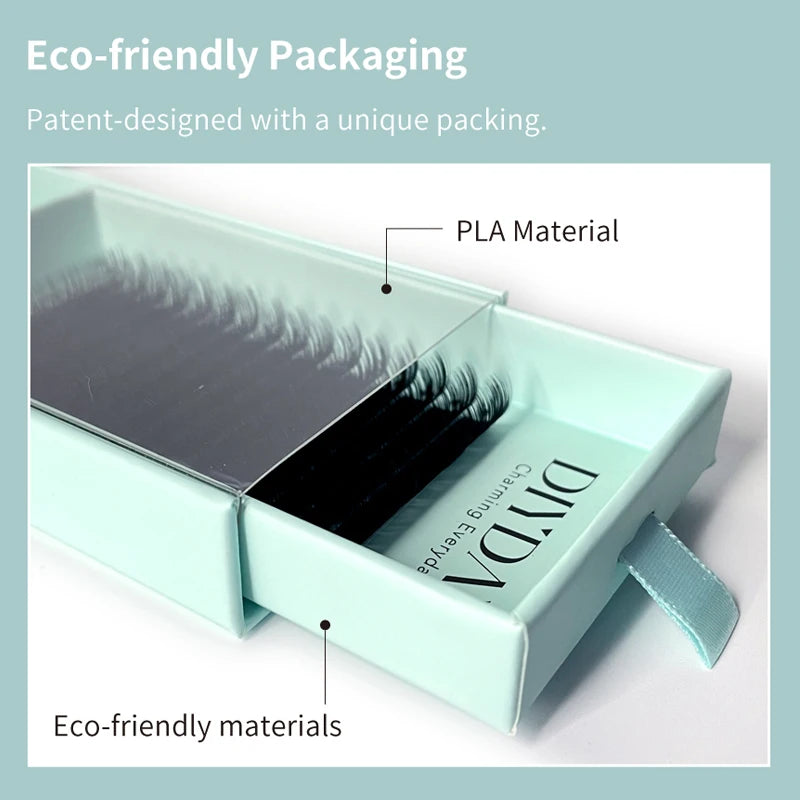
Handmade lashes vs. machine-made lashes
The important distinction is manufacturing method, not simply whether one product is marketed as professional. Handmade production can allow closer attention to fiber alignment, finish, curl formation, and tray preparation. Machine-made lashes can provide excellent uniformity and efficient production when manufacturing controls are strong.
In other words, “handmade” is a quality signal worth investigating, not automatic proof of superior performance. Buyers should still verify material, diameter, curl, length range, strip construction, batch consistency, and supplier specifications.
How handmade classic lashes are constructed
Individual synthetic fibers are shaped, aligned, and prepared into extension strips or trays. Precision matters because inconsistent fiber diameter or curl can make isolation and placement less predictable. A well-prepared tray should allow the artist to pick up extensions cleanly without excessive adhesive or strip resistance.
How they are used for classic 1:1 lash application
Classic lashes are applied at a one-extension-to-one-natural-lash ratio. This makes accurate diameter, weight, length, and curl selection especially important. Unlike volume fans, classic extensions do not distribute the extension weight across multiple natural lashes. The selected extension therefore needs to be appropriate for the individual natural lash and the desired finished appearance.
Handmade vs. Machine-Made Classic Lashes: What’s the Difference?
Comparison matrix: handmade vs. machine-made lashes
| Factor | Handmade classic lashes | Machine-made classic lashes |
|---|---|---|
| Craftsmanship | More manual attention can be given to shaping, alignment, and finishing. | Relies primarily on automated manufacturing and quality controls. |
| Fiber consistency | Can be highly consistent when skilled production and inspection are used. | Can offer excellent repeatability with well-controlled manufacturing. |
| Strip quality | May receive additional attention during tray preparation and placement. | Quality varies according to machinery and manufacturing standards. |
| Customization | Often attractive for suppliers offering multiple curls, lengths, and specifications. | Typically efficient for standardized specifications. |
| Application experience | Well-prepared fibers can provide smooth pickup and predictable placement. | Consistent trays can also be fast and easy to work with. |
| Comfort | Depends primarily on fiber weight, diameter, application, and natural-lash compatibility. | Also depends on the same technical factors rather than manufacturing method alone. |
| Value | May justify a higher tray price when reduced waste and improved workflow result. | Can be economical when consistency and volume are the primary priorities. |
When handmade construction is worth paying more for
Handmade construction may be worthwhile when an artist prioritizes refined fiber finishing, reliable pickup, multiple styling specifications, or a more controlled professional workflow. The value becomes easier to justify when the tray reduces discarded lashes, inconsistent placement, rework, or application time.
However, do not pay extra simply because “handmade” appears on the label. Ask what is actually handmade, how quality is inspected, and whether the supplier can provide consistent specifications from batch to batch.
When machine-made trays may be the better choice
Machine-made trays can be a practical choice for high-volume salons that need standardized specifications and predictable replenishment. If a supplier demonstrates strong manufacturing controls and the lashes perform consistently in your workflow, automation itself is not a disadvantage.
How to Evaluate Lash Extension Fiber Quality
Fiber quality should be evaluated by measurable characteristics rather than vague claims such as “luxury,” “premium,” or “salon grade.” A professional buyer should look for specifications and physical consistency that can be checked before committing to large quantities.
Synthetic lash fibers and material composition
Most modern professional extension trays use synthetic fibers engineered for consistent shape and appearance. Check the stated material and whether the supplier provides clear information about the fiber construction. A matte or low-shine finish may blend more naturally with natural lashes than an excessively glossy surface, depending on the desired style.
Fiber softness, uniformity, and finish
Softness should not be evaluated independently of structural stability. A good extension needs to feel lightweight while retaining its intended shape. Look across several lashes in the same tray: excessive variation in sheen, thickness, taper, or curl can indicate inconsistent production.
Taper, diameter accuracy, and weight
Diameter is particularly important for classic application because the extension is attached individually to a natural lash. A thicker extension creates greater weight than a thinner extension of the same length. Artists should follow professional training and select an extension that is appropriate for the client's natural-lash condition rather than choosing thickness based solely on the desired visual intensity.
How to identify inconsistent or low-quality fibers
- Look for visible differences in diameter between supposedly identical extensions.
- Check whether curls appear uniform throughout the tray.
- Inspect the tips for irregular finishing or unexpected bluntness.
- Check whether extensions separate cleanly from the strip.
- Watch for fibers that twist, frizz, or lose their intended shape unusually easily.
- Compare samples from different batches before placing a large wholesale order.
Choosing Curl, Thickness, and Length for Classic Lashes
Choosing the right lash extension curl
Curl determines the direction and visual lift of the finished set. Common options include B, C, CC, D, and specialty curls such as L or L+ variations. A softer curl can create a more understated result, while stronger curls provide greater visual lift. The correct choice depends on natural-lash direction, eye shape, styling goals, and the artist's technique.
Choosing lash extension thickness for 1:1 application
Classic extensions are commonly selected in different diameters to create subtle or more defined results. Thicker fibers generally create a darker and more dramatic appearance but can add weight. A lightweight diameter may be preferable for delicate natural lashes or clients seeking a softer appearance.
Choosing lash extension lengths
Length should follow the natural lash and the desired design rather than simply maximizing extension length. A versatile classic tray should provide enough options for building gradual transitions, shorter inner-corner lengths, and longer sections where appropriate.
Building a versatile classic lash collection
For many artists, versatility matters more than owning a large number of nearly identical trays. Build around the curls, diameters, and lengths you use most frequently, then expand according to actual client demand. This reduces inventory waste while ensuring that your most common classic lash designs remain available.
What Makes a High-Quality Eyelash Extension Tray?
A high-quality eyelash extension tray should make the artist's workflow easier before the adhesive is even introduced. Strip design, lash positioning, labeling, and batch information all contribute to usability.
Band and strip quality
The strip should hold the extensions securely while still allowing clean pickup. Excessively aggressive adhesive on the strip can make removal frustrating, while a poorly bonded strip can cause lashes to move or detach prematurely during handling.
Lash placement and pickup consistency
Extensions should be positioned so the artist can identify, isolate, and remove individual lashes efficiently. Consistent placement becomes especially valuable during high-volume services because small workflow delays can accumulate across multiple appointments.
Curl consistency across the tray
Compare extensions from different sections of the tray rather than inspecting only one lash. A C curl, for example, should maintain a recognizable and predictable shape throughout the tray. Significant variation can lead to uneven finished sets.
Length and thickness labeling
Clear labeling reduces selection errors and makes inventory management easier. Look for clearly stated length, diameter, curl, quantity, and material information. Suppliers offering multiple specifications should make those options easy to distinguish.
Packaging, batch consistency, and supplier information
Professional buyers should be able to identify what they are purchasing and reorder the same specification reliably. Supplier transparency matters more when buying wholesale because a low-priced initial sample has limited value if subsequent batches differ significantly.
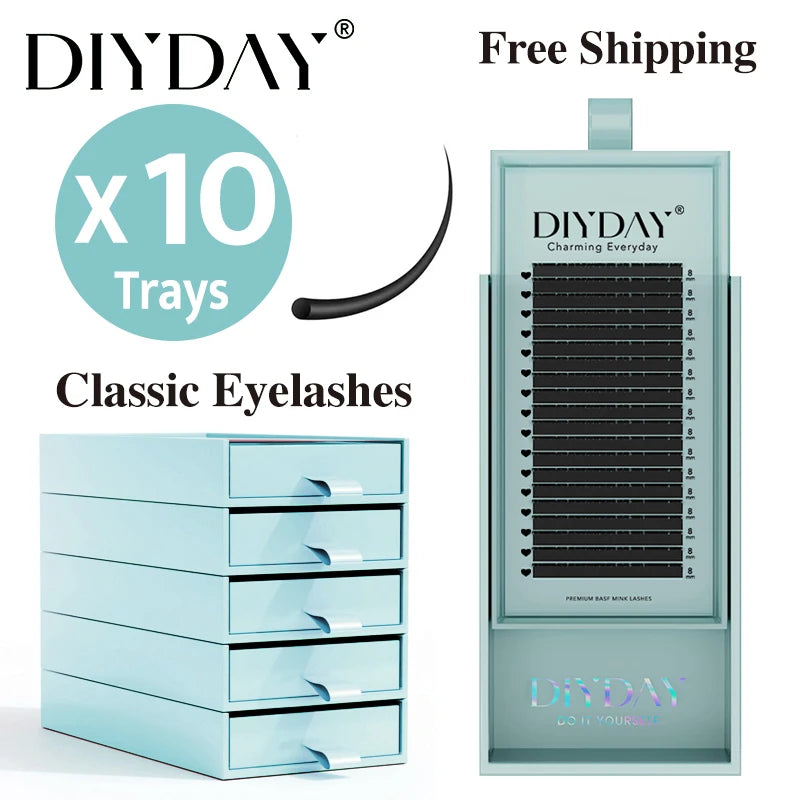
One example of a tray built around this professional-use approach is Classic Eyelash Extension 10 Trays Soft Natural Volume Pro+. The listed specifications include premium synthetic fiber, matte black finish, B through D curls plus L-family options, 7–25 mm lengths, 10 trays per set, and handmade manufacturing. Those specifications make it particularly relevant for artists who want a broad classic-lash styling range rather than a single fixed curl or length.
Buyer takeaway: evaluate the specifications and manufacturing information, not just the handmade label. A tray is useful when its physical characteristics match the artist's technique and client requirements.
How Handmade Classic Lashes Affect Comfort and Retention
Fiber weight and client comfort
Comfort depends heavily on extension weight, diameter, length, placement, adhesive, and the condition of the natural lashes. Handmade manufacturing does not automatically make an extension lighter. The actual specification matters more than the production label.
Curl stability and finished appearance
Stable curl helps preserve the intended styling effect between appointments. If an extension loses shape quickly, the finished set may appear less uniform. However, curl performance also depends on the material, manufacturing process, environmental exposure, and product handling.
What actually influences lash extension retention
Retention is multifactorial. Natural-lash growth cycles, adhesive selection, humidity and temperature, cleansing, isolation, attachment quality, curing conditions, aftercare, and the client's individual circumstances can all influence how long extensions remain attached. It would be misleading to attribute retention solely to handmade construction.
Why lash quality cannot compensate for poor application
Even an excellent tray cannot correct poor isolation, excessive adhesive, unsuitable extension weight, improper attachment, or inadequate training. Professional lash artists should follow their training, manufacturer instructions, sanitation procedures, and applicable local requirements when performing services.
Which Handmade Classic Lashes Should Lash Artists Buy?
For natural, lightweight classic sets
Prioritize lightweight diameters, softer curls, accurate tapering, and a matte or natural-looking finish. The goal is usually enhancement rather than maximum density.
For defined and darker classic sets
Look for consistent darker fibers and an appropriate diameter that provides definition without creating excessive weight. Stronger curls can increase visual lift, but they should still complement the client's natural-lash direction and desired design.
For artists serving varied client eye shapes
Choose a supplier with a broad specification range. Multiple curls and lengths give the artist more flexibility to adapt styling rather than forcing every client into the same mapping approach.
For high-volume salon workflows
Consistency and pickup efficiency may matter more than having the widest possible selection. A dependable tray that saves seconds during every appointment can provide meaningful operational value over time.
For artists prioritizing craftsmanship and customization
Handmade trays can be attractive when precise finishing, broad specifications, and supplier-level customization are important. Request samples first and compare multiple batches before committing to larger orders.
Explore more professional beauty and self-care guides for related lash, beauty-device, and service-selection education.
How Much Should Handmade Classic Lash Extensions Cost?
Price vs. usable value
Tray price is only one part of the calculation. A less expensive tray can become costly if a large percentage of lashes are unusable, difficult to pick up, inconsistent, or unsuitable for your most common services. Conversely, a more expensive tray can offer better value if consistency reduces waste and speeds application.
How craftsmanship can affect total service cost
Consider the cost per usable lash and the amount of time required to complete a typical set. If better strip construction or consistent fibers reduce handling time, the additional tray cost may be offset by workflow efficiency. Track actual usage rather than assuming the most expensive tray is automatically the most economical.
Questions to ask before buying wholesale
- What material and fiber specifications are used?
- Are curl, length, and diameter specifications clearly documented?
- Can the supplier provide samples before a bulk purchase?
- How are batches inspected for consistency?
- What happens if a wholesale batch does not match the approved sample?
- Are replacement, shipping, and minimum-order terms clearly stated?
What to Check Before Buying Handmade Classic Lash Extensions
Quality and specification checklist
- Confirm the fiber material and finish.
- Verify curl, diameter, and length ranges.
- Inspect several lashes rather than one representative fiber.
- Check strip adhesion and pickup behavior.
- Confirm that labeling is clear and accurate.
Supplier and craftsmanship verification
Look for a supplier willing to explain manufacturing, specifications, quality-control procedures, and wholesale terms. Specific information is more useful than unsupported claims about “premium” craftsmanship.
Reviews, samples, and batch consistency
Reviews can reveal practical issues such as strip usability, curl consistency, packaging, and reordering reliability. Samples are even more valuable because they allow an artist to test pickup, fiber behavior, styling, and finished appearance within their own workflow.
Professional application and safety considerations
Lash extensions involve the eye area, so professional training, appropriate sanitation, careful isolation, adhesive handling, and manufacturer directions are essential. Choose products intended for professional lash-extension use and avoid making assumptions about safety based solely on material or manufacturing claims.
Browse eye-care education for additional information relevant to professional eye-area care, while keeping lash-extension application within the scope of appropriate professional training.
Final Verdict: Are Handmade Classic Lash Extensions Worth It?
The best handmade classic lash extensions are not necessarily the most expensive trays on the market. They are the ones that consistently match the artist's classic 1:1 technique, client needs, preferred curls, thicknesses, and lengths while providing dependable fibers, usable strips, accurate labeling, and transparent supplier information.
Handmade construction can be a meaningful advantage when it translates into better finishing, predictable pickup, customization, and reduced waste. But the smartest buying decision is specification-led: compare the fiber, diameter, curl, length, strip quality, consistency, supplier support, and real-world usability before placing a larger order.
For artists ready to compare a professional handmade option, review the Classic Eyelash Extension 10 Trays Soft Natural Volume Pro+ specifications and match the available curls and lengths to your current classic-lash workflow rather than buying on the “handmade” label alone.
Pillar Article: Lash Extension Curl Retention: What Pros Should Look For













