

How to Maintain Lash Curl: Keep Your Extensions Curled Longer
If your lash extensions look beautifully lifted after an appointment but gradually appear flatter, twisted, droopy, or uneven, the problem is not always your aftercare. How to maintain lash curl depends on three things working together: appropriate curl and extension weight, high-quality professional application, and consistent daily care. Heat, steam, oils, friction, sleeping habits, makeup residue, natural lash growth, and adhesive conditions can all change how a classic lash set looks over time.
The good news is that many causes of curl loss are manageable. The key is to identify why the curl is changing rather than simply adding more brushing or trying to re-curl the extensions yourself.
How Long Should Lash Curl Last?
Classic lash extension curl should remain recognizable throughout the normal life of an extension, but it does not necessarily look identical from the day of application until the day of a fill. As natural eyelashes grow, shed, and change position, attached extensions can gradually point in different directions. Normal wear is therefore different from a widespread loss of curl shortly after application.
Typical curl retention for classic eyelash extensions
Lash extensions are attached to individual natural eyelashes, so their appearance changes as those natural lashes move through their growth and shedding cycle. A set may look less uniform near a fill even when the extension fiber itself has retained its original shape. Regular professional fills are used to replace extensions that have naturally shed and correct the appearance of grown-out lashes.
Natural eyelashes vs. lash extensions: what changes?
Natural eyelashes can lose their apparent curl because of heat, mechanical stress, cosmetics, or changes in their natural direction. Extensions behave differently: the extension has a manufactured curl, but its position is influenced by the natural lash to which it is attached. When that lash grows, the extension moves away from the original attachment position.
Normal wear vs. poor lash extension retention
Gradual changes, isolated twisting, and increased unevenness near a scheduled fill can be normal. By contrast, widespread flattening, unusual twisting, or a major change within the first few days may justify a professional assessment. Early curl changes can be related to application technique, adhesive curing conditions, extension selection, or environmental exposure rather than something the client did wrong.
Why Are My Eyelashes Losing Curl?
When eyelashes appear straighter, start with the symptom and work backward. Curl loss can result from daily habits, environmental conditions, natural lash growth, or professional application variables.
Heat, steam, and moisture exposure
Repeated exposure to high heat and steam can affect the appearance of lash extensions and may contribute to changes in adhesive performance when exposure is excessive. Hot showers, saunas, facial steaming, hot yoga, and very humid environments deserve attention, particularly if you notice a pattern of curl changes after those activities.
This does not mean ordinary water contact should be avoided indefinitely. Properly cleansed extensions need routine hygiene. The more useful rule is to avoid unnecessary prolonged heat and steam and follow the aftercare instructions supplied by your lash professional.
Oils, residue, and heavy makeup products
Heavy cosmetic residue can accumulate around the lash line and make extensions look weighed down or less defined. Oils and rich creams can also make thorough cleansing more difficult. Rather than assuming every product containing an oil is automatically responsible for retention problems, focus on whether a product leaves a persistent film around the lashes and whether it is compatible with your professional's aftercare recommendations.
Sleeping position and rubbing
Mechanical pressure is one of the easiest causes to overlook. Sleeping face-down or pressing one side of the face into a pillow can bend individual extensions. Repeated rubbing can twist, loosen, or prematurely remove extensions. If only one eye develops distorted lashes, examine your sleeping position and rubbing habits before assuming the entire set has a technical problem.
Extension weight and an unsuitable curl
A dramatic curl is not automatically a better curl. Extension selection should account for natural-lash length, direction, strength, thickness, and the desired result. Excessive extension weight can place unnecessary stress on natural eyelashes, while an unsuitable curl may produce an appearance that is difficult to keep uniform as the lashes grow.
Application quality and adhesive curing
Lash extension adhesive is sensitive to its working environment. Humidity, temperature, adhesive condition, placement, isolation, and bonding technique can influence curing and retention. If a client's curl changes substantially within the first few days despite appropriate aftercare, the situation deserves professional review rather than repeated home manipulation.
Natural-lash growth and shedding
Every extension is attached to a natural eyelash. As that lash grows, the extension moves farther from the skin and its original position. This can make a once-uniform set look less curled or more disorganized. That process is fundamentally different from the extension fiber suddenly losing its manufactured curl.

How to Maintain Lash Curl After a Lash Extension Appointment
The simplest approach to maintaining lash curl is to reduce unnecessary mechanical stress, keep the lash line clean, control excessive heat and steam, and maintain the extensions on a professional schedule.
Clean your lashes regularly and gently
Clean lashes are easier to maintain than lashes covered with makeup, skin oils, sweat, and debris. Use a lash-safe cleanser recommended by your professional and work gently around the lash line. Avoid aggressive scrubbing. Rinse thoroughly and remove excess water without dragging a towel across the extensions.
Control steam and excessive heat exposure
You do not need to treat every shower as a threat to your lash set. Instead, avoid prolonged exposure to intense steam and repeated high-heat environments when possible. If you regularly use saunas, facial steamers, or hot yoga, tell your lash artist because your lifestyle may influence curl selection and maintenance expectations.
Keep oily and heavy products away from the lash area
Be deliberate with eye creams, rich makeup removers, cleansing balms, and other products that can leave substantial residue near the lash line. Apply facial skincare carefully and cleanse the lash area according to your professional's instructions.
Brush extensions correctly
Use a clean spoolie or lash brush and make light, controlled passes through the extensions. Brush only enough to separate and realign them. Excessive brushing can create unnecessary mechanical stress, especially when an extension is already grown out or tangled with another lash.
Protect lashes while sleeping
If you wake up with one side consistently flatter or more twisted than the other, pillow friction may be contributing to the problem. Reducing direct pressure on the lashes can help minimize mechanical distortion. Avoid intentionally pressing your face into the pillow.
Avoid rubbing, pulling, and picking
Do not pull at loose extensions or pick at adhesive bonds. If an extension feels uncomfortable, catches on another lash, or repeatedly points toward the eye, have a qualified lash professional assess it. Removing extensions yourself can also pull on the natural lash.
Be careful with mascara, curlers, and eye makeup
Traditional mechanical eyelash curlers should not be used on lash extensions. They can compress, kink, or damage extensions and may place unnecessary pressure on the natural lashes. If mascara is part of your routine, ask your lash artist which formula and application method are compatible with your particular set.
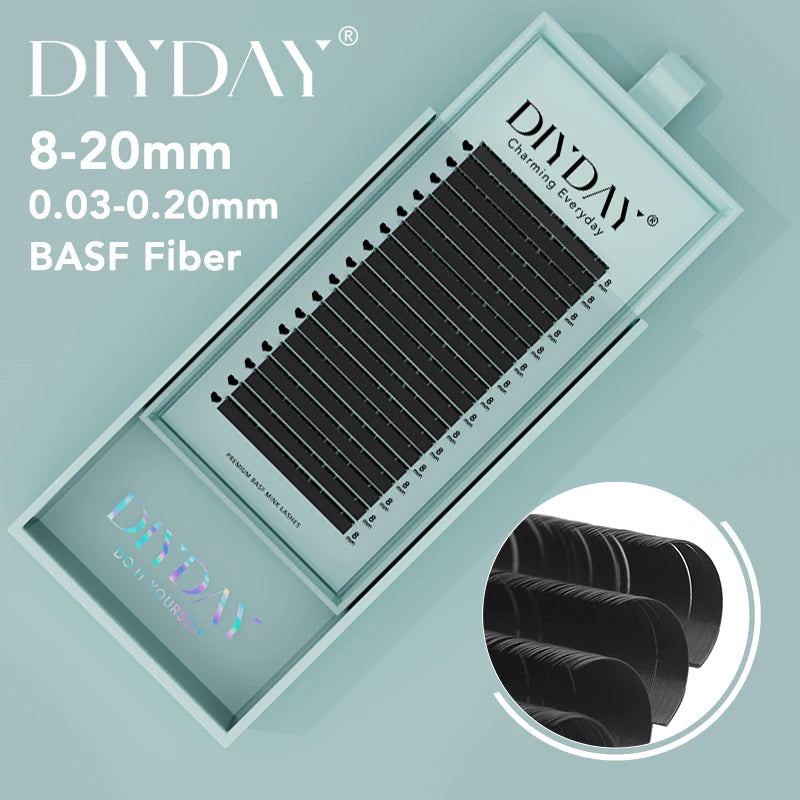
For professional lash artists, consistent, lightweight extension fibers are also part of the retention equation. Classic Eyelash Extension 10 Trays Soft Natural Volume Pro+ offer B, C, CC, D, DD, L, L+, LU, LC, and LD curl options, allowing styling choices to be matched more closely to natural-lash direction and the intended result.
For broader beauty-care resources, you can also explore KentDo's Skin and Beauty Care Devices collection and Eye Care Blog.
Your Lash Curl Retention Timeline: What to Do Day by Day
First 24 hours
Follow your lash artist's specific aftercare instructions. Avoid unnecessary rubbing, pressure, manipulation, and prolonged exposure to extreme heat or steam. Do not try to reshape the extensions manually.
Days 2-3
Establish your normal gentle cleansing routine according to your professional's recommendations. Once lashes are clean and dry, light brushing can help separate extensions and restore a neat appearance. Continue avoiding aggressive rubbing.
Days 4-14
This is the maintenance phase. Clean the lash line consistently, dry gently, brush lightly when needed, manage makeup residue, and minimize repeated mechanical pressure. Pay attention to patterns: if curl changes after a particular activity, identify that activity rather than changing your entire routine.
Weeks 3-4 and approaching a fill
As natural lashes grow and shed, some extensions will sit farther from their original position. More visible gaps, directional changes, and unevenness are expected as a set matures. Your fill schedule should reflect your natural shedding pattern and the retention achieved by your lash artist.
How Often Should You Clean and Brush Classic Lash Extensions?
There is no single frequency that fits every client, but consistent gentle cleansing is generally more useful than allowing buildup to accumulate. Brushing should be light and purposeful rather than repetitive.
A simple lash cleansing routine
- Wash your hands before touching the eye area.
- Apply a lash-compatible cleanser gently around the lash line.
- Use light downward or side-to-side movements rather than aggressive scrubbing.
- Rinse thoroughly so cleanser and residue do not remain around the extensions.
- Allow the lashes to dry appropriately before lightly separating them.
How to dry lashes without flattening or twisting them
Avoid rubbing the eyes with a towel. Pat surrounding skin dry and let the lashes dry naturally or use the gentle drying method recommended by your lash professional. The objective is to remove excess moisture without bending the extension fibers or pulling on the attachment points.
How to brush without damaging retention
Once lashes are appropriately dry, use a clean spoolie and brush with minimal pressure. Work through the lengths rather than aggressively pushing against the lash line. Stop if you encounter resistance; forcing a tangled extension can create unnecessary tension.
Steam, Oils, Sleep, and Brushing: Lash Curl Do's and Don'ts
Do
- Clean extensions gently and consistently.
- Use products compatible with your lash artist's aftercare recommendations.
- Dry lashes without towel friction.
- Brush lightly with a clean spoolie when needed.
- Reduce prolonged exposure to intense steam and heat.
- Schedule professional maintenance based on growth and shedding.
Don't
- Rub, pull, pick, or twist extensions.
- Sleep directly on your lashes whenever it can be avoided.
- Allow heavy cosmetic residue to build up around the lash line.
- Use a traditional mechanical eyelash curler on extensions.
- Attempt to reshape extensions with heat.
- Assume every early retention problem is caused by aftercare.
Why each rule protects curl retention
Most aftercare rules reduce one of two problems: mechanical distortion or unnecessary residue and environmental stress. Gentle cleansing controls buildup, light brushing restores alignment, careful sleeping reduces pressure, and avoiding DIY re-curling prevents direct damage to both extensions and natural lashes.
Curl-Loss Troubleshooting: What Is Causing Your Extensions to Straighten?
| What you notice | Likely causes | What you can control | When to seek professional help |
| Curl looks flatter across both eyes | Heat, steam, environment, curl selection, or application variables | Reduce excessive heat and follow aftercare consistently | If the change is widespread or occurs unusually early |
| Only a few extensions look twisted | Sleep pressure, rubbing, growth direction, or isolated mechanical distortion | Reduce friction and brush gently | If lashes remain uncomfortable, crossed, or incorrectly directed |
| Curl changes within the first few days | Adhesive curing, humidity, temperature, extension selection, or application quality | Review heat, steam, rubbing, and product exposure | Ask the lash artist to assess the set |
| Extensions become messy as they grow | Natural-lash growth and shedding | Clean, dry, brush lightly, and maintain the set | Schedule a fill or professional removal when appropriate |
| Natural lashes also appear less curled | Heat, mechanical stress, curling habits, or natural variation | Reduce heat and rubbing and avoid excessive mechanical curling | If distortion or unusual shedding persists |
Curl looks flatter across both eyes
Symmetrical flattening points toward factors affecting the entire set, such as environmental exposure, curl selection, extension characteristics, or application conditions. Review your recent routine first, then discuss the result with your lash professional if the change was rapid.
Only a few extensions look twisted
Localized distortion is more consistent with mechanical pressure, rubbing, natural growth direction, or an isolated extension becoming misaligned. Do not repeatedly force the lash back into place.
Curl changes within the first few days
Very early widespread changes deserve professional attention. Adhesive curing depends on environmental and application variables, so the appropriate response may involve reviewing humidity, temperature, adhesive behavior, attachment, isolation, extension weight, or curl selection.
Extensions become messy as they grow
Growth-related changes are expected. An extension can rotate or point outward as its natural lash grows. Regular fills allow grown-out extensions to be addressed before they become excessively directional or uncomfortable.
Natural lashes are also losing their curl
If both your natural eyelashes and extensions appear flatter, look beyond extension aftercare. Repeated use of mechanical curlers, excessive heat, rubbing, or other mechanical stress can affect the appearance of natural lashes. Persistent changes warrant a professional assessment.
When Curl Loss Is a Professional Lash Adjustment Issue
Home aftercare cannot correct every curl problem. If the issue is caused by extension selection, natural-lash compatibility, adhesive curing, or application technique, adding more brushing or changing cosmetics will not solve the underlying problem.
Signs of an unsuitable curl or extension weight
If extensions repeatedly appear difficult to control, pull on natural lashes, point in an unsuitable direction, or become problematic soon after application, ask whether the selected curl, length, diameter, or weight is appropriate for your natural lashes.
Signs of an application or adhesive problem
Widespread early changes, inconsistent bonding, unusual twisting across many lashes, or poor retention despite careful aftercare should be reviewed by the professional who performed the service. Adhesive curing is a technical variable that clients generally cannot diagnose or correct at home.
When to schedule a lash extension fill
A fill should be based on your natural lash growth and shedding pattern, current retention, and the condition of the remaining extensions. Waiting until a set becomes heavily grown out can make maintenance more difficult. Your lash artist can recommend an interval suited to your individual retention pattern.
What to ask your lash artist
- Is this curl appropriate for the direction of my natural lashes?
- Is the extension weight suitable for my natural-lash strength?
- Could my recent curl change be related to adhesive curing conditions?
- Is my application direction consistent across the set?
- Should my fill schedule be adjusted?
- Which cleansing and makeup products are best suited to my set?
For additional beauty education, KentDo's Beauty & Self-Care Blog provides another place to explore related maintenance topics.
How Lash Curl Type, Extension Weight, and Application Quality Affect Retention
Lash curl retention begins before the extension is attached. A professional should select a curl and extension specification that works with the natural lashes instead of treating every client as though the same curl, length, and weight will perform identically.
Choosing the right lash curl type
Curl types such as B, C, CC, D, and more specialized shapes create different visual effects and interact differently with natural-lash direction. The goal is a stable, aesthetically appropriate attachment rather than choosing the strongest-looking curl simply because it appears more dramatic.
Why extension weight matters
Longer or heavier extensions can create additional load on natural eyelashes. Professional selection should consider the natural lash's characteristics so the finished set remains comfortable and visually balanced as it grows out.
Adhesive curing, humidity, and temperature
Lash adhesive performance is influenced by the environment in which it is used. Humidity and temperature can affect curing behavior, which is why experienced lash artists control their working conditions and use products according to manufacturer guidance. Clients should not attempt to compensate for adhesive problems with heat or DIY treatments.
Application quality and attachment direction
Isolation, clean attachment, appropriate bonding, consistent placement, and controlled direction all influence how extensions sit on the natural lashes. Even an excellent extension fiber can look poorly retained if the attachment or direction is inconsistent.
How to Protect Natural Eyelashes for Better Curl Retention
Avoid excessive heat and mechanical stress
Natural eyelashes are delicate fibers. Repeated high heat, aggressive curling, rubbing, and pulling can contribute to breakage or changes in appearance. Treat the natural lash as the foundation of the extension set rather than focusing exclusively on the extension itself.
Choose extension weight that suits your natural lashes
A suitable extension should complement the natural lash rather than overwhelm it. If your natural lashes are fine or fragile, tell your lash artist before selecting a dramatic length or diameter.
Know when to give lashes a professional assessment
Persistent distortion, unusual shedding, discomfort, or visible changes in natural-lash condition are reasons to pause experimentation and seek professional evaluation. Healthy-looking natural lashes are an important part of sustainable extension wear.
Can You Restore Lash Curl After It Has Flattened?
You can often improve the appearance of mildly disorganized extensions at home through appropriate cleansing, drying, and gentle brushing, but you should not attempt to chemically or mechanically re-curl lash extensions yourself. A flattened or distorted set may require professional correction.
What you can safely correct at home
Start by removing residue with appropriate cleansing, drying the lashes gently, and lightly separating them with a clean spoolie. Correct the habits that may have caused the distortion, particularly rubbing, pillow pressure, excessive heat, and heavy product buildup.
What should be corrected professionally
If the curl remains substantially altered, many extensions are affected, or the problem began shortly after application, ask a qualified lash professional to assess curl selection, extension weight, attachment, adhesive conditions, and whether a fill, removal, or replacement is appropriate.
Why DIY heat or mechanical re-curling is risky
Applying direct heat, squeezing extensions with a curler, or attempting chemical reshaping can damage extension fibers and place unnecessary stress near the eye. Lash extensions are not designed to be re-shaped at home after application. Professional correction is the safer route when the original curl or attachment needs to be changed.
The Bottom Line: How to Maintain Lash Curl Longer
The best way to maintain lash curl is not to constantly manipulate the extensions. Keep the lash line clean, minimize prolonged heat and steam exposure, avoid heavy residue and oil near the eyes, sleep in a way that reduces pressure, brush gently, and never pull or mechanically re-curl extensions. At the professional level, curl selection, extension weight, adhesive curing, humidity, temperature, attachment, and application direction all contribute to the final result.
Gradual changes in curl and direction are normal as natural lashes grow and shed. Sudden, widespread, or very early curl loss is different and deserves a professional assessment. When professional selection, careful aftercare, and healthy natural eyelashes work together, classic lash extensions are much more likely to remain clean, comfortable, and consistently curled throughout their wear cycle.
For professional lash maintenance and broader beauty-care resources, explore KentDo's Hair Care and Styling Devices collection and related beauty education before choosing additional tools or treatments.
Pillar Article: Lash Extension Curl Retention: What Pros Should Look For













